
A quote by Gloria Jean Watkins says, “Contrary to what we may have been taught to think, unnecessary and unchosen suffering wounds us but need not scar us for life. It does mark us. What we allow the mark of our suffering to become is in our own hands.” In the novel The Scarlet Letter by Nathaniel Hawthorne, the main character, Hester Prynne, is forced to wear a letter “A” on her clothing for the rest of her life, exposing her sin to the world. Pearl may have been the result of Hester’s adultery, but by no means does that make her a symbol of evil, a punishment from God. As Watkins explains, the mark that suffering leaves on a person is often determined by them; but what it does not say is that we are not alone in the world, we need not bear our burdens alone, relying only on ourselves. Pearl may be a child, she may be Hester’s responsibility, but that does not diminish the positive impact she has on Hester’s life and the opportunities she provides her. Ultimately, Pearl is a force for good, a shot at redemption for Hester; she acts as a treasured companion, a shield, and, most importantly, a reminder of the consequences of sin.
There is no doubt that it is difficult to raise a child, a fact that Hester is frequently reminded of. However, those difficulties are outweighed by the fact that Pearl provides Hester with something incredibly important, something that was sorely lacking in her life: companionship and love. When Hester’s sin is revealed to the world, she is left with nothing and no one, the situation made worse when her husband returns and threatens her. Hester immediately moves to the outskirts of the town, devoting her life to Pearl. Pearl provides her with a sense of purpose and happiness in all the darkness of recent events. This is illustrated in the narrator’s observation, “But she named the infant ‘Pearl,’ as being of great price, -purchased with all she had- her mother’s only treasure” (Hawthorne 80)! Hester sacrificed everything to keep her daughter and her lover safe, but she wasn’t left with nothing. The quote makes it clear that Pearl is a source of happiness in Hester’s life, shown especially through her name- a pearl is a literal treasure in the same way that Hester’s daughter is a source of light in her life.
Pearl’s importance in Hester’s life is shown not only by her name, but is also demonstrated throughout the novel. It becomes obvious that Hester would do anything for her daughter, even more than many mothers at the time. It would have been easy for Hester to give Pearl away to another family to care for; not only would it make her life easier, it would also provide her with an escape from the constant presence of the product of her sin. It would not have been an unusual situation, either, considering many mothers were taking the same action; they willingly gave up their children under the assumption that another would be able to raise and discipline the child in a way that they themselves could not. Hester, though, chooses to stay and fight for Pearl, even going up against those in power to be able to keep her. This is shown when Hester hears word that the town leaders plan to remove her daughter from her care. Hester does not hesitate; she immediately marches into the governor’s house to make her case: “‘God gave me the child!’ cried she. ‘He gave her, in requital of all things else, which ye had taken from me. She is my happiness’” (Hawthorne 101)! Not only does Hester outright state that Pearl is a source of joy in her life, she declares that Pearl was sent as a gift from God. It would have been easy for Hester to give Pearl up, allowing the government to take her. In fact, it might even have gained her back a shred of respect- or tolerance at least- from the townspeople, but Hester refuses to let that happen. Her daughter is her happiness, as she states, the one good thing in her life. It is clear that Hester believes Pearl is a blessing; is that not enough?
Pearl may be Hester’s daughter, her responsibility, but she is also her shield. Pearl protects her mother from both sin and society, whether it is a conscious decision or not. Both mother and daughter are frightfully aware of their place in society, the opinions of others. It would be easy for Pearl to foster a sense of resentment towards her mother because of this, but it is actually the opposite that occurs. Pearl proves that she will always be there to protect Hester, despite any negative actions she takes. This is emphasized in one particular instance. As Hester and Pearl are walking into town, a group of children begin to threaten them with mud, clearly due to the scarlet letter lying on Hester’s chest. Pearl’s actions rather speak for themselves: “But Pearl, who was a dauntless child, after frowning, stamping her foot, and shaking her little hand with a variety of threatening gestures, suddenly made a rush at the knot of her enemies, and put them all to flight…She screamed and shouted, too, with a terrific volume of sound, which doubtless caused the hearts of the fugitives to quake within them” (Hawthorne 92). Are Pearl’s actions appropriate? Of course not. It does not, however, diminish the intentions behind her deeds. Pearl stood up for her mother when no one- not even Hester herself- would. She is willing to do anything to protect both her safety and her dignity, despite the fact that the events surrounding her birth have made her into an outcast. The whole interaction only goes to show the strength of her good intentions and impact on Hester’s life.
Not only does Pearl act as a shield against their neighbors, but also a shield against Hester herself. Pearl prevents Hester from slipping back into sin, even if she is unaware of the protection she provides. The most glaring example of this occurs just after Hester has left the governor’s house. The governor’s sister, Mistress Hibbins, invites Hester to accompany her into the woods that night, implying witchery. Hester responds to this invite: “I must tarry at home, and keep watch over my little Pearl. Had they taken her from me, I would willingly have gone with thee into the forest, and signed my name in the Black Man’s book, and that with mine own blood” (Hawthorne 105). Hester’s reply is honest as well as revealing: had Pearl not been in the picture, Hester would not have hesitated to fall back into sin, endangering her life and her reputation even more. Pearl’s arrival into Hester’s life provided her with responsibilities she cannot shake, and that is not necessarily a consequence. Rather, it supplies her with an opportunity to regain her sense of self and recover from her trauma.
Finally, perhaps most important of all, Pearl acts as a reminder for Hester, encouraging her to be good. Immediately after Hester is punished and exposed to the people, she moves to a small house on the outskirts of the town. While this is an extremely isolating experience and she still endures the hatred of the citizens, it also provides her with a chance to start over, decide how she wants to live her life. Already marked with the scarlet letter and abandoned by her husband, Hester has gained a sense of freedom. With Pearl by her side and keeping her in check, Hester can begin to make peace with herself. This is illustrated with the narrator’s description of her new life: “Her sin, her ignominy, were the roots which she had struck into the soil. It was as if a new birth, with stronger assimilations than the first, had conquered the forest-land, still so uncongenial to every other pilgrim and wanderer, into Hester Prynne’s wild and dreary, but lifelong home” (Hawthorne 71). Did Hester suffer because of her “sin?” Absolutely. But it also gave her the strength and resources to plant new roots and create a place for herself in the world, a place only for her and her daughter.
As Hester begins to establish herself in her new home, she starts giving back to the community as a way to redeem herself. She sews clothing and donates to the poor, despite being generally worse off. Pearl is the only luxury in Hester’s life, and she treats her accordingly. This is shown in the way Hester adorns her daughter: “The child’s attire, on the other hand, was distinguished by a fanciful, or, we might rather say, a fantastic ingenuity, which served, indeed, to heighten the airy charm that had begun to develop itself in the little girl… Except for that small expenditure in the decoration of her infant, Hester bestowed all her superfluous means in charity, on wretches less miserable than herself…” (Hawthorne 75). Hester recognizes that Pearl is the only thing keeping her anchored, helping her avoid sinning any further. This is demonstrated by the fact that Pearl is, seemingly, the only truly beautiful thing in her life. Hester uplifts her daughter, makes her vibrant and loud, a constant reminder of where her past actions have placed her. Pearl is her mother’s happiness, but Hester will never forget where she came from.
“Hester uplifts her daughter, makes her vibrant and loud, a constant reminder of where her past actions have placed her. Pearl is her mother’s happiness, but Hester will never forget where she came from.”
Whether or not Hester’s sin was truly an act of evil is up for debate, but, regardless, she believes it is. The words of others and of Hester’s conscience have had a tremendous impact on the course of her life and her mental health, and she will bear those marks for the rest of her life. She will not, however, endure her suffering alone. Pearl may be difficult and exhibit negative traits from time to time, but, in the end, she is there for Hester when no one else is. She brings joy, protection, and new opportunities. Repeatedly, throughout the novel, she proves that her intentions are pure and her impact is positive. She is Hester’s treasure, her shield, and her reason for life.
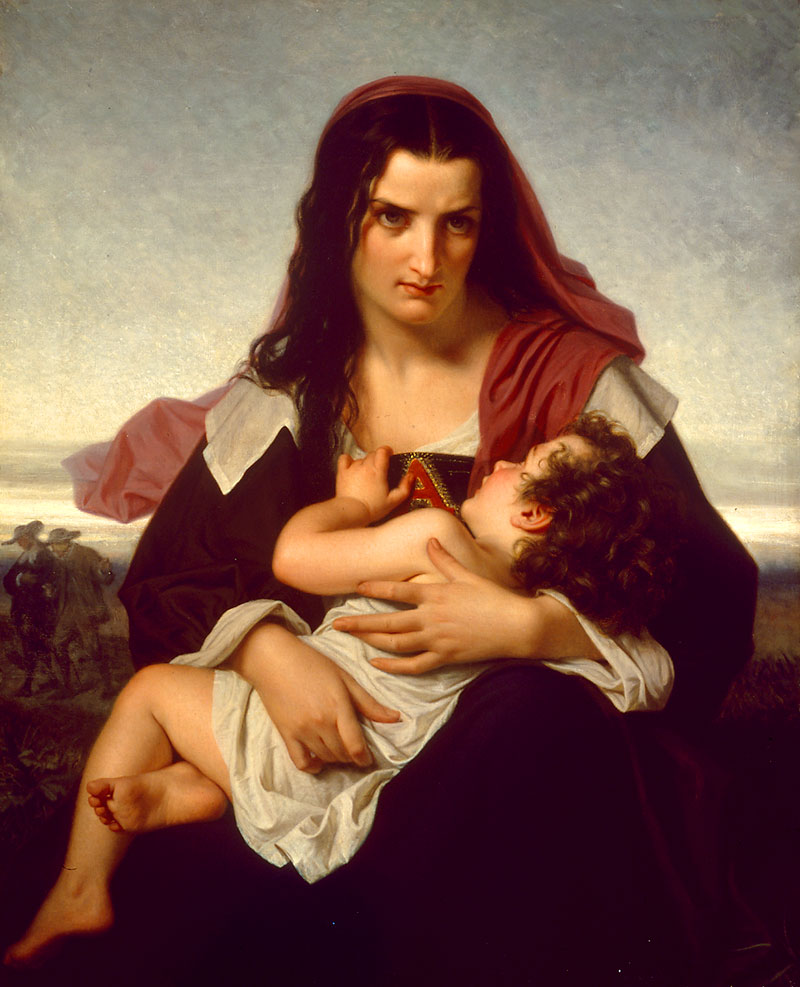
I loved Pearl as a character in The Scarlet Letter, so I liked being able to write a paper based around her. I was pretty happy with how this turned out, but I did feel like it was centered more around Hester than it was Pearl, and I don’t know how I feel about that. I’m happy with my points, and I think that my quotes work well. Looking back, there are also some pieces that I would have liked to rephrase or structure differently.