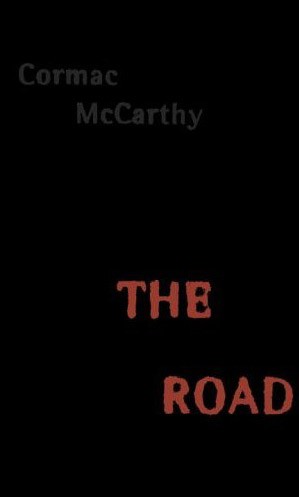
Throughout the post-apocalyptic novel The Road by Cormac McCarthy, one of the most striking stylistic choices is the lack of names in the main characters. ‘The man,’ and his son, ‘the boy,’ are fighting for their lives in a flame ravished hellscape, plagued by hunger, cold, and savage cannibalistic gangs. Not once are either of their names spoken aloud, leaving the readers with both questions and an intrinsic connection to the man and the boy. The anonymity of these characters lends itself to a universalism not able to be captured with named characters, but also shows the depth of the damage done by this apocalypse- the man and the boy no longer have names that are shown to the world, and in this case the reader, for they are not needed, but the identity of a name is something that can not be stripped away from them. This namelessness is a beautiful paradox as a literary device- it shows the triviality of identity in such a barren place, and yet the necessity of it, while also letting the reader impose their own identity onto the characters. It treads the fine line between no identity and endless identity, and in part is what makes the story so compelling.
When reading this story, no matter your thoughts on the novel as a whole, it is hard not to be drawn towards, and identify with, either the boy or the man. The two characters, though different, are given the most basic and elemental of characteristics: a child and his father, held together by fear, desperation, and blind devotion. The father is a caretaker, the child innocent and curious- both embody the very ideas of “parent” and “child”. McCarthy takes these simple character designs one step further with his decision to leave the characters nameless- every reader can relate to being a parent, a child, or both. In Chris Gilbert’s reflection on the use of identity and intrigue in The Road, he states that “Lastly, father and son particularly intrigue students because they easily relate to them. The parent-child dynamic is something most teenagers are intimately familiar with, and the figures of child and adult, respectively, symbolize past and future for them; my seniors are still able to recall the increasingly removed world of childhood innocence while simultaneously gazing toward the world of adult responsibility they will soon inhibit” (Gilbert 41). Gilbert illustrates the way that this universalism draws students, and all readers, to a connection, which just makes the story that much more powerful.
The identity of the man and the boy are just that- a man and a boy. Any semblance of individuality, outward expression, or personal identity have been destroyed by the simple fact that this barren wasteland can no longer support these frivolities- this is a dog-eat-dog situation, humans reduced to cannibals, animals, reverting back to the simplest and most brutal form of self preservation. There is no room for names, but at the same time, names are all they have left. In leaving these characters lacking, McCarthy shows us the sorry state of the world.
While this world holds no place for things such as names, names are also all they have left.When the boy and the man come across another old man on the side of the road, they inquire about his name. He says that it is Ely, but the man senses the truth.
“Is your name really Ely?
No.
You dont want to say your name.
I dont want to say it.
Why?
I couldnt trust you with it. To do something with it.”
In this interaction, an old man with nothing holds on to the only thing he can keep for himself- his identity. While this world as a whole is no place for such things, as individuals, names are priceless. They are their connection to themselves, and their pasts, and Ely’s name was for him, but also to each other. Ely has no one, and therefore, he himself owns the rights to the only thing that can never be taken from him- his name, who he is. This same concept is used to show the deep bond between the man and the boy, a bond that the reader will never fully understand. After the man dies, “[the boy] knelt beside his father and held his cold hand and said his name over and over again”(McCarthy 281). This mention of a name is quite jarring at first, shocking the reader out of a reverie of anonymity. There is suddenly recognition that these characters do have names, and at this point, they are the only ones that know them. It is the man and the boy against the world, and keeping their names from the reader sets them apart as a separate entity, a family with a bond that cannot be understood by any outsider. In a world where Ely trusts no one with his true name, up until this point, the man and the boy had each other.
As the reader takes this journey of hope and desperation with the boy and the man, their lack of names plays many important roles in our understanding of the text. It lets the reader apply themselves, their families, and loved ones to these characters, it shows the barrenness and desolation of this post-apocalyptic landscape, and it demonstrates the unbreakable bond between a man and his son.
Works Cited
Gilbert, Chris. “The Quest of Father and Son: Illuminating Character Identity, Motivation, and Conflict in Cormac McCarthy’s ‘The Road.’” The English Journal, vol. 102, no. 1, 2012, pp. 40–47. JSTOR, www.jstor.org/stable/23269380.
McCarthy, Cormac. The road / Cormac McCarthy Alfred A. Knopf New York 2006
This is all around my favorite paper I’ve written for this class, though definitely not my favorite book. I spent a lot of time thinking about this prompt and finding a good source and I think it really paid off in the end.