
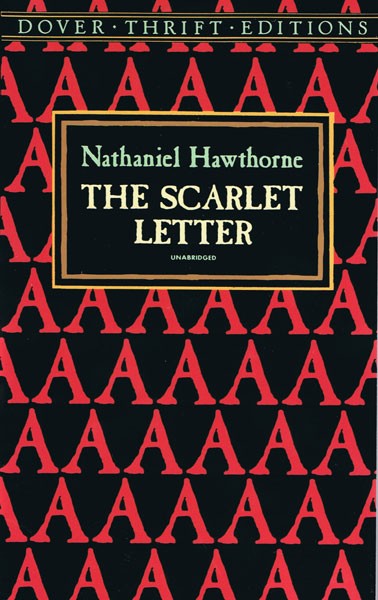
In both the The Scarlet Letter by Nathaniel Hawthorne and The Crucible by Arthur Miller, aspects of Puritan society are examined and portrayed to the reader. Though at first glance these novels seem to work together in criticizing Puritan morality, with further scrutiny it is clear that they simultaneously contradict and compliment each other. While Hawthorne uses the platform of literature to criticize Puritan society as a thing of the past, Miller uses Puritan society as an extended metaphor for modern American society. While both of these novels clearly portray flaws in the Puritan community, Miller has a more accurate and thorough understanding of Puritan society compared to the developing society of the modern United States. American society today is less moral than society during Puritan times due to the lack of strong community guidelines in our modern community, dissonance between personal and governmental values, and the fact that without a unifying factor of religion, no one can agree on what just exactly our morals are. Though society as a whole is less moral, individuals have the opportunity to be more moral due to their autonomy in making moral decisions and freedom to choose a individual set of moral codes.
In The Scarlet Letter, the strictness of Puritan values is clearly demonstrated over and over. Though Hester’s punishment could be seen as excessive or cruel on the surface, one must respect the fact that in this 1600s Puritan society in which the novel is set, morals and laws were interchangeable. Hester committed a sin, and she would be punished- she broke an important tenet and was immoral in the eyes of the authority figures, those who determine morality. In today’s society, laws and morality can rarely, if ever, be set equal. Governmental standards are so far removed from individual standards of morality that children are being separated from families and placed in concentration camps. The current president of the U.S.A. has pressed the boundaries of what is considered ‘moral’ to a point of no return. As Anne Applebaum explains in a New York Times article, “Trump’s admirers see no moral case: morality is for losers, apparently. Cruelty is for winners”(Applebaum). This is describing the concentration camps for immigrant children, and many other atrocities. This quote speaks to the lack of moral compass that our society has begun to show, and how even things that one might think of as horrifying, or atrocities, are now considered normal. As a governmental unit, current times is all around much less moral than Puritan times.
While one might use the Salem witch trials as an explanation for why modern American society is more moral, it is important to recognize that The Crucible was written as an allegory for a more modern time in our history: The second Red Scare, and McCarthyism. Miller actually uses this text to demonstrate why modern American society is no more moral than Puritan times, people will still follow that mob mentality, no matter how far fetched or simply wrong it seems (Miller, T). This shows further that we are not in fact more moral than the Puritans, but less as we have lost the thread of unity in their morals that the Puritans had.
When a society is united by group morals, the idea of moral dissonance is minimized. If all individuals have the same moral code, things can be judged as either moral or immoral, with no gray area. When a group has individualized morals, there is a chance that something that one person considers moral is actually immoral to another. For example, in the current climate of the United States, abortion is a highly contentious issue. While many groups see abortion as completely immoral and murder of an innocent child, others see the issue of forcing someone to carry a child to term as immoral. In this situation, no one is correct- both believe their personal sets of morals and no matter what happens, there is a miscarriage of justice through someone’s eyes. In theory, Puritan society would not have this problem.
Using this idea of moral dissonance, one can take a closer look at The Crucible. This play takes these ideas of a steady moral code, and shows how that doesn’t always work. In Act Two, John Proctor declares to Mary Warren “What work you do! It’s strange work for a Christian girl to hang old women!”(Miller 58). This demonstrates how community morals can somehow be twisted, and even more it shows how significant of a piece religion plays in the morality of a community. The basis for Proctor’s declaration of immorality of Mary’s actions stems from religion- Mary is betraying her religion and the moral code that comes with it in her actions. In this same vein of religiosity and morality appears The Scarlet Letter. “Heaven would show mercy,” rejoined Hester, “hadst thou but the strength to take advantage of it.” (Hawthorne 110). In this quote, Hester is telling Dimmesdale that the religion itself is merciful, if Dimmesdale would accept it. This shows Hester using religion as a tool of mercy and morality. When religion is used to encourage morality, people are more apt to follow due to the deeply personal connection of humanity to religion. Having a moral code of religion can help a society stay true to morals, and the conflicting morals of separate religions makes a consistent moral stance impossible.
Overall, Puritans hold moral high ground over modern American society due to the unity of their morals, the intertwinedness of their personal morals and governmental, and their strong connection to religion. Though as a community Puritans are more moral, Americans today have the ability to be more moral due to the autonomy to make their own decisions. Having the choice to make your own moral decisions lets every individual concoct their own personal set of morals.
References:
Hawthorne, Nathaniel. The Scarlet Letter. Millennium Publications, 1850.
Miller, Arthur. The Crucible. Penguin Plays, 1996.
Applebaum, Anne. “In Trump’s world, morality is for losers.” Washingtonpost.com, 20 June 2018. Global Issues in Context,
Miller, Tara. “The Crucible: Mccarthyism And A Historical View Of Witch Hunts”. Owlcation, 2018, https://owlcation.com/humanities/The-Crucible-McCarthyism-and-a-Historical-View-of-Witch-Hunts. Accessed 28 Dec 2018.
This was one of the critical essays I was most proud of all year. I did a lot of research and rewrote a few sections a couple of times but overall I was really happy with this paper and my subject matter.