
Are you listening?
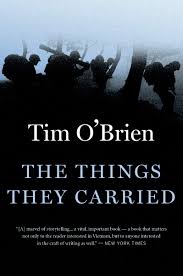
As the reader, we are expected to listen and to feel what the story wishes is felt. The purpose of Tim O’Brien telling his story was not for the reader to understand or to empathize with the soldiers it was to listen and acknowledge the events that did or did not happen in the war, because to Tim it is all the same. Tim wants the reader to listen to the love stories he tells. Tim also knows a lot of his readers do not understand that his stories are written to make the reader feel bad to force them to confront horrible emotions, and when the reader isn’t listening they don’t understand that they are supposed to feel the awful emotions they are feeling. Tim O’Brien is a skilled storyteller and the emotions he makes his reader feel do not feel forced, they feel welcomed and at home in the bottom of the reader’s heart. When his story makes the reader’s heart sink to the pit of their stomach, their lungs get stuck in their throat, it is at that moment that Tim was successful in his storytelling.
It is our job as readers to listen to make sure we are capable of the feelings that Tim presents if the reader is incapable of those emotions they simply weren’t listening to the story. Tim O’Brien tells us his story not to get empathy or pity he wants the reader to simply listen to him. The readers own thoughts and experiences are not needed to listen to the story. As readers, we are reading not to learn, not to analyze, but to listen to the love story that Tim is telling. As readers, we are to swallow his stories and the emotions that come with them and go about our normal lives, but having those feelings deep inside during everyday life can be tiresome, lonesome, and it can feel like there is no hope, if the reader begins to feel just one of these emotions the story was successful. Tim’s goal is to make his reader swallow the pain and the feelings and live with it, that same way he has had to live with his pain, “But the thing about remembering is that you don’t forget” (O’Brien), he is incapable of forgetting things that his readers could never begin to comprehend. In an attempt to make his reader understand Tim uses story truth and if the reader is listening they may begin to feel the same level of pain as he feels.
Listen, that is all Tim asks of his readers. As someone who has not been to war, especially a brutal and pointless war such as The American War in Vietnam we do not like to hear the gore and gruesome things that come with war, we don’t like how it makes us feel, we push it away and ignore it. O’Brien is forcing his reader to feel those things, those feelings about war and pain. The only way to feel this is to listen. Tim knows that sometimes he is not listened to, that the emotion and feeling put into a story has simply gone to waste on a reader, that they will push the emotion away and refuse to admit what it is supposed to mean. Tim shows this when explaining an interaction with a reader who wasn’t listening to the story: “She’ll explain that as a rule, she hates war stories; she can’t understand why people want to wallow in all the blood and gore. But this one she liked. The poor baby buffalo, it made her sad. Sometimes, even, there are little tears. What I should do, she’ll say, is to put it all behind me. Find new stories to tell. I’ll picture Rat Kiley’s face, his grief, and I’ll think, you dumb cooze. Because she wasn’t listening. It wasn’t a war story. It was a love story” (O’Brien 81). They do not see that he is not ‘wallowing’ in the ‘blood and gore’ he is grieving, and as readers, we are expected to listen. The expectations to grieve alongside Tim, the reader is supposed to listen, to understand and to feel. Someone who isn’t listening will quickly assume it is a war story and dismiss the emotion it brings, but a reader that is listening will know it is a love story and in war, there are no real war stories
O’Brien wants his reader to listen to his story no matter if it is true or not, the feeling the story gives the reader is what is real. The feeling is what is important not if the story is true or false. This is where O’Brien’s use of happening truth and story truth combine, and the events and the feeling separate “I want you to feel what I felt. I want you to know why story-truth is truer sometimes than happening-truth”(O’Brien). In order to make the reader feel the story can’t always be true, the reader is not at war and has not experienced war they will not feel the same as the soldiers did simply reading a chronological recital of events. In order to feel the story sometimes isn’t based in reality. The story told could be completely false but if the feeling it gives is strong enough to change something inside, that is what is important. The feeling makes the story true.
Our job as readers is to listen and feel the same emotion and horror Tim felt, he tells us stories that make the emotion real we are only supposed to listen. “It’s about love and memory. It’s about sorrow. It’s about sisters who never write back and people who never listen” (O’Brien 81). The story does not lose its value or importance whether it was true or not, it shows its wealth in if it makes the reader feel or not. If it hurts deep down inside and you can’t say why it’s just painful. You might begin to understand.
Were you listening?
I am not extremely proud of this paper or its outcome. Although it is not my best work I believe I had an effective introduction and conclusion. My points and explanation were less effective and I struggled on working my quotes into my writing. Overall I wish I had better word choice and more effective language.