Product of Time

In a matter of centuries, a country can drastically change. Whether the change occurs in beliefs, government, or popular ideals in our society, the country is always changing. Does the basis of morality change over the course of 200 years too? Will the evolution of our country lead to a broader change in the standards of United States society? Over the course of two hundred years, what used to be Puritan society standards is no longer our modern-day societies standards, and the change is drastic. Can you imagine the difference not only in our ideas and daily life, imagine the difference in the morality of our civilization; however, it can be interpreted that we are as moral now than we were during Puritan times in different aspects.

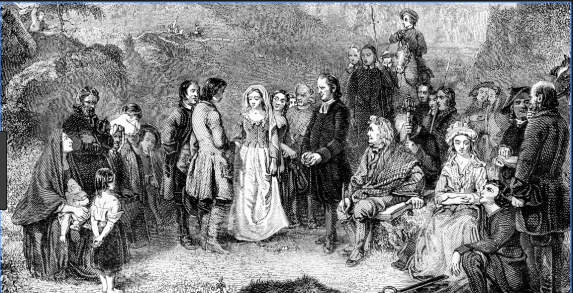
The change in religion from Puritan society to modern society is drastic. In the 1600s Puritan society was very organized and had a standard set of beliefs. Nearly all of the US population during that era believed in one specific religion, Puritanism. Their strict and ordered belief led them to have a very organized and structured society. The Puritans believed that God had a special way of providing and forming a covenant with them. All of their society believed in Puritanism and strongly felt that anything to disgrace Christianity would be immoral. English immigrants migrating from England were very passionate about the Puritan faith. This caused for a greater population of Puritan believers as more immigrants came. In Puritan faith, there is something called a predestined effect; this means that you are granted immediate permission to heaven. If given to you it plays a great deal of significance in your life. This background on Puritan society has provided an insight into not only the structure but the moral beliefs of their society. They had a structured way of living, showing that they are more moral than modern-day America. If you are constantly neat in your dorm room, you will most likely be a neat person and always want things to be tidy. So a structured way of living leads to a structured way of thinking. Structure and empathy are the two keys to being a moral person.  But our Modern day society is completely different than that of the Puritan’s. While their religion was solely Christianity, now the US has more than 127 different beliefs among the United States (Religion in the United States). This shows how diverse our society is becoming. This may seem like progress to many but this is causing conflict within our society. With more religions, this leads to certain people defending their religion and feeling violated when someone else has a different belief from them. To this day we hear jokes against Jewish people and the Holocaust just because of one event. If you are Jewish this normally is very offending and leads to an frustration and outrage. Muslim, Jewish, Mormon, Buddhism are all very popularly practiced religions in the United States. Yet these are religions that American people make fun of regularly, and it is unfair. Due to the lack of respect and empathy for other religions, the United States is slowly becoming less moral and empathetic. Empathy is a large part of being moral in our society and takes a strong stand towards why the US has been as moral as they were in Puritan times

Empathy and wholesome morals are extremely important in a healthy society. Every person has a different set of morals than the next. It does not matter if the morals coincide with what we call “healthy or not”, every society and person has morals. In moral beliefs a large part of being moral is empathy, in order to be empathetic you need to be openminded. Openminded individuals are always the nicest and most caring which is one thing keeping our society from outrage. Another large part of being moral in our society is helping others. Helping others has been a moral since the beginning of time, it is by far the most moral thing you can do. For instance, you see instances of helping others all around the world, allies in war, wealthy people providing money to people in need, and volunteer work otherwise known as community service. Companies like Feeding America have been known to aid others and have contributed largely to fixing hunger. You can find them all across the world, local and international. This shows that in today’s age, healthy morals such as helping others have advanced significantly compared to Puritan times. In Puritan times, helping others in need was not common, especially with countries or large corporations.  In modern America, it has become significantly easier to give to charities. Helping others is a popular act not matter what it is. But popular controversial ideas that encap our society will always be something that takes advantage of people in our lives and will never change.

Our society is controlled and surrounded by people encompassing negativity and it is absurd. Negativity is a domino effect that can be passed throughout the world and has strongly affected the world for centuries. Every dispute is another form of negativity and now they are transforming into different forms of negativity. They are mainly about ideas like transforming into a different gender, gender identity, and equal pay between men and women. These topics have changed drastically since Puritan society. Although there was one topic that has stayed the same, pay between men and women has always favored the men. Even though the modern world has progressed significantly we now come to see that men and women are beginning to receive close to equal pay. During Puritan times there was no acceptance of women in jobs of any kind. Women were solely meant for maintaining a neat and healthy household while taking care of the children. This has changed. This ideal of change is not favored in the world we live in today and is completely preposterous. The fact that we don’t accept people for who they are is the most immoral thing our modern society has done. It is one of the only things that has become better because we are starting to accept people for who they are.

Our modern-day society’s morals have stayed the same since the same since Puritan times.The change in morality from Puritan civilization to modern day society is drastic due to the change in religion, the willingness to help people in need, and the popular controversial ideas that encap our society. Yes, we have made advances and strides into becoming more moral and more accepting of popular ideas, yet everything is the same. Our country is flawed and no matter what our country will always be flawed.  We can not change the way people think or act or better yet their deep down personality’s yet we can make attempts to become a better country and live our lives more open-mindedly.

Works Cited

“State of Homelessness.” National Alliance to Help Homelessness, endhomelessness.org/homelessness-in-america/homelessness-statistics/state-of-homelessness-report/.

“Witchcraft and the Salem Witch Trials.” News Bank, infoweb.newsbank.com/apps/news/americas-historical-newspapers/witchcraft-and-salem-witch-trials?p=EANX-K12&pnews=WORLDNEWS.Miller, Arthur. The Crucible. Penguin Books, 1996, pp. 239-243

“Religion in the United States.” Wikipedia, Wikimedia Foundation, 12 Dec. 2018, en.wikipedia.org/wiki/Religion_in_the_United_States.

Posted in Uncategorized | 1 Comment

I’m Sorry

As long as I can remember, I have carried guilt like a wet wool blanket draped around my shoulders. When my mental health started to become a problem, I always blamed myself. I blamed myself for the pain and stress that I caused my family and friends, and I blamed myself for the money spent on my treatment, on the extra time people needed to spend with me because I wasn’t allowed to be alone, and for my own struggles. I wasn’t good enough, I deserved this. I felt guilt if I hurt myself, guilt if I didn’t. I was guilty if I starved myself, but even more guilty if I ate. There was guilt in needing therapy but guilt in hiding. I still feel guilt every time someone waits for me to walk to class. I carry guilt every time someone stays up late to talk with me or hangs out on a weekend or works with me on a project. I carry guilt that my parents spend so much money to keep me healthy and send me to school. I carry guilt when the girl I love gets in a fight with a friend or feels sick or is tired or stressed. I carry guilt when I’m sick and I have to miss school. I carry this weight around my neck, like heavy metal chains begging me to drop to the floor before my spine snaps in two.

The worst part about the guilt is that it never goes away. All my life, I have never been in any sort of relationship where I didn’t feel guilty for just existing. I feel guilt because my sister has to grow up with an older brother with a scary mental health history. I feel guilt that my mom lost the daughter she thought she had. I feel guilt that my girlfriend is afraid to introduce me to her parents because they’ll think that means she’s gay. I feel guilt that my best friend has fewer friends than I do and he feels like I’m abandoning him. I’ve carried guilt for so long that it’s a part of me now- I wouldn’t be myself if I didn’t apologize for every move I make. Guilt is the piece of me that I hate the most, but that has never gone away. I am entrenched in this losing battle of a heart-wrenching feeling of being to blame for every little thing, and I don’t know if I can ever escape.

Posted in Uncategorized | 2 Comments

You aren’t Listening

Are you listening?

As the reader, we are expected to listen and to feel what the story wishes is felt. The purpose of Tim O’Brien telling his story was not for the reader to understand or to empathize with the soldiers it was to listen and acknowledge the events that did or did not happen in the war, because to Tim it is all the same. Tim wants the reader to listen to the love stories he tells. Tim also knows a lot of his readers do not understand that his stories are written to make the reader feel bad to force them to confront horrible emotions, and when the reader isn’t listening they don’t understand that they are supposed to feel the awful emotions they are feeling. Tim O’Brien is a skilled storyteller and the emotions he makes his reader feel do not feel forced, they feel welcomed and at home in the bottom of the reader’s heart. When his story makes the reader’s heart sink to the pit of their stomach, their lungs get stuck in their throat, it is at that moment that Tim was successful in his storytelling.

It is our job as readers to listen to make sure we are capable of the feelings that Tim presents if the reader is incapable of those emotions they simply weren’t listening to the story. Tim O’Brien tells us his story not to get empathy or pity he wants the reader to simply listen to him. The readers own thoughts and experiences are not needed to listen to the story. As readers, we are reading not to learn, not to analyze, but to listen to the love story that Tim is telling. As readers, we are to swallow his stories and the emotions that come with them and go about our normal lives, but having those feelings deep inside during everyday life can be tiresome, lonesome, and it can feel like there is no hope, if the reader begins to feel just one of these emotions the story was successful. Tim’s goal is to make his reader swallow the pain and the feelings and live with it, that same way he has had to live with his pain, “But the thing about remembering is that you don’t forget” (O’Brien), he is incapable of forgetting things that his readers could never begin to comprehend. In an attempt to make his reader understand  Tim uses story truth and if the reader is listening they may begin to feel the same level of pain as he feels.

Listen, that is all Tim asks of his readers. As someone who has not been to war, especially a brutal and pointless war such as The American War in Vietnam we do not like to hear the gore and gruesome things that come with war, we don’t like how it makes us feel, we push it away and ignore it. O’Brien is forcing his reader to feel those things, those feelings about war and pain. The only way to feel this is to listen. Tim knows that sometimes he is not listened to, that the emotion and feeling put into a story has simply gone to waste on a reader, that they will push the emotion away and refuse to admit what it is supposed to mean. Tim shows this when explaining an interaction with a reader who wasn’t listening to the story: “She’ll explain that as a rule, she hates war stories; she can’t understand why people want to wallow in all the blood and gore. But this one she liked. The poor baby buffalo, it made her sad. Sometimes, even, there are little tears. What I should do, she’ll say, is to put it all behind me. Find new stories to tell. I’ll picture Rat Kiley’s face, his grief, and I’ll think, you dumb cooze. Because she wasn’t listening. It wasn’t a war story. It was a love story” (O’Brien 81). They do not see that he is not ‘wallowing’ in the ‘blood and gore’ he is grieving, and as readers, we are expected to listen. The expectations to grieve alongside Tim, the reader is supposed to listen, to understand and to feel. Someone who isn’t listening will quickly assume it is a war story and dismiss the emotion it brings, but a reader that is listening will know it is  a love story and in war, there are no real war stories

O’Brien wants his reader to listen to his story no matter if it is true or not, the feeling the story gives the reader is what is real. The feeling is what is important not if the story is true or false. This is where O’Brien’s use of happening truth and story truth combine, and the events and the feeling separate “I want you to feel what I felt. I want you to know why story-truth is truer sometimes than happening-truth”(O’Brien). In order to make the reader feel the story can’t always be true, the reader is not at war and has not experienced war they will not feel the same as the soldiers did simply reading a chronological recital of events. In order to feel the story sometimes isn’t based in reality.  The story told could be completely false but if the feeling it gives is strong enough to change something inside, that is what is important. The feeling makes the story true.

Our job as readers is to listen and feel the same emotion and horror Tim felt, he tells us stories that make the emotion real we are only supposed to listen. “It’s about love and memory. It’s about sorrow. It’s about sisters who never write back and people who never listen” (O’Brien 81).  The story does not lose its value or importance whether it was true or not, it shows its wealth in if it makes the reader feel or not. If it hurts deep down inside and you can’t say why it’s just painful. You might begin to understand.

Were you listening?

Posted in Uncategorized | 1 Comment

“I Don’t Want To Say It”- What a Name Means to Us

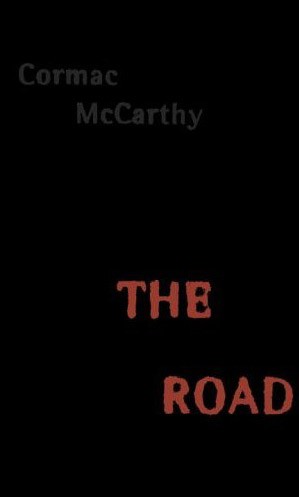
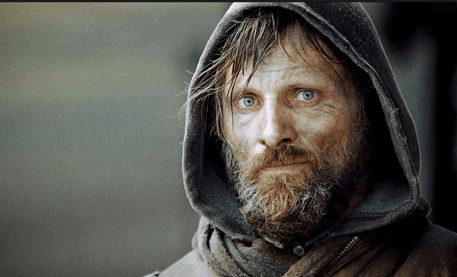
Throughout the post-apocalyptic novel The Road by Cormac McCarthy, one of the most striking stylistic choices is the lack of names in the main characters. ‘The man,’ and his son, ‘the boy,’ are fighting for their lives in a flame ravished hellscape, plagued by hunger, cold, and savage cannibalistic gangs. Not once are either of their names spoken aloud, leaving the readers with both questions and an intrinsic connection to the man and the boy. The anonymity of these characters lends itself to a universalism not able to be captured with named characters, but also shows the depth of the damage done by this apocalypse- the man and the boy no longer have names that are shown to the world, and in this case the reader, for they are not needed, but the identity of a name is something that can not be stripped away from them. This namelessness is a beautiful paradox as a literary device- it shows the triviality of identity in such a barren place, and yet the necessity of it, while also letting the reader impose their own identity onto the characters. It treads the fine line between no identity and endless identity, and in part is what makes the story so compelling.

When reading this story, no matter your thoughts on the novel as a whole, it is hard not to be drawn towards, and identify with, either the boy or the man. The two characters, though different, are given the most basic and elemental of characteristics: a child and his father, held together by fear, desperation, and blind devotion. The father is a caretaker, the child innocent and curious- both embody the very ideas of “parent” and “child”. McCarthy takes these simple character designs one step further with his decision to leave the characters nameless- every reader can relate to being a parent, a child, or both. In Chris Gilbert’s reflection on the use of identity and intrigue in The Road, he states that “Lastly, father and son particularly intrigue students because they easily relate to them. The parent-child dynamic is something most teenagers are intimately familiar with, and the figures of child and adult, respectively, symbolize past and future for them; my seniors are still able to recall the increasingly removed world of childhood innocence while simultaneously gazing toward the world of adult responsibility they will soon inhibit” (Gilbert 41).  Gilbert illustrates the way that this universalism draws students, and all readers, to a connection, which just makes the story that much more powerful.

The identity of the man and the boy are just that- a man and a boy. Any semblance of individuality, outward expression, or personal identity have been destroyed by the simple fact that this barren wasteland can no longer support these frivolities- this is a dog-eat-dog situation, humans reduced to cannibals, animals, reverting back to the simplest and most brutal form of self preservation. There is no room for names, but at the same time, names are all they have left. In leaving these characters lacking, McCarthy shows us the sorry state of the world.

While this world holds no place for things such as names, names are also all they have left.When the boy and the man come across another old man on the side of the road, they inquire about his name. He says that it is Ely, but the man senses the truth.

“Is your name really Ely?

No.

You dont want to say your name.

I dont want to say it.

Why?

I couldnt trust you with it. To do something with it.”

In this interaction, an old man with nothing holds on to the only thing he can keep for himself- his identity. While this world as a whole is no place for such things, as individuals, names are priceless. They are their connection to themselves, and their pasts, and Ely’s name was for him, but also to each other. Ely has no one, and therefore, he himself owns the rights to the only thing that can never be taken from him- his name, who he is. This same concept is used to show the deep bond between the man and the boy, a bond that the reader will never fully understand. After the man dies, “[the boy] knelt beside his father and held his cold hand and said his name over and over again”(McCarthy 281). This mention of a name is quite jarring at first, shocking the reader out of a reverie of anonymity. There is suddenly recognition that these characters do have names, and at this point, they are the only ones that know them. It is the man and the boy against the world, and keeping their names from the reader sets them apart as a separate entity, a family with a bond that cannot be understood by any outsider. In a world where Ely trusts no one with his true name, up until this point, the man and the boy had each other.

As the reader takes this journey of hope and desperation with the boy and the man, their lack of names plays many important roles in our understanding of the text. It lets the reader apply themselves, their families, and loved ones to these characters, it shows the barrenness and desolation of this post-apocalyptic landscape, and it demonstrates the unbreakable bond between a man and his son.

Works Cited

Gilbert, Chris. “The Quest of Father and Son: Illuminating Character Identity, Motivation, and Conflict in Cormac McCarthy’s ‘The Road.’” The English Journal, vol. 102, no. 1, 2012, pp. 40–47. JSTOR, www.jstor.org/stable/23269380.

McCarthy, Cormac.  The road / Cormac McCarthy  Alfred A. Knopf New York  2006

Posted in Uncategorized | 1 Comment

A Letter to my Lover

August 6, 1772

Dear Love,

I know I could not say goodbye the way I had wished so this will have to do. I went to your father’s shop the morning before my departure, asking him to pass this letter on to you. He gave me a pouch of sweets for the trip and said he would miss me, and to tell my mother sorry for him no longer carrying her favorite tea due to the tax. He knew that had argued earlier in the week about the resistance. After I agreed to pass on his message he then hugged me before I left. I had to shield my face walking out the door to hide the tears swelling behind my eyes.

I ate one of the candies on my walk home, and the sweet coating made me think of you, your voice smooth and soft like honey. I walked and cried, I didn’t hide my face, I did it just as you told me, that “if you are to cry, do so proudly”. With tears streaming down my face I was smiling, thinking of you. I only had one wish, to meet you one last time by the lovers’ maple behind the old schoolyard, to feel your soft hands in mine. I will miss your touch, with your delicate fingertips and gentle caress. The sun was hot and everything felt sticky, but as the dust from the dirt road clung to my skin but I didn’t notice. My mind was with you.

My mind was full of thoughts of you, our childhood memories, to the last time your cheek had touched mine, where I could feel your heartbeat on mine and your tender breath on my neck The story of us unfolded. I was so distracted by the smell of perennials which filled Ms. Brookes flowerboxes, I nearly stepped in the way of a passing carriage. The smell had reminded me of you, the long walks we shared in the meadow, our fingertips brushing occasionally while we walked. I remembered the schoolgirl blush that would rush over my face when you took my hand. I tried to hide the red in my face, but I can hide nothing from you. I will miss those summer afternoons we spent in the meadow, placing flowers in each other’s hair, laughing freely and openly with the world. There were no secrets, only us.

I wish I had your confidence then. You never lowered your eyes, no matter who spoke to you. You were so confident and outspoken, unlike I who still felt like a small child hiding between their mother legs, lost in her dress. I will be sure to speak my mind when I get to my new home, I will not hide, I hope to make you proud.

My family has already spoken to the one of which they say has a suitable son where we are going. They say he is excited to meet me. I am not excited to see him, I cannot bear to love someone who is not you, someone without your narrow shoulders and delicate face. I cannot love someone who does not have your ocean blue eyes and your wild blonde hair. I cannot love someone who is not you.

I will not be giving you my new address at the end of this letter, I do not wish you to write to me.  If you read this letter and respond I will have no choice but to answer and I cannot answer. I am not as strong as you, I cannot bear speaking to you knowing we can never be together. I cannot live my life knowing that we will both marry and have children, and you will wish to write to me about them. And, that my love is what I cannot live with, hearing you live your life without me.
Sincerely,

yours

Posted in Uncategorized | 1 Comment

My Letter

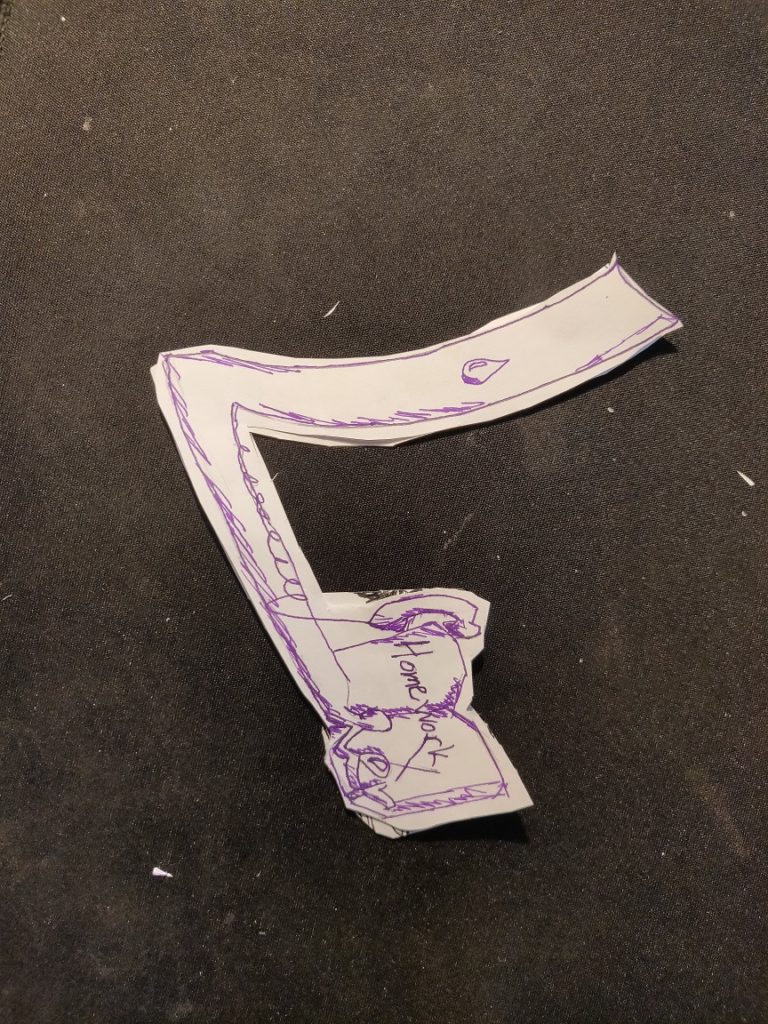
The letter L represents one of the most awful crimes that I have done until now that is very significant to me due to it has changed my attitude toward studying and my understanding of knowledge the most in a positive way. The letter “L” stands for “Liar”. Before I was punished, at some point in my life, I was the worse kind of liar one can think of in terms of skills of telling stories.

The story started when I was in the third grade in elementary school. The amount of homework that teachers gave us was unimaginably large. At least for a 9-year-old. On top of that, I had a totally different attitude toward doing my homework compare to what it is now. I was heavily addicted to television shows. (All kind of TV shows, from news to cartoons to science to cooking.) In order to run away from homework, I only did part of them. Then I would put my unfinished homework between two books on my bookshelf to prevent my parents from discovering my unfinished homework. I also erased my notepad. On the due day, I would simply say that I did not bring them or I lost them for some reason. Surprisingly my stories worked several times, which was of course because of the tolerance that my teachers had on me. I thought naively that I could rely on lying for the rest of my life.

Before the ultimate punishment arrived, I was pulled out of class to complete for several times, but it was useless for me. Until one day, my math teacher Ms. Hu lost her patience on me. On that day I was forced out of class and into Ms. Hu’s office for a phone call to my mom. I denied at first. I tried every excused that my tiny brain could come up with in order to escape. However, the river of destiny kept flush me down the stream. The phone call happened. I cried for the first time in school. This experience was a great impact on my poor young mind. This was one of the darkest days of my life. I did not like this back then, but what could I do other than finishing my assignment with an intense dislike toward Ms. Hu every night?

Things are quite different from where I am standing now. I have to thank Ms. Hu, my poor storytelling skills, and that day. I bore the misery of doing homework for years, and I understood that I am not finishing my assignments for my teacher. I felt guilty about what I have done. I also felt happy that I have lost the ability to lie to everything. This event in my life ignited my passion for studying. It also made studying no longer pressure for me, because understood that every result that I get is according to my work. Every piece of hardworking that made me able to sit in this classroom was all because of this ignition, or the lies that I have made when I was at the age of understanding nothing.

Therefore. I choose the letter “L” to wear. Since it was one of the biggest turning points for me, and it is an experience I should thank and always remember about. It was a crime, but also a gift that shaped me to become who I am now.

Posted in Uncategorized | 1 Comment

Summertime Free Fall

By Sam Gumprecht

I stand with one of my feet gripping the rusty railing, the other firmly mounted to the aged wood of the bridge. My fingers are wrapped one by one around the iron bar tightly. My eyes catch the flitting sunlight on the water down below me as it ripples in little scaley waves. The sunshine in the azure sky warms my back, sharpening my tan lines as I wait. The breeze brushing across my bronzed skin, carries with it the smell of the dirt road and the fresh air of the pines lining the shore of the lake. My hair, that is streaked white from the touch of the sun, coils and waves in the wind. Freckles dot the slight pink of my cheeks like stars on a clear night.

I stand there, hunched over as my eyes catch the sign that clearly states “No Jumping”. But that’s just for decoration I decided as I surge off the wooden bridge. I fling myself out over the water and a small shriek of panic and excitement slips through my smile. My limbs each go a different direction and the feeling of free fall churns my stomach like a whirlpool. My mind goes blank, and for a second I think of nothing.

Before I know it my body plunges into the water and my feet sink to the ice cold depths beneath the surface. It seems to hold me for just a split second and everything seems frozen, as I’m suspended in the moment like someone hit pause. I push up to the air just to let out a burst of laughter mixed with the gurgles of water. Looking back up to where I pushed off just a few seconds before the bridge doesn’t seem as high as it felt looking down. I glide in to the shore and hobble my way back up to the bridge hopping from rock to rock. My suit drips with the fresh lake water as I shiver from the sudden change in temperature. Within a minute I have mounted myself again on the railing and bridge, taken a quick glance at the sign and flung myself off into the water just to feel that little bit of panic and excitement again. I could do this little routine for hours. In this exact moment, at a small bridge on a big lake, in a little town in the middle of nowhere is where I feel most alive.

Posted in Uncategorized | 2 Comments

i’ll carry it for you

We all carry something with us at some point in our lives. The choice we then have to make is if what we carry defines who we are. Everyone carries something different; for some, it’s their sexuality and the trouble they had accepting it. Others it’s their gender identity and the constant struggle of where they belong. For some, it is the childhood trauma they faced at just the ripe and impressionable age of five. Some carry more than others and some are so oblivious and shallow they do not carry much more than their name. There are also those who are overlooked, and in most situations, these are the people who carry the baggage and pain for those around them. They carry the emotional damage of their close friend which simultaneously lives with the pain this absent-minded and selfish friend causes them. They carry this pain silently and without a second thought. Abandonment, resentment, none of these feelings they carry can ever surface. These people are normally the ones who are least needed in the room when the population size is any greater than three, but most needed when the world of one of those people is crashing to their feet around them and there they are to pick it all up and carry those broken pieces.

i carry broken pieces and secrets, and i do so silently. i also write everything personal in the third person, this may be due to the fact i don’t know how to share what i carry, i am never the one who shares. i am simply the one who listens. People don’t carry my pieces, most don’t even know that i’m broken. i have come to believe that this is why i speak in the third person. i never learned how to share my demons, only knew how to tame and care for the demons of those around me. Since i myself never speak, i only seem to comprehend the emotion if i am not the one expressing it. i am the one who listens, the one who gives a shoulder to cry on, who cares for demons and lastly, i am the one who is never wanted until i am needed.

The people who carry for others have odd coping mechanisms and unique ways to take out anger. This is due to the fact that they cannot share the things they carry with others, it is kept bottled deep beneath the surface. Carrying more than your own secrets can feel like you are not only holding the world on your shoulders but the universe, each planet, star and piece of space trash resting on your back. You have become Atlas holding the celestial heavens for eternity condemned to silence. People who carry are trusted but not loved.

Feeling like an outsider in my own life, i tried to break my silence. i tried to express, i tried to share. i had reached out and as soon as i did, i felt a door slammed in my face, nobody believed me. What i had shared with the world seemed to be a semi-truck crashing into a freshly painted white picket fence. It was a never-ending car crash and i had become the victim of every careless driver’s actions.

i decided it was okay that i didn’t matter. i came to terms with the idea that if i left the room nobody would notice, and that was okay. Discovering more in myself and seeing that change can happen. Seemingly overnight my mindset had changed, maybe it was a dream or maybe a bridge in my mind finally connected to its destination but my heart was lighter and my mind seemed to brighten. Waking up with a spontaneous new sense of self a feeling of relief came over me, it was happening. Slowly i pulled each piece that did not belong to my puzzle from my open wounds and patched myself up. Knowing, sure enough, this change i had made would take time and even though my wounds are still open they are healing. i am making progress one step at a time, starting by addressing myself as I. I am just as important as every other person, and it is about time I treat myself as such. I am important.

I will no longer carry broken pieces, and I am okay with being seen as selfish for this. By putting myself and my broken pieces first I am enabling myself to heal. The weight of the universe is not my responsibility. My responsibility is to hold and cherish my star, my small but amazing star, hidden for so long among the planets and stars of others who never cared enough to make sure my star was still shining. I know that I will be told that I am acting differently. That I have changed.

And to that, I will simply smile and say “thank you”.

Posted in Uncategorized | 2 Comments

The Value of a Child

You’re in a post-apocalyptic scenario, you wake up and feel like everything around you is the same, it doesn’t phase you. Then you step outside your house, breath the air, look around, and suddenly notice that everything is different. There is no one walking the streets and ultimately no life to be perceived. It’s just you and your son, you have to do everything to protect him. In The Road by Cormac Perry, it is perceived to many readers that the man takes care of the boy. If you dig deep to understand the whole story, you can find that there are many instances of the boy being the fatherly figure and keeping him sane. The boy is constantly there to support and help his father, whether it is just his presence in the moment or the physical struggles that a post-apocalyptic scenario bears on them. The view of society’s standards on fathers being the leader and the mature one is challenged in this novel which brings light to the importance of the boy. The boy is the only thing that keeps his father sane, his maturity, protective instincts, and caring personality is the reason that they survived as long as they did. The boy is not the fatherly figure in this novel but rather is the rock that holds everything together.

Throughout the novel, ages of the man and the boy are never revealed. It can be depicted for the boy to be around ten years old due to his personality and his childish actions. The boys maturity and humbleness for his childish perception is astounding. He shows much maturity in how he approaches his life scenario. The post apocalyptic life he lives in is brutal and terrifying, through these negative events that he encounters we see many instances of him being the bigger person and persevering through them. Kids in his scenario would not take it lightly, the boy shows emotion yet keeps himself humble through it all. When the boy enters the abandoned house with his father, he recognizes and feels bad for whoever’s house it previously was. He not only thinks of the people on the road who are less fortunate than him but he feels for them; moreover, he recognizes how he also could’ve been in that scenario and is grateful that he has a chance at a better life. The boys caring and mature personality is unwavering, essentially having a more complex and developed look on life than his father does at times.

The boy is constantly showing care and gratitude to the positives that come his way. As previously written, the boy feels for and recognizes the significance of the abandoned house that they encountered and lived in. He finds value in having more freedom than the people shackled in the road but is empathetic towards what they are going through. One specific instance of the boys caring and loving attitude shining is when he sits down at the table with his father. “The boy sat staring at his plate. He seemed lost. The man was about to speak when he said: Dear people, thank you for all this food and stuff. We know that you saved it for yourself and if you were here we wouldn’t eat it no matter how hungry we were and we’re sorry that you didn’t get to eat it and we hope that you’re safe in heaven with god.”(McCarthy 146) When the boy and his father are in the bunker, the boy has trouble picking what to eat first. He sits there staring at his food before realizing that there’s something missing. He asks his dad if they can recognize the soldiers who never were able to eat this lovely food. They sit together and say grace to recognize those who blessed them with this food. His fathers lack of consideration and the boys recognition for those who were not able to eat this food was something only someone who is genuinely caring and mature could understand. The boy values the importance of caring for other people which is what his father seems to lack; however, the father is caring and mature but not to the level that his son portrays.

The substitute of a mother in this novel brings their father-son relationship tighter. They are all each other have and can’t trust anyone other than themselves. Whenever one of them is in trouble or needs help, they sense it, they feel it. There instincts are connected in that they both are interconnected. Since they are all they have, both of them understand each other like no one could  ever grasp. When the father walks into the house that has old clothes and people crouched, peeking at them the man immediately gets out of there. “He Turned and grabbed the boy. Hurry, he said. Hurry. He’d dropped the lighter. No time to look. He pushed the boy up the stairs. Help us, they called.”(McCarthy 111) The man and the boy encountered many naked men and women in the house, one of which was legless to the hip, and his limbs at the bottom were burned black. The boy was frightened and was warning the man the entire time to leave. Once they see the naked people, they run. They got out of the house as fast as they could so they wouldn’t be harmed. A form of realization for the boy was that he had predicted something wrong was happening. He kept telling his dad that “we should leave”, forewarning his father of the dangers ahead. His protective outlook on this scenario shines light to what his personality is like. He recognized something was wrong but his father’s stubbornness caused them to be put in harm’s way.

The boy is the glue that holds his father together, without the boy the man is nothing. Everytime something bad happens to either of them, they turn to each other for hope and guidance. The boys maturity, protective instincts, and caring personality is the reason that they both survived in that life scenario. They would do absolutely anything for each other, which brings me to why the man tries too hard to provide for his son. He is constantly seen putting his son in dangerous situations in attempt to better their lives and get them proper necessities. Whether it is them entering the house with the naked people, having many close calls with the men on the road, or the nights where they light a fire to keep themselves warm but putting them in harm’s way. The boy may not represent the fatherly figure that he plays out to be, but his presence and guidance leads to him showing maturity and responsibility in a role that many people at his age could not display.

Work Cited”Blog Post One: The Old Man.” Stoneridge School, Dystopian Literature, edtech.stoneridgeschool.org/wordpress/dystopian/2014/09/10/the-road-blog-post-1-the-old-man/.

Posted in Uncategorized | 1 Comment

Blurred By Beauty

By Sam Gumprecht

Death blinded by sunlight, a body blurred by beauty and a soldier consumed by nature. These contrasts are examples of the stand out scenes in Tim O’Brien’s book The Things They Carried. In the book, he uses contrast to set off particularly harsh scenes about death and people in the war. By using this technique it makes those specific scenes stand out in readers minds. This uncommon use of contrast in describing traumatic situations gives readers a unique perspective on what he sees, and makes the scenes more emotionally stable rather than gruesome. The way O’Brien talks about the following scenes shows that the war is not simply evil but there is beauty in all bad.

The first scene that O’Brien uses this contrast in is the story of Mary Anne Bell. She is  young naive woman who goes to the Vietnamese jungle to see her boyfriend a soldier in O’Brien’s platoon. But she ends up gaining a whole new perspective by the end of the chapter. She ends up joining the group of green berets and going out into the jungle at night on raids. Instead of focusing on the fact that war took her innocence away and that she might never be the same again after this, O’Brien contrasts this. He softens it with vivid descriptions about how alive and connected to the jungle Mary Anne feels when she’s tip toeing on missions.

The second important scene O’Brien uses contrast in is the death of Curt Lemon. At this point in the story we know next to nothing about this young soldier, except for how he dies. O’Brien paints a scene of nature and the young naivety of Rat Kiley and Curt Lemon, messing around on a break in the battle. Readers can picture themselves dancing under the canopy of the jungle with the young men, it seems almost unimaginable what follows. The particular descriptions O’Brien chooses to focus on such as how the sunlight Lemon’s face, masks the traumatic event of the death. “ I can still see the sunlight on Lemon’s face… and when his foot touched down, in that instant, he must’ve thought it was the sunlight that was killing him.” (O’Brien). His specific choice in words keeps the readers focused the lightheartedness he felt before his death rather than the terrible details. By doing so O’Brien reinforces a feeling of surreality, that the death of Lemon didn’t seem real. As a reader you feel as if you are right there, unaware of the coming atrocity.

The third scene that he uses the contrast in is the chapter on the man he killed. The way O’Brien writes in this chapter and the discussion with Kiowa shows such emotion. The act of killing another human being is a shocking one to say the least and you would expect a scene dedicated to it would match the emotions felt. But it is surprisingly the opposite in the book. O’Brien provides a well written of the man he killed. He provides details of how he physically looked but continues on to write about who the man was, or at least who he imagines him to be. By putting so much personal detail into this gruesome scene, it blurs the bad. Instead of seeing the chaos and crazy that went into the death of the man, readers seem to envision a more peaceful scene. In his description O’Brien describes a literary juxtaposition of life and death. “ There was a butterfly on his chin” (O’Brien) he simply slides this delicate description in with the gorey details of death and the butterfly symbolizing life. By writing this scene this way it seems almost more real to readers. O’Brien could have been blunt and harsh with details about every moment of killing this man. But instead he coupled it with this heart felt description of a person not just a body.

By opposing these difficult memories with such opposite descriptions, the scenes seemed to pop out of the book more than the others. These scenes make an impact on what the readers take away from the book because of how compelling the contrast is. O’Brien strategically placed theses opposites in the book to show how war is not all simply dark but rather there is a light side to the dark you just have to pick it out.

The novel The Things They Carried

Posted in Uncategorized | 1 Comment