Home

When I used to think about what home felt like or looked like, I thought about the house I grew up in. I grew up in the same house until I moved to California when I was fourteen. Coming home used to be walking through the door, smelling hockey tape that infiltrated my senses as soon as I stepped in, hearing my dog barking while nipping at my feet and begging for attention, all while feeling the soft warm glow of cranberry scented candles that were placed all over the house. I reveled in the puck marks on the garage doors, and when my mom complained about it my brother and I used to say, “they’re not dents, they’re goals.” Home used to be hearing my brother shout at the top of his lungs while playing on his Xbox with his friends and my mother and I squeezing together on a one person couch watching whatever was on.

As I’ve gotten older, I’ve realized that the feeling of home was never a place. My family gave me the sense of home. If I were to walk back into my childhood house, it would no longer feel like my home. There are without a doubt changes that have made, most likely to the point where the house I once knew has become unrecognizable. Me, my mom, and my brother make it a home. Before we found a house in California, we had to live in a hotel for a couple months, and while we were cramped and confined in such a tight space, it still had a sense of home. It took me seventeen years to realize that the only thing I’ll ever need is my family in the same place for it to feel like home. It’s part of the reason that being at boarding school is so difficult. My mom is still in California, while my brother is going to university in Toronto, and I’m here, in rural Maine. It’s been four months, almost five, since we’ve all been together in the same place and I am more excited to return to my home.

Posted in Uncategorized | 1 Comment

Desensitization

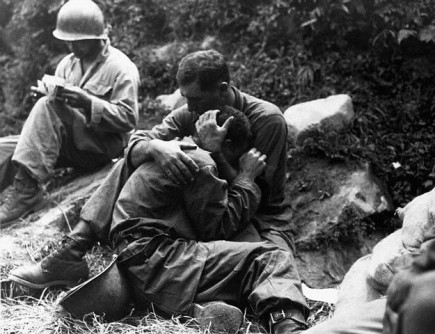
The definition of desensitization reads as follows; the diminished emotional responsiveness to a negative, aversive or positive stimulus after repeated exposure to it. In simpler terms, it means to emotionally detach yourself from a situation or person to protect yourself. An example of this is when a soldier goes off to war. Soldiers often become desensitized due to the atrocities they might be asked to commit or have to witness and they emotionally detach themselves from the situation, this is also referred to as PTSD. Another example of people coming desensitized is everyone exposed to the media, especially as a modern society in North America. When we watch the news, more often than thot another tragedy just took place, whether it’s another school shooting, or another murder due to gang affiliation in rough cities like Compton or Detroit. Whenever we see such headlines we think that it’s sad but we don’t dwell on it. We immediately move on and forget or another one of these atrocities happen.

Desensitization can also be called PTSD which more people are familiar with. We often see cases of PTSD in soldiers who have been deployed. PTSD can be defined as a person who has difficulty recovering after experiencing or witnessing a terrifying event. “The condition may last months or years, with triggers that can bring back memories of the trauma accompanied by intense emotional and physical reactions. Symptoms may include nightmares or unwanted memories of the trauma, avoidance of situations that bring back memories of the trauma, heightened reactions, anxiety, or depressed mood. Treatment includes different types of trauma-focused psychotherapy as well as medications to manage symptoms.” (Mayo Clinic).  Sometimes when people are exposed to such horrors it is near impossible to process it as it is happening because it is human nature to survive and you can’t move forward and keep going if you have to process your best friend being killed right next to you. Desensitization becomes a coping mechanism meant to keep you going but eventually you’re going to have to face your demons and confront your fears and combat whatever emotional trauma has been thrown your way. One way or another your truth will be revealed and your past will come back but it is your choice whether or not you let it haunt you.

Paul D, a character in Toni Morrison’s Beloved describes his heart as a tin tobacco box. Throughout the book Paul D goes through hell, from being a slave at Sweet Home to being a prisoner, his emotional trauma eventually became too much to the point that he felt as though he needs to lock his memories and emotions from that time period in a box.  “It was some time before he could put Alfred, Georgia, Sixo, schoolteacher, Halle, his brothers, Sethe, Mister, the taste of iron, the sight of butter, the smell of hickory, notebook paper, one by one, into the tobacco tin lodged in his chest. By the time he got to 124 nothing in this world could pry it open.” (Morrison 133). He does this to protect himself so he doesn’t have to deal with his past. He wasn’t emotionally ready to face his fears and confront what happened head on so he kept everything buried deep inside. There are consequences to his actions. Due to this process, he also lost a big part of his humanity since he is actively giving up his  ability to empathize and sympathize with others. “By the time he got to Ohio, then then to Cincinnati, then to Halle Suggs’ mother’s house, he thought he had seen and felt it all. Even now as he put back the window frame he had smashed, he could not account for the pleasure in his surprise at seeing Halle’s wife alive, barefoot with uncovered hair—walking around the corner of the house with her shoes and stockings in her hands. The closed portion of his head opened like a greased lock.” (Morrison 119). He has been desensitized for so long that he can no longer open himself up and begin the grieving process, he needs the help of Beloved and Sethe to show him who he can be. He has the potential to be a good father as well as partner but he needs to open himself up to his past to move past it and reach his full potential.

Posted in Uncategorized | 1 Comment

It Was Not Just Her Fault

It Was Not Just Her Fault

A tragic hero is defined as “a person who must evoke a sense of pity and fear in the audience. He is considered a man of misfortune that comes to him through error of judgment.”

In the novella Maggie: A Girl of the Streets by Stephen Crane, the main character Maggie can be defined as a tragic hero because she falls due to her error of judgement in people.

Maggie grew up in a tenement house with alcoholic parents,  a younger baby brother who died due to being neglected and an older brother who who got into many fights and defied laws. This household set the track for Maggie’s life, and defined her future regardless of who she was. Her parents would constantly be fighting and swearing at each other saying “Go teh hell.” (Crane 15) or be severely intoxicated and tearing up their house and destroying the furniture. This irradical type of behavior became normalized to Maggie, it was all she had known.

Through Maggie’s parents poor examples of how a person should act she saw Pete as “the beau ideal of a man.” (Crane 37) even though it was made clear to the reader he was not. Maggie was captivated by his charming looks, wealthy aristocratic vibe, and his brave heroic stories. On Pete and Maggie’s first date Pete brought her to an orchestra which she thought was a luxurious place, but was actually a hangout for prostitutes. Maggie thought Pete had proper manners when in reality he was very rude to the waiter who he had ordered beers from. When the waiter brought out the beers to the couple, Pete said “Say, what deh hell? Bring deh lady a big glass! What deh hell use is dat pony?”. (Crane 32) Pete’s ignorance towards others is shown when he does this, however “Maggie perceived that Pete brought forth all his elegance and all his knowledge of the high-class customs for her benefits. Her heart warmed as she reflected upon his condescension.” (Crane 32) Based on Pete’s actions, it is clear to the reader that Pete is not a gentleman, yet Maggie does not see this and thinks he stood up for her and was respectful but this is only because her parents had set bad examples about how a person should act. Maggie’s hamartia is shown through her inability to see who the true Pete is. Maggie is unable to understand who Pete really is because she is blinded by her infatuation towards him, and this inability to recognize his faults is what leads to her downfall.

Secondly, Maggie’s other tragic flaw is shown when she completely relies on Pete. Maggie’s downfall first starts when she became raveled in the fun of the dime museum, the Central Park Mengaries, and the Museums of Arts. On nights when the couple would go to plays, Maggie would connect herself to the “heroine who was being rescued from palatial home of her guardian, who is cruelly after her bonds, by the hero with the beautiful sentiments.”. (Crane 40) Maggie preserves Pete as the hero taking her away from her wretched home, and giving her joy. With all this happiness that filled Maggie, she became relient on it and looked to her partner to give her this happiness as “she leaned with a dependent air toward her companion. She was timid, as if fearing his anger or displeasure. She seemed to beseech tenderness of him.”. (Crane 57) Maggie’s inability to see who Pete truly is and her loss of self reliance while with Pete are the reasons for Maggie’s downfall in her story because she loses herself and her ability to not rely on others to survive. However, though the examples of hamartia lead Maggie to be viewed as a tragic hero, her downfall was not completely her fault. Throughout Maggie’s life she was never shown nor taught what a true, loving relationship looked like. Maggie only saw the toxic ones that her parents had, or the sex based relationships that her brother Jimmie had. These relationships that Maggie witnessed did not have love or enjoyable, fun dates to the Central Park Mengarine. Maggie’s parents and her brother Jimmy’s relationships created the image of a relationship for her. But, when Pete offered her a type of relationship where he took her on dates, and told her he loved her Maggie believed that she had found something very special and became completely reliant on him because he showed her joy in life outside of the tenement house which she had never known before: “So long as Pete adored her as he now said he did. She did not feel like a bad woman. To her knowledge she had never seen any better.” (Crane 58) Maggie’s parents and Jimmie can be blamed for part of Maggies downfall by setting bad examples of relationships. On the other hand, Pete is also to blame because he used Maggie for sex and was only fascinated by her looks and not building a loving relationship. Pete only made compliments to Maggie about the way her body looked: “Mag, yer a bloomin’ good-looker, he remarked, studying her face through the haze.”(Crane 58) and never about how he enjoyed going on the dates with her. During the dates the narrator describes Pete to not being interested in being out with Maggie, “ Pete did not appear particularly interested in what he saw. He stood around looking heavy, while Maggie giggled in glee.” (Crane 37) Yet, when it comes time for kissing Maggie, Pete immediately gains interests and tries to smooch her. The compliments only about her body and the lack of interest Pete had on his dates with Maggie are prime examples of Pete’s bad intentions. When he expected a kiss from Maggie this showed the reader that Pete was really trying to get in the bed with Maggie, and would even tell her he loved her to do it. Pete’s bad intentions in his relationship with Maggie is what makes partly responsible for Maggie’s downfall.

Though Maggie is considered a tragic hero because of her lack of judgement in people, her downfall is not entirely her fault because she was never taught what a loving relationship was and because Pete was a manipulative man who was in the wrong for tricking and using Maggie by saying he loved her.

Posted in Uncategorized | 1 Comment

THE ROAD —- Growing Up in A Nutshell

Even though the novel THE ROAD by Cormac McCarthy may not be the most accurate and classic post-apocalyptic novel due to the world it describes being too fictional that human exists even though every other species has gone extinct, it is definitely a novel that reflects on growing up and the relationship between parents and children. In the novel, the boy learned to be independent, experienced leaving his dad whom he loves, and he and his dad developed gaps due to their different values and identities.

The son and the dad in the book are nameless, which suggests Cormac McCarthy intended to uses them as universal examples for a parent and a child. The son in the novel grows significantly more independent as the story progresses. Being independent is an important aspect of being an adult. The boy shows his independence in his language. After he and his father left the bunker the boy questioned his dad about what their “long term goal” was (McCarthy 160). The phrase “long term goal” is not what a child would use normally. Let alone a kid that has grown up in the ashes and has never been educated formally. This phrase is not here for nothing. In the real world, there are examples that a parent would be surprised by a child’s mature action; Many readers should have experienced, as children or as parents, similar occasions. Cormac McCarthy put this language here to indicate the growth of the son. Different from his father, the son’s maturity hasn’t taken away his ability to empathize yet. People in the world of the novel shows an extreme lack of empathy. They always put themselves first before others, which is going to be true in an uncivilized world with extremely limited resources. The boy, however, possessed some empathy from some mysterious place. Near the end of the book, a poor guy took away all the stuff that the man and the boy had. The man commanded him to give them all of his stuff with what he stole. The man didn’t think he killed the guy, but the boy reminded him “But we did kill him” (McCarthy 260). People, like every other creature in the world, are born for themselves. Being able to put themselves into other’s shoes is an important skill that a person in a civilized world should learn. From the beginning of the book, the boy has had this ability, but this was the first time that he was able to convince his father to do something, and the man put the the thief’s things back onto the road. The boy is now able to do something with his empathy, which is a sign of having a matured mind.

When people grow up, they always have to face a step of leaving the people they love, especially their parents. Leaving parents can be heartbreaking, but people have to face it, and often a parent will encourage a child to leave them. This phase is also represented in this novel, though in a more dramatic way. The force that separated them was death. When the man was dying, he didn’t want his son to stay with him untill his last minute. Rather, he told the boy that “[The boy] needs to go on, I can’t go with you. You need to keep going. You don’t know what might be down the road. We are always lucky. You’ll be lucky again. You’ll see. Just go. It’s alright” (McCarthy 278). The boy’s reaction was natural, he didn’t go. They are carrying the fire, just like people carrying the torch of the Olympics that they pass on. The man, like every parent, asked his child to leave him and keep carrying the fire into the unknown even though the parting must have hurt him and his son. If everything stays the same, no one would want to and need to leave the person they love, but the world is not like this. Leaving is an unavoidable stage of growing up, and THE ROAD shows this.

Growing up is not always a smooth process. Each individual has different values and identities. This is especially influential in a parent-child relationship because the relationship is usually very close and the age difference is usually very large. The man and the boy both value different things, and Cormac McCarthy amplifies this by putting them into a world that is always full of pressure and decisions that were to be made. Any differences they have are going to have a big impact on their relationship but the man always forgives the son. The New York Times article Left Behind describes one example, “The son, born after the sky opened, has no memory of the world that was. His father gave him lessons about it but then he stopped” (Kennedy). Their generational gap is so huge that the man could not really give the son a sense of what the past was. In real life, it is also hard for a parent born in the 1980s to teach a child that was born in the 2010s how a floppy disk worked or what a flip phone could do. Beyond the generational gap, the boy also had different beliefs to the man because the boy was protected and the man was protecting. The boy never wanted to take the pistol —- a tool the man used to protect his son. When the man went onto the ship to collect supplies, he gave the pistol to the boy. After he came back he asked the boy for the pistol but “the boy froze. He looked terrified” (McCarthy 232). He threw the pistol away because he was the one that was being protected and he didn’t want to accept the benefit to surviving of the pistol is higher than its negativity of killing. After the man found the pistol, “he aligned the cylinder for the true cartridge to come up” (McCarthy 233). He is always ready to protect his son despite the fact that the son made a mistake to him. In the real world, every child has let down their parent, but their parent usually chooses to not blame the mistake on their child and keep loving their child.


THE ROAD by Cormac McCarthy is a work that reflects the process of growing up. Cormac McCarthy wrote at the beginning of the book that it is dedicated to his son John Francis McCarthy, which suggested that the book is about a parent-child relationship. Throughout the book, Cormac McCarthy has placed many elements into the novel to imply to us that this novel is not about the fact of the world ending, but about a story of growing up, that has been dramatized by the post-apocalyptic world.

Work Cited

Kennedy, Willam. “Left Behind.” Sunday Book Review, 8 Oct. 2006.

Posted in Uncategorized | 1 Comment

Dependence and Destinies

Across many types of literature that have a universal theme, do you have a say in what happens to you? In other words, is your life dictated by your fate? Or do your actions and decisions shape you. In Maggie: A Girl Of The Streets written by Stephen Crane both Nellie and Maggie depict what it is like being a woman in 19th Century New York City. Although both women are “cut from the same cloth”, they go about their lives in completely different ways. Maggie lets her upbringing which was filled with abuse and neglect dictate her life while Nellie is solely dependent on herself and has become financially stable and respected which shows that you dictate what happens to you and you have a say in what course your life is going to take.

Maggie never had the picture perfect upbringing. She grew up poor, with an alcoholic mother and an abusive father. Even her own brother wasn’t in her corner supporting her. Maggie didn’t have the ideal childhood to grow up and be successful but not many people do. Everyone has baggage, nobody has a perfect life. However, she let her past dictate her future. She grew up feeling useless and that she didn’t matter and that carried over to her adult life. Maggie had “none of the dirt of Rum Alley… in her veins.” (Crane 9), she wasn’t tough or strong spirited like her brother was, not that Jimmie was an ideal role model but he took care of himself and make a life for himself. Maggie wasn’t the type of girl to stand up for herself and what she wanted.  Maggie never had hope for herself until she met Pete. Pete was everything she wished she could be or had. He wasn’t wealthy but he was comfortable financially. He could have been able to support her in every way. Maggie saw him as a gentleman and what a man should be but in reality he was nothing special, he was just another guy who wasn’t polite. Maggie saw him as better than he was since all the men in her life are the worst of the worst. Maggie wants a better life and she thinks being with Pete is the way to get there.

Nellie can be described as a person with “brilliance and audacity”. Although we don’t know the conditions in which Nellie grew up we can infer that she didn’t have the picture perfect upbringing either since she ended up being a prostitute. Nellie chooses not to rely on anyone, especially a man. The first time Maggie laid eyes on Nellie she instantly noticed how she held herself, “. . .took instant note of the woman. She perceived that her black dress fitted her to perfection. Her linen collar and cuffs were spotless. Tan gloves were stretched over her well-shaped hands. A hat of a prevailing fashion perched jauntily upon her dark hair.She wore no jewelry and was painted with no apparent paint. She looked clear-eyed through the stares of the men(Crane 64). Nellie didn’t have to stoop down to anyone’s level, she elevated herself. She was confident in herself and didn’t let anyone push her around or just have their way with her. Throughout Maggie’s relationship with Pete, she tried to become everything she wasn’t in order to impress Pete. “She envied elegance and soft palms. She craved those adornments of person which she saw every day on the street, conceiving them to be allies of vast importance to women.”(Crane 36) She didn’t think that her true self would ever be enough for Pete so she tried to appear wealthier and more polite. She put up a facade of being apart of a higher class than she was.  Throughout the book we can see that Maggie is consistently in awe of Pete but Nellie only sees him for what he’s worth; money. Maggie and Nellie both end up becoming prostitutes but for completely different reasons. Nellie becomes a woman of the streets because she sees it as the best way of supporting herself and Maggie becomes a prostitute in hopes of finding her prince charming to give her a better life.

The readers aren’t the only ones who can see the major differences between Nellie and Maggie, Pete also realizes this. It becomes very clear to Pete early on that Maggie depends on him and needs him to survive so when he had his first encounter with Nellie, he was drawn in by her bold and confident personality. Soon after their first meeting, Pete becomes interested in Nellie because he realizes that Nellie can give him what Maggie never could. He’s intrigued by how strong of a woman she is and how self-reliant she is. He isn’t accustomed to knowing this type of woman.  Now that Maggie has no one to support since her family completely kicked her to the curb and now Pete has abandoned her she is compared to a dog by the author. At this point in time she can be described as a girl with no sense of identity or direction who completely relies on those around her. “Three weeks had passed since the girl had left home. The air of spaniel-like dependence had been magnified and showed its direct effect in the peculiar off-handedness and ease of Pete’s ways towards her” (Crane 65). This metaphor can sum up Maggie’s entire existence, always depending on somebody else to provide for her and never taking the initiative to take care of herself like Nellie did. Maggie was incredibly naive in thinking that someone would swoop in and give her this incredible life she always dreamed of and she never realized that she needed to work hard to get what she’s always wanted.

Both Maggie and Nellie led the same life to a certain extent. They both ended up being prostitutes but their motives behind it were polar opposites. The endings to both of their stories as far as the book is concerned can completely sum up how different they are. We are unclear on how Maggie dies but we can infer that she was either murdered or she killed herself but the final scene we see Nellie in she is walking away from Pete grinning like a cheshire cat with Pete’s money leaving him drunk and vulnerable at the bar. Nellie never let her childish whims get in the way of what she had to do. All of us are “cut from the same cloth” but it is our choice how we choose to deal with the hand of cards that life dealt us.

Posted in Uncategorized | 1 Comment

The Competitor

My body became engulfed by the weight of my feet, and I started to slow down. The sun seemed to be beating harder on me, the rays stinging into my back, I felt a light burning sensation. Sweat dripped down my forehead and onto my cheek and into my mouth.  A gust of wind whipped by and I was brought back to reality. My hair plastered on my wet cheeks, my eyes focused on the road ahead, and my speed picked up. My mind was blank, focusing entirely on the rhythm of my movements.

The whistle was blown, and I was off, down the endless road. I had a strong start, and my biggest competitor was beside me. We have struggled through races before, but this time I would beat her. I took longer strides, and the distance between the two of us enlarged. The dust of the road engulfed everybody as we trampled to the half mile marker. The once large clump of people, all zooming at the starting point began to separate from one another. The transition of terrain occured at the half mile mark. I was now fighting the uphill battle over the rocks and through the trees. My toes ached from running straight up and around a mountain. I felt the urge to stop, but I didn’t. “It had only been a mile and a half.” I told myself. My stomach was turning, and the heat had started to get to me. I wanted so badly to stop. “Keep going.” I kept telling myself. Still fighting my way through the woods, I tripped and fell over a tree stump. I was frustrated about this, but got up and still kept going. My back began to hunch and my head was now tilted downward. I was staring at my feet, my mind focused on nothing. I was exhausted, and it felt as though I was trying to carry my own body. My pace was slower, and the heat struck me more. “Two miles. Only one left” yelled the volunteer. I could see the street road and the volunteer just ahead, through the last couple feet in the woods.

My mind clicked back on. I forgot about my exhaustion. My head came back up, I tilted my shoulders back and I started to race. Having paid no attention to my surroundings, I had lost sight of my competitor. I then noticed she was ahead of me. I thought to myself about the one mile I had left. “This was the last stretch. This is where I give it my all.” My words constantly played over and over again in my mind. I raced hard, catching up to my opponent. I felt as though I had never run faster in my life. We were now neck in neck with 150 yards to go. She started sprinting, but my legs wouldn’t let me. They continued to hold me down.  With 100 yards left, I pushed hard to be ahead of her. She was only a couple steps in front of me. I dug deep for my last 100 yard stretch. I could just touch her. My fingers spread out pulling me towards the finish line. I was ahead of my competitor by a hair. Now, I was a couple steps ahead. I crossed the finish line, and as I crossed, a line from “All I Do Is Win” played and I ran through with my hands high in the sky. At the end of my race, I got my time of 22:50. My competitor, PR, came in at 23 flat. I had finally beat her. My perseverance through my race, and my accomplishments make me feel alive.

Posted in Uncategorized | 1 Comment

Nothing and Everything

Feeling alive is not something that can be described or put into a specific sentence or words, for me it’s more than that or less than that. It’s that spur of the moment feeling that comes out of nowhere and can leave just as fast as it came. That second of recklessness that comes over you as you do something you know you will regret, but the memory will become one of your favorites.

There is no emotion that describes feeling alive, there is no word or words you can string together in a comprehensible sentence to make anyone else understand. It is a feeling inside your body that most times you can’t even understand yourself. The feeling comes rarely and leaves quickly, leaving you breathless and confused like an unexpected and unexplainable slap to the face that you don’t feel until it’s over when the sting burns your check for those short seconds and when the shock fades you no longer know what it feels like and forget the feeling until the wind winds itself up once again to caress your face once more.

For everyone, their “alive” moment is different, for many athletes it’s the drop of the puck, the crack of the backboard, or the gunshot fired into the sky. I could say any of those are my moment but that would only be cliche, and not completely accurate. My sport is not my alive moment it is my happy place. The difference between the two concepts is that in my alive moment, joy is not always my primary emotion, in fact, it rarely is. In my alive moment, joy and happiness are usually not my primary emotion, it’s fear or anxiety even anger. Joy is not my alive it does not stir every nerve in my body making me tremble, shake or jitter. No, joy is much too calm for that.  

Joy is undeniable happiness that feels like a warm hug under a cozy blanket on a cold day. Joy is the sunshine kissing your face while your body rushes with warmth and happiness as those sunshine kisses fulfill the broken cracks in your heart. Joy makes you whole once again after longing and sadness after feeling incomplete and torn down. Joy is different than being alive. Someone can be happy and joyful and have never felt alive.

Yes, nothing makes me feel alive. The feeling of everything at once that numbness that controls your body that can make you feel nothing, yet everything all at once. That is my alive moment. It is nothing. It’s not a moment but there is no word for that feeling, there is no warning, nor caution to warn your body for that overwhelming feeling lurking just beneath the surface of your skin. It is nothing. How are you supposed to label that? The sensation running through my bones as I do something so ordinary and that could happen one hundred more times but all those other times won’t give me the same feeling. It is nothing, but an irrelevant section of time, one that was wasted. That wasted moment of my time is one I will cherish for as long as I can remember. That second is so irrelevant except for in the moment. At that point, it is my everything, my world, and all that is inside me, then it is gone. Never to be touched, seen or felt again.

That moment will be nothing but mean everything, it is my alive.

That moment of adrenaline rushing through your body as you run down the stairs out the door disregarding the coat hanging directly next to you, but in your excitement, a coat is the least of your concern, the furthest thing from your mind. The last thing your thinking of is how you will be standing in the dark shivering cold but even then it won’t concern you.  The million other things rushing through your brain seems so natural, yet all these thoughts, but your mind still seems blank. There is nothing to think about, except for everything.

Posted in Uncategorized | 1 Comment

Nick Carraway; The Doormat

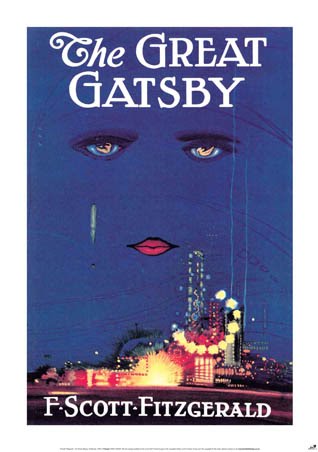
I love Nick Carraway, the narrator of F. Scott Fitzgerald’s The Great Gatsby, very dearly. But even though he is a character I hold very close to my heart, one thing can not be denied: his passivity as a person. Though some people may say that Nick’s passivity was willful, and that he chose to ignore the lives of his friends crashing down around him, Nick really didn’t have the ability to stop it. His passivity was so ingrained into his being that he didn’t ever have the chance to change anything, and can not be held any more responsible than anyone else for the tragedies that occurred.

Nick Carraway, at his very core, is a doormat. Though Nick tends to mean well, he rarely has the courage to speak his mind, nevermind contradict someone. He rarely even has the contradictory thoughts at all- he is so conditioned to follow along that it doesn’t occur to him to think differently than the people he cares about.

Through all he said, even through his appalling sentimentality, I was reminded of something- an elusive rhythm, a fragment of lost words, that I had heard somewhere a long time ago. For a moment a phrase tried to take shape in my mouth and my lips parted like a dumb man’s, as though there was more struggling upon them than a wisp of startled air. But they made no sound, and what I had almost remembered was uncommunicable forever(Fitzgerald 112).

Nick has this one moment, as Gatsby tells him about his past with Daisy, where he may have had the means to stop this. The warning is there, at the tip of his tongue, before it is ‘uncommunicable forever’- his moment is gone, and he longer has the physical or emotional ability to hold responsibility for everything that comes after. If one does not have the means to stop something, how could we hold them responsible? His relative inexperience with the gaudy wealth and fast pace of the city leave him feeling like he needs to take a backseat to those who are more experienced, namely Daisy and Gatsby, which leads him into many a situation. One example of this is when he goes out to eat lunch with Gatsby. Together they interact with a shady man named Meyer Wolfsheim. During this lunch, Wolfsheim points out his cufflinks. “‘Finest specimens of human molars,’ he informed me. ‘Well!’ I inspected them. ‘That’s a very interesting idea’”(Fitzgerald 73). Nick’s passivity is immediately clear. Even though a very suspicious person has shown him jewelry composed of parts of a human body, no shock or horror is apparent in Nick’s outward appearance, and more importantly, in his head. Nowhere in this situation does Nick have any opposition in his mind to literal human teeth, and this attitude is telling of his character as a whole. When Daisy and Gatsby do something that may seem jarring or off-putting to the reader, Nick is too far gone in his world of passivity to even consider challenging them.

This attitude is magnified when it concerns someone that Nick truly cares about. While at rare moments he may silently, or even more rarely, openly disagree with Tom Buchanan, Daisy’s husband, he strongly dislikes Tom. In the world that Nick presents to the reader, Daisy and Gatsby are the shining stars. Nick has an intense dislike for the money around him, except for Gatsby. “I wanted no more riotous excursions with privileged glimpses into the human heart. Only Gatsby, the man who gives his name to this book, was exempt from my reaction-Gatsby, who represented everything for which I have an unaffected scorn”(Fitzgerald 2). This shows Nick’s hatred for the wealth, but how even though Gatsby embodied it, he had respect and strong affection for him. Gatsby embodied everything he hated, and Nick loved him anyways. This is important because it shows Nick’s desperation for human connection, and how Gatsby gives it to him. With this reliance on Gatsby, Nick is terribly afraid of offending or hurting him, and never even considers contradiction. In Nick’s eyes, the way to keep his friend happy is to agree with everything he says or does, and support him in it.

Though Nick has a fierce love of Gatsby, his feelings for Daisy are more complicated. He admires her- he oftens talks about the beauty of her voice, the strikingness of her person- but he also resents her. He sees her with the disdain that Gatsby escapes in his eyes. In many instances, he refers to her wealth with snark and clear dislike of it- but it doesn’t stop him from loving her as a cousin, and as a force to be reckoned with.

With all of this combined- his love for Gatsby and admiration blurring his judgement, his people pleasing personality, and a physical inability to contradict people due to a life of agreeability, Nick can not be held accountable for the contents of this novel. Nick is trapped in a world of ‘uncommunicable’ truths- If one does not have the means to stop a tragedy, how can we blame them for it?

Posted in Uncategorized | 1 Comment

The Realization

The American Dream can be defined as the ideal by which equality of opportunity is available to any American, allowing the highest aspirations and goals to be achieved. Many people across the world leave their home and their families to fulfill their dreams of being successful. The Great Gatsby written by F. Scott Fitzgerald depicts both ends of the spectrum of the American Dream: a comfortable and typical upbringing in the Midwest to being a self made successful socialite in New York City. There isn’t a single definition of the American Dream, it depends on the person. Someone could have everything they could ever want or need in life and others are more than happy leading a more simple life. Throughout the novel, we see Gatsby get everything he’s ever wanted but still crave something more, on the other hand, we see the more realistic Nick who observes Gatsby’s situation and decides that he doesn’t want to spend the rest of his life unhappy with what he already has.

Gatsby spent his whole life looking for something more. He came from a humble upbringing and by chance started working for a wealthy man. His rise to fame included several crimes. Despite everything he has obtained in his life, a ridiculous mansion and lumps of money, he still yearns for something more. The first time we see Gatsby, Nick sees him on a dock in the dead of night reaching out towards a green light, “But I didn’t call to him for he gave a sudden intimation that he was content to be alone–he stretched out his arms toward the dark water in a curious way, and far as I was from him I could have sworn he was trembling. Involuntarily I glanced seaward–and distinguished nothing except a single green light, minute and far away, that might have been the end of a dock” (Fitzgerald 17). Our first look at Gatsby is of him reaching out for more, which we end up finding out is Daisy, his first love who also happens to be the one that got away. Gatsby was born a dreamer, he didn’t grow up being around money or having a lot of wealth like Tom and Daisy, were but throughout his life he has been always working for something more, something better.

Gatsby spends a significant portion of his adult life chasing his version of the American Dream which is his relationship with Daisy. Before Gatsby obtained his self-made fortune, he was a soldier in World War 1. He had met Daisy in Louisville, Kentucky where he fell in love with her wealth and her beauty. Before he ended up leaving for war, Daisy had promised to wait for him until he returned home. Gatsby was scared to tell her about his upbringing since he thought that that would turn her away, so he worked hard to become attractive and desirable for Daisy. He spent many years trying to become equal to Daisy so they could be together but Daisy ended up marrying Tom Buchanan who was a man worthy of her wealth and beauty according to society. “His heart beat faster and faster as Daisy’s white face came up to his own. He knew that when he kissed this girl, and forever wed his unutterable visions to her perishable breath, his mind would never romp again like the mind of God. So he waited, listening for a moment longer to the tuning fork that had been struck upon a star. Then he kissed her. At his lips’ touch she blossomed for him like a flower and the incarnation was complete” (Fitzgerald 143). Daisy becomes Gatsby’s version of the American Dream. If he has her he becomes the person he’s always wanted to be. On the flip side, she will never live up to his expectations. No woman ever could. Gatsby and Daisy don’t end up together, thus, his American Dream was never realized.

Throughout the book, we see Nick come to the realization that Gatsby’s version of the American Dream might not be worth it. At the beginning of the story, we almost get a sense that Nick is envious of Gatsby and everything that he seems to have but Nick ends up coming to the realization that Gatsby wants something he can never truly have. He eventually becomes the only person in Gatsby’s inner circle who truly understands him, “Gatsby believed in the green light, the orgastic future that year by year recedes before us. It eluded us then, but that’s no matter—tomorrow we will run faster, stretch out our arms farther. . . . And then one fine morning— So we beat on, boats against the current, borne back ceaselessly into the past” (Fitzgerald 189). Nick sees that the recurring green light ultimately ends up in the valley of ashes. He sees Gatsby’s chase as a tragedy because he knows that there’s no way that Gatsby and Daisy will ever end up together since life got in the way. It seems that it is better to dwell in the comfort of simplicity than shoot for the stars and not reach the desired destination.

Posted in Uncategorized | 1 Comment

The Glittering Avenues of Maggie: A Girl of the Streets

In the novella Maggie: A Girl of the Streets, Stephen Crane uses the concepts of light and color to move the plot and set the tone of the scene. Three examples of this in the work are the dance hall scenes, the descriptions of Maggie and Jimmie’s home, and Maggie’s progression through the city in chapter XVII. Crane uses recurring phrases and concepts to better show the perceived opulence of the wealthier areas, juxtaposed with the dreary darkness of the slums.

In this novella, when Crane chooses to add a description of color or light, it is purposeful. Color and light signify opulence, monotone descriptions show poverty, and red specifically is used to show anger and demonstrate the tie between their house and hell. One of the places where this is most clear is in descriptions of Maggie and Jimmie’s home, and the tenement house. “A glow from the fire threw red hues over the bare floor, the cracked and soiled plastering, and the overturned and broken furniture” (Crane, 15). This use of red light succeeds in making the house feel Hellish, and clearly showing the threat that Mary is to the family. This is a recurring theme, in Chapter VI, Mary is described as “Maggie’s red mother”(Crane 30), again to show the anger and fear that Mary imposes on the family.

Another instance of Crane’s use of light and color to set the tone and move the plot forward is the direct juxtaposition of the tenement house and the dance halls. At the end of Chapter VI, Pete comes to the apartment to pick up Maggie after she and her mother have had a fight.

When Pete arrived Maggie, in a worn black dress, was waiting for him in the midst of a floor strewn with wreckage. The curtain at the window had been pulled by a heavy hand and hung by one tack, dangling to and fro in the draft through the cracks at the sash. The knots of blue ribbons appeared like violated flowers. The fire in the stove had gone out. The displaced lids and opened doors showed heaps of sullen grey ashes. The remnants of a meal, ghastly, like dead flesh, lay in a corner. Maggie’s red mother, stretched on the floor, blasphemed and gave her daughter a bad name. (Crane 30)

These descriptions of various items around the tenement, all in tones of gray barring the blue flowers and red mother, are set in place to show the hopelessness of the situation, with the blue flowers a jarring effect to show the stark contrast to the home with any source of light and color, and the red of the mother to show her anger, while the absence of light from the fireplace furthers the desperation. In contrast, the very next paragraph, the beginning of Chapter VII, juxtaposes this entire section to the light and colors of the dance hall. “An orchestra of yellow silk women and bald headed men on an elevated stage near the centre of a great green-hued hall, played a popular waltz”(Crane 31). While color, or lack thereof,  was used to show desperation and impoverishment just before, the descriptions of the dance hall invoke a sense of opulence. The vivid colors show a brilliance and hope for the first time in the story, and further the plot by opening Maggie’s eyes to the ‘riches’ that she is so certain Pete holds the key to. Setting these two paragraphs one after the other shows a stark difference between Maggie’s home life and Maggie’s life with Pete, and is used to show us as the readers why Maggie chooses to leave her house and family for him. Where at home she has darkness, shades of grey only broken by the red of her mother’s ferocity, with Pete she is exposed to color, light, and hope.

One final example of Crane’s use of light and color to show development and tone is in Chapter XVII. In this chapter, we are shown Maggie for the last time, as a prostitute looking desperately for work. She begins her search watching higher-class people exit a show. They are merry, chattering among themselves as they forge their way through the rain, and Crane describes “electric lights whirring, shedding a blurred radiance”(78). Following this, Crane focuses the reader’s attention to a “handful of wet wanderers, in attitudes of chronic dejection”(78), under “mingled light and gloom”(78). Already the difference between the brilliance of the show and the dejection of the people in the park is clear, using just this difference in lighting. Following, Crane uses the recurring phrasing of ‘glittering avenues’ to show Maggie’s descent through the city. “She passed more glittering avenues and went into darker blocks”(Crane 79). He is using the light to directly show her path from the evident light and happiness of the theatres to the rougher, more impoverished and dangerous areas of the city. As she descends further, she comes across “gloomy districts”, “tall black factories”, and eventually, “the blackness of the final block”(Crane 80). The use of gloom first, and then blackness, shows the desperation and danger of her job, and what she is forced to do to survive. In the last paragraph of this chapter, the river appears a “deathly black hue”(Crane 81). This last use of blackness in Maggie’s experiences shows us her hopelessness, and eventual downfall.

Maggie’s descent, both physically into the depths of the city and metaphorically, is clearly marked by the ongoing and slowly creeping darkness described by Stephen Crane. He uses gray tones to set a bleak tone for the tenement housing and show the anger of Mary, and juxtaposes this with the apparent radiance of the dance halls. He uses to color to forge sympathy for Maggie and lead the reader to understanding her choices and how hope was given to her at the dance halls, and uses light to signify her eventual downfall.


Posted in Uncategorized | 1 Comment