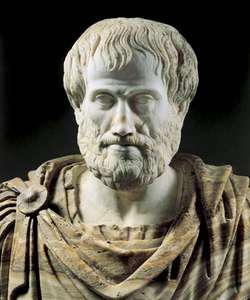
According to Aristotle, a tragic hero is “A person who must evoke a sense of pity and fear in the audience. He is considered a man of misfortune that comes to him through error of judgment”(“Tragic Hero – Examples And Definition Of Tragic Hero”). Aristotle also defines the characteristics of a tragic hero as the following; Hamartia, a tragic flaw that causes the downfall of a hero; hubris, excessive pride and disrespect for the natural order of things; peripeteia, the reversal of fate that the hero experiences; anagnorisis, a moment in time when the hero makes an important discovery in the story; nemesis, a punishment that the protagonist cannot avoid, usually occurring as a result of their hubris; catharsis, feelings of pity and fear felt by the audience, for the inevitable downfall of the protagonist. In Maggie: A Girl of the Streets by Stephen Crane, a specific character is painted as the tragic hero, and that character is Maggie. Crane shows that Maggie is a tragic hero by her hamartia, hubris, peripeteia, anagnorisis, nemesis, and catharsis. Once deciphered, these characteristics paint the story and truly show how Maggie was a tragic hero, and how she caused her downfall.
Hamartia: a tragic flaw that causes the downfall of a hero; Maggie gained this characteristic when she met Pete. Pete was the evil in the world of Maggie, yet she couldn’t see it. Pete introduced her to the ‘lavish’ lifestyle, the dance halls, and the fine dining. All of these things were foreign to Maggie since she grew up in a place that was stricken with poverty. Maggie not only loved this lifestyle, but she saw it as a way to escape from the ‘hell’ that she grew up in. “She rejoiced at the way in which the poor and virtuous eventually surmounted the wealthy and wicked. The theatre made her think. She wondered if the culture and refinement she had seen imitated, perhaps grotesquely, by the heroine on the stage, could be acquired by a girl who lived in a tenement house and worked in a shirt factory”(Crane 39-40). Maggie saw a future in being with Pete, not only as a lover, but as an advancement in society, a ticket out of the harsh conditions she grew up in. Pete noticed this early on. He knew that he held her happiness and future in the palm of his hand, and that he could just simply break up with her and her life would crumble. By having all of this power as just a bartender, Pete was the hamartia of Maggie. Pete was not only Maggie’s hamartia, but he introduced, and guided her into the next step; hubris.
Hubris: excessive pride and disrespect for the natural order of things; Maggie slowly but surely gained this characteristic as she hung out more and more with Pete. Through the lavish dance halls, the fine dining, and being overall exposed to an entirely different world that she was unfamiliar with, she gained that hubris. Eventually Maggie made the worst mistake of her life and had sex with Pete. By having sex with Pete she achieved the “disrespect for the natural order of things”. At that time it was heavily frowned upon to have pre-marital intercourse, and would usually result in being the outcast of society. Through all of the lavishness and ‘disrespect’ that she induced and experienced, Maggie slowly felt more superior to her acquaintances, therefore achieving hubris.
Peripeteia: the reversal of fate that the hero experiences; through having sex with Pete, Maggie soon had her entire life change. Later on, Jimmie talked with the old woman who overheard Pete and Maggie talking after Maggie had lost her virginity. After he found out what happened, he informed his mother. They decided to outcast Maggie, and banish her from the home in which she grew up in. By doing so, Maggie felt that reversal of fate, the change in circumstances, the peripeteia. Maggie no longer had a home to live in, and was constantly bantered and mocked by society. Because of this, she realized something.
Anagnorisis: a moment in time when the hero makes an important discovery in the story; when Pete and Maggie were at a lounge, they met another ‘couple’, and of that couple, there was a woman named Nellie. To Pete, Nellie represented a “woman of brilliance and audacity”, something that Pete wanted even more than Maggie. Nellie then lured Pete away with ease, leaving Maggie in the dust, like a lonely puppy. It was at this place that Maggie realized that Pete had her entire life in the palm of his hand. Pete then broke up with her and left Maggie homeless and with nobody. Maggie realized that she had made a dire mistake by trusting Pete with her future, and by trusting Pete, she destroyed everything in her past. Maggie then turned to her only option left.
Nemesis: a punishment that the protagonist cannot avoid, usually occurring as a result of their hubris; because of Maggie’s decision to have sex with Pete, as outlined in the hubris section, she faced punishment for her ‘crimes’ against society. She was left as an outcast, and nobody wanted to help her, except for one group. Several months after her break up with Pete, she receives her punishment, she is revealed to be a prostitute.
Catharsis: feelings of pity and fear felt by the audience, for the inevitable downfall of the protagonist; Crane does a good job of making the audience feel the tension build up, and feel incoming sadness. That is why the prostitution and eventual death of Maggie aren’t total surprises to the audience. “At the feet of the tall buildings appeared the deathly black hue of the river. Some hidden factory sent up a yellow glare, that lit for a moment the waters lapping oilily against timbers. The varied sounds of life, made joyous by distance and seeming unapproachableness, came faintly and died away to a silence”(Crane 81). Crane makes this scene about Maggie’s life, Crane reinforces the fact that Maggie “came faintly and died away to a silence”, referring that nobody really noticed that Maggie had died, and nobody really noticed that she was born. Maggie was none but a single character that experienced the lives of hundreds of others. We as an audience barely realize that something significant had happened when Crane says “The varied sounds of life, made joyous by distance and seeming unapproachableness, came faintly and died away to a silence”(Crane 81). Yet we still feel uneasy at that line and know that something tragic had happened.
Maggie had experienced a short life of fear, happiness, hope, utter defeat, and depression. Though it was Pete that played a significant role in her downfall, she was at fault because she trusted and worshiped him like a god. She had learned early on the lesson of trust, and how somebody can crush your entire life with only a few words. Maggie experienced all of the characteristics of a tragic hero and made her own downfall when she met Pete. Life can be unforgiving to some, and a tragic mistake can lead to a tragic hero.