
There was music from a packed kitchen most summer nights. On the neatly-trimmed lawn children and teenagers drifted like leaves among the laughter and the songs and the sun low in the sky. At sunset I watched them play guitar on the dock over the lake, or cast fishing lines into the darkly sparkling surface of the water while others danced and jumped around, drawing abstract pictures on the wood with the water dripping from their feet. At dinner the kitchen became a concert hall, filled to bursting with hungry adults and screaming children and gossiping, giggling college kids, while those who had already filled their plates pushed through the masses to look for silverware. And after everyone had eaten, parents, occasionally including one of their well-meaning teenagers, worked with sponges and paper towels and Windex, removing any traces of the mess that had been there only minutes before, and restoring the room to its former glory.
Every warm summer evening, as the stars rose in the sky, teenagers slipped upstairs and gathered in a space just for them, a space where they could stay up late, laughing, playing games, and exchanging stories—every morning these same teenagers rose late and brushed exhaustion from their eyes. There was a certain beauty in existing after everyone else had gone to bed, and their feelings in the morning were well worth experiencing it time and time again.
At least once every summer they were forced to reckon with the mess they had made in their joy, armed with enough brooms and mops and cleaning materials to make the room practically sparkle. On dressers, decorated with long-forgotten articles of clothing someone was probably looking for, empty cans and bottles sat not-so-subtly hidden and cast brilliant shadows as they were uncovered and struck by the light from the windows. To the bathroom one unlucky soul was assigned, resigned to the cleaning of the consequences of their drunken revelry, and yet they still reminisced over the happiness of the night before.
“There was a certain beauty in existing after everyone else had gone to bed, and their feelings in the morning were well worth experiencing it time and time again.”
By mid-July the best days of the summer have arrived, no minor affairs allowed, but a whole month of cannonballs and watermelon and shaken sodas and fireworks at night, and sunburnt backs and faces. The last friends and family members have driven in from out of state now and are quickly settling in; cars with various license plates are parked three deep in driveways, and houses are brimming with dozens of uniquely gorgeous people, and personalities slightly different from the year prior, and music tastes competing for the speaker. Meals and activities run like beautifully unoiled machines, and the kitchen lights permeate the patio outside as the side door swings open and closed on a constant basis, until the air is electric with jokes and hugs, and enthusiastic introductions of new friends and significant others.
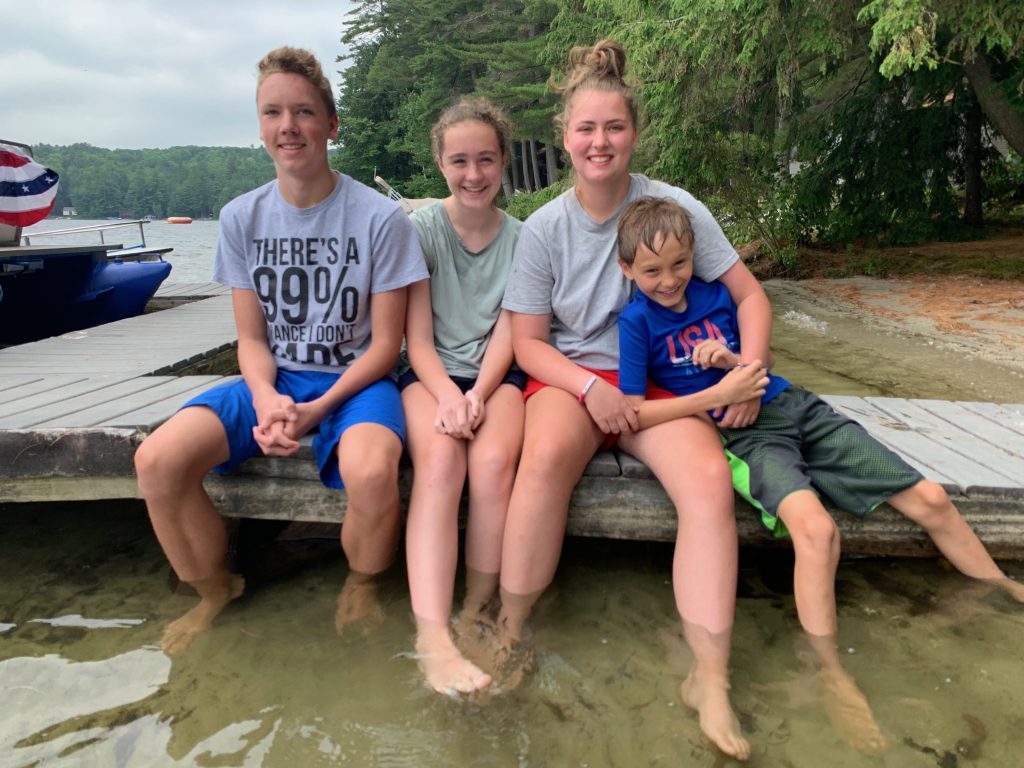
The laughter grows louder as the sun sets and neighbors go to bed, and now it is just us alive in this moment, broadcasting our experiences to the rest of the world in the hopes that they see our joy. Interacting with each other is easier day by day as we catch up, relearn the intricacies of each others’ lives. Dynamics between the adults are concrete, ever the same, but relationships in our group of growing young adults are constantly shifting and realigning; already new bonds form and become a source of comfort in a turbulent world; glow, for just a minute, as if nothing could be more important than that connection at that moment.
Suddenly one of us, with a nervous smile, steps out into the spotlight that is the universe, like an astronaut leaping onto the surface of the moon. A momentary hush; they are the first of us to truly leave our precious summer bubble for the real world. Our lives have begun.
It was a challenge to try and match the sentence structure of Fitzgerald’s writing, but I really enjoyed it. I think I did a good job with descriptive language, and I feel like following the guidelines helped me practice with specific types of grammar. Were I to write this without specific sentence structure rules, I think I would rearrange some of my sentences, as I kind of bent them to fit, and I think they could have been phrased better.
I really liked the end of the essay, Nola. The comparison of being out in space and stepping up and starting to live life is really powerful. The imagery also adds to the way you wrote the essay and it help to picture what’s going on around the teenagers.