“Let’s go watch the sunset,” my sister said, grabbing my hand. We get our bikes and set off down the dirt path. The chatter of French kids and the crunching of our tires serenades us towards the beach. The ground underneath us becomes sandy and the trees get shorter and shorter. We turn up a sharp hill and all of a sudden see the whole ocean in front of us. My sister sets her bike down and starts running down to the water. I start walking behind her. The sand is cold under my bare feet but it feels nice after the long bike ride. I found somewhere to sit and watch my sister play in the water.
As I sit I allow myself to dissolve into the moment. The cold sand on my toes and the warm breeze pushing hair across my face. The sun starts to set. Warm pink colors begin to emerge behind the clouds, like a child playing peek-a-boo. The child’s hands parted slowly allowing for a rush of color. The color that comes out is muted, the color of an artist’s pastels. But despite the muted overcoat the colors are numerous as the sun slides down the horizon. Shades of pink-ranging from a deep red to that of a light flower, blue too that seems to blend well with the pink forming a unique purple.
The colors reflect into the tide too, like lines of morris code the sunset seems to duplicate itself into the sand. The sand is porus with ridges and hills that match the waves of the previous days. I run my toes over these dips smoothing them out. As I peer at the sand I notice a small jellyfish, it’s body is a translucent membrane that matches the sunset as well. I pick up the jellyfish and return it to the waves. As it floats off I notice a group of surfers paddling out into the water. They are laughing as they struggle to catch the crashing waves. Their bodies seem to camouflage with the dark water, white boards sticking out like a sore thumb.
I splash my feet in the water, a cold but refreshing feeling taking over. I look out into the horizon. It seems never ending. To me the horizon is where the known world seems to merge into the unknown. Where everything I have ever experienced seems to merge with endless possibilities. When right now seems to merge with the future. A surfer catches a wave riding and turning with it’s crests. His board slicing the water like a knife through butter.
“This moment is perfect,” I think to myself. I try to capture it in my brain so as to hold onto it forever. But as the sun continues to dip down I realise that it is my time to walk into the horizon. Right now is starting to merge into the future. I look back to my sister motioning me to come up the sand dune with her. The sun has set and the sky has dimmed. Night has fallen and as I look behind me the reality of that perfect moment sets in. I look back onto my phone at the vivid sunset picture I just captured.
I didn’t understand what ‘Africa’ was until I was there. It turns out that ‘Africa’ wasn’t, in fact, the continent, but a wooden deck overlooking the marsh. Once we got there the first thing I asked her was, “Why ‘Africa?’”
“Because,” she replied, “that section of water out there looks like Africa.”
After turning my head to all angles imaginable, I finally realized what she meant.
“Huh, it kind of does look like Africa,” I said.
That was it, that was the whole of the conversation we had there. Sophie was the kind of friend that required no conversation, just company, and so, we sat in beautiful, comfortable silence. All we did was look out at the sun setting over the marsh. The way the vibrant blues faded into purples, oranges, and yellows, occasionally broken by wisps of clouds, mesmerized me. There was nothing else but the kaleidoscope of hues. The expansion of the fading sky into the dark greens of the marsh was separated only by the bold tree line. As if the trees were protecting the marsh from the sky, as the marsh protects the land from the sea. The pools of water that broke the elongated patches of marsh grass reflected the sky’s ripping performance. Looking at them was like looking down upon the sky; Stepping into those pools would result in falling from the sky. Instead of ending up in the mysterious, oceanic world beneath the surface, you would end up in the incessant world of birds and clouds, only to fall back to the ever disappointing world of humans. The marsh and it’s views were therapeutic. Each time the wind blew my hair across my face it took some of my stress with it. Each flap of the passing heron’s wings released the strain within me. This marsh’s ability to distract me from everything else in the world amazed me, and therefore, it became my favorite place.
“As if the trees were protecting the marsh from the sky..”
The next day, I spent four hours at ‘Africa.’ Just as they did before, the views and nature around me seemed to diffuse all worry from me. I sat on that deck listening to the crickets, bees, birds, and winds live their untroubled lives around me. I imagined what it would be like to live as a bee or cricket, or even the winds. How would it feel to walk upon the buds of a flower? Would those yellow, pollen coated buds be soft or scratchy? How do the winds feel when they whip through towns? How many people do they see, with all differing emotions and feelings? Am I much different from the ones they often see? These are the thoughts that this little marsh land brought to my mind. Just looking at the land was a meditation in itself. I had no use for a recording to instruct me on how to think, the nature around me did that on it’s own. The long, green switchgrass instructed me to think of the things that have rambled upon them; The crickets and odonata commanded me to think of plants and grass blades the height of skyscrapers. Being at ‘Africa’ was like looking into a different dimension; One without fears, stress, or anxiety. This picture represents the parts of the spell casted on me; the oranges that slowly enthralled me, the grasses that condemned me to leave my bubble of thought, and the setting sun that spoke the final, enchanting words.
“What in Heaven’s name is she?” (Hawthorne 121). This is what the town often asks when they see Pearl; is she some demonic creation, has she come to Earth to wreak havoc on the small town of Boston? In The Scarlet Letter by Nathaniel Hawthorne, Pearl is depicted as something unearthly and monstrous, but she is also depicted as a beautiful being worth that of a Pearl. Pearl, being the result of Hester’s sin, has an oscillating impact on Hester’s being and happiness, wavering from positive to negative. Much of this impact is heavily influenced by the strictly Puritan town in which Hester and Pearl live. However, it’s clear that, for Hester, Pearl is one of the only positive influences in her life, as Pearl stops Hester from sinning further; she protects her from, and lessens, the impact of the community’s hatred; she is her only companion, and therefore, her only inviolable reason to live.
Although Pearl is made from sin, she stops Hester, time and time again, from sinning. Apart from many of the townspeople’s thoughts ─ who wanted to separate Pearl from Hester in order to forestall one from adulterating the other ─ Pearl, in fact, kept her mother safe from the Black Man’s reach. For instance, when Hester was invited to gather in the woods with Mistress Hibbins she said no: “I must tarry home, and keep watch over my little Pearl. Had they taken her from me, I would willingly have gone with thee into the forest, and signed my name in the Black Man’s book too, and that with mine own blood” (Hawthorne 105). Not only does this dialogue from Hester further disprove the town’s claim regarding Pearl’s effect on Heaster, but it also gives evidence to support the idea that Pearl is good for Hester in her journey of penance. Were it not for Pearl, Hester would no longer try to right herself with God and would simply give herself to the Devil. Hester herself also states: “see ye not, she is the scarlet letter, only capable of being loved, and so endowed with a million-fold the power of retribution for my sin” (Hawthorne 101). In these lines, Hester refers to Pearl as the embodiment of the scarlet letter, her greatest shame and sin, except with the power to do good and relieve Hester from that shame she experiences. This line alone sums up Pearl and Hester’s relationship; while it’s hard for Hester to live with the result of her sin, she also loves her deeply and is learning and growing from the existence of this being. Furthermore, when Mr. Dimmesdale, the local minister, speaks to the governor on the subject of Pearl and Hester, he describes Pearl by saying, “this boon, was meant, above all things else, to keep the mother’s soul alive, and to preserve her from blacker depths of sin” (Hawthorne 103). Although Mr. Dimmesdale may have some kind of bias towards Hester, he is still a minister and knows the nature of those who sin and their relationship with God. He also observes Hester and Pearl as an outside party and is still able to perceive that Pearl shields Hester from sinning further. His statement further shows that Pearl may be the embodiment of sin, but she is also the protector from deeper sin.
“Pearl is the embodiment of the scarlet letter, her greatest shame and sin, except with the power to do good…”
The embodiment of sin or the embodiment of the Devil ─ as thought so by many in the town ─ Pearl often acts, rather, with the protection of God when she protects Hester from the hatred the townspeople throw at her. For example, when Hester and Pearl were being spoken harshly about by the nearby Puritan children, Pearl overheard them and reacted in the way a dedicated protector would.
“Pearl… made a rush at the knot of her enemies, and put them all to flight. She resembled, in her fierce pursuit of them, an infant pestilence ─ the scarlet fever, or some half-fledged angel of judgment, ─ whose mission was to punish the sins of the rising generation. She screamed and shouted too… The victory accomplished, Pearl returned quietly to her mother, and looked up smiling into her face.” (Hawthorne 92)
This excerpt shows the ruthlessness Pearl displays; however, the acts are strictly for the sake of her mother. In the end, Pearl returns to Hester’s side with a wide smile, displaying a sense of accomplishment towards her mother and, most likely, expecting her approval for her acts of protection. Also, in the passage, Pearl is referred to as an angel; this is one of the first times the reader sees Pearl being compared to something heavenly rather than infernal, and it is while she’s protecting Hester. The comparison to an angel supports the idea that Pearl acts as a sort of guardian for Hester rather than a being that would condemn her to hell or hostility. She is, essentially, her protector from hatred and also sin.
Furthermore, however obvious, with Hester being socially exiled, Pearl is her only true companion, and in some ways, her only reason to live. When the narrator describes Hester’s feelings towards the notion that the government might take Pearl away from her, he says, “alone in the world, cast off by it, and with this sole treasure to keep her heart alive, she felt that she possessed indefensible rights against the world, and was ready to defend them to the death” (Hawthorne 101). Pearl is referred to as Hester’s ‘sole treasure;’ this shows that Hester does not care for much else than Pearl, and it goes further to explain that she is the ‘sole’ thing, the only thing, keeping Hester’s heart alive. Pearl, being her treasure, brings Hester her only known happiness, and therefore reason and will to live. Also, when Hester was arguing with the minister and governor to keep Pearl she says, “thou knowest what is in my heart, and what are a mother’s rights, and how much the stronger they are, when that mother has but her child and the scarlet letter” (Hawthorne 102). Hester’s desperation and exclamation in this dialogue shows how much she cares for and cherishes Pearl. Hester’s statement that she has only her child, Pearl, is more reason to the idea that Pearl is her reason to live, and the reason she stays in this world when she could, otherwise, so easily end her shame and guilt. Pearl keeps Hester alive and gives her her only source of companionship and happiness.
In conclusion, even though Pearl is the embodiment of Hester’s sin, she is one of the only sources of joy and positivity in Hester’s life. She keeps Hester on the path of penance and shields her from sin; she acts as a sort of guardian angel for Hester and protects her from the town’s hatred, and finally she is her soul companion and reason to live. This is why Pearl is good for Hester, rather than a negative being of demonic creation. ‘What in the world is she?’ The town’s comments will be forever thrown at Pearl and Hester; however, we know that in Hester’s world, Pearl is her ‘soul treasure’ and happiness.
“Never did a man suffer what this man has suffered” (Hawthorne 155). Yes, ‘never had a man suffered’ what Reverend Arthur Dimmesdale has suffered, all except Hester Prynne, Roger Chillingworth, and many more. In The Scarlet Letter by Nathaniel Hawthorne, Arthur Dimmesdale is depicted as a poor, tortured man suffering from the pains of his own guilt and remorse. He simply thinks of nothing and no one but this deep tragedy which is his life, the life he so impulsively brought upon himself. This guilt Dimmesdale so painfully endures is brought about by his affair with Hester Prynne – who also experiences deep guilt and shame for the sin they both took part in – although while Dimmesdale undergoes these traumas in private, Hester is forced to endure them publicly and on her own. He is the sole antagonist of this book. Some may say that the scarlet letter is the true antagonist of the book, however is Dimmesdale not a partial creator of the sin which the scarlet letter feeds on? He is the sole reason Hester stays in Boston – the place of her prosecution and shame, he is the reason Chillingworth devotes his life to revenge, and he keeps Hester pining for a love that herself and the readers are unsure of.
Dimmesdale causes many life altering problems, one of which being that Hester stays in Boston. Hester, having committed adultery, is charged with the task of wearing that scarlet letter for as long as her mortal life should allow it. Now Hester is only condemned by a small puritan community, in a small colonial Boston; what is stopping her from fleeing and starting a new life without the weight of the letter on her bosom and the shame that it carries? No one would follow her; she is the town social exile, to be seen with her is to be exiled yourself. She has the ability to make her own living and support her newly-born daughter, Pearl; so why does she stay? According to the narrator, her reason to stay is “half truth, and half a self-delusion” (Hawthorne 72), where the truth that is hidden consists of her barred love for Dimmesdale.
“The chain that bound her here was of iron links, and galling to her inmost soul, but never could be broken… There dwelt, there trode the feet of one with who she deemed herself connected in a union, that, unrecognized on earth, would bring them together before the bar of final judgment, and make that their marriage-altar, for a joint futurity of endless retribution” (Hawthorne 72).
The narrator explains Hester’s thoughts on why she does not flee Boston; these thoughts in particular are those she, in the end, decides to ignore as the true reason. Hester is, overall, thinking of Dimmesdale and his connection to her. ‘The feet of one…she deemed herself connected in a union… unrecognized on earth,’ speaks to the fact that she and Dimmesdale are, in fact, united in that they both share their sin; however this union is unrecognized on earth because it is only Hester who knows Dimmesdale committed adultery with her. The use of metaphor in ‘the chain that bound her… never could be broken,’ addresses the power Dimmesdale has over Hester’s freedom. He is undoubtedly the reason she stays in Boston; her hopes to be with him in ‘endless retribution,’ or their punishment for sinning, and to be united under a form of ‘marriage-altar’ is the reason Hester stays. She gives up the freedom from shame to endure the possibility of their love. It may have been easier for Hester to simply hate Dimmesdale for his cowardice, as did Chillingworth.
“She gives up the freedom from shame to endure the possibility of their love.”
This hatred Dimmesdale involks in Chillingworth leads him to live a life centered on revenge. Chillingworth, who is the long-lost husband of a sinning Hester Prynne, comes home to find his wife as the main spectacle of town, displaying two new marks of shame, the scarlet letter and a fatherless child. When he comes home, he expects to see Hester as the woman he loves and married: “beheld the woman, in whom he hoped to find embodied the warmth and cheerfulness of home” (Hawthorne 106). When he doesn’t, it fills Chillingworth with an unexplainable rage, “a writhing horror twisted itself across his features, like a snake gliding swiftly over them” (Hawthorne 55), and convinces him to seek revenge on the being that took the love that was once in his and Hester’s union. While the sin of adultery is committed by both Hester and Dimmesdale, Chillingworth has an unrequited, unresolved love for Hester that persuades him to somewhat look past her wrongdoings and towards Dimmesdale’s. We see this love when Hester recalls her life with him before her acts with Dimmesdale,
“he used to emerge at eventide from the seclusion of his study, and sit down in the fire light of their home and in the light of her nuptial smile. He needed to bask himself in that smile, he said, in order that the chill of so many lonely hours… might be taken off the scholar’s heart” (Hawthorne 160).
This clearly shows the love and dependence Chillingworth places on Hester, and therefore, the depth of his feelings when he realizes that had been taken away; possibly made worse by the fact that the man who had taken his wife’s love and honor, also hid behind his own pride and ego. As the book goes on, we see Chillingworth become more consumed and dependent on the task of torturing Dimmesdale for this very reason. The reader notices this dependence in the final scenes: when Dimmesdale confesses his sin, Chillingworth no longer has a reason to live and, therefore, dies. If it weren’t for Dimmesdale and his incapability to come forward, Chillingworth could have stayed the intelligent, kind-hearted scholar that he was. This is why Dimmesdale is the antagonist in Chillingworth’s story; just one story of the many that Dimmesdale torments with his cowardice and inability to look past himself.
Dimmesdale also puts Hester through her own, separate, kind of torture with his oblivion towards her soul. Throughout the whole book, we are filled with the suspension and notion of Hester and Dimmesdale’s deep, unquestionable love. Seemingly, they have a love so strong they, a man and woman of God and devotion, simply had to overlook their morals and ideals to be together, even though it was only for a short period of time. In almost each passage of the book we see Hester’s love for Dimmesdale; in the way she keeps his secret to both the town and Chillingworth, and in the way her thoughts are mostly consumed with his well being. Hester even claims once to have a responsibility to him and only him: “having cast off all duty towards other human beings, there remained a duty towards him… I have acted a false part by the only man to whom the power was left me to be true” (Hawthorne 154). This quote not only explains her devotion, but also the singularity of her feelings towards Dimmesdale. We even see in Dimmesdale’s dying scene Hester continuing with this want and devotion to him. “‘Shall we not spend our immortal lives together?’… ‘Hush, Hester, hush!’ said he, with tremulous solemnity” (Hawthorne 234). In this passage the reader sees Dimmesdale’s dying words to Hester. With such a build up and strong foundation for the two of them to create some epic love story that could amount to Shakespeare, with the notion that Dimmesdale could love Hester just as deeply as she loves him, the reader is met with such a disappointment as Dimmesdale shushing Hester, in the middle of her love proclamation! It’s not only during this scene that we see Dimmesdale’s lack of concern for Hester, but during the entirety of the book. Dimmesdale again and again is only concerned with himself and his own guilt, never once thinking about the consequences Hester must publicly face daily. For this reason, Dimmesdale is the antagonist in his own love story; he is the roadblock Hester must find a way to get around in order to reach him.
Overall, while Dimmesdale is being paraded about as a poor, sad soul, he is really the villain. He makes Hester stay in the place of her shame and condemnation just for the idea of love that he blatantly ignores despite her heart. He forces Chillingworth into a life of revenge and sadness when he selfishly constrains the reach of Hester’s love, and cannot make up for the love she lost. Finally, he causes Hester to live a life of pining and loneliness just because he can’t look past himself. He is the antagonist in Hester’s, Chillingworth’s, and his own story. His inability to look past fame, honor, pride, and ego makes him become a man of dishonor and oblivion. There comes a time when he must ask himself: which is the greater sin? That which I share with another, or the character I become when I bury that said sin?
Everything looks fresh for Alex, fishing in the blue sky sea of Cancun was an awesome experience for him. He loved everything in his surroundings. In a small fishing boat the sea has turquoise eyes. The hot breeze of the beach felt good on Alex’s skin. Fishing is a really relaxing and boring activity for him when he is still little. He suddenly sleeps with the sound of whales crushing the boat, echoing in his ears. Suddenly when he wakes up, these big golden fishes, that he has never seen before, were in the boat. His father, a wise man in Alex’s eyes, told him with a smile that they caught the most delicious fish, a tuna and two dorados. He thought everyday would be this happy
Little Alex thought everyday was fun, but what he did not know was that soon he would realize that his father tried to hide the inevitable truth, how rotten the world was. Alex’s innocent eyes could only see good people around him. He could not perceive any danger whatsoever. Suddenly an event happened that made Alex realize that not everything was as colorful as he thought. His grandfather suddenly died, it was the first time he felt pain, sadness, and that he missed someone. He learned that people and loved ones die sooner or later. Everyone’s life can end in a blink of an eye.
Then he realized that not everyone in his surroundings were good people. He was starting to get bullied by kids and he did not know the reason, they were just mean to him, and trying to harm him. The only solution he found was to require to violence; however, he realized that everytime he fought, there would be consequences following him. He could not understand why. In his logic, he thought if someone picked a fight with him, he would respond with a fight, but there were other ways to solve each other’s problems that he did not know because he was reckless.
Alex acted before he had time to think about the consequences. With time and therapy he started to get more mature and think about other solutions before starting to fight. At that time he started to hear from his father that maybe because of the situation in Mexico there was this possibility that they were going to migrate. They said that a lot and they never fulfilled it; however, he started to question why they would say that a lot. What was wrong with the country they are in? Looking for answers, he ended up on the internet. His father tried to censor him from the reality of how spoiled the world truly is. At the age of eight he start to learn about corruption, racism, poverty, murder, thanks to internet.
Reality crashed into Alex’s life, his colorful world was non-existent. He learned that he was lucky to have a family that loved him and did not lack for money. He started to learn that there are kids like him that suffers from domestic violence, a lot poor families selling her daughters to the mafia, kidnappings, rape, were in the vocabulary of Alex. Kids that have nothing to eat, kids without education or a purpose to live. The world was a rotten place to live. He felt insecure about where he lived for the first time; however, his father told him that this is something that everyone has to get used to. It is good to be cautious, but in an extreme way, that would lead to paranoia. Alex knew now that you only have only one life, and that he has to be gracious because he had no difficulties. The more knowledge he had, the darker the humanity was for him, but he told himself to live his life as it was the last. Do good things for humanity, and leave a good mark before he leaves this world.
I have struggled with my mental health for as long as I can remember; one of my earliest memories is of my mom reading me a children’s book about dealing with anxiety. I have no idea what it’s like to live without the constant worries, constant pressure in my mind. But the fact of the matter is that I wasn’t ashamed of my anxiety until I started school, started interacting with a larger number of people. I know now that my mental illness isn’t actually a sin, but it certainly feels like it at times. I see the way my family has had to deal with it, the way people view me differently when they learn.
My family is open about their struggles with mental health. I’ve known for a long time that my mom and my grandfather deal with anxiety as well; it’s always been normalized among our small little circle. In school, though, I quickly realized that not everyone thought like I did. They didn’t spend days obsessing over an upcoming test or a single point off of an assignment, they didn’t break down over a teacher’s correction. Why did it matter so much to me? It didn’t make any sense.
“I know now that my mental illness isn’t actually a sin, but it certainly feels like it at times.”
This idea occupied my mind for an incredibly long time- years rather than months. No one said anything to me, but I knew that my mom emailed my teachers and my school’s guidance counselor. All of the adults in my life were aware of my constant anxiety, and instead of being grateful for my support system, all I felt was guilt. Guilt over the fact that everyone was going out of their way to make sure I was okay, that I was treated differently from the other kids in my grade.
In fifth grade, I had my first panic attack. My teacher had forgotten to mention that we had a giant standardized test that morning, and a million different thoughts entered my mind all at once- none of them positive. I felt like I was going to vomit or pass out, and I had the worst headache I’ve ever gotten. My teacher sent me to the nurse, but when my mom came to pick me up she took one look and knew. We had a long conversation about my mental health that night, but the idea occupying my mind had nothing to do with my well-being. My mom had taken time out of her day to come get me, just to find out that nothing was actually wrong with me- or at least that’s what my fifth-grade self thought. The next day at school, everyone stared at me. They asked me what had happened, and I didn’t know how to answer. So I didn’t.
A few weeks later, I went to my first appointment with my therapist. It changed my life. Up until the moment I walked into that room, though, I obsessed over the idea that therapy made me weak. No one had said anything to me about it, but the word still had negative connotations in my mind- society had told me that therapy was something to be ashamed of, to be hidden away from the world, and I believed it. It’s been almost six years since that first meeting, and those thoughts have long been gone from my mind. It’s still challenging at times, though. One of my cousins has recently started considering therapy and shared the idea with me, unaware of my experiences. She expressed her doubts, her feelings that seeing a therapist was equivalent to giving up. When I shared my own story, this was quickly followed by a hasty statement of, “Oh, I didn’t mean that about anyone else, just myself! I’m not trying to shame you at all!” I understand the stigma- I’ve had to overcome it myself- but that still hurt.
Anxiety has been a constant in my life for almost seventeen years. I’ve fought to develop coping mechanisms and an acceptance of myself and my mental illness. It’s taken an extremely long time, and I still struggle with my guilt and shame at times, but I am a stronger person because of these experiences. I know my mind better than ever before, and feel more confident and in-control of my emotions. I would not have gotten to this point without the challenges of years past.
I’ve always thought of my anxiety as an ocean- I think visualizing it as a physical thing helps me recognize that I’m a person outside of my mental illness, I have interests and a personality. As much as anxiety has defined the challenges I’ve gone through, it’s not the whole picture. Coping with my mental health is like swimming; sometimes the water is rough and I have to fight just to stay afloat. Even when the water is calm, though, I still have to put in the effort, still have to keep my head above water. This is a challenge I’ll have to face my entire life, and I accepted that a long time ago; but that doesn’t make it any easier.
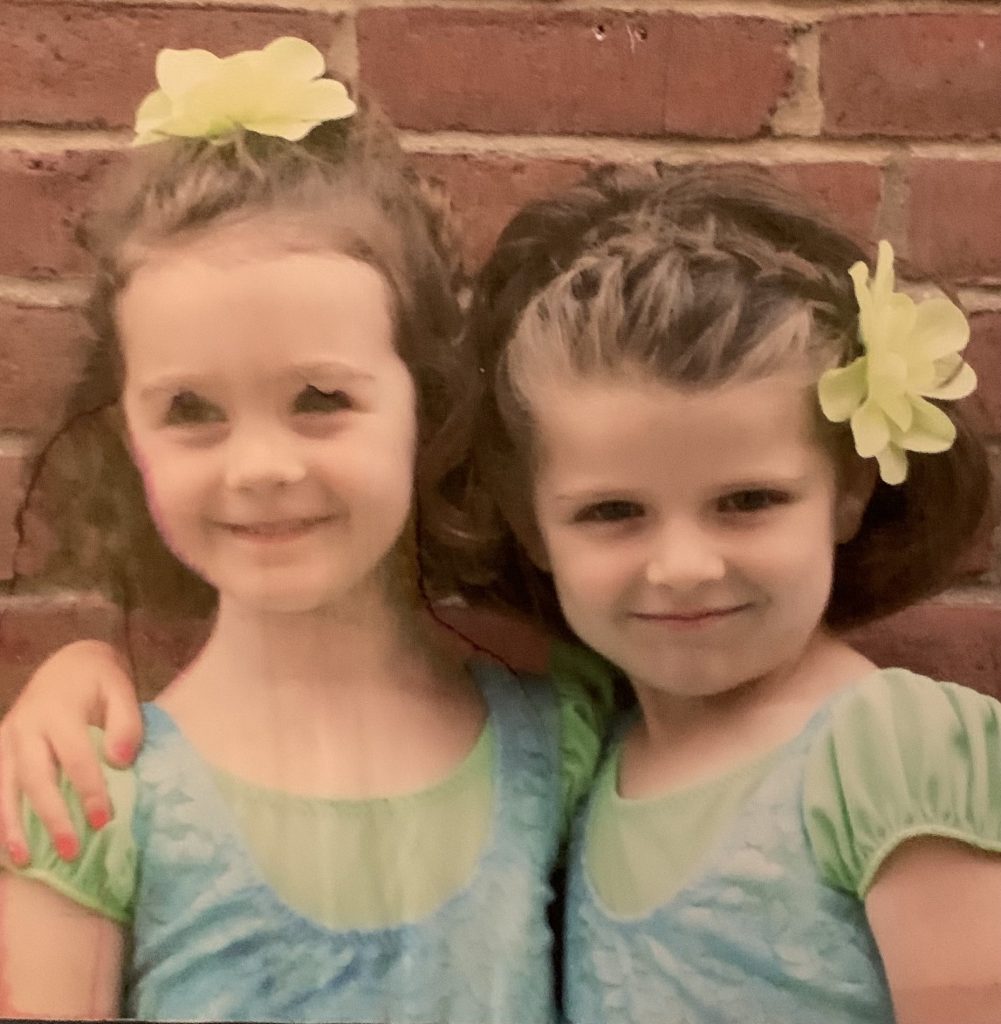
It started in the summer. We were nine, nothing more important than our sunburnt skin and the grass, soft and slippery, beneath our feet. Her house stood tall behind us, but the heat was worth it, for the world outside was a kingdom and we were in charge. In reality, that kingdom stretched only as far as the outskirts of the yard; but we were free, and we could pretend whatever we wanted. We were knights or princesses, pirates or explorers, sometimes all at once. We had smiles in our eyes and a song on our lips.
I was a guest in her house, but it felt like home. Her hand in mine as we ran up the stairs, her siblings on our backs as we raced through the living room. We made a tent in her sheets that night, a space carved out just for us. We were only nine, but already thinking about the future. What would our lives look like? Where would we live, who would we live with? Those answers changed a great many times throughout our friendship, but one thing was always certain: wherever we were, we would be together.
“We were only nine, but already thinking about the future…wherever we were, we would be together.”
Fall came, and we started elementary school. Fourth grade. We weren’t in the same class. While I did math in one room, she practiced writing across the hall. The distance was like a canyon between us, our hearts tied together by an invisible string. But we were okay. Everything was going to turn out fine. I still saw her at lunch, at recess, and she was the same person that I had played pretend with that summer. We could still make each other laugh, giggles rising above the other noises in the lunchroom, tears salty on our tongues. They were good tears, the kind that only your best friend could pull from your eyes, a joke so unfunny it became the best thing you heard all day.
There were people at our table. That table was the bridge across the canyon, and it could only hold so much weight. I heard her voice through the din, talking to the other girls. I knew their names of course, our school was small, but they had never talked to me, never shown interest. What else could I do but sit down? I tucked my hands under my legs, felt the smooth wood of the table as my fingers and palms began to fall asleep. Not a single person talked to me.
Winter came in like a knife; quick and unexpected. It was early for snow, only October. It was also the first Halloween I had spent without her, only my brother for company. November arrived swiftly as well, and so did my tenth birthday. Self-doubt was a worm in my mind. The girls had stayed at our table, though I no longer felt it was a part of me. I was separate, something for them to observe and wonder about. Why did I care about school so much? Why did I read so many books? I was simultaneously too loud and too quiet, always picking the wrong tone at the wrong time. I was too bossy, yet also too meek. Why couldn’t I make up my mind?
I barely talked to my best friend anymore. The canyon had doubled, even tripled, in width and the bridge had snapped a long time ago. Somehow, I was the only one that had fallen. That string between our hearts? It was so frayed it hardly existed. I was tired. And the worst part was, she had done nothing. No insults, no angry words, not even an acknowledgement of the distance. It was like she had simply drifted into the dark.
Spring came, and I got up. It was completely unplanned. For months, I had been spending each lunch period in silence. Surrounded by people, but still silent. My best friend talked to her new friends like normal, like they had been doing every day for months. And I was done. So I got up. I was such a nonpresence that I cannot say for certain whether or not they even noticed me leave.
I picked a table that I had wanted to join for months. Every day, I watched the group laugh from across the room. When I sat down, there were no questions. We were friends, just like that. I was suddenly a part of that laughter, that joy that I had been so jealous of. We had the same interests and the same sense of humor. I felt seen.
Summer arrived again, and I was a different person. I had new friends, new interests, a better sense of myself. I was no longer best friends with the same girl, and it didn’t hurt as much as I thought it would. We didn’t talk every day, but we were friendly. We smiled and waved and were happy for each other from a distance. She had found her people, and I wasn’t one of them.
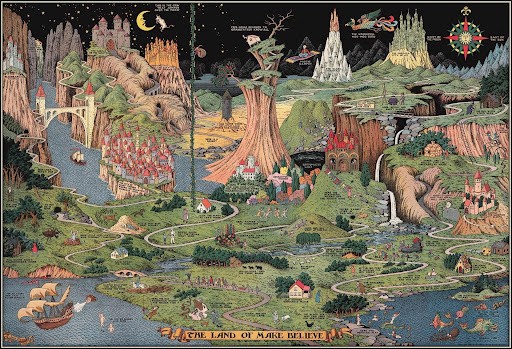
When I was a kid, I believed in imaginary things, as we all did, Santa Claus, mermaids, dragons, unicorns and even imaginary friends. However, no one ever told me these things were fake. No one ever said these things were just a peaceful distraction from the ominous and mysterious real world. Sometimes I’d be talking or singing with my imaginary friends and hear someone say, “I wish I could be a kid again.” I never understood what they meant. Why would they want to be a kid again? I can’t wait to grow up. These thoughts would circle my clear mind then quickly rush out, like a small leaf in a quick river. It wasn’t until I was ten years old that I finally understood what they meant. It was that understanding that quickly swept me from childhood to adulthood. My trouble-free mind became a bit more complicated and my world of imagination was sliced in half.
“The Land of Make Believe”
That day, all I could focus on was the loose tooth that would do anything but fall out. It was hanging on like the last seed of a dandelion. I couldn’t wait to put it under my pillow so the tooth fairy would come and leave me a gift. Everyone would tell me to simply pull it out, but I knew the tooth fairy wouldn’t give me as nice of a gift if I did that. I was going to wait, Mom and Dad always say patience is key, I told myself. So it went on, days and days of showing everyone my loose tooth, like it was a trophy no one else could possibly receive. Days and days of waking up and checking if it was still there, as if my restful sleep would knock it loose. I’d check after each meal, after each drink and anytime I could see a mirror. The suspense was like when my parents told me I could have dessert…once I had finished my vegetables.
Then finally, after I bit into a cracker just hard enough, the tooth fell out. My excitement could be heard from towns over, it was like those imaginary unicorns had jumped out in front of me and pooped rainbows. Now instead of showing everyone my loose tooth, I showed them the fallen tooth. “Look,” I’d yell, with my hands reached in my mouth to show them the new gap. My parents then handed me a container to put the tooth in, which I shook as if it were a maraca. That night I went to bed earlier than the sun, shoved my tooth under the pillow, and tried to sleep so the tooth fairy would come. However, that sleep did not find me. I tossed and turned uncontrollably and looked beneath the pillow each minute in case the tooth teleported away without me noticing. Each noise I heard woke me up and struck a match in me that screamed “tooth fairy!”
Then sometime in the night, I woke up to a noise outside my door. This is it! I thought. The tooth fairy is finally here! I looked underneath my pillow one last time to be sure she hadn’t come yet when I heard my door open. I quickly shot back under my covers and pretended to sleep. When I heard footsteps close to my bed I tried to sneak a peek. No one has ever seen the tooth fairy before, what if she’s invisible? What if she has bright pink wings? These thoughts were quickly flushed out of my mind when I realized that it wasn’t the bright pink wings of the tooth fairy peeking through the seam of my heavy eyelids, but rather the brown, worn leather of my dad’s old slippers. He must be saying goodnight, I thought. That thought was wrong, so wrong that it took a machete and cut straight through my imaginary world. Straight through everything I believed and everything I relied on. The unicorns, dragons and mermaids were dragged away from my world leaving me with nothing but reality. The moment I felt my dad’s hand reach underneath my pillow, was the moment that machete landed it’s strike.
Once he left my room, I hesitantly lifted up my pillow. Five dollars sat there. Five dollars left by my dad, not the tooth fairy. Because the tooth fairy wasn’t real, and if the tooth fairy wasn’t real then how could my unicorns or Santa Claus be real? How could that world everyone wrapped so tightly around me be fake, but also feel so peaceful and true? It was like the wrap was strung so tight that I couldn’t see anything beyond it, but also so tight to the point where it began to stretch and tear until it completely split and fell off. The moment I became an adult was when that protective wrap fell off and left me bare to the elements of the real world.
All my life I had lived in complete darkness. I felt like I didn’t belong anywhere, I saw everything in black and white tones. In the depths of my being, I felt an immense hole that expanded, taking of my soul. I was lost, not fitting in and I had no idea what my purpose in life was, much less what I was passionate about. It was until February 24, 2020, at the age of fourteen, when I finally began to see life in color.
In my last school, the Alexander von Humboldt German International School, the ninth-grade students were asked to do a week of professional internships in a place of our choice, with the purpose of going to do a free service and being able to live the experience of “work for the first time”.
Since I was little, my parents have taught me that one of the most important values in life is helping others. My father always tells me that “whatever you give to help the other, later it will come back to you multiplied”. My mother, on the other hand, has always told me that it is very important to help others regardless of the situation and she always moves me with a phrase that she tells me all the time; “If you see someone drowning, try to help, even if you can’t swim.” Both teachings of my parents have remained in my mind and from a very young age, I did anything to help others.
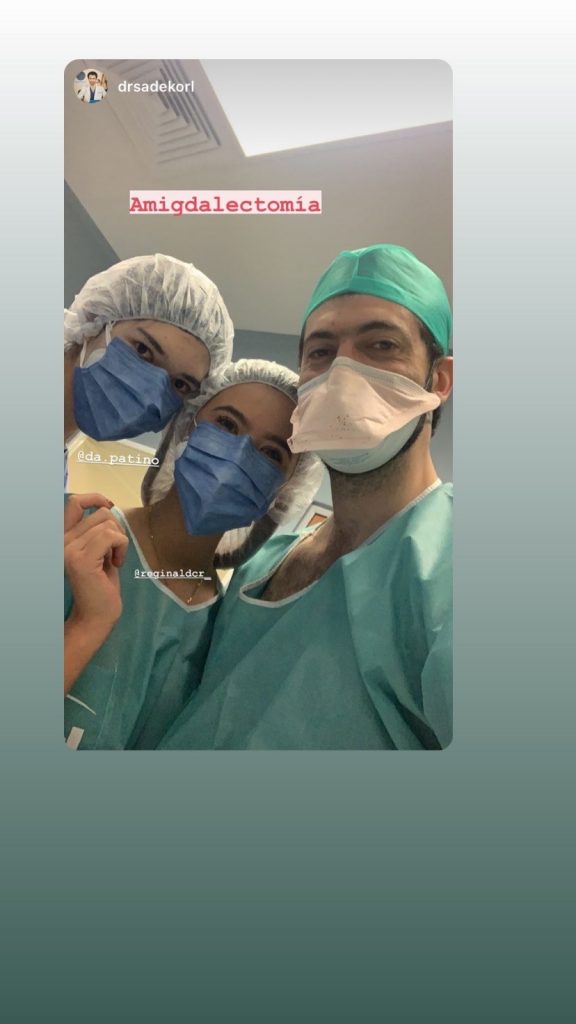
That is how it occurred to me to go to a hospital for my professional internship, to give my help in whatever way to the doctors, nurses, and hospital staff. Therefore, in the last week of February 2020, I had the honor of doing my professional internship at the Salvador Zubirán National Institute of Medical Sciences and Nutrition (INCMNSZ). To cut a long story short, the first days I was able to see clinical consultations, I visited the radiology and hospitalization center and observed several investigations in pathology.
On February 25, 2020, I had to arrive at the hospital at 7:00 A.M. in the morning because the doctor in charge called me at that time and when I arrived, he told me something that left me stunned. It turned out that that very morning I had to go in to see four surgeries with him. Since I obviously couldn’t say “NO”, I plucked up my courage and decided to go into surgery for the first time. I changed, I put on a surgical pyjama that was gigantic for me and I entered a corridor full of doors on the sides and with an immense luminosity. At the end of the corridor, I found the door to the surgical room. Before entering, I said to myself “Why did you choose this!” At that moment I had mixed feelings, because one part of me did want to enter, but the other was afraid of what was on the other side of the door.
Finally, I plucked up my courage and walked into the room. The place was cold, full of temptation of getting closer to see the surgery, and I felt the sensation of a call from across the room that demanded that I come closer to see the patient who was being operated. I did not know what was about to happen, but something in my consciousness echoed; it was as if something in my heart coincided with reality and my desires. That unique feeling kept taking over me and little by little, it took over my soul. At that moment, my life completely changed.
I was getting closer little by little, with fear in my conscience and my heartbeat was stronger than ever. From a different perspective, I observed how they opened a woman’s neck with a scalpel and finished cutting the tissues with an electrocautery to save her life. It was at that precise moment that I understood everything. At the age of fourteen I learned about the wonders of medicine. At last, I felt in my element and felt that I belonged to that place and all the people around me understood the feeling that I had.
The following days I was able to see a laparoscopy, a colectomy, a mastectomy, two laparotomies and a kidney transplant. With each surgery I saw, I fell more and more in love with the idea of helping people through science and through the beauties of medicine.
Months later, I had the privilege of meeting an Otolaryngologist, who has invited me to witness surgeries several times. And just before last Christmas holidays, I was able to appreciate my grandmother’s bladder surgery (cystocele). Now all I think about is studying medicine and becoming a successful surgeon. Now Medicine is everywhere. It is while I reflect, while I study and while I am immersed in my dreams. That day, when I finally knew what medicine was, everything changed; my direction took a new course, and I began to shape my own destiny. That cold and that fear that I had before entering the surgical room soon turned into heat. Those shades of living flesh, of the blood that ran everywhere, and of the wonderful tissues found within the human body, allowed me to see for the first time life in colors, and in a different way and complete of wonders, as is the case of the incredible medical advances of medicine to be able to treat diagnoses. Finally, that black void that lay in me was seized by my passion, medicine. People will say that how is it possible to fall in love with a career, with a science, with medicine, but it happened to me, and its wonders
“Medicine is the art of maintaining health and eventually curing disease that occurs in the human body.”
Sometimes I act like a five year old. A five year old with self control issues. I make stupid decisions, say stupid comments and act childish. Childish is loosely defined as someone acting like an immature idiot. I strongly identify with this word for a number of reasons. In class, I crack jokes to cheer up the room, I imitate people’s voices if they say something funny and I always try to lighten the mood. Even though this trait might seem harmless it has come to stab me in the back.
This incident threw me into a harsh reality. It was like someone pulling up the blinds to reveal bright sunlight. The sunlight is the realization that the words I say and the way I say them can have an effect on the people around me. So as I looked back on the man selling his toys, I felt guilt. At that moment I did not realize that what I was saying could be heard by others or that other’s would be listening to my lighthearted laughter and comments.
I remember the time we took a trip to Italy. We were walking to the Colosseum, a large oval shaped building in the center of Rome, and the streets were crowded with tourists trying to get to the dozens of famous landmarks around the city. Along with the abundance of tourists, there were lots of locals trying to sell toys and knickknacks on the streets, anyone who has been to Rome can confirm. These knickknacks were repetitive, usually things like mini models of the Colosseum, fidget spinners, and stuffed animals. I remember walking down a particularly narrow street, my brother and I caught a glimpse of a toy we had never seen before. It was a squishy ball that, when chucked down at the sidewalk, made a squeaky noise. My brother and I stood there imitating the cat-like squeak of the toy. I was laughing so hard that I stepped back to brace myself from falling, but little did I know that the street seller behind me was angered by the fact that my brother and I found this man’s toy more amusing than his. As I stepped back my foot planted right onto his mini Mickey Mouse, interrupting the little dance it was performing. The man immediately leaped up from his crouched position, like he had just been stung by a bee. He yelled at me in thickly accented English, “Watch where you’re stepping, idiot American.” His hand reached out to grab my ankle. I did not know what to do but ran away from him. Once I was half a block away, I turned. He was scowling in my direction, blood rushing to his tanned skin. I stood there shocked and trembling. It was the first time I had been sworn at before. The words “you’re stepping” and “idiot American” jumping in my brain. My brother was standing next to me at that point and asking what was wrong, he obviously had not heard the man’s harsh words. I stood there close to crying, my hands sweating in the Italian heat. I did not tell my older brother or parents what the man had said to me, but his words really hurt.
At that moment I did not realize that what I was saying could be heard by others or that other’s would be listening to my lighthearted laughter and comments.
Now years after that day, I still have to take a second before I say a comment that to me might be humorous. Being childish is part of who I am and is not something that I will ever try to get rid of. Instead of getting rid of my “flaw” I work towards being more conscientious of the people around me and how different demographics might react to a certain comment or giggle.