Morality Essay – Puritanism and Discerning Values

Puritanism and Discerning Values

Morality is a question of values and how humans have solved conflict throughout history. But has knowledge and time increased our morality? Modern society has taken steps back in many ways concerning values and enforcing them. There is no motivating cause to maintain those values, like religion, which served this role in Puritan times. There is a complication of too much liberty where the individual may prevail over society as a whole. There have also been no steps forward from the concept of morality in modern methods of punishment. These issues are surprisingly underlined and in many texts that often negatively portray Puritans; this is an invitation to read between the words and stray from the obvious answer: that today’s society prevails solely for its modernity, due to the common belief that newer is better. The Puritans in The Scarlet Letter and The Crucible were more invested in their morals than modern society due to the importance that defines their values.  

Religious reform was the main reason for the emigration of Puritans to the New World from England, for they believed that the English were straying away from their values and associated themselves too closely with Catholicism. This heavy interest in religion served as a great motivation and scaffold for their moral values; therefore, making them an important aspect of their day-to-day life. This heavy influence of religion is seen in The Crucible, notably in the court of law when John Proctor is asked to sign away his name and he begins threatening Danforth with the name of Devil and his destiny: Hell.

“A fire, a fire is burning! I hear the boot of Lucifer, I see his filthy face! And it is my face, and yours, Daforth! For them that quail to bring men out ignorance, as I have quailed, and as you quail now when you know in all your black hearts that this will be fraud — God damns our kind especially, and we will burn, we will burn together!” (Miller 111) 

This emphasizes the presence of Hell and Lucifer for Danforth’s wrongdoings by repeating the word fire and using punctuation such as exclamation marks and hyphens. When he says “God damns our kind especially…” he refers to the fact that since they have not acted in good faith, God will punish them for their faulty morals. Much of the court etiquette used by the Puritans is still used nowadays along with their basic religious values. For example, in some courts it is still a custom to place the interrogated person’s hand upon the bible so they can vow to “tell the truth, the whole truth and nothing but the truth.” Hutson, who wrote “Still Puritan After All These Years” describes a study in which it was found that “… something like Puritan values seemed to be guiding [the subject’s] moral judgments” (Hutson). These moral judgements not only create a foundation of modern society but relate to newly emerging ideas. 

Nowadays new ideas flood society and individuals have inherited more liberty than Puritans used to have. However, with this newfound liberty comes great responsibility and importance in differentiating right from wrong on a more individual level. The vast difference between good and evil is one of the many themes represented in The Scarlet Letter and The Crucible. For instance, in The Crucible there is a great representation of good versus evil which can also be viewed as God versus Satan. This is especially notable in the courtroom scene where Proctor is fighting with Danforth for his freedom: 

“You must understand, sir, that a person is either with this court or he must be counted against it, there be no road between.This is a sharp time, now, a precise time — we live no longer in the dusky afternoon when evil mixed itself with good and befuddled the world. Now, by God’s grace, the shining sun is up, and them that fear not light will surely praise it. I hope you will be one of those” (Miller 87).

In this quote, Danforth is arguing with Proctor about the nature of religion and the court’s position in the matter. This quote suggests that his perception of the world is black and white. White being God and black being the Devil. He believes himself to be a good person because he is part of the court and the court is tied to God. Therefore he believes that anyone like Proctor who opposes the court must be working for the Devil. This depicts the structure the Puritans had which aided people to respect the rules and understand morality — either you are right or you are wrong and punished — which is more ambiguous with the amount of liberty that is given today. David D. Hall, the author of “Peace, Love and Puritanism” agrees that liberty can spark conflict and ignite a sense of personal entitlement: “In our society, liberty has become deeply problematic: one more a matter of entitlement than of obligation to the whole.” (Hall) Just like the Puritans our morality comes hand in hand with power, nowadays this liberty encourages such abuse of power and encroachments on standard morality. This often happens because nowadays individualism has taken over as opposed to the benefit of the whole. Puritans for example had a moral obligation to attend church which would create structure and prioritize their morals and values. Even the sole definition of Puritanism refers to the austerity of Puritan values. The definition of Puritanism is strictness and austerity especially in matters of religion or conduct (“PURITANISM.”). This demonstrates the set standard of the Puritan values which made it very clear and black and white when it came to respecting values. 

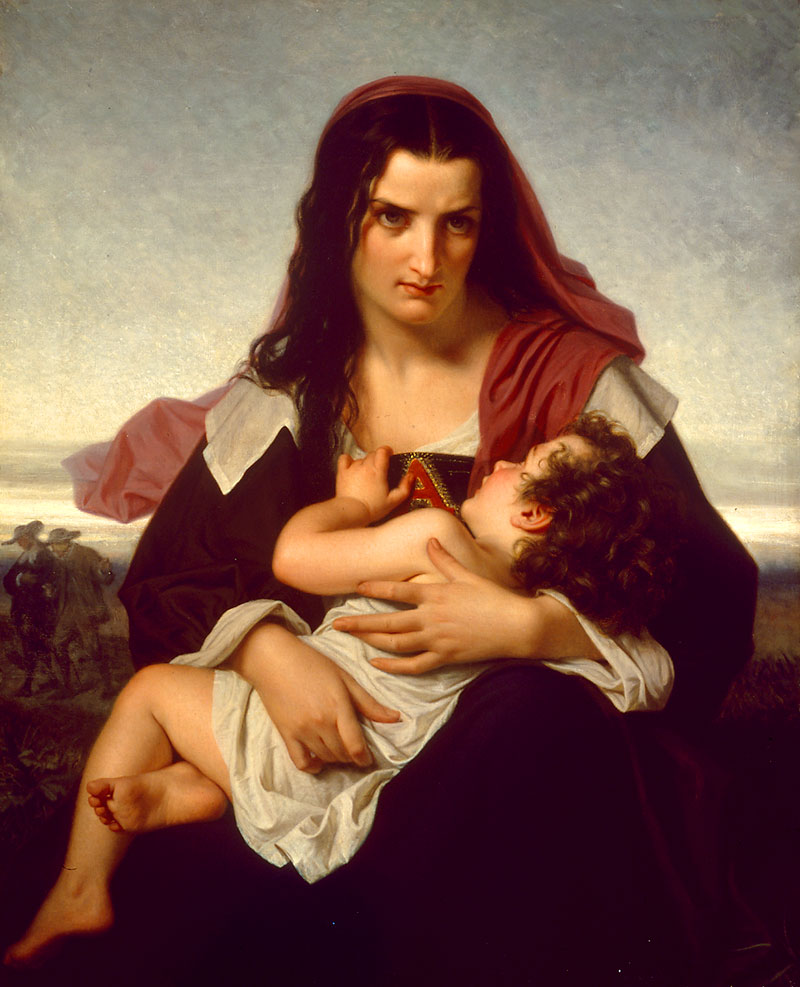
What happens when one decides to disrespect the morals of the community? How does morality play a role in punishment and how can one learn from their mistakes after having infringed on a moral matter? Two texts set in Puritan times, The Crucible and The Scarlet Letter, illustrate a clear punishment for disobedience: shame, imprisonment or execution. In The Scarlet Letter Hester Prynne is held on the scaffold with an emblem of her shame on her chest: “‘I might have known that, as I came out of the vast and dismal forest, and entered this settlement of Christian men, the very first object to meet my eyes would be thyself, Hester Prynne, standing up, a statue of ignominy, before the people.’” (Hawthorne 66) This refers to when Chillingworth entered the Puritan settlement after being imprisoned by the Native Americains and when he entered the village all he could fixate on was Hester Prynne on her podium of shame. He also refers to Hester Prynne as an ‘object’, characterizing the fact that she has no longer any rights after having sinned, enforcing their rigidity of the concept that punishments are black and white. He also compares her to a statue of shame to really capitalize on the fact that she is posted there for everyone to look at in disgust and lament. However, she is only a statue of shame before her people and she has the option to flee the settlement and start fresh. Nowadays, there is social media: a way to disperse information at much greater rates. Hester Prynne had a choice not to face her sin, in contrast in today’s world people keep records of imprisonment and infractions to the society which make it difficult to get a job and reintegrate into life. Additionally, the identities of those who commit crimes are published as news stories all over the world destroying what Proctor held onto so much in The Crucible: their reputation. 

Not only was it possible to escape from a life of sin in Puritan times their emphasis on moral correction was greater with their idea of a scaffold which was believed to be  “as effectual an agent, in the promotion of good citizenship, as ever was the guillotine among the terrorists of France. It was, in short, the platform of the pillory; and above it rose the framework of that instrument of discipline, so fashioned as to confine the human head in its tight grasp, and thus hold it up to the public gaze. The very ideal of ignominy was embodied and made manifest in this contrivance of wood and iron” (Hawthorne 49-50). This excerpt recognizes how much the Puritans valued the punishment of public shame which was more civil than the guillotine in France which cut off the heads of law offenders. Nowadays, with the media, it is impossible to escape shame. If the idea of public shaming on a scaffold is horrific, the sharing of one’s sinful or lawless actions on the internet has become much worse and inescapable. The puritans also valued their morals more than modern society which was why they viewed the scaffold as a learning opportunity for citizens not to replicate the actions of the “statues of ignominy”. Overall the Puritans built their society around their morals and emphasized the importance of their values more than modern society which is based more on individualism and liberty. This investment in their morals was supported by the guidance they extracted from religion. Their importance of keeping their community in unity with a specific structure and balck and white ideals to judge unlawful actions. Their fundamentals on punishment endorsed their morals and values especially reflecting the theme of shame which is notable in The Crucible and The Scarlet Letter. The Puritans had a specific structure and followed it to reinforce their morals as a community: a sense of unity modern society has lost.

“The Puritans had a specific structure and followed it to reinforce their morals as a community: a sense of unity modern society has lost.”


Posted in Uncategorized | 1 Comment

End of Book Essay – “Feminist thinking in an early age”

Within the narrative The Scarlet Letter, written by Hawthorne, there are indications of feminist factors throughout history. Although the tone of the book goes against the perception of Hester as a pioneering feminist, that is, factors such as the time or period in which the narrative is developed, and simultaneously the Puritan society that is at its best, the narrator is constantly on the side of Hester. Throughout the novel there are several events where Hester’s actions express feminist indications, even against the anti-feminist tone of the time, and therefore, of Puritan society.

To start, Nathaniel Hawthorne was a feminist forerunner who exposed his sympathy for women in  The Scarlet Letter through the protagonist, Hester Prynne. He presents a masterpiece about a woman breaking with all the stereotypes of the time, thus becoming an implicit symbol of premature feminism. When Hawthorne writing The Scarlet Letter in the late 1800s, the feminist movement was beginning to gather momentum in the United States; this factor helped him open his horizons to the feminist ideas of the time.

Although The Scarlet Letter takes place during the pinnacle of Puritan society and women are generally portrayed as manly and ominous, the author is able to bring out Hester’s sensuality. He portrays her as the only rose in society and shows her as a determined, strong-willed woman. Hester’s feminism is reflected throughout the story by both her actions and the voice of the narrator.

Much of the content in the novel is based on the anti-feminist vision of society and the times, but Hester still acts as an advocate for women with her strength and attitude. She is alone without a man, but she is very nice alone. In addition, she refused to reveal the name of the baby’s father in order to challenge her community; yet she does not suffer because of it- even going so far as to challenge her community and stick to her beliefs in the face of adversity. The authorities can punish her, but they cannot force her to disclose secrets. Hester claims that she has the only form of power available—the power to keep secrets—and shows feminism in her own life. She proves that she can be an independent mother, and she makes her own decisions without consulting a man; she can experience empowerment on her own without the help of a partner.

Hester is an incredibly devoted mother to her little Pearl; she is her great treasure and therefore her greatest reward. Although her skillful sewing work aligns with a common female occupation of the time, regarded as proper and respectable work, Hester differs from other Puritan women in the fact that she earns her own living. This automatically breaks stereotypes of that time; in Puritan society, where the rules had to be followed to the letter, women were housewives and dedicated to the home, children and the welfare of their husbands. Not only is Hester devoted solely to her daughter, but she also earns her own living without anyone’s help. Her status as a single and working mother makes her fully responsible for the welfare of her daughter, but also free to raise Pearl as she wants, with the ideals that she prefers. Both points make Hester a model of female self-reliance. Similarly, her isolation from Puritan society allows her to question ideas that society took for granted. What differentiates Hester from the others are her actions, yes, but those were all thanks to the punishment imposed by the scarlet letter. As cited in the examples above, thanks to that independence – freedom – that has been granted to Hester Prynne, she has had opportunities unlike any other Puritan woman: ” The scarlet letter was her passport to regions other women dared not tread. “(Hawthorne 135). The author uses a personification of the scarlet letter and uses it as an instance that has allowed Hester Prynne to have more opportunities unlike other women of the time. Moreover, although the scarlet letter has given her more freedom, it has also brought her suffering. Hester’s success as an individual, though, is shown in the fact that she did not give up and negative factors that the scarlet letter brought to her. In the end, those same elements brought her lessons and therefore total success: “Shame, Despair, Solitude! These had been her teachers, —stern and wild ones, —and they had made her strong, but taught her much amiss. ” (Hawthorne 135). The author personifies Shame, Despair, Solitude, as the teachers that Hester had who gave her great doctrines in order to become a stronger woman which disobeys the ideals of puritan society and it is herself who takes the initiative of her own decisions.

Hester comes to see that the governing ideas of how people should behave actually have no other purpose than to create a kind of social control and stereotypes within society. Specifically, Hester realizes that women are treated unfairly compared to men and often lead unhappy lives as a result: “The very nature of the opposite sex … must be essentially altered, before the woman can be allowed to assume it. That seems like a fair and appropriate position. “(Hawthorne 111). Unfortunately at that time women had no presence or participation in society – repressed by machismo – their only role was to stay at home, raise children and satisfy their husbands. Hester breaks with all these stereotypes and shows that the one who governs – the owner – of her life is herself and not someone else.

Likewise, Hester expresses feminist tendencies when talking to Dimmesdale in the woods. She tears off the scarlet letter and loosens her hair, showing that she is a symbol of beauty and sensuality. Rejection of the attempts of the puritanical society to control it, even in this case where it has been forced to wear the letter as its clothing and to cover its beauty; so Hester is rejecting all the ways in which women are subject to patriarchal control, as in the case of clothing: “Her sex, her youth and all the richness of her beauty returned”(Hawthorne 137); She showed herself as she pleased by breaking the dress code that was given to her by the Puritans; she showed her unconditional beauty through this rebellious behavior. Since she is a determined woman, nothing about her prevents her from taking her own path; such is the case with her return to New England.

The novel ends when Hester voluntarily returns to New England and continues to wear the scarlet letter. Here we might think that she is contradicting the whole message, since this hardly seems an act of feminist rebellion. However, by wearing the scarlet letter by choice, not obligation as she had to do for seven long years under Puritan rule: “She had returned, therefore, and resumed – of her own free will… resumed. She had returned, therefore, and resumed – of her own free will… resumed the symbol” (Hawthorne 174). Hester actually continues her feminist self-determination and decides to put her scarlet letter back on her own taste and desire, not by constriction of patriarchy. As she is the one who chooses to live the life that she did, Hester embodies powerful ideas about female agency and gender equality, thus breaking all kinds of stereotypes of women in the 18th century, becoming a pioneer feminist.

Something that should be noted is that what had been a masterpiece by the renowned author Hawthorne, the end of the narrative somewhat contradicts the entire feminist message that the author was working hard for hundreds of pages; at the end in the last paragraphs of the narrative it is revealed that Pearl, the little girl who had always broken any type of stereotype, raised by an independent mother and with feminist traits, ends up marrying a man with a lot of money. This completely corrupts the magnificent message that one does not need to have a partner to love you so you can be happy; this great misconception had been broken by the denouement that Hester has at the end of the story. She ends up being independent, without a partner, finding love in herself and in her beloved daughter Pearl; She did not have the need to have a partner by her side to be able to get ahead, she alone as a woman had the strength and guts to be successful in life. All this is painted by the author in such an incredible way, and yet in the last paragraphs of the narrative we see that Pearl ends up being a stereotype of the time; she marries an aristocrat so that she can be happy and subsist. At this point honestly the novel’s main message is corrupted. Although it does have to be taken into account that to have been a 19th century writing, the author’s avant-garde ideas regarding indications of feminism about women are of a high level, so ultimately his masterpiece was a great revolutionary narrative. Still taking into account all the elements in which Hester broke the stereotypes of women in the Puritan Society, – being able to support her daughter and earn her own money; to be able to make her own decisions without the intervention of a male figure; being able to find happiness without the need to have a partner – and for the simple fact that the scarlet letter, her own sin, has brought her the benefit of being a more independent woman, with different ideals and isolated from the Puritan society of that then, it makes the author reflect clearly indications of feminist thought very avant-garde for the time. In addition, the narrative is entitled The Scarlet Letter, evidently being the most important symbol during the story; The Scarlet Letter was what brought Hester all that freedom to be herself, break the stereotypes of the time, and be able to pioneer early feminism.

“The scarlet letter was her passport to regions other women dared not tread.”

Posted in Uncategorized | 1 Comment

The table next to us

“I laughed so crazy”, Ellie shouted in a pause for breath. “Just like you described it, horrific”.

“Terribly fat for his age”, said the mother. “Perhaps he should go on a diet. By the way, Rita, do you know if he’s completely healthy?”

Rita sat up straight and held onto the seat with her hands. She said: “Oh, I think he’s healthy”. “Just like you said, soft as a newt, like mud”, added Nanni. “And his hands too, so soft.”

“But he’s got something kind too”, said Ellie. ”Yes, Rita”. “I think he’s got something kind, really”. “Well”, said the mother. She also began to laugh again and ashamed: “Very nice, but horribly funny. You didn’t promise too much, Rita, you really did not”. Now she laughed out loud. “He also has dewlaps on the back of his neck, like an old man”, said Nanni. “He’s so fat, so soft, so soft”. She snorted from her short nose; her small face looked puffy from laughter. Rita held onto the seat. She pressed her fingertips firmly to the wood. “He’s got something insecure”, said Ellie. “I think he’s so nice. I don’t know why, but he is just kind”.

Nanni screamed and threw her hands on the table; the knives and forks clinked on the plate.

“Me too, really, I think he’s nice too”, she exclaimed. “I could always look at him and disgust me”. The father came back the restaurant, closed the restaurant’s door, and brought in cool, wet air. “He was so scared that he would miss his bus”, he said. “So scared”. “He lives with his mother”, said Rita. They all blurted out, now Ellie too. The wood under Rita’s fingertips became sticky. She said: “His mother is not quite healthy, as far as I know”.

The laughter swelled, piling up in front of her up, waited, and then lunged, it washed over her and hid her long enough for a little weak peace. The mother was the first to manage to recover. “But that’s it”, she said, her voice trembled, she wiped her eyes and lips with a lump of handkerchief. “We can finally talk about something else”.

“Oh”, said Nanni. She sighed and rubbed her little belly, “oh I’m done, my God. When will the big fat jellyfish come back, say, Rita, when?” Expectant glances were eyeing Rita.

“From now on, he will come more often”, said Rita. She held her head up.

“I got engaged to him”.

Nobody moved at the table. Rita laughed tentatively and then, with a great effort, she could do it louder than the others, and she exclaimed: “Just imagine that; I’m

engaged to him! Isn’t that laughable!”

They sat well-mannered and serious, carefully moving knives and forks.

“Hey, Nanni, aren’t you grateful to me? I got engaged to the jellyfish, imagine that!”

“He’s a nice guy”, said the father. He’s polite, you can’t say anything against that.”

“I could imagine”, said the mother gravely, “that he is humanly pleasant, I mean, as a housemate or something, as a family member.”

“He didn’t make a bad impression on me eighter”, said the father.

Rita saw them all sitting there carefully, she saw tamed lips. The red spots on the faces lingered for a while. They bowed their heads and ate dessert.

If my story confused you, I will now tell you the background. I went to that fancy restaurant near my house in Frankfurt last year. I took the picture that you can see above just before going inside. When I look at it now, I always remember the family that was sitting next to me and my parents. Their conversation was the most shameless, embarrassing, and inhuman thing I have ever experienced. By the way, to write that story, I came up with some random names, because I do not know their real ones. But that is not important for the story. I still think about them a lot. Is Rita still engaged to her boyfriend? How is the relationship between them and the rest of the family?

Posted in Uncategorized | 1 Comment

Lackluster Morality

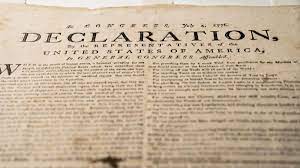
What does it mean to have morals? The dictionary defines them as “a person’s standards of behavior or beliefs concerning what is and is not acceptable for them to do.” In reality, though, it is not that simple—not even close. Morality is not black and white, good and evil. Every society around the world is founded on different ideas, different values; every person is guided by different principles. Morality is unique to each individual, but that does not mean there are not certain spoken, or unspoken, standards guiding the behavior of humanity. In a perfect world, every single person would be treated equally, provided with healthy living conditions, and allowed the same opportunities. This is not a perfect world. America in particular was founded on ideas of liberty and representation, aiming to present itself as a land of opportunity and freedom. These ideas came from the Puritans, but so did many other, less positive influences that we still see today, whether we choose to acknowledge them or not. The preamble of the Declaration of Independence, the country’s beginning, states: “We hold these truths to be self-evident, that all men are created equal, that they are endowed by their Creator with certain unalienable Rights, that among these are Life, Liberty, and the Pursuit of Happiness.” Everyone knows that this statement was meant for white men, yet society still likes to hang on to the idea of America as a superior country, “the free world,” ignoring the large percentage of the population that the preamble blatantly ignores. The truth is, America is not as great as some would like to believe. The truth is, it does not have as much of a moral high-ground as it thinks, incredibly far from it, actually. Our modern society clings to the idea that it has progressed further than anyone else, that it has overcome prejudices and practices from Puritan times, but the ideas surrounding our nation’s founding continue to slip slowly down the drain. The Scarlet Letter by Nathaniel Hawthorne and The Crucible by Arthur Miller are prime points of comparison between the two periods. America claims that it has only improved upon Puritan ideas, but the government is still deeply flawed, the country is more divided than ever, violence and bigotry run rampant, and no lessons have been taken from the past the country claims to have risen above.

As one of the nation’s first major civilizations, the Puritans had an incredible impact on the present day America, that fact is unavoidable. Aspects of the government they created hundreds of years ago are still present today, but society has not risen above its blemishes as much as it thinks; the government and structure of the country are still deeply flawed and biased. David Hall examines the beginnings of modern government in his article “Peace, Love and Puritanism”:

“The most far-reaching of these Puritan reforms concerned the civil law and the workings of justice. In 1648, Massachusetts became the first place in the Anglo-American world to publish a code of laws—and make it accessible to everyone. Believing that the rule of law protected against arbitrary or unjust authority, the civil courts practiced speedy justice, empowered local juries and encouraged reconciliation and restitution. Overnight, most of the cruelties of the English justice system vanished. Marriage became secularized, divorce a possibility, meetinghouses (churches) town property” (Hall).

The similarities between the early Puritan government and modern government are clear, yet the contrasts are even more telling. According to the description, the Puritans “protected against arbitrary or unjust authority,” but when a country has increased incarceration rates by 500% over a period of forty years, and Black people are sentenced five times more than white people for lesser crimes (“Incarceration”), how can it claim that it protects against unjust authority? The injustice in these statistics is clear.

Not only has the American justice system proven its prejudice, but the government as a whole has shown that, at times, it no longer accurately reflects the views of the nation and its people. The electoral college may have been put in place with good intentions, meant to balance out state power, but when it begins to elect presidents that lose the popular vote, is it still fair and relevant? An article written by The Washington Post states: “It is alarming that a candidate came so close to winning while polling more than 5 million votes fewer than his opponent nationwide. The electoral college, whatever virtues it may have had for the Founding Fathers, is no longer tenable for American Democracy” (“Opinion: Abolish the Electoral College”). In 2016, Donald Trump was elected president, despite losing the  popular vote to Hilary Clinton. In 2000, George W. Bush lost the popular vote to Al Gore. Two additional presidents have won under the same circumstances (Law). Four times the American voting system has elected a president that the people do not want. Has the system really been properly adapted from Puritan times if that continues to occur?

There is no doubt that the Puritans labored under highly questionable beliefs. That fact though, does not diminish the truth that they were guided by strong principles. Their God, their religion, guided every word and action, and they knew where to go because of that. Today, though, what does America believe? The country is so divided that the separation is hindering real progress. In Nathaniel Hawthorne’s Puritan novel The Scarlet Letter, the idea of religion as a motivating force is illustrated perfectly in a conversation between the main characters, Hester Prynne and Arthur Dimmesdale: “‘The conscience of God is on me,’ answered the conscience-stricken priest. ‘It is too mighty for me to struggle with!’ ‘Heaven would show mercy,’ rejoined Hester, ‘hadst thou but the strength to take advantage of it’” (Hawthorne 180). These two characters have been victimized by religion; it has allowed the town to take actions against their adultery that are insane and out of proportion. Despite that, though, they still cling to God as their savior. Their religion is what keeps them going, but also what motivates the town’s legal actions.

The question now is: what drives America today? What do we want to achieve, what motivates our legal decisions? It is not religion, but it would be difficult to argue that it is equal rights and opportunity. There is no single answer, as no one feels the same. As the Associated Press explains,

“The question now is: what drives America today?”

“It’s no longer just Republican vs. Democrat, or liberal vs. conservative. It’s the 1 percent vs. the 99 percent, rural vs. urban, white men against the world. Climate doubters clash with believers. Bathrooms have become battlefields, borders are battle lines. Sex and race, faith and ethnicity… the melting pot seems to be boiling over” (“DIVIDED AMERICA”).

With the size of America’s population, the differences in race, ethnicity, sexual orientation, and other identities, it would be impossible to get everyone to agree. Our differences should be celebrated, but they cannot be allowed to result in negative outcomes for certain groups of people. There is nothing unifying the population, nothing holding us together long enough to create significant positive change. And in this, the Puritans succeeded where America has failed.

America has made many positive changes, especially in recent years. Steps towards equal rights and the legalization of same-sex marriage, for example. Certainly, these should not be discredited nor forgotten about. However, these advancements do not outweigh the violence and bigotry that is persistent in American culture. In order for the United States to claim goodness and morality, to support the idea that it has grown in the hundreds of years since Puritan times, everyone must be treated equally. In Arthur Miller’s play, The Crucible, Reverend Hale is a secondary character. Yet, he seems to grasp the importance of life and freedom more than many of the other Puritans in Salem. This is illustrated in his frantic warning to Elizabeth Proctor: “‘Beware, Goody Proctor—cleave to no faith when faith brings blood. It is mistaken law that leads you to sacrifice. Life, woman, life is God’s most precious gift; no principle, however glorious, may justify the taking of it’” (Miller 132). In this message, Hale conveys an ideal that America seems to have lost sight of today: the importance of human life, no matter the identity or appearance. For it is modern laws that allow for the death penalty, the murder of Black people and people of color by police officers, and allow hate crimes to persist. ‘Mistaken law,’ as Hale states.

“For it is modern laws that allow for the death penalty, the murder of Black people and people of color by police officers, and allow hate crimes to persist.”

Not only does the country’s flawed justice system allow for murder and violence, but bigotry has, at this point, become a part of America’s national identity. This has been suggested not just by observation, but by concrete studies. In his article, “Still Puritan After All These Years,” Matthew Hutson describes the results of several studies comparing modern times to Puritan times, and one result in particular stands out: 

“Studies since the ‘70s have also found that Americans who score high on a Protestant Ethic Scale (emphasizing self-reliance and self-discipline) or similar metric show marked prejudice against racial minorities and the poor; hostility toward social welfare efforts; and, among obese women, self-denigration” (Hutson).

Not only do the results of one study link the beliefs of modern Americans to those of the Puritans, but several. The Puritans were guided by their Protestant ideals, both a blessing and a curse. Clearly, though, those ideals live on. They encourage bigotry and hate, and have real, physical consequences for people they consider “different.” Americans want to believe that they are better, that they have improved their country and widened their beliefs. Where is the evidence to back that up? Where is the action and the real, substantial, systemic change?

Why do we study history? The answer to that question is always the same: to learn from it, to avoid repeating the mistakes of those long dead. There is no doubt that this is an extremely valuable point, yet America continues to fail in showing what lessons it has learned. An excerpt from the introduction to The Crucible explains: 

“The language of The Crucible is not authentic in the sense of reproducing archaisms or reconstructing a seventeenth-century lexis. It is authentic in that it makes fully believable the words of those who speak out of a different time and place but whose human dilemmas are recognizably our own” (Bigsby xxii).

The Crucible is a valuable read, if not for the story then for the true essence of humanity it explores. The characters are, in general, not good people. They kill, manipulate, and accuse innocent people. Ultimately, though, as Bigsby states, the problems they face, the guilt and need for power that drive them to do what they do, can still be witnessed today. There are always going to be some elements of human nature that do not disappear, but when we fail to act, fail to make changes despite researching similar events in the past, those elements can no longer be used as an excuse.

A particularly relevant example of this focuses on reproductive rights. In Puritan times, the white men in control of society chose to label women as inferior, refusing to allow them lives of their own. As embodied in The Crucible by the character Abigail Williams, when those who are refused rights are given a taste of power they, understandably, use it to their advantage. In Abby’s case, this ended in the death of far too many people in what we now know as the Salem Witch Trials. Today, 329 years later, the state of Texas has just passed a law removing rights from thousands of people: 

“The law bars abortions once cardiac activity can be detected in the embryo. This typically occurs around the sixth week of pregnancy. That is very early in a pregnancy, and many women do not know they are pregnant at that point… The cardiac activity detected on ultrasound is not a true heartbeat… It results from electrical activity, but the valves of the heart have not yet formed. And the sound does not indicate the pregnancy is viable” (Rabin).

History has illustrated, time and time again, that attacking people’s basic human rights never ends well. The Puritans chose to declare women subservient to men, controlling their lives, their bodies, and their autonomy. Modern America claims to be better, but how is that possible if they make the same mistakes as the society they condemn? America has not learned from their mistakes; they continue to attempt to strip people of their basic rights and goad them into rebellion, yet still blame them for the consequences of those rebellions. In case they had not noticed, this has never once ended well.

This is not a perfect world, and America is not a perfect country. That fact has been made abundantly clear over the past centuries. However much America would like to claim morality, claim superiority and positive change from Puritan times; the truth does not back those claims up. The Puritans were far from perfect, no one is denying that. America, though, insists that it is better, that it has left those times behind. This is misleading. Many positive changes have been made, but the remnants of past societies are still obvious in the leadership and rampant bigotry. America does not have the moral high-ground it would like to believe. Rather, the country boasts a deeply flawed government, a divided population, violence and prejudice that are not outweighed by the positives, and repeated Puritan mistakes. America could still improve, it has not lost its chance. To do that, though, it must first acknowledge the truth of its lackluster morality.

Works Cited

“DIVIDED AMERICA.” Associated Presshttps://www.ap.org/explore/divided-america/ideology.html#about-contact.

Bigsby, Christopher. Introduction. The Crucible. Penguin Books, 2003.

Caryn Rabin, Roni. “Answers to Questions About the Texas Abortion Law.” The New York Times, https://www.nytimes.com/2021/09/01/health/texas-abortion-law-facts.html.

Hall, David D. “Peace, Love and Puritanism.” The New York Times, https://www.nytimes.com/2010/11/24/opinion/24hall.html.

Hawthorne, Nathaniel. The Scarlet Letter. Modern Library, 2000.

Hutson, Matthew. “Still Puritan After All These Years.” The New York Times, https://www.nytimes.com/2012/08/05/opinion/sunday/are-americans-still-puritan.html.

Law, Tara. “These Presidents Won the Electoral College—But Not the Popular Vote.” Time, https://time.com/5579161/presidents-elected-electoral-college/.

Miller, Arthur. The Crucible. Penguin Books, 1976.

“Opinion: Abolish the Electoral College.” The Washington Posthttps://www.washingtonpost.com/opinions/abolish-the-electoral-college/2020/11/15/c40367d8-2441-11eb-a688-5298ad5d580a_story.html.

“Incarceration.” The Sentencing Project, https://www.sentencingproject.org/.

Posted in Uncategorized | 1 Comment

She-Devil

In Hawthorne’s romance The Scarlet Letter, which was published in 1850, we meet Mistress Hibbins. She is an old, creepy woman, and she is known for her witchcraft. Although she does not play an equally important role as Hester or Dimmesdale for the story, she has an important function in the novel for a better understanding of the plot, the symbolism, and Hester, the main character.

First, Hibbins gives the story a firm time and place setting. She is an actual historical figure  included in a work of fiction: Ann Hibbins, a prosperous Boston woman who was executed in 1656 after being found guilty of witchcraft. By doing this, Hawthorne is able to ground his story a bit more in reality. The Mistress also provides readers with actual historical evidence that Hawthorne’s story and portrayal of Puritan society is not purely fiction.  He hasn’t exactly built a story around real people, but he has woven real people through his story, which has the effect of further grounding the story. 

Hibbins definitely serves a purpose in terms of helping to develop Hester as a character. Both Hester and Hibbins have been alienated from the town; however, each woman responds differently to being an outcast.  Hibbins essentially embraces it, becomes angry and nasty to people around her, and she is eventually accused of witchcraft and hanged.  Hester, on the other hand, works hard to purify herself from her sin by enduring the town’s public shaming:  

“Here, she said to herself had been the scene of her guilt, and here should be the scene of her earthly punishment; and so, perchance, the torture of her daily shame would at length purge her soul, and work out another purity than that which she had lost: more saintlike, because the result of martyrdom” (Hawthorne 51). By occasionally showing readers Hibbins, Hawthorne is better able to show how wonderful Hester is at overcoming the burden of her guilt and public shame.  Mistress Hibbins could be seen as the other side of Hester, the bad side. Hester could easily go over to that bad side. Having been alienated from the community, as Hibbins has been, Hester could become evil, angry, and a servant of the devil.  All the things that Mistress Hibbins is.  The town pushes Hester to the edge of town – Hibbins domain is the forest, so Hester is almost there. When Mistress Hibbins first appears just after Hester learns the magistrates are considering taking Pearl away from her, she actually tries to tempt Hester into that forest, so sign her name with the “Black Man”: Wilt thou go with us tonight?  There will be a merry company in the forest; and I well-nigh promised the Black Man that comely Hester Prynne should make one” (Hawthorne 74). Hibbins is offering Hester friendship, connection – Hester refuses. This character allows us to see how devout Hester is as a Christian.  She will not, despite her rough times, turn to the dark side of society and herself.

The inclusion of the witch not only helps to understand Hester as a character, but it also supports Hawthorne’s critical view of Puritans. Mistress Hibbins, with her “ill-omened physiognomy” who appears to cast a shadow upon the governor’s house, is, ironically, a witch.  With the leader of the Puritan colony having a witch for a sister, Hawthorne’s scorn for the hypocrisy of the Puritans is clearly apparent. In addition, that Hester refuses to accompany Mistress Hibbins because she “must keep watch over my little Pearl” or otherwise, she says, she would go and sign her name in the Black Man’s book–“and that with own blood!” (Hawthorne 75) –is testimony to the validity of her plea that she be allowed to keep Pearl so she will live, and live righteously. Further, Hester’s interview with Mistress Hibbins illustrates how dependent Hester has become on the child of her illicit love affair now that she has been ostracized from society. Later in the novel, Mistress Hibbins appears at unexpected moments; each time that she does enter the scene, however, either Hester or Arthur Dimmesdale suffer from remorse. Thus it would seem that the witch serves as a reminder to Hester and the minister of their sin and of the darkness hidden in Puritanism. 

Toward the end of the novel, after Hester Prynne and Arthur Dimmesdale have determined to run away together, Hester sees Mistress Hibbins in town. Mistress Hibbins says a number of things that make it clear that she understands the relationship between Hester and Arthur. When Hester feigns confusion, Mistress Hibbins asks her: “Dost thou think I have been to the forest so many times, and have yet no skill to judge who else has been there? . . . I know thee, Hester, for I behold the token.  We may all see it in the sunshine! and it glows like a red flame in the dark. Thou wearest it openly, so there need be no question about that.  But this minister! . . .When the Black Man sees one of his own servants, signed and sealed, so shy of owning to the bond as is the Reverend Mr. Dimmesdale, he hath a way of ordering matters so that the mark shall be disclosed, in open daylight, to the eyes of all the world!” (Hawthorne 159). In other words, Hibbins claims that she knows sin and temptation well enough to know who else has experienced it.  She says that though Dimmesdale tries to hide his sin, the Devil still knows of it.  Her words even foreshadow the ending, where Dimmesdale finally confesses and then dies on the scaffold. Mistress Hibbins explains she does not need proof to know all of this; she can tell by the way Dimmesdale acts. This shows how perceptive

Mistress Hibbins is; she seems to intuitively know the contents of another’s heart. The majority of Puritans may be utterly blind to such a possibility, and this is another criticism Hawthorne launches at them.  Mistress Hibbins senses Hester’s heart rebels against the community, though she seems to conform and accept her punishment with equanimity.  She later senses Dimmesdale’s guilt, despite his attempts to conceal his sin.  It is interesting this supposed witch actually knows more about the human heart than many of the rigid, judgmental Puritans do. She is more discerning as well as more compassionate than her Puritan peers.  Those “self-constituted judges,” as the narrator described them, wanted Hester branded or even hanged for her crimes.  This society had little sympathy for her and was ready to treat her co-sinner the same way.  Rather than “out” him, however, Mistress Hibbins has kept her knowledge to herself, reserving judgment because she knows that he will be judged by a higher power (though, for her, it is the Devil), in the way these so-called Christians ought to have done.  The contrast between the so-called good, God-fearing Puritans and the godless witch actually makes the Puritans look even more self-righteous, officious, and merciless. One year after Dimmesdale’s death, Mistress Hibbins is executed for practicing witchcraft. Her death supports the mercilessness of the Puritan society in the name of piety and propriety.

Some readers might see Mistress Hibbins as a bad character, embodying a devil’s servant Hester has to escape from, and symbolizing the evil. But by looking further into the witch’s actions, it becomes clear that she is more complex, helping readers to understand the Puritan society and its hypocrisy. She creates an image under which conditions people who were different had to live in the colonies of the New World. Of course, this is primarily shown in Hester, but Hibbins presents a foil to Hester, allowing us to understand her better. Mistress Hibbins therefor plays a very important role in Hawthorne’s romance.

Posted in Uncategorized | 1 Comment

Pearl Essay – “Hester’s most valuable treasure born of sin”

Illegitimate children are either all good or all bad. Pearl is the illegitimate daughter of Hester Prynne, and therefore, the reincarnation and representation of her sin. Is she considered the evil of an inevitable good for our protagonist? In the novel The Scarlet Letter written by Nathaniel Hawthorne the story of Hester Prynne is set in the 17th century in the era of the Puritans in New England. The protagonist of the narrative, Hester Prynne, has committed adultery, and in the eyes of society has committed a terrible sin, for which she must wear a scarlet letter “A” for the rest of her life, which refers to adultery. Her illegitimate daughter, Pearl, her great treasure, has been the product of this sin, and not only represents “sin” but also the vital spirit and passion that that sin engendered. Because Pearl is a very intelligent girl, and she is unique. She breaks all the stereotypes of the time, and makes herself heard by society. However, all of these characteristics have brought Hester both bad and good consequences. So, what does Pearl really mean regarding Hester? Is it her salvation or her undoing?

After a long analysis of this problem, a result has been reached. Regardless of the cons that Pearl brings throughout the narrative, it is clear that the positive points regarding Pearl and her mother Hester outweigh the negative points of the novel. Because Pearl is the constant reminder of Hester’s sin; this factor helps Hester lean toward redemption and sin no more than she has already done. Furthermore, Pearl symbolizes the embodiment of her parents’ passion. Likewise, Pearl is as if she were Hester’s shield and salvation against the Puritan society of the time and especially Chillingworth himself. The most important point is that Pearl is Hester’s only companion, and therefore she is the greatest treasure, but rather the only treasure that Hester has.

First of all, we can see that Pearl is a constant reminder of the sin committed by Hester, not only because she is the symbol of sin, but also because it is Pearl herself who emphasizes the letter “A” in various parts of the story. For example, the first time she paid attention to when she was a newborn, it was the letter “A” that Hester wore on her chest as a sinner’s mark. The narrator observes, “By no means! But that first object of which Pearl seemed to become aware was —Shall we say it? — the scarlet letter on Hester´s bosom!” (Hawthorne 66). The narrator describes in great detail that the first thing Pearl noticed was the letter of the sin committed by Hester. As a result, we can see the direct relationship that exists between the representation of sin as a simple scarlet letter, and at the same time as the reincarnation of said sin through Pearl. The fact that Pearl first looked at the letter, gives us the reference that there is a connection between both representations of sin and immediately we as readers, we realize that Hester has not only been marked as a sinner with the letter “A”, but that also with the event of having conceived Pearl. Moreover, the statement that is presented above that Pearl herself as a person is a symbol, is the personification and reincarnation of sin and of Hester’s passion for her lover, can be seen in the observations, “It appalled her, nevertheless, to discern here, again, a shadowy reflection of the evil that had existed in herself. All this enmity and passion had Pearl inherited, by inalienable right, out of Hester´s heart.” (65). As in unbreakable love, it arises from that deep passion, Pearl, Hester’s unbreakable shield.

Pearl is like Hester’s shield, regardless of being the representation of her sin. When both Pearl and Hester, are on the way to the governor’s house, some Puritan children begin to have negative attitudes towards both, and it is Pearl who scares the courage and goes out to defend not only herself, but also her beloved mother. The narrator describes, “Behold, verily, there is the woman of the scarlet letter … But Pearl, who was a dauntless child, after frowning, stamping her foot, and shaking her little hand with a variety of threatening gestures, suddenly made a rush at the knot of her enemies, and put them all to fight.” (Hawthorne 70). In the first part of the citation, it is written “Behold, indeed, is the woman with the scarlet letter”, a comment said by the Puritan children as a sign that Hester has been marked by tenderness, and unfortunately it is constantly repressed by the Puritan society. The second part of the quotation shows the courage that little Pearl had, at only three years of age, in defending herself and her mother. It is curious to see that Pearl alone has pounced on her knot of her enemies and set them to fight. This fact is an incredible representation that while Hester is a symbol of frailty, Pearl has become a shield for her beautiful mother. Regardless of Pearl being the representation of the sin committed for Hester, and therefore, is in a way the “culprit” that Hester is repressed and crossed out by Puritan society, Pearl defends her at all costs and ends up being the love she has for her mother, which is why she defends her and acts as her shield.

Pearl can also be seen like her mother’s shield in Puritan society, in chapter 8, when Hester and Pearl leave the governor’s house. The governor’s sister invites Hester to go into the woods at night to have an encounter with Satan (represented as the Black Man). Here Pearl is depicted as a saving mechanism for Hester, as Hester gives the excuse of not going to the forest, because he must stay home taking care of little Pearl from him: “’Wilt thou go with us to-night? There will be a merry company in the forest; and I well-nigh promised the Black Man that comely Hester Prynne should make one…’ ‘I must tarry at home, and keep watch over my little Pearl. ‘” (79). In short, the language used in this summons shows without a doubt that Hester has been able to come out of this uncomfortable and mocking situation unscathed, thanks to the excuse that she is the one who should take care of her daughter, Pearl, and that therefore she cannot attend that mysterious meeting with Satan in the forest. The narrator uses the words “tarry”, indicating that it is of the utmost importance that Hester stays home so she can take care of her three-year-old little girl, who is eager to see her beloved mother, being the only one waiting for her at home.

Hester’s only companion is Pearl and that even under sin, Hester was able to conceive Pearl with divine motherhood. Hester was alone and under the rejection of society, and submerged in sin; however, God blessed her with a beautiful companion, Pearl, who would accompany her for the rest of her life: “God as direct consequence of the sin which man thus punished, had given her a lovely child, whose place was on the same dishonored bosom, to connect her parent forever with the race and descent of mortals, and to be finally a blessed soul in heaven!” (62). Here we can observe that the narrator says, ‘as direct consequence of the sin which man thus punished’, obviously referring to the great sinner of history, Hester Prynne; and then he continues the summons by saying ‘to be finally a blessed soul in heaven!’, referring to the blessing of divine motherhood, even after being conceived under illegitimacy, and therefore under sin. These fragments definitively confirm that Pearl has arrived as Hester’s companion and has caused the protagonist not to feel alone fighting against the rejection of the Puritans, and therefore she is being accompanied throughout the hell that she is living.

Besides Pearl has become Hester’s only companion, Pearl has become her mother’s greatest treasure, if not her only treasure. We can observe this in the descriptive way that the narrator gives when he says that the clouds of sadness have been lowered by the illumination of the girl in the following: “Cloud-shapes of gloom and despondency that had brooded in her heart. They were now illuminated by the morning radiance of a young child’s disposition…” (63). As a result, we can see that Pearl has come to give birth in the gloom that followed Hester to be able to pursue her happiness. To finish confirming and putting the cherry on the cake, we have this following quote, where the author takes the time to give a divine phrase regarding the beautiful name that Hester has given her daughter, thus showing the great affection that Hester has her beloved daughter: “But she named the infant” Pearl “, as being of great price — purchased with all she had — her mother’s only treasure!” (63). This beautiful phrase closes our analysis with a flourish. The fact that Hester has decided to name her daughter ‘Pearl’ ‘as being of great price’, as the quote above indicates, makes us confirm that regardless of whether the reincarnation of sin is represented in her beloved daughter Pearl, Hester has no doubt that he will love her unconditionally no matter the situation. Pearl is not only the representation of sin and the devil as the Puritans see it, but she is also the beautiful representation of the love and passion that exists between Hester her beloved Dimmesdale. From the moment the author describes in detail the beauty that Pearl has, to the smallest detail of the meaning of her name. Hester undoubtedly loves her daughter more than anything in the underworld, and she is his greatest treasure! She is blessed with divine motherhood, and despite her being in sin and illegitimacy, Pearl is still a miracle and a gift from God; therefore, she is the greatest treasure that Hester Prynne could imagine having!

As a conclusion, beyond the fact that Pearl is the representation of Hester’s sin, and that because of her, Hester is rejected by society, Pearl has acted as a shield, a mechanism of salvation, a companion, a treasure, and most importantly, the representation of passion and the miracle of love and therefore of the blessing of divine motherhood. “Being a mother is not measured by what you leave behind by having a baby, but by what you earn by doing it.” And that is exactly what Hester Prynne is doing by leaving any worries behind, turning the page on her mistakes, and now all she concentrates on and cares about is her priceless treasure, her beautiful daughter Pearl!

“The greatest treasure of a mother is her daughter.”

Posted in Uncategorized | 1 Comment

Shades of Gray

What does it truly mean to be a villain? The fact of the matter is, good and evil are not surface level; there is not one sole characteristic that defines how we see a person, a character. This is heavily showcased throughout the novel The Scarlet Letter by Nathaniel Hawthorne. Roger Chillingworth is a textbook example of a villain: storming into the town after two years gone, seeking revenge on his young wife’s lover, scaring her into submission. Is he a good person? Of course not. But there is something to be said about the emotions behind his actions. The fact that he is in pain by no means excuses the deeds he did, but they do explain them. Upon closer inspection, another character causes much more harm than Chillingworth ever did, with no obvious excuse in sight. Despite how Hester’s husband is presented to the audience, Arthur Dimmesdale is the true antagonist of her story. He is a symbol of corruption and sin in her life and her town, and his impact on her life is certainly not positive. Dimmesdale is the evil in The Scarlet Letter; he traps Hester Prynne in a pernicious relationship, proves his selfish nature time and time again, and physically embodies the torments of the patriarchy that plagues women.

While it is certainly true that Chillingworth is the antagonist of Dimmesdale’s story, a much darker character haunts Hester. Throughout the novel, the audience, as well as Hester, witnesses Dimmesdale’s slow decline into near madness. No one deserves to live with the all-consuming pain that he does, but that by no means excuses the fact that he allows his own guilt to negatively impact others. Arthur Dimmesdale is quick to drag Hester down with him, trapping her in an extremely unhealthy relationship. This is first illustrated in the woods, at the site of Hester’s confession about her true relationship to Chillingworth: “‘Why did I not understand? O Hester Prynne, thou little, little knowest all the horror of this thing! And the shame!—the indelicacy!—the horrible ugliness of this exposure of a sick and guilty heart to the very eye that would gloat over it! Woman, woman, thou art accountable for this! I cannot forgive thee!’” (Hawthorne 178). It is, of course, understandable that Dimmesdale is upset over this turn of events. The issue is that he is angry at the wrong person. Hester has been through the same, if not worse, situation as him, and yet he fails to recognize that this was a difficult piece of information to reveal. Dimmesdale does not even stop to consider that she was taking a risk in telling him, immediately screaming at her that she is “accountable for this,” when Chillingworth is the real source of his agony. It is okay to struggle, but it is not okay to inflict your pain, your blame, onto others.

“His words help Hester survive, yet when all was said and done they turned out to be false.”

Not only does Arthur Dimmesdale take his anger out on Hester, he also goes back on his word, proving that their relationship was not as sacred, as important as he promised. His words help Hester survive, yet when all was said and done they turned out to be false. Shortly after Hester’s confession in the woods, she and Dimmesdale are able to make amends and plan for the future. The pair agrees that they are not the true sinners in this scenario, but rather their love “had a consecration of its own” (Hawthorne 178). Hester seems so sure of his devotion, so positive that their bond is right, and Dimmesdale, at first glance, agrees. Yet, it is not so surprising that he goes back on his word when it matters most. With his dying breaths, Dimmesdale responds to Hester’s hopes they will meet again with: “‘Hush, Hester, hush!’…’The law we broke!—the sin here so awfully revealed!—let these alone be in thy thoughts!’” (Hawthorne 235). This is Dimmesdale’s last chance to say goodbye to the woman he “loves,” the one he has sacrificed so much for. In his very last moments, though, he chooses to instead remind her that their love is insignificant compared to the sin of their actions. Puritan times may have been very different from our modern age, but that is not love.

Aside from the fact that Dimmesdale draws Hester into a toxic, unhealthy relationship, he also proves repeatedly that his selfish nature consumes all other aspects of his personality; it appears in far too many of his major decisions. One example of this that particularly stands out is his blatant disregard for the lives of those around him. At the end of the novel, after Dimmesdale gives his speech to the town, he draws both Hester and Pearl, his only remaining family members, onto the scaffolding in front of everyone. It is there that he announces his sin to the world: he is Pearl’s father, the lover that Hester has sacrificed everything for. Not only does this disrespect Hester’s losses, it jeopardizes their plans to leave for no reason at all. Dimmesdale was under no obligation, aside from his own guilt, to expose this secret to the town. Did it make him feel better to finally be his true self? Perhaps. But, in the end, it renews the town’s interest in the crime Hester spent so long burying, as well as completely demolishes their chance to leave once and for all. Dimmesdale’s decision in that moment benefited no one but himself, and even put literal lives at risk, as shown when Hester voices her concern: “‘I know not! I know not!’ she hurriedly replied. ‘Better? Yea; so we both may die, and little Pearl die with us!’ ‘For thee and Pearl, be it as God shall order’” (Hawthorne 232). Whether or not Hester and Pearl were actually at risk of death does not matter here; what matters is what Dimmesdale thinks. And he makes it quite clear that their deaths would have little impact on him. Arthur Dimmesdale is already going to die, and he knows it; what does it matter if his last actions bring about the deaths of those around him? He won’t be around to see it.

The Scarlet Letter is not a feminist novel. Do Hester and Pearl showcase elements of feminism? Absolutely. Ultimately, though, the tone of the novel and certain choices by the author undermine these elements. No character in this version of Puritan Boston benefits from the patriarchy more than Arthur Dimmesdale. In fact, he is a physical representation of the torments of the patriarchal society that plagues the novel’s main female characters, and still exists today. Much like men in today’s age, Dimmesdale is able to take full advantage of his power and privilege. It may not be a conscious decision, but it happens nonetheless. He is viewed favorably throughout his life and career in Boston, with no one questioning his purity and morality, even after death; this is unlike the women, who are under constant scrutiny. The narrator shows this particularly well after his death and the reveal of his sin: “Neither, by their report, had his dying words acknowledged, nor even remotely  implied, any, the slightest connection, on his part, with the guilt for which Hester Prynne had so long worn the scarlet letter. According to these highly respectable witnesses, the minister, conscious that he was dying,—conscious, also, that the reverence of the multitude placed him already among saints and angels,—had desired, by yielding up his breath in the arms of that fallen woman, to express to the world how utterly nugatory is the choicest of man’s own righteousness” (Hawthorne 237). Even in death, even after stating himself that he sinned, Dimmesdale is still portrayed as an angel, and Hester is still left to deal with the consequences of their sin, however much they have waned. This description by the narrator only goes to show the extent of Dimmedale’s privilege: the people downright refuse to see him in a negative light. Contrasted with the scene in the beginning of the novel, in which Hester is picked apart by women she has never met, it emphasizes the privilege Dimmesdale, and men in general, have; they are able to escape these dark and terrible situations with their reputations intact solely due to their sex assigned at birth.

Not only does Arthur Dimmesdale reap the benefits of the patriarchy, he is also a figurehead for male superiority in Puritan society. It is made abundantly clear throughout The Scarlet Letter that Dimmesdale is seen as the moral core of the town; he is their guiding light, the figure they turn to for advice. And yet, he is still incredibly corrupt. He is able to take advantage of his position to avoid persecution, and many citizens almost literally worship the ground he walks on. Dimmesdale is often seen throughout the novel in the company of other ministers and governors, and they all trust his opinions. The man is an embodiment of abuse of power and position, and still the only official that the people care about. Not only that, but it is stated that power is often hereditary; it is passed down, rather than earned, with few chances for exchange. The narrator illustrates this in this description of the men in the parade: “And yet the men of civil eminence, who came immediately behind the military escort, were better worth a thoughtful observer’s eye…It was an age when what we call talent had far less consideration than now…The people possessed, by hereditary right, the quality of reverence” (Hawthorne 217). These men are not known for their talent, that is made clear. So what gained them their power? The narrator has an answer for that as well: the circumstances of their birth. At the head of the town, the government, is Reverend Arthur Dimmesdale. Dimmesdale is a figurehead, a representation not only of those in charge, but what they stand for.

No person, no character, is black and white, good or evil. Arthur Dimmesdale is a prime example of this, a man illustrated in shades of gray. At first, he appears to be the poor victim of the villain of the story, subject to revenge plots and emotional torture. In reality, it is not that simple. Dimmesdale inflicts just as much pain as is inflicted upon him, and stands for some of the evils that torment Hester and Pearl throughout the novel. He traps Hester in a relationship more harmful than healthy, cannot restrain his selfish nature, and symbolizes the pains of the patriarchy.

Posted in Uncategorized | 1 Comment

An Immoral Society

It is thought by some people that Puritan society was more moral than society today. The Bible guided their morals and religion brought their community together. This argument is inherently incorrect though because of the positive progression society has made since the 1600s. Based on the texts, The Scarlet Letter and The Crucible several conclusions can be drawn. The Puritans were a racist, homophobic and sexist society. Even though these three traits exist in our communities today, our society cannot be compared to the misfortunes of the Puritans’ way of living. The Puritans targeted other cultures, especially the Quakers, treating them with hate, violence, and discrimination. Additionally, the Puritans’ morals were based on religion, specifically the bible and Protestantism. This idea of a whole community basing morals off of religion creates some problems which immediately discredit Puritan ideals. Moreover, mortality has improved since the Puritan times because of what is understood as socially acceptable, anti-discrimination movements, and the lack of a strong religion in society.

The character trait of jealousy is very apparent among the Puritans, more so than people today. This can be seen in The Scarlet Letter when the main character, Hester, is standing on the scaffold looking out at the townspeople. Hawthorne makes it clear that she looks beautiful with a delicately embroidered scarlet letter on her chest. The response of some of the townspeople is that of jealousy: “It would be good if we stripped Madame Hester’s rich gown off her dainty shoulders; and as for the red letter, which she hath stitched so curiously, I’ll bestow a rag of my own rheumatic flannel, to make a fitter one!” (Hawthorne 30) The woman who says this sees Hester as a woman she would like to look like, she wants to take her rag and make a letter similar to Hesters. From these women, it is clear that jealousy is an idea embedded in their minds. Today, this amount of jealousy is not socially acceptable. Now people showing off talents are celebrated. For example, TikTok is a platform where people show their talents and even appearances. Whether that’s dancing, skateboarding, or just smiling into the camera. Either way, people today are more supportive of other people showing off their looks. In Puritan times Hester was ridiculed for embroidering her letter but today people are lifted for being proud of their good features. The positive change in society’s norms is obvious through the sin of jealousy. 

Besides jealousy, another fault of the Puritans was the way they treated people who were different from them. The Puritans have biased attitudes towards people of color and they even owned slaves. The Puritans thought of people of color as lesser than them and forced them to work without pay. In The Crucible the character Tituba is a slave from Barbados and represents the only character from the play not from New England. Tituba stands apart from any of the other characters in the play because of her race. She keeps to herself and seems almost invisible in many scenes. Before Tituba even confessed to witchcraft, the townspeople deemed her evil and automatically associated her with witchcraft because of her skin color and origin. “God’s condemnation was visible in the color of her skin” (Miller 26). The people of Salem saw her as evil simply due to her skin color, which shows blatant racism. Today society still struggles with racism but people are actively trying to prevent it through anti-discrimination movements. Protests like Black Lives Matter have been occurring more frequently, which advocate stopping police brutality and discrimination again people of color. Black Lives Matter has effectively spread awareness and education about issues involving race. It shows the large strides society has made to prevent racism. One cannot compare a society that owned slaves and saw them as forces of evil to a society that is actively preventing racism. Society today is much more moral and accepting because of this. 

The lack of morals in Puritan society can also be seen in their treatment of Native Americans. It is clear throughout the novel that Native Americans were treated poorly. The townspeople call them “uncivilized” and not fit to be around the Puritans. The novel makes Native Americans seem like idiots and animals. In one scene the townspeople all gathered because someone was causing a scene. Not knowing what the commotion was they started guessing, “it might be, that an idle or vagrant Indian, whom the white man’s fire-water had made riotous about the streets, was to be driven with stripes into the shadow of the forest” (Hawthorne 53) They thought it might be a Native American, drunk on whiskey, being beaten and then dragged back into the forest. This cruel behavior was sadly not uncommon in Puritan society which supports the idea that Puritans did not treat Native Americans well. Now our society has become much more accepting of Native Americans. An example of this is how society has corrected the language used to address Native Americans. In Puritan society, they called Native Americans “Indians” even though they were not from India. Since then terms have been changed and are more appropriate. This represents a change in society and how Americans are more accepting now, therefore more moral. 

One final group that the Puritans discriminated against was the Quakers. The Quakers were from Christian roots and were named “The Society of Friends.” Quakers believed that everyone was blessed by God and that God lives in us all. The Puritans, however, believed that one must earn their way to heaven through work and religion. This being said the Puritans were very intolerant toward the Quaker’s beliefs, which caused conflicts. The Puritans persecuted the Quakers “with beatings, fines, whippings, imprisonment, and mutilation.” (Sigmund 1) The Puritan government in Massachusetts even passed laws to prevent the Quakers from entering Massachusetts. They were afraid Quakers would change their society and give Puritans new ideas (Sigmund 1). This prejudice that the Puritans had towards Quakers proves their lack of morals. Today, however, society has been much more accepting of people from any religion. An example of this improved tolerance can be seen in the demographics of United States cities. In New York City  “one-in-ten people (8%) are Jewish, 3% are Muslim and another 3% are Hindu” (Lipka). Through these statistics it is clear that New York City has diversity and people of many religious backgrounds live together. Diversity in cities is something Americans take pride in. Looking back at Puritan times it is clear that morals have changed in religious acceptance, even if there are still large strides to make. 

A person’s morals can be based on many things: experience, wisdom, the people whom they are surrounded with. The Puritans base their morals on the Bible, which is an inherently immoral document. The Puritans’ whole society surrounds religion. If a Puritan were to skip church they would be snitched on and shamed. In The Crucible when Proctor is found out to be plowing on a Sunday, for the good of his family, he is looked down upon by everyone around him. His family is then called “the devil’s household”, simply for Proctor’s hard work. The Puritans got this idea from the Bible, which states that one must rest and pray on Sundays. The Puritans also based their punishment on the Bible. In The Scarlet Letter, Hester is punished for sleeping with someone when they were not married, which comes from one of the Ten Commandments in the Bible, “Thou shalt not commit adultery.” Everything in Puritan society comes from this book. But the book they are basing all of their decisions on is inherently immoral and subjective. 

The Bible is subjective to everyone which already makes its whole backbone immoral. An example of this is that the Old Testament of the Bible is followed by Jewish people whereas the New Testament is read by those who follow Jesus (Shook). There is no standard moral code across the bible. There is no structure or baseline to any of the Bible’s messages because of this. Additionally, strong followers of the Bible, like the Puritans, also follow the Bible no matter the condition. Even if the Bible says obscene or immoral things a true believer of it would not question what it says, they would submit to its teachings. 

“Submission to God and obedience to arbitrary rules is the opposite of taking responsibility for one’s own actions. There is no ethics here, nothing that leads towards independent thoughtful objectivity. Letting God decide all morality is the ultimate subjectivity: the whim of one individual decides morality. It’s a contradictory morality at that” (Shook).

A devout follower of the Bible is then the least moral of all people than since they do not think for themselves. Rather they only think about what God, Jesus, or a speaker in the Bible has to say. Discussing morality in the Puritan times is overshadowed by this constant following of the Bible. If the Bible is not moral, then all of the Puritan morals must be not credible. 

Another religious issue in Puritan society were their sermons. A sermon is a speech, given at church, about a moral subject. The Puritans have plenty of topics they would discuss in sermons like drunkenness, gambling, and adultery. This being said, Puritan sermons are a good way of looking at their morals and how religion was tightly connected to them. One sermon, written in 1675 said “That excess in wickedness doth bring untimely death” (Heyrman 1). The priest was explaining that those who are evil will die early. In Puritan times women who were deemed evil were sentenced for witchcraft and put to death. No proof would have to be offered, just that being called “evil” or “suspicious” was enough for hundreds of women to be executed. The Puritans lacked justice, a moral that Americans hold very dear today. 

Morals are standards for behavior or belief-everyone has them. But some people have stronger morals than others. Morals can waver with society-some points of history had stronger morals than others. But one thing can be certain, today’s society has stronger morals than in Puritan times. In Puritan times they lacked certain morals that people today have-they were very jealous, racist, and did not serve proper justice. Puritans also based most of their morals on the Bible, which does not set a good moral standard for any group of people. No one should look to the Puritans as a source of strong morals, instead, one should reflect on weak points of society and work to create equality. 

Work Cited:

1: Heyrman, Christine Leigh Christina Lee. “Puritanism and Predestination, Divining America,” TeacherServe®, National Humanities Center, http://nationalhumanitiescenter.org/tserve/eighteen/ekeyinfo/puritan.htm.

2: Hawthorne, Nathaniel. The Scarlet Letter, 2018.

3: Lipka, Michael. “Major U.S. Metropolitan Areas Differ in Their Religious Profiles.” Pew Research Center, Pew Research Center, 27 July 2020, https://www.pewresearch.org/fact-tank/2015/07/29/major-u-s-metropolitan-areas-differ-in-their-religious-profiles/.

4: Miller, Arthur, and Susan C. W. Abbotson. The Crucible. Bloomsbury, 2014.

5: Simond, Carl E. “Quakers Fight for Religious Freedom in Puritan Massachusetts, 1656-1661.” Quakers Fight for Religious Freedom in Puritan Massachusetts, 1656-1661 | Global Nonviolent Action Database, https://nvdatabase.swarthmore.edu/content/quakers-fight-religious-freedom-puritan-massachusetts-1656-1661.

Posted in Uncategorized | 1 Comment

We Need Not Bear Our Burdens Alone

A quote by Gloria Jean Watkins says, “Contrary to what we may have been taught to think, unnecessary and unchosen suffering wounds us but need not scar us for life. It does mark us. What we allow the mark of our suffering to become is in our own hands.” In the novel The Scarlet Letter by Nathaniel Hawthorne, the main character, Hester Prynne, is forced to wear a letter “A” on her clothing for the rest of her life, exposing her sin to the world. Pearl may have been the result of Hester’s adultery, but by no means does that make her a symbol of evil, a punishment from God. As Watkins explains, the mark that suffering leaves on a person is often determined by them; but what it does not say is that we are not alone in the world, we need not bear our burdens alone, relying only on ourselves. Pearl may be a child, she may be Hester’s responsibility, but that does not diminish the positive impact she has on Hester’s life and the opportunities she provides her. Ultimately, Pearl is a force for good, a shot at redemption for Hester; she acts as a treasured companion, a shield, and, most importantly, a reminder of the consequences of sin.

There is no doubt that it is difficult to raise a child, a fact that Hester is frequently reminded of. However, those difficulties are outweighed by the fact that Pearl provides Hester with something incredibly important, something that was sorely lacking in her life: companionship and love. When Hester’s sin is revealed to the world, she is left with nothing and no one, the situation made worse when her husband returns and threatens her. Hester immediately moves to the outskirts of the town, devoting her life to Pearl. Pearl provides her with a sense of purpose and happiness in all the darkness of recent events. This is illustrated in the narrator’s observation, “But she named the infant ‘Pearl,’ as being of great price, -purchased with all she had- her mother’s only treasure” (Hawthorne 80)! Hester sacrificed everything to keep her daughter and her lover safe, but she wasn’t left with nothing. The quote makes it clear that Pearl is a source of happiness in Hester’s life, shown especially through her name- a pearl is a literal treasure in the same way that Hester’s daughter is a source of light in her life.

Pearl’s importance in Hester’s life is shown not only by her name, but is also demonstrated throughout the novel. It becomes obvious that Hester would do anything for her daughter, even more than many mothers at the time. It would have been easy for Hester to give Pearl away to another family to care for; not only would it make her life easier, it would also provide her with an escape from the constant presence of the product of her sin. It would not have been an unusual situation, either, considering many mothers were taking the same action; they willingly gave up their children under the assumption that another would be able to raise and discipline the child in a way that they themselves could not. Hester, though, chooses to stay and fight for Pearl, even going up against those in power to be able to keep her. This is shown when Hester hears word that the town leaders plan to remove her daughter from her care. Hester does not hesitate; she immediately marches into the governor’s house to make her case: “‘God gave me the child!’ cried she. ‘He gave her, in requital of all things else, which ye had taken from me. She is my happiness’” (Hawthorne 101)! Not only does Hester outright state that Pearl is a source of joy in her life, she declares that Pearl was sent as a gift from God. It would have been easy for Hester to give Pearl up, allowing the government to take her. In fact, it might even have gained her back a shred of respect- or tolerance at least- from the townspeople, but Hester refuses to let that happen. Her daughter is her happiness, as she states, the one good thing in her life. It is clear that Hester believes Pearl is a blessing; is that not enough?

Pearl may be Hester’s daughter, her responsibility, but she is also her shield. Pearl protects her mother from both sin and society, whether it is a conscious decision or not. Both mother and daughter are frightfully aware of their place in society, the opinions of others. It would be easy for Pearl to foster a sense of resentment towards her mother because of this, but it is actually the opposite that occurs. Pearl proves that she will always be there to protect Hester, despite any negative actions she takes. This is emphasized in one particular instance. As Hester and Pearl are walking into town, a group of children begin to threaten them with mud, clearly due to the scarlet letter lying on Hester’s chest. Pearl’s actions rather speak for themselves: “But Pearl, who was a dauntless child, after frowning, stamping her foot, and shaking her little hand with a variety of threatening gestures, suddenly made a rush at the knot of her enemies, and put them all to flight…She screamed and shouted, too, with a terrific volume of sound, which doubtless caused the hearts of the fugitives to quake within them” (Hawthorne 92). Are Pearl’s actions appropriate? Of course not. It does not, however, diminish the intentions behind her deeds. Pearl stood up for her mother when no one- not even Hester herself- would. She is willing to do anything to protect both her safety and her dignity, despite the fact that the events surrounding her birth have made her into an outcast. The whole interaction only goes to show the strength of her good intentions and impact on Hester’s life.

Not only does Pearl act as a shield against their neighbors, but also a shield against Hester herself. Pearl prevents Hester from slipping back into sin, even if she is unaware of the protection she provides. The most glaring example of this occurs just after Hester has left the governor’s house. The governor’s sister, Mistress Hibbins, invites Hester to accompany her into the woods that night, implying witchery. Hester responds to this invite: “I must tarry at home, and keep watch over my little Pearl. Had they taken her from me, I would willingly have gone with thee into the forest, and signed my name in the Black Man’s book, and that with mine own blood” (Hawthorne 105). Hester’s reply is honest as well as revealing: had Pearl not been in the picture, Hester would not have hesitated to fall back into sin, endangering her life and her reputation even more. Pearl’s arrival into Hester’s life provided her with responsibilities she cannot shake, and that is not necessarily a consequence. Rather, it supplies her with an opportunity to regain her sense of self and recover from her trauma.

Finally, perhaps most important of all, Pearl acts as a reminder for Hester, encouraging her to be good. Immediately after Hester is punished and exposed to the people, she moves to a small house on the outskirts of the town. While this is an extremely isolating experience and she still endures the hatred of the citizens, it also provides her with a chance to start over, decide how she wants to live her life. Already marked with the scarlet letter and abandoned by her husband, Hester has gained a sense of freedom. With Pearl by her side and keeping her in check, Hester can begin to make peace with herself. This is illustrated with the narrator’s description of her new life: “Her sin, her ignominy, were the roots which she had struck into the soil. It was as if a new birth, with stronger assimilations than the first, had conquered the forest-land, still so uncongenial to every other pilgrim and wanderer, into Hester Prynne’s wild and dreary, but lifelong home” (Hawthorne 71). Did Hester suffer because of her “sin?” Absolutely. But it also gave her the strength and resources to plant new roots and create a place for herself in the world, a place only for her and her daughter.

As Hester begins to establish herself in her new home, she starts giving back to the community as a way to redeem herself. She sews clothing and donates to the poor, despite being generally worse off. Pearl is the only luxury in Hester’s life, and she treats her accordingly. This is shown in the way Hester adorns her daughter: “The child’s attire, on the other hand, was distinguished by a fanciful, or, we might rather say, a fantastic ingenuity, which served, indeed, to heighten the airy charm that had begun to develop itself in the little girl… Except for that small expenditure in the decoration of her infant, Hester bestowed all her superfluous means in charity, on wretches less miserable than herself…” (Hawthorne 75). Hester recognizes that Pearl is the only thing keeping her anchored, helping her avoid sinning any further. This is demonstrated by the fact that Pearl is, seemingly, the only truly beautiful thing in her life. Hester uplifts her daughter, makes her vibrant and loud, a constant reminder of where her past actions have placed her. Pearl is her mother’s happiness, but Hester will never forget where she came from.

“Hester uplifts her daughter, makes her vibrant and loud, a constant reminder of where her past actions have placed her. Pearl is her mother’s happiness, but Hester will never forget where she came from.”

Whether or not Hester’s sin was truly an act of evil is up for debate, but, regardless, she believes it is. The words of others and of Hester’s conscience have had a tremendous impact on the course of her life and her mental health, and she will bear those marks for the rest of her life. She will not, however, endure her suffering alone. Pearl may be difficult and exhibit negative traits from time to time, but, in the end, she is there for Hester when no one else is. She brings joy, protection, and new opportunities. Repeatedly, throughout the novel, she proves that her intentions are pure and her impact is positive. She is Hester’s treasure, her shield, and her reason for life.

Posted in Uncategorized | 1 Comment

Hester’s Sin and Pearl’s Impact

The Puritans had a strong belief that someone who is going down a path of sin could only be saved by God. This path of sin could be addiction, laziness, or vengefulness; whatever this sin may be, it was thought that the only way one could rid themselves of this downward spiral was through religion and God. However this is false. So many other things can rid people of sin and help them become better member’s of society. In the novel The Scarlet Letter by Nathaniel Hawthorne the central character Hester is rid of sin through her daughter Pearl. This is ironic because Pearl was a byproduct of her sin, adultery. Despite this irony, Pearl is who helped Hester from sinning more, helped her get past her previous ideologies and lead a better life. Pearl is a light in the dark path of evil, and she even changes Hester’s mind about the decisions she makes. Furthermore, Pearl is a positive person in Hester’s life. 

Pearl, Hester’s daughter

Pearl’s positive impact on her mother is clear when Hester describes Pearl. Hester uses beautiful language when referring to her firstborn child, which shows her undying love. A common metaphor used when referring to something beautiful is comparing it to the Garden of Eden. In the Bible, the Garden of Eden is described as a paradise on earth: full of lush gardens, flowing rivers, and beautiful flowers. It is where the first man and woman were told to have lived. Pearl is described as “worthy to have been forth in Eden” (Hawthorne, 51). Pearl is so beautiful, in the narrator’s eyes, that she could have been plucked right from this garden. Something so pure and delicate can surely only be a blessing to Hester along her journey of growth. Coinciding with this is the metaphor of Pearl’s name. Her name is ironic since she is a living representation of sin, yet her name is Pearl. She was a pearl, at least to her mother. A pearl is defined as an admirable and valuable gem. Hester sees Pearl in this way, which is why she chose such a name. Another defining quality of a pearl is rareness. Pearl’s are produced from the tissue of a mollusk and are quite scarce. Pearl’s rareness is something her mother sees and finds beautiful. Through this Hester understands that Pearl must be protected because of her beauty and rarity. She takes this protectiveness to such an extreme that sin could never cross her mind or path.  Additionally, Pearl is described as being “her mother’s only treasure” (Hawthorne, 51). Pearl is very valuable to her mother, without the treasure of Pearl Hester would be left with nothing. Consequently Pearl must be what keeps Hester going down the path of resolving her sin. So despite what she derived from her place in Hester’s heart will always be great. Something that takes up that much room in a heart can be nothing but a blessing to the owner. 

“Pearl’s are produced from the tissue of a mollusk and are quite scarce. Pearl’s rareness is something her mother sees and finds beautiful. Through this Hester understands that Pearl must be protected because of her beauty and rarity.”

Proof of Pearl’s presence in Hester’s heart can also be seen by the decisions Hester makes. Pearl has become her top priority and keeps her from indulging with sin. Mistress Hemmings invites Hester to come to the forest that night and dance with a “Black Man”. The “Black Man” means the devil. Hester denies the offer saying she “must try home and keep watch over little Pearl.” (Hawthorne 66) Without Pearl in her life Hester would have agreed to go dance with the Devil, which would have been a great sin. Pearl is the only reason Hester did not go with Mistress Hemmings, which shows that she is the only thing keeping Hester away from a life of sin. Without Pearl Hester would have surely fell through a downward spiral of sin because there was simply no reason not to. Having a reason not to sin, Pearl being that reason, is what is keeping Hester out of trouble and turning over a new leaf. 

Pearl’s decisions are directly influenced by the sins she has committed in the past. The nagging reminder of her sins is constantly being played in her ear. This nagging reminder keeps her from sinning again and spiraling to an easy path of bad decisions. This nagging reminder is often from Pearl, who is a living product of her sin. One example of Pearl’s nagging is the constant poking and exclamations she produces when the scarlet letter is visible. Even as young as an infant, Pearl noticed the letter hanging from Hester’s chest. She used to reach her hand out to touch the gold embroidering and as a baby she tried to pull it off. (Hawthorne, 55) Even though this moment seems unimportant, to Hester the child’s interest feels like a knife to the heart. Hester is deeply affected by the child’s harmless playing because it is a reminder of her past transgressions that she has to display to everyone, even her child. This reminder is what ultimately keeps her from sinning again. The reminder of sin in a consistent form is pushing her away from the temptation of sin because she knows the consequences that follow. Another instance of Hester’s deep guilt happens when she visits the governor. Pearl points out the reflection of Hester on an armor breastplate, the distortion amplifies the letter stuck to Hester. (Hawthorne 60). In pure horror, Hester pulls Pearl back. This action shows Hester’s disgust at herself and the sins she has committed. Proving the point that Pearl’s ever-present pestering is a reminder of her past decisions: “From the epoch, except when the child was asleep Hester had never felt a moment’s safety” (Hawthorne 51). Right from the beginning, Pearl’s presence seemed to force Hester into the reality she had created for herself. The reality might be unfair but it seems necessary to generate the change Hester should incorporate to not commit any more sins. 

Sins were strictly prohibited in Puritan society. Hester broke this Puritan value and has to wear a reminder with her constantly. This punishment is painful for her but is a journey she is not undertaking alone. Pearl is always there for her. Pearl makes Hester happy but allows her to stay on the path she needs to become a better person. Through Pearl, Hester can make changes in her life; this is seen with her constant praise and affection. This affection directly translates into the decisions Hester makes daily and how Pearl reflects on her sin. Moreover, the reminder of sin, as represented by Pearl, directly projects change in Hester and a love that cannot be broken. 

Posted in Uncategorized | 1 Comment