
Being Lost in Life
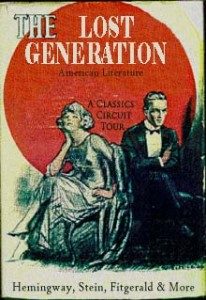
All is to no purpose, said the Preacher, all the ways of men are to no purpose; they are lost. This generation of men who, even though they may have escaped shells, were destroyed by the World War One(Remarque, 1). Facing the holocausts, deaths, and miseries in the battles, this lost generation feels melancholy, empty, and abandoned. Indeed, after they realized the insignificance and fragility of life, how can they stop doubting about the meaning of existence and destiny? In the book The Sun Also Rises, Ernest Hemingway describes the life of the Lost Generation after the war and interprets the idea of being lost. This lost generation, with their lost soul, is lost on their way to find their lost aim in their life. They have lost their identity, value, and purpose. They try to escape from the reality but then lose themselves in their own world. The men of the lost generation are expatriates; they have lost touch with the soil. They get precious. They drink themselves to death. They become obsessed by sex. They spend all their time talking, not working. They hang around cafés(Hemingway, 120). They are lost.
The society consists of people with different identities; the loss of identity will make people lost. Almost every character in the book has lost their identity, especially the masculinity and femininity. The narrator Jake Barnes is physically wounded in the war; his impotence deprives his gender identity. Sitting outside the café in Paris, Jake looks for a prostitute. His instinct as a man drives him to have dinner with her. However, Jake only holds his arm around the prostitute. He pushes her hand away when she is trying to touch him. Jake feels insecure, inferior, and lost with the loss of his male identity. Robert Cohn, on the other hand, lacks masculinity because he has a nice, boyish sort of cheerfulness that had never been trained out of him(Hemingway, 52). Cohn allows himself to be abused terribly by his girlfriend, while listening silently the entire time she rebukes him in front of his friend. He is so juvenile and weak that he even cried in the argument. In contrast, Lady Brett, who is the only woman in the six main characters, acts like a strong bullfighter, revolving her relationship vigilantly around the men with her. She lacks the femininity that Romero even suggests her to grow her hair out to be more womanly. The gender identity of each person is totally switched between men and women. The loss of identity not only creates abnormal society and life but also explains the idea of being lost.
Everything in the world has its value; people have their value for life and items have the value for exchange. For the lost generation, the life value is lost. Brett’s fiancé Mike has lost his value of honor, the most important value of the war. For a big dinner with Prince of Wales, he asked the tailor to find him some medals. After the dinner, he gave out the medals to the girls in a night club. Mike said: “I gave one to each girl. Form of souvenir. They thought I was hell’s own shakes od a soldier. Dashing fellow”(Hemingway, 141). Mike is indifferent with the value of metals which belong to a frightfully military cove. There is even pride in his tone. He used to be a soldier, how can he not know the value of the medals and the honor? It is the loss of life value that makes him lost. The tailor wrote him letters for returning the medals but Mike paid him one hundred pounds a year to keep him quiet. The medals lose their value of honor; the only value they have is pure money. In fact, everything in the lost generation has lost their original value. Jake represents the value of friendship as: “If you want people to like you you have only to spend a little money. Everything is on such a clear financial basis”(Hemingway, 237). In that society, the value of everything can be simplified to a labeled price. As both life and items have lost their value, the generation is lost. For them, what is the purpose for living in this world?
The men in the lost generation borne back ceaselessly into their past, suffering from the horror of the war and the desperation in life. Before they went to the war, everyone has an aim to save their country. However, the reality of the war defeated them. They lost their aim and had nothing to fight for in their lives. They are lost in the aimlessness. Under that circumstance, the only thing they can do is to escape. They want to escape from the shattered dreams; they want to escape from the cruel reality; they want to escape from the painful torment. In order to kill the pain of their past and aimlessness, they use wine and traveling to numb themselves. Jake describes the feeling of drinking as: “Under the wine I lost the disgusted feeling and was happy. It seemed they were all such nice people”(Hemingway, 151). As the horror of the war constantly bothers the lost generation, they drink aimlessly to numb themselves and eliminate the pain. Moreover, drinking and traveling also filled up the hollowness of their lost life.
The idea of being lost appeared in the loss of gender identity, honor, life value, and purpose. The lost things will never come back. This generation is lost and will be eventually lost in the history. However, one generation passes away, and another generation comes. The new generation will not be lost. On one fine morning when the sun rises, it will run faster, stretch the arms farther…
In this critical piece about “the sun also rises”, I explained why that generation after world war 1 became lost. I analyzed the gender identity, honor, and value of the people who fought in the war. At the end of my paper, I used the quote from the Great Gatsby: “On one fine morning when the sun rises, it will run faster, stretch the arms farther.”
This is well-written. I am surprised by how you link the quotes from another book to The Sun Also Rises. I like it. You also explained well how the quotes from books showed the signs of lost generation.