Morality Today vs. Puritan Times

On the Side of Better Angel

Although morality consstantly exists in societies worldwide, it represents for different values in different societies. Some may think consuming alcohol is a sin, and some think that it is pleasurable. However, as society progresses, there are common values or behaviors that are defined as “morality”, such as being polite and not killing the innocent. As human evolve, the standards of morality is changing continuously. However, nowadays, because of education and technology, people restrict themselves to higher moral standards than Puritan times, in both behaviors and ideas. The comparison can be drawn from contemporary events and the books The Scarlet Letter by Nathaniel Hawthorne and The Crucible by Arthur Miller, which both describe the Puritan society.

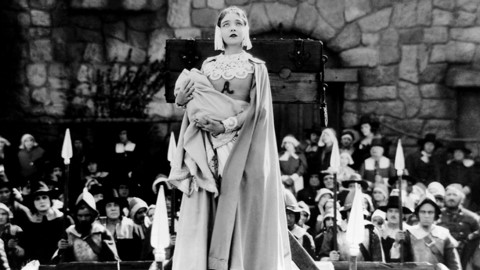
In Puritan times, although Puritans set up high moral standards in their society, their hearts and minds were less moral than today’s society. As the book The Scarlet Letter described, the “goodwife” used her toxic words to attack Hester, a woman who committed adultery, “It were well, if we stripped Madam Hester’s rich gown off her dainty shoulders; and as for the red letter, which she hath stitched so curiously, I’ll bestow a rag of mine own rheumatic flannel, to make a fitter one!” (Hawthorne 48). The women from the crowd were jealous of Hester’s beauty and her fancy letter. From this “goodwife”, it suggests that the society of Puritan is less moral because of their sin of jealousy built in their minds. Moreover, they did not feel ashamed to show their jealousy in front of public. They still spoke bad words about Hester even when a man in the crowd shouted: “Mercy on us, goodwife, is there no virtue in woman, save that springs from a wholesome fear of the gallows? That is the hardest word yet!” (Hawthorne 46). These evidence prove that the morality of sympathy and kindness among these women was lost in their mind.

In contract, in today’s society, people have higher moral standards in minds, peace in particular. In modern history, people fight for morality. Morality reached its peak with the intolerance of racial inequality, sexual discrimination, police brutality, gender bias, child abuse, religious discrimination, killing and slavery. All events and ideological revolutions happened when thinkers and philosophers led the discussions, and people recognized and accepted. Soon, they became the new standards of morality in our society. As Stephen Pinker describes in his book The Better Angels of Our Nature: “Violence has declined over long stretches of time, and today we may be living in the most peaceable era in our species’ existence.” (Pinker 1). No killing is always a moral value, which people tried so long to accomplish. After all conflicts, war and revolution, the “peaceable era “ finally came, which indicates that today’s society has highest morality in history. In education, people always make use of history to prevent further violence and tragic loss in further generation, which suggests the higher moral standards of peace and sympathy are introduced in today’s society. 

Not only did the Puritans lack of moral ideas, but they also had behaviors that were less moral. As Nathaniel Hawthorne described in his book The Scarlet Letter, the sailors in Puritan Times had extremely rude behaviors: “They transgressed, without fear or scruple, the rules of behaviour that were binding on all others; smoking tobacco under the beadle’s very nose … draughts of wine or aqua-vita from pocket flasks.” (Hawthorne 213). These rude behaviors showed their lacks of sense of law and morality. Hawthorne commented it as “it remarkably characterized the incomplete morality of the age” (Hawthorne 213). Lawless behaviors can lead to more violence and a lack of morality. Those behaviors absolutely outraged the town people. However, nobody stands to defend their moral standards. Another example of immorality in Puritan times is in the book The Crucible. Abigail accused other people for being witches by pretending. When she was asked if she still wanted to cry out others, she responses: “If I live, if I am not murdered, I surely will, until the last hypocrite is dead” (Miller 150). Morality was lost because she gained a little power. She presumptuously accused people who she did not like as ‘hypocrite’. Her behavior definitely showed her lack of morality. She did not feel guilty or sympathy when accusing innocent people. Both examples showed immorality in their behaviors.

In modern times, most people have higher moral standards showed in their behaviors. For example, in China, there are still lots of undeveloped cities or provinces. People lived there are poor and uneducated. Recently, those regions have received a lot of help. Financially, many people, even students, donate money for building schools in those regions. Many companies build libraries and donate books. These behaviors show the ideas of generosity and charity, both are types of morality, are developing (Rural Poverty In China).

As the society develops, the higher moral standards are set, and more people are trying to accomplish it through their behaviors. Some common values of morality that we held throughout history are reaching the highest point. Today’s society is on the better angels.


Work Cited:

Hawthorne, Nathaniel. The Scarlet Letter. New York: Modern Library, 2000. Print.

Miller, Arthur. The Crucible. New York, NY: Penguin, 1995. Print.

Pinker, Steven. The Better Angels of Our Nature: Why Violence Has Declined. New York: Viking, 2011. Web

“Rural Poverty Portal.” IFAD. N.p., n.d. Web. 10 Nov. 2016.
Posted in Uncategorized | 2 Comments

Scarlet Letter Pearl Essay

Pearl as the Only Redemption for Hester

Should a child be blamed for the parent’s sin? In the book The Scarlet Letter, the narrator Nathaniel Hawthorne sets up an interesting character, Pearl, the daughter of Hester Prynne and Dimmesdale. The role that Pearl plays in Hester’s life is controversial. Some argue that Pearl is a torment for Hester. Her behaviors and birth actually represent Hester’s sin. However, Pearl can also be seen as the only source of joy and redemption that Hester has in her life because of Pearl’s lawless behavior and characteristics, and Pearl’s existence brings Hester hope to live on. She should not be blamed for the sin of her mother.

Pearl’s behavior has shown her personality; she is lawless and wild, but she definitely has cleverness and tenderness. Some might think these behaviors cause pain for Hester. When the town’s children throw mud on Hester and Pearl, Pearl’s reacts defensively: “She screamed and shouted” like “an infant pestilence” when fiercely pursuing them (Hawthorne 92). However, this behavior is more like a self-protection. Pearl is very clever about what she should do to protect not only herself, but also her mother, Hester. In addition, the behavior itself is not irrational, nor does she over-react. Before Pearl chases the children, she starts “frowning, stamping her foot, and shaking her little hand with a variety of threatening gestures” (Hawthorne 92). Pearl’s behavior of ‘frowning, stamping her food’ indicates that she does not want to make trouble for her mother, as she warns those children with gestures first. Pearl is never the one who starts the fight. In fact, she only reacts and fight back to whoever hurts her. Pearl’s behavior is helpful to Hester because Hester is blamed by public, and Pearl is the only one that stands up for her.

While Pearl’s behaviors serve as a protection, Pearl’s existence serves as a hope for Hester. When the Governor tries to take away Pearl from Hester, Hester’s reaction clearly declares that Hester cannot live without Pearl. She shouts: “Pearl keeps me here in life!” (Hawthorne 101). One might argue that Hester does not want to give away Pearl because Pearl is her own daughter. However, as Hester’s words suggest, she recognizes Pearl as her only redemption for her sin. Hester thinks for many times to kill herself and Pearl: “At times, a fearful doubt strove to possess her soul, whether it were not better to send Pearl at once to heaven, and go herself to such futurity as Eternal Justice should provide” (Hawthorne 150). She has an idea to ‘send Pearl to heaven’ and ‘go herself to Eternal Justice’, in order to receive a redemption. However, Hester later finds out what Pearl really means to her: “Providence, in the person of this little girl, had assigned to Hester’s charge the germ and blossom of womanhood, to be cherished and developed amid a host of difficulties” (Hawthorne 149). The ‘cherished and developed amid a host of difficulties’ womanhood suggests that Hester feels responsibility of raising Pearl, which gives her will to live.

Sometimes, Pearl’s behavior with her cleverness successfully express what Hester cannot possibly address, and in this way Pearl is speaking to redeem Hester. When Hester, Pearl and Dimmesdale, father of Pearl, stands on the stage without being seen, Pearl asks Dimmesdale: “Wilt thou stand here with mother and me, to-morrow noontide?” which is the question what Hester wants to raise up (Hawthorne 138). Although Pearl does not understand what happened behind the scarlet letter, she has a feeling of connection between three of them. Pearl wants Dimmesdale to stand ‘to-morrow noontide’, in front of public, to show their connection, in fact, the sin. It suggests that Pearl is looking for the redemption for Hester: Love. The sin has changed Hester to a woman without tenderness. Pearl asks this question for her mother, attempting to bring happiness back into her life. Her behavior suggests that she is the redemption of Hester.

Pearl’s lawless actions protect Hester, and Hester’s will to live rests totally on the reason of Pearl’s existence. At the same time, Pearl speaks out the sentence that Hester wants to ask, helping Hester to understand the attitude of Dimmesdale. Pearl herself never commits a crime, and she should not be blamed for Hester’s sin. Although many think that Pearl’s lawless behaviors build her a torment to Hester, the intention behind them is actually served as a redemption for Hester.

Posted in Uncategorized | 4 Comments

And the Summer Was Over narrative essay

Safe Trip, Seat Belts

The plane landed in that cold winter night filled with snowdrifts and numerous flakes falling to the ground. As the lonely sky hung up high, the darkness and silence are all over the place. People even put their volume down when talking on such quiet night. I found a hard time breathing in the freezing air. It was unexpected about the time I spent on looking for my jacket from my luggage. Perhaps because my mom accidentally put it underneath other clothes when packing it. Perhaps I was eating chips and watching TV shows when she was packing. I should not blame her about it because if it was me packing up, I might even forget to bring it.

I wiped out all the snow on my giant heavy luggage and put it into the cab. Then I jumped into the back seats because I could not endure one more second in the air. I stretched my stiff fingers and legs. The cab driver was smart about presetting the air conditioner, so there was warm air flowing around. He probably turned it on for several hours because of the late arrival of flight.

As usual, I sent a message to my mom informing her my arrival,. As usual, her reply was simple: “safe trip, seat belts”. Looking at the screen on my phone with little lights on the road, I only saw fatigue. My body was telling me to sleep after a full day in the air. I found a comfortable position lying on the back seats. Warm air and comfortable music soon brought me to dreams.

And then here came the sound of tires screeching and the collision. The warm air was filled with the smell of something burning I tried to understand from the driver’s shaking voice, but I soon found out that the words came out of his mouth were unmeaningful sentences about Gods.

The snowflakes were still flying around with the breeze. The lonely moon was also surrounded by darkness because there was no star in the sky. While the driver was recovering from his desperation, I pulled out my phone, calmly, calling 911. The freezing wind made my fingers stiff, and I was still dizzy because of the collision. However, surprisingly, I talked through all that happened to the police officials with a calm voice and clear chronology.

The cold air kept me awake and I was comprehensive about what I should do next, acting like it had been through times of rehearsals. I called the Dean of Student and the transportation officer from my school. I asked one of the cars which stopped after us to light up and warn the following cars, because we were all standing in middle of the road. And at the next second, I thought: “Maybe it’s time to call my parents.” Then I picked up my phone and kept saying: “Yes” and apologizing when she shouted “I told you to wear your seat belts!”

That freezing winter night actually taught me more than just fastening seat belts. When I finished a body test and came out the hospital, the sun almost came out. I have never seen any dawn beautiful as that.

And the spring came eventually.

Posted in Uncategorized | 2 Comments

The Things They Carried: In-Class Essay

Listen 

In the novel The Things They Carried by Tim O’Brien readers experience the horrific scenes of Vietnam during the war.  The soldiers carry with them, not just the items needed to survive, but mental, emotional, and physical burdens.  While men are at war the absence of emotion and sense of self makes it difficult for the soldiers to pack away these feelings, so they carry them.  In this novel the soldiers physically and figuratively carry war alongside them.  Along with themselves the soldiers carried their stories, death, and most importantly love as they endured the very worst of war, driven by fear and embarrassment.

When soldiers left the war, but also when they were still fighting, they carried with them their stories.  Stories of friendships, stories of experiences, and stories of war itself.  Stories were a way for the soldiers to talk and a chance for someone to listen.  Tim O’Brien was saved by his stories, he carried them with him and shared them so that he was able to defeat fear.  As he reflects on how alive death feels sometimes he says, “But this too is true, stories can save us”(O’Brien, 213).  In Tim’s memories he kept with him the happy stories and the sad, as well as the horrific ones.  His stories that he carried shaped his life following the war.  The use of ‘but’ at the beginning of the sentence shows O’Brien’s authority in making his point heard.  Stories were among the many things the soldiers carried, often times even about love.

War is dark, graphic, and lacks the emotion and feeling of love.  In a horrific landscape of war the men saw glimpses of beauty in love, carrying with them the hearts of women who allowed their hearts to stay alive.  The soldiers often reflected on the women in their past lives that they had loved.  The beauty and happiness they dreamed of gave them a break from the darkness of Vietnam.  Tim and Azar were sitting outside of the hootch listening to tapes of Mary Hopkin.  As they sat and absorbed the woman’s voice, Tim shares, “That’s another thing Nam does to you.  It turns you sentimental”(O’Brien, 199).  The men were ‘sentimental’ because they craved love, a balance of both death and beauty.  The love they carried with them was not the love they felt before the war.  It was a love they ached for, but a love that was long past them, leaving them to dream deeper into it.  The opposite of love, hate, brought the very hatred of death in this novel.

In the midst of all else they carried, death ate the minds of all.  The soldiers carried horrific  memories of those brothers they had lost.  Death during war is so frequent the men become silenced to the toll it takes on their emotions.  Each death is just the same as all the others, a routine that had become consistent in Vietnam.  Death was that one second of fear, that one moment of embarrassment.  It was the different between being listened to and being silenced.  Mitchel Sanders said it so concisely, but so perfect, “Death sucks”(O’Brien, 230).  Following a battle Sanders and O’Brien were issued to go remove the dead bodies.  O’Brien remembered vividly this story of death.  He said, “I remember swinging the bodies up.  Mitchel Sanders took a man’s feet, I took the arms, and we counted to three, working up momentum, and then we tossed the body high and watched it bounce and come to rest amongst the other bodies”(O’Brien, 230).  The soldier’s stories of death stuck, like Curt Lemon stuck to that tree.  They carried the stories of death because it happened so much, they didn’t know how not to.  The bodies ‘came to rest amongst the other bodies’ and that was it, but death never “went to rest” in the minds of the soldiers.  Twenty years later and Tim O’Brien vividly tells that story to readers.

It wasn’t just the comic books, the tranquilizers, or the cigarettes the men carried.  It was the last minute of their dead friend’s life, the very last breath.  Death made the soldiers feel alive, while love gave war a beautiful dream, but the stories told experiences.  The men strapped on the required equipment at the beginning of each day, but surrounding them and within them was an invisible nature of stories, love, and the very vivid memories of death that they carried.

Posted in Uncategorized | 7 Comments

Sin and Guilt: Dimmesdale Essay

Truth Is The Only Safe Ground To Stand Upon

In the novel The Scarlet Letter, by Nathaniel Hawthorne Reverend Arthur Dimmesdale is a man of secret sin, hidden guilt, but a man that must stay honest to his relationship with the church.  Arthur Dimmesdale is secretly the father of Hester’s child, little Pearl, but he must forgo his duties as a priest in complete truth, so his secret had to remain unknown to all.  He was severely ill, and after his sin Hester soon learned that there would be no happily ever. Dimmesdale was a man who had deeply sinned and it scarred his existence, something he wasn’t able to recover from.  The truth often times hurts, and sometimes never heals, but the ultimate sin had been committed and Dimmesdale chose the most worthy punishment, death.  Through honesty, confession with God, and death Dimmesdale is able to prove his good manhood, proving that he has entered through the gates of heaven instead of hell.

Dimmesdale was aware that it wasn’t anyone else’s fault but his own.  He didn’t want to take Hester and Pearl with him atop the scaffolding because Hester’s time of guilt and torment had already passed, Hester’s confession was already revealed.  With true independence he let go of the hands of Hester and Pearl as he inhaled torment and judgement atop public humiliation. As he walked up the stairs leading to the scaffolding Hawthorne writes, “He threw off all assistance, and stepped passionately forward a pace before the woman and the child” (Hawthorne 174).  Dimmesdale took hold of honesty, he reveals himself as a true man in revealing alone.  When Dimmesdale ‘walks passionately forward’ he knows that his love for Hester and little Pearl was once real, he has no regret in his sin.  Dimmesdale understands and accepts the manner in which he sinned, and finally is ready to redeem his guilt.  The way he chooses to redeem his guilt is confessing in front of the city of Boston; it was refreshing for him to come clean after seven long years, but also reveals of the honest man he has always intended to be.  That only of a true man confessing of sin, stands upon a scaffolding with no one but himself, and knows death will be his true redemption.

Dimmesdale’s sin was the only thing that was keeping his ill, sickened, and tired body alive.  The guilt he was feeling was the fuel for his survival, and once he revealed this sin he knew that it was the end for him.  He knew that the only way for forgiveness from God was to die, and fly truthfully to heaven.  As he stood on the scaffolding the day of confession he struggled to make it up the stairs.  Hester accompanied him with little Pearl by their sides, as he would make his way to the podium.  It was his biggest fear, but also the showing of a true man.  As he stood before the crowd he began with, “I should have stood; here, with this woman [Hester], whose arm, more than the little strength wherewith I have crept hitherward, sustains me, at this dreadful moment, from grovelling down upon my face” (Hawthorne, 174). Hester is resembling his guilt, she is holding him up, she is the living proof of his sin that is keeping him alive.  When she is saving him ‘from grovelling upon his face,’ she is stopping him from death.  She, as the sin, is stopping him from going peacefully, because he must go in truth and honesty because he is a well nurtured man.      

Dimmesdale confesses his sin in the only way that he knows to be true, in front of all the people he was dishonest to and through the influence of God.  As Dimmesdale has just stood atop the scaffolding and revealed his sin, Hester was standing right next to him and doesn’t hesitate to still wonder if their future still exists.  She tries to question him about what feelings that might still remain, but he is sure the future of their love will never exist.  While being honest with himself and Hester he states, “It may be, that, when we forgot our God,—-when we violated our reverence each for the other’s soul,—-it was thenceforth vain to hope that we could meet hereafter, in an everlasting and pure reunion” (Hawthorne, 175).  Dimmesdale knows that the punishment for his sin should not reward him with this love.  He knows that this so called ‘pure reunion’ can not be possible because they ‘forgot God.’  He was dishonest to the one soul he promised he never would be, and that was God.  Dimmesdale knew that in order to redeem, he would need to part with the person he ‘violated reverence’ with, his guilt could not continue with Hester because he would be corrupt.  The manhood he embodied was that of a innocent soul, and confessing his sin for God proved him to be an honest man.

Arthur Dimmesdale hid his sin for seven long years, but after such a long time, he was able to come clean.  That only of a true man can stay hidden for so long, but still find courage to remain honest and truthful to the public.  Death was Dimmesdale’s redemption, the only way for him to feel truthfully happy and be an honest man was dying for the mistake he had made.  Death meant that he was content with God, and that was the one person that still had meaning to him.  Truth with God meant that he had forgiven himself, and that he could finally be in a better place, not struggling from pain and guilt.  After seven long years the faithful, young, and good-hearted minister had redeemed his guilt, confessed his sin, and died truthfully in the hands of God.

Posted in Uncategorized | 3 Comments

Concussions Are Not Real

It was all black when I woke up on the ice, the first thing I saw was coach Jeff Ross looking down at me. “Well, that can’t be good. He’s done” Ross said.  

It was 6 A.M on a Sunday in January. I was just waking up. I was excited because I was playing hockey with my old travel team, The Maine Moose. The game was in Manchester, NH, so I slept the whole car ride there. When we got there at 9 A.M, I was the first one there and was soon greeted by all my old teammates who showed up later.

“Kapp, are you ok?” Ross asked

“Yeah, you good man?” the ref asked me

“Umm yeah? What happened.” I asked

“Do you really not remember anything?” coach Jim Raby asked me.

It was a typical Thursday in school, and one of my friends Luke , told me he had a concussion. I responded laughing to annoy him.

“Concussions aren’t real, stop being soft. We all know concussions were made up by the NFL to sell expensive football helmets.”

“Kapp, you’re a terrible person. I hope you get a concussion, and I’m going to laugh so hard,” he responded.

“Seriously coach, what happened?” I asked

“Do you honestly not remember? Ross responded.

“None, what happened?” I exclaimed.

“You got your head hit into the stanchion on the glass. A kid hit you and you went head/ neck first into it. You fell down and were knocked out and you started making a weird sound when you woke up. You may be concussed,” Ross responded.

When I somehow got off the ice into the locker room, I was greeted by my dad who asked Ross

“Hows he doing?”

“Ah not great, he’s done for the day” Ross said.

My dad continued to tell me what happened, and 20 times I would ask him again.

“It was like when Chara hit the guy on the Canadians” he continued to tell me.

When I returned to school two days after (which I don’t recommend), it was not smart. The head was hurting all day and I was not able to do a lot of work.  When I saw Luke he noticed something was different with me, mainly the mark on the side of my face.

“What happened to you?” he asked.

“You’re going to make fun of me.”

“Ha, you got a concussion.I told you you’d get one.”

“I can’t, I told him again those aren’t real”

When I got into the car, I immediately said

“I just got hit like what Chara did to the guy.”

My Dad continued to tell me how he just told me that many times in the locker room. After I closed my eyes and opened them I was back at my house and proceeded upstairs to rest. My dad told me how it was all going to be better and in a few days I will remember exactly what happened. But, to this day, four months later, I still do not remember what happened. Wow, maybe concussions are real after all.

Posted in Uncategorized | 2 Comments

Maggie: A Girl of the Streets

Corruption of Innocence

In the novella Maggie: A Girl of the Streets by Stephen Crane, Maggie, a prostitute on the street corners in New York sees life in the eyes of a “painted cohort.”  Maggie involves herself in a toxic relationship with an arrogant and wealthy fellow, who she is easily attracted to.  Pete, the arrogant gentlemen, takes her on dates to dance halls.  The dance halls transform from elegant lounges to dirty strip clubs.  Maggie, who was fascinated by the silks and the wealth of these women envisions her future to be just like theirs.  Through the acts of fooling with a dishonest man her family disowns her.  She spends her days and nights on street corners, away from the lighted parts of town, smiling and glancing at the men who pass.  In the last glimpse of Maggie in the concluding chapters she dies, surrounded by nothing.  The transformation and degradation of the dance halls shows the downfall in personality and character of Maggie throughout this novella.  

The first Dance Hall that Maggie was brought to was the most elegant, presenting innocence and quality.  It inhabited vibrant light, and people who could easily be perceived as family oriented.  The waiters and little children ran around gracefully to assist all who requested service.  It was infrequent to see a man or women in a drunken state.  Crane writes, “ The great body of the crowd was composed of people who showed that all day they strove with their hands” (Crane, 22).  A crowd of people consumed of such elegant innocence, just as Maggie saw her relationship with Pete as an opportunity to experience and explore love so innocently.  The hard working families and their kids at this dance hall resembled that aspect of innocence as well.  The people showed that they ‘strove all day with their hands’ meaning they were hard at work all day, and the money they had, they earned.  The crowd had no intentions to become drunk and irresponsible, they were warm-hearted and genuine.   Maggie was enjoying the young and innocent love she felt, just as the people of this dance hall were drinking beers and conversing in great innocence.

The second dance hall Pete dragged Maggie to, encouraged outrage and obliterated despair.  The whereabouts of a quiet observant stranger told the story and atmosphere of this dance hall.  While the stranger drinks himself to oblivion, he watches confusingly at Pete who treats people with such arrogance and disrespect.  The hall was elaborate and looked to be tidy, but it also accentuated Pete’s tendencies. It showed ‘opulence and geometrical accuracy,” (Crane, 34) describing the life of lavish Maggie had begun to live with Pete.  However, Crane also illustrated that, “The open mouth of a saloon called seductively to passengers to enter and annihilate sorrow or create rage” (Crane, 33).  The ‘annihilation of sorrow’ connects to the beginning of the annihilation of Maggie’s existence.  The deeper Maggie dug with Pete, the further she found herself from her family and her innocence.  While this hall is lavish, like Maggie’s life with Pete, the hall also defeats emotion, foreshadowing what Pete’s intentions with all women are.

The final dance hall that Maggie visits symbolises her downfall and the depletion of her existence.  The hall is full of barely clothed women, greasy men, and wild music.  The dance hall is illustrated as “hilarious,” in other words more entertaining than enjoyable.  The absence of lavishness and elegance resembled the loss of love and purpose in Maggie’s life, the departure of Pete.  While she had grown to appreciate elegance and fall in love with wealth, it was now gone. In description of the hall’s atmosphere Crane wrote, “A woman was singing and smiling upon the stage, but no one took notice of her” (Crane, 42).  Maggie is now similar to this woman, no one is interested to give thought to her life.  Pete has chosen to explore with Nelle and Maggie’s family believes she has been destroyed and “gone to Hell.”  People no longer care about her, she feels lost, and she no longer has Pete to ‘take notice of her.’  Maggie struggles to find purpose, just like the men at this dance hall, whose only purpose is to empty their pockets for half-naked women.  The lack of consciousness in this dance hall is able to show how Maggie is lost, without purpose or feeling, just like the woman who sings for the inattentive men, theoretically playing for a lost cause.

Maggie, a girl of the street, is at once innocent and genuine.  However, the wealth and arrogance of the hungry men took over her, she found herself suffocated.  Her infatuation with Pete led her to be deathly hurt when his loyalty didn’t prevail.  The dance halls Pete brought Maggie to tell the story of her downfall.  The loss of innocence, elegance, and attention lead to the destruction of Maggie’s existence and eventually her death.  The evolution of the three dance halls in this Novella demonstrate the downfall of Maggie’s life and her character.       

Posted in Uncategorized | 2 Comments

For You; Non-Linear

Death is Alive

People only go to a hospice house for one reason, and it isn’t for long time care or assisted living.  My grandmother, Grammy as I called her, entered hospice care just two days before she took her last breath surrounded by her most prized possessions, her children and family.  Though she strolled around her ten pound oxygen tank after years of smoking,  she lit up every room.  She wasn’t the most healthy person I knew, as just one trip up and down the stairs was all she could handle.  She took numerous medications, doctor’s visits, and restless sleeps so that she could be with her family.  As she lay in the hospice bed on her final day, she probably felt nothing.  She was too weak to speak, the medications allowed her to go in peace.  What the medications didn’t do was ease the pain for those who loved her, myself in particular.

A number of years back, one Christmas, my dad opened up a box with a women’s size small, pink t-shirt.  “Those damn people working for the magazine telephone lines,” she said “I promise I did not order you that.”  As my Grammy got older she was no longer able to go shopping for birthdays and holidays.  She found herself intrigued by The Lakeside Collection, a magazine filled with a variety of different gadgets and gifts.  Year after year she picked out presents that each family member would love.  We all anxiously awaited our selected gifts that year, “I know it’s not much, but you know I can’t get out anymore,” she said.  She always loved shopping, especially for her grandkids, she always found us flashy clothes and pajamas that we would never wear out, but we always said thank you and appreciated her gestured anyways.  It was never about the gifts at Christmas, with her it was always about spending time, laughing, and being a family.  

There she was, a beautiful square urn placed so graciously into a clear case that would be placed at the altar.  Surrounding the urn was a purple cloth that protected her, a soft silk that laid so gently against the toughness of the granite.  On this day her presence still lit up the room, though now she was in a better place; a happier place.  We stood in the entryway of the funeral home awaiting the celebration of someone’s life, who in a heartbeat would have told us to do no such thing so selflessly.

A woman so dedicated to her reality television shows, and Tuesday night rituals of Dancing With The Stars.  “You guys know what night it is right?” she said in a panic. There was no doubt in our minds, we did know what night it was.  She always told us every professional dancer, each judge’s preferred dance routine, and even the guest stars of the current season.  She loved to sing and dance, though her health and old age restricted her.  I observed her facial expressions as they hinted at the anxiety that was coming upon realizing it was almost eight o’clock.  In a blink of an eye we would be out of there, not to interrupt her show.  As my sister and I made our way out she said “I love you guys” as she always did.  

Emotions, how do you keep them in?  The incense of the catholic funeral procession spread throughout the church.  Each step down the aisle felt like one step further from my Grammy.  Just two steps in and a single tear drop hit the church floor followed by many more.  I cried because I missed her and I cried because she supported me always, but I cried because she was my Grammy and I loved her so profoundly.  The priest spoke words that I can not recall because I was so lost in the thought of goodbye.  I felt guilt; I wanted her to see me graduate and go to college, I wanted her to see me play hockey because she never had.  As she lay at the head of the altar, her remains were there, but her presence was amongst us as she looked down smiling at the love within the walls of that church.  She was a beautiful human being with such a golden soul, a woman whose pride in me began very early on.

She had her good days and bad, just as we all do, but each day I was with her I knew without question it was a good one.  As I watched her say goodbye in silence the last time I visited the hospital, and the love in her heart carried with me as I drove home and still does each new day.  The heart-shaped necklace I wear around my neck everyday is a tribute to her, as once belonged to her.  She was without question my biggest supporter and the pride she showed me is something I feel every time I strap on my skates, lace up my cleats, or throw on my softball glove.  The necklace is my reminder that someone is always proud, someone is always watching, and I am always loved.  I walked away from her gravestone for the final time that day in a moment of bliss, as I knew she had happily been laid to rest.  Annie L. McInnis it read,  “I love you guys” echoed.  

Posted in Uncategorized | 3 Comments

Pearl

Shine Pearl Shine

Hester Prynne, the most shamed woman in all of Boston in The Scarlet Letter, by Nathaniel Hawthorne, has committed a sin that shall belong to her for the rest of her existence.  If it isn’t enough of a reminder to her and everyone of the town that she wears the letter “A” upon her bosom for adultery, the result of her sin, her little Pearl, follows her around wherever they may go.  The people of Boston see Pearl as an inhuman creature, a witch, and an elf child, but Hester learns to love Pearl and gains a lot of knowledge about herself from the responsibility she has taken since the birth of her first child.  Pearl is the reason Hester knows so well the qualities Hester embodies whether good or bad, and she allows Hester to make amends with her sin, aside from the bad Pearl is the reason that Hester has realized the absence of love in her life.

The people of Boston view Pearl as the replica of her sinful guilty mother, and the influence Hester leaves on Pearl is seen as a bad one by the people of the town.  Though at points the public aren’t the only people who think this.  Hester has these moments of doubting the innocence of her existence, and the bad influence she may have on little Pearl.  The narrator writes, “she could recognize her [Hester’s] wild, desperate, defiant mood, the flightiness of her temper, and even some of the very cloud-shapes of gloom and despondency that broaden her heart.  They were now illuminated by the morning radiance of a young child’s disposition” (Hawthorne 62).  Readers now know that Hester is realizing the true guilt she feels.  When Hawthorne says ‘illuminated’ Hester sees clear as day the sin she has committed, which prevents her from remaining hidden.  Pearl stood as the reminder to Hester that she would never be like any of the other women of the town, there would always be a different distinctiveness towards her qualities.  The ‘defiance’ in Pearls mood showed Hester the little disobedience she had given her little girl, the mother she needed to be, but never was.  This constantly reminded Hester of her mistake.  

The way in which a character responds to sin and guilt is their willingness to accept and learn from a mistake.  Hester is in jeopardy of losing her child due to assumptions from the public suggesting bad mothering.  She stands up and defends Pearl and fights for her right to have possession of her child.  Hawthorne writes in defense of Hester, “this badge hath taught me,—-it daily teaches me, —-it is teaching me at this moment,—lessons whereof my child may be wiser and better” (Hawthorne 76).  When referring to this ‘badge’ Hawthorne is meaning both the letter “A” and the sin Hester has committed, as well as the child she now possesses.  Pearl is the reason she has learned and the reason she will continue to learn.  Readers see the true pride and connection Hester feels with little Pearl, a connection she fights for and is scared of losing.  Hester declares that “my child may be wiser and better” suggesting that Hester wants Pearl to be different from her.  Hester wants Pearl to be accepted and not just seen as the mistake Hester created.  Pearl is the leader on which the path leads to showing Hester how she wants to move past this guilt, instead of dwelling on such a horrid mistake to the people of Boston.  Pearl is the key component who is illustrating the future Hester is able to have.  

Pearl serves as a very important connection in Hester’s life, the reassurance that love still exists for Hester.  As Hester has accepted her sin, she works to receive forgiveness from others, but mostly from herself.  The people of the town had forgiven her, but this was not enough to allow Hester to forgive herself , something was missing.  In doing this she had the realization that Pearl’s suffering father, Dimmesdale, deserved to know the truth about what happened and who had been aiding him.  He deserved to stop being tormented by Chillingworth, and understand to how Hester felt.  Most importantly Hester realized her love for Dimmesdale and that soon it would be too late to convey to him.  She had been missing one aspect of life since the sin, and that was love.  Hawthorne beautifully writes, “And there stood the minister, with his hand over his heart; and Hester Prynne, with the embroidered letter glimmering on her bosom; and little Pearl, herself a symbol, and the connecting link between those two” (Hawthorne 106).  Pearl is providing Hester with that moment of clarity.  Pearl described as the ‘connecting link’ is speaking to Hester directly, that both Dimmesdale and herself can be guilty together.  She gives the reassurance that guilt together is much better than guilt alone. Pearl stands as the realization for Hester that Dimmesdale is what she is missing.  Love had vacated her life for so long because of her sin, and it may just be the last piece she needs to forgive herself.  Pearl provides the key so that Hester is willing to reveal the truth and out her identity, all for the importance of love.

The story of Hester Prynne’s guilty life of sin provides readers reasons to believe Pearl will be nothing different than the person her mother embodies.  In truth Pearl is the reason Hester has learned, but also the reason she still shames herself and second guesses if she should forgive herself.  Hester had continued to try and accept her guilt, but she was always being held back.  While at the governor’s hall Pearl’s instinct draws her to interact with Dimmesdale, surely not out of random.  The narrator describes Pearl’s actions as, “that wild and flighty little elf, stole softly towards him, and, taking his hand in the grasp of her own, laid her cheek against it, a caress so tender, and withal so unobtrusive” (Hawthorne 79). This took Hester by so much surprise she continued on to ask “Is that my Pearl” (Hawthorne 79)?  Pearl was showing Hester what the right decisions was, and the one avenue of a happy future that remained.  It was Dimmesdale, it was love, Pearl was showing Hester that even if Hester would not forgive herself Dimmesdale would still forgive her.  Dimmesdale and Hester’s future together was so clear to Pearl who was always watching from the outside in, and now Hester was able to realize they could be a family with little Pearl.  Though some may think that Hester can never be forgiven, Pearl is the reminder that love forgives, and that Dimmesdale is Hester’s true love.  She learned more than just about her sin, but about herself as a human being, that she is deserving of love, and the life she intends to give her little Pearl.  Pearl provided her mother with the opportunity for growth, love, but most importantly the chance to forgive herself.

Posted in Uncategorized | 2 Comments

The Sun Also Rises; A Look into Betrayal

Lost in the Lost Generation

In the time following World War I novels such as The Sun Also Rises by Ernest Hemingway were written in a time period know as The Lost Generation.  In a time of rebuilding after the war, authors used their writing to portray forced emotion and false love.  This time period was not packed with realists but more so suffocated with emotional unstableness lacking commitment.  In The Sun Also Rises, the main characters Jake and Cohn, as well as a gentleman named Mike all fall in love with Brett, the ideal woman of the time period.  Through this love triangle emerges tension and the struggle to win the girl’s heart.  In the plot of a Spanish fiesta where people attempt to go head to head with massive bulls, the poor decisions of the people in this society relate exactly to the poor decisions of the main characters in this novel.  While the end of this novel embodies some sort of cliché happy ending, it also resembles the idea of betrayal rather than trust.   

The idea of betrayal and lack of trust are apparent in the friendship between Cohn and Jake.  A friendship that began at the start of the book between two tennis friends exploded into a romantic duel and an ugly betrayal.  When Cohn and Jake are fighting because Jake won’t tell Cohn where Brett has gone, Cohn is angered by Jake’s stubbornness.  Jake is in love with Brett and doesn’t want Cohn near Brett because he doesn’t trust Cohn after the antics he pulled at the bar in the previous week.  Their argument soon ends in Cohn calling Jake a pimp and then fleeing the scene.  While this may be an accurate description of Jake, Jake is hurt and Cohn issues Jake to his hotel room later and attempts to beg for his forgiveness.  Jake responds with nothing more than, “Forgive you, hell” (Hemingway, 198).  These are the words of betrayal from Jake, and the assurance to Cohn that he has lost Jake as a friend.  While some associate betrayal with relationships this is a betrayal of a friendship.  The sarcasm in this quote when Hemingway writes ‘hell’ suggest the surprised nature of Jake that Cohn would even try and apologize for his actions.  Jake would no longer tolerate the rude and unnecessary comments of Cohn with no consideration to his injury or the pain it has brought in his life.  On the scale of betrayal to trustworthy the friendship of Jake and Cohn most resembles betrayal.

The concept of betrayal also can be seen in Brett and Jake’s relationship throughout the novel.  Their relationship struggled from the start as Jake suffered an injury in the war that prevents him from having sex.  Since the injury Jake and Brett’s relationship has always lacked completeness and emotional connection.  Brett has also struggled with the trust barrier because she knows herself well enough to know that she will cheat on Jake simply for intimacy.  The last line of the book illustrates their betrayal as they reflect on what they could have been, Cohn says, “Isn’t it pretty to think so” (Hemingway, 251)?  The hope and wish of this statement by Jake shows the act of betrayal and Jake’s acceptance to the end of their relationship.  When Hemingway writes ‘think so’ it is clear that their relationship was only a fantasy and only something they could ‘think’ up in their minds rather than something they could have in reality.  While in a sense this is a happy ending because they will not completely dissociate themselves, the affection and feeling comes to an end between Jake and Brett reiterating the absence of lasting trust illustrating betrayal.

 We continue to see the absence of lasting trust between Mike and Brett, another relationship that ends poorly.  While Brett has began to have hopes to marry Mike, it is only because Mike can offer Brett what Jake can’t, physical affection.  Brett is often times open with Jake about her future plans with Mike, but as the novel progresses we see Mike as an aggressive drunk that Brett loses interest in.  She also loses interest in Mike because she is scared that if she chooses Mike, Jake will be left all alone.  As Mike and Brett’s relationship continues to dissipate due to Brett’s uncertainty Mike is heartbroken.  After Brett has left for Madrid Mike and Bill are casually chatting and Brett is mentioned in conversation.  Mike says, “Brett’s rather cut up.  But she loves looking after people.  That’s how we came to go off together.  She was looking after me” (Hemingway, 206).  The use of the past tense in this conversation shows how Brett ‘was’ looking after Mike and she isn’t anymore.  The way in which Mike is speaking about Brett when he says ‘she loves looking after people’ shows that he is thinking about her and that he misses her presence in his life.  Brett is no longer looking after Mike and her presence is missed by him resulting in another one of the many betrayals in this novel.  

In the time following World War I The Lost Generation seemed to define an era of betrayal and hardship.  In a time that lacked simplicity Brett finds herself as the main focus of Mike, Jake, and Cohn as a complicated nature began to congest their friendships.  The excessive intake of alcohol became the plot of the story, as civilians in the society challenged bulls in a battle surely to be lost.  The fiesta- like atmosphere displayed the chaos that had taken place, and once that uproar had ended a rebirth began for the characters.  In the end readers can perceive this novel as one consisting of a slightly positive ending, but more so one that ended in betrayal.        


Posted in Uncategorized | 1 Comment