The Things They Carry In Class Essay

Every one of us carries a weight, whether it be emotional or physical or a combination of the two. In the novel The Things They Carried by Tim O’Brien, each of the soldiers carries their own weights. The physical objects often lend themselves to their own emotional weights, connecting the things they physically care about to their emotions. All of the weight, whether physical or emotional, affect the soldier’s actions.

Every soldier has a personal object that they carry; tranquilizers, the New Testament, a diary. In the chapter “Stockings”, O’Brien describes Henry Dobbins carrying his girlfriend’s pantyhose around his neck all the time. He uses it as his good luck charm and as a connection to his life at home, “More than anything, though, the stockings were a talisman for him. They kept him safe. They gave access to a spiritual world, where things were soft and intimate, a place where he might someday take his girlfriend to live” (O’Brien 111). This physical piece that Dobbins carries means more to him than just the pantyhose. It is his past and future with his girlfriend. They gave him confidence and a reason to survive the war. He never got hurt, and survived many close calls with ambushes. When his girlfriend broke up with him, he never lost that connection with the pantyhose, “No sweat,” he said. “The magic doesn’t go away” (112). The language is careless, even though we know that he was affected by the loss of his girlfriend. Even though he had no future to come back to with her, the pantyhose still gave him hope and perseverance.

In the war the men keep up a persona. They must be brave and fearless at all times, otherwise they are not men. Cowardice was certainly present, but they felt as if they couldn’t show it, “They carried the common secret of cowardice barely restrained, the instinct to run or freeze or hide, and in many respects this was the heaviest burden of all, for it could never be put down” (O’Brien 20). The men felt like they could not be afraid of anything, even though it is human nature to have fear. The way that O’Brien talks about the weight of the ‘common secret of cowardice’ as if it was a physical object that they ‘could never [put it] down’ gives the emotional weight a more tangible feel, like something more real. Keeping up the act of being unphased by the terrible things that occurred all around them was the hardest thing for them to do, “They carried their reputations. They carried the soldier’s greatest fear, which was the fear of blushing” (O’Brien 20). The soldiers felt that they could not have human emotions for fear of seeming weak to their peers.

In The Things They Carried, each of the men has something specific that they carry. Some carry physical things to remind them of their home or past that have a larger meaning to themselves. However, all the soldiers carry the fear of being constantly brave and never letting the horrors of war affect them like the war should.


Posted in Uncategorized | 2 Comments

Two Female Epitomes of Literature in the XX Century

The Great Gatsby – a novel by F. Scott Fitzgerald and The Sun Also Rises, written by Ernest Hemingway are two of the most influential books that shaped what American literature is now. Written in the late XX century, both novelas succeeded in showing different perspectives of how corrupt and lost Americans have become after the destructive World War I inside and outside of the country. With brilliant language, unique styles and excellent thoughts, the two also delivered to the world two of the most iconic women in literature: Daisy Buchanan in The Great Gatsby and Lady Brett Ashley from The Sun Also Rises. Both were born in the same time period, one slightly earlier than the other one. They share similar social background and are even shaped by similar world events, yet they are very distinctive. Nonetheless, the two ladies flourish the roles they play in each of the book and shape the two classics by constructing the barbaric and superficial society, giving readers a view of women at the time and giving insight to other characters in the book.

Daisy Buchanan in The Great Gatsby is portrayed as a dream that the main character, Gatsby can never achieve. Daisy falls in love with Gatsby when he is still a military officer but decides to marry Tom Buchanan, an aristocrat, while Gatsby is in the war. After returning, Gatsby dedicates all of his time making money, building his own mansion right next to the Buchanan’s and hosting luxurious parties just to win Daisy back. In reality, Daisy is not the illusion that Gatsby has been worshipping. She is beautiful and charming, but also careless and shallow. This is shown when she hits Myrtle, Tom’s mistress, and runs back to Tom while letting Gatsby take the blame and look over her all night, “watching over nothing” as his dream is now shattered and dead (Fitzgerald 145). Gatsby spent his whole life chasing after Daisy but received nothing instead and is unexpectedly betrayed to at the end of the book. Throughout the whole novel, Daisy Buchanan not only represents the American Dream that Gatsby longs for but also the amoral values of the American aristocracy during the 1920s. Daisy is the epitome of the decline of the American Dream as well as the hollowness of the upper class in the country that F. Scott Fitzgerald tries to describe at the time.

On the other hand, Lady Brett Ashley is an independent, charismatic woman who not only Jake, but all four men in The Sun Also Rises dream of but can never fully have. She is different from other women: short hair, male name and usually refers to herself as chap. Brett comes off as an antagonist because her disruption of relationships between men. Cohn, for example, beats Jake, “the best friend” Cohn has ever had (Hemingway 47), as he is frustrated that Brett is not with him. Along with his action, Cohn’s values are ruined and he is never the same after loving Brett. Brett also acts as a threat to Romero, the young new generation when she seduces him. In addition, her presence constantly reminds other men, Jake especially, of his impotence and makes him anxious about his own manliness. However, Lady Brett is also a victim of the war herself. She lost her true love during the war, so she wanders aimlessly from men to men to find refuge and another original love. Overall, Brett symbolizes a challenge to men’s masculinity and the search of the whole Lost Generation to their own shelter and love. Her character enhances the most important themes of the novella: the aimlessness and insecurity of males after World War I.

In general, the two characters share a lot in common but also individually contrast from each other. Both are seen as possessions that a man should achieve in order to show their power and ideal. Tom’s control of Daisy’s past allows him to hinder her from leaving with Gatsby. Meanwhile, Mike and Romero wants Brett as their own by asking to marry her and even request that she “grow her hair out” and be “more womanly” (Hemingway 245). Cohn, in contrast, wants Brett to be with him to romanticize his idea of an “…affair with a lady of title” (Hemingway 181). Daisy Buchanan is similar Lady Brett Ashley as they both are unable to show a sincere love to any man. Daisy’s cynical characteristics even show in her way of treating her own child, who she rarely mentions, and is indifferent to. Daisy fails to be committed to either of the men. Additionally, she cannot see the love that Gatsby has dedicated for her because she fails to love someone fully and sincerely herself. Daisy chose wealth over her own romance and emotions; therefore, she can never be happy with either her marriage or her affair. The same goes with Brett as she refuses to be dominated by any man and would rather leave than change herself and settle down. Brett cannot understand the sense of sacrifice needed in love. This is why Brett moves from one to another without ever experiencing the notion of love. However, in The Great Gatsby, Daisy is powerless to choose between two of her men. In fact, she does not realize what she is doing until the consequences are in front of her eyes: “…and as though she had never, all along, intended doing anything at all. But it was done now. It was too late” (Fitzgerald 132). Daisy is then forced to leave with him after that. After all, she should be condemned for her incapability to stand for herself and take responsibility. On the contrary, Brett is celebrated because has her own opinion on who she chooses to stay with. Even though she does not acknowledge that she is hurting all the men around her, saying it is “the things that a woman goes through” (Hemingway 188) and thinks that leaving Romero was an act of sacrificing herself: “I’m not going to be one of these bitches that ruins children.”(Hemingway 246). Still, Brett is different from Daisy as she is a more feminist and stronger and has her own freedom to do whatever she wants compared to Daisy.

In summary, Lady Brett Ashley has Daisy Buchanan’s inability to sincerely loves another but also advanced to being an independent and feminist character. Daisy and Brett played their own important roles in the novels by depicting an image of women at the time, symbolizing the most essential theme of the books and adding depth to the main characters. Both F. Scott Fitzgerald and Ernest Hemingway have successfully created two iconic women in American literature.

Posted in Uncategorized | 1 Comment

A Letter to My Roommate

Dear My Roommate,

As you are leaving me after this year and we will probably never see each other again, I am writing to thank you for an awesome year and for being the best roommate ever.

I will forever remember your hairdryer turning on at 5:00 A.M in the morning. I love being an early bird, especially during the winter when there are no birds around and the lovely sound of a hairdryer is what wakes me up first. Of course I couldn’t help but groan and stare at you for a long and hard time but you never seem to notice. Those are my signs of thankfulness and appreciation. If you can, try using it when your parents are asleep too as you are their precious daughter and they will definitely love it.

You show me what love is. Ever since you have been dating your boyfriend, now I know that I should call my boyfriend everyday, the most suitable time being study hall. Every sentence you two speak to each other, every kiss you give him on the phone, I can hear them all because you decide to open the speaker even though I tell you not too. I used to not understand why you want to do that, but then I realize loving is sharing, and all you ever want to do is to share your happiness with me. It is such a sweet message that maybe you will never speak but luckily I acknowledge that. Thank you so much.

Last but not least, I will never forget how to pick up trash and know which is to recycle and which is not to. Somehow our room is always filled with so much trash that it is hard to walk and I don’t know where they come from. Usually I pick them up and throw it in the right place. Other time it is you who clean them but you may have intentionally put them in the wrong trash can so I can have a keener sense of dividing different types of trash. I enjoy taking out your cans of coke that are still dripping on the ground or your ice cream wrap that is in the recycle bin. Being your roommate, now I have the tendency to pick up trash in the public too, how thoughtful of you!

Well, it is sad that it is our time to say goodbye. Someone like you, as sweet and understanding, will always be in my heart. I would love to hear from you again and may the love be with you until the end of the day.

With all my love,

Lan

Posted in Uncategorized | 3 Comments

Jimmie: A Sympathetic Or A Spiteful Character?

Maggie – A Girl of the Streets, the first novela of Stephen Crane, is a book about an Irish-immigrant family in New York at the start of the twentieth century. Maggie, the main character, is a naive, young and beautiful girl who leaves her family to live with her lover but ends up being abandoned and dying without particular reasons. Apart from her story, Jimmie, Maggie’s brother, brings readers another view about the society at the time and raises the question about if one should live like him or his sister, in toughness and wrongdoing or in oblivion and romance, surviving the hardship or dying in silence. Jimmie obviously has his bad side as well as good characteristics but also creates an understanding for Pete – the supposed villain in the novel.

First of all, Jimmie, inevitably like his parents, grows up to be violent and combative. Jimmie is the first character Stephen Crane brings readers to in the book. He starts out as a young boy fighting on the street, trembling for losing the battle. As time passes by, people see Jimmie develops into a, of course, bad-tempered and aggressive man who “never conceives a respect for the world, for he has begun with no idols that it has smashed” (Crane 18). He turns to be the head of the family as his father passes away, stumbles up-stairs late at night, heavily drunk, swearing at his relations or going to sleep on the floor everyday. Jimmie has a respect for fire engines and police for its power and ability to destroy everything, something he is always striving to have. Expectedly, he gets into a lot of trouble. Jimmie frequently enters into quarrels with other truck drivers to the point that gets himself arrested at times. He even impregnates two different women and later on abandons one of them on the street.

On the other hand, Jimmie’s soft and humane side is rarely but visibly shown throughout the book by Crane. Jimmie is the head of the family, the one who is responsible for making ends meet, avoiding starving the three of them and keeping his mother in place. Thus, it cannot be hidden that Jimmie treasures and protects his sister. He believes that Maggie cannot be touched by any man: “He was trying to formulate a theory that he had always unconsciously held, that all sisters, excepting his own, could advisedly be ruined” (Crane 48). Because of this reason, Jimmie, with the help of his friend, has had a tough and brutal fight with Pete in the bar. When finding out that Maggie has been ruined, it comes down to Jimmie to put himself in the his women’s shoes: “It occurred to him to vaguely wonder, for an instant, if some of the women of his acquaintance had brothers” (Crane 47). Even though his thought was for a moment, instant and very vague, it has essentially shown that he had felt regret and sorry for the women, something readers would never expects from the violent Jimmie. In addition, the most important detail of Jimmie that reveals his humane, and even innocent character, must be what he says while looking at the moon on a star-lit evening in full of respect: “Deh moon looks like hell, don’t it?” (Crane 22). Why is it that he felts “reverent” towards the Moon but he compares it to hell? Maybe living under a family like his with drunk and violent parents, “hell” is the only word he knows and possibly all the word he has to describe the beauty, the ugliness and everything he observes. He has to be tough because the world he is living in has no space for lenience, or he would probably ends up like Maggie. Through this sentence, readers can feel sympathetic towards Jimmie for being under his parents’ influences to become a man just the same as them.Image result for jimmie in maggie a girl of the streets

Nonetheless, if there is a sympathy for Jimmie, there should be an understanding for the antagonist in the novel – Pete. Jimmie and Pete have been friends since they were small, indicating that there is a mutual character between the two. In fact, it is indirectly Jimmie’s fault for bringing Pete home and meeting with Maggie for the first time. During Jimmie’s years of growing up, “his sneer became chronic” (Crane 18), which is what Pete has been described as in the first chapter: “the lad with the chronic sneer” (Crane 6). This signifies that Pete may suffer under the same condition growing as Jimmie’s, might even be worse for his smirk has appeared earlier than Jimmie’s. Pete abandons Maggie by saying “Oh, go teh hell” (Crane 76), the same sentence Jimmie says to Hattie, one of his women. What Jimmie has done to the women is echoed with his sister and eventually leads to her death. At least Maggie’s death is mentioned, but Hattie’s destiny was never cared about in the book. Jimmie’s character gives readers a new look about Pete; no one is really bad or truthfully good in the novel. Stephen Crane has successfully done the job of portraying each character in the book.

In conclusion, Jimmie is a man with toughness and violence but also has his positive side. He helps give a different perspective on Pete, the man who seduces Maggie, contributing a depth to the novel. Jimmie has an important role in depicting the world that Stephen Crane is sketching in Maggie: A Girl of the Streets.

Posted in Uncategorized | 2 Comments

Contrasting Images In The Things They Carried

The things they carried is a work of Tim O’Brien, a historical fiction about the Vietnam war. With captivating and powerful language, O’Brien has succeeded in bringing readers back to the time, breathing and living the atmosphere of Vietnam, feeling the true image of the war. Although most of the time the war is ugly and gruesome, the author also gives readers another view of it with beautiful sketches of nature and emotions amid the chaos that the soldiers have to suffer, especially in the scene of Curt Lemon dying, the portrayal of Rat Kiley killing a young buffalo and the description of the young man that O’Brien kills.

The death of Curt Lemon in “How to tell a true war story” is one of the most saddening but also beautiful scenes in the book. O’Brien describes Curt Lemon as if he has been saved by the light: “His face was suddenly brown and shining. A handsome kid, really. Sharp gray eyes, lean and narrow-waisted, and when he died it was almost beautiful, the way the sunlight came around him and lifted him up and sucked him high into a true full of moss and vines and white blossoms” (O’Brien 67). Along with his death, Dave Jensen is singing the mellow and lovely song – “Lemon tree”. O’Brien never mentions the blood and carnage even when he was forced to climb up the tree to throw down Curt Lemon’s body parts. He focuses more on the sunlight than the carnage, making the death beautiful but also unspecific and separated. In this way, O’Brien can deal with the loss of his friend and deal with the complexity of the war experience more easily, making sense of the death of Curt Lemon. His death is devastating, but it is also one of the most lovely images throughout the whole novella. 

Rad Kiley mourns for his best friend by shooting the baby buffalo is disturbing but at the same time a heart-warming scene. Rat is depicted as immoral right after Curt Lemon dies by hurting the buffalo: “…and Rat took careful aim and shot off an ear. He shot it in the hindquarters and in the little humps at its back. He shot it twice in the flanks. It wasn’t to kill; it was to hurt” (O’Brien 76). He shoots the baby buffalo because he has no where to place his anger and because Rat is unable to deal with his feelings effectively. Nonetheless, the despair of Rat Kiley, the imagery of his crying later shows how much he treasures and longs for his best friend, and that’s one of the most beautiful friendships in literature. It turns the story from a horrible, gruesome war experience to a love story, which is what O’Brien wants readers to understand while reading the book.

For constracting images, it cannot go without mentioning the scene of the young dead man in the chapter “The man I killed”, which is brutal but also accompanied by the beauty of nature right next to it. Throughout the whole chapter, O’Brien keeps coming back to the description of the man he kills with the “star-shaped hole” in his eyes, his “cheek was peeled back in three ragged strips”, “his head cocked at wrong angle”, his “neck wet with blood” again and again. He both consoles and tortures himself by imagining a fantasy that he shares with the man. His guilt takes on on its own way in the repitition of ideas, phases, and observations. On the other hand, the beautiful butterfly and the blue flowers cannot be ignored among the grotesque and cruel scene. It shows the suddeness and unnaturalness of war amid nature. In addition, it also implies that life goes on despite such tragedy. The flowers don’t shrivel up; the butterfly doesn’t go away. They stay and find their home around the disastrous event, which is heart-breaking among all those beauty. The depiction of the dead man might not be as horrifying as when Rat Kiley shoots the baby buffalo, but it is one of the most saddening images of the novel.

In conclusion, Tim O’Brien not only portrays the destructive and disastrous reality of the war, but also the liveliness, the beauty and the heavy emotions underneath. Ass a war story is never about the war itself, these images carry various meanings that readers have to look at the contrast  and most important of all, have to “listen” to understand the purpose Tim O’Brien wants to deliver.

Posted in Uncategorized | 3 Comments

The Next Step

It was 7:26 PM, and Jack finally left the room. “Why does he come in at this time if he already knows the answer?” Ben had asked me. “Just cause he doesn’t have homework, doesn’t mean we don’t.”

“I know, and tonight I have so much work. With Ms. Waterman’s fifty pages of reading and a nonlinear essay to write I’m gonna be up so late. Plus all of Mr. Ftorek’s work. Dude I’m gonna be up so late.”

I climbed out of my couch and turned on my Christmas lights. The calm gloomy yellow lights filled up the room and pushed me back onto the couch. Laptop open, backpack at my side, I was ready for study hall. “I never thought I’d ever have this much work,” I told Ben. “I never signed up for this. All my free time, all my sleep, and sometimes my time to eat, it’s all being used for homework.” Ben paused the audiobook he was listening to, took off one of his headphones and said, “What?” I waved my hand at him, “Forget about it.” He took his other head phone off and said, “It’s been about an hour and a half and I’m not even done with the reading for Ms. Waterman. It’s so much man, have fun.”

I sat back and let my head fall deep into the couch, as if I had stopped swimming and just let myself slowly sink to the bottom. I thought to myself, “Why, why am I working so much harder than everyone else for nothing. I should be having fun, and enjoying high school. Hours and hours of work in honors and AP classes for what? A 3.67 non-weighted GPA? To work ten times harder than students taking mainstream classes, and to get recognized at the same level of academics as them? No, none of it is worth it.”

“CHRISTIAN! Baja ahora, ya estas tarde. Si no bajas ahora voy a subir darte unos…

Rushing down the stairs half dressed, “I’m coming, I’m coming, jeez calm down.” I reached to grab my lunch from the counter.

“Ouch! What the heck!” She had clenched onto my wrist with her long nails. She looked me in the eyes and said, “You are late, not me. Don’t ever tell me to calm down. You are a brown hispanic boy, and not a white rich kid. If you want to go to a good college, you need to work twice as hard as everyone else just to achieve the same as them.”

I yanked my hand out of her death grab, looked at her and said, “But I’m not trying to be like them.”

She replied, “Then you gotta work even harder in the classroom and play even better on the field.” I made a sassy face at her, like when a mother tells her little boy that TV time is up.

She gently lifted my head from my chin and said, “Guess who’s going to play at Hebron next year?”

I jumped with excitement and hugged her from her shoulders. “I can’t believe it, I’m so happy.” She looked at me and said, “Hebron is a great school for academics as well as soccer, and you’re going to do well, no excuses. Four years of hard work in the class then you can become a plastic surgeon in college, and make me look good when I’m really old.” We both laughed. “No way, I hate science, I wanna be a lawyer.”

My mom looked me in the eyes with this deep yet soft look that I’ll never forget. “Christian, you can do whatever you set your mind to. Never settle for anything, and always continue to fight for what you believe in. The only way you’ll know you’re getting better is if they start to hate you even more. Make them doubt you, and prove them wrong. But most importantly be yourself and be happy with who you are.”

With 300 sets of eyes focused on me, I was scared and happy at the same time. It was all over. I made it to the spring of senior year. “Like many of you, and many soon to come, I have survived high school. The long nights and early morning were all worth it. I wouldn’t be where I am today without any of all the hard work my teachers and coaches put me through. If there’s one piece of advice I could give to all you still at Hebron next year, it’s to never give up, and keep working hard because it will all soon catch up.” I looked at my mom in the back of the chapel. “Like my mother always told me, it all starts here. It’s all what you make of it, and it’s all up to you. Because of all my hard work in and out of the classroom, I am proud to announce that I will be attending…”

“Who is it?”

From the other side of the door I heard, “It’s me bro, I’m coming in.”

“Bro, I have homework,” I told him

“Dude, it’s freshmen year, no one has homework.”

“Not everyone is in seminar classes that take no mental effort to pass,” I thought of saying to him, instead I just stayed quiet.

“You’re talking to your roommate, just let me play Xbox.”

My roommate looks at me, laughs, and says, “Sounds like Jack.”

Image result for friends playing video games clipart

Non-Linear Essay


Posted in Uncategorized | 3 Comments

It’s Time To Grow Up (In Class Essay)

In The Road by Cormac McCarthy the son acts more like a little boy than an adult.  SInce he and his father have been on the road for so long, we start to see the son start to mature and act less child-like.  The little boy loses his innocence over time and it signifies that he is becoming more mature.  

One example of the boy becoming more mature is when the find the cellar full of food.  The son wants to give thanks to the people whose shelter it was.  The father notices the boy is acting weird so he asks what is wrong.  The boy replies with, “Do you think we should thank the people… The people who gave us all this” (McCarthy 145).  The boy is showing how he is mature enough to acknowledge the fact that it is someone else’s food, and they should give thanks for that.   If he acted like a young child he would have taken the food and not have a second thought about it.  Another example of the boy growing up is when he throws his flute away.

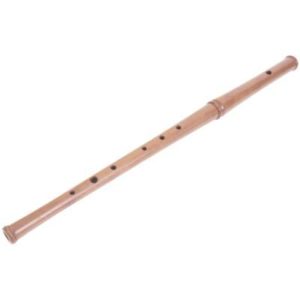
The son seems to be growing up, and that means getting rid of childish things.  One example of this comes when the father asks the son about his flute.  He asks, “What happened to your flute?  I threw it away.  You threw it away?  Yes.  Okay.  Okay” (McCarthy 159).  The boy throws away the flute to show he is not an innocent little kid anymore.  He has no need for a silly little flute.  He is growing up and understands his circumstances.  The boy is mature enough to realize that survival is more important than a toy.

In conclusion, all the time spent on the road forces the boy to go from an innocent little boy to a more mature young adult.  He shows his maturity by ditching the flute and wanting to give thanks to the people who left the food and water in the shelter that he and his dad stumbled upon.

Posted in Uncategorized | 3 Comments

Tough Love

Everywhere I went, everything I did, it followed me. It was attached to me and wouldn’t leave my side. Even in my brightest moments when happiness took over everything, it was still in sight. It was dark, big, and looked at me with deep red eyes almost as if it had been holding its anger back forever. No matter where I went or what I did, my failure were always there reminding me of its presence.

Since I was little,  I’ve always been someone to refute any information with no evidence presented or to disagree with anyone who doesn’t hold a high credibility. I’ve never liked to agree with the common perspective of things and have always chosen to find new ways to solve problems. When I was 7 years old, I remember a conversation with my teacher. “Forget about the bad things that have happened to you, and focus on the future,” she said, “Try to put it behind you because they will only hold you back.” I, being someone to refute what she said, chose to do the complete opposite. I chose to always remember my failures in life and carry them with me wherever I go no matter what. Since then, I’ve decided that I would let my failures remind me of my defeat and use them to push myself to achieve greater success.

At the beginning of this school year, I was singed up for AP U.S. History, known to be one of the hardest classes available junior year. I went into the first trimester with my head high believing that it wouldn’t be as hard as people said it was. I was soon shocked by the work load and the difficulty of obtaining an A in the class. After my first paper, I received a low score based on the grading system for the class. Surprised that my score was so low, I called my mother over the phone that night. “It was very bad,” I told her. A long pause took over the phone as I waited for the inspirational motivational speech I was about to hear to help me do well in APUSH. “Hello,” I said, “What?” she replied in a sassy tone. “About the paper?” I reminded her, to which her response was, “Yeah I heard. Stop being salty about it and do better next time. Now you know what not to do, so try to figure out what the right thing to do it.” Already filled with defeat, her words put me down even more. I hung up the phone and threw it on my bed. Eventually I got over it and started working on homework again.

As the night progressed, I contemplated dropping the class. I thought of what other classes I could take, and if it would be worth staying in a hard class but getting an average grade.  I was mad at what my mom said. I called her for help, but all I got was an obvious response in a very sassy and sarcastic tone. Time passed as I started to think harder about what my mom had said. What she said wasn’t wrong, but the way she said it really didn’t help. Later that night I realized that what she said wasn’t what I wanted to hear, but was what I needed to hear. I started to have a flashback to the conversation I had with my teacher when I was 7. I decided that I would remember that paper, and think of it every time I was to write another paper. Since then, I’ve used that paper to motivate me to work even harder every time I write a new paper.

With the mentality of remembering the taste of failure to push myself to achieve greater success, I was able to get an A in the course by the second trimester. I’ve used this mentality with every other aspect in my life, whether it be for sports or academics, to constantly improve and get better. As I look back, I’m glad I’ve been dragging around the intangible weight of my failures, and will continue to always remember my defeat to improve and achieve greater success.

Image result for shadow following someone

Things We Carry


Posted in Uncategorized | 2 Comments

How?

How will you ever know what pride is

If you never put on the green and white?

How will you ever know what pain is

If you never gave up a one goal lead in the last five minutes of the New England quarterfinal?

How will you ever know what pleasure is

If you never rung the victory bell after a win against Kents Hill?

How will you know what solidarity is

If you never stood up for your teammate after a dirty tackle?

How will you know what poetry is

If you never did a scissors across all the defenders?

How will you never know what humiliation is

If you never got nutmegged?

How will you ever know what friendship is

If you never gave back a wall pass?

How will you ever know what panic is

If you never almost got scored on on a counter attack?

How will you ever know what death is

If you never went to take the ball out of the back of your net?

How will you ever know what loneliness is

If you never stood five steps from scoring the winning penalty of the championship?

How will you ever know what a tackle is

If you never chased down a counter attack to kick the ball out in the 90th minute?

How will you ever know what egotism is

If you never took an extra touch?

How will you ever know what art is

If you never did a rabona?

How will you ever know what music is

If you never sang from sidelines at a home game?

How will you ever know what injustice is

If an away ref never gave you a yellow card?

How will you ever know what insomnia is

If you never slept away for the final game of the Championship?

How will you ever know what hatred is

If you never scored an own goal?

How will you ever know what it is to cry

If you never heard the last whistle of your last game of the year?

How will you ever know what hope is

If your team never had to save the last penalty to win the game?

Tell me, tell me my dear friend

How will you ever know what Hebron is?

If you never became a Lumberjack?

Image result for hebron academy soccer

Hope Is a Thing With Feathers

Posted in Uncategorized | 2 Comments

Not an All A’s School Report

If you have ever met someone with a pale face, short breaths, and a trembling body, you might conclude that they are extremely anxious, and you might even ask to help. In some people’s circumstances, they get uneasy when they are about to do a public speech, proposal, or they might be doing something for the first time ever. For my case, those are the symptoms when I was going to have my P.E. test.
In my country, sports or physical activities are not considered important. My family has never gone hiking, backpacking, or played any sports together. They prefer sitting indoors, watching television, or going on relaxing trips after a day of working. It’s not that I am against any of these outdoor activities. I used to spend a day from seven in the morning to four at school, then got on the bus to go to after school extra classes for English, math, anything I ever needed to pass the high school examination and go to a good college. I usually came home at around ten in the evening just to have some left overs from dinner and sat right on the table to do homework, getting ready for the day after. I actually liked the schedule; it gave me a feeling that I was really hard-working and diligent and a certainty that I would definitely get into a top school.Moreover, I wanted my transcript to look good and I thought extra classes helped boost my grades. You can call it a trend in my country because no one I have ever known not go to extra classes and spend a day like that. At parents meetings, mothers discuss which English centers are good or open an after-school class for their children so they can improve altogether. This is even worse in public schools (I went to a private school) where head teachers in schools open the extra classes themselves. I don’t blame them to be honest; teachers’ wages are nowhere near enough to make ends meet. Universities have courses throughout the year for high school students to prepare themselves for the examination. All in all, to find a free spot in my schedule to have enough sleep and relax is already hard, let alone time for physical activities.
Everything changed when I decided to go to study abroad in Dallas, Texas. It was a quick decision, and I prepared everything in a span of three months. Like every Asian stereotype, I aced all my class, earned great trust from teachers, all but one class: Physical education.
I can still recall that day when my coaches told us we were having a running test. The rule was simple: fewer than eight minutes for an A and more than thirteen minutes and you would fail. The class was divided in two groups to run out in the track (there were seventy students in the class, it was an overcrowded school in my opinion), I was in the latter group. I was not worried at all when we started running. The first round was fine, but I can started to feel something in my stomach growling when it was the second round. My lungs desperately asked for more air and my throat tasted like metal. My legs felt like they were bitten by hundreds of ants, as though they were mine anymore. All other friends have passed me, and I resolved to just walk. The sun came out – or I wondered if it had always been there – and it made me dizzy. The wind was very strong when we ran, I felt like I almost got blown away. I tried to jogged again and then walked, jogged and walked, then reached to the finish line with all the coaches’ cheers. I could not make out what they were saying, I felt like throwing up. Everyone else had finished their course before me, waiting for me to come so the class is finished. It was the longest thirteen minutes and twenty-six seconds in my life.
I failed the test as expected. The first class I ever failed miserably like that. I thought the suffering was over until I heard that running would also be included in finals. I could not let my grades down like that. I had to do something. For the first time in my life, I wanted to do well, to get an A in P.E.
I started running after school, trying every way possible to reduce my time. Even as I practiced, I started to get nervous before running. At first it was painful. I tried to run while listening to music, listening to a podcasts but my own heavy breathing thundered on all those noises. The day in Texas was relentless and hot, running at three in the afternoon felt like the hottest time of the day. I usually came home dying from the heat and had all my limbs sore the next morning.
Finally that day came. We divided into five different groups this time. I was in the third group. Watching all my friends running was torturous. I could not help but think how I would do this time. I heard my heart shaking so badly that I have to pinch my hand to think about something else. When the coach blew her whistle, I tried to calm myself to run. I still had to stop for breath at times, but the whole process was much faster than the first time. I could not help but cried out in joy when I reached the finish line. My legs were still burning, I was still out of breath, my lungs were still craving for more air, but with each lumps of air I inhaled, I felt even more happy.
I completed the test with ten minutes and three seconds for a B. Throughout the whole year running was a struggle, a pressure that I put on myself, and I’m proud that I can reach the finish line in the end. Even though I didn’t get what I wanted, an A, but I have another thing in return for putting all my effort into this class: confidence.

Posted in Uncategorized | 1 Comment