The Definition of Hope

What is hope? It does not have any shape, no color, nơ smell or any sign for its presence. No one even knows if it is real or not. People just created it and and gave it a name. Still, I can give you some hints to know when someone has hope. That old man over there, who keeps on changing his pace of walking, can’t wait to go home to reunite with his lovely family. The red hair girl at the corner, who has to work even on holidays, still dreams on what her pay check can do for already old her mother. That nervous student running across the road, despite being late for class, secretly wishes that his professor is absent today.

Hope has no forms or types, but it comes in all kinds you can ever imagined. Everyone hopes. From the most practical, realistic thing to the most impossible, difficult wishes ever. The five-year old girl playing with dolls would not be hesitated to say she hoped to be a princess with her prince charming. That homeless man sitting under the shelter of a restaurant would hope for a warm house with enough food until the end of his life. Or the sorrow boy over there would say right away he hopes he dad would be alive again so he can say a simple “Thank you”.

But the worst of all is having no hope at all. Someone who has no hope would have no expression on his face. His life would be repetitive days circling around and around as usual. Having no hope in life is the same as not being alive at all. You are just living through days not knowing what to do and what to expect. Needless to say it is very sad, very sad.

So that is why people hope. It is something that no one can ever forbid or limit you to do. It is also a motivation for your life, a reason of you living in this huge world. Hoping is a thing, actually get down to working your dream is another. So why don’t you start hoping now and making a plan to achieve it? I hope you can all make it to your destination.

Posted in Uncategorized | 2 Comments

Hope

He makes his way down the street

A lonely man trodding on his feet

Ice covers the path as well as his mind

Like a formidable fortress, defending his thoughts

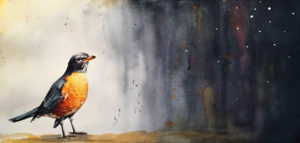
From the warmth and feathers perched in his chest

A tune propels itself against the stone

But it prevails and sends the tune home


The harsh winter night provides a haven for the darkness

As it creeps in through the seeping cold

Cars pass him with restlessness

Furthermore proving his mold


Currents rush beneath the concrete

And will soon make his life complete

 When the tune seems to stop

And he uncertainly makes his way to the edge

He sees a cop

But he makes his final pledge  


Words batter the fortress

But the ice sustains

Until something leaves its perch

And glides over the walls

A single feather falls

And brings back it all


A blanket drapes itself over his shoulders and wraps around his body

The ice melts and the sky reveals a starry night

The tune has returned

But it was always there

No matter how faint

Or how small

Posted in Uncategorized | 2 Comments

Keep Your Mouth Shut

At age eleven there was a great deal of things I did not know; however, I did know the general rules regarding everyday social dynamics. There was not much I would say to people other than close friends and in return you could say that I was not particularly involved in heaps of drama. Beside the fact, every once in awhile I was trusted with a secret. It was particular custom for every single person to have a crush, and also for people to want to tell somebody who they had one on. So, my close friend, Matt, walks up to me in that awkward loping gait of his at recess, and we talk for a little bit, then it seems that out of pure eagerness to reveal his something, he says,

“Can I trust you with a secret?”

Calculations race through my naive head. I already do not talk much, and furthermore, I do not spark drama, as well as just knowing when to keep my mouth shut. Even when reflecting on that moment, there is still a man in the back of my head, sitting in a dark leathered chair, reading a newspaper and drinking coffee and telling me, with eyes fixed on the text of the news, that there is absolutely no positive outcome of learning Matt’s intriguing secret. Yet, here I am, fully well aware that the secret will presumptively be Matt’s crush, and that I will be a liability, but I say,

“Yeah sure. What is it?”

Matt’s eyes, with trust now embedded in them, dolefully set his gaze upon a girl across the playground. He leaned his head towards me and quietly whispered into my ear, with seemingly great enthusiasm,  

“I have a crush on Shawna.”

Then he swore me to secrecy.

Now the man in the chair was shaking his head, steely eyes locked onto my own, having wringed the newspaper in his hands, and then with a displeased and intense cast, bitterly stating,

“keep your mouth shut.”

I really did not understand why Matt told me his crush. Anybody with half an ear and eye could comprehend the interactions between the two, and I am pretty sure that they had “dated” in previous months, or had been off and on. Anyways the two were like best friends, a big brother to her, or maybe that was the problem. Poor kid must have been stuck in the friend zone.

The next week or so we were on the playground and playing football like usual. Only this time, it had become slowly, yet increasingly, normal for the girls to join in on the fun. Due to snow on the ground, we had to play on the plowed pavement, so there was not abundant room to run around and the teams were rather large. So, most of the time the kids just stood around and talked, maybe a few here and there were actually playing hard, but not like during the fall. With the added time to talk with others, more drama flew about, eventually everyone was put upon the fiery stake and forced to confess their secrets. Soon Matt was being set aflame. He deflected just about everything set upon him; however, someone mentioned Shawna’s name, but just like a well trained politician in a press conference, he cooly parried the prying inquiry and became sidetracked in other activities. Meanwhile, Shawna, having heard her name, asked who liked her, and me being me, kind of spilled the beans. I’m not sure how it happened, but for some reason it was not a big deal to me. Then I turned around to see Matt’s face. Hurt. Flushed. He became fidgety, and then he shrugged in a seemingly indifferent way, yet you could almost see a drip of sweat begin to form on his head and a ever so tiny smile of shyness cross over his face.

Now the man in the chair just smirked, which then slowly turned into a booming laugh, then he began slapping his knee with his heavy hands. Eventually his great lungs produced only wheezing and coughing, until he finally returned to the smirk and newspaper. Before my mind wandered off, his last words were,

“Ya should’ve kept your mouth shut.”

Posted in Uncategorized | 3 Comments

Temper

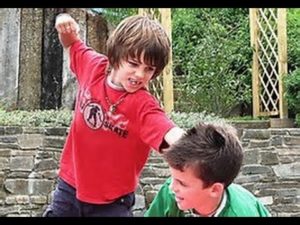
I was a good kid in elementary school. I had been home-schooled from grades two to three, and then attended Crescent Park Elementary school for 4th and 5th grade. When I went to Crescent Park I was quite, nice, athletic, had many friends, and most importantly had all A’s. However the one thing that I did not accomplish at that school was the ability to control my temper. After only spending two short years at the school, I got into nearly 5 fights. Some of them I tend to brag about, others I am extremely disgusted by, but either way I could not control that rage. The red.

The first incident occurred in the fall of my 4th grade year. I was new at the school, but knew many of the kids because I played football with them. In a way, football was the main cause of most of my fights. Due to being part of the football team, that ended up going undefeated and winning a championship against powerhouse Rumford with only twelve players that year, I was in a clique of tightly knit football players. This clique did only one thing during recess, and that was playing two-hand touch football. I was fast, tough, competitive and so was everyone else. The nature of two-hand touch football relied heavily on the earnesty of the players to acknowledge whether they had been downed or not, and this produced problems. It seemed that nearly every single game ended in an argument about what down it was, the touchdown boundaries, or whether someone got the runner with two hands or one. One recess, we were arguing about what down it was, and this kid called me a motherf*cker. I walked right up to him and said,

“What did you call me?!”

“I said ‘motherf*cker’”

He said.

Then all of the sudden, I saw a flash of red, and the next thing I knew, I grabbed a hold of his collar and threw five quick and hard haymakers right on his head. The teacher came running through the field and broke us up. She walked me down to the principal’s office, but I was not that worried about that. What I was worried about, was the knuckle’s of my right hand. They hurt, but it gave me that feeling of being a tough dude. I ended up sitting in the principal’s office with my football teammate who now had an ice bag on his head. The principal asked what had happened and after a little explanation, my teammate said that it was his fault because he had provoked me. After this brief meeting, we both walked out with no punishment due to our clean track records.

As far as I was concerned at that time, we had just gotten even. However, after reflecting on the event years later, I realize that my actions were produced by a rage that plagued me throughout the next year and a half. In that period I had got into another four fights, some caused by football, and others by a water bottle to the eye that sparked a quick punch, resulting in a bloody-nose. It got so out of control that I was nearly suspended. Eventually I learned to control my anger and now as far as I can tell I am still that quiet, nice, kind of athletic, and all B’s and maybe an A student.

Posted in Uncategorized | 1 Comment

Dear Future Middle School Students…

Future HAMS students,

As a HAMS alumna, I have some tips to help you through your next three years of being in the Hebron Academy Middle School. Firstly, talk to every single high schooler you pass by. Start a conversation, talk about life. Every person in high school would love to talk to you on their way to class. Trust me. I made so many high school friends and was the coolest person in middle school. Next, make sure you walk in a amoeba-like form all over campus, especially on the senior path. Most importantly make sure you do not let anyone get past you on the path. They must walk on the grass around you; bonus points if they have heels on.

Now these next two are related and two of the most important tips. Always, always yell on the way to class because the high school has different schedules as you and they love to hear your voices while they are in class. Your high-pitched voices are perfect for when we are falling asleep in class. Similarly, make sure you do this during exam week, when there are signs saying to be quiet. This helps everyone focus and kill their final exams!

Take my advice into consideration, and remember, to always be inconsiderate.

Posted in Uncategorized | 3 Comments

Driver’s License

Drivers License

I walked into the well lit and old-people smelling basement of the church for the second time in my life, hopefully the last as well. From that moment on I forced myself to smile for the next hour, trying to win over the old familiar face that had dashed my dreams only a couple months ago. This time I knew the ropes and seated myself in front of the makeshift desk while  keeping that constant smile. She asked me to fill out some information and I did. I moved to prepare to take an eye test; however, she told me that because I had taken it last time, I did not need to do it. I was handed two sheets of paper and told to wait in the car.

As I sat waiting in the car, I probed my brain, searching for pieces of information to remember throughout the test: how to use the parking brake, turn on the lights, left and right signals. I knew that I was prepared, but I was still worried that I would forget. She emerged through the basement door. I smiled at her my most charming smile. I was received with a neutral face. She stood in front of the Buick Park Avenue Ultra and barked orders at me.

“Left signal. Right signal. Lights.”

She walked around to the back of the car.

“Left Signal.”

I hesitate. I don’t know why.

“Left signal” she says again.

I do it.

“Right signal.”

She seats herself in the passenger seat of the car and orders that I put on the parking brake. I do it. Then she asks for the papers I had been handed just a few minutes ago. I hand them to her. She tells me that we are good to go, and I say okay. I grab a hold of the gear selector and move it casually downwards like I had done a million times before and I slowly released the brake so that I would smoothly pull out of the parking space. Except I’m not pulling out. Instead, I begin to go backwards. The opposite way of what I wanted. At first I act like nothing had happened and calmly move the gear selector to drive, but it is too late and she tells me to stop and breathe. My heart is going about as fast as a NASCAR race car right now, and I let out my breath that I had unintentionally been holding for a long period of time. This time I successfully pull out from the parking space and exit the parking lot.

I remember when my brother got his driver’s licence on his first try. He was happier than Uncle Sam on the 4th of July. When I asked him about any tricks that I could use to help me pass, he said that he had just talked to her like any normal person and even thought of presents that she could pick out for her grandchildren. This was going to be my plan. As soon as I got on the road, I began to ask her questions about her day.

“How many tests before me had there been today? Is it usually busy during the summer or the winter?”

Finally we got around to her grandkids and I instantly jumped on it.

“What were their names? Where did they live? How old?”

Then it turned out that one of the grandkids played lacrosse. Now that was something I could really hop on. I told her that I also played lacrosse and began to hammer her with more questions, but with ease and politeness.

“What position? How did he like it?”

I also slowly began to reveal information about myself as well. I said that I went to Hebron Academy and then we discussed about how diverse the school was. Finally she ordered me to do the dreaded command.

“Please parallel park.”

I calmly pulled up beside the car and began the maneuver smoothly. I put it into park. She said I could go now and I tried to. However I had parked so closely to the curb that I could not turn the wheels. I tried and tried again, but I just couldn’t move and was very frustrated. She gave me directions and only then was I able to get out. After that I knew there was only one outcome to this test. It was pretty silent throughout the rest of the drive. At a big intersection, I took a left turn and entered the wrong lane. Eventually we arrived back at the Church. By the time we got there I was feeling pretty down. My mind was shrouded with disappointment, and I could only think about how many things I couldn’t do without my license. I parked and the day felt gloomy, like Lucifer himself had ascended from the depths of hell and cast his doom over the land. Then she said the magic word. Congratulations.

Excitement and about a hundred pounds of burden was lifted from my back. After she explained all the official stuff, we got of the car. The bright rays of the sun struck my face, and a breeze cooled me down from the mind excruciating torment of the test. My smile felt a mile wide.  

And the summer was over.

And I need to get a car.

Posted in Uncategorized | 1 Comment

Evolution

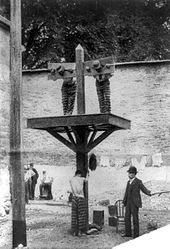
Many authors use a reoccurring scene or place to show the continuities and changes between times. How a character may grow is easily represented when a place is returned to. In The Scarlet Letter by Nathaniel Hawthorne, one venue, a large pillory, or scaffolding, in the center of the town, is shown on three separate occasions, the four main characters changing tremendously between each scene. Each character evolves throughout the book, changing their perspectives and desires outlined at each distinctive point at the scaffolding.

The first scene in the novel where we are introduced to the characters and setting is, coincidentally, the first scene where we are introduced to the pillory. Hester is being publicly shamed for her sin with her baby, Pearl. Hester is ashamed of the letter on her chest and tries to use Pearl to cover it, “It seemed to be her first impulse to clasp the infant closely to her bosom; not so much by an impulse of motherly affection, as that she might thereby conceal a certain token, which was wrought or fastened into her dress” (Hawthorne 31). While she attempts to cover the letter of her sin, she is also somewhat proud of it, seen by the detail it was made with and a ‘haughty smile’ she flashes to the crowd gathered in front of her. This attitude changes when she recognizes her husband, Roger Chillingworth, in the crowd. Chillingworth watches from a distance, pretending not to know who she is or what she has done. He stays in the shadows, asking people in the crowd what is happening so as to not alert himself as her husband. Hester’s attitude changes once again during this scene when she sees Pearl’s father, Dimmesdale. She relaxes slightly, knowing that at least one person there is on her side. Even Pearl reaches out to where he is standing, as if she knows he is her father. While everyone is ridiculing Hester, he is the one to support her decision to not disclose who the father is in the end. Both Chillingworth and Dimmesdale subtly protect Hester whilst the town is humiliating her.

The second scene in which the scaffolding is used is seven years later, as the torture of Dimmesdale’s sin starts to eat away at his sanity. He returns to the scaffolding in the dark of night to begin to admit to the crimes he has committed. Even though there is no one around to hear him, the act of personally shaming himself punishes him, “He shrieked aloud: an outcry that went pealing through the night . . . as if a company of devils, detecting so much misery and terror in it, had made a plaything of the sound” (Hawthorne 83). He feels a physical pain because of the sin he committed, making a noise sounding as if a ‘company of devils’ would hear it and play with it. Hester and Pearl walk through the town to see Dimmesdale atop the scaffolding, and he invites the two to join him. These emotions differ greatly from those they had at the start of the book, him attempting to hide his true identity and her respecting his wishes. They climb up, all standing together for the first time. Pearl shows her first understanding of who Dimmesdale his while they all hold hands together. Chillingworth appears, as he has been standing watching them on the scaffolding the entire time. He does not make any move to harm or accuse them of anything, but acts normal as he talks to them. Chillingworth’s attitude towards the three appears to dull in intensity, even though it is still threatening.

In the last scaffolding scene, it is Dimmesdale, again atop it by himself, yet this time in front of the entire town. After giving a sermon to the town, he calls Hester and Pearl to come with him on top of the scaffolding. Hester readily does, and Pearl is beyond excited to stand with him. They have nothing else to lose as Hester is no longer ashamed of her sin. Once they do he confesses his misdeeds while everyone watches in awe. After he completes his confession, he falls dead. His last words, those of truth, do the opposite of what he used to want. He wanted his good name to be left unaffected and to hide, but this is completely paradox to his actions before he died. Chillingworth, from the crowd once more, yells in frustration, “‘Thou hast escaped me!’ he repeated more than once. ‘Thou hast escaped me!’” (Hawthorne 142). His cries illustrate how he believed that he was supposed to reveal Dimmesdale’s secret and punish him, but he is tortured by the fact that he is left without that satisfaction. Chillingworth’s wants never changed from the first scaffolding scene, but the way he demonstrates his intentions evolves from quietly implying them to shouting them in front of the town in anguish.

Throughout the novel each main character evolves and grows, with each step highlighted by scenes on the pillory. Hester is at first ashamed of her letter and attempts to hide it. As she grows she accepts it and eventually embraces it to where she can stand in front of the town with the man she sinned with. The changes that Pearl undergoes are mainly due to her age and growing up, but she begins to understand her past more. Roger Chillingworth has had the same intentions since the first scene, but becomes increasingly forthcoming with these intentions. Arthur Dimmesdale undergoes the largest amount of change. At first he silently protects Hester, keeping her alive, but never publicly supports her. As the grief erodes at his soul, he eventually does publicly stand with Hester and his daughter. The four main characters develop in their own ways, and the pillory creates a framework so we can clearly see the distinctions between each part of their lives. 

Posted in Uncategorized | 1 Comment

Self-destruction

Since a young age, I have always been terrified of disappointing the people who are important to me, especially my parents. They pushed me to do my best and try my hardest at everything I do. It never was “you need all A’s” or “you need to have a 4.0”, but instead “try your best, because that’s all you can ever do”. Despite seeming like an easy goal, I put more pressure on myself because I knew they still expected the best. However, what they said was true; they didn’t and still don’t care about grades. It has been and always will be myself who produces the pressure to be the best that I am constantly carrying.

I was homeschooled until I was nine. I never had competition; my only fight was against myself, beating my old record, going further. I was smart, but only because I only fought against myself, striving to be better. I had a thirst for knowledge that only the nerdiest people could relate to. This is why I grew. There was no fear of disappointment because there were no standards to meet. Sometimes I would ask my father to give me a grade on an eight page research paper that I wrote for fun or ask him to give me homework even though I was always home. He would do it just to make me happy, but in the end it meant nothing, had no standing. I continued to work my hardest because I wanted to. As long as I wanted to learn and kept going, everything was fine.

When I was ten we moved, and I went to public school for fifth grade. It was the hardest transition I ever had to make. Suddenly there were grades and expectations and rules that I never had to conform to before. All of this was on top of the addition of twenty-five other kids in my class. Even though I was completely overwhelmed by the rules and social expectations, the work was never a problem. I felt even better because now I had proof for my parents that I was doing well. They were glad I was having fun, but I wasn’t trying. I never did anything substantial that was helping myself improve as a person and student. That’s when they decided to send me to Hebron.

My first year at Hebron, I was a small sixth grader who was the same age as most fourth graders. While academically it still was not a problem, I progressively put more and more stress on myself to make my parents proud with perfect grades. As always, my parents only cared that I was putting in my best effort and avoiding slacking off. I ignored their constant reminders and felt the need to do whatever it took to get the best grades. While middle school is not a high-pressure situation to be concerned about, this was only the beginning of a long career of unnecessary self-destruction.

All through freshman year to the beginning of this year, I carried this crazy belief that I had to be the best at everything I did, that I had to achieve everything possible to the highest standard possible. Even though this seems like a normal way of thinking, I based my success on grades rather than the amount I worked or learned. I stressed myself out more than needed and pushed it all down thinking that I was weak. Everyone else had the same amount of work and they were doing it. By the middle of last year, I couldn’t deal with it anymore. Every time I didn’t understand Shakespeare or couldn’t wrap my brain around a concept in chemistry, I fell apart. It wasn’t because I was frustrated, but because I thought I was letting my parents down after everything they had done for me up until that point. I carried this burden that I put upon myself until the middle of this year when I understood my parents’ position. Partially because if I kept going, I knew I would be more stress than human, and partially because I kept running out of tissues to save myself from mental breakdowns. No matter what the reason was, I accepted that the pressure I have put on myself for six years is my own, not from my parents. I will always carry the burden of feeling the need be perfect for my parents who have worked non-stop to give me the best opportunities. But now when I become overwhelmed, I know it’s only myself who will be disappointed.

Posted in Uncategorized | 2 Comments

Broken Women

After surviving through the wars, The Lost Generation had a much different outlook on the world as their predecessors. They were known for their excessive drinking, promiscuity, and new outlook on literature. Both F. Scott Fitzgerald and Ernest Hemingway embraced the attitude of this group. While Fitzgerald and Hemingway were two of the most influential American authors, their perspectives on the women of the Lost Generation show questionable female presence. In the novels The Sun Also Rises and The Great Gatsby, the women are often questioned for their every action, seen as destructively careless and cunning.

In The Sun Also Rises by Ernest Hemingway, Brett Ashley is portrayed to be a strong and care-free woman as she is known for her sexuality. She is either loved or hated, encouraged or reprimanded for her actions. It is only upon a deeper level that readers see her internal struggle and her indecisive nature towards her love for Jake Barnes. Underneath the surface of the woman known as a masculine figure is a woman who is broken. Mike Campbell, her current fiance, tells everyone that her last husband “wouldn’t even sleep in a bed. Always made Brett sleep on the floor. Finally, when he got really bad, he used to tell her he’d kill her. Always slept with a loaded service revolver,” (Hemingway 207). Brett loved her husband but ultimately saw him driven to madness due to the hardships he had dealt with in the war. This is an example of the suffering Brett has seen being a nurse in the war and as a wife. Brett had to tear herself away from a love she knew was broken, and continues to use men in replacement of this broken relationship. Her sexuality concerning these many suitors is not what makes her powerful, but what makes her weak. Because of her fear of getting close to another man in the same way, she rejects those who love her. Brett pulls away from Jake, a man she confesses her love for, “Our lips were tight together and then she turned away and pressed against the corner of the seat, as far away as she could get,” (Hemingway 33). In the next line she begs Jake, “‘Don’t touch me. Please don’t touch me,’” (Hemingway 33). Brett begs him not to touch her because of the way he makes her feel. This shows a different side of Brett, with her guard briefly down. She isn’t manipulating Jake, because the one thing she wants from men she cannot have from him. Lady Brett Ashley’s internal struggle between her own strength and her love for Jake are what make her such a dynamic character. While Jake is a victim of Brett’s flightiness, Brett is flighty because she once was a victim as well.

Daisy Buchanan in The Great Gatsby is also an indecisive character in her love life. She loves Gatsby, yet she refuses to leave Tom to be with him. Tom repeatedly cheats on her with his mistress, Myrtle, and still Daisy cannot let go of him or remove herself from the safety net that is her rich and luxurious lifestyle. Though Gatsby cannot realize why Daisy won’t be with him, Nick does, “They were careless people, Tom and Daisy- they smashed up things and creatures and then retreated back into their money or their vast carelessness,” (Fitzgerald 179). When Gatsby left her and went to war, he hurt her to the point of no return, giving her this destructive nature. Daisy has a momentary weakness in her marriage due to another one of Tom’s runs with Myrtle, and she gives in to Gatsby. Gatsby becomes obsessive and pushes her too far; he even tries to convince her that she never loved Tom in the first place. He mentions this to Tom when Daisy denies the statement, “Even alone I can’t say I never loved Tom,” (Fitzgerald 133). Daisy never told Gatsby that she didn’t love Tom. She is so torn between the two men, both of which she is in love with, neither of which she is happy with. While Daisy has not dealt with the same emo
tional struggles that Brett has, she is so indecisive about both of these two men that the back and forth between them has turned into a human tug-of-war with her stuck in the middle. Her fear of love hurt is ultimately what she gives in to, and she returns to her lavish lifestyle and the safety net of family wealth to protect herself. Daisy cannot be blamed for her realization that, while her relationship with Tom may not be perfect, that it is safer than being merely a figurehead in the lifestyle that Gatsby has been chasing for so long.

Loved or hated, both of these women have deeper underlying feelings and insecurities that play a role in their decisions. The emotions that they have carried with them only heavily weigh upon their hearts. Only when reading in between the lines do people see these things. While Hemingway and Fitzgerald may have conveyed the two women as strong, the truth is that they are weak and broken. Constantly giving in to the fear of loss and suffering, they make the choices they do to keep themselves safe. 

Posted in Uncategorized | 2 Comments

Rose-tinted Glasses

“When he takes me in his arms, and speaks to me softly, I see the world through rose-tinted glasses.” – Edith Piaf. In the novella Maggie: Girl of the Streets by Stephen Crane, the main character Maggie slowly sees the world around her change as her relationship with Pete changes. Her sugar-coated vision that previously covered her relationship slowly fades away throughout the novel, like the luxury of the dance halls Pete brings her to. Maggie’s high hopes slowly fall like the smoke in each hall, and the audience becomes less adoring of the performers, mirroring Pete’s treatment of her.

In the first dance hall scene, the hall is described as “great and green-hued”. Maggie sees everything as very extravagant and new, a world she has never been a part of before. The people  there were “men with calloused hands and attired garments that showed the wear of an endless trudge for a living,” (Crane 22)  and “a mere sprinkling of kid-gloved men,” (Crane 22). Here it is suggesting that most of these men work for their money and are not naturally wealthy. The few that are “kid-gloved” are assumed to be the only ones born into money or did not work as hard. Maggie, having never have seen such wealthy people, is captivated by the glamour. The smoke in the air “rolled and wavered high in the air about the dull gilt of the chandeliers,” (Crane 22). The chandeliers and height of the ceiling suggests that this is an elegant dance hall, and that the tobacco smoke only “rolls and wavers” about the chandeliers, and not around the people themselves. In this scene, Maggie is introduced to a world completely different from the one she has been living in, and sees this new world as beautiful and lovely. Even Pete, the greasy bartender, is described as having “brought forth all his elegance”. Maggie still sees Pete as a high-class and respectable man, and not for what he really is, much like the dance hall. Her vision of his world and everything in it, including him, is still bright and glittering with her hopes of fitting in.

Maggie’s hopes, much like the smoke, begin to fall in the second dance hall, where the smoke now fills the room. Maggie and Pete’s relationship has changed drastically since the last dance hall scene, and she is now almost completely dependent on him. “From her eyes had been plucked all look of self-reliance,” (Crane 38). She stares at him as he pays no attention to her and “leaned with a dependent air toward her companion,” (Crane 38). We see Maggie slowly losing herself to Pete, who couldn’t care less. This one-sided dependency comes later in the scene saying, “Her life was Pete’s,” (Crane 39). This second time we see the dance hall it is not as wonderful as the first, but still has a small orchestra and classy dancers. While Maggie watches the show with Pete, she “imagined a future, rose-tinted,” (Crane 39). This portrays the fact that she is not seeing the relationship clearly, either from wearing rose-tinted glasses or from the smoke that is filling the dance halls.

In the last dance hall scene, Maggie begins to see things more clear, but still has hope that everything will turn out better. This time the clouds of smoke were “so dense that heads and arms seemed entangled in it,” (Crane 42). The word “entangled” suggests that the people were entrapped in the thick smoke. In the far corner there is a bouncer that is not only watching the people and surveying to prevent fights as seen in modern clubs, but has an “immense load” of work to do, suggesting that the dance hall has more than a fight or two breaking out between its drunken patrons. The people are not the quiet, classy members of society anymore, but have been replaced by a wild, half drunk crowd. Pete seems unfazed by this, and Maggie’s disgust towards this hall leads us to believe that she is finally seeing things correctly. However, Maggie still clings tightly to Pete. Her dependency is now described as “spaniel-like”, and it wasn’t until Pete left Maggie for Nellie, a woman he previously knew, that she is shocked back to her reality.

Through the novel, Maggie’s rose-tinted vision slowly fades away, and she realizes that her life with Pete is not at all what she originally believed it would be. Pete, whom she loved and depended on, was nothing more than a drunk who took her from her family. Her transition of losing her hope was marked by each dance hall scene, where she quickly loses her sense of self. The increasing smoke in the dance halls stands as a shield from the terrible way that Pete treats her. Ultimately, Maggie realizes her downfall when Pete leaves her for another woman. 

Posted in Uncategorized | 1 Comment