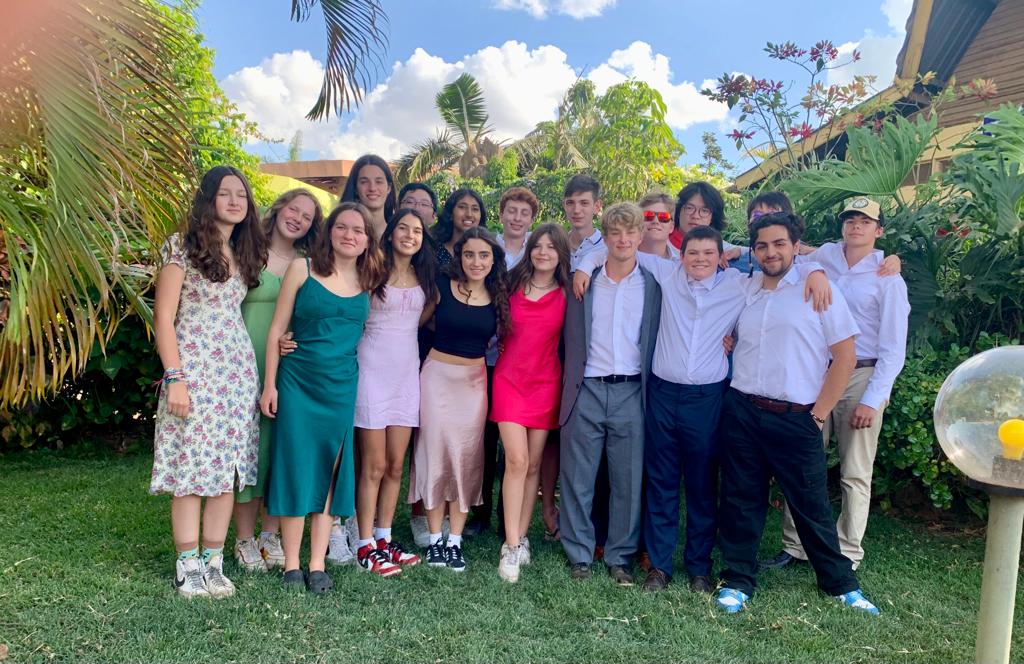
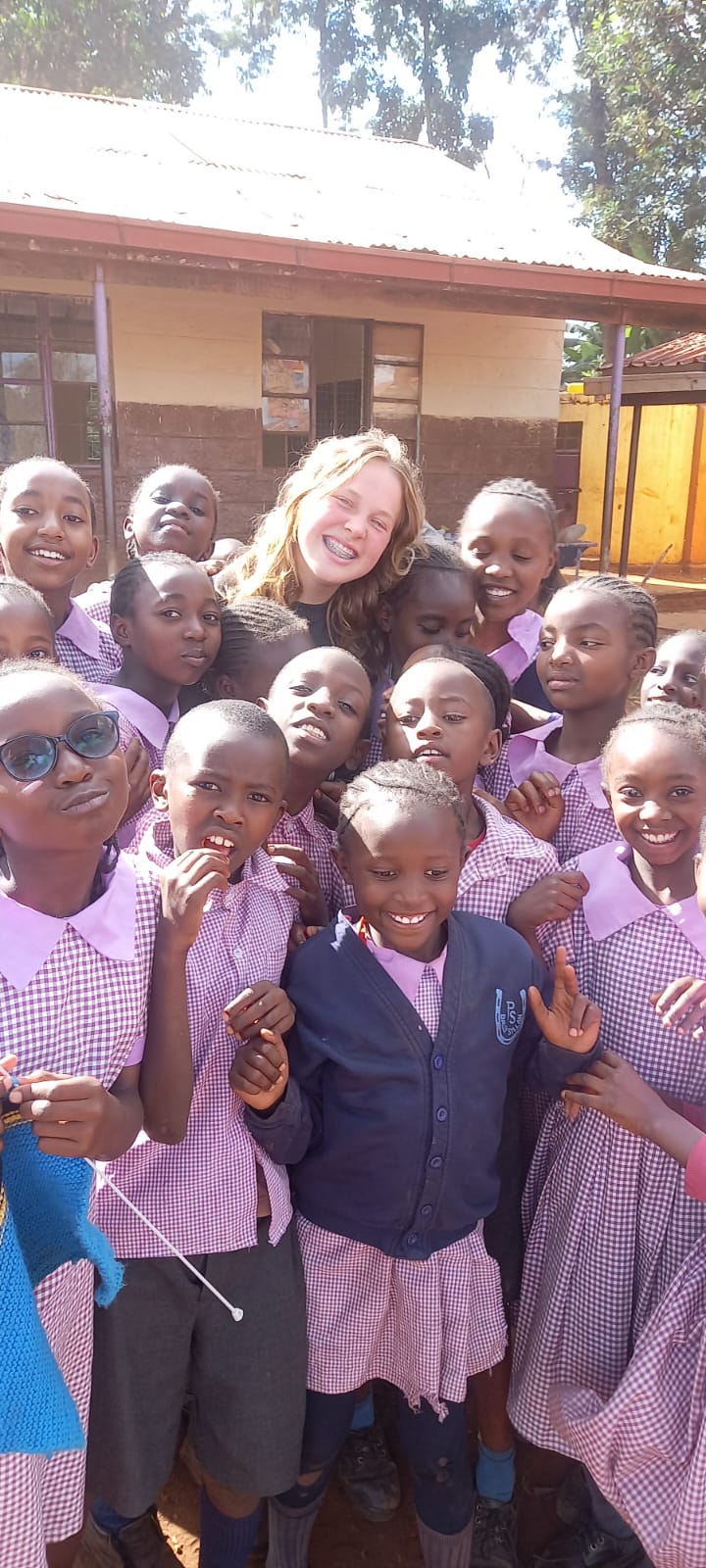
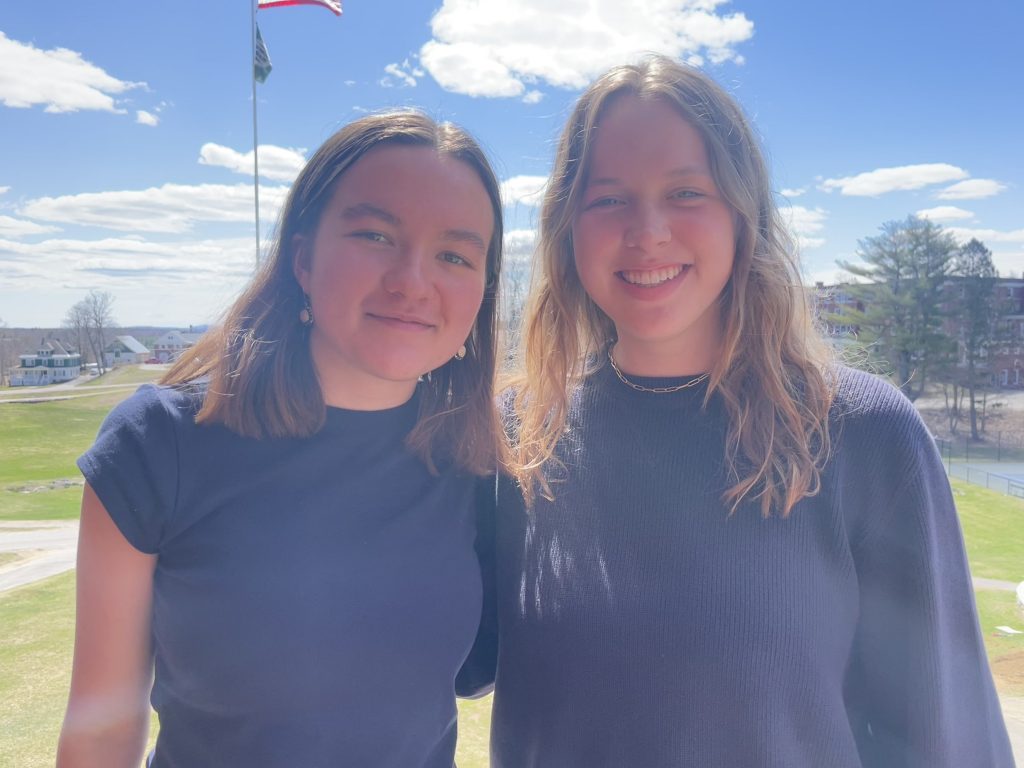
-Photo credits: Lasting Image Photography
“Don’t worry about what people think and say about you, it and they won’t matter in the long run”- Lily Beauchesne (going to King’s College to become a PA)

-Photo credits: Lasting Image Photography
“Don’t worry about what people think and say about you, it and they won’t matter in the long run”- Lily Beauchesne (going to King’s College to become a PA)
By: Cassidy Russell ’25
This photo was taken in the fall, for my photography class. At the time, we were working on composition and learning how to operate our cameras. This was one of my early pictures, and it displays “fill the frame”. Filling the frame is achieved by composing an image with its subject taking up most of the space on the photo.
By: Mason Hatfield ’24
The mid-July sun is beating down so hard you can hear it. The croaking haze roars, giving way only to a gentle breeze and the sizzling of the grill. Minutes later, a still-crackling hot dog is placed on a bun and served. We have all had a hotdog at one point or another, and we have all had a sandwich at one point or another. Both hotdogs and sandwiches have been around for centuries, and hundreds of thousands of people have sunk their teeth into each numerous times. With their long and intertwining history, the question of what exactly is a hotdog has arisen. Is a hot dog a sandwich? After some extensive research and continuous in-depth thought, I have come to the conclusion that a hotdog is in fact a sandwich.
I know this conclusion may upset some people. If you look at the cold hard facts and set aside personal opinions, you will come to the same conclusion. I was once on the not-a-sandwich side and firmly believed that sandwiches and hotdogs were completely separate beings. One defining factor set this sword in stone for me; a sandwich requires two slices of bread. Then came along something that would pull that sword from the stone; subs. I’m sure you’ve been to a Subway sandwich shop. Subway sandwiches are undoubtedly sandwiches, right? Well, they have only one piece of bread, with a singular slice that gets stuffed with meat and whatever else you want. That sounds familiar. That sounds like a hotdog.
This astonishing revelation got me thinking, if we count subs and sandwiches then we have to count hot dogs, right? I needed an answer to this question so I did some research. According to the U.S. Department of Agriculture (USDA), a sandwich is “a meat or poultry filling between two slices of bread, a bun, or a biscuit.” With this definition, both hotdogs and subs can be considered sandwiches, finally settling the “beef” between Team Sandwich and Team Not a Sandwich.
After unquantifiable amounts of research and thinking, I have come to the conclusion that a hotdog is undoubtedly a sandwich. The x-factor to this conversation is subs, if I never realized subs and hotdogs are eerily similar I never would’ve been enlightened to the sandwichness of hotdogs. Subs catalyzed hotdogs into the sandwich category.


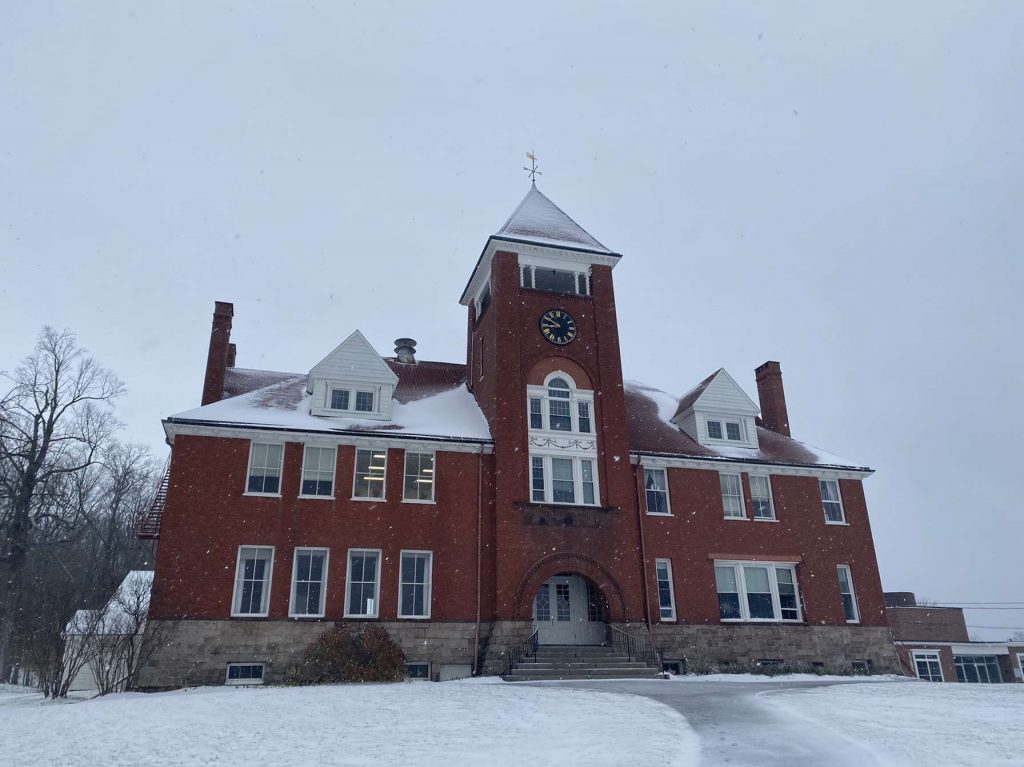
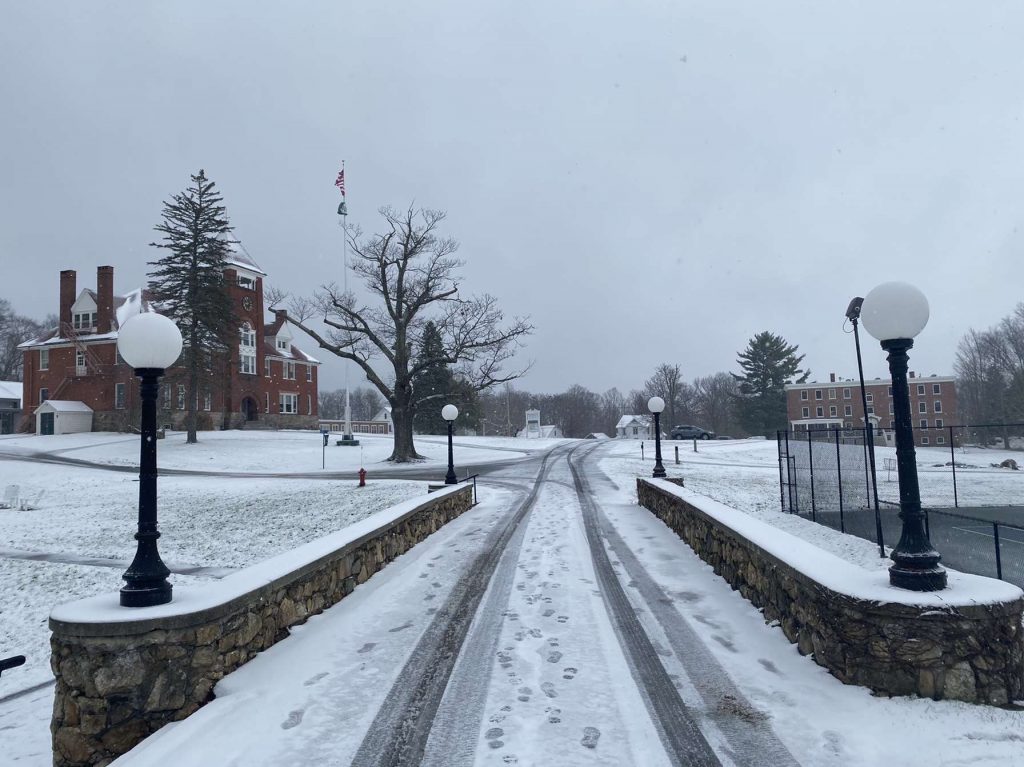
Photographs were taken by Joel Thornton ’23 on the first day of snowfall


By: Cotton Strong ’23
During the last two weeks of September, five Hebron students, accompanied by Mrs. Bonis and Mrs. Gaug, traveled to the United Kingdom to attend the round Square international conference. Round Square is a group of almost two hundred and fifty schools that meet annually to discuss and work for their six “ideals”: internationalism, democracy, environmentalism, adventure, leadership, and service.
The Hebron Academy student delegation participated in a variety of activities throughout the trip. But arguably the most important part of Round Square goes beyond just the designated activities. Besides just working to understand the ideals of the conference, the point of round square is to have students from all over the world meet each other. The Hebron students met many people of many different backgrounds and cultures. First and foremost, there were a lot of British people in the United Kingdom. We quickly learned that they think our accents are as dumb as we think theirs are. The other English speakers like Australians also had things to say about the way we talk. Everyone was surprised that we don’t call McDonald’s “Mackies” or “Mackers” or sunglasses “sunnies”. Non- Native English speakers like students from Peru and South Africa were shocked to learn that most of the American students only spoke one language since they were all at least bilingual. Students from Peru also brought some food to share, including a caramel-milk thing I can’t remember the name of, but it was very good, I promise. At the end of the day, even though Round Square is about learning to work for a better world, the stuff that takes away is the experience of meeting new people from so many unique cultures, and making new friends, even if you might never see them again. In summary, the real international student conference is the friends we made along the way.
By: Hannah Sullivan ‘24
On August 20th, Erin Keville and I conducted a survey that went out to forty people. The basis of the survey was to scale students’ progress on the summer reading assignments, with only two weeks to go before the start of classes. The survey was as follows:
Have you a) finished your summer reading (including the work that goes along with it, b) started the readings but not yet finished them yet, or c) not started the reading(s) or the work yet?
Out of 40 responses, 8 students answered a, 26 answered b, and 6 answered c.
Fifteen percent of students had not started the summer reading by August twentieth, Sixty-five percent of students had only started by then and not yet finished, while twenty percent had completed it all.
Dr. Oakes, the chair of the English department, gave her thoughts on these results:
“Based on what I see in my classroom each fall, I’m not surprised to learn that more than half of the students surveyed hadn’t finished their summer reading so close to the start of the school year. As a parent of students and as a person who cherishes downtime myself, I realize that summers can be full of family obligations, summer jobs, and travel. And I know that not everyone’s ideal summer day is like mine, sitting as close to the ocean as possible and reading from dawn to dusk!
I do find it concerning, though, that so many students wait so long to turn to their summer reading. In part, this is because one of the reasons Hebron teachers assign this work for the summer is to encourage students to see reading as a habit that happens all year long. We hope that students can make time to read in a favorite place and at a pace that works for them and, in doing so, realize that a little reading can make for a nice meditative or relaxing moment. I’d like to feel that we are helping students cultivate a stronger appreciation for reading. Another reason I assign summer work is because my students are usually in my Honors or AP classes. These classes are designed to move at a speed and at a difficulty level similar to a college course; thus, the day classes begin in the fall I want to start setting expectations for intellectual discussion and jump right into a conversation about the (what I consider!) intriguing texts from summer reading. We don’t have time in these classes to read a few chapters at a time and gradually gather enough context and content to discuss. So if students haven’t done the summer work for my class, they can be at a disadvantage right from the start. This goes for students in other teachers’ courses, too: Waiting too long to do the reading—or not doing it at all—makes it harder for a student to connect to the class material from Day One.”
Whether Dr. Oakes’ stong suggestion to keep up with your summer work-for your own benefit- influences you to change your mind about reading on vacation or not, I think many students can agree with us on the fact that while we may say now that we’ll be more productive this summer, in reality, it will still probably get left to the last minute.

By Calvin Grover ’22

I am very proud of the fact that I am a nerd. I also love to take road trips. So when one of my favorite faculty members, Dr. Swenton, offered a science nerd road trip, I was immediately interested. This road trip was a part of a new tradition at Hebron Academy, known as Winterlude. Winterlude consists of three days of experiential learning outside of the classroom, taking place in January, several weeks after students return from winter break. Though the history of Winterlude only spans two years, it has included fantastic activities such as ice climbing in Grafton Notch, watching musicals on Broadway, backcountry skiing in the foothills of Western Maine, and of course, a science nerds road trip to northern Vermont.
Winterlude provides an excellent opportunity for students to try something completely new with their friends, removed from the stresses of the classroom. In January of 2021, the first ever Winterlude celebrated the ending of an extended period of online classes, letting friends reunite in person for the first time since the fall term. During this time I had the opportunity to pursue ice climbing, trying a new sport and pushing myself outside my comfort zone, all while documenting the adventure in a short video.

When Winterlude returned in 2022, I chose the road trip to Vermont, hoping to see a different part of New England with my friends. Again, I brought my camera along, but this time I primarily focused on photography. Visiting the Living Shores Aquarium in North Conway, New Hampshire, our group interacted with various aquatic and avian creatures, such as stingrays and lorikeets. Further north, our party visited the ECHO Leahy Center for Lake Champlain in Burlington, Vermont, where we learned about the ecological history of the region, through fossil displays, interactive exhibits and a documentary film.
For me, this trip was a much needed break from the constant pressure of classes and college applications, and still managed to be educational. Winterlude affords students the opportunity to try out new things, visit new places, and learn without expectations or stress. This may be my final year at Hebron, but I have no doubt that Winterlude will continue to enrich student’s experiences for years to come.


By Nora Tobey ’24
For Winterlude, I went to New York to see Broadway shows. Carlos, Noa and I formed our little group of three people and walked all over New York. Spending too much money, eating pizza, waiting for the musicals to start, stuffing Playbills into coat pockets. I had almost too much fun. But that was only after I got over the overwhelming fear of being in a big city I’d never been to before. Now I should probably get to the point where I talk about the three shows I went to see.

First show. SIX was loud, and I loved it so much. I’ve listened to the cast recording multiple times, but that show was made to be seen live. There were a few times that Carlos thought it was a concert and sang along loudly, and I was embarrassed for him. I bought a few souvenirs from the merch stand while Carlos bought almost the entire thing.
Second show. Hadestown was a masterpiece. When we went to see it, it was most of the original cast. I think there were only two or three different people. The set was gorgeous, and the lighting was immaculate. It was so fun to watch, and I loved every second of it. I also got really hooked on the music and I listen to it at least once a day now.

We also went to a panel with some of Mr B’s friends, who were awesome. Some were actors, others were directors or writers, and some had done all three. I learned a lot in that short span of time. For example, separating your worth from your job, doing new things that scare you, embracing insecurities, and accepting failure. Also, a few gags like going on antidepressants sooner and finding other, more stable, things to do. Carlos and I had to leave early because our show started earlier than everyone else’s.
And the final show, Harry Potter and the Cursed Child. This was the only one that wasn’t a musical. I had read the book, which is still a play, but it was so much better to see it happen in person. The special effects were absolutely flawless—the lighting, the rippling time travel effect of the stage, the pool that opened up at the front, the dementors flying in your face, and even the illegal picture Carlos took of Delphi’s madness. I could ramble about how it looked forever. Another thing I loved about it, the gay tension between Albus and Scorpius. They aren’t technically gay, but you can just tell.
And then the bus ride home was great. Noa, Carlos and I took the small van with Ms. Alt, and got to sing show tunes and Disney songs. This is where I learned the surprising fact that I’m more of a theater kid than Carlos. Then, when we stopped, Mr B. drove our bus and sang The Book of Mormon (which is one of my favorite musicals) with Noa and I. Carlos kept asking me if Mormons were okay (because I’m an ex-Mormon). Afterwards, I fell asleep, and the next thing I knew it was 1 A.M. and we were home.
All in all, I loved going to New York, and missed it the first few days we were back. I would totally go again, and recommend it to anyone interested.


By Kate Hashiya ’24
This is my journey back home for winter break, but it wasn’t a normal trip. Let me tell you what happened. How long would it take for you to go back home? A ten-minute car ride? Five-hour flight? Or, if you are an international student, it might take you ten hours or more. Yes, that’s me. My name is Kate Hashiya, and I came all the way from another continent, a country called Japan. It takes me fifteen hours to get back home… if everything goes normally.
I left Hebron Academy on December 18th, 2021 at two A.M.. I had a transit flight through Texas. I arrived at Boston Logan airport, and I departed for Texas by six A.M. It was all going great until I arrived in Texas, until the part where my ticket didn’t tell me which gate I was supposed to go. I texted my dad, (trust me, my dad knows everything) and he told me I’m flying with Japan Airlines. I was waiting at the gate by JAL, and they started loading people a few minutes after. It was at that moment that I found out that there were two flights departing at the same time to the same place.
I ran to the other gate, where my real flight was. There was only one thing in my mind; WHY IS DALLAS AIRPORT SO HUGE???? I ran for five minutes, and I still didn’t see my gate. I finally got to the real gate, and by the time I got there, they had already closed the door.

I asked the lady there for help, and they quickly asked me for all my forms. I was relieved for a second that I still might be able to get on the flight. They then asked me for the PCR testing form. I showed them a paper I got from the school, thinking that it was all I needed. It was unacceptable. I needed the form that the Japanese government set, which meant I couldn’t get on my flight with the English form I had. I was so scared that my dad would be so mad and wouldn’t let me go home anymore, but they told me they could book the next flight for me, which was the day after. I had no idea what I was supposed to do, so I called my dad again. He was so surprised, and he was talking to the staff by the gate. They came to a solution of keeping me in the airport for a night. They had a place where they took care of the children under fifteen years old during the transit. Although I was sixteen, they could keep me there since I couldn’t reserve a hotel, and I needed somewhere to sleep.
I hated my country for a moment, but it was a rare experience to stay in an airport. A nice lady named Noriko san (she had the same name as my mom!) took me to the PCR testing center, so I could get a proper Japanese form. She looked evil in my eyes when she told me I couldn’t get on a plane, but she was so nice as we talked and spent some time together. I didn’t sleep well that night, and it was so weird to walk around the huge empty airport at two in the morning. I got to the right gate the next day, and thanked Noriko san again. A long long twenty four hours later, I finally got on the plane.
Somehow, the thirteen hour flight felt very short. I was mostly sleeping the whole time. I knew there was still a whole process I needed to go through to meet my dad, and there was one thing I still didn’t know. It was whether or not I needed to quarantine in a hotel. The Japanese government announced that people from Texas needed to be quarantined, but not Maine. Even my dad couldn’t give me the answer. I was waiting in line to get my form stamped at the counter when I heard the guy in front of me ask the staff if he needed to quarantine for three days if he visited Texas only for the transit, and I finally heard the good news: The answer was no! I walked up to the counter, and I told her that I came from Maine. She marked zero on my form, and I was finally allowed to meet my dad.
It was already dark when I got out of the airport. It was already eleven P.M.. My dad rushed from the hotel, as he didn’t expect to see me that day. We hugged each other, and my dad told me he was not doing this again. That night, my dad drove for seven hours north from Tokyo. I slept through the night in the back seat. When I woke up, it was six A.M., and we were in the ferry terminal in Aomori. Our ferry left at ten A.M.. We were both so tired that we slept through the ferry ride.
When we arrived in Hokkaido, I could finally see the roads I’m familiar with. It was as if I were dreaming, and I couldn’t be more surprised or excited. On the way back home, I heard more surprising news. My family moved!!! I’m going back to a new house!!! I was tired of surprises at that point, but I got very excited and everything started to seem real. I could finally meet my mom. She hugged me and welcomed me to our new house.
That was the end of my four-day journey. It was the most chaotic four days of my life, but being able to spend even ten days with my family made it worth it.
By Tucker Kenney ’24

Over the course of my fifteen year lifetime, I have had the privilege of experiencing some of the most exciting, fun, and fascinating times of my life through community service. Community service is something that often goes overlooked, and doesn’t get the recognition that it should. However, the impacts that community service itself has on others can be tremendous and incredible. To me, community service means providing some source of help, entertainment, or just simply helping out the community in any way possible. I have done this in several ways during my time, and I hope it is something that I will continue to do, because as I mentioned above, its impacts can be tremendous. I enjoy helping others because it makes me feel accomplished, and that I have helped someone in need. Community service goes beyond just food drives, car washes, and penny drives. Community service can be anything as simple as holding the door for someone at the grocery store. Now, it may seem cliche, but it’s true. Sometimes all someone needs is something like that to make their day just a bit better


One of the ways that I personally have been able to grow my community service skills and perform them is through Woodside One Wheelers. Woodside One Wheelers is a performing circus arts group based out of Topsham, Maine at my elementary school, Woodside Elementary School. I have been a member of Woodside One Wheelers, also known as W.O.W., for about nine years. I started performing with W.O.W. in grade one, and am still a member to this day. As a group we not only perform, but help the local community. W.O.W. often runs food drives, fundraisers, and benefit performances for local charities or organizations. W.O.W. has taken me to many places that I would not have been able to go otherwise, including the West Virginia Strawberry Festival Parade and Street Performance, The Washington D.C. Cherry Blossom Parade, The Philadelphia Thanksgiving Day Parade, The Philadelphia 76er’s Halftime Show, and many more. These trips have allowed us to provide entertainment and help communities. I remember one specific event that made a lasting impression on me. This was during our Philadelphia trip in 2018 when we were performing and teaching at a downtown YMCA in Philadelphia. This performance was especially important to me because it made me happy to see all the children’s faces light up after seeing a unicycle for the first time. This experience may not seem like a typical community service event, but to me it is one of the best examples of giving back to the community. We not only taught these kids how to juggle and to perform with a group, but we taught them how to set a goal and work for it. That is special, and something that many children don’t have exposure to growing up. Once again, making these kids’ days just a little bit better left me with a smile on my face and gave me the feeling that I had helped and given back to the community.

Another opportunity that has allowed me to provide community service and help local communities is the Hebron Round Square. Round Square has taken me on many adventures already, and I hope to continue these adventures for my entire high school career. Through Round Square, I have participated in many events such as trash cleanup along Station Road, camping trips, and volunteer trips. Similar to W.O.W., I have one experience that stands out from others, and I wanted to talk a little more about it. MidCoast Hunger Prevention Program is a hunger prevention program based out of Brunswick, Maine, not far from my childhood home. The goal of MidCoast Hunger, otherwise known as M.C.H.P.P., is to put food in the kitchens of local families in need who are struggling to find food and meals. Through Hebron Round Square, I was able to take on my own individual project and plan a volunteer opportunity at M.C.H.P.P.. About five of us went to Brunswick and volunteered for about four hours helping make soup, cut vegetables, and plan meals. This experience was special to me because I was able to give back to a local organization that is close to my heart. It felt heartwarming to go home knowing that we had provided food for families who did not have three meals a day in a warm home.
Creating bonds with friends and getting together to help out the communities around us is something that I will always remember and value for the rest of my life, and I hope to continue doing it. As was mentioned in my brief explanation of my W.O.W. performance in Philadelphia, my community service has not only been special to me because I have helped others around me, but that I have also been able to learn valuable lessons within myself. The community service I have provided has allowed me to pass on lessons about not giving up and setting goals to achieve eventually. To me, community service is about giving back to others around you in order to make a difference and a better world.