Throughout the novel The Road by Cormac McCarthy, there have been themes of sadness, despair, destruction, and a loss of hope. These themes, however, did not apply to the son. The son symbolizes hope, future, and morality for the man and other who come across him.
Though in section five we might have seen a disappearance in these symbols in the boy and a slow replacement of the themes that grip every man, woman, and child of this desolate world. We see this disappearance specifically when they go to the first house, and the effects that grip him afterword.
After they went to the first house and witnessed the horrifying things that humans could and would do to each other, it set something off in the boy. The boy was now fearing for his life at every given time in section six. No longer did the boy have any bravery and innocence to trust random people, as he had seen the horrifying things that men could do. When the man and his son reach the house with the bunker, and settle down to sleep. (scene before they found the bunker) the man says: “But when he bent to see into the boy’s face under the hood of the blanket he very much feared that something was gone that could not be put right again”(McCarthy 136). This quote alludes to the fact that the boy lost his innocence at that first house, and innocence can never be repaired or put back again, the only hope and future they have now is in the morals of the boy and his choice on whether or not to continue with them.
The boy does decide to continue with his morals, he may have lost his innocence, but he had not lost his hope for good people in the world. He exemplifies this behavior when they are in the bunker and he prays to the owners over the food: “Dear people, thank you for all this food and stuff. We know that you saved it for yourself and if you were here we wouldn’t eat it no matter how hungry we were and we’re sorry that you didnt get to eat it and we hope that you’re safe in heaven with God”(McCarthy 146). This quote is important because even though the child lost his innocence, he still has his morals and the goodness of the past world. This quote is also important because he says ‘safe in heaven with God’, making it look to the reader that the boy still has hope for safety and happiness past this world. The world might be full of destruction, fear, sadness, and despair, but there is always a hope for something better and something to be unafraid of.
The boy might still be afraid of the world that is around him, and his innocence may have disappeared with the witnessing of the first house, but his morals still remain and continue to guide both his father and himself into a world of hope.
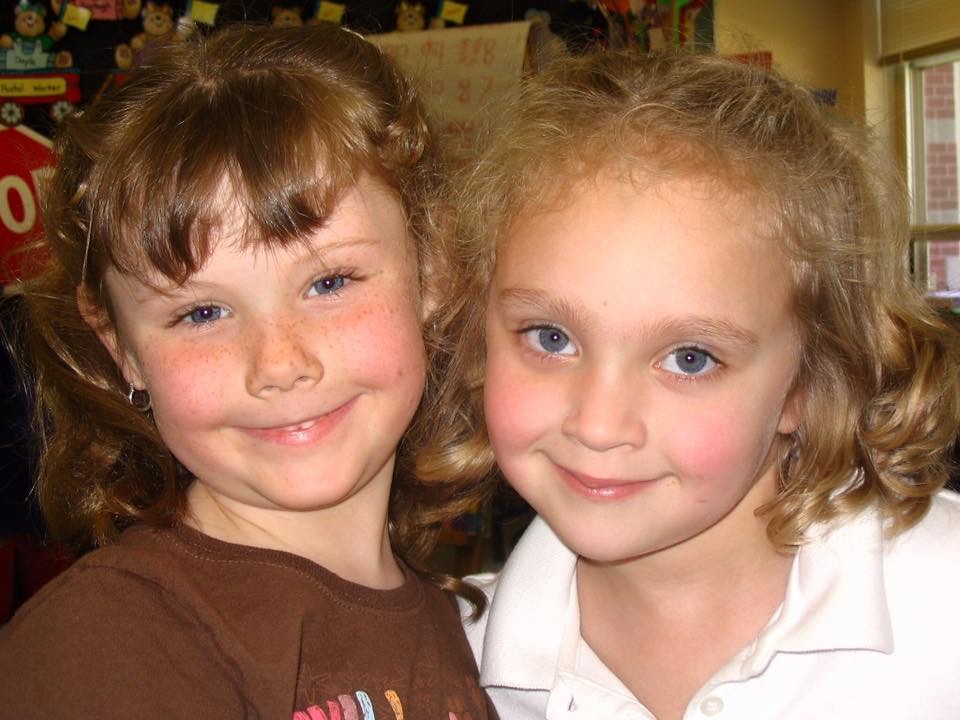
There was once a time when we were kids. Before the world had changed us. Without care, and without limits, we were children with full imaginations, where we ran wild like animals in the jungle. Despite our parents constant naggings, we did everything and anything, from playing in the dirt, running in the forests pretending we were fairies, to making mud pies in the rain and pretending we had made a five course meal. And like we were never going to grow up, creating promises that could never be broken, and bonds that we would never forget.
A younger me
Every memory created was beautiful. Places beyond what we could have imagined now, as we sit as teenagers with a much darker view of the world.
At least now we have a better knowledge of the world, right? But we are unhappier now, much more unhappy than when we played princess of the castle on the playground. After the world became more real, we lost our sunshine.
By the time we have grown up, our sparkle has dulled. We are still shiny, and we still have sparkle left, you just have to look hard to find it. Life goes on and on and as we grow old, it begins somewhat of a pattern, but not a bad pattern, more of a comforting one, a routine of sorts that doesn’t change or deviate.
Although, the routine gets slower. But life gets faster, with licenses, first cars, graduations, milestones, colleges, and then finally what comes after childhood. Some say that adulthood becomes better, and to some extent that is true, there’s more freedom of expression, but it’s also scarier, and things become more real, and you lose the rose tinted glasses of childhood, and the innocence that comes with it.
My childhood best friend Jaida
Suddenly though it all comes to a beautiful conclusion, childhood that is, and we move on to bigger and better things. Life goes on, we get older, but we still have those unbreakable bonds and promises that withstood our childhood, and will continue into adulthood, like a rock that withstands the elements thrown at it. And now that I am older, everything has just begun, but everything unbreakable is still there.
My other Childhood best friend Cara
These two pictures are examples of bonds that haven’t been broken like talked about in the essay.
I have always lived by honesty is the best policy. That’s the way I was raised. This can be one of my biggest flaws at times. Some take my honesty as being rude or mean, but I feel like they should always know where they stand with me. This flaw of mine has, at some points, caused friendships to fail and people to turn their backs on me. My sin is that I am brutally upfront and honest all the time. This is the story about how that sin has affected my life.
High school life at my old public school was a very difficult and unhappy time for me. My friends saw it, my family saw it, and even my teachers and coaches saw it. There were always cliques at school, and I never really belonged to one. I would bounce from group to group because I had a lot of friends. Or so I thought. It was about midway through my sophomore year, and I had just been broken up with by an ex-boyfriend who was toxic. Him and I shared a lot of friends, and everything that had happened made it really awkward for our friends.
Around that time was when the rumors started, he had begun them, and my “friends” were spreading them and talking about me behind my back. They thought I didn’t know, and that I was blind to the whole situation, but it turns out that I wasn’t. I heard everything they said about me. How brutal and upfront I was, how annoying, and how much of a try hard and a goody two shoes I was.
Being the person that I am, I wanted to know the truth. I wanted them to be honest with me and tell me why they were saying such mean things about me. The response I got was somewhat expected. They lied and said they never would say that and how I shouldn’t have assumed that they did. That was the final straw for me, and I was my most honest with them than I ever had to be before.
I told them that if the lies were going to continue, and they were going to keep saying these rumors about me, and keep treating me badly, that I didn’t want them in my life anymore. I was done, I had been nothing but nice and welcoming to them, and I had always been honest to them even when nobody else was, and they took it for granted.
That’s when everything started to get worse. I was outcast for being honest with them, and they turned many of my friends against me. The people who were my true friends though, they stayed around, and they supported me throughout everything. They still support me to this day. The funny thing is though, they are people just like me, always honest, and they had been through the same situation. I will be completely honest, I am proud of my sin. It makes me who I am. I am happier now without those people in my life, so my sin actually helped me in a way. To this day still, I believe that honesty is the key to life.
Love, even in times that there seems there is none, is all around. Love is not just a romantic connection either. It’s a feeling of brotherhood or sisterhood, a familial feeling shared between those who aren’t blood relatives. Tim O’Brien’s The Things They Carried is a compilation of not war stories and examples, but ones of love and brotherhood between the men of Lt. Jimmy Cross’s men, and more specifically between Lee Strunk and Dave Jensen, Curt Lemon and Rat Kiley, and most importantly the love shown between Kiowa and all the men of the Alpha Company.
Starting with Lee Strunk and Dave Jensen’s relationship, it was begun more on a negative tone due to Strunk stealing Jensen’s jack knife. Though after they fought, and ‘got even’ with one another, they formed a connection and eventually made a pact that basically said if one of them was critically injured, the other would take them out of their pain and kill them. This was a pact that proved this bond between these two men, though the brotherhood aspect of it was proven in a conversation between Strunk and Jensen after Strunk had been injured, and the pact was activated. During an interaction after Strunk’s leg had been blown off the two had a conversation where they said “‘Don’t kill me’ ‘I won’t,’ Jensen said … ‘But you got to promise. Swear it to me—swear you won’t kill me’ Jensen nodded and said, ‘I swear,’” (63). Though these two men had made this pact, they still had love between them, and there was enough that Jensen couldn’t follow through with what he was supposed to do. It was not the strongest bond within the Alpha Company, but it was one of brotherhood and love because of the fact that Jensen loved Strunk to a point that made it impossible for Jensen to carry out the pact, and kill basically who is now Jensen’s brother, and someone who was now one with Jensen.
Jensen and Strunk were a ‘tough love’ sort of connection that was not very open and expressive of their love, whereas Curt Lemon and Rat Kiley served as a contrast with the openness of their love for one another. Lemon was killed by stepping on a landmine while playing catch with Kiley. It is after this event that the reader to can see the true bond between these men. Shortly after Lemon’s shocking death, Rat Kiley started to show the effect that the death had on him by shooting a baby buffalo “through the right front knee. The animal did not make a sound. It went down hard, then got up again, and Rat took careful aim and shot off an ear. He shot it in the hindquarters and in the little hump at its back. He shot it twice in the flanks. It wasn’t to kill; it was to hurt” (75). O’Brien also wrote that “Curt Lemon was dead. Rat Kiley had lost his best friend in the world” (75). Kiley loved Lemon very much, and he could not cope with Lemon’s death. Kiley wanted someone or something else to feel the pain that he felt after losing someone he loved so much. The pain and hurt afflicted onto the baby buffalo is equal to what Kiley is feeling internally.
As strong as Lemon and Kiley’s love for one another was, the collective love of the men of Alpha company and Kiowa is much stronger. Kiowa was a character who impacted almost every other character in the novel, and was a character that was loved by everyone. His death was a loss that every man in the Alpha Company felt guilty for, with Norman Bowker constantly “remembered how he had taken hold of Kiowa’s boot and pulled hard, but how the smell was simply too much, and how he’d backed off and in that way had lost the Silver Star” (147), or when Jimmy Cross said “What he should’ve done, he told himself, was follow his first impulse. In the late afternoon yesterday, when they reached the night coordinates, he should’ve taken one look and headed for higher ground. He should’ve known. No excuses” (160), or most impactfully when Azar “moved to the dike and sat holding his stomach. His face was pale” (167). These men, and many more within the group felt like it was their fault for the death of Kiowa. These men had loved him so much that when he was actually gone, each and every one felt the impact. This feeling of guilt ties to their love for Kiowa because none of these men were the same after losing Kiowa, and some would remember the feeling of brotherhood between themselves and Kiowa for the rest of their lives.
Many instances of love are shown throughout the novel The Things They Carried even though it is seen as instances of war, and these moments of love are shown between Strunk and Jensen; who could not carry on a pact that asked one of them to kill the other, Lemon and Kiley; who when the pain of lost love from Lemon’s death hurt Kiley so badly that he had to take it out on something else so that it felt the pain like he did, or Kiowa and the men of Alpha Company; who after Kiowa’s death, each man felt a sole guilt and responsibility for ‘killing’ Kiowa. These examples are all ones that stem from a deeply rooted sense of love for one another. Like said before, love is not just a romantic connection, it is a bond formed with the people that you deeply care for, it is brotherhood and sisterhood. There is always love all around, and you sometimes just have to look past the surface to see it.
“Make sure you have your pepper spray on you at all times, okay?”
“Don’t wear that, it’s way too short, and you don’t want to attract THAT kind of attention do you?”
“That outfit’s a little too slutty for you.”
“Chubby girls like you are just not my type.”
These, among many others, are all words that at one point or another have been said to me. Whether they had been said to hurt me or not, they still have resonated deep within me. I live with the weight of other people’s opinions around me. I live with the weight of always having to defend myself. I live with the weight of constantly looking over my shoulder, and watching out for the world around me. But this is only a fraction of what it’s like to live in a girl’s world. And it’s a fraction from my world.
One may think that pepper spray is a bit excessive. I mean, we go to school in rural Maine! But tell that to my Dad, who a week before school started, heard of a attempted kidnapping only a few miles from our campus, and began to worry about his daughter being next. Tell that to my mother, who whenever she is watching the news tells me of all the missing and murdered girls that had only happened that month. Tell that to the parents of so many high school and college girls who went out one night and had their lives changed forever, and possibly never returned. But yeah, keep saying that I’m just overreacting, because in the real world, this doesn’t happen. My parents fear that I am next, because so many of our family and friends know someone who has been a victim. According to RAINN an estimated 321, 500 women each year are victims of sexual assault, so my parents worries about me being next are completely legitimized, because those are only the number of reported assaults, and there could be so many more than what that number represents. And the worst part about it is that according to RAINN, about 995 perpetrators of 1000 will walk free. How come everyone knows someone who has been a victim, but nobody knows anyone who has been a perpetrator?
It shouldn’t matter what I decide to wear when I go out, because you know, it is my body, my choice, yet people always feel the need to give me their personal input and judgment. I shouldn’t have to worry about what I wear possibly leading to an excuse for me being sexually assaulted because what I wore was ‘asking for it’. No one is ever asking to be sexually assaulted, but it still happens, regardless of what they are wearing.
And then there’s the constant pressure to look a certain way. It’s in the way that an authoritative figure from my past constantly watched my weight, and eventually told me I needed to be much skinnier than what I already was. It was them hounding me if I looked even a little ‘pudgy’ in their eyes. It was forcing myself to act, look, and feel a certain way just to please this person so that I would be in their good graces.
But it wasn’t just pressure from them. It was pressure from ex-boyfriends who would occasionally mention that ‘you would look so much better if you just dropped a few pounds’ or would constantly drop little hints about my weight not being to their liking. It was one of them, in the middle of the nastiest breakup of my life, said that ‘you’re too fat to be loved by anyone else’. But why should my weight be a deciding factor on if I deserve to be loved or not? Why does it matter if anyone loves me if I just love and embrace myself for who I am?
Like I said before, this is a fraction of my world, and if I were to tell much more, well, I’d probably be on my tenth page. This is my weight that is always hanging on my shoulders, trying to drag me down. The experience differs from girl to girl, and no two girls have the same weight on their shoulders. This could just be downplayed as me overreacting to situations around me, but to me, these are real experiences that shape me into the self-conscious, always worrying, sheltered person that I am today. Though this weight on my shoulders has lessened its load as I’ve learned to love myself. The self love began this year, a fresh start, new, welcoming faces, and a caring environment at Hebron has helped me somewhat move past these insecurities that I carry with me. I have learned to laugh without thinking about how ugly my smile is or how weird my laugh might sound. I have learned that weight is just a number, and it should never dictate my self worth. I have learned that the ugly scar that crosses my forehead is just a scar, and doesn’t mean anything more than a mark on my face. And most importantly I have learned that nobody else’s love for me is worth more than my own love for myself. I still have a long ways to go before my self love journey is over, and my intangible weight of being a girl is always going to be there, whether I like it or not. But it is up to me to move past it, and learn and grow from it.
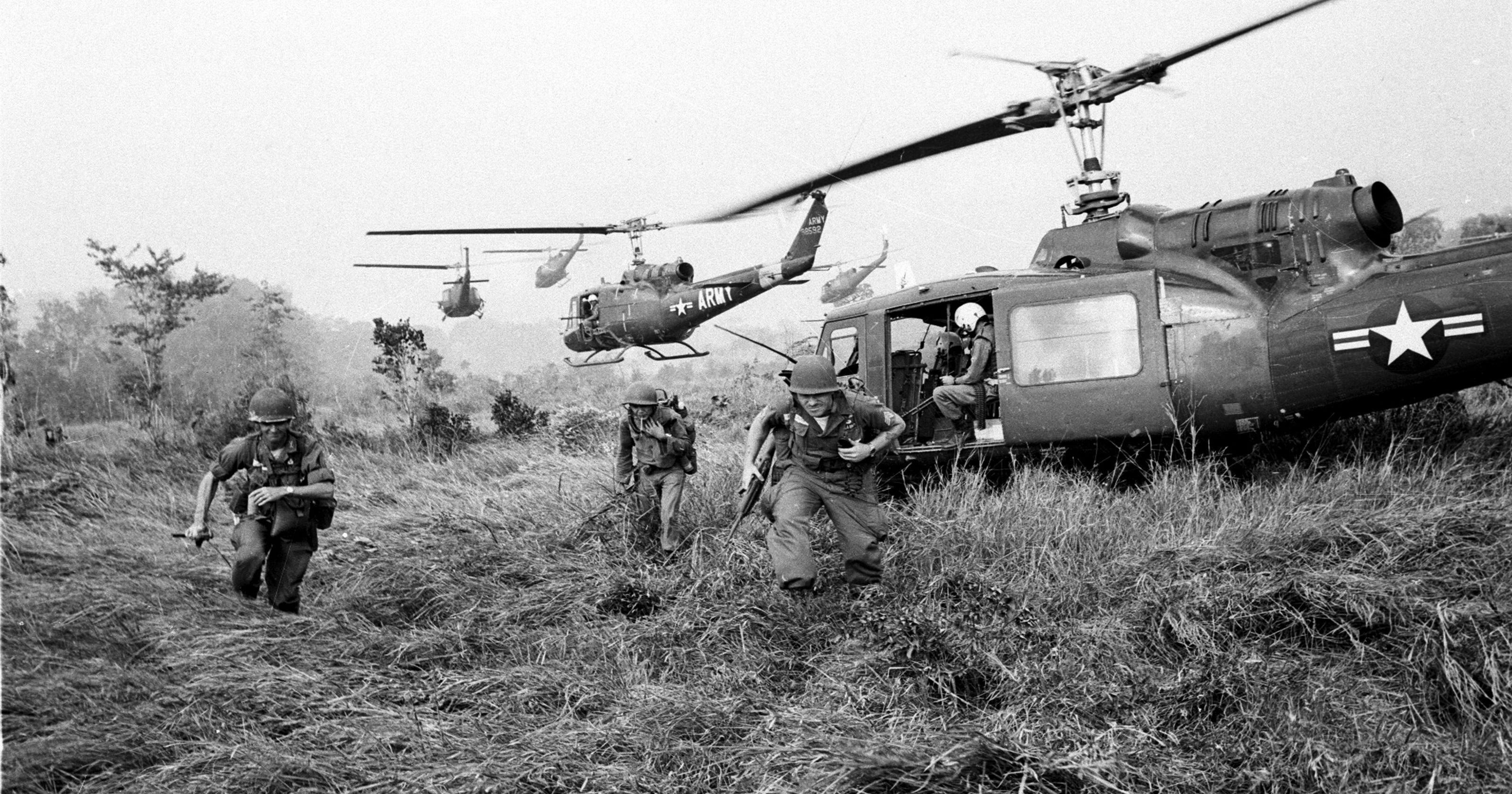
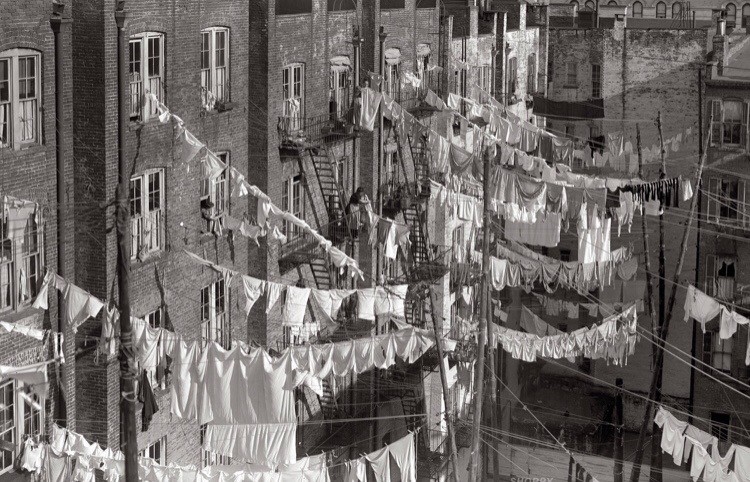
Example of how housing/life looked in the time period that this novel takes place in
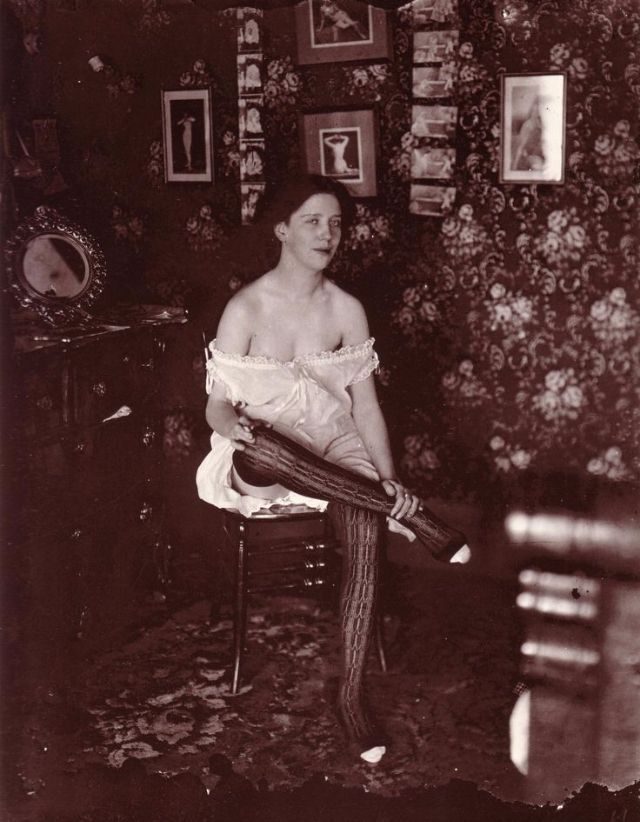
A tragic hero is defined as literary character who makes a judgment error that inevitably leads to his/her own destruction. In Maggie: A Girl of the Streets by Stephen Crane, the reader learns of the cruel and harsh upbringing of the protagonist Maggie, and her brother Jimmie. One also follows Maggie’s infatuation with a man named Pete, who she becomes increasingly dependent on over the the course of the novella, and the split between them. Tragically, Maggie leads a sad, short, and lonely life after the split, and turns to a life of prostitution. Maggie is considered to be a tragic hero, who is partially responsible for her own downfall because of her dependency on others for an escape from her horrible life she was living, and Pete being the second part of Maggie’s downfall because of his manipulation of her due to her craving for attention and child like innocence.
Maggie, because of the environment she was raised in, grew up very naively and innocently about the world. Pete, knowing this about her, used this as an advantage. After Maggie and Pete had gone out for their first date, Pete had walked her home and said “‘Give us a kiss for takin’ yeh teh deh show, will yer?’” (Crane 35). Maggie reacted out of innocence when “[she] laughed, as if startled, and drew away from him” (35). She was so innocent that she had never kissed anyone before, making it easy for her to end up being manipulated into something that could cause her life harm. Alike to how Pete eventually convinced Maggie to “go to the devil”, leaving clues of what had happened when “Maggie’s jacket and hat were gone from the nail behind the door” (47). Maggie’s mother and brother were very displeased with this, and Maggie’s mother said “‘Den I’ll take ‘er in, won’t I, deh beast. She kin cry ‘er two eyes out on deh stones of deh street before I’ll dirty deh place wid her’” (62). Pete had manipulated and taken advantage of Maggie so much that it had caused Maggie to upset and anger her mother, to the point where her mother decided to remove Maggie from her household. He convinced Maggie that he loved her, and she was so infatuated with him that the repercussions of her actions had not yet appeared to her. They would not appear until after he had done his damage. She did not realize that she was so far down a path with Pete, that it was breaking her away from her family, which was about the only point of some stability she ever had. When Pete disappeared from her life, she had nowhere to go. This lack of a home and stability, taken away when Pete left led Maggie down a dark and twisted path, leaving part of the blame on him. Although, Pete was not completely at fault for Maggie’s downfall.
Another reason for Maggie’s downfall was her constant dependency and reliance on others to save her from the situation she was in at home. Maggie thought “Her life was Pete’s and she considered him worthy of the charge. She would be disturbed by no particular apprehensions, so long as Pete adored her as he now said he did” (58). This was a sign of the everblooming dependency on Pete, and she was giving her life to him and not leading one of her own. This also lead to “[Maggie] contemplated Pete’s man-subduing eyes and noted that wealth and prosperity was indicated by his clothes. She imagined a future, rosetinted, because of its distance from all that she previously had experienced” (58). This combination of her dangerous adoration and dependency on Pete lead to him becoming the singular most important person and thing in her world, which caused major problems after the couple had split. She had relied on Pete for everything, life, a home, and much more, and once he had left, she had nothing left for her. This development of everything with Pete caused her to get kicked out, and she had nowhere to go, and no one to blame but herself for putting too much trust into the hands of the wrong person. Maggie also had thought after everything had happened, and she was living the life of prostitution, that if she had friends or had not hurt her mother so much, that she would still have a home. She had a job, which she quit, and she could’ve been completely self-reliant, but she was caught in the moment due her blindness to any sort of self reliance she had. Tragically she had lead to her downfall, with the cutting off of her family for Pete, the quitting of her job, and lack of friendships made with others, Maggie had nothing. She had relied too heavily on the people and society around her to support her, and was inadequate with any life skills or anything to help her support herself. This nothingness that she had, and the realization of it all led to the life Maggie followed until her death.
Maggie with the dangerous innocence, and easy manipulation of her character coins her as being the prime definition of a tragic hero. Pete was partly the one responsible for the downfall of Maggie due to the manipulation and corruption of her, stemming from the very first meeting with him. He attracted a young, innocent girl and convinced her to make her world revolve around him, knowing she was looking for an escape. She had put all her faith, and almost all of the life she had into Pete, and he threw it down the drain. Her fatal flaw in doing that was deeply ingrained in her, a craving for attention, and a willingness to do anything to get herself out of the situation she was in, which lead to her being blind to all the harm she was causing herself. Then, there was the increasing dependency on others to get through life, her mother and brother for a home and food to live, and dependency on Pete for those qualities she so desperately needed. After that, she relied on the men she was working with, while living the life of prostitution to get her through the cruelties of life, and they became her only source of income. Although, if really thought about, we, as a society, all have a little bit of Maggie within ourselves, and our own self destructive qualities just like her. And just like her, we could have Petes lurking around the corner, waiting to cause harm.
There was an immense amount of colors that filled the bright and luminescent sky. In front of me were abstract, colorful rays of sunshine ready to depart on an adventure to the other side of the world. Around us were a couple of forlorn birds whose faces portrayed an eerie element of avidity to elude from what appeared to be their most appalling nightmare. During our final moments of light, our eyes locked in a vast instant, questioning whether we were interchangeable members of each other’s lives waiting for one of us to betray the other. And on the anticipated moments of darkness falling through the clouds, the chains that bound us to our existence together gradually disintegrated into the gloom.
Every moment of that sunset we encountered shocked our equilibrium as we waited for the other to speak. Who goes first?
At least 4000 painful seconds had passed in which our thoughts possessed our youthful minds. When one of us parted their lips in preparation to speak, we were struck by numerous signals of our own hearts beating viciously. Among us were precarious teenagers, stressed adults, and elders simply content to still be alive, all joined by the agonizing essence of loneliness.
By the time the sky had faded to purple , our minds have ceaselessly started roaring with thought. The darkness of the sky has briskly worsened as its orange undertones are swiftly commencing attempting to evaporate into the setting sun. The uproar of our sudden emotion becomes serene as we begin to embrace the darkness closing in on us.
We both decide that our love for each other is boundaryless; so, we gather our strengths to combat the journey of our romanticized relationship. Venturing out into the darkness, we entered a state of composure. The sky is growing darker, trapping us into a state of vulnerability, a horrifying confinement that exposed the inner workings of our minds.
Suddenly one of the many emotions we confronted between the fascinating parameters of our shattering encounter triggers a thought in my mind, sinking back in as if it is a hopeful penny being thrown into a fountain. In that moment, we realize that we are not vivid objects of each others imagination, this is real. The sun has set again .
Living in America in 2018 often feels like living within the walls of a news station. It seems like every day there’s another narrow minded shooter, another questionable twitter blast from our President, or another sexual misconduct accusation. Flashback to the 1600s to the age where Puritans ruled, things were undoubtedly different. There was no social media or apps that could immediately notify us of another headliner, but does that mean the same atrocities weren’t occuring? Throughout history minorities have always been oppressed, that was just a societal norm at the time. Granting all this, about 300 years later the same oppression is still occurring even after various strides and attempts for racial equality. Since the Puritans were the first American society, the Puritans set the ideals of morals in America. American society has become less moral since Puritan times because civilians are still being penalized for the attached stigma that is perceived to be true about their race.
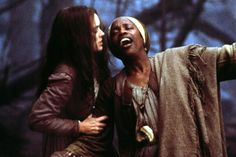
The Scarlet Letter by Nathaniel Hawthorne, took place in the Puritan Massachusetts Bay Colony in 1642. The Puritans made it very apparent that they strongly disapproved of the Native Americans. Chillingworth, the legal husband of Hester Prynne, the protagonist in the novel, even refers to them as “savages”. The reasoning for this ostracism has been discussed in every American history class. The Native Americans were not white and were not Christian, and therefore, in the minds of white Puritans they were inferior. In reference to her mother, Hester, Pearl states, “You are the most sinful woman in the whole world, not counting those heathen Indians” (Hawthorne 68). In Puritan Society, Hester’s sin was one that would go unforgotten, and there was a widespread belief that she should pay for the sin she commited. Pearl alludes to the Indians as if they were born corrupt, and were inherent sinners, but all they did was defy the ideals of Puritan society for the sake of their own individuality and culture. Unlike Hester, who was the one to blame for the sins she commited. The Crucible by Arthur Miller is another book based off the principles of the Puritan Religion. Although, it was inspired by the Red Scare, which speaks to the continued lack of morals in American society as the Red Scare occurred during the 1950’s. The novel takes place in Salem, Massachusetts in 1692 during the notorious Salem Witch Trials. The novel describes the many women accused of witchcraft, but one of the first accusations made was of a black slave, Tituba. Tituba was an easy target. As a slave she was already looked down upon in society. Despite any actions she could have taken no one would have listened, Tituba was a black woman. In the scene where Tituba was being accused by Abigail, who was a white Puritan woman, she begs for the reverend to believe her that Abigail is the one in the wrong. Tituba cries, “You beg me to conjure! You beg me to make charm-” (Miller 44). Tituba desperately tries to convey to the reverend that Abigail is the one who is lying, but because of her race, she is allocated with blame. This speaks to the lack of morals in Puritan society because the reverend immediately rules the possibility of Tituba’s truth because she is black.
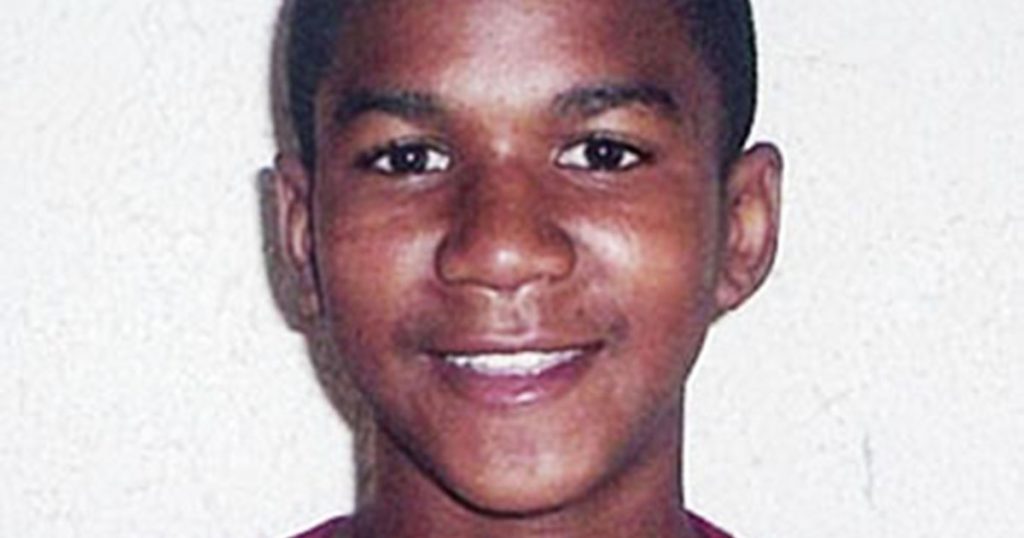
Throughout the past hundreds of years, America has made great strides for justice and equality of racial minorities, but even with all these movements, racial injustices still occur everyday. Trayvon Martin was an unarmed black teenager who was killed due to a white man’s “suspicion”. The New York Times describes the violent acts George Zimmerman inflicted upon Trayvon Martin when he, “…knocked him to the ground, punched him and slammed his head repeatedly against the sidewalk…. The jury agreed that Mr. Zimmerman had been justified in shooting Mr. Martin because he feared great bodily harm or death” (Alvarez). Throughout the case it was made very clear by the defense that Trayvon Martin was not a threat. The supposed gun was actually just a bottle of Arizona Iced Tea. Mr. Zimmerman saw the color of Trayvon Martin’s skin and immediately became suspicious, largely due to the stigma around African American men in society. On behalf of America’s lack of morals surrounding racial stigmas, a teenager was brutally murdered based off of a suspicion.
Tragically, murders of racial minorities are not a rare occurrence in American history. A CNN article about Trayvon Martin’s Case states “Trayvon Martin will forever remain in the annals of history next to Medgar Evers and Emmett Till” (Simon). Medgar Evers and Emmett Till were two falsely accused black teenagers who lost their lives based off of a suspicion. Medgar Evers and Emmett Till both were lynched in the 1950’s during the Civil Rights Movement. Trayvon Martin was killed in 2012, over 50 years later. American society has showed little progression in the likes of morality considering the same injustices of racial minorities are still taking place.
When taking a look at the history of America, racial injustices have always been a prominent role in conflict. But throughout all the strides and movements Americans have made, these injustices still take place everyday. American society is less moral today than in Puritan times because we’ve come to agreements, we’ve had empowering civil rights movements and racial justice figures who will forever be engraved in the lines of history textbooks, but the oppression of minorities are still occurring. America has witnessed all of these tragedies. Americans have celebrated racial equality in our educational system, and the termination of Jim Crow laws. Despite all this, America is still less moral because we still choose to act immorally. Trayvon Martin, a young black teenager from Florida and Tituba, an enslaved black woman from the Barbados are no different from each other. With hundreds of years in between them there race still determined there fate. They were both accused based off of suspicion by a caucasian, and both of their lives resulted in death. A suspicion based off of skin color shows no morality today or in the 1600’s. Although if in 2018 after our country has evolved, slavery has been abolished and movements have been made and these brutal acts are still occuring, American society proves for itself that it has become less moral.
Works Cited
Alvarez, Lizette, and Cara Buckley. “Zimmerman Is Acquitted in Trayvon Martin Killing.”
Have you ever wondered why two people of the same socioeconomic upbringing might end up pursuing drastically different paths in life? In a given family, one sibling might become a working man on Wall Street making six figures, while the other might become a forlorn drug addict on Skidrow. This is because we choose the magnitude of our own destiny with every action we make. With each choice or decision we make in our lifetimes, the product of our choices directly result in the outcomes of our relationships, livelihood, and other perceived successes. Stephen Crane’s characters Nellie and Maggie from his novella Maggie: A Girl of the Streets, are as Crane puts, “cut from the same cloth.” Both Nellie and Maggie grew up with the same poor economic and societal realities of most citizens living in nineteenth century America. Both characters found themselves within situations that led them to a life of prostitution to sustain themselves. Although they chose to work on the streets, Maggie and Nellie are opposite in the way Crane characterizes them; Nellie presents herself with “brilliance and audacity,” while Maggie is characterized by her “timid and dependent” demeanor. The most central choice Crane presents in his novella is the choice to be independent. Nellie’s self assurance and confidence help her to deceive Pete and take advantage of his wealth, while Maggie, the helpless romantic, makes choices that ultimately result in her demise. Stephen Crane describes these two characters with such differences to illustrate the key to survival is to be self reliant.
Throughout Maggie’s whole life she has been forced to rely on herself. Growing up in a poverty stricken home surrounded by alcoholics, she had no other choice but to become independent to meet her own needs. This all changes for Maggie when she meets Pete, a wealthy young man who she feels can take care of her and give her the comfortable life she’s always idealized. As soon as Pete shows interest in Maggie, she becomes obsessed with hope for a better life, imagining every detail of their perfect future together. The narrator describes a sense of shame Maggie feels towards the juxtaposition between Petes life and hers, noting that “Her eyes dwelt wonderingly and rather wistfully upon Pete’s face. The broken furniture, grimy walls, and general disorder and dirt of her home of a sudden appeared before her and began to take a potential aspect. Pete’s aristocratic person looked as if it might soil. She looked keenly at him, occasionally, wondering if he felt contempt” (Crane 26). In Maggie’s eyes, Pete’s beauty only highlights her filthy, poverty stricken home. She idolizes Pete in comparison to her dirt filled furniture. Maggie wants more for herself and sees Pete as the key to getting her there. Throughout the book, Maggie’s shame and unhappiness leads to a growing fantasy about the life Pete was capable of giving of her. Maggie remains awestruck by Pete despite the prevailing issues in the two’s relationship due to obvious contempt, and as the narrator describes, “Maggie perceived that here was the beau ideal of a man. Her dim thoughts were often searching for far away lands where, as God says, the little hills sing together in the morning. Under the trees of her dream-gardens there had always walked a lover” (Crane 23). Maggie’s utopian fantasies all depended on dream-like images of Pete’s life, rather than a realistic portrait of Pete as a human being or what their relationship would entail. Maggie wishes to absolve reality and depend on Pete for a way out of her harsh lifestyle, rather than seeking a reality in which she can attain a better life by herself.
Nellie’s most prominent characteristic as described in the novel is her confidence and poise. Unlike Maggie, who seeks love and support from Pete, Nellie chooses to be self reliant and to not pay attention to anyone else’s antics or promises. Maggie, noticing the contrast between her and Nellie’s demeanor, “. . .took instant note of the woman. She perceived that her black dress fitted her to perfection. Her linen collar and cuffs were spotless. Tan gloves were stretched over her well-shaped hands. A hat of a prevailing fashion perched jauntily upon her dark hair. She wore no jewelry and was painted with no apparent paint. She looked clear-eyed through the stares of the men” (Crane 64). Nellie’s appearance and behavior show that she doesn’t fantasize over Pete or view him as superior to her in the way Maggie does. Despite the fact that Maggie and Nellie both turn to prostitution, Nellies advantage is her disdain towards towards people like Pete. To Nellie, prostitution was a choice she made to support herself and one day move forward and attain a better life for herself, while Maggie becomes a prostitute and hopes that one day someone will come along and give her a happier life.
Maggie’s fantasies soon turn into a more unromantic reality when Pete agrees to take her in to his home. Unlike Nellie, Maggie makes it very obvious to Pete that she needs him to provide for her. The narrator notes that when Maggie first starts living with him, she views the world as a place “composed of hardships and insults,” (Crane 28) and admires Pete for his ability to ignore the pain that is innate to life. She imagined Pete faced with death, and saying: “Oh, ev’ryt’ing goes”’ (Crane 28). His nonchalant attitude soon becomes an issue within his relationship with Maggie, and Maggie becomes aware of Pete’s growing lack of interest. The day Nellie meets Pete and Maggie, Maggie’s time with Pete came to an abrupt end, as he was enthralled by Nellie’s bold and dignified personality. Seduced by Nellie, a woman with seemingly much more to offer to him than Maggie, Pete abandons Maggie to pursue a relationship with Nellie. Now alone and helpless, the narrator compares Maggie to a dog to portray her lack of identity and independence, “Three weeks had passed since the girl had left home. The air of spaniel-like dependence had been magnified and showed its direct effect in the peculiar off-handedness and ease of Pete’s ways towards her” (Crane 65). Just as a stray dog, Maggie is thrown out of Pete’s house and forced to fend for herself again, with no one to provide her with the tools to sustain herself.
The novel ends in Maggie’s mysterious death, showing that her helplessness and her expectations that someone would come along and save her from her own choices had failed. Nellie on the other hand, was able to trick Pete into giving her his money, and left him drunk and powerless in the bar. Just as Maggie succumbed to fantasies of a perfect life with Pete, Pete trusted Nellie to bring his life more fulfillment, and was ultimately robbed and abandoned. The fates of Pete and Maggie after choosing to rely on someone else to satisfy their hopes and dreams prove that dependence on someone is not as empowering or effective as achieving your goals independently. Despite her unethical and unconventional methods, Nellie prevailed as the book’s successor, by using what little she had to further her agenda and provide for herself.
It was six o’clock in the morning on June 1st 2016. I slept soundly to the loud screeching cars on the Brooklyn Queens Expressway, as they had acted in place of a lullaby my whole life. A knock on the door startled me awake as I struggled to grab blankets to keep my modesty. I awoke red eyed, memory still hazy from the events of the night before. My head was pulsating as I sat up in utter confusion. I had my final exam of the school year that day and was dismayed that my mother would wake me so early. My was voice thin and weak as I managed to mumble the words “Come in”.
Two unfamiliar faces entered my room and slammed the door, a noise I can recall vividly to this day. Confused and terrified, I sat motionless, still clutching my blankets. There was a man and woman, both of whom were strong, with looks on their face that suggested that they had done this before and were not to be manipulated . I wanted to fight back. I wanted to scream and yell until all that was left of my voice had vanished, until my vocal chords ripped in half, but I couldn’t. Somewhere in my strung-out, weak 105 pound body I knew I needed what was about to happen. I had been expecting this. It was my only option if I wanted to live to see the age of twenty-five.
“Your parents have hired us to take you somewhere that will help you” the man said, his bald head shining in the radiant summer light. The man barricaded the door. “Don’t get out of bed, or this will get much harder, very quickly.” I stayed in bed as the lady picked out clothes for me to wear, warm, salty tears rushing down my face as I sat there gripping my silk sheets so hard my knuckles had turned to white. Trapped in the constraints of my own bed, the shirt I was handed ironically printed the words, “The Good Times Are Killing Us.”
As I finished getting dressed, I held out my wrists, mentally preparing myself for the journey on which I was about to embark upon. I felt the cold metal on my pale skin and heard a click into place. I walked down my stairs, eyes drawn to the floor, trying to forget that this would be the last time I would see inside the walls of my own home for a very long time. The front door opened, I inhaled the heavy New York City air as I let my thoughts consume my mind. I expected this to happen, but now that it was my brain couldn’t seem to process it.
I looked up as my giant escorts opened up the rental car. The seats were smooth and the car smelled so new it was nauseating. The stone cold automated voice of the GPS started on its route to John F Kennedy international airport. I was left with no information about what I was about to experience. Life as I knew it was about to drastically change, and no one was even telling me where I was going. I stared into the abyss that was New York City as we made our way from Brooklyn to Queens, tears streaming down my face, but my thoughts suddenly still.
The ride progressed, my mind turned into a film, replaying the past four years and all the decisions I had made that had led to me to this moment. I remembered all the times I let people down, all the situations I got myself into that no seventeen year old should ever have to experience. Regret and shame flooded my being as I let out a wail, releasing emotions that had been pent up for years. All those emotions that I had been trying so hard not to acknowledge devoured me as the car pulled to a stop in front of the airport.
I looked up at the terminal and saw I was going to a rehab in Hawaii, two strong arms grabbing either sides of my shoulders, taking me through the motions as I began to mourn my old life. Reality clicked back into place, like the metal cuffs had clicked onto my wrists. I looked around and locked eyes with a smiling old lady, “Why are you crying sweetie?” She asked excitedly “ You’re going to Hawaii!”