Cosmopolitan Underworld

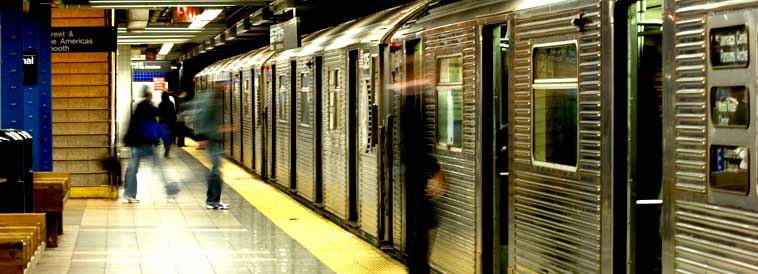
I hear the metal tracks creak louder and louder as I approach the station. My heart speeds up to allow my legs to move at a faster pace. My lungs expand and contract so rapidly that I fear they might burst. Each finger holds a tight grip on my Metrocard: my ticket to cross the Styx river between Earth and the cosmopolitan underworld. All that separates me from the abyss is a simple archaic turnstile. I slide my card through the reader as my body pushes itself to the other side- I have crossed into the world of the living.

I stop for an instant to take in my surroundings, noticing the distinct scent of dense, humid air present within every station. My thoughts are interrupted by the metal creaks slashing through my eardrums again, signaling me that my train is arriving. My feet lunge longer distances with every stride, the urgency of my pursuit intensifying as the train comes to a stop. At last, I undertake one final sprint to reach the sliding doors of the train.

I veer to the right to let a muck of people roll out before stepping over the gap between the platform and the train. My legs are exhausted, and I pray that there will be an empty seat, but as always, the chairs are filled. I find a pole to hold onto, sharing it with five other passengers. In a flash, the doors slide closed and the train begins racing forward. I allow my eyes to wander, noticing people of all different ages, ethnicities, and socioeconomic backgrounds sharing one small enclosure. Most commuters keep to themselves, gazes fixated on iPhones and books, creating their own bubble of solidarity despite being surrounded by so many other passengers. But, as I look around, I ponder what each passenger’s story may be. Some might be new mothers, others convicted felons. I turn my head to see a pack of children in their school uniforms clump together next to a drummer with hopes of earning some spare change by melodically tapping his drum pads and beatboxing along to his rhythm. Businessmen with briefcases are smushed against homeless men with plastic bags as the train’s capacity fills. More than just a steel box that transports me from point A to point B, the subway is a vessel full of people with unique experiences, thoughts, aspirations, and personalities.
Growing up amid such a vastly diverse group of people is an experience that only New York City natives can truly understand. Often, I feel lost amongst the millions of inhabitants, but the sense of anonymity can also feel extremely liberating; whoever you want to be, and wherever you choose to go is your decision- It’s just a matter of which subway line you choose to take. This sense of freedom makes me feel alive more than anything else I’ve experienced. I remember the day my parents finally let me ride the subway on my own, handing me my first ever Metrocard. After twelve years of anticipation for this right of passage, the world was mine. For only $2.75, a small rectangular card promised to take me wherever I desired, and I was overcome with excitement.

The voice on the overhead speaker announcing the train’s arrival at Delancey Street snaps me out of my daze. I quietly count the remaining stops before mine: East Broadway, York, Jay Street Metrotech, Bergen, simultaneously calculating the amount of time it will take to reach my final destination. I check my watch, realizing that it’s now past 8 PM, meaning rush hour has ended. I look around to discover the train is nearly empty and the atmosphere of intensity has dissipated. I close my eyes and return to my thoughts, lulled into a state of relaxation by the steady movement of the train and the soft beat of the music from a nearby passenger’s headphones, tuning out the speaker’s announcement of each passing stop. The familiar sound of a monotone voice projecting the words “This is Carroll Street, the next stop is Smith-9th Street, stand clear of the closing doors please” breaks the calm and my muscle memory takes over, dictating each step I take out of the train and through the station that I’ve known my entire life. I clumsily maneuver past people as I orient my mind back to reality. Finally I reach the exit, trudging up the stairs to enter the real world again.

To some, riding a busy subway is a nuisance. Holding a germ-infested pole, being pressed up against sweaty bodies, or enduring the piercing sound of  a screaming baby’s first subway ride might not be what most people find exhilarating. But to me, the feeling of transporting from borough to borough, the freedom of choosing a destination- my prerogative as a Metrocard owner, alongside hundreds of unique passengers as the train speeds down the tracks, is when I feel most alive.


Posted in Uncategorized | 2 Comments

The American Dream Vs. The American Reality

Every year about 1,000,000 people immigrate to America. Each with the same dream. The American dream. The American dream is the idea that you can come from nothing, but with enough hard work and devotion you can achieve financial greatness which will therefore result in your own happiness. In The Great Gatsby by F. Scott Fitzgerald, the protagonist Jay Gatsby did exactly that. He worked hard to achieve his dreams of wealth. Gatsby saw the world through a filter, one that made him think that money and happiness are directly correlated. The Great Gatsby falsely represents the American dream; it displays Gatsby’s pursuit of success and wealth, while simultaneously exposing the overt fixation Americans have with money as a means of attaining happiness.

Jay Gatsby wasn’t always the great gatsby. His given name was James Gatz. James Gatz grew up poor, his parents were “shiftless and unsuccessful farm people”, a fact that filled Gatsby with shame about his identity and his past (Fitzgerald 104) . But when Gatz went off to fight in the war he was determined to revise his identity. All because of Daisy. Daisy was beautiful and wealthy. Gatsby soon became infatuated and saw Daisy as the key to his happiness. Gatsby felt that Daisy would never truly love him and marry him if he was poor.  James Gatz changed his name to Jay Gatsby to symbolize his newly attained lifestyle and wealth, Gatsby “sprang from his Platonic conception of himself” in reference to the greek philosopher Plato, who often spoke on the idea of the real world versus the ideal world (Fitzgerald 104). Gatsby created himself a facade, or mask to present to the real world, because he knew that who he was raised to be would not please the ideals of Daisy’s lifestyle.

Despite the fact that his lavish lifestyle was only a facade,  Gatsby still represented the interpretation of the phrase “new money”, while Daisy, her husband Tom Buchanan and both of their bloodlines had been basking in the glory of wealth for years. Gatsby felt inadequate  compared to Daisy’s new husband, Tom Buchanan, when he says, “‘ She never loved you, do you hear?” He cried. “She only married you because I was poor and she was tired of waiting for me” (Fitzgerald 130). Through Gatsby’s tainted view of the American dream he assumed that Daisy would never love him if he was poor, exposing the bias that many Americans have towards poverty. In the eyes of Americans, if you’re not successful financially, then you must not be working hard enough. The only reason Gatsby wished to attain the riches he had was to feel worthy of Daisy, who he saw as his link to happiness.

Gatsby only found his own happiness within Daisy’s happiness. And long before Gatsby acquired his riches, he concluded that money was the way to secure Daisy’s happiness and love. When Gatsby finally has Daisy at his newly obtained mansion, he desperately tries to make sure that everything was flawless, “He hadn’t once ceased looking at Daisy, and I think he revalued everything in his house according to the measure of response it drew from her well-loved eyes” (Fitzgerald 91). Gatsby strived for the reassurance of Daisy on behalf of his own feelings of adequacy. Gatsby was fixated on Daisy’s reactions to his valuables to prove to himself that he was good enough for her.  

Gatsby inherently knew that a self created man of new money like himself would never reach the standards set by the high class society that Daisy came from, “Gatsby saw that the blocks of the sidewalk really formed a ladder and mounted to a secret place above the trees- he could climb to it, if he climbed alone, and once there he would suck on the pap of life, gulp down the incomparable milk of wonder” (Fitzgerald 110). This ladder represents Gatsby’s envision of the American dream, He knew that he could reach the dream that he had been hunting for so long, but he would have to do it alone. Instead, he became entranced in Daisy’s “perishable breath” and at that moment he had unconsciously determined his fate by losing himself within another human being, who was charmed only by wealth and the ideals of living a high class life (Fitzgerald 110).

In the end Gatsby truly never was good enough for Daisy. Gatsby’s dire wishes of  love and wealth resulted in his own death. On the final page of the novel the narrator and great admirer of Gatsby, Nick, describes Gatsby’s pursuit and warped view of what happiness means and how to attain it, “Gatsby believed in the greenlight, the orgastic future that year by year recedes before us. It eluded us then, but that’s no matter- tomorrow we will run faster, stretch our arms out farther….and one fine morning-” (Fitzgerald 180). This warped view of the correlation between money and happiness is the reason for Gatsby’s death.  Gatsby had been fixated on this greenlight at the end of Daisy’s dock across the water from his house. This greenlight represents all of Gatsby’s goals in life, Daisy and a richer financial status. The greenlight unmasks the juxtaposition between the American dream and the American reality. Nick alludes to the idea that no matter how hard you strive to accomplish the set societal ideals of the American dream, money is not what brings joy and happiness. For Jay Gatsby the green light will forever remain on the other side of the water. James Gatz was an insignificant member of society who craved a richer lifestyle and purpose. Simplistically Gatsby does represent the American dream, he worked hard and got the money in the end. The American dream circulates around the pursuit of wealth, but the American reality is what is exposed in The Great Gatsby. Fitzgerald reveals  the snobbish filth of upper class Americans while simultaneously highlighting that none of these people of great wealth are actually happy in life. The Great Gatsby purposefully falsely embodies the American dream to make evident that money does not bring happiness.

Posted in Uncategorized | 9 Comments

Learn From Your Mistakes

People make mistakes. This is a basic human quality that allows us to progress, even though some of the errors we make are way more serious than others. In Bulgarian, there is a famous saying: “Да ти бъде обеца на ухото!”, which roughly translates that once a person makes an error, he will not repeat it intentionally. Most of the times, people get easily annoyed by making mistakes, as we strive towards perfection. Everyone wants to be able to say that they do not regret any of their actions; however, this is rarely possible because life experience is gained by trying, failing, and trying again. The mistakes people usually tend to regret the most are the ones that have affected not only themselves, but other people they care for too. The simple reasoning behind that fact is that once a person takes a decision that affects others, most of the times they do not realize all of the consequences of their action and how others will be affected. Also, we cannot predict how people are going to react, which limits our ability to take actions on behalf of others. Furthermore, adults are way more mature than children, as they have had a lot of time to fail. This explains why one of my decisions that I regret the most happened when I was just thirteen years old.

During the summer of 2015, my sister got invited to be one of the teachers at a summer camp for computer science. As soon as my sister asked me whether I wanted to go with her, I said yes. It was located on the seashore, which for me, compensated that I have to actually study during the summer. Additionally, I was really interested in computer science, as I was a big fan of video games, and wanted to have the opportunity to make games of my own. My mother was not as forward-looking as I was. She was worried, and even though I still cannot understand why, I believe that she was just anxious because it would be my first camp without my parents. I assured her that everything will be alright and that I have my “old” seventeen-year-old sister to take care of me. After approximately a thousand times in which I repeated the words “Please Mom!”, she agreed to let me go. However, she had one condition. I had to call her every night, so that she could sleep calmly, without having to worry whether I am alright. She even bought me a new phone, because she knew that I will be really into it, and I will spend a lot of time playing on it, which would increase the chances of me actually remembering to call her. It was like a dream come true for me.

As soon as we arrived in Sozopol, I made a ton of friends. Even though it was a camp that was designed for us to study, I was having so much fun. I even created my own first game. It really looked like Flappy Bird, but it was my creation. However, as a really responsible early teen, and combined with the fact that I was constantly with my friends, I forgot to call my mom. My sister was constantly reminding me to call her, but every time I said I will do it in the evening. The first three days of a nine-day camp had passed, and I had not called my mother even once. As soon as I got that realization, I called her immediately. To my surprise, she was not mad at me, but rather happy to hear me and that I am having so much fun. Deep down in my consciousness, I knew that I had caused her a lot of anxiety, but she refused to admit it. This provoked me to learn from my mistake. Until the end of the camp, I called her every night, and this improvement that I made, allowed me to go to the same camp next year. I learned that even though we believe that we know everything when we are thirteen, and that we can survive on our own, it is always better to follow our parents’ advice as they are so much more experienced than us. Also, it will not cause them any additional stress, and they will continue to allow us to go to different fun events.

Before writing this paper, I called my mother. In fact, since I came to America, I have been calling her at least four times a week. I guess that, after all, my camp experiences taught me a lot about how our decisions affect others. As we like to say in Bulgarian, “Да ми бъде обица на ухото.”

Posted in Uncategorized | 1 Comment

This New World Called America

My name is Enrique Ball, and I am an immigrant from Venezuela. The year is 1980, I am scared. I am confused. Around me all I hear is words. Words that I don’t understand. I look to my brother, Carlos, he’s always been an inspiration to me, he taught me how to ride a bike, he took me to get Arepas at the bodega near my house. I look at him and see that we’re both lost. Lost in this new world called America.

I now live in a town called Newton, Massachusetts. I can not say the word Massachusetts. My classmates skin is as white as the clouds that hang above me. My skin is as dark as the night sky after the clouds have dissipated. For the first time in my life I am viewed differently for something as insignificant as my skin color.

Inside the safety of my new home I feel almost as if I am back in Venezuela. I understand the language being spoken around me, the rolling of the tongues, the sweety melody of simply comprehending the words being spoken to me. But even so, this new home was a foreign land. My house in Venezuela was named Casita De Mariella Sandra. Now I live on 139 Oak Hill Drive. The rhythm of these new words daunted me.

My first day of school I ask a group of boys to play Futbol with me, they nod with a questioning look. I see them travel into the school building and when they come back, they carry a strange diamond shaped brown ball. This is not what I asked for. They ask me what my favorite team is, I have no clue what they’re talking about.

The day is October 31st. I walk to school with my brother only to see a mass of children dressed up in scary clothing. In Venezuela, we don’t have this holiday called “Halloween”. The whole day I was ridiculed for not wearing a costume.

The funny thing is that I felt like I was wearing a costume everyday at school. I was left back in school, I was no longer with boys my own age. At lunch I was being fed sandwiches and apples. I could not say the word sandwiches. I wanted my friends, mi amigos, I wanted empanadas and tres leches. I wanted my tan skin to be glistening in the hot Venezuela sun. I did not want these cold Massachusetts winters. I want more, more than this dismal life of routine. Dismayed by the constant ridicule of my accent. Or my skin color. Or my clothes. Or the contents in my lunch box.

Simultaneously, I wanted to have what these other boys had. I wanted milky white skin and clear blue eyes. I wanted white blonde hair and knowledge of this new sport that they, for some reason, call football. I wanted to be able to pronounce the word Massachusetts. Or sandwich. Or Maryland. Or compartmentalize.

This new world called America. It’s confusing. It’s scary. Everything is new to me. It’s a crazy concept that you can live in the same world as someone, at the same exact time, and everything is still so completely different. But yet, so completely the same. This journey has taught me that all of mankind shares a common goal, the continuity of existence, Blonde hair or black hair, the ability to roll your R’s or not…we are all the same, we are all just attempting to live.

My name is Enrique Ball. I am an immigrant, who shares the same goal as you.

Posted in Uncategorized | 1 Comment

A Backpack Full of Memories

Even though when people are born they are extremely vulnerable and weak, that does not stop them from entering a dangerous world. However, as soon as our first cry and breath of fresh air happen, we are already surrounded by people who love us and want to help us craft our way through life. People do not completely realize the role of parents in the life of a newborn. Consequently, some parents decide to leave their child when they are still infants, thinking that somebody else will take care of them. This is the reason why some babies are born without the love and warmth of their guardians and are left alone in the world. As a result, they grow up in a place that they view differently, as they have not been exposed to affection from their real parents while young. This may either make a person stronger or completely break them. However, what happens when people grow up with the aid of their parents but lose one of them unexpectedly? What happens when the only thing left from a certain person is the shared memories? Does that completely devastate people or makes them enter the real world? In my case, the death of my father was an event that I have had to carry for the past three years and has completely changed the person I am today in a positive way.

Despite all of the grief that came my way, with the support of my friends and relatives, I managed to block out all of the negative impacts of that event. I was happy to have known such a great and inspiring person as my dad, who has always looked for the best in me. He has always pushed me to do even more than I believed I could because he truly wanted the best for me. I would say that he is the only reason why I am currently in the USA, as he wanted me to get the best education I can. I learned to believe that I should not be heartbroken that my dad is gone, but to be grateful that I had the opportunity to be influenced by him. Through the past years, I have always carried those memories of us laughing while watching movies that I would have never watched without him telling me to, which are now one of my favorite movies, and just having normal conversations about whether I enjoyed my day at school, what fun activities I did, and what I learned from the day. I also carry all of the information he has taught me, and most importantly, I carry the motivation that he had for me to become a successful and happy person.

On the other hand, in any basic human interaction, there always is going to be conflict, no matter how close the participants are. Like any other child, I have had my moments when I think that my parents are just annoying and they do not want me to have any fun. I have thought many times that I know everything and that no matter what my parents say, I will always be right. All of that childish behavior has led me many times to have arguments with my dad and as a result, I would wish that I could run away. With the death of my father, I have had to carry a lot of regret about my past decisions. Of course, I did not know that my father is going to pass away when I was only a child, but if I did, I would have changed so much of my behavior. However, I cannot, and I am left wondering what would have changed if I was not such a childish boy at times. The worst of all is that I have to carry a lot of thought that makes me wonder whether my actions could have prevented anything.

Nevertheless, the invisible backpack that I have to carry everywhere with me is full of positive and negative memories of my father. Sometimes the good memories come out and make me see the true beauty of life by motivating me to become a better person every day. Other days, the negative memories make me wish that I could go back a couple of years in order to spend more time with my dad and say one final goodbye; however, I know that I will never be able to do so, and as a result, I am stuck in a never-ending cycle. Consequently, both of those types of memories have changed the person I am today. They have taught me to cherish every moment I get to spend with people I love. Also, I am even more motivated to become a son that my dad would be proud of, as I want to accomplish everything that he would have wanted me to. Last but not least, the death of my father has made me more mature, as it has taught me that actions have consequences and that we should always think twice before we do something because there is no going back.

Posted in Uncategorized | 1 Comment

An Impactful Birthday

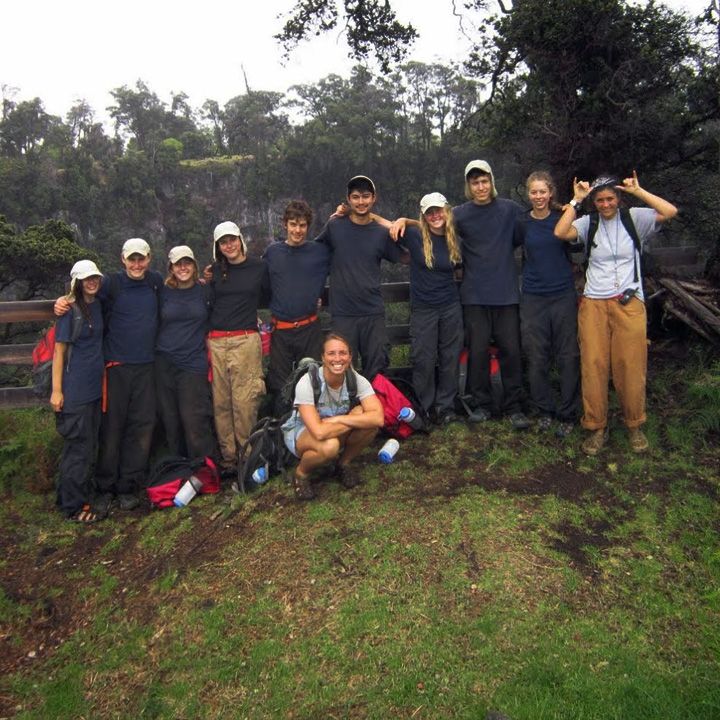
I woke up on June 27th 2016 inherently angry. I had been angry for the last twenty six days. But today is my birthday. I heard the loud yells of my wilderness guides calling out our names and stumbled out of my sleeping bag onto the dirt roads of Hawaii. I noticed the lush greens surrounding me, the pineapples sprouting from the rich soil, and the vast volcanoes glaring at me from the distance. Many people would’ve been in awe of the scenery that grasped their eyes. I was unimpressed. A nice vacation to Hawaii on your birthday would’ve been a dream to most, but for me this was in no way a vacation.

I spent my sixteenth birthday hiking in silence. I trudged up the volcanoes, ignoring the breathtaking sights and staring at my hiking boots. Once in a while I would feel a single tear gush from my corneas, a tear that I would quickly wipe away with a dirt streaked hand. I simply could not fathom the fact that I was spending my birthday like this.

Our group takes a moment to rest and we are ordered to reflect in our journals. I remember laughing, How does one force another to “reflect’? I open up my framepack, rifling through my sweaty socks and cans of tuna until I found my notebook. I opened the soiled journal and realized, I have a lot to say, and no one to say it to. I began writing a stream of consciousness, aggressively scribbling down every thought of contempt I had for the day I was experiencing, allocating blame on to my parents for doing this to me. I thought of how I would’ve spent this day at home in a drug induced haze, with people who barely knew my authentic self. This thought was still appealing to me.

We were not allowed to know dates or even times in wilderness. The only reason I knew today was my birthday was because I had been tallying the days with a pen on my sunhat. Today marked the twenty sixth day of my stay. I saw those twenty six tallys and sighed as I put my sunhat on and embarked upon the rest of our hike. My legs were aching and weak. Sweat was dripping from my forehead, I could feel the dirt dissolving into my pores. There wasn’t an ounce of birthday happiness in my being.

At last, I had finally reached the end of our hike for the day. Although hiking was strenuous, that was, by far, the least challenging part of my day. Today I had therapy. I saw my therapist out of the corner of my eye and cringed. I heard her say the words “Happy Birthday!”, I saw them as the vocalization moved her lips, but in now way could I process them. This was not a happy birthday.

“We’re going to do something different today” My therapist said. I groaned, anticipating the next worthless activity I was supposed to do that was suddenly supposed to cure my yearn for drugs.

“I have your impact letter” she said.

The sensation that took hold of my body was debilitating. I knew what this meant. I opened the two letters; one from Mom and one from Dad. Tears streamed from my eyes in a way I didn’t know was humanly possible. I read each word and realized the traumatizing effects my behaviors had on the two most important people in my life. Each letter was two pages, crammed with destructive behaviors I had as habits for the past two years. I opened my mother’s last. I knew this would be the most difficult to read, difficult because I could not bear to read the horrible things I had done that had affected the person I looked up to most. I got to the last paragraph and read a sentence that would forever be engraved into my mind.

“I just want my little girl  back.”

Those five words created a whirlwind of thoughts. I realized that the person I was acting as for the last two years was not me. On June 27th 2016, I made a vow to my sobriety. I read my letters repeatedly, finally taking accountability for the detrimental impacts I had inflicted upon my parents. I no longer wanted to live the life I was living twenty six days prior.

I looked up at my therapist bleary eyed. I politely thanked her for our session; the way the authors of my letters raised me to do. I swallowed my shame as I stood up from the dirt, mentally preparing for the pain that comes with self-improvement.  I was abruptly stunned by her warm wrinkly arms encasing my body. It was a hug. For the past 26 days I hadn’t been allowed to even talk to anyone besides her, and the guides, let alone touch someone. I felt her physical body against me as I melted into her platonic touch. She pulled away as I gathered myself, not wanting her to know that her hug was the best present I would have received. This simple motherly act of nurturing was all I needed.

“I hope it was an impactful birthday.”

Posted in Uncategorized | 1 Comment

Maggie’s Responsibility for Her Tragic Fate

“You have to accept your fate; do it without bitterness and stay humble”- Anthony Scaramucci. In order for anyone to develop, they have to learn to love where they come from. If they fail to do so, they will be unable to find true happiness. They will be missing a major part of their life. For some people, embracing and loving the place where they are born is extremely hard, as they were unable to find any comfort there. They may have had to face poverty, diseases, bullying, etc. in their childhood, while other people have never been exposed to them. The only factor that determines what kind of childhood you will have is where you are born. The statement that ever since the creation of society, people have been stimulated by their peers to become better is not completely true. The world is extremely big, and therefore, people born in different parts are used to different customs and live in a diverse way. Also, not all parts of the world are developed enough in order to provide people with opportunities that are as good as those around the world. Therefore, being born in a society that is not as advanced as others may be a huge drawback that shapes people’s mentality towards their own life. In the novella Maggie: A Girl of the Streets by Stephen Crane, Maggie is the protagonist who is born in an extremely unwelcoming and dangerous society. The story takes place in early 20th century New York City, which means that a lot of people had racial prejudice towards immigrants, and Maggie was a daughter of an immigrant family. Maggie’s downfall is both caused by the environment by which she was surrounded, and by her lack of motivation to improve herself, which forced her to look for an easy way out.

Parents play a crucial part in the lives of their children as they are responsible for almost everything they learn. Without the life experience and protection of adults, children would simply be thrown into a world that they had no understanding of. Even though Maggie had two parents, they were unable to perform their duties to give all of the life experience they have gained to her. Both of them were alcoholics, which even worsened the situation, as many times, they would blame Maggie for their own mistakes because they were unable to think clearly. The worst thing out of all was that she was deprived of essential skills that would limit her development as an adult. Maggie has not been sent to school, she has not been taught how to think independently, and most importantly, she has not been shown that she is loved. Throughout her childhood, Maggie has not been clearly demonstrated that she is a valuable person and because of that, her self-esteem would suffer in the future. Mary and her husband did not treat their children with affection, but rather as just people who live with them: “‘Let the damned kid alone for a minute, will yeh, Mary? Yer allus poundin’ ‘im. When I come nights I can’t git no rest ‘cause yer allus poundin’ a kid.” (Crane 10) Maggie’s father does not see anything wrong with Mary beating their children, but rather he is frustrated that he does not get any rest. The narrator illustrates the ignorance that Maggie was forced to grow up with, as she was just treated as an object that will eventually grow up and leave. Additionally, Maggie could not look for help from the New York society, as people did not want to do anything with immigrants, and would gladly ignore them, as they pretended that they are less of a human being that they are. To conclude, Maggie’s early childhood environment was extremely harsh, as she did not get to experience anything that would help her find the true qualities of life, but rather she saw poverty, alcoholic parents, and ignorance.

Despite all of the negative factors that were drawing Maggie back, she could have easily opposed all of the stereotypes for immigrant’s life. The only thing that would allow her to achieve happiness is to have the will to self-improve. Despite all odds when growing up in Rum Alley, Maggie grew up to be extremely pretty. The narrator illustrates this development by stating, “The girl, Maggie, blossomed in a mud puddle” (Crane 23), which describes how unique and important her beauty is. However, she did not perceive that importance, as she saw the fact that she is beautiful as a tool to help her get out of her society: “She began to see the bloom upon her cheeks as valuable.” (Crane 36). She knew that she will not be pretty forever, so she forced herself into “liking” Pete. In fact, this decision of hers was the one that resulted in her downfall. She could not have known that Pete was faking his emotions and was only using her.  However, she could have realized that by giving her fate to a stranger, it would not result in her desired outcome. Maggie believed that Pete could be her escape from her family and society: “Maggie perceived that here was the beau ideal of a man. Her dim thoughts were often searching for far away lands where, as God says, the little hills sing together in the morning.” (Crane 26) The girl believes that Pete was the ideal man, even though he clearly was not, only because she found some sort of hope in him. The narrator does not write that Maggie falls in love with Pete but implies that their relationship was based on the fact that both of them had something that they wanted from the other. This reveals that Maggie’s worst mistake was that she had given up on her own abilities by deciding to trust Pete, who represents everything bad in a society, more than herself. This mistake of hers is not caused by the lack of care she received in her childhood but by her inability to work towards self-improvement. To conclude, Maggie could have decided to educate herself, and eventually, she would find herself out of her society, but instead, she decided to blindly trust a person she did not truly know, which resulted in herself disregarding all of her moral norms and becoming a prostitute.

Maggie’s early childhood create a false image of what the real world is. She believes that there is no hope in her own actions, but instead, the only way she could develop is by attaching to a successful person like a leech and not letting go. This point of view was created to a degree by her observations of the world that surrounded her. She saw a lot of prostitutes, who would spend a lot of time with wealthy men, in order to make a living for themselves. The fact that Maggie did not receive any education also played a crucial part in her forming her beliefs of what a person has to do in order to become successful and happy. However, her lack of motivation to improve and her false sense of helplessness pushed her to create a false relationship with Pete more than anything else. Maggie did not see anybody else improve their situation just by relying on themselves, so she believed that she is incapable to do so too. After all, if Maggie had accepted her fate, without bitterness and had stayed humble while choosing to learn from her childhood rather than suffer, she could have completely changed her fate.

Posted in Uncategorized | 1 Comment

Martianism

It is a warm and sunny day, like all the days before and time to come. The weather is perfect, the mood is perfect, everything is perfect. All of the inhabitants work in tangum, all moving towards the same goal, enjoyment. I too relish in the perfect days I am blessed with, never really having a care that every day appears the same as before. In fact, I would want it no other way. The simplicity of life, it is soothing, it is calm, it is my home and the only thing I know.

I am often told stories of the hardships my ancestors faced. Having to struggle for life, their enjoyment blocked by their fight for survival. They had to provide for themselves, working their lives away, sleeping for what little was left over. But that time has passed. It is no longer, faded away to become only tales and legends, their only legacies. And what was all that work really for. They are dead and gone. Only now are the benefits of their sacrifices revealed, and they do not even come into contact with them. What a cruel world, all work and no enjoyment. They were slaves of hardship.

Four-thousand treacherous years later, and we are finally free. The hardships have vanished, and with it, slavery has dissolved. It all started two-thousand years ago, so legend has it, when God descended down upon the slaves from the sky and freed them from the grasp of hardship. At first, as naturally expected, the people resisted; they did not want change. Somehow,  they were happy with their circumstances, something I will never understand. But God would not halt his assault. He wanted his people to be free. They deserved to be free.

Slowly, city by city, God relieved the people of their hardships and took them to the Utopia we appreciate as our home today. No more slavery, no more violence, no more worries. It was just the people versus their enjoyment, the ultimate freedom. But the people did not want this Utopia, they were accustomed to their wars and straining lifestyle. They felt trapped in the grasp of God, the ultimate decisions maker. They wanted out of the freedom and back into slavery. They felt constantly monitored, an outrageous statement. They controlled their own lives, they just wanted a reason to complain. They did not understand the concept of perfectness as we do now.

As with all problems, time heals them or kills them. In this instance, it was death. With an ever increasing number of protesters, God realized he could breed out the imperfections. He could do what he wanted, he was God. And so, several generations later, the population forgot its ancestors and learned to appreciate the life they were given. They valued how easy it was and were able to do the hard thing that others could not, enjoy it. And so, another thousand years have passed, reaching the present, life only growing easier with the ever increasing amount of time.

I quite enjoy the freedom and enjoyment I am able to suck out of life. I truly cannot understand the fuss that the first citizens of this Utopia produced. Why would anyone ever want to fight a war or produce their own source of food. Everything is provided to us by God, our savior. Every night we go to bed, arising to a fresh supply of food, steady weather, freedom, and simplicity. There is nothing more I would wish for or ever want, except one thing; for God to have saved the people of Earth from slavery sooner, bringing them to our great Utopia, The Martian Zoo.

Posted in Uncategorized | Leave a comment

Dangerous Love

Two people meet, overcome obstacles, and fall in love, a traditional love story. The Things They Carried by Tim O’Brien is also a love story, but it is not a traditional one. Like war, it is not, and cannot be that simple. There is no linear story, the outcome is not favorable, and everything is unpredictable. Despite these differences, O’Brien’s novel still stands as a strong love story. To love something, simply means to be fully devoted to it, and put it above everything else. Love makes a person do unthinkable things, and so does war, and when it is lost, you are also lost. These elements radiate strong in the novel and shape it into the love story that it truly is. But let’s not forget, this is not a traditional love story, there is not even love between two people, but rather between the soldiers and the war, a war which interrupts all other loves.

The true sense of love in the novel is observed between the soldiers and the war. Although, originally, the soldiers did not want to participate in the pointless war, they grew to become obsessed with it. At the age of only seventeen, the soldiers lost their innocence and became victims to the harsh environment of war. They all changed and became entrapped in their alternate world, their war lives. This obsession and devotion can be demonstrated by O’Brien after he has been injured and can no longer participate in the war. O’Brien notes: “That’s how I felt-like a civilian-and it made me sad” (O’Brien 185). O’Brien could not live without the war, as like someone who is away from their true love would feel. He missed the bonds between his fellow soldiers that had become his life, and missed the intense action of the war; he could not handle seeing his once platoon mates loving the war that he was no longer apart of. To help reminisce this love, O’Brien wrote The Things They Carried, a love story, but one with no happy ending. A similar instance can also be seen with O’Brien’s fellow platoon mate, Norman Bowker. O’Brien comments about Bowker after the war: “The war was over and there was no place in particular to go” (O’Brien 131). Like a person who just lost a traditional love, Bowker found no point in life and was lost. He saw no purpose to his existence, and would not be able to gain it back until he was reunited with his love, the war. But Bowker would never find his love again, leading to his death. Only the absence of a true love can cause such a death, and Bowker feel victim to it. The soldiers loved the war, and the love became their lives.

Like in any other love story, their can only be one true love. For the soldiers, the war was their true love, and it overpowered and destroyed all others. It created a sense of unbreakable brotherly love between the soldiers, but broke it away just as quickly. In the relationship between Dave Jensen and Lee Strunk, that was brought together by the war, they loved each other so much that they created a daring pact with one another: “In late August, they made a pact that if one of them should ever get totally fucked up-a wheelchair wound-the other guy would automatically find a way to end it” (O’Brien 62). The two had such a deep love and admiration for one another that they were willing to go as far as to kill each other. No other environment but war can create that amount of love and devotion. Soon after, Strunk received an injury during the war, a wheelchair injury, but neither was willing to follow the pact they had created, and with the breaking of the pact, came a breaking of their brotherly love, destroyed by the war that had written it. Additional examples of brotherly love can also be seen between Bowker and Kiowa who gained a sense of love between each other throughout the war. They relied and understood one another the way no one else could. But the war took away this love as fast as it created it, after all, a love story can only contain one love. Kiowa was killed in the war and Bowker left with nothing except the love that persisted between him and the war. A Similar circumstance is also seen between Mark Fossie and Mary Anne Bell. Mark was so absorbed with Bell, that he invited her to join him during the war. At first, the relationship was untouched by the war, but over time, the war would win out. The war had absorbed Bell, and she began to love it as much as everyone else. She could not get enough of it and slowly fell away from the grasp of Fossie’s love. In a love story, their can only be a single love, and O’Brien’s novel is no exception to this.    

Although The Things They Carried is, in no sense, traditional, it cannot be overlook as what it truly is, a love story. The soldier’s entire lives revolve around the war. They are lost without it and can not handle being away from it. Like all love does, it drives people to do the unthinkable, even killing people, like it had killed Bowker. With love, their can only be one, and there is no shortage of this in O’Brien’s novel. It kills and absorbs everything until it is the only thing left that can be loved. The soldiers love the war, but the war loves none.           

Posted in Uncategorized | Leave a comment

Itinerary

Luxurious car, lavish parties, insurmountable wealth, a full and perfect life. But this life was not complete for Jay Gatsby, a wealthy mafia member in the novel The Great Gatsby by F. Scott Fitzgerald. Although Gatsby had achieved an immense collection of wealth and social status, he felt empty and unaccomplished in the world. He did not care for the money that he accumulated as most individuals would, but did care for what he hoped it would attract, the affection of Daisy Buchanan, a classy and wealthy married woman. Gatsby devotes his entire life to achieving the affection of Daisy, sees her as the only valuable thing in life, and is kept alive only by his hope of gaining Daisy’s affection. Although Gatsby never archives his goal of love from Daisy, he has still lived a full life.   

Within the span of one’s life, there is often a distinct end goal for each individual. For Gatsby, this end goal is obtaining the affection of Daisy. When Gatsby first meets Daisy, he is poor and unworthy of Daisy’s love: “He [Gatsby] had intended, probably, to take what he could and go-but now he found that he had committed himself to the following of a grail” (Fitzgerald 149). Gatsby finds himself in the presence of Daisy by a facade of high social status, boosted by his being in the army. The army gives Gatsby an opportunity to hide his real life and the chance to take all the love and admiration from Daisy that he can before he had to return to his normal, penniless life. However, Gatsby becomes mesmerized by Daisy and can not give up what he has accomplished under false pretenses. Daisy has become Gatsby’s grail and everything he does in life is devoted to achieving the love and affection that he once had with her under his facade. After working endlessly every day of his life, Gatsby finally acquires the wealth necessary to attract the attention of Daisy once again. To show off his wealth, Gatsby moves into a mansion near Daisy’s house and throws numerous wild parties. Unlike most parties, that are thrown for enjoyment, Gatsby’s parties are held for the sole purpose of drawing Daisy into his luxurious mansion in order to pull her back into loving him. Despite Gatsby’s efforts, his plan is unsuccessful. Fortunately, Gatsby is still able to show Daisy his mansion with help from Nick. While Gatsby is guiding Daisy through his house, Nick notes: “He [Gatsby] hadn’t once ceased looking at Daisy, and I think he revalued everything in his house according to the measure of response it drew from her well-loved eyes” (Fitzgerald 91). Although the items in Gatsby’s house were priceless, Gatsby viewed them as garbage if Daisy did not seem pleased by them. If Gatsby’s life was not devoted to achieving the affection of Daisy, then her view on the items would be irrelevant as they held a high monetary value and Gatsby would be pleased to display them. However, Gatsby only cared about pleasing and attracting Daisy and worked his entire life to purchase items that would make her happy rather than himself. All of Gatsby’s work for a better future is done to chase the past. Although Gatsby lives life for Daisy and not himself, he still has a very complete life. He has followed the American Dream and made something from nothing. He has filled his life with devotion that has made him feel complete. He enjoys making Daisy happy and when she displays her happiness, Gatsby feels ecstatic. Although he never does acquire love from Daisy, his desire for it causes him to push himself in life to become the best person he can be, forcing him to have a full life.

The only thing that would make Gatsby happy is affection from Daisy. Gatsby has all of the money he needs and can buy whatever he wants in his life. With so much wealth, Gatsby can get any women in the world, but he decides to keep his eye set on Daisy, a married woman. Gatsby is devoted to Daisy and can not find happiness without her. As typical in life, a person attempts to achieve their best self and always grow. Gatsby does not value this. Right before Gatsby kisses Daisy for the first time, it is observed that: “He [Gatsby] knew that when he kissed the girl, and forever wed his unutterable visions to her [Daisy] perishable breath, his mind would never romp again like the mind of God” (Fitzgerald 110). If Gatsby kisses Daisy, then he is giving up on his chance of a more achieved life, but this does not concern Gatsby. Daisy is the only thing that Gatsby values and he is prepared to hinder his self-growth in order to obtain it. It does not  matter how successful Gatsby is as his life will be empty if Daisy is not apart of it. Many years after the kiss, and after Gatsby’s death, it is revealed that Gatsby held a book with a detailed schedule of his everyday at an early age (Fitzgerald 173). This schedule shows the immense organisation and planning that Gatsby had in his life. This daily schedule not only relates to a single day in Gatsby’s life, but relates to his entire life. The schedule starts with Gatsby meeting Daisy and is followed by the rest of his actions that allowed him to gain wealth and status. However, his schedule was not complete and Gatsby was incapable of accepting it. Achieving Daisy’s affection was the last piece. It is this piece that provides Gatsby a complete life. It is his one goal in life, and it keeps him happy. Even though he never finishes his schedule, it is all the steps in between that bring meaning and fullness to his life.

Gatsby, now knowing what he wanted in life, would be kept alive by the hope that he would one day aquire Daisy. It is this hope that keeps Gatsby working hard and able to wake up every morning. When Gatsby and Daisy are talking in a hotel in New York, Nick notes: “But with every word she [Daisy] was drawing further into herself, so he gave that up, and only the dead dream fought on as the afternoon slipped away, trying to touch what was no longer tangible…” (Fitzgerald 134). As Gatsby continues to talk to Daisy, she loses interest and starts to not like Gatsby as she had many years before. Gatsby is unobservant and unable to see this change in Daisy. The dream of acquiring Daisy’s affection is dead, but Gatsby still tries to find the love that is not there. He still has hope for love with Daisy in this moment, and it is this hope that keeps Gatsby alive. If Gatsby were able to understand that his dream was dead, then his life would have no value, his plan ruined. But Gatsby did not lose hope: “Gatsby believed in the green light, the orgastic future that year by year recedes before us” (Fitzgerald 180). Although Gatsby had not held Daisy for five years, his hope to have her back had not receded. He believed in the green light, the hope that he would one day accomplish his dream. It is this hope that provides Gatsby a complete life. As long as he has a future to believe in, his life seems complete as he sees what he can have, and although he can’t reach it, he feels its positive effects. Gatsby  did not care how long it would take, as long as it would happen some day. Although Gatsby’s life may not be the best in the current moment, he is kept alive by the hope that his future life will be ‘orgastic’ when he completes his schedule, and Gatsby will do whatever it takes to achieve this future. As long as Gatsby has hope, he has a bright future, a reason to live, and a full life.

    The entirety of Gatsby’s life is based on gaining affection from Daisy. His entire life is devoted to her and everything he does, including his grueling work, is done to impress and please Daisy. Nothing is done for his own enjoyment if it does not please Daisy, the only thing he values in life. Daisy is the last step in his lifelong schedule and he is willing to give up even the greatest of achievement in order to complete it. In the end, it is the hope of achieving Daisy’s love that keep Gatsby alive. It is the hope of a better future that keeps him breathing. However,  life is not always about achieving a dream, but is about chasing it. Even though Gatsby never got to see his dream come to fruition, he still lived a full life as he was able to chase the future that he hoped to have.

Posted in Uncategorized | Leave a comment