Give or Take

Are humans innately altruistic or egoistic? It’s a matter of both: the givers and the takers. At different points in a person’s life they adapt and change from both, altruistic and egoistic, sometimes even both in tandem. People rely on others in a dangerous way. Humans innately co-depend on others and use each other as a way of support for themselves, when that support is gone all that’s left is the pain of what’s left. But isolation is not seen as an option for the human brain, so what is left is to live in an ignorant society who refuses to listen to its own problems. Generally, altruistic people live among egoistic communities, because humans have a way of looking for a reason to live while destroying other people’s purposes. Both concepts exist within the other, without bad there’s no good and without good there’s no bad. It’s the same for altruism and egoism, they’re two sides of the same coin and they influence each other effortlessly. 

One perfect example of this situation is in The Road by Cormac McCarthy. In this post-apocalyptic novel the boy prevents his father from crossing lines, moral lines only these two still have. After a catastrophe that wiped out and changed the world the main purpose of the ones that are left is to survive. It’s an idea that is dug deep in the human brain, but how far can someone go without a motive for life? To satiate their needs, majority of the groups in this book turned to cannibalism and slavery, a horrifying scene the boy has to relive many times: 

He was standing checking the perimeter when the boy turned and buried his face against him. He looked quickly to see what had happened. What is it? he said. What is it? The boy shook his head. Oh Papa, he said. He turned around and looked again. What the boy had seen was a charred human infant headless and gutted and blackening on their spit. (McCarthy 198). 

This was not the first, certainly would not be the last, time that the pair had witnessed such a thing. They live in a corrupted world where the phrase ‘survival of the fittest’ surfaces to another meaning. The ones who lived were the people who would do anything to do so, murdering and eating a defenseless infants organs is part of the list. Still the protagonists’ morals wouldn’t quaver, the only sense of morality the man still had was because of the boy’s demands. The need to be good overpowered him when he was surrounded by such cruelty, this forced his father to do the same: “He kept his eyes on the thief. Goddamn you, he said. 

Papa please dont kill the man. 

The thief’s eyes swung wildly. The boy was crying

Come on, man. I done what you said. Listen to the boy” (McCarthy 258). The boy has a necessity for staying moral and not hurting anyone, his empathy for others does nothing but harm him. The boy and the man are a representation of how altruism and egoism influence the other, because, as altruistic as the man may seem, he only kept his morals for the sake of his son. This part of the book shows one of the many times this has happened. An old man had stolen all of their things, took their blankets and food and left them with nothing, and the man’s plan was to leave him with nothing but his shame. But the boy’s golden empathy always won, after the confrontation he managed to convince his father to give the poor man some things so that he could survive. The man was hesitant but obliged at the end. The boy manages to keep his father in check and makes sure he doesn’t cross the line from his morals, he makes sure they are the good guys. This highly altruistic character living in an egotistical world is an example of how there cannot be egalitarianism in society, selfish and selfless. Because eventually he has to make selfish choices and he can’t balance his morality with the rest of the people who are still alive, there’s no equilibrium in his world of good and bad. 

The world consists of people who give and people who take. It is not balanced and it is not fair, but that’s how it works and there’s nothing we can change. 

Another example of altruism living among egoism is in Maggie: A Girl of the Streets by Stephen Crane. The case here is an innocent girl who’s being taken advantage of because of her love. Maggie’s way of looking at life is through rose-colored lenses, she uses this as a coping mechanism for her harsh reality, and the main focus of those glasses is Pete, who she believes to be so good but ends up stripping her of herself by the end of the story. Maggie’s lover takes advantage of her and when he obtains what he wants from her he leaves her, abandoning her in a misery without her name: “At the feet of the tall buildings appeared the deathly black hue of the river (…) The varied sounds of life, made joyous by distance and seeming unapproachableness, came faintly and died away to a silence” (Crane 69). What was left of this girl was her suicide, frowned upon by her community and family, left alone by her lover, she had no other option but to die. Because Pete ruined her life, he took her virginity and left her with the shame of the act. Nobody around her tried to understand what had happened, nobody tried to listen to her, nobody helped her in any way, she was left to feed by herself. The girl of the streets was corrupted by, what she thought was, love, and there was no savior coming to help. She had to realize that fairytales are nothing but fake, that others wouldn’t help her even when she helped others, that life is not fair. 

Unfairness can be found everywhere, and there’s as many selfish people as there are altruistic. In a society where all that matters is power, people don’t care for truth or lie, right or wrong. And if there are so many people who are taking advantage of others, where are the ones that are tactless? In The Great Gatsby readers can appreciate the people who take and receive but never give. The high class society that the main characters live in consists in taking from others and selfish desire. They care about their status, money, and power, they don’t care if they hurt others if it’s beneficial to them, and they don’t have a consequence for it: “It was all very careless and confused. They were careless people, Tom and Daisy– they smashed up things and creatures and then retreated back into their money or their vast carelessness, or whatever it was that kept them together, and let other people clean up the mess they had made” (Fitzgerald 109). In this situation it is because of their high class lives that the characters are this way, but a lot of the time it doesn’t take money to hurt others, most of the time it just takes the self-centered interest that humans have. At some point or another, there’s damage done to the ones around us caused by us, whether we want that or not. A person can be selfish and then turn selfless, or vice versa. 

It’s a matter of both egoism and altruism. There is no best option to take because it’s the way that we live our lives, it’s how we survive. A person can’t lead their lives without being hurt or hurting others, humans learn from pain and guilt, and even if it’s for personal gain, being selfish is not wrong and being selfless is not right. Because right and wrong are just concepts humans use to create a sense of morality, it’s all just a social construct that people learn through their lives, it’s not a real thing. The world consists of people who give and people who take. It is not balanced and it is not fair, but that’s how it works and there’s nothing we can change. 
Posted in Uncategorized | 1 Comment

Should We Keep Reading The Sun Also Rises?

The Sun Also Rises is a book that is written by the misanthrope, because this is expected to see some of that hate in Hemingway’s writing. Considering the time it was written, it was also socially accepted to think the way Hemingway did. It is a book that clearly shows antisemitism, racism, homophobia, etc. but that’s what makes the book interesting. It’s full of things no one is willing to say now-days. It’s a book that has a short plot, a repetitive one, that makes readers feel as if they’re living Jake’s everyday life. So, why shouldn’t we read the book? Why do people seek to look out for the controversial part of everything and cancel it because of it?

The dislikable parts are not completely an excuse to hate it nor is the story it has.

One of the interesting things of the book is the hate that is expressed in it. It’s the way it’s mentioned and nobody seems to disagree on it, something that cannot happen anymore, because everyone is so eager to share their worthless opinion and it always gets criticism. People can’t say what they truly want since someone might get mad. The misanthropist writing is clear in the book, Hemingway makes no effort of hiding it, and even if what he has to say about others isn’t nice, it’s a great part of the book to see the characters that are affected by it. Robert Cohn is a perfect example, they all hated him for the simple fact that he, a jew, existed near them. They made him a villain and treated him as one, even made him act like one. Robert Cohn is an antagonist the main characters created because of their hate. Readers can see how he was affected by the mistreatment he received.

Another argument to not read the book is that it barely has a plot, a repetitive one at that, we get the insight of the characters every-day life. Is somebody’s life not repetitive? Is it interesting enough that everyday is completely different from the last? No, no one leads a life like that because that repetitiveness is what the human being calls routine, a basic thing we all need to lead and enjoy a good life. We see Jake and his friends’ routine in every chapter, our lives are as boring and exciting as theirs, days are different than others but, at the same time, they are the same as the last. There’s no avoiding that.

The Sun Also Rises is a book that should be read and taught. The dislikable parts are not completely an excuse to hate it nor is the story it has, but it’s understandable that it is not a book for everyone to enjoy, it’s understandable that some parts are hard to take for some. Meanwhile, they’re not reasons for canceling it and the ones that do like it.

Posted in Uncategorized | 3 Comments

Body Terror

I can’t get up.

It’s been five hours since I woke up and I find myself not moving an inch away from my bed. My stomach grumbles but I don’t find the appetite to eat. I need to go to the bathroom, but my legs won’t move out of my sheets. My body has demands I can’t seem to meet. It has needs I can’t seem to give, and it gets mad at me for the lack of treatment I give it. Our goals are different: it needs food, I need to stay in bed. We constantly fight like this, we’re both stubborn and I can’t ignore it always, because long enough it will bring me pain. It will give me unnecessary pain to give it its needs, it will make me get out of bed to go eat. But I don’t want to eat, food sounds disgusting at this kind of moment, and whatever I choose to feed it with won’t be enough to satisfy the demand of food, nor can I keep avoiding it for much more. 

My impotent body brings me down with it.

My brain hates me as much as my body, they both hate their host and they let me know. We’re supposed to be one, yet each seems like a different person. If I am my brain and I am my body, then why doesn’t it feel like it? Why do I have to deal with my brain’s lack of chemicals? Can’t it just fix itself? My brain haunts me, its chemicals give me irrelevant emotion, its thoughts bring me down like everyone else, all with fascinating imagination. 

I’m filled with infection, and the weakness my body goes through is something else I have to deal with. They give me all of their pain and I’m responsible for them, but they’re not responsible for me. The demand for food comes again but this time I feel I might throw up, and the disgusting fluids out of my body would help it, but I don’t want to go through that process. Medicine is not enough to help, it takes the pain away but it will always come back. Why does my body wastes time in something as stupid as this? Doesn’t my body get better than me that we don’t have enough energy for this? It feels so weak I can’t even stand up, this monthly thing is getting old. I don’t want it anymore. It sickens me, both physically and mentally, and I just want to get rid of it. I can’t get rid of it. 

Sitting down at the table with my family, something about the good smell makes my stomach revolt, isn’t my stomach supposed to want it? Why now is it driving me away from it? I don’t get it. 

“Sara, how’s your day been?”

“It’s been good, not much to do in online school” I shrugged. It was my mom and that would always bring a smile to my face, I miss her even when she’s there. “Can I just drop out? It’s all too stupid for me” 

“Yeah? Then how do you get to college?” 

“I don’t.” 

“No no no no no, if you don’t go to college I’ll kick you out of my house” My dad never seems to get the joke. 

“Dad,” I smiled

“Yes?”

“It’s a joke” 

The food is served and the meat in front of me looks so good, it smells so good. Both me and my body agree on it. I slice the food on my plate and bring the fork up to my mouth, but the moment it touches my tongue something feels… wrong. Chewing suddenly felt disgusting and I can’t swallow the piece in my mouth until I force myself to, and the only thing I can do after is to chug some water down my throat. Everything was great, why am I now feeling this disgust? After a few more pieces of meat, I can’t seem to eat anymore.

I’m expected to be naturally strong, I am naturally strong. It would show more if I exercised and trained my body to be more powerful then this would be a much easier task. Why do I have to go through that process of building it all up to just lift things? I don’t want help, I don’t need help, I just want my body to be able to do this, why can’t it help me do it? Why does my body have to be so ridiculously weak? The only one that ends up dealing with this is me. I’m responsible for my body, I know that. It just makes me feel like I’m incapable of anything, like I’m just good for nothing, and my body drags me through it. I lack the strength I need, and too much effort just brings pain to my under-used muscles. I can’t get anything done because of it. My impotent body brings me down with it. 

Every time my brain has the chance, it reminds me. It reminds me in my dreams, in my thoughts, in my memories, and in my emotions. It reminds me of how I was never good enough, I can’t make anyone stay. At this point, I don’t want them to stay. But why does it keep thinking about it? Why, at the smallest chance, my brain just goes over the last two years? I’m tired of it, I’m tired in general. The reminder that everyone is better than me makes me want to give up. There will always be someone better and I’ll never be good enough at anything. My brain loves the idea of that. It’s a contradiction. Because I know I’m better than most, I know that, they even show it, but then why are there others who surpass me? In the end, am I better or worse than everyone else? 

The inconvenience of having a body and living in one is endless: It’s painful, it’s fearful, it’s failure, it’s filled with scars, it’s uncomfortable, it’s emotional, and it’s called living.  

I carry my body with me just as much as it drags me with it.

Posted in Uncategorized | 1 Comment

Guilty of Death

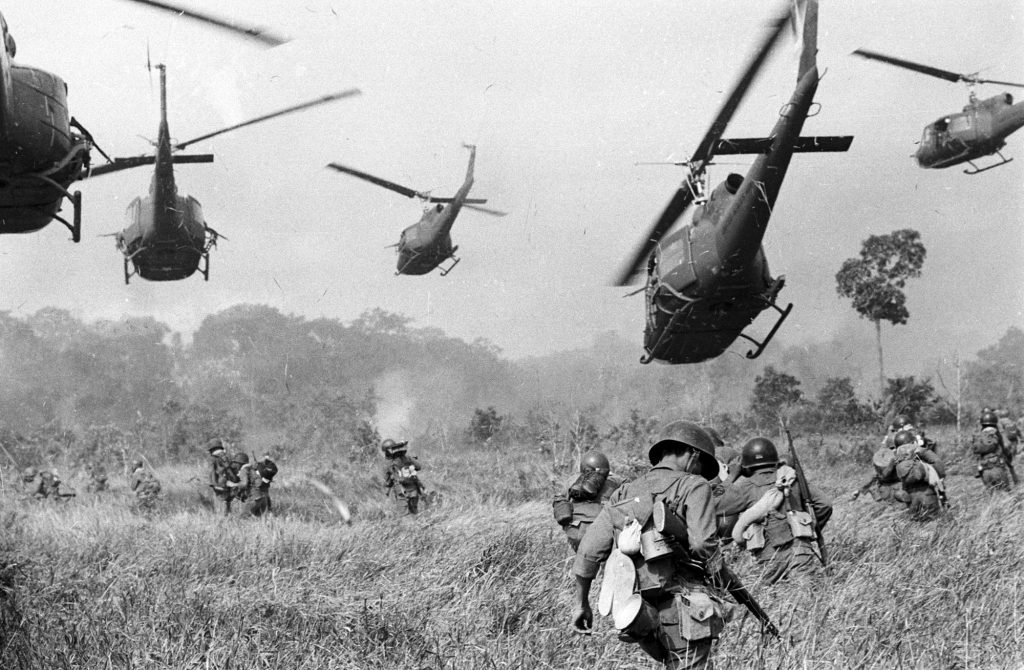
The Things They Carried by Tim O’Brien tells a story about war, to be more specific it tells his experience in the Vietnam war, where he had to go by force and was met with the trauma and guilt that death brings. The group of soldiers O’Brien was in all had to face their own guilt in different, but similar, situations. They had to face it when one of their own died, when they killed someone, and the aftermath of the war. The penitence of the war soldiers will always stay with them, will always haunt them. They could not escape their past actions and some didn’t know how to deal with their feelings after the war. They couldn’t reintegrate society because now they’ve seen other parts of it, they’ve seen the massacre that humans are capable of. This, and more, is why guilt after death is a major theme in the novel; readers get to see what comes with this sentiment and how soldiers deal with it. 

Nothing can go back to what it was once you see someone die, because you’re not the same, your brain’s not the same, it’s a process of change and grief that some can’t survive.

The way O’Brien dealt with his guilt and trauma was by writing stories; he often talks about this in the book and how much of these stories aren’t real. But he also mentions how story-truth sometimes is more important than happening-truth, because it gives more sensibility to the story, because through his stories he could bring back his dead friends for a few minutes: “That’s what a story does. The bodies are animated. You make the dead talk. They sometimes say things like, ‘Roger that.’ Or they say, ‘Timmy, stop crying,’ which is what Linda said to me after she was dead” (O’Brien 219). The author tells his stories through metafiction. He talks about what it’s like to write stories and why they’re important. He talks about bringing the dead back to life through his stories, how he can picture all of his friends talking to him and living their lives. It’s the way he chose to use to be able to survive, writing is O’Brien’s coping mechanism and he also talks about how much it has helped him, how without his stories he would probably be dead, too. Because writing is a way for O’Brien to express himself, to alleviate all of his trauma and pain. It helps the brain process events, decreases depressive and anxiety symptoms, and perceives stress; all of these are ways that writing, probably, help O’Brien to survive.

Death has a big impact on the human brain and morale, it affects humans deeply and the soldiers in the novel are a great example of this. Whether they killed someone or witnessed a death, the soldiers would forever feel guilt. Loss and grief are feelings that come after witnessing a death, and it affects the brain in many ways; it causes changes: in memory, sleep, behavior, body function, and more. This shows in the characters of The Things They Carried. One of the times could be when Curt Lemon died and Rat Kiley was left alone with the guilt of playing with smoke grenades with his friend, “Rat took a careful aim and shot off an ear. He shot it in the hindquarters and in the flanks. It wasn’t to kill; it was to hurt… Curt Lemon was dead. Rat Kiley had lost his best friend in the world” (O’Brien 75). The first response Rat had to the death of his best friend was to inflict his pain into something else, this being the baby buffalo he shot multiple times; he didn’t know what else to do, how else to react. The rest of the platoon just stands and watches him while he does this. After some time passes, Kiley ends up shooting himself in the foot because of his fear, he was scared of himself, he feared what he would do if he lost it. That’s how he dealt with the presence of death around him. Death brought guilt, fear and paranoia to this character. Kiley feels guilty and has a mental breakdown because of it. He was playing the game with Curt Lemon, he was, in his perspective, guilty of playing around on the battle field. His actions toward the baby buffalo express this along his pain. 

Another character that suffered because of the death of a loved one is Norman Bowker. After the war and Kiowa’s death he couldn’t readapt to society, he couldn’t shake the guilt of not saving his friend, he believes it was his fault even if there was nothing he could’ve done. He decides to put an end to his life and his pain, his last words readers get from him (chronologically) is the letter he sent O’Brien, in which he writes: “‘The things is’ he wrote, ‘there’s no place to go. Not just in this lousy town. In general. My life, I mean. It’s almost like I got killed over in Nam… Hard to describe. That night when Kiowa got wasted, I sort of sank down into the sewage with him’” (O’Brien, 150). The character of Norman Bowker often tried to hide his guilt and grief through not winning the medal for uncommon valor. It’s a way for him to lock up his actual feelings towards the war. What he tells himself is that he is ashamed of himself for not receiving the medal. The truth is he feels guilty for not saving his friend. Bowker connects it saying that he didn’t win the medal because he didn’t save Kiowa. In the end, nothing he did could save him of his guilt, of his own feelings toward his life and how things had turned out; so Norman Bowker hanged himself in the YMCA locker of his hometown. 

These three examples of guilt around death shows how each person has their own reaction to guilt and their own way to deal with it. This is why guilt is a major theme in the novel, it’s why it has a big impact on the characters and changes their lives. Nothing can go back to what it was once you see someone die, because you’re not the same, your brain’s not the same, it’s a process of change and grief that some can’t survive.

Posted in Uncategorized | 1 Comment

The Corruption in Humanity

The characters of The Great Gatsby, by F. Scott Fitzgerald, are distinguished by a group of Americans in the 1920’s: the rich hedonists of the Jazz Age. A group of rich white people, who a lot come from old money, a corrupted group with superficial affluenza. But who is to say that those characters are bad when those characters are as corrupt as any other human? It’s normal human behavior to act like they do in the book, to lie to get our way, to hope for things that are never going to come, it’s normal for us because, like them, we’re human. People do all of this without realizing it, then they criticize others over the same things because they don’t like that about themselves. It is a foolish thing to believe that everyone is good and innocent when nobody is. Nick Carraway, the protagonist of the novel, is a character who mostly watches. He observes and lets things happen. If he wasn’t the narrator of the story he would be a much less significant character, is standing by and doing nothing really such a bad thing? He observes Jay Gatsby more than anyone else. Gatsby is seen as an exception to everyone else by the main character, as somebody who is beautiful, and even if his death was a tragic one, he’s still as corrupt as all the others, so why was he so different for Nick? 

The character’s behavior makes us believe that they are bad people: they lie to get their way and what they want, they use others to feel better about themselves, and it would look like they only care about themselves. Why is this looked as a bad thing when we have all done the same things as the characters? We’ve all lied and been selfish, so what’s wrong with that if it gets you what you want? The characters are as corrupt as everybody else, Nick points it out in the book, too: “They were careless people, Tom and Daisy– they smashed up things and creatures and then retreated back into their money or their vast carelessness, or whatever it was that kept them together, and let other people clean up the mess they had made” (Fitzgerald 109). Nick is the one who said this, but Nick doesn’t realize that he often acts the same way as Daisy and Tom. Even if most don’t have the amount of wealth the characters had, we still act like them on a lot of occasions. Some have more advantages than others but, at the end of the day, humans will act like humans. Fitzgerald portrays the nature of humanity through his characters and story; everyone is corrupt to one extent or the other. The rich ones are corrupt because of their money and the poor ones are corrupt by the lack of it and the desperation that being without money brings. The morality of the characters is the same as ours, the same one we were taught, and the same one we created. A morality that only goes so far because no one is truly good or sinless. A morality that nobody can or want to change.

Humans hope for things that they can’t have, and Gatsby, no matter how hard he tried, would never get the past back.

Standing by and doing nothing could be considered one of Nick’s biggest flaws. Still, one of the biggest themes in the book is about the idea of observing, we have multiple examples for this like Nick, Doctor T. J. Eckleburg, and the owl-eyed man. Two out of the three only appear a few times in the novel, but they’re always watching and catching details that nobody else has seen. Nick is the bystander of his own story, he sits and watches without doing anything to change it, complaining about the ones around him when he is just the same. Dr. Eckleburg are a pair of eyes on an old billboard that see everything, eyes that are constantly observing and judging what’s down below, like a god or an entity. And the owl-eyed man is the first character that saw through Gatsby’s facade: “‘See!’ he cried triumphantly, ‘It’s a bona-fide piece of printed matter. It fooled me. This fella’s a regular Belasco. It’s a triumph. What thoroughness! What realism! Knew when to stop, too– didn’t cut the pages. But what do you want? What do you expect?’” (Fitzgerald 32). A drunk man in a fake library realized what everyone else could not: that Gatsby’s a fake. He appears next in James Gatz funeral, even if he didn’t know him and Gatsby didn’t know him, he shows up to show his respect for Gatsby. Unlike everyone else, this man saw Jay Gatsby as a real complex person, even if he discovered his farce. The importance of perceiving is what this character embodies. Readers disapprove of Nick when he does the same, but was there truly anything he could have done to change the results of everyone else’s actions? Myrtle wouldn’t have listened to him and she would’ve died anyway, her death leads to Gatsby’s and Wilsons death. It’s the same result. He is a side character in his own story.

The main character of the events is Jay Gatsby, he is also the character readers know nothing about until the end, because he lies to put up a facade, he fools everyone except himself. All humans want more than what they can have and Jay Gatsby is a great example of hoping for an impossible dream. So why was he so great in Nick’s eyes? Why do readers feel bad when he dies? His character is tragic and it shows us that even the ones who appear to have the most are the ones who have the least. Gatsby has everything in terms of money and status, but in reality he has no one, no friends, or lover, or somebody to keep him company. All of this creates sympathy for him, even if he lived as a fool with an impossible dream: “He must have felt that he had lost the old warm world, paid a high price for living too long with a single dream” (Fitzgerald 99). Humans hope for things that they can’t have, and Gatsby, no matter how hard he tried, would never get the past back. He was delusional and hopeful for impossible things, and Nick saw something great about that, about working and hoping for what he wanted until achieving it, but that never happened, it never would have. 

Nick, Jordan, Daisy, Tom, and Gatsby, all of them are corrupt people who don’t see the truth about themselves, all are superficial and lie to keep up their lives how they are. They are like us, fools and liars who, in other people’s eyes, seem so great, they lie and cheat like everyone else. The corruption we criticize them for are the same things we do in our daily lives, it’s how we live to keep up with our surroundings, it’s what we do to survive, and thinking that everyone is pure and innocent is as delusional as Gatsby was for his past.

Posted in Uncategorized | 2 Comments

The Candy Store

There was a translucent red light refracted on the walls inside the candy store coming through the high glass walls. In the back of the store, multiple colored candies rested, each different type inside a big container that hung on the gray concrete of the back-wall. By the red ceiling, the light of the sun rays turned its color, a contrast against the wide, dark-gray floor I was standing on. On the ground level of the building, the top view of the New York skyscrapers reached my eyes– it was an impossible edifice, the entrance on the street, yet the view from the windows was a bird-eye view. And I was peering from below up to the top, multiple stories in each gray building, a long antenna could be seen in the peak of most structures, blue reflective surfaces in each floor, where people could see the outside but not the inside, a sight from above inside a ground-floor room. 

Every sound that was made echoed in the corners of the room, conversations bounced off of the walls, my friend’s voice was the loudest, her high, Czech accent could be heard everywhere. Whispers about school and dinner were formed by the vibrations of the vocal cords, and I heard nothing but nonsense. 

At least I could understand the words that were being formed and the conversation started to make sense the more I listened to it. At the second my name was mentioned, the conversation turned bitter, as if my name was venom on their tongues. Across the room was the place where they stood, the distance between us was shortening and the room felt smaller than what it was, suddenly I was near them.

By mistake I have heard the dialogue with sparkling curiosity. The gossip has mentioned make-up rumors and is using my name as the protagonist in them, they say I manipulate and utilize the ones around me, just because I switched tables at dinner yesterday. With her harsh glare staring into my eyes, I hear her yell at me, a reproach about how I just use them as a second option. 

The next thing in front of me is a closed fist at a faster pace than I imagined, going straight to my nose as I stand there. I can feel the noise the punch makes, I can feel the red liquid flow inside my nose, slowly pouring out, I can feel it trickle down my face and into my mouth; it stains my teeth and my lips are bloodier than usual, it gets in my tongue and I can taste its metallic taste– it doesn’t stop, the blood pours out from my nose and it doesn’t stop– it drips down my chin and stains the floor, it makes my mouth redder by the second, the taste stronger as it mixes with my saliva, making a pool in my mouth, I can smell it. I feel the nausea revolve my stomach and go up to my throat, I force myself to swallow it, and the blood goes down my esophagus with the nausea. 

It doesn’t stop, the blood pours out from my nose and it doesn’t stop.

Suddenly I smile, my bloody teeth showing, the silence is loud and their shock is all that is seen on their faces, wide eyes and some mouths agape, all of it for me as if I had a crazed look on my face. The blood is still streaming down my nose like a cascade from the mountains, I swallow it again and lick it off my lips, the feeling of nausea increases, my hands have a slight shake, everything goes fuzzy in an instant and then-. I have opened my eyes.

Posted in Uncategorized | 2 Comments

Invisible Empathy

Invisible.

I feel invisible. I feel like no one here cares about me, not even my friends. I feel like if I would die right now, in front of everyone, no one would notice. Why am I always feeling bad about myself? Why can’t I just enjoy what I have before it’s gone?… It’s already gone, isn’t it? Why can’t anyone else feel bad for me? Why do I crave their pity so badly if I don’t even like the people here? I don’t understand this, I don’t understand me. 

I’m sitting on the table outside the cafeteria, multiple voices can be heard in one conversation. I don’t know what they’re talking about. I’m oblivious to my surroundings. The blue table sitting in the grass is big enough for all of us, but I still feel like there is not enough space for me to fit in it. The sun is bright, up in the sky and warming my skin. The people in the cafeteria’s terrace are loud, their voices mixing up with one another. I just hear a crowd talking, but the sound is faint. We’re not sitting that close to them. The grass beneath me is green, a green not taken care of. I remember how a few years ago in class we buried a time capsule in it. We are supposed to open it in our senior year, but I don’t know if I will make it till then. Some people don’t remember what they buried in it, but I remember mine vividly. It was a page with my name on it, the letters written with decorations in them, a colorful written name, a name that today means nothing to me or the people around me. 

A name that today means nothing to me or the people around me. 

Brown hair slaps my face, that was probably Rachel, she gained the habit of doing that these past few months. I know she does it unconsciously but it feels as bad as when she did it the first time. I turn my head to look at her. She is talking with the others. I still don’t know what they are talking about. My eyes go back down, my fingers playing with the holes of the surface of the blue table. I don’t why the tables around the school are filled with holes. They were made that way, but what’s the point of it? I can’t even figure that out. It feels like I don’t know anything at all.

I hear my name, someone’s calling out for me. I’m so out of it, I don’t know who’s calling me. Did I imagine that just because I want someone’s attention?

 “Sara” There it is again. “Hey, are you listening?” It’s a girl’s voice, she sounds worried, why is she worried?

 “Sara!” 

The loud voice snaps me out of my thoughts. They feel unescapable sometimes. I look to my left, big, warm brown eyes are looking directly at me. It was Rachel again. 

“Hm? Sorry I zoned out” I speak for the first time since the lunch period started. Lately, if my friends don’t ask for me, then I don’t speak. I learned that my opinion is irrelevant until someone asks for it. 

“I was telling you about Isaac. He called me last night.” Oh, it’s about this again. Her crush on Isaac and how he, obviously, doesn’t like her back. I don’t think that guy will ever settle for anyone, at least not right now. We met him in a camp last year, and ever since Rachel has liked him. He is also one of the people I feel like I can talk to without caring about what he thinks. “He sounded worried about you,” Wait, what? “He told me that one of his friends that is in your class told him that they saw you really sad lately.” My eyes snapped open. Someone from my class noticed me? They noticed and cared about me? Who? I can’t think of anyone in my class who would do that. All of them are a bunch of  fourteen-year-old imbeciles, who care about no one but themselves. But if so, who cares enough to talk to Isaac about me? It was someone, but who? 

“Huh? Who?”  

“Oh, I don’t know. He didn’t tell me.” Suddenly Rachel’s attitude turned standoffish. When at first she wanted to talk to me, now she wouldn’t even look at me. Her hair slapped my face again when she turned her head to talk to whoever was beside her. I don’t care enough to check who it is, not with what I had just heard from my friend. Who could it be? It has to be someone in my class, and a guy since it’s Isaac’s friend, but who from my class would care enough to worry for me when they don’t even look at me?

A loud ring brings me out of my thoughts. Lunch is over, and so is this conversation. 

I decided to call Isaac to talk about it. I’m sure he’ll tell me who was worrying about me. I can’t stop thinking about it. It feels like not even my friends care about me, so why would a random guy in my class? It makes no sense to me. The sun is starting to set. I can only see the sky slightly change color through the living room’s window. The place turns darker by the second without the artificial light on. 

Sitting at the edge of one of the gray couches I look for Isaac’s number in my phone. One ring- maybe he’s still in the sports center and won’t pick up because of it- Two rings- maybe this was a bad idea and I should just let it go, he probably lied to Rachel about it- Three rings- but if he lied to Rachel then who told him? Well, his friend would be the obvious answe– “What do you want, mutt!?” The aggressive voice that sounds through the phone pulls me out of my thoughts. Huh he did answer. 

“Nothing, rat!” I retort, just as aggressively as him. After a few other sarcastic comments and remarks, I get to the point of the call and ask him who the person that’s concerned about me is. 

“I can’t tell you” he answers me back in a much more calm way than before. And I don’t know what he means, why can’t he tell me? It’s not like that person will know that I know, so why can’t I know? Why is everything a secret being kept from me? 

“What do you mean you can’t tell me?” I’m desperate enough to know that I will believe anything that comes out of his mouth and won’t question it, like I did last year, like I’ve always done. 

“I can’t really”

“Why?”

“‘Cause I promised him that I wouldn’t tell you,” So it is one of his soccer friends “And I don’t get anything from telling you”

“Neither do you gain anything from keeping it” I hope this could convince him. I want to know, I want proof that somebody cares for me, and I want to know who it is. Because if the people that are supposed to be my friends since third grade don’t, then who will? 

“Okay, let’s do this”

“Do what?”

“If you send me nudes, I’ll tell you” He said seriously in a joking manner, and I know I shouldn’t be as surprised as I am because I’ve known he’s like that since I met him.

“Oh, Fuck you!” And that’s the only thing that comes out of my mouth after my pathetic plea. I know after that that this is going nowhere, that I’m not getting an answer, at least not today. 

“You wish you could” His laughter fills my ears as I try to forget my disappointment and move on to a new topic to talk about. 

I wanna be somebody else’ My body sways back and forth with the movement of my legs, the chains that support my weight clank every time the yellow swing goes up and down. It’s eleven P.M. My family is having dinner beside the dim light of the pool. I’m not there with them. ‘Somebody who’s not scared as hell.’ The lyrics from the melodious song flow into my ears, a melancholic tune that describes my life perfectly. ‘Somebody who don’t second guess themselves’ A drop falls into my hand, a hand that is tightly holding onto the metal. A single tear is what fell into my hand, is what came out of my empty eyes, that hold nothing but sadness in them. I think back to a few weeks ago– or was it a month already?– when there was a mystery person who worried for me. I still don’t know who it is. First Rachel told me about that call she had with Isaac, but she doesn’t know either. He didn’t tell her. And it all clicks, from one second to the other I know the truth, the truth is that this person doesn’t exist. It was all Rachel’s lie to not let me know that she told another person about it, and I foolishly believed it. I actually thought somebody cared about my pitiful existence. ‘Yeah I wanna be, I wanna be, wanna be like that’. 

The phone rings twice before it’s answered, the movements of the swing are faster than the calm rhythm of a few minutes ago. A soft “Hi” can be heard from the other side of the speaker, and my blood boils, cause she’s been lying to me this whole time and I know she’s not going to tell the truth now.

“Rachel,” my throat feels dry and I don’t know how to ask her, I don’t wanna hear what she has to say next, being that a truth or a lie. 

“What’s up?” 

I don’t know where I muster the courage for but the words come out of my mouth before I’m aware of it.

“Were you the one that told Isaac about me not being well in school?” There’s no going back now, and I dread what’s next because I know that, no matter the answer, I won’t be satisfied. 

“No,” It’s an instant answer that comes after my question, and I know she’s lying “You know I wouldn’t tell him, it was somebody else, one of his friends probably.” A hurried, generic, tone is all I can hear; still, I can’t seem to discover why she did it.

I hum after, I have nothing to say, not anymore, because that’s the answer I’ve been hearing and it only took some thinking to unravel the mystery. I hang up after a few exchanges of words and the next thing I know as the music starts playing again is that a quiet sob comes out of my mouth. 

Because of my recently found apathy, I can’t think of anything to write about for my class. An essay about empathy, what am I supposed to write about if I don’t have any ideas for it. I don’t want to keep writing about my old school, but it’s also more than half of my life, which is a shame. If I need to talk about empathy, then why not turn it around and talk about when somebody felt it towards me. I guess that works, too. Thinking back to two years ago I remember what happened with Rachel, and now I understand; I understand that she was just worried about me and didn’t know how to approach me. Even though we have talked about this before, I still decided to call her, for the sake of my grade. 

She answers the phone and I start to mention the past few years and the truth we both now knew. “Of course it was me who told him, which one of the other assholes would’ve done something?” At that I half-smiled, because I know she was right, because I know that I was so blinded by my self pity and self-loathing that nothing outside of it would actually matter, and I know that, even if she handled it in a bad way at the time, she still cared for me and tried to help me, because I was her friend, because I still am her friend. 

“None of them,” I answer her question “But also they stopped caring a while before that so”

“Yeah, but also you never realized that I did try to help you, maybe not in the best way, but still, you know?”

“I know” I do. “And I’m thankful you tried” I am. There’s nothing to hide from the past few years anymore, not to myself or anyone else. 

“Yeah, why did you think every time you stayed inside your classroom in lunch I went with you?” A rhetorical question with a story behind it that I didn’t know.

“Wait, what?” 

“You actually thought all of the time I just went there to watch movies?” 

“…Yeah” I’m unsure of what it was then, didn’t she just come to watch movies because her Netflix account wouldn’t work?

Sitting at my desk by myself, I should get used to it by now, but it still stinks when I see that no one will come looking for me, not for a good reason at least. The door opens and Rachel comes in. She can’t seem to leave me alone sometimes, and I don’t know how I feel about it. 

“Hey” She says while she walks up to my desk and grabs a chair.

“What’s up?” 

“Not much, wanna keep watching the movie we started in Hebrew class?” Of course it would be that, there’s no other reason for her to be here. 

“The fake, high school, prostitute one?” I’m starting to hate that movie and I haven’t watched it completely. 

“Yup, that one” and for some reason Rachel seems to love it. I barely know what’s happening in it ‘cause it’s so boring. Heck, I don’t even know what it’s called. 

I narrow my eyes while looking at her and sighed “Can we watch another one? That one’s boring”

“Let’s finish it and we’ll start another one” My friend insisted

“Why can’t you watch it on your own?” I’m starting to hate that her Netflix account is not working on her computer.

“Because my mom blocked Netflix on my computer, you know that”

“I do”

“Well, after finishing that one we can watch one that I found. You’ll like it” Sure I will, I won’t. 

“You don’t know that Rachel” I reply tiredly, I just want to go back home. 

“But I do” And so lunch period went on. 

“Wait, you’re kidding me, did you really just go to the classroom for me?” 

“Yeah! I wasn’t gonna let you stay by yourself all the time and sulk” Laughter escapes my mouth; a shocked, but happy, laugh. 

“I’m happy you did” Just as I’m happy she stuck with me through it. 

“Oh you better be” 

And I’m glad that she’s my friend. 

Posted in Uncategorized | 2 Comments

The Quiet Stranger

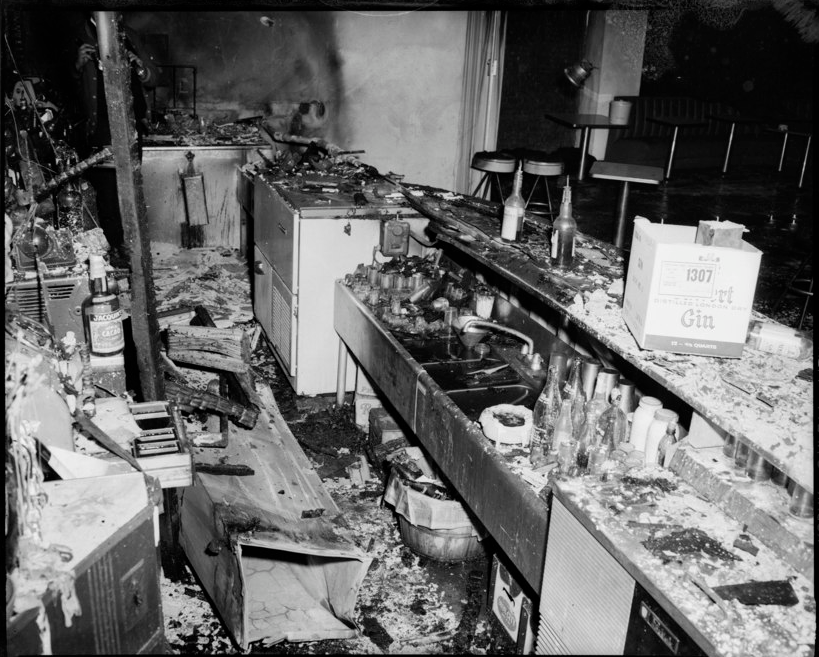
Maggie: A Girl of the Streets is a novel written by Stephen Crane that tells the story of a girl and her life. It starts with a glimpse of Maggie’s childhood, where her brother, Jimmie, was fighting with the kids from another street. It’s the only time where her father makes an appearance in the story only to take his son out of the fight and drag him back home. When they are back home it’s shown the environment in which Maggie and Jimmie grew up: drunk parents cursing at each other until they both drink themselves to the oblivion. Maggie and Jimmie grew up in poverty, one getting corrupted by it and hardening, while the other was naive and hopeful for a better life. It ends up being Jimmie’s friend, Pete, who corrupts Maggie. He makes her fall in love with him just to use her body and then abandon her, seemingly unknowing of it. When Jimmie hears of the relationship between his sister and his friend, he takes it upon himself to start a fight with Pete. The tension between them builds up quickly and Crane offers the reader a violent scene through a complex use of literary tools such as repetition and metaphors. The quiet stranger is one of the things Crane uses to show the rising tension between the men. 

The quiet stranger is a genius stylistic device that the author utilizes and manipulates to mark how things are going through, in this case, the fight.

The first appearance of this quiet stranger is a simple one, that of a man in a bar ordering beer: “Pete, in a white jacket, was behind the bar bending expectantly towards a quiet stranger. ‘A beeh,’ said the man” (Crane 42). It’s a common scene to see in a bar: a man ordering beer. This is Pete’s job, everyday he serves people alcohol at work, everyday there’s men ordering beer, it’s his everyday life. The author uses this situation as a way of showing the beforemath of this fight, the normality there is of a bar offering alcohol and drinks to the people that come in, a normality that is later disrupted by Jimmie and his friend’s appearance. 

When Jimmie comes into the bar, coming in swaggering unsteadily but belligerently. While the bartender tries to ignore them, Jimmie makes a comment of the man in front of him, loudly enough for Pete to hear. The companion follows up on the conversation, creating tension as they talk of the man who is standing in front of them. The quiet stranger sensing the tension moves away from them: “The quiet stranger moved himself and his glass a trifle farther away and maintained an attitude of obliviousness” (Crane 43). The stranger’s movements are marked as a way to build up tension that appeared the second Jimmie came in the bar. The normality of the bar was disrupted by Maggie’s brother with an obvious intent to start a conflict. The reaction to move away to avoid what was about to happen is what Crane uses to show the reader that something is going to go wrong and it has already started.

Pete, listening to the comments that are being made about him, makes a retort towards Jimmie, defending himself and his pride. With that the arguments commence and his third appearance is made: “The quiet stranger looked at the door calculatingly” (Crane 43). With him planning to escape the place where chaos has already stricken, glancing at the door, thinking of an escape in case the situation worsens. On the other hand Pete and Jimmie keep arguing, and snarling like animals. The comparison the men have in this chapter to animals is another of the things Crane does to show their lack of thought throughout this fight, acting by instinct and attacking each other.

Things start escalating when Pete and Jimmie dare the other, to show who would win in the fight, hearing this the quiet stranger decides to start his escape in a furtive way: “The quiet stranger moved modestly toward the door” (Crane 44). The fighting is escalating, not yet to physical fighting, what started out as talking loudly and offensive comments turned into yelling and threats. Pete, who was equally into the fight as Jimmie, had asked the aggressor to leave without causing trouble. His words only got to offend Jimmie and get him more aggravated than before.

In the purpose to show that what they’re doing is inhuman, Crane brings in animal characteristics in the fight to describe the characters and their actions as well. It is when the fists go in and the blood pours out. That rationality, or whatever was left of it, leaves the fighters, throwing glasses around and making chaos. Seeing this the coy beer-drinker is also gone: “The quiet stranger vanished” (Crane 45). Is just another sign that the fighting got worse, it’s not only Jimmie and Pete’s problem now, but everyone inside the bar. The people got caught up in it too, the chaos augmented and his abandoned beer glass is used to get Pete unconscious by a blow in the head with it. 

Even if he had escaped the bar, the quiet stranger wasn’t fast enough to escape from the chaos that came from it. When the police arrive and Jimmie decides to leave before they catch him, readers get the last glimpse of him: “The quiet stranger had sprawled very pyrotechnically out on the sidewalk” (Crane 46).  A man who just wanted a beer probably ended up in the hospital because of two angry men and their temper tantrum over a girl.

Stephen Crane uses the quiet stranger, and other metaphors, to show how this scene went down, to show what happened and how quickly it escalated. Within a blink of an eye everyone was going at each other’s throats, there were things being thrown around and it seemed that the situation was inescapable, even for the ones that were not involved. The quiet stranger is a genius stylistic device that the author utilizes and manipulates to mark how things are developing, in this case, the fight, every movement he makes is important even if the character itself isn’t.

Posted in Uncategorized | 1 Comment

I Have No True Dream

A year ago I wrote an essay about having a dream. A dream so beautifully impossible that turns to a ridiculous reality, a dream so naive and foolish, a dream no one can reach. Now, a year later, looking back at it I realize how ignorant I was, an open-minded ignorance. Not in a million years will that dream come true. I dreamt about freedom, dreamt about fairness and open minds, dreamt about liberty of expression. Dreamt about things many people want: a fair, just, world; for humanity to be saved, changed, to be better; to be free of doing what we want, what we desire. There’s nothing of that, not yesterday, not today, and certainly not tomorrow. They’re called dreams for a reason. I opened my eyes and came to realize that humanity has no saving, there’s no point in changing it, we’re all sinful creatures whose only saving is by falling to the hands of death. 

To go back to where we started and to never come back, to leave with everyone and leave nothing behind, not a trace left of what humanity once was, that’s a possible event, that, with the passing of time, it’ll come true. There’s no escaping the upcoming death of Gaia. As pessimist as it sounds, it’s just the reality of life. We live to die. The second you are born is the second your death starts, so if everything ends, should we enjoy, and better our lives, or face the harsh reality in which we live? There’s no satisfaction in the act of living, but why does that have to stop me from enjoying it? Questions with answers as unreachable as the stars, and as we grow the answers change, like everything around us changes. 

With the change of things, human stupidity remains unchanged. It’s the thing we will never be able to get rid of and the biggest flaw of humanity. There is no escaping the foolish human since they can be found everywhere, in the meaningless of the good and bad and the irrationality of believing it. Humans are expected to be one way and one way only, there’s no breaking the limits without a consequence, there is no true freedom in our way of life. 

I wish to be free

I wish to live a life without authorities

I wish to live somewhere in outer space, far, far away from this place

I wish for things that cannot be accomplished

But wishes and desires are just dreams

And dreams don’t always come true

We live to die

My dream: the natural destruction of humanity and planet Earth, an inevitable fate. Humans can’t be saved; there is no one here who can save us and there is no saving coming to us. A dream where we die along with our loved ones, to be left in the emptiness of nothing, and to go back to the start of the beginning, where not even the cosmos existed. My dream is to await the inevitable end of it all. 

Posted in Uncategorized | 1 Comment

Intangible Thing

Going to Hebron is hard in so many ways. You have to adjust yourself to living on your own, making new friends, learning in a new environment and being far away from home. But the hardest thing for me about leaving Connecticut and coming to Maine was leaving my little sister. While being away from home I have been filled with so much guilt. She’s grown up without me, and there’s nothing I can do about it. This massive amount of guilt has been weighing me down since the day I left her. Even though I see her for much of the year, I think we will never share the closeness we had before I left.

“I thought I would go back and see the same little sister, eager to do something with me when I got back. But that was not the case. She had learned to do things without me in just a short amount of time.”


Before I left, my little sister and I were inseparable. She used to sleep in my bed almost every night and we would cuddle until she fell asleep next to me. I would read her stories and help her write her own. She would tell me every single little detail about what happened in school that day. From her best friend arguing with her to how many times she went to the bathroom. We would go on walks everyday. We would play soccer together. We would go out to lunch at our favorite restaurant. We would ski, we would skateboard, we would swim, we would bake, we would do everything. But then I left and she was left to ski, skateboard, swim, bake, and do everything by herself or with my parents or my brother or her friends. I had abandoned her.
I did not think I was abandoning her when I first left freshman year. I thought I would go back and see the same little sister, eager to do something with me when I got back. But that was not the case. She had learned to do things without me in just a short amount of time. It was so different not being with her constantly. She would go out with her friends or go on walks with my other siblings. I was left there by myself with the realisation that my sister and I did not get along like we used to. I mean we still do, I still love her just as much and she loves me, too. But we aren’t inseparable anymore.


I remember one day my sister and I were alone at home together with nothing to do. I asked if she wanted to go on a walk with me and we did. Before I left, our walks were full of chatter, laughing and emotion. My sister would ramble on with things she wanted to tell me. There was not a second where she would not have anything to say. But it was not like that this time. We walked and I found that we were just having mindless conversations. I would ask her a question and she would answer, then I would ask another. “How was your day?”, “What did you eat for lunch”, and “Is soccer going ok?”, each followed by a short, dry response: “My day was ok”, “Mac and Cheese” and “Yah it is.” There was no motivation for her to talk to me. At that moment my heart broke. My little sister had moved on. She had changed. Or maybe I had changed. Or maybe both of us had changed. Whichever had happened the rhythm was gone.
It was like a song played too many times. It did not feel right anymore, playing it again was forced and boring. The melody was too predicitable and the voice started to sound flawed and broken. The beat, which had been so easy to tap your foot too, now just made your head ache with it’s boringness. The song, although you still loved it dearly, was just not the same anyone.
When I went back to school after that break, the guilt started. I felt as though I had abandoned her again. A heavy weight now rested on my shoulders and there seemed to be nothing I could do about it. I would spend nights in my thoughts, thinking about how my little sister was not so little anymore. How she was growing up and slipping between my fingers. Slipping so fast that I felt as though I could not catch her. I still feel that guilt on my shoulders. The guilt weighs me down and whenever I think about it, my heart hurts.The weight fills my head with questions. Why did I not stay home? Why did I choose to leave her? Am I choosing Hebron over my little sister? Was it worth it?

Posted in Uncategorized | 1 Comment