There was an echoing pulse of cicadas that nested gently in the pine trees. In the evening, a golden shine of light seemed to luminate the surroundings. Before the sunset, everything seemed to be still, as if anticipating the natural wonder that would soon approach. By the beach, wetsuits were pulled on, surfboards grabbed from racks and a look of excitement plastered on faces. In the air, was the smell of a hot days end which resembles sunscreen, cooked fish, sand and dry seaweed. And as the sun kept retreating, the tide kept approaching, knocking down sandcastles, interrupting romantic picnics and stealing stray flip flops.
“But as the sunset advanced, it did not matter the language what mattered, was the language of the wave, of the beach and of the evening.”
Every person turned their eyes to the water. Surfboards in hands, warm evening air; the ocean was waiting for someone to enter, to experience the ride of the wave and the joy it would bring. At least five different languages were audible, French, German, English, Dutch intermingling to the ear. But as the sunset advanced, it did not matter the language what mattered, was the language of the wave, of the beach and of the evening. Out of breath, feet started running towards the water, feeling the cold rush of the tide and the harsh push of the waves.
By the time the sun sets, the water is waist deep. The clash of color has filled the sky and is reflected in the water. The water goes to neck level and rises as waves fly by.
The sun is making its descent into the horizon. The waves are beautiful and perfectly crash into the shore. Standing on one is harder than usual but as it comes closer wet feet grip to the board riding up and down, a few seconds that are calmer than what is about to come.
Suddenly a rush of cold water encapsulates. Feet flying into the air, board comes crashing down, salt is all that can be tasted, another wave crashes on top pushing arms and legs deeper down. Meter below the surface and still falling, lungs burn and feel like a small fire has been lit; then peace as the fall begins to slow, crashing to the bottom. A flash of bright light has encased.
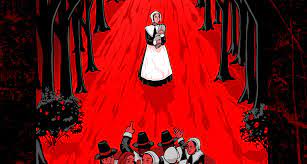
Nathaniel Hawthorne, the author of The Scarlet Letter, intentionally made this novel antifeminist when the roots of it point to a feminist idea. The idea of the novel is of how a woman, burdened by a scarlet letter A, gets through life with her daughter Pearl, Dimmesdale her “true love” and Chillingworth her previous husband. But despite the seemly feminist plot idea the novel degrades women and praises men’s role in society. Hester’s change seems to only stem from her motherhood, which ties to the stereotypes of a woman only being good at raising children. She is seen as only being good at typically feminine things that fall under typical gender roles. Finally, the ending demeans Hester’s presence in the novel and puts her character down below a powerful male one. The book is inherently antifeminist through the character of Hester.
Throughout the novel Hester is described as a strong woman: “They said that it meant Able, so strong was Hester Prynne, with a woman’s strength” (Hawthorne 91). Hawthorne describes Hester as being an independent motherly figure looking after a child with no man to help her, learning how to get over her sin and the heartbreak of Dimmesdale. As a character, Hester does seem like the ultimate feminist and female role model, but the way Hawthorne describes it and integrates Hester’s character into the book is not like such.
Hawthorne does not use Hester’s strength as a feminist statement but as a way of playing into the gender roles already apparent in Puritan society. When Hester was standing on the scaffold Hawthorne described the Puritan women who were standing and looking up at her, “The older ones are sturdier, harsh, and crueler than those who are younger” (Hawthorne 34). He describes the women as big and intimidating looking. This strong judgment of their looks is surely the opposite of feminism. A feminist novel would look at a character’s actions and words rather than their appearance. Through the word choice, Hawthorne uses we are able to see how his meaning in writing this book was not of feminism but of anti-feminism and blatant judgment of a women’s appearance.
To relate to this is Hawthorne’s obvious anti-feminism reveals itself when he is describing Hester’s change throughout the novel. Hester spends most of the novel trying to become a better person and Hawthorne makes it very clear that she was successful through this. But what makes Hester’s change so immense is Pearl. Hester raised Pearl on her own without a husband to help her and we are meant to believe that this is what “saved” Hester. Through her motherly role, she was able to become a better person. In the novel Hester denies the offer to go “dance with the Black Man” she says that she “must-try home and keep watch over little Pearl” (Hawthorne 66). Without Pearl in her life, Hester would have agreed to go dance with the Devil, which would have been a great sin. Pearl is the only reason Hester did not go with Mistress Hemmings, which shows that she is the only thing keeping Hester away from a life of sin. Without Pearl, Hester would have surely fallen through a downward spiral of sin because there was simply no reason not to. But this motherly role that leads her to live a better life ties into the gender norms apparent in society. These norms dictate that a woman should stay home and look after the kids while a man is out working and earning money. Hawthorne just adds to this stereotype by saying that Hester was saved through motherhood. Instead of focusing on Pearl as the sole factor of her redemption, Hawthorne could have gone into the internal process Hester surely went through to become the person she ends the book as. In conjunction with the motherly role Hester adopts, Hawthorne also plays into another female stereotype. In the novel, Hester is known for her beautiful embroidery, and even though this may seem like a harmless characteristic of Hester’s it aligns with the stereotype that women typically do tasks like sewing and weaving clothing. Sewing in early America was seen as “women’s work” and was typically a household task that was left for the women. It was seen as something that a good housewife would do for her husband. Hawthorne uses his stereotype in his novel, which shows that it cannot be a feminist novel. A true feminist novel would not tie back to the roots of gender roles.
“the moment when the novel is still about her before he hijacks it and tries to make it about him”
The ending of the novel is the most undeniably antifeminist section. Throughout the whole novel, we hear about Hester’s seemingly never-ending struggles. This being said the only fitting ending to the novel would be surrounding Hester and how she finds happiness. Hawthorne, however, does not end the novel in such a way. Instead, he ends the novel with a male character, Dimmesdale dying on the scaffolding after revealing his sin and guilt to the world. Dimmesdale steals the show and Hawthorne seems to give the readers some sort of resolved ending to him, for example, he even gets a kiss from Pearl and professes his undying love. If it were a novel about Dimmesdale this would seem appropriate but the problem is that the novel surrounds Hester. The ending of this novel is “the moment when the novel is still about her before he hijacks it and tries to make it about him” (O’Neill 35). Despite the whole book being about Hester and her journey to being a better person, the ending has to be about a man. Dimmesdale swoops in and steals the one happy ending that could come for Hester. This lack of a happy ending shows how Hawthorne’s writing is surrounded by male superiority rather than equality-the message of feminisms. Hawthorne is making the readers feel bad for Dimmesdale, ignoring the actual victim in the novel Hester. In order to be a feminist novel, Hester must get the ending, not Dimmesdale.
Hawthorne wrote The Scarlet Letter as an obviously antifeminist novel. The grounds on the plot were solid but subtle details lead to the conclusion that Hawthorne’s work played into female stereotypes and gender norms. The idea that Hester must be a mother to change into a better person and that she is a master sewer are perfect examples of the antifeminist aspects that Hawthorne implants into the novel. But the real reason that Hawthorne’s first novel is anti-feminists is from the ending. Dimmesdale’s dramatic ending covers up Hester’s character change and main role. Hawthorne’s novel is a classic example of an anti-feminist book that seems to disguise as a feminist one.
Due to the truly devastating topics that are presented within the novel The Sun Also Rises, there has always been questioned whether it should be an appropriate narrative that should be taught to teenagers. Subjects of matter such as Superstition and Sexism, along with The Victims –The Lost generation –of World War I are shown throughout the novel. Even Though the novel’s script includes contents that require full maturity and predisposition in order to acknowledge the gravity of said topics, it is of great importance to be a novel in which teenagers were to include within the reader’s audience. The humongous price that a war can bring with itself that comes to tear down a whole generation; the power of sexism represented within bullfighting; the capability of a single woman to corrupt stereotypes within society; and the superstition and materialism that disfigures society’s morality, all of them are doubtedly themes that should be recognized of great seriousness, and should be taught within the future citizens of tomorrow.
Ernest Hemingway pays tribute to The Lost Generation that was devastated not only physically but mostly psychologically after the atrocities during World War One. First of all, we can see how Lady Brett Ashley is completely different from other women of those times, and we see how she breaks with the stereotypes of society. Unlike other women, Brett wears a short cap, she dresses less feminine than the others, and above all, she has several affairs, and she does not mind at all being frowned upon by the eyes of society. Brett’s appearance is being described as “her hair!-brushed back like boys” and as a woman with curves like “ hull of a racing yacht” (Hemingway 30). She clearly evokes masculinity within her aspect. Brett having been a nurse during World War One, she completely changes and becomes a new person. Consequently, she is the clear representation of very avant-garde femininity because she breaks with all sexist images of the time.
Furthermore, there are many sexist details not only among women, but also against men themselves. Among the male characters in history, it is often questioned who is more of a man? On the one hand, Jake considers Cohn as a person who does not have the characteristics of a male because he did not participate in the WWI, while Pedro Romero, the bullfighter, is considered to be someone who has more characteristics of a man not only because he is a bullfighter but also because Jake has the firm conviction that “the only way to fully enjoy life is through constantly confronting death” (Hemingway ) just like he did in the war, and it’s exactly the same thing Romero does every time he faces a bull. He puts his life at risk facing a fearful and imposing being. Hence, bullfighting has dominated the second half of the novel symbolizing the relationship between Jake, Cohn, Mike, and Romero, where the men fight like bulls to conquer Brett. The bulls in Pamplona signify for Jake and his friends, the strength, and aggressiveness to traditionally masculine characteristics to judge whether they are worthy. And although Romero is the most handsome, honorable, and talented, in the end he was heartbroken just as the strongest, and most aggressive bull can be killed by a skilled bullfighter, in the end Romero Falls to Brett.
We see how the author shows us the protagonist Jake Barnes, an expatriate veteran corrupted by the war, disillusioned, apathetic, without hope, a hopeless case. A wound suffered in the war has left him impotent and unable to consummate his love with Lady Brett Ashley, which affects him to the point of consummating his feeling of masculinity. Therefore, he too is deprived of love so he cannot give sex to Brett. It is striking that on the one hand we have this character corrupted by the War, and on the other hand we see how Robert Cohn, a Jewish friend of Jake’s, in contrast represents a person who remains somewhat more civilized than Jake, since he did not participate as a soldier in war. Regardless of this contrast, we see how Hemingway, in the same way that several other authors such as Fitzgerald in his novel The Great Gatsby, express through their writings the moral declines that society obtained during that time. Some like Cohn were practically unaffected by the war, others much more like Jake. However, all together as a society they were corrupted by the war. The Lost Generation was the social generational cohort during World War One, where the term “Lost” refers to the disoriented and disillusioned spirit of many of the war’s survivors in the early post-war period. Within The Sun Also Rises “the characters cannot find a way home” (Foster 151). Hemingway manages to express the consequences of the war within the society, and he also emphasizes the moral decline of post-war society in the twenties through superstition. Not only Jake who participated in the war but also the whole society of the 20’s at that time, tend to be very superstitious only focusing on what happens inside a bar drinking alcohol, dancing, and confronting each other. Jake even reveals that alcohol distracts him from reality: “Under the wine I lost the disgusted feeling and was happy” (Hemingway 117). The use of alcohol within this novel is a key point that reveals the characters’ attempt to forget about reality by getting drunk because they don’t know any better way. Nobody really pays attention to knowing the fellow; they are all used only as means of entertainment. Both Fitzgerald and Hemingway express in their novels a society that has been consumed.
On the one hand, The Great Gatsby focuses on the society consumed by the luxuries and parties of the time, a materialistic society, which is represented primarily in the characters of Daisy and Tom. On the other hand, The Sun Also Rises approaches the subject in a different way, as it puts its maximum focus on the generation damaged by the atrocities of war, which is seen embodied mostly in the characters of Jake and Brett. Basically, it causes a Society to be corrupted by war, hence causing a drastic change in the behavior of society thus making it to become lost: “You are all a lost generation” (Gertrude Stein). Although there are different contexts, in both representations of the characters in The Great Gatsby as well as in The Sun Also Rises, we see how absolutely all the characters drown their sorrows in alcohol, fun, and sex. Life is not important anymore.
In view of the fact that Hemingway was able to represent in an excellent way how corrupt society ends after a war, it is a great reason to teach young people to read and analyze this narrative, because they can learn first hand the consequences that leave any war in which no one, absolutely no one wins. In addition, the author also succeeded in highlighting the sexism between men and women, and the superstition that exists in society, and reveals what really has value among the individuals of a community. Humans place higher value on tangible things like the pleasure of food, alcohol, sex, and money. In conclusion, due to the excellent representation of the consequences of the war, and the representation of society, where topics such as sexism, superstition and lack of morality were addressed, it is a material outcast that can be used as a mechanism to teach future generations at school.
“What better way to learn from others than from the Lost Generation itself!”
We all carry a load on our shoulders every day of our lives, a load that, although it is invisible, is a load that breaks our weak back. Sometimes, our burdens make us stronger, more empathetic, better people, successful people. They can even make us a better version of ourselves. However, it is our own burdens that end up plunging us into the depths of an endless well. Maybe every day we carry our backpack to school or work, with our cell phone and our clothes on top, dressing ourselves. Some women carry a child growing in their womb for nine months. Teachers carry homework and tests everywhere. An athlete always carries a bottle of water. A president carries his country. Engineers carry insane mathematical problems. Doctors carry someone else’s life. We all carry something different. However the heaviest burdens we carry are the thoughts in our minds and the feelings in our hearts.
Throughout the novel The Things They Carry the men of the Alpha Company carry countless physical items: Mitchell Sanders carries condoms, brass knuckles, and the unit’s radio. Norman Bowker carries a diary. Kiowa carry a volume of the New Testament and moccasins. Rat Kiley carries his medical kit, brandy, comic books, and M&M’s candy. Ted Lavender carries his tranquilizers. Jimmy Cross carries Martha’s pebble: “They carry whatever presented itself, or whatever seemed appropriate as means of killing or staying alive” (O’Brien 7). They carry M-14s and CAR-15s. They all carry pictures, ponchos, boots, weapons, razor blades, grenades, even hot chow in green Mermite Cans. They carry pencils, books, lamps, chewing tobacco . . . Henry Dobbins carries a Black Flag Insecticide. Dave Jensen carries empty sandbags that could be filled for extra protection. Lee Strunk carries tanning lotion. They all carry diseases and lice.
O’Brien uses the list of physical items that the members of The Alpha Company carry in Vietnam as a window into the emotional burdens these soldiers carry. O’Brien plays with the intangible and tangible things that each soldier in the platoon carries with themselves throughout the novel. Although each soldier carries countless physical objects to survive the Vietnam War, no matter how heavy each item was, that weight did not outweigh the emotional burdens soldiers carry with them everywhere during and after the war.
Being the Lieutenant of the platoon, Jimmy Cross carries all the lives of his men; he carries the great responsibility of being a good leader, not letting himself be defeated, and keeping his men safe. As the war progressed, Cross lost more soldiers from his platoon. Far from him carrying only the lives of the rest of his men, a greater burden looms on his shoulders: the burden of having lost more than one of his men under his leadership. Mitchell Sanders always carries the best narratives for any story. No matter how good he is at story-telling, Sanders carries in them all the suffering, humanization and high cost that a war entails. Kiowa carries the rational morality of the war. Although he died in one of the worst ways, Kiowa always carried a smile on his face. He carried the almost perfect representation of what it is to be human: a person of simple origin serving his country, who left an indelible mark on his brothers in the Alpha Company, especially Tim O’Brien. Norman Bowker was always burdened with pressure from his father to get medals or war honors. His back was so weak that his burden of guilt, regret, cowardice and fear made him break down and he commitedsuicide after the war. Rat Kiley was constantly burdened with the responsibility of assisting and saving the life of the members of the Alpha Company, a burden which became too much for him as well, which would eventually bring him his bane of losing his sanity. Curt Lemon carries the immaturity of a child who did not understand the War. He died very young, so you never really saw any growth in his character. However, he was unable to truly understand his position as a soldier in the war. Ted Lavender carries his anxiety, nerves, and tremors, which would never be known if he had overcome them. Dave Jensen and Lee Strunk both carry the promise to kill the other if seriously injured. When Strunk is seriously injured, Jensen refuses to kill him. Jensen’s relief after Strunk’s death is an illustration of the perspective soldiers are forced to take; If Strunk hadn’t died, Jensen would have carried the guilt of not helping his friend find relief in death for his entire life. Azar carries cruelty and mockery towards the War, which also led him to carry the blame. Bobby Jorgenson carries the responsibility for saving lives, but mostly the guilt of having stood still when O’brien was wounded. Unlike other characters, Jorgenson was able to overcome this burden, because as the war progressed, Jorgenson acquired medical experience and cared for his wounded in the best possible way; he never became paralyzed again like that first time.
In addition to the men of the Alpha Company, Mary Anne Bell carries the feeling of a wild and adventurous warrior in her. Her shoulders were so compatible with the load due to the desire for adventure in the jungle that she ended up becoming it. Elroy Berdahl carries wisdom. Mark Fossie carries regret by bringing Mary Anne to Vietnam. Kathleen just like most ignorant people at that time carries the ignorance towards the war. Linda carries an incurable disease that would kill her eventually. She carries the innocence of a little girl, and above all the immeasurable love for Timmy.
Just as importantly, O’Brien carries irrational thoughts, grief, guilt, youth, naivety, fear, and grief; what weighed on him the most was the love he felt towards Linda, towards his country, and especially towards his brothers from the Alpha Company. Despite the multiple burdens on his shoulders which haunted him since he was just a child, O’Brien was able to strengthen his back through his narration in different literary works so that he could carry all his burdens throughout his life. They all carry immeasurable loads of pain and grief, shame and embarrassment, cowardice and fear, dignity and blame. They all carry each other. They all carry with their own lifes. Nevertheless, they all carry the war and love with themselves. Some lost the battle against those burdens, others continue to carry them, and many more find relief in telling about their burdens in writing or narratives.
It does not matter all the intangible things that the men of the Alpha Company carried, or what the other characters in the novel carried as well. It does not matter what each individual in society physically carries with them each day. We all carry different difficult situations day by day. There is no load heavier than the one you cannot carry, that is why it is important to know how to carry those loads on our backs. But sooner or later, we realize that those things that we carry, in particular the intangible things, are the ones that make us human. That makes us feel anger, grief, desire, desperation, guilt, and mostly love. Now I ask you, the reader who hides behind these pages full of meaningless sentences and infinite words, what are the things you carry?
“The heaviest burdens are those that are invisible to our eyes.”
In Toni Morrison’s novel Beloved, 124 Bluestone Road is both a character and a setting. Although, it is slightly more like a “hidden Character.” Perhaps it is the most important character of the story a long with Sethe. We see how Morrison makes 124 to stand out within the narrative at the beginning of each section of the novel: “124 WAS DESPITEFUL” (Morrison 3); “124 WAS LOUD” (Morrison 199); “124 WAS QUIET” (Morrison 281). These lines also imply a development of 124 both as a setting, and as a character. Although Morrison personified the beginning of the house as something ‘DESPITEFUL’, throughout the novel, 124 has been changing hand-to-hand with the atmosphere, as well as the flow of the actions within the story and its characters. We can confirm this with the rest two lines presented above: “124 WAS LOUD” (Morrison 199), and “124 WAS QUIET” (Morrison 281).
On the other hand, the house itself is full of history, not just the history of Sethe, but also the history of their previous owners. The house has been a faithful witness from the heyday of Baby Suggs, when she preached the word of God, to the darkest moments, when Sethe murdered her daughter in this same place.
Furthermore, the house, number 124, symbolizes constantly disturbed memories as it recalls the murder of Sethe’s third daughter, and other unforgettable memories of Sethe’s experiences within slavery. The number “3” has multiple meanings with respect to the novel; when considering the house, note that the number “124” is written in chronological order. However, from number “2” to number “4”, the “3” is missing. This refers to Sethe’s missing third child, Beloved. It has to be noted that number “4” represents Denver, and the first two numbers “1” and “2” refer to Howard and Buglar, Sethe’s older children. This remarkable example confirms the importance of the house as a setting, and as a faithful witness character. Therefore, number 124 is a haunted house with respect to Sethe’s murdered baby. Moreover, the house is a stage for the complete occupation, and reclamation of the confrontation between the terrestrial world, and the supernatural world; it is “the bridge” as Morrison implies in chapter five between both worlds.
“The number 124, silent but present.”
Likewise, since the house is located between the Ohio River, which marks the boundary between free and slavery, and a stream that marks the water boundary between the world of living and brightness, and the dead and darkness, 124 is a meeting point of powerful forces. As a conclusion, 124 is considered more like a chlcrater and rather less than a setting, since it has witnessed Sethe’s happiest and warmest days, as well as her worst nightmares. Therefore. the 124 is a faithful witness to the story, and it could even be represented as if it was the narrator of the whole narrative.
Nick Carraway, the protagonist in the novel The Great Gatsby grew up in the Midwest, surrounded by a typical midwest family. He goes to Yale for college before enlisting in the military, and when his enlistment is over he travels to Oxford. This whole period of his young adult years is spent dodging the midwest. Even though he says he has an everlasting love for the midwest, something is stopping him from returning home. This is the classic path for a closeted gay man at around the time the book was published. Nick also does not like anyone in the West Egg, except the mysterious Gastby. He is not attracted to the femine parts of women and even wakes up in a man’s bed in one scene. Therefore, it can be concluded that Fitzgerald intentionally wrote Nick’s character as a closeted homosexual.
“[Gatsby] smiled understandingly — much more than understandingly. It was one of those rare smiles with a quality of eternal reassurance in it, that you might come across four or five times in your life.”
Nick’s homosexuality starts with his almost immediate attraction to Gastby. Nick describes Gatsby like he describes no other character. When Nick first meets Gastby, “[Gatsby] smiled understandingly — much more than understandingly. It was one of those rare smiles with a quality of eternal reassurance in it, that you might come across four or five times in your life.” (Fitzgerald 48) This description is not one that a heterosexual man would give. A man would not describe another man based on their smile, but something they would be jealous of, like their masculinity. Fitzgerald adding these descriptions of what Nick sees is his way of showing Nick’s attraction to men.
Furthermore, Nick not only notices Gatsby’s features, but the way he presents himself. Nick likes his “gorgeous pink rag of a suit” (Fitzgerald 162). Tom, who is a typical straight man in the novel, makes fun of his eye-catching suit, however Nick finds it “gorgeous.” When comparing the two characters, it is obvious that Nick is not like the other straight men in the novel. Nick finds femine things, like a pink suit, beautiful. This difference in Nick was intentional by Fitzgerald. He wanted to show how Nick is attracted to men, specifically Gatsby in this case. Pink is also a color traditionally associated with love. Valentine’s day, the day of love, is based on the color pink. So Fitzgerald’s selecting pink is his way of subtly showing Nick’s attraction to Gasby. Overall, Nick notices things about Gatsby that straight men would not. Nick’s extra detail when describing Gasby is a sign that he is gay.
Along with Nick’s attraction to Gatsby, it becomes clear that he finds women’s masculine traits attractive, rather than the femininity that men are expected to notice. An example of this is when he first meets Jordan. Instead of noticing her hips, eyes, or face he sees “a slender, small-breasted girl with an erect carriage which she accentuated by throwing her body backward at the shoulders like a young cadet” (Fitzgerald 15). Nick is not attracted to her for her femininity. Instead he sees her ‘small-breasts,’ which makes her boyish and masculine in his eyes. He calls her a ‘young cadet’ as well. A cadet is a male trainee for the army. Nick referring to an attractive person as boyish shows that he finds men more appealing than women. In addition, Jordan is a professional golf player. Female athletes, especially at a higher level, usually have a more masculine build. They have broader shoulders and strong arms. Based on this, it can be concluded that Jordan had some of these traits, which made her look more masculine than other women Nick could have dated. This shows his homosexuality and attraction to masculinity. In another scene, Nick describes his ex-girlfriend from the Midwest: “All I could think of was how, when that certain girl played tennis, a faint mustache of perspiration appeared on her upper lip.” Nick could have noticed any of the beautiful parts of a woman playing tennis, like her body, clothing, or skill. Instead, he focuses on the disgusting sweat that accumulated. This shows that he might not actually be attracted to women, just men. But these comments were intentional by Fitzgerald. He added them to show how Nick did not like the women themselves, but their masculine traits. Thus, because of Nick’s love for the maculine traits in women, it makes sense that he has a certain level of desire for men.
The final aspect of the novel that shows Nick’s desire for men is his drunk hookup with McKnee. The two characters met at a dinner party where everyone got extremely drunk. Nick then began to notice McKnee as a “pale” man (Fitzgerald 30). Fitzgerald specifically decides to describe McKnee’s appearances rather than his mannerisms or actions, which is a subtle hint about Nick’s attraction. Mr. McKnee then invites Nick to go to lunch with him after the party. They ride down the elevator with each other. Fitzgerald uses very specific language in the elevator ride like “lever” and “touching” (Fitzgerald 37). This word choice is quite erotic, a hint that Fitzergald drops about the hook-up that is to come.
The scene escalates from there, and Nick wakes up in McKnee’s bed. Nick is either too drunk to remember what happened, or the author did not include the scene, but it can inferred that they had sex. Nick explains, “I was standing beside his bed and he was sitting up between the sheets, clad in his underwear, with a great portfolio in his hands” (Fitzgerald 38). Nick woke up in bed with an almost naked man the next morning. In a short novel of less than fifty thousand words the author chose to add these details. Fitzgerald is clearly trying to show that Nick does not fit the average mold of a man at that time, and is attempting to convey Nick’s complex attraction to men.
Nick’s actions and thoughts in The Great Gatsby suggests that he is gay, but Fitzgerald would not have been able to bluntly call Nick gay. This is because at the time being gay was not widely accepted. It was very uncommon to be out, and if someone was out they would face persecution and descrimination in American society. So by adding subtle details to the text, Fitzgerald was able to portray Nick’s sexuality to the readers without facing the consequences of writing it openly. Fitzgerald wrote about Nick’s attraction to Gatsby and his love for masculinity in women. He even included a drunken hook-up scene, something that was not necessary for the plot of the novel. Overall, it is obvious that Fitzgerald is trying to depict Nick as a closeted gay man.
My orchestra in middle school made it to regionals. Everyone was so excited but not about the actual band part of the trip. What we were excited about was the trip to an amusement park afterwards. That morning we packed our bags and headed on a big coach bus. We drove and drove to the venue, where we played our music and got scored by the judges. I honestly can’t remember how we did at the performance. All I can remember is the amusement park and most importantly what happened once I returned home.
The amusement park was so much fun, as it would be for any middle schooler. My friends and I spent the afternoon riding on roller coasters, eating snacks and running around in the hot sun. One particular roller coaster I liked was the drop ride. It brought us to the top of a tower from which we plummeted to the ground. It gave me such a thrill. The sense of weightlessness and freedom. As the adrenaline pumped through my body I felt pure joy. The sense that life could not get better than this: spending the day with adrenaline rushes and friends. But that sense of joy would be put to rest soon after I arrived home from the packed day.
When we returned to school my best friend at the time drove me home. We spent the ride recalling the day to her father and petting her too black labs. The dogs were so cute and I had always loved them. They leaped around in the car, wagging their tails with the excitement of the drive. After we got home my friend’s dad and my dad started talking. My dad invited him to stay for a beer and dinner. As we left the car the two black labs dashed out. I didn’t pay any mind to it, I was just excited that this day would end with my best friend staying for dinner. As we were eating dinner I saw the two black labs run away into the woods surrounding my house. At that second I got a feeling in my stomach, but unlike the drop ride from earlier that day, it was a bad feeling. My stomach dropped. I leaned over to my friend and said something about her dogs running down in the woods. She dismissed my comments saying, “It’s fine they’ll come back.”
But then I realised something worse: my cat wasn’t in the house. This cat meant so much to me. We had adopted her at a shelter by my house and she was the most adorable creature I had ever seen. She had a beautiful tabby back with a white belly. Whenever we would walk by her she would flop on her back, asking to be stroked. Whenever we packed our bags for vacation she would get all sad because she knew by the sound that we would leave soon. Whenever I returned from school she would be waiting for me at the door and itch her chest on my leg. Whenever it would snow she would try going outside but would immediately run back in horror. She was the best cat I could ever ask for. But since she was a shelter cat she had some issues. For one she didn’t have a tail. We didn’t know why, maybe she had been run over by a car or attacked by a fox. Either way it was clear she had been through some trauma in her life. And the day my best friend came over for dinner that trauma came back.
“I remember hearing her breathing, it was all messed up.”
The two black labs had been chasing her down the driveaway. By the time I got to her and scared the dogs away she was nestled under a rock. I remember hearing her breathing, it was all messed up. Her body was shaking. Her fur full of leaves and dirt, which she usually would never let happen. I picked her up and began to run towards the house. But it was too late. She was having a heart attack. I remember kneeling down, out of breath and worried as my dad came running over. Her breathing got worse and her shaking continued. And then she felt heavy. She just melted in my arms. I tugged her ear trying to wake her up. But it was too late. My friend’s dog killed my cat. She died in my arms.
“67 percent of 18-24 year olds felt compelled to display ‘hyper-masculine’ behavior in tough situations” (Petter 2018). Young men are taught to act powerful or “manly” in stressful situations. They are taught to take control. They are taught to not show emotions and command a situation. This is toxic-masculinity, the harmful attitudes about the way a man should behave. This toxic masculinity comes from stereotypes and can lead to young men thinking they are not allowed to show emotions, not allowed to be human. This stereotype plays a large role in the novel The Things They Carried by Tim O’Brien as these, mostly young men, have to fight in war and compete with their emotions. Soldiers in the war are told to “suck it up” and are embarrassed if they do not act manly enough. Men in The Things They Carried display negative stereotypes about women and talk about them as such. The culture of toxic masculinity in The Things they Carried causes characters to feel fear about not being manly and treat women badly.
They are told to suck it up and be manly. These phrases are dangerous for soldiers as it can lead to them not understanding how to let out their emotions.
A classic example of toxic masculinity in the war is what the soldiers are told by officers and lieutenants. They are told to suck it up and be manly. These phrases are dangerous for soldiers as it can lead to them not understanding how to let out their emotions. Instead of stepping back and reflecting on what they just saw or did, soldiers have to keep going. Their actions after this can, therefore, be out of frustration and penned up emotion. A good example of this is when Rat Kiley shoots a baby water buffalo several times. The scene starts with Kurt Lemon dying. Kiley is sad as Lemon was his best friend. He becomes frustrated when Lemon’s sister never responds to the descriptive letter Kiley sent her regarding Lemon’s death. He keeps this emotion inside though, not wanting to look soft in the eyes of his friends. Eventually he runs into a water buffalo that refuses to eat the food he offers it. Out of frustration, he shoots the buffalo several times. The water buffalo is not what frustrates Kiley, it is the loss of his friend, his friend’s sister not acknowledging his letter, and his inability to express the emotion he feels about all of it. Instead, his sadness turns to anger. Towards the end of his shooting “Rat Kiley was crying. He tried to say something, but then cradled his rifle and went off by himself” (O’Brien 76). Kiley could not say anything he just had to shoot, let the anger he was taught in the war out instead of the moral natural emotion of sadness. He was trying to suck it up like his officers said to do, but he broke. This shows the toxic masculinity he was taught. A man showing any emotion but anger was seen as embarrassing and not for the war. Overall, what Kiley did is an example of how the war teaches men to hide their emotion and how that mindset can be dangerous for those involved.
Another scene that shows the danger of toxic masculinity and sucking it up is when Tim O’Brien got revenge on Jorgenson. Jorgenson is the new medic that was too scared to help Tim when he was shot. Tim almost died because of him. Tim and Azar pulled a prank on him, but the prank ended in O’Brien getting so scared and regretful that he started crying: “I was trembling. I kept hugging myself, rocking but I couldn’t make it go away” (O’Brien 206). O’Brien became scared as anyone would in this situation. He had been up all night and felt bad for the person he was hurting. Azar’s reaction to this scene shows the extremity of the toxic masculinity. Azar observes, “Disgusting, sorriest fuckin’ specimen I ever seen” (O’brien 206). Azar thought that O’Brien was being unmanly by acting the way he did. Azar understood what he was taught by the war, that men cannot show their true feelings in a situation, must keep going, keep showing a straight face, and keep causing pain. When O’Brien did not conform to these standards taught in the war Azar reacted with disgust. He even kicked O’Brien in the head, to show how much disrespect he had for him. Azar was coded to react this way when a man shows emotion, which reveals how the war displays roots of toxic masculinity. Due to the pressure from officers and various lietenants to be “more manly” many soldiers feel embarrassment and even fear not meeting these standards. O’Brien describes, “They carried the soldier’s greatest fear, which was the fear of blushing” (O’Brien 20). As soon as soldier’s enter the battlefield they are afraid to show emotion. They think that showing emotion will make them lose respect from their commanding officers and comrades around them. This idea is the core of toxic masculinity. The idea that if a soldier does not comply then they will not be respected and seen as not a man. The soldier’s take this to a new extreme. To avoid the dishonor they “crawled into tunnels and advanced under fire” (O’Brien 20). Soldier’s were more afraid to be seen as unmanly than to die. The extremity of the toxic masculinity in the Vietnam War was the cause of deadly harm.
The extremity of the toxic masculinity is also apparent in the way the soldier’s refer to women. The soldier’s describe women purely based on their looks, which shows how shallow and discriminatory their mindset is. O’Brien describes a woman as, “a tall, big-boned blonde…she had white legs and blue eyes and a complexion like strawberry ice cream. Very friendly, too” (O’Brien 89). O’Brien is recounting Mary-Anne arriving at their army base in Vietnam. Instead of describing her personality or what she is physically doing notices her looks. He does not even describe her looks in a nice way, he talks about her in a sexual manner, how her looks please him. This attitude and language show just how ingrained toxic masculinity is. Boys are taught from a young age to look at women in a sexual way. Modern day locker room talk is a classic environment. Boys and young men talking in a locker room about who they want to have sex with or just women who they think are hot. The language and sexual nature of the description shows just how accustomed to toxic masculinity Tim O’Brien is. It is a classic example of the mindset that men are taught from a young age and how it is exacerbated in an all male setting like the war.
The Things They Carried is a novel that seems like its main theme is war, and although war is a theme throughout, there are many other themes that correlate to war. There are themes surrounding war stories but that talk about deeper moral issues present in the world. Toxic-masculinity is just one. Character’s in the book have a dark mindset about how they should act. They use violence to express their emotions, lean into the demands of officers and sexualise all of the female characters. This issue did not end after Vietnam. Toxic-masculinity is still very much present in today’s society. Whether it is locker-room talk, fathers teaching their sons bad morals, aggressive reactions to problems or disrespectful politicians, the issue of toxic-masculinity must not be forgotten. Novels like The Things They Carried present these issues that can be easily translated and should be read by audiences in today’s age.
Works Cited
O’Brien, Tim. The Things They Carried. Houghton Mifflin (Trade), 2009.
“Toxic Masculinity Leaves Most Young Men Feeling Pressured to “Man Up.”” The Independent, 20 Nov. 2018, www.independent.co.uk/life-style/toxic-masculinity-international-mens-day-2018-gender-stereotypes-man-up-a8641136.html.
Innocence is “a child’s simplicity, their lack of knowledge, and their purity not yet spoiled by mundane affairs’” (Oxford 2015). Loss of innocence is an important stage of growing up, it is when a child realises the reality of the world they live in. They come to a new understanding and no longer care about the insignificant things in life. The boy in The Road by Cormac McCarthy goes through a loss of innocence between the pages 130-161. In these thirty pages he faces reality, considers the future, and no longer plays with toys.
“This happens, in a different way, to the boy.”
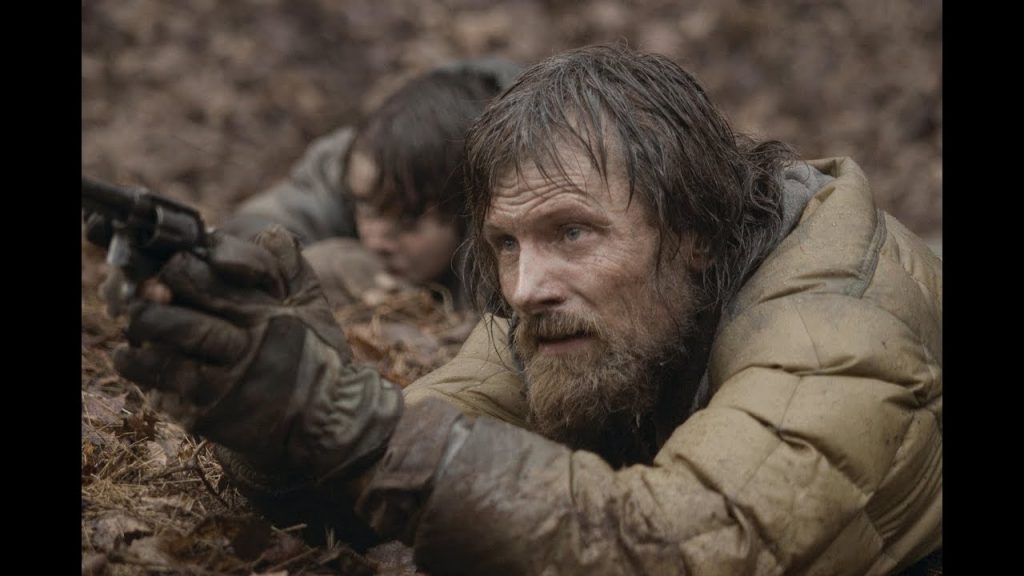
One side effect of losing innocence is becoming more realistic and realising the traps that are apparent in the world. A classic example of this is a child becoming scared to take a test. They now understand the weight of the test and the effect it could have on them. The test could end badly and the consequences could be immense. This happens, in a different way, to the boy. All of a sudden he realises what is around him and what it could cause. This is seen when the boy is afraid to open the trap door in the ground. He is traumatized from the last trap door he opened, which lead to dying people, because of this trauma he is more aware of the actions he and his father takes. They could cause them to potentially die or be in a risky situation. “He was very scared. Don’t open it, Papa, he whispered,” (McCarthy 134). The boy is obviously very nervous about the situation he and his father are in. This fear shows his new loss of innocence because of the reality he now realises.
Another effect of losing innocence is thinking about the future. When children are still little they do not understand goals and the future. They are only focused on the present, what toys they will play with next and how good their food tastes. They do not consider the future and goals they will achieve. However in this section of the book the boy gains this perspective: “What are our long term goals?” is a question that he prompts to his father (McCarthy 160). The boy is no longer just thinking about the presence but what will come next and what his life will bring. This is a sign of maturity and development in the boy.
A third development in the boy is that he does not play with toys anymore. When this father asks what happened to his flute he answers by saying “I threw it away” (McCarthy 159). The boy no longer sees the joy in playing with his flute, a toy he treasured only a few days ago. “After a while he fell back and after a while the man could hear him playing. A formless music for the age to come. Or perhaps the last music on earth called up from out of the ashes of its ruin” (McCarthy 66). The boy enjoyed his flute and it provided valuable entertainment. But in a period of only a few days he no longer had a need for it. This shows his maturity because when kids grow up they forget how to be entertained by toys. The boy has reached his stage in his loss of innocence.
In conclusion, the boy has quickly lost his innocence. He does not fear things anymore, he learns to think about the future and he is not entertained by toys. These three big steps show a huge shift in the boy’s maturity, as he is learning how to become an adult.
Is the soul reason humans keep going for themselves or is it powered for the needs of others? Are humans willing to sacrifice themselves for others or do they simply live for themselves? These two questions tie to the fundamental debate of egoism vs altruism. Egoism is the theory that self-interest is the basis of morality, whereas altruism is in the opposite- selflessness to benefit the welfare of others. Books like The Road by Cormac McCarthy, The Scarlet Letter by Nathaniel Hawthorne and The Things They Carried by Tim O’Brien all question the theory of egoism. They generate the idea that altruism and the connection humans have with others is the foundation of our morals. Other facts help prove this theory too such as kin-selection in the natural world, the bible and the concept of sacrificing mental wellbeing for the welfare of others. Therefore, humans are inherently altruistic.
“Due to kin selection, baboons and many other species are altruistic. This concept of kin selection can be seen in humans too.”
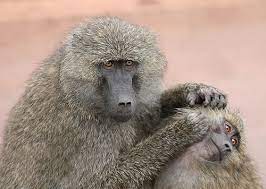
In biology, species often sacrifice themselves for the fitness of their children. This is called kin selection. It boils down to the idea of the greater good, that if an animal puts their own self interest and personal fitness aside then their child can flourish and bring more to the community. A classic example of this is in baboon grooming behaviors. Female baboons are seen often grooming their relatives, but not a baboon that they have no relation to. Baboons with relatives are therefore cleaner and have higher fitness than baboons that do not have relatives to groom them. This causes a system where baboons often sacrifice their energy to groom their relatives, that energy could be used for themselves in many other ways like forging for food or attracting a mate. Instead of acting for themselves baboons act for the good of their relatives, boosting their relatives’ fitness, not their own. Due to kin selection, baboons and many other species are altruistic. This concept of kin selection can be seen in humans too. An example is in The Road by Cormac McCarthy. In the novel the father sacrifices himself for his son, putting his body between his son and a flying arrow. This act of self sacrifice decreased his personal fitness, as he became injured but saved his son. The father also says “My job is to take care of you…I will kill anyone who touches you” (McCarthy 77). The man acts not for himself but for his son. He puts his own life and personal wellbeing on the line, therefore acting altruistically for the good of his son. Hester Prinn from The Scarlet Letter acts in the same manner to protect her daughter Pearl. Before Pearl, Hester committed what was a horrible crime at that time, adultery. But after Pearl was born Hester found a new meaning in life: looking after Pearl. This ultimately stopped her from committing more crimes, “The child saved her from the Satan’s snare” (Hawthorne 97). Pearl’s entrance into Hester’s life caused her to stop going down the path of crime and get back on track. But the cost of spending her own life looking after Pearl was her emotional and physical decline. She became frail, appeared older and showed less emotions after she started looking after Pearl, her fitness decreased for the wellbeing of her daughter. She acted altruistically risking her social and emotional life for her daughter. Through these two examples it is clear that what drives humans is the need to help others.
Additionally, one characteristic that all humans share is the phenomenon of making mistakes that might go against overarching morals. These mistakes and the reaction to those mistakes are what ultimately prove that humans are driven by the idea of self-sacrifice and improving the welfare of others. An example of this can be seen in the wartime novel The Things They Carried by Tim O’Brien. In the novel one of the main characters, Kiowa, dies because of the actions of Norman Bowker. This plunges Bowker into a period of grief and depression afterward, he is so consumed with guilt from the passing of Kiowa that he kills himself. Norman Bowker realized that he acted selfishly and made the wrong choice, which is what makes him altruistic. O’Brien realizes that, “Bowker had been braver than he ever thought possible, but how he had not been so brave as he wanted to be. The distinction was important” (O’Brien 147). Bowker is driving around thinking of the mistakes that have occurred in his life. He is so consumed with guilt that he cannot even say that he is mourning the death of Kiowa. Instead he says the sadness is due to him not winning the “Silver Star,” a prestigious military prize given to those who act in extreme bravery. This inability to even say how it feels is generated, explains the true extent of his guilt. O’Brien explains how Bowker did not act as brave as he wanted to, which shows where his morals lie. His morals lie in putting others before himself, also known as acting altruistically. But since he could not succeed in this, he is put in a position where he cannot describe or explain his own shame and guilt. This example can be seen in people everywhere, on the same or a lower explanation. Whether it is accidentally tripping someone or forgetting to make dinner, humans feel guilty for hurting or not looking after someone else. This guilt is generated by morals and altruism, the need to help others even at the expense of themselves.
Everyone strives to reach their bigger morals. Some people use the bible as guidance, some use authors and philosophers and even more just use guidance from their own self. Either way morals drive people to act the way they act. One basic moral taught to everyone at a young age is to act selflessly and put others’ well being before themselves. It is seen in the bible with “love thy neighbor”. One should respect the needs of the people around them just as greatly as they regard their needs. This means that people should not act selfishlessly but to help the people around them. Martin Luther King Jr said in his final speech before his assassination: “Every man must decide whether he will walk in the light of creative altruism or in the darkness of destructive selfishness.” Martin Luther King Jr believed acting altruistically is the only way to live a fulfilling life. In these ways altruism is rooted in the human mind from the beginning as it drives most basic morals. This idea of morality and altruism being tied together can be seen in the boy in The Road. The boy follows morals as he is always wanting to help the people he and his father come across on the road. The boy wants to help people even if it does not benefit him and holds him back. “Can we help him Papa” (McCarthy 50), the boy asks as they pass a man who has been struck by lightning. The man will not benefit them but the boy still wants to help him because he is driven by his morals. If the boy was egoistic and not altruistic he would not have even asked to help the dying man. Through the boy, the altruism apparent in everyone’s morals is seen.
For these reasons humans are altruistic. Humans, just like animals, sacrifice their own fitness for the good of their relatives and children. They realize their own selfishness, like Norman Bowker, which is the ultimate proof of altruism. Humans follow guiding morals that teach them to put others needs before their own. Altruism is the driving for survival for humans, as self-interest alone is not enough to keep humans alive. A world without anyone else would be a world unlivable, since the only thing that makes it worth living is the people they surround themselves with. Whether it is a mother sacrificing her physical health for her children, a man killing himself from the guilt of selfishness or a young boy realizing the pain and suffering that other people feel, selflessness is what humans live for.
Works Cited Griffin, A. S. “Kin Selection.” ScienceDirect.com | Science, Health and Medical Journals, Full Text Articles and Books, Brenner’s Encyclopedia of Genetics, www.sciencedirect.com/topics/agricultural-and-biological-sciences/kin-selection. Accessed 2013.
Hawthorne, Nathaniel. The Scarlet Letter. Courier Corporation, 1994. McCarthy, Cormac. The Road. Vintage, 2007.
O’Brien, Tim. The Things They Carried. HarperCollins, 2009. Riley, Dorothy W. My Soul Looks Back, ‘less I Forget: A Collection of Quotations by People of Color. Harpercollins, 1993.