Everyone talks about the American dream An equal opportunity All your goals will be achieved Like a house made of cardboard Decorated beautifully It looks pristine at first But as time wears on it slowly weakens Buckling And eventually lays in a pile of what once was What once was hope and aspiration for the future That opportunity really was equal And that goals could be achieved That anything was possible in America That those who did not succeed simply did not try Survival of the fittest right? That you were lazy and did not work as hard As hard as those people Who grew up with money And had the American dream at their fingertips since the day they were born Those people who never fought to be successful Who were not discriminate because of their gender Their skin color Who they loved Or who they were See the American dream is fake
“the American dream is fake”
It only works for some It is not an equation that is always solvable Like two puzzle pieces that do not fit together It’s not that you didn’t try hard enough It’s just that the pieces were not the right shape in the first place Some people just don’t fit the mold that the American dream relies on For some people it is cursed for the beginning To an inevitable loop Because right from the start they did not match the part So be grateful if the dream works for you If you are able to walk by scathed free Because others are trampled by things they cannot control
As the plane accelerated, Aaron felt a push on his back. A push that is going to take him further away from his home, a push that is going to take him to the place he has been wanting to go. Slowly, it took off. Eighteen hours had gone by in the blind of an eye. After landing in Boston, Aaron has set his feet on the land of New England again.
It has been a year since the last time Aaron stood in the Hebron Academy Campus. A year under a special circumstance. It is going to be hard going through all this without his parents but he was prepared. The closer it gets to Hebron, the more exciting Aaron gets. He felt like he got closer by every tree that he passed. Over one hill, no sights of Hebron, Over another hill, still no sights of Hebron. When it was almost there, Aaron got so excited that his hands were shaking. He found himself not being able to sit still.
Finally, here it is. Around a corner, the building of Lepage ran into Aaron’s eyes. A rock that had been swinging in Aaron’s heart had dropped. As he stepped out of the car, a familiar breeze of air touched Aaron’s face. The Sturtevant Dorm was right in front of him. Looking in the opposite direction, his old dorm Atwood appeared. The left and right of it are the School Building and the Gym. Once again, he was surrounded by these places again. Those are the places that carried so many memories.
“A rock that had been swinging in Aaron’s heart had dropped. As he stepped out of the car, a familiar breeze of air touched Aaron’s face.”
When he opened the door, a face that is extremely familiar to Aaron greeted him. It was Frankie. “So it has really been a year huh?” Frankie said, with a joking tone. He stood up to fistbump Aaron even though Frankie was in the middle of a class. Aaron’s feeling of happiness can not be described easily, it is the feeling of meeting one’s best friend after a long time.
They carried all of the luggages up. Having traveled for more than a day, Aaron is exhausted. Thinking about the broken laundry machine; the basketball hoop without a net; the hundreds of stairs just to get up to the room. None of this is perfect, but that is what makes this place so unique and special to Aaron. Although things had definitely changed. Nonetheless, even Mr. Falconer grew a mustache.
Looking at all the boxes waiting to be unpacked. A feeling of being overwhelmed rushed to Aaron’s head. He started to miss his parents.
Ever since we moved into the apartment, Aunt has been there. See, I was never a well behaved kid growing up. With the addition of a little brother, things became even messier. We moved out of a house and into an apartment right before the birth of my brother. I don’t remember anything specific about the new home but the fact that it was smaller and newer. Something I do remember, however, is that Aunt came to our apartment.
Aunt is a housemaid my mother hired after we moved. We did not call her by her name, we just called her Aunt. As far as I know, she is not even anyone’s aunt, especially not mine, nor my brother’s.That is what we called her anyway. I can not remember how long she lived with us; long enough for me to think certainly that she is going to be there tomorrow is all I know. Aunt is a kind and thoughtful person that has always taken care of me and my brother. That is something I knew ever since the beginning. When mom is not home, which is most of the day, Aunt was the only one we leaned on. Almost every meal I ate for my entire childhood had the taste of her hard work.
“When mom is not home, which is most of the day, Aunt was the only one we leaned on. Almost every meal I ate for my entire childhood had the taste of her hard work”
I only have vivid memories of that time of my life. Maybe that is because nothing really stood out to me, who was still trying hard to learn and absorb this world I live in. Over the years, the taste of her delicious meals did not change, but my attitude towards her did. A twelve year old kid going through a parent’s divorce and school dramas has a lot of frustration that can not be expressed. He started being mean to people around him. The kinder and closer the person was to him, the more he reflected his emotions on them. Especially on Aunt. He realised that no matter what happens, the meals will still taste good and the house will still be clean. This sense of power, plus the ignorance he had, made him feel like he was somehow better than her. He almost forgot that Aunt works for his family after years of living with her, but now he remembers. A bit too much salt on the chicken? Interrupting when he was working? All of a sudden, everything Aunt does for him seemed imperfect, and he had to point it out and make it seem bad.
I have always been into making model cars and ships. It gives me a sense of satisfaction. If his anger and frustration is the fan, Aunt accidentally breaking a model car when cleaning is the sh#t that hit it. How dare she break the most precious, beautiful, masterpiece of a model car! Which happens to be one of the one hundred that he has made and already forgot about. He yelled at her and screamed. He had convinced himself that he cares about the car and is sad about it being broken. Aunt stood there like a rock, her face expressed barely any emotion. She looked sad, she did not know what to do. When mom came home, she knew exactly what was going on. She looked at him, who would not stop complaining, and looked at Aunt, who stood there once again, like a rock. “If that Aunt can’t clean up well enough, why don’t you clean up your own room?”
Needless to say, that only made the relationship between Aunt and I worse.
I went to a boarding school and came home on the weekends. Occasionally I think of Aunt. Everytime I do, there is a slight sense of guilt I feel. I never really end up doing anything about it when I go back home. However, the longer I go without doing anything, the more guilty I feel. I keep telling myself that I am going to apologize, or at least do something nice for her, but I never had the “chance” to do it.
Once I came back home after a long week. My mom opened the door instead of Aunt. Mom told me that Aunt’s mom is sick and she had to go back home and take care of her. I expected her to come back, but that hope faded away as time passed. I never did anything nice to her, I don’t even remember the last time I saw her. When mom leaves, it is just an empty apartment now. After years of living in it, the apartment felt strange to me again.
“All those moments will get lost in time, like tears in rain”. Looking out the window of my mom’s car as thousands of cars pass by always brings me to a point where I can make the world still. The clear picture of the cars is detailed enough for me to tell the exact model of them. Then they become shadows, shadows that create forms moving rapidly past me. In the end all that is left are lines. The entire world is united to many lines and it stops moving.
As the alarm went off at five thirty, I woke up with the vapid feeling of Monday morning and the laziness of going to school again. Being a boarding student at the age of six was not the easiest thing ever, but I was not afraid. School for me was nonetheless a busy process, not being able to see my family for the week did not help either. But I was not afraid. With the school uniform on and two bags heavy enough to crush an elephant, I stepped into the car with sun in my eyes, ready for whatever the challenge was.
Looking at the cars passing by, while thinking about the argument I had last Friday with my best friend, the shadow became thinner and thinner. Just when the shadow of the cars were about to turn into a line, the car stopped. Of course, a red light. It happens. It broke my thoughts. My eyes became clear again and started to look around. A shadow was out of place. It was a person, I did not see all the details at first, but I could tell that it was a person. By the time I realized that he was there, he was already pretty close to the car. The closer he inched the more intense it was for me. My eyes were stuck to him, I was counting the steps as he got closer. Every step, my eyes got bigger and for a second, it felt like I could not move.
Here he is, standing right next to my mother’s side of the car. I tried to ask her what was going on but I was not able to talk. He lifted his right arm, my head moved with the motion. Suddenly I felt a push on my backseat. My mom tapped on the gas paddle and moved the car a bit forward. He is closer to me now, but still staring at the driver’s seat. As he took back his arm like a branch falling off a tree, I got a chance to move my eyes up to see his eyes. I remember this in the slowest motion. His eyes were dark; his eyes were hollow; his eyes were empty. He swung his sight around and eventually met my eyes. I still do not know what that look was supposed to mean. Honestly I do not know if he was even able to see me or not because the window was tinted. But that look in his eyes, those eyes of nothingness stoned me for a second, the next time I was awake, he had walked off.
I turned my head around as fast as I could. The man was wearing a pair of boots, a blue raincoat and a yellow hat. His steps seemed tired, they were small and slow. As the car drove away, I kept my eyes on him. The man stood in the middle of Beijing’s traffic. At this moment, the world was moving, but he was still. Red lights, green lights; hundreds of cars passing by him. Everyone was hustling in this city that never sleeps, chasing their dreams; but he just stood there.
“At this moment, the world was moving, but he was still. Red lights, green lights; hundreds of cars passing by him. Everyone was hustling in this city that never sleeps, chasing their dreams; but he just stood there”
My mother informed me what had happened as soon as I turned back, I was thankful that she waited until I finished looking at the homeless man.
For the rest of the ride, I was not able to see the world as lines, I was not able to make the world stop. All of a sudden, living without my parents seems so much worse than before. For the rest of the week, I tried to avoid thinking about that man, thinking about his life. All of a sudden I was scared and not ready. For the rest of my life, I see the world a bit differently. People; work; responsibility; life. Out of all the moments in my life that got lost in time and tears in rain, this one stuck around. The six years old me in the back seat of my mom’s car, seeing the world moving rapidly.
But the World never changes, never stops, and the summer is forever over.
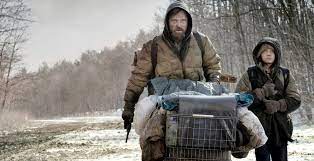
The boy’s internal change throughout the story of The Road is one of the most important aspects of the book. What is terrifying about the setting of this story is that it can drive a sane man bizarre, and the readers can clearly see that happening. The boy’s loss of innocence can be seen through his interactions with his father, his reaction with surroundings and his obsession about death.
The most direct characterization of the boy is when he is talking to his dad. The boy never lies about his feelings and therefore is the easiest way to learn about the internal change. One of the continuous wonders of the boy is the question of “good guy, bad guy”. The boy keeps asking the man if what they are doing is what “good guys” do and if the people they come across are “good guys”. When the man and the boy first discovered the supplies, he asked his dad if the people that left the supplies here were “good guys”. “They were the good guys? Yes. Like us?” (McCarthy 140). The boy has matured that he knows everything comes at a cost. If they are taking something they did not earn, they are taking it away from someone else. Although the boy knows supplies are extremely important for their survival, he still feels guilty for taking them, which is shown when he constantly asks about if he and his father are “good guys”. He understands that nothing is free in this cool gray world and even feels insecure when good things happen.
“He understands that nothing is free in this cool gray world and even feels insecure when good things happen. “
Readers learn a lot from the clear conversations that the boy has with his dad, but reading the boy’s mind through his reactions is able to provide an even deeper understanding to the boy’s maturity. When they first discovered the bunker, the boy did not want the father to open it. After the man went down the bunker, “when he bent to see into the boy’s face under the hood of the blanket he very much feared that something was gone that he could not be put right again” (McCarthy 136). For a kid, the world is full of points of curiosity. However, the boy is not curious about the bunker whatsoever. He has been through multiple events where the man opens some door and terrible things happen, he loses his curiosity and faith in good things happening. The thing that could not be put right again is the innocence of the boy. The man looked back and saw a matured man, with no faith in this world.
The boy’s constant wondering about death is also an important aspect to him losing innocence. Throughout the story, the boy’s perception on death went from: wondering what happens when people die, to: he is going to die with his father, and it is going to be soon. He thinks that they are going to die under their current conditions, no matter what. The boy was certain that the man thought they were going to die. What is worse than losing hope? Knowing that the person one cares about has lost hope.
The amount of trauma the boy has been through at such a young age is impossible to understand by readers living in the modern society. The boy has lost his innocence and became mature, ready to face the world that is full of ashes.
Humanity is the miracle of this world. It is what society is built on. Although the society on surface looks like a functional altruistic community, humanity in reality is actually egoistic. Throughout American literature, multiple famous pieces point to the egotism in humanity. Egoism is shown in people manipulating others, people’s will to survive, and in fact, altruistic acts are based on egoism.
“Egoism is shown in people manipulating others, people’s will to survive, and in fact, altruistic acts are based on egoism”
One of the best examples of egoism in humanity is the manipulation between people. People often try to control others in the interest of their own good. In the novel, Maggie, Girl of The Streets, the main character Maggie’s life is led to a decline as a direct result of Pete’s manipulation. Pete uses the fact that Maggie falls in love with him to control her. When they are at the bar, “the sound of the music which, by the efforts of the frowsy-headed leader, drifted to her ears through the smoke-filled atmosphere, made the girl dream. She thought of her former Rum Alley environment and turned to regard Pete’s strong protecting fists. She thought of the collar and cuff anufactory and the eternal moan of the proprietor” (Crane 58). In the nasty night club full of smoke, sits Pete and Maggie. Many might think it is Maggie’s fault that she trusted and fell in love with Pete, but the truth is Maggie knows no better. Pete used Maggie’s innocence to his own advantage, extremely egoistic. Pete just wants to take advantage of Maggie, he does not have the slightest thought of giving anything back to Maggie. However, Maggie is not in love with Pete for no reason, in fact, she is egotistic too. Maggie wants to, eventually, marry Pete, so she can get out of Rum Alley. She idolizes Pete and thinks that Pete is powerful and is able to benefit her if she treats him well.
Just like Pete, Lady Brett Ashley in the famous novel The Sun Also Rises by Ernest Hemingway, is also a manipulative character. The entire story revolves around her egoism because she has control over all the characters. At the end of the novel, Brett wants Jake to help her. Even though it was interrupting his vacation, he still decided to go. But later, he thinks to himself: “That seemed to handle it. That was it. Send a girl off with one man, Introduce her to another to go off with him. Now go and bring her back. And sign the wire with love. That was it all right” (Hemingway 243). Brett manipulates Jake into helping her all the time. After all the drama Jake has been through, Brett still wants him to help her out. The most ridiculous thing is that by the time Jake gets there, Brett has already gotten the ‘problem’ solved’, Jake’s vacation is ruined for nothing. So how did Brett feel about all this? She did not even apologize to Jake, because she knows that Jake is attached to her. Jake realizes that he is being used, but still chooses to go help Brett because he can not do anything else, he will not allow himself to do so. After so many years, it is more about himself than Brett. Jake is attached to Brett, to a point that he helps her just for his own satisfaction. He is already used to being manipulated by Brett, and she knows it. Brett’s actions are the egoistic nature of humans.
Manipulation is a great example of the egoistic nature of humans, however, down to the basics, the will to survive, the most important will that every human has, is egoistical. The Road explores the human nature of survival by putting characters in a post apocalyptic world where there is no hope, yet, everyone still strives to survive, even if that means at the cost of others. A thief has stolen the man and the boy’s supplies. When the man and the boy finally found the thief that stole their supplies, they threatened the thief and got all of their belongings back. The man says:
“You tried to kill us
I’m starving, man. You’d have done the same.
You took everything.
Come on, man. I’ll die.
I’m going to leave you the way you left us.
Come on. I’m begging you” (McCarthy 257).
The thief steals their supplies because he needs it to survive, even if that would cause the death of the man and the boy. The man takes everything back, even if that means the certain death of the thief, because he and the boy need it to survive. The will to survive is the strongest will in humanity, and it is egotistic. The man directly caused other’s death to save themselves, the rest of humanity would do the same if they were in this situation.
The will to survive is one of the most important aspects of The Road, some are more explicit than others. Cannibalism is unfortunately one of the aspects. Cannibalism brings the life of others to save themselves to another level. Not only does the person die because of others’ survival, but their body is the direct food source to survive. When the man and the boy came across an abandoned camp, they explored, and what the boy sees “was a charred human infant headless and gutted and blackening on the spit. He bent and picked the boy up and started for the road with him” (McCarthy 198). Cannibalism is no doubt, one of the worst act a human can do. When the post-apocalyptic setting strips humanity to the basics, people will do anything to survive, even if that means eating other humans. The fact that cannibalism is commonly seen throughout the story is scary, yet shows how low of a standard most people will hold themselves to when it comes down to survival. In the modern world, the real nature of humanity might horrify people, but it is terrifyingly egotistic.
Egotistic behaviors like manipulation and the will to survive are easy to identify. However, the best proof of egotism in humanity is hard to see. They are, on the surface, altruistic behaviors. Altruistic acts are based on egotism, and The Road is also a good example. The relationship between the man and the boy is the most important aspect of the story. Most people think that the man is very altruistic, especially towards the boy, but in reality, the reason why the man is good to the boy is because he is the man’s son. This might be confusing in the argument of egotism in humanity, in spite of that, it actually makes sense. The one and only actual purpose of all lives on earth is to reproduce. The boy is a part of the man, a part of the man’s density is the survival of his offspring. The boy’s survival is the man’s success, and leads to the higher biological fitness of the man.
Just like The Road, The Things They Carried also put characters in a cruel environment, the Vietnam War. Tim going to the war is a big aspect of the book, however, the decision of going to war is egoistic. Unlike The Road, The Things They Carried gave the main character Tim O’Brien a choice to go or not. Tim was drafted to the Vietnam War. He ran to the border between The U.S. and Canada. He had the choice to either escape from his life, to Canada, or stay and fight in the Vietnam War for his country. Eventually, he chose to fight in the war. Fighting for his country seems altruistic on surface, but Tim did not go to war for his country. Rather, he went to war because of his ego. Tim reflected: “I would go to the war – I would kill and maybe die – because I was embarrassed not to” (O’Brien 57). The chapter “On The Rainy River ” is Tim’s confession on his ego driving him to war. Going to war for Tim is not a glorious thing to do, but not going to war and escaping however, is an embarrassing thing to do. Tim thinks that if he did not go to war, the public would make fun of him, and thinks that he is a coward. What he does not realize is that he would feel like a coward if he went to war. “I survived, but it’s not a happy ending. I was a coward. I went to war” (O’Brien 58). This is a short and clean statement that includes all of his emotions towards war. By giving up to his egoistic thoughts, he betrayed himself. Tim was never meant to be a soldier, he went to war simply because his ego forced him to. It is the egotism that drives the seemingly altruistic acts.
Egoism is in every human on earth, the American Literature is a great reflection of it. Egoism is greatly portrayed through the acts of manipulation and the will to survive. Many things might even appear altruistic, but its foundation is often egoistic.
Works Cited
Fitzgerald, F. Scott. The Great Gatsby. Scribner.
Hemingway, Ernest. The Sun Also Rises. Scribner, 2006.
McCarthy, Cormac. The road. Vintage Books, 2006.
O’Brien, Tim. The Things They Carried: A Work of Fiction. Houghton Mifflin Harcourt, 2009.
Daisy is certainly painted to be a beautiful, rich woman, but she is certainly not the fool that she wants her daughter to be: “‘She told me it was a girl, and so I turned my head away and wept. ‘All right,’ I said, ‘I’m glad it’s a girl. And I hope she’ll be a fool — that’s the best thing a girls can be in this world, a beautiful little fool’” (Fitzgerald 17). This might seem delightful, but it does not apply to Daisy as she is not oblivious to the burdens of men. Daisy however profits from her interactions with men as a source to gain materialistic value. This raises the question of is Daisy really the beautiful fool she models for her daughter to be or is money the source of her happiness? Through Daisy’s actions and qualities like her golden voice, her selfishness and her willingness to do anything for status and wealth it is evident that she is not a fool. These qualities closely identify Daisy with Nellie from Maggie: A Girl of the Streets due to their tendencies to manipulate men to acquire their deepest desires of wealth and status, defying the reality of the American Dream.
An example of Daisy’s tendency to manipulate men is her voice; she charms men with her “voice made of money” to guarantee her high level position in society and satisfy her need for materialism. Her voice is the subject of many of Daisy’s descriptions and one of the very first qualities that Nick notices about her. Daisy’s voice is one of her most defining characteristics: “‘Her voice is full of money,’ he said suddenly. That was it. I’d never understood before. It was full of money — that was the inexhaustible charm that rose and fell in it, the jingle of it, the cymbals’ song of it… high in a white palace, the king’s daughter, the golden girl… .” (Fitzgerald 120). This metaphor expressed by Nick Carraway claims Daisy’s attraction to money. Money is something that multiple of the characters of The Great Gatsby yearn for creating this illusion that Daisy is pursuing money from Gatsby, and Gatsby is pursuing money to please her. Nellie does this by chasing Pete; he is blinded by how in love he is with her like Gatsby is with Daisy. This gives these two female characters the advantage of manipulating these men. Comparable to Nellie is Daisy who pursues Gatsby while she is married to Tom Buchanan. This untraditional behavior is a way to get back at Tom for cheating on Daisy with his New York mystress. Daisy admits to not be preoccupied by this which indicates her deep-rooted selfishness.
“Daisy is not as innocent and charming as we envision her to be in the very first chapters. Instead, she is more identical to Nellie who is willing to manipulate men to get what she wants through her charming manipulative voice, her selfishness, and her infringement on boundaries all to preserve her status and wealth.”
Similarly to Nellie, Daisy is very selfish and fits this perfect model of a woman pursuing wealth and status. When Daisy is faced with the ultimatum of choosing between Gatsby and Tom she chooses the most lucrative alternative: Tom Buchanan. Tom is the most rewarding alternative as he provides her with greater wealth and stability. Just like Daisy, Nellie is an opportunist who steals Pete from Maggie, and manipulates him to withdraw his money: “The woman of brilliance and audacity stayed behind, taking up the bills and stuffing them into a deep, irregularly-shaped pocket. A guttural snore from the recumbent man caused her to turn and look down at him” (Crane 86). Nellie takes advantage of Pete’s status and steals money from him while he is almost unconscious and drunk. Just like Daisy’s token voice, Nellie is perceived as “a woman of brilliance and audacity.” This characterizes her charming ways aiding her shrewd interactions. Additionally, Daisy is very egoistic and prides herself in joking about others perceptions of her: “‘Are you in love with me,’ she said low in my ear, ‘or why did I have to come alone?’” (Fitzgerald 85). When Nick arranges Gatsby’s meeting with Daisy she makes this unnecessary comment to charm and to upraise herself. This comment is strange because of Nick and Daisy’s relationship as cousins. Her selfishness further illustrates this egotistic and uplifted version of herself which differentiates her from a “beautiful fool”.
The most astonishing part of Daisy’s pursuit is to the extent of which she goes to preserve her wealth and status. The first sign of this is the neglect of her own little “beautiful fool”. She is so unpreoccupied by her daughter that she is not truly aware of her own accomplishments: “I waited but she didn’t say any more, and after a moment I returned rather feebly to the subject of her daughter. “I suppose she talks, and — eats, and everything’” (Fitzgerald 16). This neglect is deeply rooted in her distance from Tom Buchanan. Had she truly loved her husband she might be more inclined to raising her daughter. The biggest length that Daisy went to preserve her wealth and status was to run over Myrtle. This allowed her to keep her husband and preserve her status because it was public knowledge that Tom was having an affair with a woman from New York, and she knew Gatsby would take the blame. Nellie and Daisy are both factors in the downfall of the tragic heros in the novels due to their lack of concern for others. Nellie steals the one thing that Maggie values, which is Pete.This abandonment slowly draws her to the streets, and she becomes a prostitute to survive. Daisy participates in Gatsby’s downfall similarly: she withdraws herself from his life and lets him take the blame for Myrtle’s murder. Gatsby is prepared to sacrifice anything for Daisy and suffers a tragic death in his swimming pool on his first swim.
Clearly, Daisy is not as innocent and charming as we envision her to be in the very first chapters. Instead, she is more identical to Nellie who is willing to manipulate men to get what she wants through her charming manipulative voice, her selfishness, and her infringement on boundaries all to preserve her status and wealth. Daisy is very comparable to Nellie from Maggie: Girl of the Streets as she robs Maggie of Pete and takes advantage of every situation to preserve herself. Nellie and Daisy are the contrary of the American Dream; through their opportunist values they reach security with the least effort and without pursuing their happiness. The American Dream is the “equal opportunity of success through hard work”. Daisy waves this requirement and finds a shortcut which is available to her. This defies the definition of the American Dream of equality because it is due to her charming ways and beauty that she is given this opportunity to maintain wealth and status.
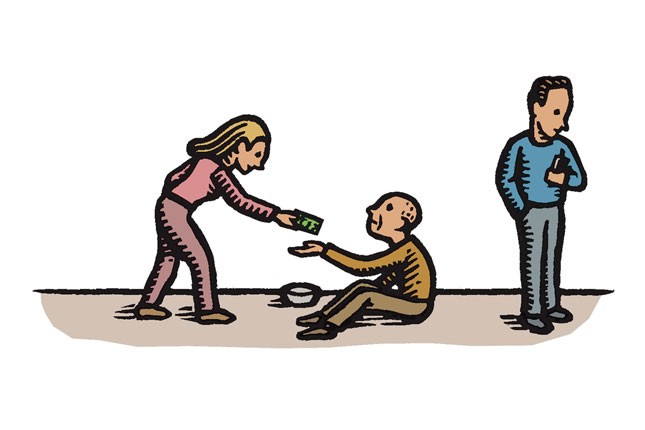
Martin Luther King once said: “Every man must decide whether he will walk in the light of creative altruism or in the darkness of destructive selfishness.” Altruism is the devotion to the welfare of others, regard for others, as a principle of action; opposed to egoism or selfishness. Everyone experiences the obligation of a devotion to something or someone, the devotion to family, a pet or a memory. But is this a selfless act or is it powered by the expectation of faithfulness in return? When one thinks of devotion, one thinks of egoism. The need to treat self-interest as the foundation of morality. However, the altruistic foundation of the characters in the novels read this year, The Scarlet Letter, The Things they Carried,and The Road have a certain devotion to someone or something presenting selfless intentions, indicating the innate altruism of the human race.
The incriminating story of Hester Prynne in The Scarlet Letter, a woman who had to bear the weight of a bold, red letter on her chest is an illustration of altruistic devotion. Despite the shunning of her name and the egoism of others around her she remained a committed mother and lover because of the deep love for her child, Pearl. She births the child in harsh conditions in a jail cell on the basis of her heretic crime: adultery. Nonetheless, Hester “…stepped into the open air, as if by her own free will. She bore in her arms a child, a baby of some three months old, who winked and turned aside its little face from the too vivid light of day; because its existence, heretofore, had brought it acquainted only with the gray twilight of a dungeon, or other darksome apartment of the prison,” (Hawthorne 47). Hester stands up as a powerful woman for a crime that she has committed; she bears the shame, the harassment and the stares of other Puritans for the love of her child: a product of heresy. The reasons for which she bears the child are far from egoistic, the pride that she has as she walks the child out of the prison is all for her little girl. Had she wanted to be included in her community, she would have gotten rid of her daughter, or acted more vulnerable to her punishment.
Her devotion to this child is altruistic as she does not hide nor shelter her but instead honors her life on earth through the scarification of hers, and naming her after a treasure: Pearl. Her own public ignominy becomes her motive for the devotion to her daughter. “The very law that condemned her — a giant stern of her features, but with vigor to support, as well as annihilate, in his iron arm — had held her up, through the terrible ordeal of her ignominy,” (Hawthorne 70). Hester often thinks of leaving her sentence, the large crimson branding on her chest. That is what she would have done had she been selfish and unfaithful to her Puritan home; instead, she is overcome by a selfless devotion and pursues a fruitful life for herself and her daughter. By the end of the novel Hester refuses to peel the red “A” off her chest and bears the weight by having lived “[with] no selfish ends, nor lived in any measure for her own profit and enjoyment, people brought all their sorrows and perplexities, and besought her counsel, as one who had herself gone through a mighty trouble,” (Hawthorne 240). This lack of selfishness and in a way a commitment to her sentencing by bearing other people’s concerns is in no way egoistic, but instead, a true act of altruistic faithfulness to her life and her daughter’s.
A novel fully based on selfless devotion is one of the greatest love stories that could be written in a war setting. In the rough paysage of Vietnam emerges a story of true altruism honoring every name that fought in this wretched war against communism; ironically, a public theory derived from selflessness. O’Brien describes the hardships of the war through an amicable love for his fellow soldiers. He describes each name by illustrating their hardships and the weight they carried. In the chapter “Love” he uses metafiction to create a powerful name for his platoon leader, Jimmy Cross. As Cross states “‘Make me out to be a good guy, okay? Brave and handsome, all that stuff. Best platoon leader ever,’” (O’Brien 29). Instead of focusing on himself and reminiscing on his war efforts, he instead focuses on the efforts of his platoon. He does make out Jimmy Cross to be a good guy through his altruistic action and the dwelling of his actions after the harsh deaths of Kiowa, Lavender and Lemon; a soldier whose remains he has to peel off a tree like a rotten fruit. Nonetheless, the members of the Alpha company vow for his selflessness and care for others: “Kiowa admired Lieutenant Jimmy Cross’s capacity for grief. He wanted to share the man’s pain, he wanted to care as Jimmy Cross cared,” (O’Brien 17). The pain that the whole platoon carried depicts their great devotion to each other and what this novel is truly about: Love and Devotion to one another, a truly selfless act.
The themes of love and devotion also depict the father-son relationship in The Road. Being on the road is hard, being on the road is saying goodbye to one’s old life and unleashing the ugliest emotions known to humankind. In The Road, a post apocalyptic novel by Cormac McCarthy is another remarkable love story; a love story dedicated to kin, one of a father and a son who scavenge for their survival. A dilemma whether life is worth living or not makes this story overwhelmingly somber and sentimental. One would think that the man’s and the boy’s need to survive would make them egoistic; however the boy reinstates our faith in humanity by showing altruism through his devotion to the care of others. The boy finds himself starved, skinny and a few days from death as his father and him stumble into a multitude of food, shelter and clothing. The boy is automatically overcome with a sense of morality. He wonders whether the people who previously owned the supplies would care if they took them and therefore decides to devote a grace to them: “Dear people, thank you for all this food and stuff. We know that you saved it for yourself and if you were here we wouldnt eat it no matter how hungry we were and we’re sorry that you didnt get to eat it and we hope that you’re safe in heaven with God,” (McCarthy 146). We can tell that the boy is young, and his English, notably his grammar, has begun to erode over the years as he has never grown up in the real world. The boy has lived in an apocalyptic world his whole life, yet he finds a reason within himself to say grace to thank those who have passed and who have blessed them with food. A few passages in the novel, like this one, create a connection between Christianity and the boy, almost leading us to believe that the boy is “the last prophet on earth”. This embodiment of Jesus also furthers our sense of the boys’ altruism connecting it to the deep roots of altruism in religion dating back to the very first early civilizations.
The boy is often also the one who keeps his father in line when he strays away from reason. The pair often encounter others on the road, sometimes very vulnerable individuals. A man who barely seems human due to the dehumanization of his portrayal and condition, and a man who caves into his survival instincts by robbing the man and son of their possessions. The man is very maddened by these instances but the boy grounds him. He expresses a sense of morality for others without giving into the egoism of the lack of basic needs. He gives the starving man a spoon and the robber back his clothes: “Finally he piled the man’s shoes and clothes in the road. He put a rock on top of them. We have to go, he said. We have to go,” (McCarthy 260). The frantic repetition and urgency of the father illustrates the boys and the man’s lack of security yet the boy holds true to his altruistic manners and wants to be good, urging for his good intentions to reflect on his father. The boy, even devastated by his father’s death at the end of the novel, holds true to his morals and covers his father in a blanket that he could get a better use of.
“What about my papa?
What about him.
We cant just leave him here.
Yes we can.
I dont want people to see him.
There’s no one to see him.
Can I cover him with leaves?
The wind will blow them away.
Could we cover him with one of the blankets?
Yes. I’ll do it. Go on now.” (McCarthy 285)
To the very end the boy is selfless to his father and that is because he holds a certain loyalty to him. Out of every opportunity to demonstrate love they have had in this novel, this is the most powerful one. He insists for his father to be covered even though the boy has a small sense of burial and the traditions of mourning after death. Nonetheless, he demonstrates a dedication to the one who raised him and gave a little spark to his life, whether it was with a flare gun or bringing him to the ocean, even though it lacks its multitude of blue that the boy dreamed of. No matter how selfless, no child should have to bury their father. The boy’s unstable conditions truly magnify his remarkable sense of morality.
“Humans do show egoist tendencies, but if one holds a true devotion to something or someone, their actions will innately be altruistic.”
Humans do show egoist tendencies, but if one holds a true devotion to something or someone, their actions will innately be altruistic. Hester Prynne shows an altruistic concern for her daughter as she loves her unconditionally despite her being the “very law that condemned her”. The Things they Carried is another example of putting others’ needs before our own. O’Brien dedicates this entire book to the Alpha company. While some of the passages seem egoistic his overall experiences, and dedications to his friends show a deeper sense of selflessness. Finally, a father-son duo that would make anybody shed at least a few tears accounts for the altruistic means of not only Christianity but also through the boy. The boy serves as a means to reinstate our faith in humanity in a post apocalyptic setting where most morals have slipped humans’ thoughts just like colors no longer paint the Earth. Overall humans display a care for one another that is innately altruistic and that is their devotion to others.
Bibliography
Hawthorne, Nathaniel. The Scarlet Letter. New York, The Modern Library, 2000.
Mccarthy, Cormac. The Road. New York, Vintage Books, 2006.
O’Brien, Tim. The Things They Carried. Boston Mariner, 2009.
“Oxford English Dictionary: Altruism.” Oed.com, 2021, www.oed.com/oed2/00006619. Accessed 12 May 2022.