Puppy Love

Roxy and Nina

My first two pets will always have a special place in my heart. Raised from the streets in Tunis, Tunisia, Roxy and Nina were my first two dogs. I remember the first day that I ran my fingers through their glistening fur which reflected the warm African sun. One of them, Roxy was a tree toned dog with a beautiful blend of white brown and black fur and the other one, Nina was a funny looking mixed labrador with black fur and white accents especially on her feet which made it look as if she was wearing little socks. They had made moving continents a silver lining. They become an unstoppable pair just like my sister and I. Roxy and Nina, themselves sisters, reflected mine and my sister’s relationship. Roxy was hers and Nina was mine. Therefore my sister and I discovered the most beautiful parts of Tunisia with our best companions: our dogs. 

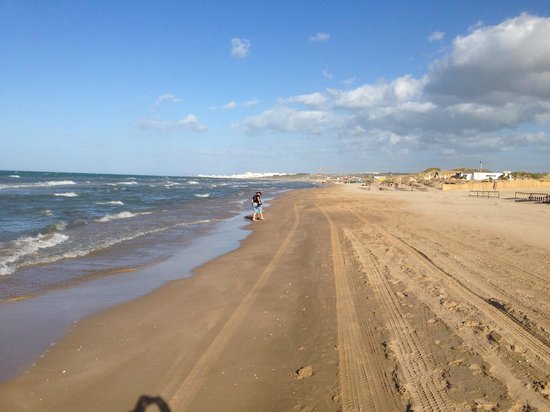
We embarked on wonderful adventures especially on the warm Mediterranean beaches. The beaches crashed to the sound of our laugh as we saw Roxy and Nina rushed up and down the long white sand beaches. They ran marathons up and down the coast and around the dunes which were painted a rich green color a couple feet from the beach. There was not a place that they had not parcoured in that small beach in the white and blue cities of Gammarth, la Marsa and Carthage. Their happiness always reflected my sister and I’s disposition. We let Roxy and Nina explore every inch of the beaches as we followed them walking or on the backs of camels and horses. The camels were a frightening sight for Roxy and Nina which surprised me as they had found confidence on the Mediterranean beaches almost like the restless waves which painted the coast white, almost as white as Nina’s socks. 

“They ran marathons up and down the coast and around the dunes which were painted a rich green color a couple feet from the beach.”

We brought Roxy and Nina everywhere whether it were our tennis lessons or we were horse riding. At our tennis lessons their barks and wagging tails resembled encouraging voices. At our horse riding stable their presence made their excitement skyrocket seeing the horse gallop and jump over the wooden obstacles reminding them of their dashes up and down the Tunisian beaches. The ambiance of having our dogs beside us at every challenge lifted our spirits and ceased our nervousness at horse riding competitions as well as tennis matches. Roxy and Nina were our biggest supporters. Even after every school day, Roxy and Nina greeted us with smiling expressions and enthusiastic barks and wagging tails. But they were street dogs and we had never had dogs before which made training them much harder than we presumed. This created a lot of distrust and arguments between my family. Something that once brought us together was pulling us apart. 

The white socked dog and her sister just became wilder and wilder as they grew up and the long walk on the beach could no longer appease their energy. Roxy and Nina had taken upon themselves the duty to protect our home by barking at every shadow that appeared on the street. This gave our home an unpleasant ambiance as the barks that once reflected encouragement and happiness now echoed between the house’s cold white marble floors. But there were always small sparks almost like a silver lining like the cracks of the marble. They always made me laugh. Nina was a dumb dog and often found herself in clumsy situations; contrastly Roxy was the confident leader to balance her sister. This again mirrored myself and my sister’s relationship. 
Nina’s clumsy nature always got her into trouble. Once I had gotten mad at her for walking up the stairs at the beach fearing she would get hit by a car. I ran up the stairs and urged her to come down. She became stressed by my anger and nervousness and decided to jump down the stairs and crashed with her whole body into the hard wet sand below. I stood there in awe and prayed she would not be hurt. Nina was fine and both her and I were baffled by her ability to survive that jump without injury. Roxy on the other hand was busy fighting the waves in the ocean and jumped in snout first into the crashing wave. Nina had just crashed into the sand and a wave had just crashed into Roxy. Roxy struggled to paddle against the waves’ strength with her snout barely on the water’s surface and her eyes wide open by surprise. Now our voices echoed like the seagulls above urging her to swim towards us. She finally struggled her way back onto shore and ran towards her sister. Roxy never returned into the water and we never returned to that beach. 

Through all the hardships that come with having a dog I will miss Roxy and Nina and wish to see them soon enough. They brought my family apart at times but together all at once. They strengthened the bond between my sister and I. Nina and Roxy complimented each other like my sister and I. Nina always got into trouble and Roxy got her out of it. They led us through the Tunisian beaches, followed us to our tennis matches, and cheered us on during our equitation lessons.  The day they left for Portugal and left our home marked the day of one of my hardest goodbyes.

Posted in Uncategorized | 2 Comments

Imitation

It may seem absurd that of all things she could be doing― laughing with her friends, reading, playing with her dog, or simply being anywhere else― she stayed locked up in her room― while the sun slowly shifted from one window to the next, while the noise of the morning hours faded to those of the afternoon, to night, then to nothing― the birds sang, the children played, and the owl hooted, all the while she remained in her room. But the comforts of her room were never ending; there was no question about who would walk in; therefore, there was no question about which mask she’d have to put on, which shade of herself she’d have to imitate for that day, as if she were a chameleon in a haphazard environment. This abiding comfortability is why she stayed secured in her room. It was as if she couldn’t bear the idea of disappointing those who came within her path, so she eliminated that path altogether. All other places were unknown to her, she didn’t want to think of them, for then she’d be reminded of all that she wasn’t doing. Her glass box was forever sealed and locked― revealing all, but allowing no escape. 

“Which mask she’d have to put on, which shade of herself she’d have to imitate for that day.”

40 Bed sunlight aesthetic ideas | bed, home, interior

It might be too―her responsibilities completely vanishing when she stepped into that box, as if the walls were a dam and her burdens were the quickly moving stream, ready to take her feet out from beneath her, the moment she stepped out of the protections of her beautiful box― it might be that her room was the shield that kept her defended from the outside world. These feelings of despondency and apprehension, recognized in all minds but dismissed in all ways, were the reasons for why she stayed inside her bedroom. When she left that room, the tempter of souls forced her to subdue those feelings, along with the rest of the world who also suppressed theirs, only to be condemned for doing so.  The world outside that room was a never ending game, that which allows no winner. What she convinced herself― what she eventually concluded in her mind, as to why she sat locked within that room― was, actually, not a reason, rather, a lie to make herself feel better. Finally, she’s persuaded herself that, perchance, she’s not in her room to hide from the world that’s so often carelessly thrown at her; she just simply overslept.

Posted in Uncategorized | 2 Comments

Blue 

My eyes of glistening blue 

Have never seen a sweeter view
My teenage years are going so fast 

I wish I never had to reminisce on the past 

My head spins as I fall asleep 

These are the years I want to keep

“Tears taste better than laughter

When you miss what you sought after”

Tears taste better than laughter 

When you miss what you sought-after

Deeply anticipating the future
But don’t want it to come sooner 

The creation of another memory 

That will soon no longer be 

Posted in Uncategorized | 2 Comments

Morals vs Morality

How do you define mortality? If you google “what is morality,” you’ll find the definition: principles concerning the distinction between right and wrong, or good and bad behavior. Morality is having ideas and beliefs that steer you towards right and wrong. Morality is having an angel on one shoulder and a devil on the other, and being able to differ between which is which. To be moral is to live with a sense of morality. So is today’s society more moral than that of the Puritans? You could say today’s morals are better than the Puritans, but are we more moral? Does today’s society have an angel and devil talking on its shoulders, and can it tell the difference between which is which? Certainly not to the level of the Puritans; therefore, the Puritans were more moral than we are today. The Puritans had legal punishment for being immoral, they praised people for putting others before themselves, they had communities based on living morally, many of the morals we live by today are just alterations of their ideas, and today’s society is strongly influenced by one of the Puritans worst morals: the necessity of power. 

While we may have some community based morals today, the Puritans went an extra step in lawfully enforcing their morals. This idea is supported in The Scarlet Letter, by Nathaniel Hawthorne when Hester Prynne is accused for the sin of adultery. She is condemned to a punishment of wearing a scarlet letter for the rest of her life. This punishment inflicted her with great feelings of shame and regret, as seen in this passage: “she turned her eyes downward at the scarlet letter, and even touched it with her finger, to assure herself that the infant and the shame were real” (Hawthorne 53). This represents the Puritans lawful enforcement of their morals. The moral in question is staying sin free, or in Hester’s case, being faithful, and the punishment is the town’s placement of the scarlet letter, and therefore public shame and disgrace. Their willingness to implement what they believe to be right shows how strong their morality is. The idea of lawful enforcement of morals is also represented in The Crucible by Arthur Miller. When John Proctor is in an argument with the town council, he is accused of being ungodly and unchristian-like. During this time, being very religious and committed to God was one of the Puritans’ morals; therefore, the fact that John Proctor didn’t attend church on Sundays was a big deal. The fact that “‘he [plows] on Sunday…’” (Miller 90) is brought up during an argument, followed by the bewildered response “‘plow on Sunday!’” (Miller 90), which shows the bafflement of the townspeople when someone didn’t follow their widespread morals. The result of this ‘plow on Sunday’ realization, among other things, was the condemnation of John Proctor for witchcraft. Now this result may have been dramatic by today’s morals and point of view; however, it shows how seriously the Puritans took their morals; one of these morals is helping others before yourself. 

The Puritans - HISTORY

Puritans had a strong belief in putting others before themselves; this is a characteristic that many people today don’t completely possess, especially with the multitude that the Puritans displayed. In The Scarlet Letter Hester Prynne is seen doing endless good deeds for the people of the town in order to achieve penance.  The narrator describes that there were “None so ready as she to give of her little substance to every demand of poverty” (Hawthorne 145). This passage is used to describe Hester in this time of penance and the good things she does for others. Later in the book, the narrator gives the point of view of the townspeople concerning her deeds: “Her breast, with its badge of shame, was but the softer pillow for the head that needed one” (Hawthorne 146).  The town’s ideas of Hester changed from shameful to supporting and thoughtful. This simple act of Hester helping other people influences the stain her previous sin, and immorality, has left on her. The importance of putting other people before oneself in Puritan society is also seen in “Peace, Love, and Puritanism” by David D. Hall. He says, “Colonists hungered to recreate the ethics of love and mutual obligation spelled out in the New Testament. Church members pledged to respect the common good and to care for one another” (Hall). This passage further supports how Puritans were very insistent on caring for others. The fact that the Puritans were very religiously driven, and that these ideas were put in the New Testament would’ve also been an extremely effective push for the Puritans to follow them, in addition to the strong community-based belief in morality.

The Puritans had communities that were based on living morally; their ideas of what was morally good is very different from what we would consider today; however, their efforts to abide by those morals were much stronger than today. An idea expressed in “Peace, Love, and Puritanism” supports this: “The Puritans were… bent on making everyone conform to a rigid set of rules…” (Hall). Puritans had everyone follow a uniform set of moral and ethical beliefs. Some may say that this is not moral, but restrictive; however the Puritans had systems that allowed widespread beliefs to lead their moral ideas: “No law was valid unless the people or their representatives had consented to it” (Hall). Laws and morals were largely based on the opinions of whole communities, and therefore communities lived by those morals. This democracy that they were striving to achieve affected the way our government and society is built today. 

Many of the strong, widespread morals that people follow today are adaptations, or derived, from Puritan beliefs and morals; therefore, how could we be more moral if today’s morals are just stolen ones? A study was done to determine whether today’s society really does display a connection to Puritan beliefs; the result was a definite yes: “something like Puritan values seemed to be guiding [today’s] moral judgments” (Hutson). This absorption of Puritan ideas is also seen in the way our government has developed: “It was the Puritans who had introduced similar practices [ to today’s society]  in colony governments” (Hall). This supports the fact that Puritans contributed a great deal to the growth of colonial societies, and therefore today’s societies. Today’s society subconsciously rejects the idea that we could still relate to the Puritans, due to the negative connotations we place on them; however, why should we reject and disown the good ideas a society had just because of the bad things they may have condoned? The belief that we are always better, stronger, and more developed than the societies that came before us blind us from true growth. This ideal is very much like the idea that we are also more powerful. Power, which seems to be a never ending trait that both today’s society and Puritan society took part in. 

“How could we be more moral if today’s morals are just stolen ones?”

The praising of power was one the Puritan’s greatest driving moral, a moral that today’s society is still strongly influenced by; therefore, how can today be more moral when we don’t address one of the most controversial ideas of the Puritan time? While this idea isn’t very visible in society, it influences it a great deal more than anything else; the placement and uses of power affect people’s actions, ideas, and ways of life. This idea is represented in “Peace, Love, and Puritanism” when the author says, “our civil society depends, as theirs did, on linking an ethics of the common good with the uses of power. In our society, liberty has become deeply problematic: more a matter of entitlement than of obligation to the whole” (Hall). This describes how the communal ethics are directly affected by the power displayed during that time; the morals that community will admit to are decided and enforced by those with the most power; we still see this in today’s society. The claim of ‘democracy,’ today and during Puritan times, is extremely arbitrary due to the fact that the real rights and voices go to those with power; which is funny to imagine due to the historical extremes we’ve gone through to defend that democracy. This passage is also saying that liberty has no longer become an argument of ‘who should have it, and why’, as it was during Puritan times, but is now ‘who should have more, and how can they use it against others.’How can society today be more moral when we completely overlook the moral controversy of power and who possesses it; and better yet, completely change the argument to something that better fits ourselves? 

The Puritans were more moral than we are in today’s society. Yes, their beliefs may have not been ethical in today’s point of view; however, their whole lives were based on being morally good and ethical. Puritan society lawfully enforced their morals, praised putting others before themselves, had communities based on living morally, and has had great influence on the ways today’s society acts. The Puritan’s society and today’s society each have an angel and devil on their shoulders; however, the Puritan’s angel is multiplied by the number of Puritan citizens. Today’s society has their angel and devil sitting comfortably, patiently on their shoulders; waiting for the time when we fully acknowledge and ask that angel and devil to guide us – waiting for us to fully come back and address our morals. The Puritans lived their lives trying to abide by their morals and ethics, today’s society lives their lives by trying not to sleep through the alarm.

Works Cited

Hall, David D. “Peace, Love, and Puritanism.” The New York Times. The New York Times. 23 

Nov. 2010.

Hawthorne, Nathaniel. The Scarlet Letter. New York, The Modern Library Classics, 2000. 

Hutson, Matthew. “Still Puritan After All These Years.” The New York Time. The New York 

Times. 3 Aug. 2012. Miller, Arthur. The Crucible. Toronto, Penguin Books, 1976.

Posted in Uncategorized | 1 Comment

All Was Spoken

“Noah,” Claire said gingerly, then, exlaimed with more sureness, “Noah!” 

Noah’s head snapped, too quickly to be casual, in the direction of her voice. 

“Hello?” he questioned. 

At the sound of Claire’s voice, his presence and character became more precise, more measured; it was as if he were being graded on how he carried himself. He brought himself to clear his throat, adjust his clothes, run a swift and tremulous hand through his hair, and straighten his spine. Noah could be seen as nothing but pristine, always devine, to those who laid their eyes upon him. As time went on and he had yet to see the owner of the voice who had called him, he began to wonder if it was just his own mind playing tricks on him. I could’ve sworn I had heard her voice, he thought to himself. This would not have been unordinary for Noah, it was his mind’s favorite pastime to play tricks on him these days. 

“It’s me. Claire,” she spoke still a tad unsurely. 

At these words, Noah was unsure if she could really be standing before him; and it seemed so that Claire thought the same thing. 

“It is you, Noah, right?” she wondered. 

Noah did not know whether or not to believe this beautiful image his mind had placed behind his eyes. He could not remember the last time he had seen her; and nowー as if the image of her face was a sort of antidote to his amnesia ー he could think of nothing but the last time he saw her. Their tangled history and feelings flooded his mind and compelled him to apprehensively reach forth his hand and feel the realness of Claire’s skin upon his own. 

HD wallpaper: lonely, bench, streetlight, park, dusk, night, street light |  Wallpaper Flare

They travelled silently to the park bench, partially lighted only by the single street light some feet away, which flickered with each violent stir of midnight wind, and buzzed at all passing moths. There they sat, for what seemed like moments, in silence, and then, in slightly and hesitant conversation, that which you’d make with a not-so-close acquaintance. These moments were the practices before the games, they were merely pulling up and preparing the contents that needed the most yanking; the subjects that which they wanted to expose the most, yet also hide the best. 

After a long while, Noah finally spoke. 

“Are you happy?” he asked Claire. 

She painted a misshapen smile on her face, looking off into the darkness around them. 

“Are you?” she replied. 

“No, no I am not!” Noah exclaimed remorsefully. “But how could I be? I may have been a happier man were I at loss of true emotion, if I hadn’t given into my pride when it first fought back; however, these things abated themselves in my mind. Now, I walk around as if I am living a life of dreams; I walk through life wrapped in the skin of another man, one I cannot shed! Claire, I am miserable!” 

Claire looked within his eyes ー once light and youthful, now shadowed and dim ー and was not sure what to say. His full expression of emotion brought to light the deep pain Claire had inflicted on this poor man. No matter that her intentions were honest, the path she would’ve so easily chosen for herself, had she been given the chance, was now proving itself to be more worrisome and tortuous than she had first believed. This had ultimately led her to expose the matter she had taken so long to dig up. 

“Once light and youthful, now shadowed and dim.”

“Noah! Please forgive me!” she explained rather surprisingly. “I have tried to be true in all things, and the moment I stray is when it matters the most. When it came to protecting your name and your life, I threw my truth away. I left because your father threatened disownment if I did not! I am truly sorry, I thought the path I chose for you would be better than this path you now trudge along!” 

With this, Noah looked at her with a fleeting moment of violence and hatred that could’ve only been established within his character in the time that they had lost. He then turned his head away, as if he could not bear to look at her, and buried his face in his palms. 

After a moment, he finally returned to their little park bench; “Do you know what sorrow, what shame, I have been through during this time? I cannot forgive you for this.” 

“Please, forgive me!” Claire bellowed, wrapping her hands around his outturned arms. 

The look of distaste and disapproval sitting on his face was unbearable to her. She could receive the looks and torment from his father and whoever else, but coming from him, it was worse than anything she could’ve imagined. She begged and pleaded with him to forgive her, not letting him out of her grasp during the entirety. 

After repeating her pleas, Noah solemnly replied, “I forgive you Claire.” 

And that was that. She held him tight in her embrace, as if he might swiftly slither away; however, he had given into her and accepted the grasp she gifted him. 

“How must I live now?” Noah questioned. “Am I to live as I have been, in this fit of despair? How am I to walk into my home knowing that my own father could do such a thing to me? Please, help me. You are strong, be strong for me too!” 

“You can move on. You can leave this life and begin a new one; a life full of happiness and free of condemnation,” Claire replied strongly. “You are neither limited to this small park bench, nor this city.” 

“No, I can’t. I can’t run from disapproval and judgment, it will follow me everywhere; nor is there any courage or bravery left in me to accomplish such a thing alone!” Noah said shamefully. 

“You won’t be alone,” Claire whispered.

Posted in Uncategorized | 2 Comments

Scarlet Letter Imitation

It may seem perplexing that people lie despite of how many times they are told to be honest — with no inclination to tell the truth, humans often withhold information from others for the clear purpose of personal gain — often tempted by this illusion and so thought benefit, they hurt and delude themselves and others– no matter, how perplexing, how unnecessary and how deceiving, they persist — often conforming to extreme guilt or another’s distrust. But this gain, this seclusion of information, regardless of the consequences, can feel empowering, so irresistible; sometimes bending the limits of compulsion and stretching the walls of freedom. Lying, rephrasing the truth in unbelievable ways, has a potential to make one feel guilt, yet sovereignty over the one they shame. It is as if, the one shamed and robbed of information will never piece the puzzle together or untrot the distortion of reality. All other forms of reality — the real events of the timeline where the truth lies untold — escape one’s mind at the scene of dishonesty. A lie, a mother’s hands over her face in a game of peek-a-boo with her child resembles a disguise – her face almost unrecognizable when covered, can unfortunately be unmasked, comparably to a lie. 

“What if one compelled themselves to be honest, to refrain from a twisted truth to eliminate guilt; what if one reasoned to honesty– but is guilt comparable to the feeling of power?”

It may be too — doubtless it is so, the truth will never be unsmaked but such confidence cannot be played out because this game is not foolproof, lying is like an unsure gamble — although one may be self-assured, the house always wins. The player, unsure of their played game until the result, until the told truth is revealed, is bound to be deceived by the underlying possibility of the disclosure of their torn reality. However, over and over again people lie, the temper of souls has an effect on this habit, starting with a compulsion; it leads to an addiction. A feeling so powerful, an urge to feel superiority, a win pertaining to a fallible game. What if one compelled themselves to be honest, to refrain from a twisted truth to eliminate guilt; what if one reasoned to honesty– but is guilt comparable to the feeling of power?

Posted in Uncategorized | 1 Comment

Land of the Free

August 26, 1920

Just over twenty years ago, half of this American population received their right to be heard. The tape over their mouths was removed. 

And replaced by glue – glue so clear and so thin, thus those who placed it there didn’t have to look at their defiance of liberty in the eye. Glue so much stronger than tape, so much more secret, as if the men placing that bind wished to hide themselves as the glue did, as if hiding would keep their victims from knowing it was they who glued them silent. 

But they try to tear through their invisible chains of contempt. 

But we shake and shatter our chains despite their contempt. 

My dream is to live in a world where I don’t have to break free of chains, where chains aren’t placed on me for reasons that I cannot come to understand or explain. My dream is to be heard, seen, and respected. 

When I’m sitting at a table full of men, I don’t want to feel as if I’m an animal in oncoming traffic – like everyone is traveling 80mph and I’m an inconvenience that they must swerve around; however, sometimes I am not even big enough to swerve, to notice. I’m simply driven over. I can wave my arms, I can yell, I can stand up on my chair and demand to be acknowledged, demand to be recognized; but then I’ll be waved off as dramatic, irrational, or another word from a list of adjectives meant to make me feel small. 

I want to be able to do an activity without a man coming to me in an offer to “explain how it works,” or suggest “no, not like that,” as if I’m a toddler incapable of simple tasks. 

Now I almost deleted that sentence, in my mind it seemed dramatic, like if I were to actually say that to someone they would think I was melodramatic. The chains placed on me since I took my first breath have become engraved in my skin – as if they are now the bones that I use to move. 

The waves of feminism, and why people keep fighting over them, explained -  Vox

In my dream, it has become self-evident that I cannot completely remove these chains and their scars all on my own. Although it pains me to say, we, as women, cannot remove these chains all on our own. We can shake and shatter, bend and break, but without the effort of men, we can only go so far. 

I have a dream that our glass ceiling will be shattered – that the ceiling becomes our floor. 

I have a dream that we will be heard, seen, and respected. 

I have a dream that this “land of the free” will one day include all those that walk on it.

Posted in Uncategorized | 1 Comment

Tale of the American Dream

The American Dream: an idea that coming to America offers you the chance to become anything one has ever dreamed of being; it emphasizes the ideas of freedom, equality, growth, and prosperity. Maggie: A Girl of the Streets by Stephen Crane is a novela that highlights the expectations the American Dream conveys, as well as the mendacity of those promises. Maggie, her family, and her neighbors all travel to America in hopes of living a better life, as opposed to the lives they had in Ireland. Throughout the book, we see these hopes pummeled and disregarded in the way the families live – poorly and dangerously – as well as in the things Maggie does to try to accomplish a better life than that of her family. 

Maggie and her family all come from Ireland in hopes of acquiring the things promised in the American Dream; they’ve come for their chance at riches, education, freedom, and equality. The American Dream fills them with so much hope that they become extremely patriotic to America, despite its unfaithful promises. This act of nationalism is seen when Maggie is at the dance hall with Pete. The two of them are sitting and listening to the woman sing when the drunken crowd erupts into applause; “the singer threw out her arms and cried, ‘The star-spangled banner.’ Instantly a great cheer swelled from the throats of the assemblage of the masses… Eyes gleamed with sudden fire, and callused hands waved frantically in the air” (Crane 34). The crowd of Irish in the dance hall immediately feel a strong loyalty to this nation, simply because of its promise to give them a chance; the extent of this excitement is seen in how their eyes ‘gleamed with a sudden fire,’ and cheers ‘[swell] from their throats’ – all for hope in America. While all this charisma fuels and strengthens the ideology of the American Dream, its believers are still let down, as seen later on in the book. 

For example, these families that put so much faith in their dream are actually living some of the worst lives in America. The neighborhood Maggie lives in is filled with Irish who are poor, poorly educated, and constantly surrounded by danger. The extent of their lack of education is seen when a scene with Jimmie; he’s looking at the moon “wonderingly and quite reverently” when he claims it to “‘[look] like hell’” (Crane 22). Normally, when one describes something to ‘look like hell’ it’s not interpreted as a good thing; however, from the way Jimmie says this, we know he meant it to show his respect and awe towards the moon. This shows how little education he’s really had; he’s unable to express his true emotions because he simply doesn’t have the words to do so. Another way the American Dream is portrayed as mendacious is in Maggie’s home and childhood. She’s described as having “blossomed in a mud pile” (Crane 23), meaning she grew to be something beautiful despite being surrounded by filth and danger. This filth and danger can be seen when the narrator describes her childhood; they say, “when a child, playing and fighting with gamins in the street, dirt disguised her. Attired in tatters and grime, she went unseen” (Crane 23). This shows how poor Maggie’s living conditions are – wearing nothing but rags, covered in dirt, surrounded by street urchin and danger – going directly against all hopes placed in the American Dream. The American Dream betrays Maggie even more when she’s forced to fall into prostitution. 

Amazon.com : VIPPER American Flag 3x5 FT Outdoor - USA Heavy duty Nylon US  Flags with Embroidered Stars, Sewn Stripes and Brass Grommets : Patio, Lawn  & Garden

Maggie, in her escape from her family and in hope of a better life, falls into prostitution. If the American Dream had produced Maggie what it promises, then she wouldn’t have ended up in the situation she did; we see this in Nellie’s character as well. Both women are pushed into prositution while following the American Dream and searching for a better life; however, Nellie enters with confidence and an understanding of her self-worth, while Maggie enters with the need for validation. Overall, Maggie’s innocence and lack of knowledge blinded her from her own downfall. When Maggie’s with Pete in the dance hall and thinks of a possible future for herself, “she imagined a future, rose-tinted, because of its distance from all that she had previously experienced” (Crane 58). Maggie sees a future that’s ‘rose-tinted’ because, to her, anything is better than what she’s currently experiencing – representing the disappointment of the American Dream. It’s even stated later, when Maggie is admiring Pete and his ‘wealth,’ that “to her knowledge she had never seen any better” (Crane 58), further showing that her lack of knowledge blinds her. Despite everything Maggie has been through and all she’s been denied, she has hope in the American Dream even in her last moments. The narrator describes the streets around Maggie and their “varied sounds of life, made joyous by distance and seeming unapproachableness” (Crane 81). In this, Maggie is noticing hope, the ‘sounds of life’ seem to be desirable; however, they’re still only desirable because she believes she can’t reach them, with their ‘unapproachableness’ and ‘distance.’ This line alone shows the lasting effects of the disappointment of the American Dream on Maggie. 

“Lasting effects of the disappointment of the American Dream.”

Overall, Maggie: A Girl of the Streets represents the ideas, promises, and repudiations of the American Dream. It’s shown in the hopes of Maggie, her family, and her neighbors, and the lack of fulfillment in the way they live their poor, dangerous lives. They are poorly educated, poor in wealth, live surrounded by danger, and are forced into life threatening ways of life. Maggie and her family represent the true faults in the American Dream, and therefore, the true faults in America. The book is a true testament to the fact that the American Dream is a mere slogan – an illusion used to blind people from their suffering and convince them that the Dream will fix it all.

Posted in Uncategorized | 2 Comments

Love and War

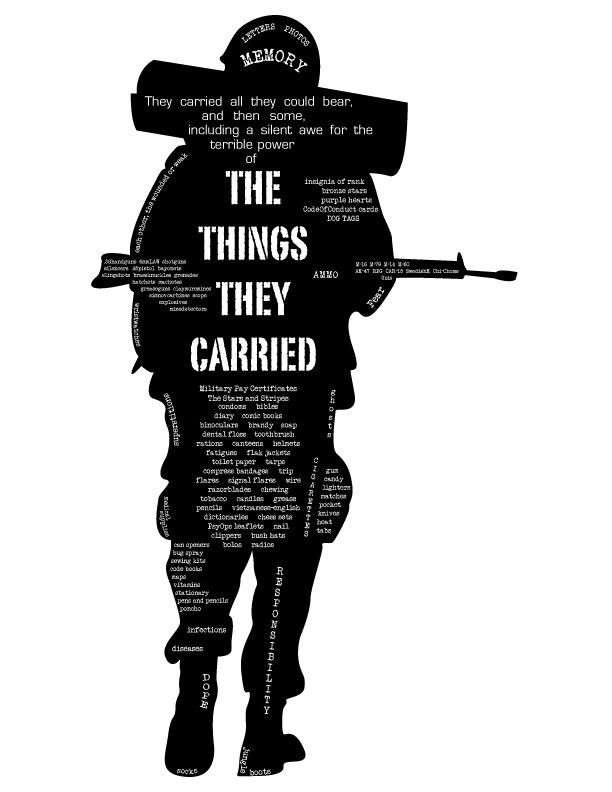
Love is defined as a feeling of deep affection towards something or someone. While the gruesome war novel, The Things They Carried by Tim O’Brien, might not reflect it in a literal sense, it is in fact a love story. It encompasses the ugliness of the war by magnifying the beauty and affection O’Brien has for the characters in the novel. O’Brien reflects on his deep affection for places, memories, and people as well as their actions. The author focuses on the loss of his best friend, Kiowa, as one of the short love stories in this novel. Often he emotionalizes and projects his own interpretation of these events, communicating that “story truth is truer than happening truth,” which increases the authenticity of each love story. O’Brien ends the collection of memoirs with his childhood love story which is perceived as innocent as he talks about a simple boy and girl love story in grade school, but is very real and tragic like the Vietnam War. O’Brien’s talent in recounting his love for the Soldiers of the Alpha Company with his own emotion and interpretation is what makes this war novel a true love story. 

O’Brien often romanticizes the people in the war, making it feel almost like a love story. He beautifully narrates places, memories and most importantly people and their actions. Notably, Jimmy Cross’ affection for the Apha Company can be perceived in this novel. The element of storytelling and use of metafiction is also present as in the second chapter entitled “Love,” Jimmy Cross discourages O’Brien from making him look weak and talks about his love interest Martha instead he says: “‘Make me out to be a good guy, okay? Brave and handsome, all that stuff. Best platoon leader ever,’” (O’Brien 29). His weakness in this novel turns out to be love, as he thinks a soldier should be tough and inconsiderate. Cross instead falls in love with a college student, Martha. She doesn’t love him back, so his obsession with her becomes a harm to himself and his duty as a lieutenant. Cross ends up sacrificing one love, the one of Martha, for another, his men, and burns all of her letters and photographs. This sacrifice magnifies this connection to love and war as he prevents her from distracting him even though she was his motivation almost like Kiowa, O’Brien’s best friend.  

How often has one encountered the loss of a best friend? O’Brien’s loss of his best friend is one of the most powerful love stories in the novel, especially with his use of storytelling and story truth. O’Brien shows a deep affection for places through his novel, often through a rememory, also a theme in Beloved. This connection is drawn through Kiowa’s tragic death by the side of the Song Tra Bong River where the platoon recovers his body and a rucksack with moccasins. After many years O’Brien returns to Vietnam with his daughter. His daughter expresses a nationwide ignorance about the war; however, O’Brien experiences a deep remembrance of the land and mostly his dearest friend, Kiowa. 

[Kathleen] “…pinched her nose and watched me wade out to where the water reached my knees. Roughly here, I decided, was where Mitchell Sanders had found Kiowa’s rucksack. I eased myself down, squatting at first, then sitting. There was again that sense of recognition. The water rose to midchest, a deep greenish brown, almost hot. Small water bugs skipped along the surface. Right here, I thought. Leaning forward, I reached in with the moccasins and wedged them into the soft bottom, letting them slide away. Tiny bubbles broke along the surface. I tried to think of something decent to say, something meaningful and right, but nothing came to me.” (O’Brien 178)  

This moment in the story is by far one of the most powerful as O’Brien tries to reconnect with the war but his efforts fail due to the sheer beauty of Vietnam; however, the smell of the field persists giving him a small window to the past. He then pays homage to Kiowa, his best friend, by letting go of his friend’s moccasins in the river right by where Kiowa was deceased. The bubbles that rise represent Kiowa’s presence, importance ,and love being reciprocated. This is a notion of how influential the war was for those who lost someone and represents the themes of guilt but mostly the “deep affection” for his best friend.   

A further connection that O’Brien draws between love and war is spelled out in the chapter “How to Write a True War Story ” as he clearly states what a war story should consist of: “And in the end, of course, a true war story is never about war. It’s about sunlight. It’s about the special way that dawn spreads out on a river when you know you must cross the river and march into the mountains and do things you are afraid to do. It’s about love and memory. It’s about sorrow. It’s about sisters who never write back and people who never listen,” (O’Brien 81) In this instance of metafiction, as he indicates to the reader the process of writing a war story, he states that a true war story really is not about war but instead it is about every other emotion, particularly love, feeling and memory. This additionally ties in the themes of storytelling and story truth  compared to happening truth. His dramatization of certain events is described as story truth which is truer than happening truth as it emcompasses his correct interpretation of the deaths of the people that he truly loved. 

The end of the book is what reminds the reader that this is a profound love story. Linda takes the form of O’Briend’s childhood love and while the reader pictures the relationship as innocent O’Brien assures us it is real. Linda is O’Brien’s first encounter with love but also death which causes him to relate her death to those of his other loved ones like Curt Lemon, Ted Lavender, Norman Bowker, and Kiowa. Linda had a terminal brain tumor and wore a red cap ever since hers and O’Brien’s first date. He takes note of this but decides not to question it as he cares about her deeply. One day at school a boy by the name of Nick Venhoff pulls the cap off her head to reveal her bandages. Following this, Linda dies being the first death that Tim O’Brien witnesses. When he attends her wake he is stressed and nervous yet eager to see his friend again he fashbacks between Linda’s lifeless body “She looked dead. She looked heavy and totally dead,” (O’Brien 229)  and the other bodies he encountered at a later date: “In the months after Ted Lavender died, there were many other bodies. I never shook hands—not that—but one afternoon I climbed a tree and threw down what was left of Curt Lemon. I watched my friend Kiowa sink into the muck along the Song Tra Bong,” (O’Brien 229) This progression of his encounters resonates with the reader and with death makes a greater impact as we approach the end of the story; this is why O’Brien saves Linda’s story as a remarkable ending. Some readers may seem disappointed by an ending that does not contain a war scene; however it encounters the idea of love as one of the themes of this story. Not only does Linda’s story make a connection to love but also other notable themes such as shame, guilt and regret.  

“As Tim O’Brien states, “It wasn’t a war story. It was a love story” morphing a tragedy of war into a highlight of true love and affection.”

It is almost impossible to associate a war novel with love but sometimes the ugliest of things remind one of the obvious beauty of others. As Tim O’Brien states, “It wasn’t a war story. It was a love story” morphing a tragedy of war into a highlight of true love and affection. This is expressed in the novel with O’Brien’s stylistic choice of story truth. The emotions that he embodies while expressing his story truth that he interprets from the happening truth give the reader a larger sense of a love story due to the sincerity of his words and feelings. The death in this novel only makes the love brighter and more authentic. From his struggles of losing his best friend and childhood love to representing the love in places, memories and other characters truly makes this novel, originally thought to be about war,  one of the rawest, truest love stories. 

Posted in Uncategorized | 1 Comment

Lens of Self

I roll out of bed at exactly 11:29 A.M., just as I have been for the past week and a half. This seems like a perfect start to a perfect day; I get to sleep in, only being awoken by the warm  golden sunlight shining through my partially closed curtains – and it would be a perfect start to a perfect day… if this was about anyone other than me. For me, waking up as late as 11:30 for days in a row fills me with a kind of despair I can’t really explain. It’s as if each hour spent in bed is another brick placed on my shoulders, making it harder and harder for me to climb out of the hole I chose to dig when I stayed in bed; however, today, I make the conscious decision to actually place my two feet on the floor, slowly, one foot at a time, and walk, slowly, one step at a time, downstairs. The long trek to the kitchen stacks on to my excursion out of bed and weighs me down so much that I must fall like Jello on to the couch… where I stay. It isn’t until my dad, who’s as cheerful as song birds, comes crashing through the door that I actually stand up. I offer him a hug, one of my favorites, where I let him hold up every pound of me, as if he’s Atlas holding up the sky – this hug is enough to get me to eat breakfast. 

Breakfast was not good. I rinse the oatmeal out of my bowl, holding it with my fingertips at the end of my extended arm, and watch the pallid chunks of inedible grossness swirl down the drain. My eyes move to the couch, still playing my show from earlier – When did I watch seven episodes, I ask myself. Now instead of flopping back down to watch seven more, I decide to go for a drive; That will cheer me up. I amble down the hall looking for my mom. 

“Hey, I’m going to go for a drive,” I say to her. 

She looks up from her desk, almost startled to see me. 

“Oh! Hi, I didn’t know you were awake,” she replies enthusiastically. 

I glance at the clock behind her. 1:00 P.M. Her comment leaves what feels like a knife in my chest; although, I can’t really blame her. Most days I spend my time sitting in my dark cave, seeing just enough sunlight to know when I should start feeling bad that I haven’t left yet.

“Yup. I’m awake,” I reply in a monotone voice. “So can I go?” 

“Sure honey, be careful.” 

I walk out of the house with my phone, wallet, keys, and book; however, I’m not really sure why I bring a book. I rarely ever stop to read it, and if I do stop then I get worried that I’ll keep the car running too long, waste too much gas, and have to pay to refill it. Now my brain is in a spiral. I don’t have any money. I should’ve worked while I was home. Maybe I shouldn’t go for a drive. And finally my mind halts on, Whatever. I turn the key in the ignition and go to turn on my music. Today calls for my “Spilt Milk” playlist – a playlist full of songs to play when I’m sad, because for some reason playing sad music will make me feel happier. Only the problem is that it’s taken me five minutes to connect my phone, and in those five minutes my mood went from sad to mad. 

Finally, with “Streetcar” playing, I pull out of my driveway and head for the beach. Nothing makes me feel better than driving down the beach and seeing the waves crashing, people walking, and sun shining. With each crash of the blue, sparkling waves, a brick is lifted from my shoulders. With each smiling face and waving hand in my direction, I climb a step higher out of the hole. I’m thinking of this peaceful utopia when someone pulls out three feet in front of me. I slam on my breaks, as if my foot is made of steel. What the hell! I think. 

“Are you stupid?!” I yell at the car now several feet ahead of me. Those irenic thoughts that were circling my head are swatted out, and followed by a red hot wave of anger. I look at the license plate and notice it says Massachusetts. Of course, a masshole, I think to myself; but now suddenly it’s two lanes, and I’m going fast enough to pass them, and that thought is no longer sitting in my head, but being thrown out of my mouth, along with my hand, which has also thrown up its middle finger. I pass the stranger and make eye contact. His face, stricken with confusion and a hint of bafflement, tosses a cool wind over my red rage. Suddenly I imagine what I must look like to him; barbaric and laughable. I’m immediately met with feelings of regret and remorse. I was looking only through my lens of self. He got in my way, he cut me off, he ruined my already bad day; but what if I just ruined his already bad day? What if he had to convince himself to get out of bed this morning? Only to be met by a mad teenager whose music wasn’t working. I was the center of the world, he was the center of his world. We both saw the world as our own, like it should bend to our wants and needs, and only ours. I cautiously slow down now, and return to my previously unwanted spot behind the supposed masshole. My music becomes quiet, in my mind or actually, I’m not really sure. I take a slow left turn onto the road that will bring me home, where I should’ve stayed.

Posted in Uncategorized | 2 Comments