
Morality, Evolution’s Close Cousin
“Society is a joint-stock company in which the members agree for the better securing of his bread to each share-holder, to surrender the liberty and culture of the eater” (Emerson).Throughout evolution, humans have proved that society’s abusive and biased influence can destroy one’s sense of individuality and thus lead to a society reflecting only the ideas of the most powerful. However, morals in America today are far closer to equity and righteousness compared to a Puritan point of view. These new standards create a world where people live by their own ideas and create a sense of belonging as everyone contributes in their own way. This same evolution from our original roots(the Puritans) and the building upon the foundation for society they instaurated is what allows humans to strive and consider the world a genuinely fair place today(for the most part). Both Natahniel Hawthorne’s The Scarlet Letter and Arthur Miller’s play, The Crucible, manifest that morality in America has definitely ameliorated since Puritan times, as proved by an equitable justice system compared to theocracy, legitimate and agreed-upon laws, in addition to a prevalent sense of trust and loyalty.
To begin, the justice system has indubitably been strengthened compared to Puritan times as today, accessible and agreed upon laws reinforce the very morals that create structure and order in society. An article published in The New York Times by David D. Hall explains, “In 1648, Massachusetts became the first place in the Anglo-American world to publish a code of laws-and make it accessible to everyone. Believing that the rule of law protected against arbitrary or unjust authority, the civil courts practiced speedy justice, empowered local juries and encouraged reconciliation and restitution(Hall). Effective word choice such as ‘speedy justice’ and ‘reconciliation’ and ‘restitution’ emphasizes the very ideal our society lives by to maintain order. Without the previously mentioned values, the judicial system would fall to crumbles and criminals would never come out of their dark holes. Obviously, a code of laws that is accessible to everyone would erase any previous confusion and definitely prevent ‘arbitrary or unjust authority’, right? Actually, righteous morals such as justice, forgiveness, and most importantly, fairness, were not seamlessly developed with a simple rule set. Despite these rules, corruption was still prevalent due to the delusion and conceit of the Puritan time period. Conformism was basically taking the easy way out as “the witch-finder is ever vigilant, and who would not rather direct his attention to others than stand, in the what of the day, and challenge his authority?”(Bigsby 25). Conformity to the higher-ups essentially stabbed many in the back during the Salem witch trials. Civilization basically agreed to accept corruption for the price of giving away their individuality and witnessing the fall of close ones as a reward. How could someone even perceive this as rational? This event occurred in 1692(Bigsby 7) meaning that laws did not prevent abuse of power and condescendance. Therefore, accessible laws were in fact the basis to growth as societies but it was the question of authority and knowledge gained from tragic events(such as the Salem witch trials) that helped mold new standards that would lead to less corrupted authority and genuine ‘speedy justice’- which are the foundation to a legitimate and fair world.
“Society is a joint-stock company in which the members agree for the better securing of his bread to each share-holder, to surrender the liberty and culture of the eater”
Ralph Waldo Emerson
Moreover, Miller’s The Crucible and its interpretation of the Salem witch trials effectively demonstrates the immorality in giving accusers an excessive amount of power and its negative effect on society as a whole. In an attempt to save his wife from the duplicitous children, a desperate John Proctor exclaims, “Is the accuser always holy now? Were they born this morning as clean as God’s fingers? I’ll tell you what’s walking Salem—vengeance is walking Salem. We are what we always were in Salem, but now the little crazy children are jangling the keys of the kingdom, and common vengeance writes the law!”(Miller 73). A simile comparing the accusers to God’s fingers advances the idea that these people are in fact not innocent and should not have the power to change the course of people’s lives such as God has. In addition, personification is employed as vengeance does not literally walk, in fact, the accusers seeking vengeance and power are disregarded though they are the true sinners. Evidently, the accusers have tremendous power and are essentially seen as ‘clean as God’s fingers’ though they seek evil. This proves to be a problem in a society where one is not innocent until proven guilty but, one false accusation away from death. This day and age, ‘vengeance does not walk the street’ as loop holes such as the power accusers had simply do not exist anymore. In brief, society has advanced and proved to be a lot more fair and moral in the sense that it is a lot more difficult to abuse the justice system.
Next, ‘Vengeance walking the street’ during the Puritan era reminds us of the very morals that maintain the foundation of our societies and how the absence of trust and loyalty led to the fall of the Puritans. The Introduction to Miller’s The Crucible reminds us:“Beyond the question of witchcraft lies the more fundamental question of human nature, for which betrayal seems an ever-present possibility. The Crucible reminds us how fragile is our grasp on those shared values that are the foundation of any society(Bigsby 16). The personification used to illustrate how our grasp on fundamental values is ‘fragile’ amplifies the importance of being true to one another and even more importantly, to ourselves. This fragile ‘grasp’ is what maintains the structure in society and what prevents chaos and anarchy from ensuing. Strong relationships and loyalty to others are what contribute to forming a group and creating opportunities for the whole. Such relationships weren’t possible during the Puritan era as one may find themselves second guessing what everyone else’s true intentions are as betrayal was often the price to pay for power. Today, this is not the case and disasters such as the witch trials remind us just how important it is to hold our hands together and create a society founded based on trust. Essentially, the play reminds us of how easy it is for the world to fall apart and to keep hold of the progress we’ve made in keeping fundamental morals such as the importance of trust and loyalty that have proved to be crucial parts of flourishing societies.
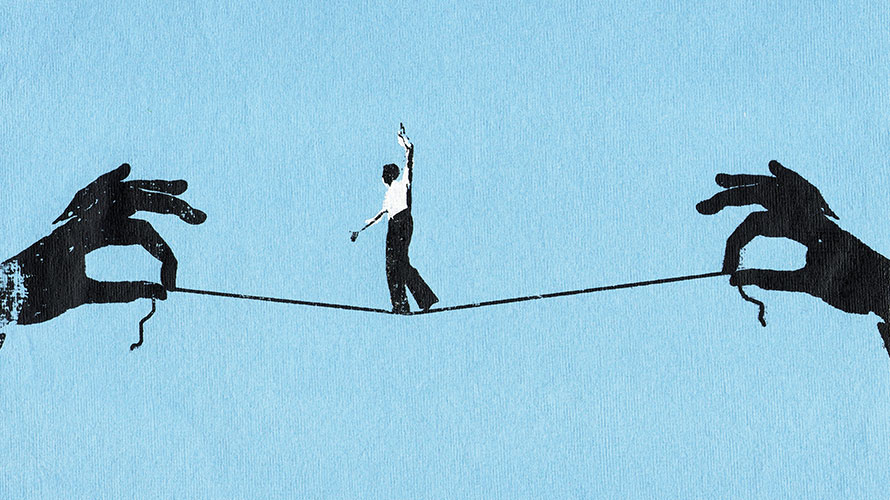
To end, a further consideration of Puritan morals can be found in Hawthorne’s The Scarlet Letter, which also confronts the justice system and proves that theocracy essentially promotes guilt and hypocrisy. A penance embracing Dimmesdale’s loving and positive spirit was shunned by the guilt associated with his sin: “His intellectual gifts, his moral perceptions, his power of experiencing and communicating emotion, were kept in a state of preternatural activity by the prick and anguish of his daily life”(Hawthorne 75,76). Arthur Dimmesdale is proved to be very caring and proficient in the art of healing others. However, his intellect as well as positive emotions were all neglected and replaced by guilt when he committed adultery. This sin not only live a life full of torture, but quite literally killed him. This reality is extremely unfortunate as theocracy evidently separated him from his true love and took away his precious gift; the right to live freely. Would this have occurred in a more forgiving and moral society such as the one in which we are fortunate enough to exist? Dimmesdale would live as an innocent and free man who could use his expertise to make the world a better place. Thus, a society where theocracy is not so imposed definitely allows humans to live to their fullest potential and grants a perfect balance between forgiveness and justice.
In conclusion, morality in America has undoubtedly improved since Puritan times as individualism allowed for evolution and the refinement of societal structure and past experiences have allowed us to develop morals such as trust and loyalty in addition to creating a fair justice system where abuse of power is near impossible. Evolution has improved the world as it is today and almost guarantees that countless ordeals lived in the past do not occur today. However, would it be possible to experience some regression in society where the world in 300 years is far worse than today?
Works Cited
Emerson, Ralph Waldo, “Self-Reliance: Change Your Life for the Better.” Self Reliance, Ralph Waldo Emerson, 5 Nov. 2021, https://emersoncentral.com/texts/essays-first-series/self-reliance/.
Hall, David “Peace, Love and Puritanism.” The New York Times, The New York Times, 24 Nov. 2010, https://www.nytimes.com/2010/11/24/opinion/24hall.html.
Hawthorne, Nathaniel. The Scarlet Letter Access Editions, St. Paul, Minnesota, 1998.
Hutson, Matthew. “Still Puritan After All These Years.” The New York Times, The New York Times, August 4, 2012
Miller, Arthur. The Crucible. Penguin Books, New York, New York, 2003.
I had pretty good structure and presented my arguments in a way that made sense. I think I could have done a better job on the transition between the paragraphs and the explanations of the quotes. If I could write it again, I would come up with more creative transitions and work on writing more thorough explanations.