
Humans are inherently selfish, displaying egoism in most of their actions. Although altruism can occur, it is a rare sight to see. The majority of the time it is for the sake of friends, family, or a loved one. Oftentimes humans are altruistic for the sake of an ulterior motive or are doing it to feel good about themselves. As a result, they are not willing to go to extreme measures for their altruism. Egoism is a basic behavior that is necessary to survive. This is seen throughout literature, in works like The Road where the man and boy cannot help the people trapped in the basement, or in others like The Great Gatsby where they must take steps to preserve their reputation, humans often act to save themselves instead of others.
Egoism is forever present in our society as a tactic for survival.
Protecting yourself is a basic biological behavior present in humans. The idea of egoism being the dominant behavior has been around forever. A prime example is the legalist Han Fei Tzu who believed all humans are originally evil and selfish in their actions. As altruism can often be at the expense of oneself it is an uncomfortable thing to do, as a result, it generally takes strong feelings to incite altruistic behavior. An example of this is Nick Carraway from the Great Gatsby. After discovering Tom’s cheating, he chooses not to tell his dear cousin Daisy. This occurs near the beginning of the book before Nick finds out Daisy is confident in her suspicions of Tom cheating. Nick is even shocked about the lies in their relationship “It’s really his wife that’s keeping them apart. She’s a catholic and they don’t believe in divorce. Daisy was not a catholic, and I was a little shocked at the elaborateness of the lie.” (Fitzgerald 33). Yet even with his shock at Tom’s elaborate lie, Nick is unable to try and set things right. It may be argued that Nick wasn’t selfish in not speaking against Tom or informing Daisy out of fear of Tom. This fear is justified by the fact that Tom breaks Myrtle’s nose not long after Nick’s discovery. However, the practice of selfless concern for others is a part of altruism. If people like Nick were truly altruistic in their actions, rather than just their thoughts, he would have set things right with all three of them. Fear of consequences upon oneself is a strong motivator against altruistic behavior.
War is riddled with cases of egoism as well as the occasional romanticized case of altruism. It is often the case that soldiers want to get back home safe and sound to their loved ones. At the same time, they do not want to abandon their comrades in arms who they have grown close to through suffering together. A want for altruism is seen a lot, even in high-stakes cases like war. A prime example is Tim O’Brien from The Things They Carried wanting to rejoin his group after he leaves due to injury, even though he hates the war and has only suffered because of it. Yet when push comes to shove even the closest of soldiers are not willing to risk it all to save their companions, even if they believe them alive “There were bubbles where Kiowa’s head should’ve been. The left hand was curled open; the fingers were filthy; the wristwatch gave off a green phosphorescent shine as it slipped beneath the thick waters. He would’ve talked about this, and how he grabbed Kiowa by the boot and tried to pull him out. He pulled hard but Kiowa was gone, and then suddenly he felt himself going, too. The shit was in his nose and eyes. There were flares and mortar rounds, and the stink was everywhere-it was inside him, in his lungs – and he could no longer tolerate it. Not here, he thought. Not like this. He released Kiowa’s boot and watched it slide away.” (O’Brien 143). Norman Bowker sees the bubbles believing his friend is still alive and attempts to save him. When he starts to get stuck himself however he is unwilling to keep pushing or to rush for aid. Instead, he lets the stink that ‘was everywhere-it was inside him, in his lungs’ get the better of him and he leaves his friend behind.
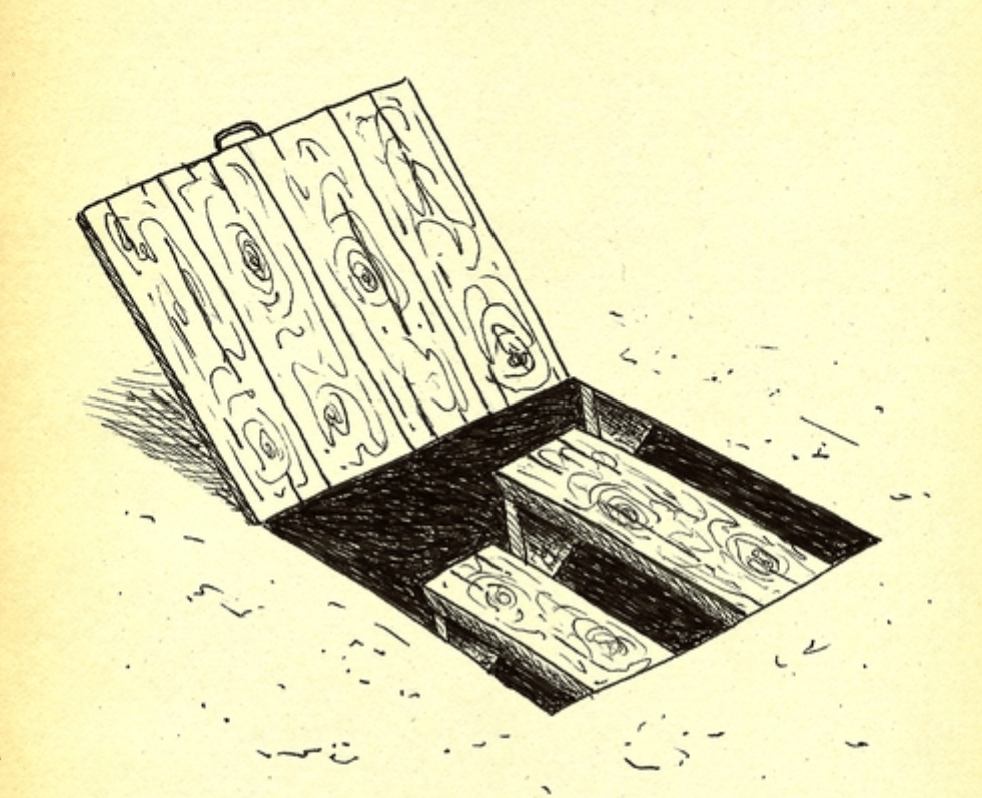
This act of self-preservation by abandoning someone you cannot support occurs similarly in Cormac McCarthy’s The Road. They have little to no food in their post-apocalyptic hellscape of ash and face the constant threat of people who enslave, rape, and cannibalize others. The Man and Boy face a high risk of death for any altruistic behavior they may do. At their discovery of the locked hatch, they think they may have found a place to protect food. Sadly their suspicion is sort of right and they discover the sustenance of cannibals “huddled against the back wall were naked people, male and female, all trying to hide, shielding their faces with their hands. On the mattress lay a man with his legs gone to the hip and the stumps of them blackened and burnt. The smell was hideous.” (McCarthy 110). These unlucky people were in a situation that just as likely could have been the Boy and the Man. They witness the captive’s cruel containment, where they are stuck in a room so dark that they must shield their eyes from the newfound light. Their counterpart has been kept alive with chunks cut off and cauterized. Yet even after witnessing this sight, they do nothing to help, unbeknownst at this point to the threat lurking outside. Instead of even leaving an opportunity for them to escape they put the suffering people back to square one “He stood and got hold of the door and swung it over and let it slam down” (McCarthy 111). They egotistically ignore the suffering of others in order to preserve themselves, not even leaving the opportunity for the captives to rebel against their captors. This is all done with the justification of protecting themselves, and more specifically the boy.
Self-preservation and preservation of one’s own assets is the common thread in cases of egoism. Most people are not okay with others suffering however it is much rarer for them to act against it. This is even the case when they themselves once went through the same hardships as the case of Jay Gatsby from The Great Gatsby. Jay grew up poor himself, being taken under the wing of a more successful and financially secure person. Once Gatsby got to his own level of immense wealth he did not use it to help other less fortunate people. Instead, he used it all to try and get Daisy and manipulate others into helping him. Such was the case when he made Nick’s house just as spectacular as his own “The flowers were unnecessary, for at two o’clock a greenhouse arrived from Gatsby’s, with innumerable receptacles to contain it.” (Fitzgerald 84). Gatsby uses all his money for the sole purpose of impressing Daisy who he is trying to woe, even offering Nick a job to try and bribe him.
Egoism is forever present in our society as a tactic for survival. We are selfish choosing to preserve our own wealth, reputation, and well-being over the benefit of others. This is not due to us lacking humanity or any altruistic drive, it is just a matter of our own deeply ingrained priority of self-preservation.
I feel as though I could have been clearer in my wording. I also think I could have done more with the quotes I included.
Forest, you’ve made this comment a couple of times, but I think this essay shows real growth in the sophistication of your voice, your organization, and the depth to which you develop your ideas, especially compared to the start of the year.