The Small Town Cafe

Abrielle Johnson

Honors American Lit.

Mrs. Waterman

10/6/21

Will used to go to the Small Town coffee shop every morning. It was the perfect name for it since it was a coffee shop in a small town. However, it has been four years since he has entered it. His old girlfriend used to work there so it would be awkward if he had continued to partake in the consumption of the shop’s coffee. It has been a really long time since he has been there though. He stopped in his tracks in front of the shop’s window. The glass was so clean he could see every detail within the other side of it. The walls were made of bricks with vines growing around them to give off a cozy feeling for any customer’s eyes to catch. 

“Surely,” Will thought as he gazed through the open sign that hung on the window he was looking at.

“Surely, she is still not working here.” The man checked his watch and noticed there was still a couple hours before work started. Now there was no excuse to not pursue his dream of entering and drinking the bittersweet coffee once again. 

At his booth, Will picked up the menu and scanned the orders in pure joy. They haven’t changed a bit since he stopped his frequent visits. His joy instantly vanished when he heard heels in the distance making it’s way towards his table. He then jumped when he heard a woman say, 

“Hello, may I take your order?” Slowly, but steadily, Will lowered the menu from his face. His hands were shaking slightly. Once he could get one eye peeking over the top, he noticed it was just an ordinary blonde haired waitress with a monotone expression on her face and blowing bubbles with the gum she had in her mouth. Will cleared his throat,

“Ahem, yes. I’ll just take a cappuccino please.” He answered in relief while handing the girl his menu. 

“Sure.” She said before walking off to the counter. Once Will finally calmed his nerves back down, they instantly went back up when he heard a very familiar voice say his name from the side of the counter. 

“Will! Long time no see.” said his once lover, sitting down in the booth across from him. Will just stared at the woman, amazed. Has she not aged one bit? Her hair was dark and shiny as ever. Her eyes were a deep emerald green that used to pierce right through his very soul, making it impossible to lie to her. She had a little splotch of freckles across her nose that showed in the sunlight, giving a sort of innocence to her appearance. 

“Pretty waitress, huh.” The woman said, picking up a menu of her own and skimming through it. 

“What are you doing here?” Will demanded. 

“Looking for you, actually.” The girl answered, but it didn’t seem like she was paying much attention to Will’s shocked expression,

“No way, they still sell breakfast sandwiches.” She quickly flagged down the waitress and handed her the menu. 

“I’ll take one of those, please.” 

“What do you want?” Will asked the girl, getting a little impatient. She sighed and looked down. 

“I thought you would be excited to see me.” Her eyes averted to the right and she gave a soft smile. 

“Look at that, not a cloud in the sky.” She then turned back to Will and gave him a comforting look, like a mother would give her child if they had fallen off a bike. 

“How’ve you been?” Will looked away from her. He didn’t want her to notice the pain in his eyes, though he’s sure she already did. 

“I…I know there’s something you’re keeping from me, Petra. Something big. That’s why we can’t be together.” Will told her, hesitantly. Petra frowned and shook her head. 

“I’ve never kept anything from you, Will.” She took his hand. He swiftly pulled away and shook his head. 

“Please, just say you hate me and leave.” Tears are now forming in the man’s eyes. “I need you to say you hate me and leave.” Petra’s frown remained plastered on her face as she stared into the man’s very existence. 

“You wish to move on?” She asked him with almost no feeling in her voice. 

“If you won’t share your secret with me, then yes.” Will explained. Petra slammed her hand on the table and stood up, 

“Stop this, I am not hiding anything from you! How many times must we go over this?” She looked at him with emptiness. Will stayed silent. The girl sighed and sat back down. 

“Have you ever stopped to consider, maybe I’m not the one lying to you?” She took his hand once again. 

“Then who is?” Will asked, still not convinced. 

“You.” She answered, “You are lying to yourself.” Will shook his head. What is this woman talking about? She’s clearly gone mad over the years. He squeezed her hand. 

“What would I be lying to myself about exactly?” The two ex lovers stared into each other’s eyes for what felt like a long while. Finally, the girl opened her mouth to speak one last sentence. 

“That I’m still here.” Will shook his head and closed his eyes in confusion. 

“No-” Before he could finish his thought, he felt Petra’s hand slip out of existence. He slowly opened his eyes and his heart sank. There was no one sitting in front of him. 

The waitress finally came over and set Will’s cappuccino down on the table for him. 

“Enjoy.” Before she could walk away, Will tugged lightly at the girl’s sleeve. 

“Um excuse me,” he began, “Do you know when the breakfast sandwich will be ready? My friend-” Before he could finish the waitress interrupted him, 

“You didn’t order a breakfast sandwich sir. Would you like to?” Will sat there for a moment. He then opened his wallet and pulled out a picture of Petra and set it down on the other side of the table, across from himself. 

“Yes please,” He answered the waitress. “We’ll take a sandwich.” 

Posted in Uncategorized | Leave a comment

An Altruistic World

Abrielle Johnson

Mrs. Waterman 

Honors American Lit. 

5/12/2022

“Empathy is the medicine the world needs,”(Judith Orloff). For the longest time one of the biggest questions about humanity is whether or not humans are truly evil. Though human beings have done many wrongful and immoral things throughout history that doesn’t mean they are all truly egoistic on the inside. The belief that humans are naturally altruistic but learn to be egoistic is an unpopular one, but with enough research and evidence there may be signs that humans are not that bad, deep down, after all. 

Before jumping into main examples of altruism in the human race, there needs to be an explanation as to why there is very little of it in the first place. The main thing that prevents honorable acts from people is fear. There are many reasons people act rationally and inhumanly, but the number one root to it all is fearfulness. In Cormac McCarthy’s novel, The Road, it talks a lot about how fear controls people and their actions. In this novel, there is a boy and his father trying to survive in a post apocalyptic era. There is a part in the story where their supplies get stolen and the father resorts to stripping the thief down and leaving him with nothing on the road. The boy gets upset and wants to know why his father has acted so harshly towards someone else just trying to survive, “The man squatted and looked at him. I’m scared, he said. Do you understand? I’m scared,”(McCarthy 259). This is proof that apprehension in others can lead them to do terrible things in order to survive. Another example of this is in Nathanial Hawthorne’s novel, The Scarlet Letter. In this novel there is a minister named Dimmsdale who impregnates a woman who he is not married to. Of course this is a sin at the time of the Puritans so he ends up keeping it a secret that he was the man she had relations with, making her go through the resentment from society alone. He would rather keep his sin a secret than face the consequences the society will have waiting for him. As an act of fear, he refuses to do what is right. One character in the novel who really expresses altruistic traits is the woman he got pregnant. 

One of the most common and wholesome examples of empathy is parents caring for their kids. Of course not all parents are perfect, but everyone has at least had one parent figure take care of them in a time of need. In The Scarlet Letter, Hester is the woman Dimmsdale ends up impregnating. Instead of treating the child like the reason for her downfall, Hester still continues to treat her daughter with love. Even though because of this child, Hester is an outcast from society, she still cares for her and wants the best for her. This idea also leads back to The Road, and how the father did everything he could to keep his son not just alive, but from the horrors that might await him if he gets kidnapped or caught by cults. There was one very chilling line in this novel that should be shared, “Shh. No crying. Do you hear me? You know how to do it. You put it in your mouth and point it up. Do it quick and hard. Do you understand,”(McCarthy 113). This was a quote the man was telling his son while they were being hunted by some bad people. The father would rather have his son kill himself than be caught by them and from the context the readers get from these “bad people” in the book, this thought does pretty much seem necessary for the boy to do rather than suffer the consequences. This also connects to a mother in another novel called, Beloved, by Toni Morrison. In this novel, there is a woman named Sethe and she is a slave in the earlier days of America. She gives birth to a child while a slave named, Beloved. And rather than having this child grow up in the horrible life of slavery, she kills her newly born baby, ”Because the truth was simple… she was squatting in the garden and when she saw them coming and recognized schoolteacher’s hat, she heard wings. Little hummingbirds stuck their needle beaks right through her headcloth into her hair and beat their wings. And if she thought anything, it was No. No. Nono. Nonono. Simple. She just flew. Collected every bit of life she had made, all the parts of her that were precious and fine and beautiful, and carried, pushed, dragged them through the veil, out, away, over there where no one could hurt them. Over there. Outside this place, where they would be safe. And the hummingbird wings beat on,”(Morrison, ch. 17). These are both significant acts of love and altruism in parents. It may seem like a harsh way to treat your children on the outside, but these parents are coming from a place of love and just want what every parent wants, which is the best for their children. It is not only parents doing altruistic acts in this world though. 

After covering family, and how they seem to always look out for each other, what about just people looking out for people in general? This is something that rarely happens since everyone is so afraid of each other and the egoistic shell they’ve all built on themselves. Still, even in this society that is so hooked on the egoistic mask, people still stand up for each other and find ways to be caring for each other. Instead of staying on the topic of books, here are some very real life examples of people showing compassion and risking it all for the safety of others. During 9/11, there were a group of firefighters helping people evacuate one of the buildings after the first tower was hit. There was an old woman amongst the group and she was not in a great situation, “When they came upon Harris, she was worn out and moving very slowly the men agreed. ‘We made it to the fourth floor (with her) and she was so tired, she couldn’t support her own weight anymore, and she fell to the ground and she was telling us to leave her,” Jonas said. “We weren’t gonna leave her,’”(Brian Dakks). Instead of just leaving this woman behind, the men did everything they could, risking their very own lives and safety to save this random woman they had no connection to. Another example of heroism is nurses. During the 1980’s-1990’s, there was an aids/HIV pandemic thought of as “the gay cancer”, since so many gay men contracted it. Around the early 90’s a lesbian nurse, Flick, started working for the dying patients. She said that she saw herself in them and did a very honorable thing for them, “‘We would plan the most elaborately fun funerals. They would know what they wanted to wear in the coffin and they would want doves released in the garden. It was always fabulously gay. Some of these things went terribly wrong. I remember trying to dress a dead body in a rubber S&M suit… it was really difficult,’”(Cydney Yeates). It’s not often that back then people would respect and go out of their way for gay people and Flicks, along with many other nurses and doctors did just those things at the time. Lastly, a more recent example is the Covid pandemic. This trying time in life has really put many things in perspective and also brought the worst, but mostly the best in people to help and engage in keeping the community healthy. “Doctors and nurses—as well as members of less heralded professions, such as custodians, grocery-store clerks, and home health aides—have assumed personal risk of infection and death. And the extraordinarily rapid development of vaccines and medicines to treat COVID-19 has reflected an extensive and generous sharing of knowledge by scientists around the world, as well as the volunteerism of study participants,”(Nicholas A. Christakis). With this pandemic forcing everyone to come together and focus on the solution at hand people have definitely changed a lot of egoistic point of views after the incident. 

Human beings are born altruistic. It is the egoistic ways that are learned for survival. But take all the survival stuff away for a second. If people had to stop constantly fending for their lives, wouldn’t they be a lot more peaceful for the most part? There are many examples to prove people’s good sides from parents all the way to random people helping one another. It is true there is more evil than good in this world, but with enough hope and kindness to one another there is still a day where humans may see a peaceful future if they are all willing to break the shell. 

Works Cited: 

It’s A Sin: LGBT+ nurses remember anger and sadness of HIV/Aids crisis | Metro News

Selflessness Alone Can’t Fight the Pandemic – The Atlantic

https://www.cbsnews.com/news/their-9-11-heroism-saved-them/
Posted in Uncategorized | 3 Comments

Queer Morality in The Great Gatsby

Abrielle Johnson

Mrs. Waterman

Honors American Lit. 

3/1/22

The book, The Great Gatsby plays a very important role in American literature. Because of this, a lot of other works and cultural discussions mention it. The Great Gatsby is a book with many themes to it. There is the famous American Dream, the deeper look into rich people’s lives, capitalism, but two linked ideas that often get overlooked in many discussions are the subtext of homosexuality combined with the theme of expectation versus reality. Many readers “expect” heterosexual characters, and so miss the underlying hints of Nick’s actual sexual leanings, the reality that he prefers men to women.  

Nick’s sexual orientation shows up in Nick’s descriptions of women versus men. When Nick moves to his new house in West Egg, he visits his second cousin who lives nearby. His description of his cousin’s husband compared to who is supposed to be his heterosexual love intrest of the story is very different. He portrays his cousin’s husband as, “…enormous power of that body”(7). And, “…great pack of muscle” (7). Compared to Jordan Baker (his “love interest”), “She was a slender, small breasted girl…like a young cadet” (11). And, “wan, scornful mouth”(80). For the best compliments Nick could give this woman in the entire book, they’re not very flattering compared to the men.

Not only does Fitzgerald, through Nick, describe men more appealingly than woman, but Fitzgerald also inserts a clearly queer-coded scene between Nick and a random man he meets at a party in the City.  In Chapter 2, Nick meets a man named Mr. McKee at a little get together with a couple other rich folks around the city. Nick describes this man as a feminine man and in the ‘artistic game’ (30). But when his wife walks in, he outrightly shows a dislike towards her. “His wife was shrill, languid, and handsome and horrible” (30). Obviously he takes no interest in the wife, but McKee seems to catch his attention for some reason throughout that evening. “Mr. McKee was asleep on a chair with his fists clenched in his lap, like a photograph of a man of action. Taking out my handkerchief I wiped from his cheek the remains of the spot of dried lather that had worried me all the afternoon” (36). In this situation, when most people meet strangers they do not approach them in their most vulnerable states and touch them intimately on the face. But that could just be a rich person thing. Anyways, Nick isn’t much of a drinker and because of that he ends up getting very drunk that night. He ends up following Mr. McKee into an elevator and agrees to meet up with him for “lunch…I was sitting beside his bed and he was sitting up between the sheets, clad in his underwear, with a great portfolio in his hands” (38). From this sentence it’s pretty clear what the word “lunch” was replacing in their drunken elevator conversation. This was a scene in the book that really jump started people’s suspicion of Nick’s sexuality. I mean, he had sex with a man. What more evidence could there be? Well, plenty more actually. Believe it or not, it does not end just yet. 

Even more than his drunken one-night stand with McKee, however, the way Nick describes his relationship with Gatsby is another sure give-away to Fitzgerald’s queer-coded exploration of morality. Whether Gatsby is gay himself or not, there is no denying that  Nick and Gatsby take a special interest in each other. When the two first meet, it is at a party Gatsby throws. Being his neighbor, Nick gets an invitation and decides to attend. After searching for a while, he comes across a man whom he bonds with for serving in the war together a while back. What he didn’t know was that he was about to find out that the man he is talking to is Gatsby. And Nick definitely has some things to say about this man’s smile. “He smiled understandingly-much more than understandingly. It was one of those rare smiles with a quality of eternal reassurance in it, that you may come across four or five times in life. It faced–or seemed to face–the whole eternal world for an instant, and then concentrated on you with an irresistible prejudice in your favor. It understood you just as far as you wanted to be understood, believed in you as you would like to believe in yourself, and assured you that it had precisely the impression of you that, at your best, you hoped to convey” (48). If this isn’t a paragraph dedicated to a love interest then honestly what is? Fast forwarding to near the end of the novel now, Gatsby has failed at winning over the woman of his dreams and so Nick gives him a visit the next day before work. This visit lasts a little longer than he intended, not because of Gatsby, but because he chooses to miss the first half of his 9-5 to comfort his “friend”. “I didn’t want to go to the city. I wasn’t worth a decent stroke of work, but it was more than that-I didn’t want to leave Gatsby. I missed the train” (153). He could tell this heartbreak really upset Gatsby and tries his best to console him. But Nick could also tell that there was still hope in Gatsby’s voice. Not wanting to ruin it for Gatsby, Nick decides to back off a bit from the matter. “He was clutching at some last hope and I couldn’t bare to shake him free” (148). Nick cares so much about Gatsby that he doesn’t want to see his hopes crushed, even if he knows that what he longs for is impossible. A lot like the way Nick may view Gatsby as himself actually. 

One theme in the famous novel The Great Gatsby that should be talked about more is expectation versus reality. It is an expectation that Nick be a straight man with absolute zero interest in Gatsby and all his attention on his heterosexual love interest. Is that really the reality though? Sure, Nick and Gatsby aren’t going to ride off into the sunset together, but to say that the subtext isn’t there is just ignorant.

Furthermore, Nick’s implied sexuality plays a part in his perceived morality. This book was written in the 1920’s so it’s very possible that Fitzgerald was using queerness to convey a character’s morality. Scholar Agnes P Collins takes a deep dive into Fitzgerald as a person himself and states, “Homosexuality is unequivocally synonymous with moral irresponsibility because it is Fitzgerald’s private emblem of the moral carelessness he was trying to repudiate in himself” (Agnes P Collins). This all could suggest that Nick’s queerness is a device used to convey his moral character, which throughout the book is hypocritical and very judgemental–but is still better than literally any other character. Though these depictions of homosexuality are harmful, it may have been the way Fitzgerald intended his characters to be written. That is why it is important to educate people about the clearly queer coded subtext this book has sprinkled throughout its pages. If the matter goes ignored, if people let Fitzgerald make his point that queerness may somehow determine a person’s morality, then it could continue to feed into some hurtful stereotypes. Fitzgerald may have been right about a couple things in his novel, but one thing that should be criticized is how being queer, or any other type of minority, does not have anything to do with that person’s moral beliefs. 

Posted in Uncategorized | Leave a comment

Pepper Dog

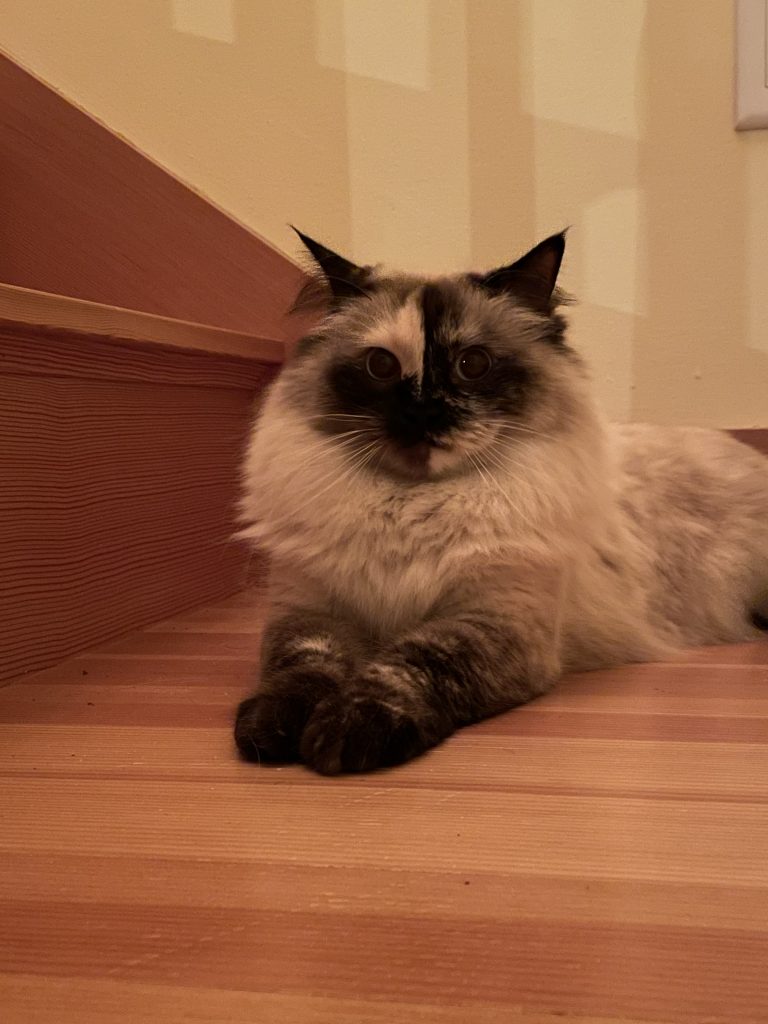
Dash! Pivot, zoom! Skid and pounce! All around the house she goes. Through the table legs like tree trunks. Then like a cougar she snaps to attention as she hears a slight crinkle. Her pupils grow wide like saucers or an eclipse. You let loose the toy through the air, it’s almost at the ground, and then… she gives a little shake and boom! She’s off to the races, and suddenly she’s there. Whack, whack, whack, she conquers her enemy, and now she has it in the clutches of her jaws. But wait, instead of vanquishing her foe, she darts off with it bringing it back to none other than you. She lets out a muffled mew and drops it at your feet, I guess it’s time for the next throw. 

 But where are these howls coming from, you’ve looked all around, but have you looked up?

It’s later in the day, and you’ve started work, but then you hear a shrieking meow with nobody in sight. You look around but see not a soul. There it is again, and again! Out of the temporary silence comes a long and loud mrowww. But where are these howls coming from, you’ve looked all around, but have you looked up? There upon the stair is your feline friend, feeling left out, only wanting to help. You climb up the stairs to see her, but she trots off under a bed. Does she want to be petted, or is this a game of tag? Either way, she has escaped the scene, so you do not pursue. You start work on an essay, but then you hear it again. As expected the little lion, is back on the step. This time you aren’t going to let her win the game, scrambling up the stairs to catch her, she sprints down instead of up, right beside your leg, barely escaping. You follow her down to a rug, her favorite. However, instead of running away, she flops over sideways right in front of you and starts rolling around. Turns out she wanted a pat. 

She is snuggled up beside, head against you, purring and in bliss. Then there’s a light tap of nails on the tile, she looks up, it’s her sister. She comes up and is off like a rocket. She has had her rest. Now it’s time to play games with Cocoa, tag, bathing, wrestling, generally in that order. Leaving you to do your work, but do not worry you are not forgotten. She will surely let your family know with her screams when you are gone for the day.

Posted in Uncategorized | 2 Comments

Dimmsdale is the Worst Guy Ever Made

In The Scarlet Letter by Natheniel Hawthorne, there is a character that is revered by his culture to an extent that people can recognize none of his true nature. This is the Reverend Arthur Dimmsdale. Dimmsdale is a holy man that is praised widely for his hard work, but at the end of the day he is actually the most sinful person in the whole town. Though he is considered one of the greatest men in his puritan society, he is actually gaining the system to cover up his massive sin, and is the main antagonist of The Scarlet Letter 

In puritan times, adultery was considered much more serious then it is today. Because of the very strict religious influence, going against the sixth commandment in the bible. “Thou shall not commit adultery”,  was one of the most heinous things a person could do. Hester Prynne commits this crime, and is reviled by the entire town. She stands on scaffolding for several hours and is shamed for her actions in public. Adultery is not the crime of an individual, though. Hester’s partner, Dimmsdale, is not suspected for this crime, because he is respected in his society as a clergyman, and is absolved of any wrongdoing in the eyes of the townspeople. So Dimmsdale, out of fear, takes advantage of this position and does not confess. From an outside perspective, this is just not cool. But some people would argue against this, saying something like “He’s a victim of his time!” due to the fact that his position put a lot of pressure on him in a religion dominated society, and if the puritan people were to hear of his sin, they would lose faith in their faith and therefore the structure of the culture as well. But through the bible, we know that Dimmesdale had a duty to confess to his sin. “Therefore, confess your sins to one another and pray for one another, that you may be healed. The prayer of a righteous person has great power as it is working.” (James 5:16). So not only is the act of not confessing morally reprehensible from an outside perspective, it is against Dimmsdale’s duty as a holy man. There is no excuse, either from a readers perspective or from the puritan’s perspective, that Dimmsdale acts this way.

Dimmsdale may have been awful in life, but ironically it is his death that ends up having the most effect on the narrative. This is the moment where Dimmesdale reveals all, his sins and his connection to Hester and Pearl. But Dimmesdale does not really have to share the pain and suffering that his inaction has caused for his lover and child, because he dies immediately after. Now most deaths can’t be called selfish, purposeful, or ignorant, because death is famously non negotiable. But in this instance, Dimmesdale knew he was about to die, as he says so himself here: “By bringing me hither, to die this death of triumphant ignominy before the people! Had either of these agonies been wanting, I had been lost for ever! Praised be his name! His will be done! Farewell!” (Hawthorne 235). So Dimmsdale knew he was going to die once he confessed in this way, because of some divine intuition. Some might see this as a selfless act, to confess his sins while having such high expectations placed upon himself by the society, but it’s really not selfless in any sense to leave behind a wife and child, especially after you have talked of escaping your oppressive society with them. Of course, we as readers know Pearl and Hester turned out fine, but Dimmesdale had no way to know this. He also escapes all scrutiny through death. Even after his confession, he is not reviled in the way Hester was, as shown by this description of the townspeople’s thoughts about his death: “Some affirmed that the Reverend Mr. Dimmesdale, on the very day when Hester Prynne first wore her ignominous badge, had begun a course of penance,-which he afterwards, in so many futile methods, followed out,-by inflicting a hideous torture on himself. Others contended that the stigma had not been produced until a long time subsequent, when old Roger Chillingworth, being a potent necromancer, had caused it to appear, through the agency of magic and poisonous drugs. Others, again,-and those best able to appreciate the minister’s peculiar sensibility, and the wonderful operation of his spirit upon the body,-whispered their belief, that the awful symbol was the effect of the ever active tooth of remorse, gnawing from the inmost heart outwardly, and at last manifesting Heaven’s dreadful judgment.” (Hawthorne 237). Notice that none of these ideas about Dimmesdale even directly condemn him. The first portrays Dimmesdale as someone who underwent torture as an effect of Hester Prynne’s sin. The second places the blame entirely on Roger Chillingworth. The last, while mostly accurate, still characterizes Dimmesdale as suffering from a burden of guilt rather than attacking him for the actual sin. So Dimmsdale manages to completely escape the scrutiny that Hester and Pearl have experienced, while also abandoning them completely to the remorseless puritan townspeople. These are not exactly the actions of a remorseful man.

. Notice that none of these ideas about Dimmesdale even directly condemn him. The first portrays Dimmesdale as someone who underwent torture as an effect of Hester Prynne’s sin. The second places the blame entirely on Roger Chillingworth. The last, while mostly accurate, still characterizes Dimmesdale as suffering from a burden of guilt rather than attacking him for the actual sin.

Guy who is running out of aliases for these pull quotes

So in summary, Dimmsdale uses his position of power to escape guilt, leaving Hester and Pearl to fend for themselves, while also ignoring his duty as a man of faith in puritan society. In his last moments, he commits a selfish action and manages to avoid all condemnation from the townspeople. Though he is considered one of the greatest men in his puritan society, he is actually gaining the system to cover up his massive sin, and is the main antagonist of The Scarlet Letter.

The Dimmadome | Fairly Odd Parents Wiki | Fandom
Posted in Uncategorized | 2 Comments

The Morning 

I woke earlier than I ever had, on a mattress wet from last night’s downpour. I saw the leak but ignored it as I struggled into my sweatpants; I was worried about moving too slow, and losing the faith of my punctual captain. I trudged through the mud in sneakers, led by the dimming glow of an almost dead flashlight. I swear every other step, getting quieter and quieter the closer I get to the cabin. The only thing that scares me more than being late that morning is waking up my mom. For this reason, I smother my dog’s yelps with my hands as quickly as possible and catch the swinging door with my foot as I enter the tiny room that is my sister’s bedroom, the living room, and the kitchen all in one. 

Once I start the coffee, all I can do is pray as the grrrrrrrrrrrrrr of the machine that seems to shake the whole house goes on for a few seconds. I stare the machine down for the minutes that follow as it continues to brew. At this time of day, I need what it gives me more than I need all my fingers attached to my hand. The fact that I make it the fifty feet from the camper to the cabin without it is a daily miracle. When the beep of completion finally comes, I walk the hardest five feet I’ve ever walked from the chair to the pot. Pouring the brown liquid into my cup is the greatest victory of my day. 

After I have eaten my breakfast of hot dogs and almonds, I head out to the garage and am greeted by what smells like a million garbage dumps that have festered for years. This originates from the many days in a row that I have forgotten to wash my fishing clothes–so many days now that the smell has attached itself to the garage like a leech. I prepare my bike, a vehicle barely held together by duct tape and hope. The seat shakes like it’s not even attached, and the brakes feel like they’re not even there. I tighten both of these things, something that has become a daily routine. I’m waiting for the day when I take it out of the garage and it collapses entirely, an impossible event that feels inevitable. Despite this struggle, when I finally get moving there is no bike I’d rather be on: it moves as fast as my captain’s four-wheeler without the girth of its massive wheels. 
It’s almost dark as I leave, with only the sun’s orange warning light lining the hills in the distance. I move down the dirt road cautiously, not able to see any obstacles that may be in my way. Every morning I roll the dice on this part of my journey, hoping the road has stayed clear. As I move onto the pavement, I pick up my pace so as to not waste a second. When I turn east, onto the final straightaway that leads to the dock, my eyes make contact with the sun as it just barely peeks over the hills, as if it was waiting for me to come. It illuminates the clouds, the road ahead, and the ocean all at once, giving me the first clear vision of the day. Speeding down the open, empty road with this image ahead is my favorite part of the day. 

my eyes make contact with the sun as it just barely peeks over the hills, as if it was waiting for me to come.

Cotton

I arrive on time, to an empty dock. This is not normal, but not strange. Ten minutes later, my captain shows up. This late arrival is strange too, but not a problem. I prepare myself for an incredibly average day of work. He walks slowly towards me. He has no bag on his back and no boots on his feet. As he gets closer I can see he is struggling with each step. When he reaches me, he gives me the news, though I can already see it. He hurt himself and tried to work through it, and now he can barely work at all. We will take a break, but it will not help enough. I will have to compensate, and nothing from here on will be easy. We both go home, preparing for the uncertainty ahead. But one thing is certain, and it’s all I can think about: The summer is over.

Learn About The Evolution of a Maine Symbol | The Lobster Boat
Posted in Uncategorized | 2 Comments

Growing up

In The Road, the character of the boy is initially shown as an innocent child. He doesn’t fully grasp all of what his father does, and he struggles to comprehend the reality of the post apocalyptic world. However, over the course of the novel he is shown as having great growth. The evolution of the boy’s maturity in The Road is shown through his reevaluation of his priorities, and his quicker demonstration of understanding- showing a parallel towards the hopelessness of the world’s situation as a whole.

First, the boy shows growth as many children do. He slowly begins to understand the reality of his situation. This can be seen in the transformation of his language. He slowly moves from questions for the man to answer to asking for affirmation on what he knows to be true. For example, you can see the boy move from “are they going to kill us, papa?” to “they’re going to kill us, won’t they papa?” The significance of this transformation is that it shows a certainty arising in the boy’s perception of what is happening around him. He moves from questioning the outcome of his life, to speaking it with utter certainty.

The transformation shown by the boy speaks to hopelessness in the novel as a whole.

Roberto Fuerte

The transformation shown by the boy speaks to hopelessness in the novel as a whole. Throughout the book, the boy’s childlike perception of reality has sort of softened the brutality shown in the novel. He offers small glimpses into the good of humanity, protecting a dog from his father, and seeing a little boy in need of help in the barren wasteland of a city. However, if the boy adapts fully and becomes any further like his father, he will lose this innocence. This is a reflection of the hopelessness of humanity moving forward in The Road. If even a child cannot maintain a sense of hope or innocence, how could humanity as we know it continue to live?

The Road shows many horrifying things about post apocalyptic society. Following the man and the boy, the reader gets to see them develop under this miserable way of life. This includes watching the boy adapt to his surroundings, losing his childhood innocence and speaking to the doomed fate of humanity as a whole.

Jupiter Music - FLUTES
Posted in Uncategorized | 1 Comment

Was Prince Right?


Prince once said: “No child is bad from the beginning, they just imitate their atmosphere.” The same can be said for Pearl, one of the central characters, was not bad from the beginning, she just saw the world she was living in and adapted to the atmosphere of the world. In the book, The Scarlet Letter, by Nathanial Hawthorne, Pearl is the daughter of Hester, who had committed one of the worst sins: adultery and was branded with the letter A which is called a scarlet letter. She is very embarrassed by the letter, as anyone would be. Out of the sin of adultery, she had Pearl who many people thought to be evil, including Hester sometimes, however seeing the whole picture, she is a source of joy for Hester. Pearl is a source of joy towards Hester and is sent from the heavens because she saved her mom from the temptation to party in the woods, Pearl attacked the kids who were throwing mud at her and her mother and making fun of her, and finally, God gave Pearl to Hester for a reason. 

Pearl was definitely a source of joy for Hester, even though people think she is evil. After talking to the Governor, Chillingworth, and Dimmesdale about who has guardianship of Pearl, Hester and Pearl were about to leave, but the Mistress in the house had come up to her. She knew of Hester’s crime, and so did the whole town and she invited her to the party, but Hester said no. She was worried if she went, she would lose Pearl forever and after fighting for Pearl the way she did, that is the last thing she wants in the world. Hester’s explanation to not going, according to the narrator: “Had they taken her from me, I would willingly have gone with thee into the forest, and signed my name in the Black Man’s book”(Hawthorne 105). What she means by this is if they had taken Pearl away from Hester, she would have gone without any hesitation. She exaggerated a little bit what she would do, but she was serious about the fact that she would have taken the invite. Pearl was the one who saved her because Hester is so loyal to Pearl, she just couldn’t get herself to go, which means she truly deserved to keep Pearl. Pearl can also get pretty violent also, which is why people think she is evil. 

Pearl would, for the most part, act mischievous to other people and in front of other people. When Pearl and Hester were walking to have the meeting with the governor about guardianship, these children had recognized them and started to cause havoc. They started by mocking Hester about her scarlet letter on her bosom, which makes Pearl extremely mad. After she had gotten over it, they decided they wanted to start throwing mud at them, and that was crossing the line for Pearl as she, according to the narrator: “was a dauntless child, after frowning, stomping her foot, shaking her little hands with a variety of threatening gestures, made a rush at the knot of her enemies and out them all to fight”(Hawthorne 101). She had got so mad, she just couldn’t control herself, which wasn’t a rare occasion, and just chased them. Those kids weren’t that different from her as they always do these types of things, and never get in any trouble, but it is Hester and Pearl, the two jokes of the town. Hester is used to this type of thing happening because it has been happening every time she goes in public for about a couple years. Pearl is obviously much younger, around three years old and has some pretty bad behavioral problems, including anger problems which is why she acted the way he did. However, Pearl also has a very enjoyable and delightful side to her. 

“was a dauntless child, after frowning, stomping her foot, shaking her little hands with a variety of threatening gestures, made a rush at the knot of her enemies and out them all to fight”(Hawthorne 101).

Hester describes Pearl as her happiness several times even though no one else see’s that side of her.  Hester can’t go a day without her and vice versa. Although Hester deeply enjoys when Pearl is asleep, she deeply enjoys her presence. Hester thinks of Pearl as a gift from God, but other people think of her as Hester’s punishment; they think of her as only being born to make Hester’s life a living hell, but it is quite the opposite,as seen in the moment when: “God gave me the child,’ cried she. ‘He gave her, in requital of all things else, which ye had taken from me. She is my happiness”(Hawthorne 101). No one understood how much Hester loved Pearl as she would always get her the most expensive items like clothing which Hester would make because she was an embroiderer, and she was the town’s best embroiderer. Hester deeply loved her child, even though she was supposed to be the punishment for her sin. Pearl has a lot of good in her, especially more than anyone knows of, probably including Hester also. An example of that is when Pearl snuggled up with Dimmesdale, her real father, which was peculiar because that side of her wasn’t shown often.  The Scarlet Letter, by Nathanial Hawthorne, has many examples of how brutal the Puritans could be, the big one being the scarlet letter branded on Hesters chest. Hester knew she had made a big mistake, especially when she was publicly shamed for it, which, according to the narrator, made the rest of her life extremely miserable, as you can infer from the way she lives and carries herself. Pearl was a blessing to Hester because she was a main source of happiness for her, always helping her in times of need, and denying events that seem hard to let go. She was undoubtedly in love with her child, and these events explained were the main reasons on why she was a blessing to Hester.  Just because a child can behave rudely, doesn’t mean her heart is full of mold because that is the way of Pearl.

Posted in Uncategorized | 2 Comments

Maggies Tragic Downfall

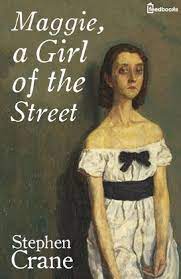
A tragic hero can be defined as  a character in a dramatic tragedy who has virtuous and sympathetic traits but ultimately meets with suffering or defeat. A character who definitely fits this is the protagonist Maggie from the book Maggie:A Girl of the Streets by Stephen Crane because of how harsh her life was growing up with her brother Jimmy. She grew up in an abusive household and it really did a toll on her and her brother. Maggie did a great deal of suffering and that started to happen when she met Pete. Maggie was very innocent before meeting Pete, but once they started talking, Pete introduced her to the crappy and cheap aspects of life and that ruined her. Maggie led herself to her own tragic downfall because of her dependence and attention seeking on other people like Pete, Maggie meeting Pete, and doing whatever it took to get herself out of the situation she was in at home. 

“‘Give us a kiss for takin’ yeh teh deh show, will yer?’” (Crane 35)

Maggie was brought up in a very poor and abusive household and it did a toll on her mentally. She was abused, but her brother was way worse off than her and she would have to watch her brother being abused mentally and physically and it was bad like when the mother hurt him by, “Grasping the urchin by the neck and shoulder she shook him until he rattled. She dragged him to the sink…soaking a rag in water, began to scrub his lacerated face with it” (Crane 8). This is when Jimmy was being abused for defying his mothers orders and Maggie felt so bad for him, even though she was still a little girl. That does a lot to a little girl, and created dependency issues on top of so many other mental issues like self blame and relying on the wrong people for a positive outcome. She relied on Pete so much and he knew that, but he didn’t really care and manipulated to a point where Pete had her wrapped around his thumb. Since Maggie had been through a rough time growing up, Pete knew it would be easy to take advantage of an innocent girl who had never even had her first kiss before, and that was morally wrong on his part. Even though Maggie had been through a lot, she still should know what to look for in a person, especially a person she was going to love. Although, that was not her only reason for downfall.

Maggie meeting Pete was probably the biggest reason for her tragic downfall. Pete was a scummy individual who was no good for Maggie. Maggie wanted out of her home life so badly and once she met Pete and thought he was successful and high class, she became attached to him. He became the one and only thing Maggie would worry about all the time and Crane describes it by stating,  “Maggie contemplated Pete’s man-subduing eyes and noted that wealth and prosperity was indicated by his clothes. She imagined a future, rose tinted, because of its distance from all that she previously had experienced” (Crane 58). She was so obsessed with him because of her dependency issues, Pete became very good at manipulating her, and because of how desperate she was to get out of her current situation. Pete was probably the worst thing for her at the time and since she only focused on him, she ended up getting herself kicked out of the house because of Pete. Also, she cut her family and friends out of her life for Pete, and quit her job. She did all this for Pete even though Pete was just manipulating her for nothing. When they split up, she was devastated because was depressed, lonely, and had nowhere to live. Even though Pete manipulated her into everything, she still did them and listened to him leading herself to her own downfall, but sadly, there are other reasons too. 

The last reason leading Maggie to a tragic downfall was doing whatever it took to get herself out of her home situation. She did everything she could to get out of the situation she was in, but it was all in the bad ways. She relied way too much on thinking Pete would save her from everything snf did everything for him. She even let him take her virginity because she was playing the end game and that was getting herself out of her current situation. He even manipulated her into a first kiss, but she let him as Crane showed it as, “‘Give us a kiss for takin’ yeh teh deh show, will yer?’” (Crane 35). Maggie should have had way more confidence and dependability in herself, but since she didn’t, she allowed Pete to walk in and basically own her. Even with all she had gone through, she should have had more reliance in herself and waited for the right opportunity to leave her home, not attack a slight possibility. 

Even though Maggie was brought up in an abusive and toxic household, so are other people who turn out way different than her, especially in her time period. Maggie should not have done what she did with Pete and poured herself into him and he basically threw it in the trash. After Maggie and Pete split up, Maggie still threw herself at her family members for food, and other men she was throwing herself at. Maggie living the life of prostitution brought her down so many levels mentally and eventually, led to her tragic downfall and death.

Posted in Uncategorized | 1 Comment

I have a Dream too…

My dream for the world we live in today is to be able to go to college for no cost instead of having to pay upwards of over sixty thousand dollars. Education is a basic right to humans and I don’t understand the reason why it has to be so expensive to a point where, at four year colleges, fifty six percent of students drop out because they can no longer afford, according to ArmStrong Advisory. Too many colleges are far too expensive for someone who gets into the school and sadly, potential students can’t even get the education they want and truly deserve if they get into the school. Just to get into college should be enough but after getting in, some colleges expect you to be able to pay tens of thousands of dollars to get an education that should be free. My dream would be to get into my dream college and be able to go because I got in fair and square. 

College gets you ready to live in the real world and gets you ready for real life situations and it is just so crucial to be able to learn how to take on life.

Zero cost for college would also benefit many students who have to send the rest of their lives paying off their student debt. That money should be going towards people’s families and other important things, not still paying back college which is also loads of money each year.

Education should also be free also because our world would be a much more intelligent place if everyone could be able to get a college education because with more learning, you will be much more wise and diligent. Also college exposes you to another social world and missing out on that could affect your future socially because it is hard to get most jobs without being socially available. College education  makes a huge change in your life and without it, it makes it that much harder to become successful because everything you go through in life with working is vitally tied to a college education. College gets you ready to live in the real world and gets you ready for real life situations and it is just so crucial to be able to learn how to take on life. Also students could put all of their time into school because a lot of students also have to work a part time job to be able to be going to college and if they didn’t have to do that, they could be using that time differently for school. Another reason free college would be more beneficial is because wealthier people who are already going to college, could shift their focus to the public sector and not just the private sector of college. Research shows that the private and public economic benefit of free community college tuition would outweigh the cost. Some people don’t have to worry about college because they are rich as virgin golden flakes. But some people are depending on a college education to get out of their situation and also maybe help their family one day also. Free college would make the world a better place and assure that we leave this world better than we found it.

Posted in Uncategorized | 1 Comment