The Winter Is Coming

Game of Thrones news, gossip, videos, photos and more

Snow gives a lot of opportunities to avoid boredom and in fact, it also gives pleasure to the ones that want to be connected with it. Skiing and snowboarding are something that each spring disconnects but return at the end of fall. Both of us have experienced that; the emptiness felt when there is no possible way to do it, but a big mental demand that comes with it.

The feeling that comes, when skiing/snowboarding downhill, is thrilling and gives goosebumps to the body. It is almost as if we are flying in the air and nothing can hold us back; nothing can stop us. The invisibility, and the moments we finally feel free as if nature just carried us to a place, where we find peace and connection to something greater; a connection to Natureforce (it’s a magical place where we get these powers that make us feel free and in peace with nature, it is where we become one with nature). But once on the ground, the feeling of the small breeze that was felt before, the calmness in the body, and then nothing can stop us disappears. The emptiness fills us up. Skiing is even more amazing when there is a buddy but it feels awful when the friend abandons the buddy without a good reason.

Waking up to a beautiful cold morning with a bright reflection of the sun coming from the white mountain is good. Jero and his friends woke up in a small hotel room with three beds. And after doing their morning chores, they started heading towards breakfast. At the same time Jakub (an old, really close skiing buddy, that Jero happened to lose contact with) and his girlfriend, were leaving. One group entered the first elevator and the other came out of the other one. They missed each other, but little did they know they would meet again.

Having come back to their room and already changed for later skiing, Jero’s friends and himself started going to the ski resort. Crowds of people, wearing snow pants and jackets appeared in front of them so they decided to put on their boots and later the skies. “Let’s go to the lift,” somebody said it, and as it suggested they went to it. When going up they noticed a snowpark with ramps, which they wanted to hit. Jero, with his excitement, couldn’t stop thinking about the jump he was about to do suddenly felt a light uplift in his feet. Confused, looked around and realized, “Oh shoot… we are already here, ight I’m going to take off the skis from the ring on the lift and we can lift the bar.” Suddenly they all skied away from the exit of the lift and put on their gloves and poles on their hands. One thing about the snow park they haven’t realized is that Jakub was there.

Entering the snow park wasn’t hard. It had a big arch with a title: ”Shrek’s Snowpark”, harder is choosing which path is better and more fun; there were two paths one “harder” with higher jumps and more objects, and the other one with fewer of them. Jero took the longer one, which was also easier. The first ramp wasn’t the tallest on the trail but had a pipe coming off it. Jero didn’t struggle with it. But the next one had a big drop with a ramp at the end which could shoot him really high up. Going down, seeming audacious was fun but then he started to overthink. “Freak.. freak… freak… ” started coming really quietly out of his mouth. One second on the ground, another in the air, actually flying. Jero in the air looked to his left which had a similar drop and ramp. He immediately recognized a guy in a dark green helmet and jacket, black pants, and white as snow boots. The other guy did the same thing.

Both skiers landed and stopped on the side of the path not to ruin the jumps for the next victims.

“Jakub, is that you?” the question was asked by Jero. “How have you been? I thought you would never want to ski with me again, after all, we haven’t spoken to each other in seven years. I missed you.”

“OMG Jero, I’m good, how have you been? I have missed you too. I’m so sorry we haven’t been in contact. It was hard for me because of the new phone and me moving away from Mexico but I never forgot about you,” answered Jakub and looked at him.

“Bro… you could have sent something or at least tried to get in contact. All these years I have been thinking my best friends abandoned me and I felt betrayed,” said Jero. The silence was in the air for a while. Jakub not knowing what to say, a sudden realization of what he had done wrong hit him.

“I’m so sorry I think we need to catch up more over a coffee or something. Where are you staying?” Jakub asked. Jero agreed and both acknowledged the fact that they are staying in the same place, they set up a meeting. Jakub said ”See you soon” and took off with an amazing jump from the next ramp in the direction of the sun. His shadow lay on Jero covering him from sunlight. They met again later in the hotel.

Snow gives a lot of opportunities to avoid boredom and in fact, it also gives pleasure to the ones that want to be connected with it

After the spontaneous meeting on the mountain, they both realized they had hurt each other. They learned that instead of trying to get in contact they pushed each other apart. Jakub realized that he should have never left without a reason and Jero acknowledged the reason he left. 

Posted in Uncategorized | 1 Comment

Experience Makes The Man

The novel The Road by Cormac McCarthy shows a post-apocalyptic world, in which a father and a boy, with no names given by the author, try to survive. The father through most of the book has been fully responsible for the boy and has taken care of him. Whereas the boy has been presented as innocent, wondering about the world, and incapable of taking care of himself. Yet the boy, due to cannibalism in the novel, lost hope, and throwing away the flute showed his mental growth. He is no longer a little innocent child.

Cannibalism as a theme and people in the novel shaped the boy. The boy couldn’t talk to the father after the first confrontation with the cannibal due to the father killing the man, when he was threatening his son, spraying the man’s blood on the boy’s face: “Talk to me, he said, but he would not” (McCarthy 68). This represents the boy’s reaction to murder from his father but also what sometimes must be done in the post-apocalyptic world. The Son must learn to survive, but his reaction might not be good as it’s a sign of losing innocence. Later, when they came back to the body they see it has been boiled and eaten, which showed the boy what people are willing to do in this world. Not only that but we also notice similar reactions yet different later in the novel. When the family is searching the farm and goes to the barn. In the barn, they find a bunch of living, naked people in cages yelling for help, even a man who had his legs eaten off. The man almost gets caught by the owners of the farm: “He fell to the ground and pulled the boy to him. Shh, he said. Shh. Are they going to kill us? Papa?” (McCarthy 112). In this scene, the boy is terrified and threatened of being caught and killed by the cannibals. Looking for an explanation of what to do from his father and possibly risking exposing them by talking. This is also a learning moment for the boy to be quiet when at risk. It was also one of the scenes of lost hope.

The father and the son have lost hope when starving for multiple days and until found shelter, they were confident they were going to die: “I know you thought we were going to die. Yeah” (McCarthy 158). The boy loses all hope for survival and even admitting about it to his father, yet when they found shelter with ‘everything’ they also found hope. The boy learned not to give up and gain experience of survival through search. He again lost a part of his innocence, which he had at the beginning of the book. He symbolizes that literally one page later.

He is no longer a little innocent child.

The father made his son a flute, yet he throws away: ”What happened to your flute? I threw it away. You threw ut away? Yes” (McCarthy 159). This can be interpreted in many ways. A big amount of people see it as him showing responsibility and the ability to survive without his father. A flute paid an important role in the novel, due to its representation of innocence and reliance on the father but due to many ‘trials’ that have been put in front of the boy, he dispenses it.

The boy has a lot of learning moments in the novel, which at the end allow him to dispense the flute also showing a loss of innocence in the process. Cannibalism helped him understand the reasons why people behave in the world he is living. Finding shelter gave him a reason to have hope, nevertheless, the circumstances and symbolic dispense of the flute show maturity in the boy and loss of reliance on the father.

Posted in Uncategorized | 1 Comment

Kicia, Kitten, and Jerry

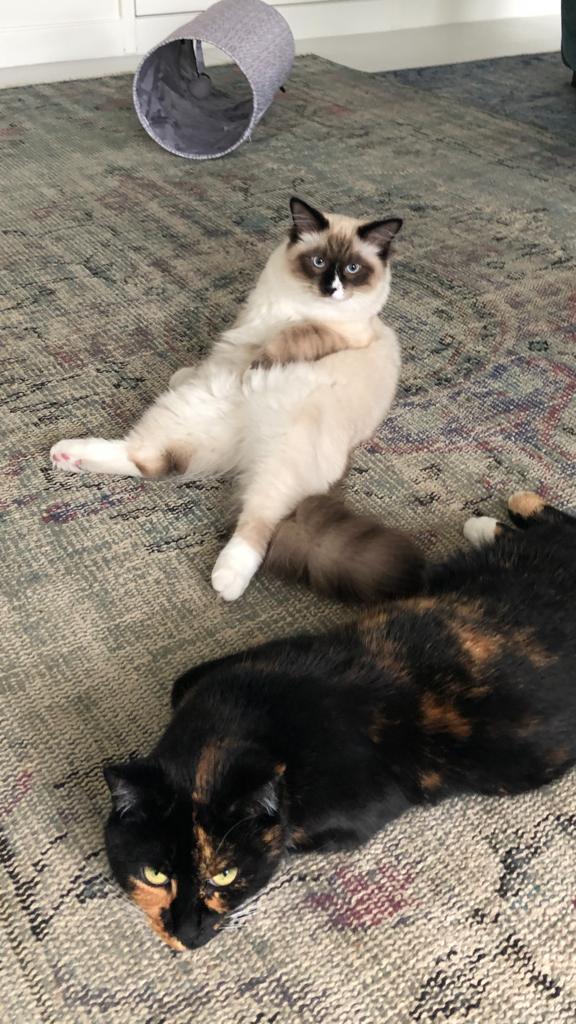
When it comes to my cat, my family may say she is wild but at the same time, we do love her.

When it comes to pets in my house, I have two cats; Kicia and Puszek. I used to have a dog, but once we moved into an apartment, we had to get rid of it, Toffee, the dog, is not dead, he is just happy in another house. One cat has been with me since I was nine years old. She has had many adventures alone because of us living in a house with a garden. Kicia would constantly go out and rarely enter our houses but if one of my family members was outside, she would accompany us. Once we moved into the apartment, we got another cat, Puszek, One day when I was sick and didn’t go to school, Kicia gave me an adventure. Details may be foggy because it happened six years ago.

It was a very warm morning. My mom woke me up at 10 A.M. and said: “I’m going to the mall, so I’m going to leave you for a bit” I nodded and told her okay. After I got myself ready for the day I walked down the stairs and opened a balcony because I saw Kicia lying on the ground in front of the terrace door. As every day Kicia would greet me by hugging my feet (just going around them and petting her head against my legs). I decided to be downstairs until my mom came, so I turned on the TV and my PlayStation. I was playing my game until I heard a loud meow, but it wasn’t anything like I knew nor heard before. It was a new one. I turned around and look out of the terrace window and saw a very small kitten, almost a newborn that was abandoned. I could see that it has been a while since he was left alone with his skinny body and dirty fur with scars. For the next couple of days, we would feed him until he unexpectedly disappeared, well that’s what my parents told me at that time. Not until I was older did I actually find out what happened to it. Kicia, my cat, isn’t very friendly toward other cats. That day she would hiss at the little kitten and didn’t like him at all. I decided to prepare a tray of food for him due to his bones being shaped in his skin. I left him there because I didn’t know whether the kitten had rabies or not. My cat unfortunately kept on following him and would hiss at him at any time. She hated him, but at the same time was interested in it. We let her outside and Kicia was gone for some time but it was usual so I didn’t really care at that time.

After a while, she came back to the terrace with something in her mouth, something that was still moving. My mom came back perfectly as my cat wandered to the house with a hurt mouse. Unfortunately, I was still a kid and although I was careful with the kitten and I told my mom about it and she said I did well, I wasn’t too careful with that little mouse. I got a cardboard box and got Kicia out of the way and put the mouse in the box. My mom watched me and yelled at me: “Jakub! What are you doing???” My mom got mad at me for bringing a wild mouse into the house. I responded with a simple “I wanted Kicia to stop bothering it”, but my mom didn’t take it well, and ripped the cardboard box out of my hands and let the mouse go under the terrace. Unfortunately, the next morning Kicia brought it back up but this time it was dead. So we dug up a small hole and buried it. When my mom was outside, the little kitten came back and for the next couple of days we would take care of it, but we didn’t let it in the house. After a week and a half I stopped seeing it, my mom told me it just disappeared but little did I know my uncle unconsciously killed it because it hid under his car. For the next days, we were worried for Kicia and decided to keep her in more.

When it comes to my cat, my family may say she is wild but at the same time, we do love her. When I was young I was more empathetic toward animals and I brought them in without thinking even though my cat would do it first to me.

Posted in Uncategorized | 1 Comment

Tobacco Tin Heart

The story, Beloved, by Toni Morrison articulates the severity of slavery in the 1870’s. The novel doesn’t just take you to overlook and observe how the slaves were being treated, but instead dives into their emotions to a bigger depth level. Morrison uses multiple literary devices to articulate the pain and emotions of the characters that she is bringing to life. One of the literary devices that help carry and transition her story is the tobacco tin heart. This is used in many ways throughout the novel to transition and bring the reader to understand the character Paul D more. 

Paul D was one of the main characters in the story who lived at Sweet Home like Sethe and Halle. Paul D’s story doesn’t start and end with Sweet Home being the worst he had to endure in his lifetime. He had many memories after Sweet Home that were way worse to an entire degree. Yes, slavery is horrible but Paul D’s torture didn’t come close to what happend to other people; he was a prisoner of the chain gang. That was torture alone.

He most likely made it self consciously, unaware of it until he felt everything release.

Over time, Paul D developed a coping mechanism. He most likely made it self consciously, unaware of it until he felt everything release. Toni Morrison refers to this as a tobacco tin in place of his heart. In the story she uses the tin to hide away painful memories from her character development. Every memory of Sweet Home or his earlier times before then had been placed into this tobacco tin and shoved down where it could no longer be felt. “It was some time before he could put Alfred, Georgia, Sixo, schoolteacher, Halle, his brothers, Sethe, Mister, the taste of iron, the sight of butter, the smell of hickory, notebook paper, one by one, into the tobacco tin lodged in his chest. By the time he got to 124 nothing in this world could pry it open.”  Any memories that cause him pain, like Sethe, he tries to bury in his metaphorical tobacco tin to try and protect himself. “Paul D doesn’t tell Sethe anything more about the experience of having the bit. He keeps the rest of the story in “that tobacco tin buried in his chest where a red heart used to be.” He resolves to keep the pain of his past locked up there and not let Sethe know that he has lost his heart.”

For my project, I decided to create Paul D’s real tobacco tin heart. I used an old Amazon tin to represent the tin box and proceeded to fill the box with textual information and quotes used throughout the novel discussing the tobacco tin heart. I included many quotes and sayings from the story that refer to his heart and used some that indirectly mention it. 

Posted in Uncategorized | 2 Comments

Mavis’s Creation

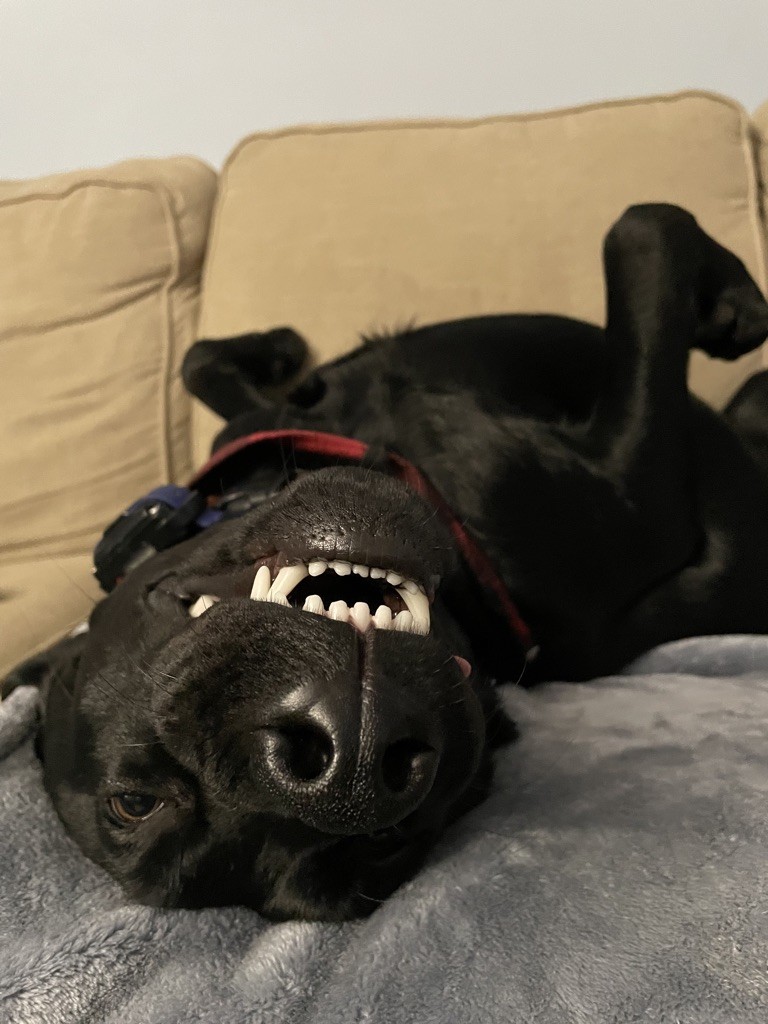
The day was July 24, 2021, it was a nice, hot summer day with a bright blue sky filled with a light breeze. I woke up to my puppy and dog playing with each other like they always do, it was their favorite pastime.  Of course, they didn’t have the decency to take their playing to a separate room and blessed me with the rough wake up call of pouncing on my body that was under the covers. 

“Hey ladies, what do you think you are doing?” I questioned. They turned and looked at me. They tilted their heads as if they were piecing together what I was saying. My oldest dog, Mavis, looked at me as if to say ‘Get this puppy away from me.’. I giggle as I walk downstairs, hearing the tiny footsteps of eight little legs behind me. 

Mavis heads straight to her bowl and sits as Maggi follows. I watch as Mavis passes me, her short, stocky, black figure is surrounded by her thick, dense, wavy coat of fur; her big block head holds high as her light auburn eyes pierce her food dish. Maggi, unlike Mavis, is long and floppy. She prances to the dish, her head moving gelatinous like, bouncing from here to there with every unorthodox step her lanky legs take her. 

“Nice try girls, I already fed you at six. Who wants their Greenie though?” I say in a high baby voice. Their tails wag and their eyes light up. After I give them their treats I start to pack for the day in order to go to my boyfriend’s house on the lake. Mavis follows me into my room and helps me pick out my clothes. I pick out two different outfits and place them on the floor, Mavis then comes and lays on the outfit she likes. 

“Perfect, nice choice Mav.” I say, gathering the pile of clothes from under her. We both walk downstairs to Maggi who is destroying a brand new dog toy on the couch. 

“Wow, Maggs you couldn’t last a day with it could you?” she just looks at me with her big brown eyes that carry no thoughts behind them. As I sit down Mavis sits next to me, she is always with me. The dogs start play fighting like normal, wrestling back and forth until I have had enough of them trampling me. I move to the floor and Mavis settles down, I use the front of the couch as a backrest and Mavis falls asleep on my shoulder. I don’t think anything of it because she has done that many times; just not with Maggi around. I turn on the TV and start watching a show, letting Mavis just relax on me. Maggi, on the other hand, is the exact opposite; she is throwing up toys and catching them with herself. She must have gotten bored because the next second there she was biting Mavis in the butt. Mavis, still half asleep, snapped. Faster than lightning she had partially bitten through my upper lip. 

At first it didn’t really hurt, it was so sudden I was almost in shock. Everything went downhill when I looked into the mirror; my upper lip and under my eye were sprayed with blood, my mouth was quickly filling with the overpowering taste of pennies. 

“ Mavis!” I exclaimed in panic. I was frantic and the worst part was my parents and sister were over two and a half hours away. I quickly Facetime my mom, but by this time I am in hysterics, when she answers I’m crying and screaming. 

“Mom, look what Mavis did to me!” I sob loudly. My mom looks concerned but doesn’t want to worry me. 

“Come closer to the phone, I can’t see it.” she fibs, to try and calm me down a little. “Oh, you might need stitches, call Memere and Pepere they will bring you to the hospital. Right now, I need you to grab an ice pack and a paper towel and hold it to your face. We are heading back home now and we will meet you at the hospital.” she explains. “What happened anyway?” she questions. 

Everything went downhill when I looked into the mirror

“Maggi bit Mavis in the butt when she was taking a nap on my shoulder, she didn’t mean to do it.” I explain. “ She feels bad now, she won’t even look at me; she just keeps running away and avoiding eye contact.”

“Hon, she is just upset that she hurt you, it was just an accident.”

In the hospital, all I am thinking about is Mavis. She doesn’t understand that I am not upset with her. I keep replaying the scenario in my head but it couldn’t have been prevented, it was just a freak accident. 

When I get home I run to Mavis, she runs away. I call her name and she sits on the couch next to me, unable to make eye contact while I’m petting her.

“Who’s a good girl?” I ask her in a high pitched voice. Her tail wags but she still isn’t looking at me. “Mavis, I am fine.” I say sternly. She looks back at me with her big, light auburn eyes. “ Thank you for your creation, I’ll have your artwork on me forever.” I say pointing to the four stitches on my face. “It is beautiful, Mav.” I state as she starts wagging her tail and sliding slowly more towards me. 

Posted in Uncategorized | 1 Comment

Picture Worth 1000 Words

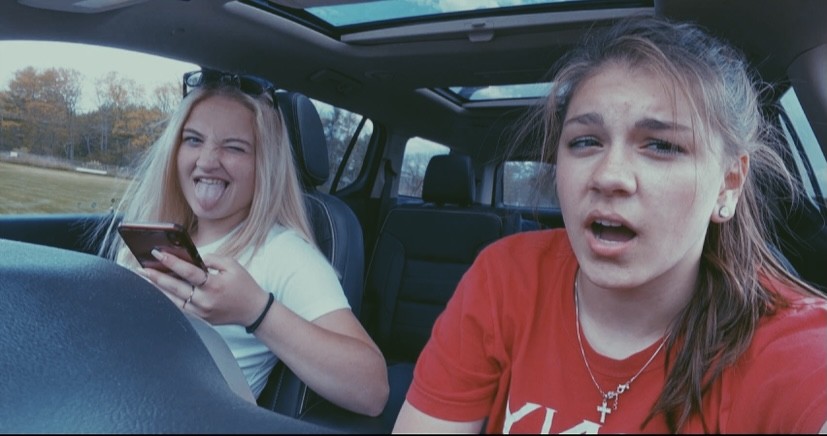
What is friendship? Is it a relationship you have with someone you hang out with 24/7? Or is it a close bond with a person you see very little? Friendship to me means both of those things, pictured above is my best friend, Elli and I, we both used to go to Saint Dom’s together last year. We were inseparable, we spent every minute together, including after school. Even though I don’t get to see her as often as I did last year, she is still my best friend.

Walking to my car after school is always the best feeling. Elli, as always, follows me from behind.

“ What exactly are we gonna do?” she questions. As she climbs in the front seat of my car, putting her bag in between her legs on the floor.

“ What do you mean, we have lacrosse practice in about twenty minutes. Grab your stuff and get changed dude.” I parent her.

We were inseparable, we spent every minute together

“I don’t want to go to practice today though and it isn’t like you can actually practice, you are on crutches stupid.” she shoots back while sticking out her tongue like a five year old that won an argument. 

  “ What exactly do you plan on doing if the coach asks you why you weren’t at practice?” 

“ I’ll just say I am helping you, he can’t get mad if I say I am helping a teammate.” she replies smugly while throwing my keys at me. “ Start your car girl, it’s too hot.”

“ Okay, okay, geez. Gimme two minutes girl, I have to be in the car to be able to start it.” I say while stepping into the car. I turn the ignition and air starts blowing throughout the vents. Elli quickly sets up her bluetooth and connects it to my car.

“What are we feelin’ today, I got aux. Oh wait, I know what to play.” suddenly she clicks on the Disney soundtrack from Frozen. “Hold up I gotta get this on video, you gotta scream this song with me though. Turn the bass and volume all the way up dude we gotta sound great.” she yells as she quickly sets up her phone, turns up the volume and starts screaming Disney’s Frozen Let It Go. The car is shaking by how much we are rocking back and forth, screaming lyrics from the top of her lungs. She swiftly opens the sun roof and climbs onto the roof of my car, her upper torso out and her legs dangling in the car.

“I’m so embarrassed oh my, I cannot do this today,” she says while retreating back into the car. 

“What? Did you see someone out there?” I question her. She is bright red in the face.

“ Dude, someone just drove by us and gave me the weirdest look, I thought it was my Dad for a second.” She giddily starts playing another Disney song, this time it is from the movie The Little Mermaid. I realize suddenly that I haven’t had a best friend like her in years. She is exactly like me but in a different body. We have the same humor and reactions to everything. 

I now realize that even though we aren’t able to hang out as often, our friendship is just as strong as it was when we were with each other everyday. Friendship is about the person and your bond, not about how much time you spend together. 

Posted in Uncategorized | 1 Comment

Was the Downfall Worth It?

Was Maggie the one responsible for her own downfall; or was it her mother, brother, place she grew up, or even the people she met in her lifetime? Taking responsibility for something as big as your own downfall speaks a lot about a person’s character; especially when the downfall leads to your own death. Some people might consider Maggie a tragic hero in this story and some might not. A tragic hero is a character that usually has a harder life, the character is someone that people feel badly for and want to help. Depending on the type of reader, I can see Maggie as the type of character to draw out a person’s empathy and want to help her. The real question is: What is a real tragic hero to the reader and will they be sympathetic to Maggie’s situation and her downfall?

Tragic heroes are often protagonists. “Tragic heroes are failed pragmatists. Their ends are unrealistic and their means are impractical.” Adam Phillips. There is no exact definition of a tragic hero, no matter how many people you ask you will always get answers that vary. The differences are small but they could also change the entire meaning of the person’s opinion. A tragic hero by definition is “a character in a dramatic tragedy who has virtuous and sympathetic traits but ultimately meets with suffering or defeat.” (Dictionary.com). Maggie has a poor, hard, simple life at the beginning of the story, Maggie: A Girl of the Streets, but towards the end of the story she has gotten herself into trouble. Maggie could have tried to become something other than a prostitute, but in reality what exactly could a poor, young, immigrant woman do? The readers are almost made to automatically feel badly for Maggie but in some parts of the story you can see the author staying neutral with which idea he wants you to decide on. The author gives Maggie as a character one of the upper hands by making her so beautiful, this could arguably have helped her downfall as well. “ The girl, Maggie, blossomed into a mud puddle. She grew to be a most rare and wonderful production of a tenement district, a pretty girl. None of the dirt of Rum Alley seemed to be in her veins.” (Crane)   This introduction description of Maggie shows how her beauty could possibly make her stand out in both a good and bad way. 

“Tragic heroes are failed pragmatists. Their ends are unrealistic and their means are impractical.” Adam Phillips.

The story often puts Maggie in a difficult position. Since Maggie is portrayed as one of the most beautiful girls in Rum Alley she is often sexualized by many men, young and old. “There came a time, however, when the young men of the vicinity said: ‘Dat Johnson goil is a puty good looker.’ About this period her brother remarked to her: ‘Mag, I’ll tell yeh dis! Yeh’ve edder got teh go teh hell or go teh work!’ ” (Crane)  This shows how even her brother is telling her to start working in order to stop the men from ogling her. Her brother tells her to either go to hell or go to work. This implies that if she didn’t start going to work the boys would start making advances on her. This would eventually lead to her having relations with them and therefore losing her innocence and being damned to hell for having sex out of wedlock. When Maggie meets Pete she is very sheltered and doesn’t know a lot about relationships in general. When Pete notices this he decides to take advantage of her lack of knowledge for his own pleasure. Maggie is easily drawn to Pete because of his high class style. “ Swaggering Pete loomed like a golden sun to Maggie.” (Crane)  This shows Maggie’s thought process of Pete, she is in awe of him like a golden sun in the sky. To Pete, Maggie was just another girl, but to Maggie, Pete was her entire world. He showed her bars, “luxury”, and clubs she had never seen before, to her he was an escape from the shadows of Rum Alley. Maggie, still, didn’t know much about how men like Pete are because this was her first time experiencing love and affection. Which is why it was so easy for Pete to persuade her into having relations with him. “An’ she, the dear, she was a-cryin’ as if her heart would break, she was. It was deh funnies’ t’ing I ever saw. An’ right out here by me door she asked him did he love her, did he. An’ she was a-cryin’ as if her heart would break, poor t’ing. An’ him, I could see by deh way what he said it dat she had been askin’ orften, he says: ‘Oh, hell, yes,’ he says, says he, ‘Oh, hell, yes.” (Crane)  This scene shows how fragile Maggie is and how sensitive she is reacting to the subject. She is begging for Pete to love her after their relations but Pete just saying “yes” doesn’t reassure her enough. Her reaction might be a mix of the emotions she was still feeling after their night together; guilt, regret, and shame. It shows how badly she already relies on Pete. Since this moment her downfall had started. Once Pete left Maggie for Nellie her downfall was rapid.

Maggie’s downfall was quick. Once she had “ thrown away her innocence” she was in Pete’s full control. She relied on him for many things, to her he was an escape from her terrible life that she lived in Rum Alley. She was emotionally attached to him ever since they had had sex; their relations meant a lot to her because it was a very vulnerable experience for her but for him it was just another action. When Nellie came back into Pete’s life, Pete didn’t think twice about going back to her over Maggie and towards the end of the book you can tell he feels very guilty. “ Yehs know how ter treat a f’ler, an’ I stays by yehs ‘til spen’ las’ cent! Das right! I’m good f’ler an’I knows when an’body treats me right!” (Crane) Pete realizes what he has done to Maggie and her life, he feels guilty about it therefore he has the group of people he is with repeatedly tell him how good of a person he is. 

Maggie’s story isn’t very complicated or long but it has very important key factors that trigger her downfall. Maggie is a tragic hero but is not responsible for her own downfall, Pete is. Maggie’s downfall wouldn’t have started if Pete treated her correctly and with some empathy, instead he solely cared about himself which is why he feels so guilty after learning about Maggie’s life and death.   

Posted in Uncategorized | 1 Comment

Pounds and Ounces

 “Mental pain is less dramatic than physical pain, but it is more common and also more hard to bear. The frequent attempt to conceal mental pain increases the burden; it is easier to say “My tooth is aching” than to say “My heart is broken.” (C.S Lewis, The Problem of Pain). This quote shows how easy mental pain is covered up by physical pain, therefore, although not alike, they work hand in hand with each other. Physical and emotional burdens are both always exhausting; which is more tiring? Many can argue that the physical burden is more difficult to deal with. The constant body pains and the need for relief can never be escaped. It is also arguable that emotional burdens can be more of a struggle; if your mind isn’t willing, how can your body be? While a broken bone is physically painful in a way that everyone can see, the emotional burden of mental illness which can’t be seen also played an immense role in the lives of many characters.

The chapter “The Things They Carried” lists off every pound and ounce of everything the American soldiers needed to carry, mandatory and personal. “The riflemen carried anywhere from 12 to 20 magazines, usually in cloth bandoliers, adding on another 8.4 pounds at minimum, 14 pounds at maximum. When it was available, they also carried M-16 maintenance gear—rods and steel brushes and swabs and tubes of LSA oil—all of which weighed about a pound. Among the grunts, some carried the M-79 grenade launcher, 5.9 pounds unloaded, a reasonably light weapon except for the ammunition, which was heavy. A single round weighed 10 ounces. The typical load was 25 rounds.” (O’Brien 5). The author throughout this novel is trying to make the reader understand the amount of struggle these soldiers have gone through. He lists off everything to the last ounce to put the scene into a certain perspective. This was just the beginning. When you are reading, O’Brien really tries to transport the reader into the novel. He wants them to understand from a personal perspective without even being present. The soldiers didn’t just physically carry items, they also carried everything around them, on an emotional level. It was just another weight they involuntarily carried: “They carried the sky. The whole atmosphere, they carried it, the humidity, the monsoons, the stink of fungus and decay, all of it, they carried gravity. They moved like mules. By daylight they took sniper fire, at night they were mortared, but it was not battle, it was just the endless march, village to village, without purpose, nothing won or lost.” (O’Brien 14). The narrator, Tim O’brian explains the scene as they cross Vietnam, he describes the physical and emotional pain the soldiers endured through the multiple days, fighting exhaustion and physical hurt. He uses a metaphor to describe in detail the specific imagery he wanted to display, ‘moved like mules’ implying slowly and with limited emotion. They trudged through the difficult environment of Vietnam, which adds another burden to their journey.  

The constant body pains and the need for relief can never be escaped.

Although difficult to endure at the time, physical burdens will eventually start to slip away. Through rest, medicine, and care physical burdens can be manageable. Emotional burdens are more difficult. The burdens are internal, they are in the soldier’s heart, soul, and mind; they are carried throughout every cell in their body. O’Brien describes all of the people and places every soldier had to leave behind them. They left behind parents, siblings, girlfriends, friends, and most importantly their home. “Nearly 1 in 4 active duty members showed signs of a mental health condition, according to a 2014 study in JAMA Psychiatry” (“Your Journey”). Some emotional burdens unfortunately become too much for people such as the character Norman Bowker. Whose stories went unheard for too long. Bowker felt trapped in his own mind and that the only way to escape was to kill himself. 

The narrator explains the weight of emotional burdens by giving in depth imagery showing the effects of mental illness. The narrator, Tim O’Brien describes, “They carried all the emotional baggage of men who might die. Grief, terror, love, longing–these were intangibles, but the intangibles had their own mass and specific gravity, they had tangible weight. They carried shameful memories. They carried the common secret of cowardice…. Men killed, and died, because they were embarrassed not to” (O’Brien 20). All of the soldiers had something in common, they didn’t want to die but they didn’t want to present as a coward. There was a common theme of toxic masculinity throughout this novel. It was an honor to die for your country, but it also is an honor to serve your country and survive to tell the tale. Many of these young men wanted to present themselves as “tough guys” and die because they were afraid of the opinions of other people back home when they returned.  As a result of the emotional and physical burdens the soldiers carry they start to go through the motions, losing hope with each day. They find themselves feeling like an outer shell of their true self. Tim O’Brien describes this feeling after being shot: “Together we understood what terror was: you’re not human anymore. You’re a shadow. You slip out of your own skin, like molting, shedding your own history and your own future, leaving behind everything you ever were or wanted to believe in. You know you’re about to die. And it’s not a movie and you aren’t a hero and all you can do is whimper and wait.” (O’Brien 201). Slowly but surely these constant thoughts of death ate at their brains until it was an irreversible damage. The soldiers went into the war wanting to be presented as ‘heros’ but the outcome of the war was that the weight of emotional and physical pain tearing them down until they were a ‘shadow’ of their true person. 

The American soldiers carried multiple burdens: environmental, physical, and emotional. These burdens some still carry with them; the body aches, the mental illness from the emotional distress, and health problems because of both of them. Even without still being in combat, these burdens will be carried with the soldiers until the day they die. As shown in the novel with the character Norman Bowker, emotional pain can have detrimental effects on a soldier’s mental health as well as both physical and emotional pain shown by O’Brien himself. 

Posted in Uncategorized | 2 Comments

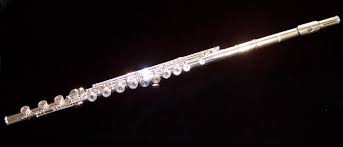
The Flute

In The Road,  the young boy often shows his innocence through his unselfish acts. The boy’s father, on the other hand, is only looking out for the survival of themselves. As the story progresses, the author shows the toll that the outside world has taken on the boy, slowly chipping away at his innocence. The flute that the man carved for his son was a stylistic device in order to not only tell but show the reader how this journey has emotionally affected the child.

Section six primarily focuses on the new hope the father has been trying to find. After finding the house and food the father starts to regain hope again, the father notices changes in the boy, they aren’t blatant but they are enough for him to worry. “Dear people, thank you for all this food and stuff we know that you saved it for yourself and if you were here we wouldn’t eat it no matter how hungry we were and we are sorry that you didn’t get to eat it and we hope that you’re safe in heaven with God.” (McCarthy 146).  The boy, unlike the father, thinks about the people around him. Even though the people that used to live in the house they found weren’t there anymore, he still felt like he needed to be able to say thank you to them. The author uses the boy’s mortality as a way to show his innocence. The boy is used stylistically to show the different mindsets different people have in post apocalyptic times and how they will react. The father has lost his morals and would do anything to survive while on the other hand the boy would never eat a dog, or eat a person because he feels morally wrong in doing so. 

The boy did whatever his father asked him to because he was terrified

This section shows how the boy longs for a normal life, it shows how much he wants to not worry about everything and trying to survive. Although he was born after the apocalypse started he knows life can be good from the stories that his father has previously told him.“Do you think somebody is coming?” “Yes sometime.” “You said nobody was coming.” “ I didn’t mean ever.” “I wish we could live here.” “I know” (McCarthy 151). This snippet of a scene shows how tired the boy is of constantly moving. You see as the scene continues the boy somewhat gets aggravated because he thought his dad would allow them to stay there for longer because he told the boy that no one will come. This is where you see the boy’s innocence start to shift from the beginning of the book. At the beginning of the book, the boy did whatever his father asked him to because he was terrified, but now the boy is trying to push back on some of his dad’s decisions. 

As the section continues the boy’s father starts asking him questions, they are fun light minded questions that are trying to involve the little boy’s imagination. They talk much about Mars and spaceships; this indicates that the father was trying to make an effort to be the boy’s companion instead of protector. Slowly the father starts to bring up that he understood the boy thought he was going to die; just then he asked about the boy’s flute that we see in the beginning of the story. Sadly, the boy reveals that he threw the flute away. “He stopped. What happened to your flute?” “I threw it away.” “You threw it away?” “Yes.” (McCarthy 159). This reveals that at some point along their journey, the boy determined that music no longer had value. The boy’s actions indicate that he, too, like his father might feel as if there’s slim to no hope left. 

The novel shows a common theme of survival, hope, and perseverance throughout the storyline, as the book continues, the perseverance and hope of survival slowly starts to disappear, as shown in the boy’s destruction of his father’s gift.

Posted in Uncategorized | 4 Comments

No Change in the Brain

Humans are more egotistical than altruistic. Humans are more inclined to look out for themselves rather than help others in need. “We are all selfish and I no more trust myself than others with a good motive.” (Luke Byron). Meaning that no matter who it is, the author of this quote will not trust them. He doesn’t trust himself, nor strangers with ‘a good motive’ because humans will look to benefit themselves instead of the good motive. Humans help others when they think it will benefit themselves in the long run, just like the way animals do. Animals look out for themselves and their kin so that their bloodline can survive. It is just how our brains are wired, we look out for our own needs before others, unless helping another would somehow benefit ourselves. “Humans cooperate to gain some advantage, such as a boost in reputation.” (Are People Naturally Inclined to Cooperate or Be Selfish?). This indicates that humans can be altruistic but in an egotistical way.

If you look at this argument from a factual and scientific standpoint the majority of studies point to humans being egotistical. Neuroscience points out that humans have more egotistical tendencies than altruistic ones. The reason being that this comes from a survival instinct that humans had developed a long time ago. When humans sense danger their brain kicks into a ‘fight or flight’ response; looking out for what will benefit themselves more in that situation in order to remain safe. “While we lack inborn notions of good and bad, we are predisposed in a fundamental way insofar as we are equipped with survival instincts. It is in this sense that egoism in (‘emotional amoral egoism’) manifests: humans are deeply, genetically hardwired for the survival of the self, which is a basic form of egoism,” (A Neuro-Philosophy of Dignity-Based Governance). Humans can’t help their egoistic ways because of how the brain is constructed. Our brain, like any living species, wants to ensure our safety and survival, therefore it doesn’t think altruistically in the majority of situations. 

“While we lack inborn notions of good and bad, we are predisposed in a fundamental way insofar as we are equipped with survival instincts.”

Another scientific point of view relating to egoism would be social darwinism. The definition of social darwinism is “the theory that individuals, groups, and peoples are subject to the same Darwinian laws of natural selection as plants and animals… this theory was used in order to justify political conservatism, imperialism, and racism and to discourage intervention and reform.” While this theory is largely discredited now, social darwinism does contribute factual information about the similarities of animals and humans from a biological and mannerism point of view. Social darwinism was only created to ‘justify’ people’s political opinions and make their controversial ideas socially acceptable. Social darwinism is an example of egoism in the world because it allows people to think that they are allowed to say what they want if they think they have a socially acceptable reason to. People created social darwinism to be able to voice their opinions without the backlash of others. 

Throughout the year our class has read a plethora of books and almost if not all of the books have had some type of egotistical behavior whether it was by instinct or tied into social darwinism. In our most recent book, The Road, by Cormac McCarthy there are many examples of egotistical behaviors. One of the earliest examples in the novel that we see is when the little boy spots the older man that was struck by lightning. The father of the boy demonstrates an egoistic mindset and tells the boy that they can’t help the man. “No. We can’t help him. There is nothing to be done for him.” (McCarthy 50). This quote indicates that the father doesn’t feel like the man is able to be helped therefore he doesn’t even try, expressing his egoistic ways. Whereas an altruistic person would have gladly helped the man even if they believed there wasn’t anything that they could do for him. The novel being based in a post-apocalyptic world brings all types of questions to the creative brain. Should it be acceptable to eat other people if there was nothing left? The novel bounces around with the topic of death quite continuously, but one of the ways people died was by being burned and killed alive by other people. Altruistic, right?  “Huddled against the back wall were naked people, male and female all trying to hide, shielding their faces with their hands. On the mattress lay a man with his legs gone to the hip and the stumps of them blackened and burnt. The smell was hideous.” (McCarthy 111). The people left in this world were either barely surviving or half dead. The people in this basement were in very poor health, you can tell by the descriptive language that they have been down there for a while because the ‘smell was hideous’ inferring that the smell would be describing the man’s burnt off legs and the lack of importance for hygiene in this world. This shows the depth of the egotistical behaviors going on in the novel, people consuming other people for their own benefit is a very large way that the novel shows egotistical ideas. 

Another egotistic character in a book that we read was Tom from the Great Gatbsy by F. Scott Fitzgerald. Tom’s egotistical and selfish behavior is well shown throughout the novel, by Fitzgerald’s informative writing. He is a very self centered person who only watches out for his own interests which is demonstrated in the novel by his mistress. He puts his own emotions and needs before Daisy. “The fact that he had one [a mistress] was insisted upon wherever he was known.” (Fitzgerald 24). Tom wanted everyone to know that Myrtle was his mistress, he found it acceptable to be a married man and show off a mistress, which expresses his sense of self entitlement. 

 Like the Great Gatsby, the Scarlet Letter by Nathaniel Hawthorne, many egotistical behaviors are displayed by many characters including the townspeople and how they live. They are a very judgemental group of people who find it appropriate to criticize Hester’s way of life. A character that radiates with egotistical energy is Dimmesdale, Hester’s lover. He, instead of revealing the truth and barring the punishment with Hester, acts clueless in order to protect his reputation and job. “If thou feelest it to be for thy soul’s peace, and that thy earthly punishment will thereby be made more effectual to salvation, I charge thee to speak out the name of thy fellow-sinner and fellow-sufferer! Be not silent from any mistaken pity and tenderness for him; for, believe me, Hester, though he were to step down from a high place, and stand there beside thee, on thy pedestal of shame, yet better were it so, than to hide a guilty heart through life. What can thy silence do for him, except it tempt him…” (Hawthorne 83). Dimmesdale is trying to act like he doesn’t know that he is the father of this child. He is expressing that he wants Hester to reveal who the father is so that he will take his punishment with her. His language somewhat expresses how he feels but he still doesn’t ‘step down from a high place’ onto the ‘pedestal of shame’ in order to feel the ‘guilt’ he is hiding from. Dimmesdale has many opportunities in the beginning of the book to take the punishment along with Hester but instead he summits her to public shame alone. While Dimmesdale is egotistical and selfish, another character in the Scarlet Letter beats him for the most egotistical. Roger Chillingworth may be one of the most egotistical characters that I have ever read about. Chillingworth uses Dimmesdale’s pain and suffering against him. “But with what a wild look of wonder, joy, and horror! With what a ghastly rapture, as it were, too mighty to be expressed only by the eye and features, and therefore bursting through the whole ugliness of his figure, and making itself riotously manifest by the extravagant gestures with which he threw up his arms towards the ceiling, and stamped his foot upon the floor! Had a man seen old Roger Chillingworth, at the moment of his ecstasy, he would have had no need to ask how Satan conports himself when a precious human soul is lost to heaven, and won into his kingdom.” (Hawthorne Chapter 10). Chillingworth has been suspecting that Dimmesdale is the father of Hester’s baby; when he finds a rash that resembles the ‘A’ Hester wears on her bosom on Dimmesdale’s chest he is overjoyed. This allows the reader to think that he is the Devil even more because he is joyful at another person’s pain and furthermore exhibits an egoistic behavior.

So, as presented by specific examples, humans can be taught the difference between right and wrong, and in some ways be altruistic. But ultimately, the way the human brain is wired is meant to be egotistical. The way the brain is constructed is to have better fitness, therefore it is meant to think about the survival of oneself. 

Posted in Uncategorized | 1 Comment