
Keep the Dead Alive, Tell Your Story

If you ever find yourself telling someone, or a group of someone’s, a story, and suddenly you’re on a downward slope, running out of excitement to build up, you should never be afraid to add a few details. As human beings, we tend to add a little extra to our stories when they start to fade out like the dying wick of a candle. Tim O’Brien uses this technique, “story truth” he calls it. It’s the difference between story truth and happening truth that determines whether the audience presented with the story is going to hear it or truly listen to it. His novel, The Things They Carried, is a rhetorically and stylistically intricate plot to keep you up at night thinking about the fine line between what is true and untrue. More specifically, O’Brien uses three main themes to shape that aspect of the story, the weight of the war for the men of the Alpha Company, the art of the love story instead of a war story, and how guilt shapes a person, especially in ‘Nam.

There’s a famous saying out there, for pretty much everything in life, that you don’t really know what a situation, scenario, or snapshot in life was truly like unless you were there in person, the raw heat of the moment. It’s that “you had to have been there” mentality that we all get lost in. However, as Tim O’Brien sits down to write about the war, what he desperately wants us all to feel is that there is so much more to his stories than first meets the eye. Its text on a page to us, a war-story, something that someone else wrote to share with us for some valuable English teacher, geek-out lesson in class. However, to Tim O’Brien, it’s so much more. It is a love story. He see’s it this way because he lived it. He was drafted and had the choice to fight or fly. In his story “On the Rainy River”, he depicts this choice through a character named Elroy Berdahl. Elroy, the owner of Tip Top Lodge, the major turning point for Tim’s choice of fate, uses his knowledge of Tim’s fear of embarrassment to convince him that nearly fleeing the country would have caused him more emotional pain and suffering than the war. He then moves on to become engulfed in the war, in the people who he fought with and for everyday. For
Kiowa, it was a love story.

The first chapter of the novel covers the literal things the men in the company have to carry. However, through his passion for literary device, O’Brien is able to convey that the men carry an immense weight and pressure of intangible things as well. O’Brien subtly demonstrates this to the reader in saying, “he carried a strobe light and the responsibility for the lives of his men”, referring to Jimmy Cross’s intangible and tangible things to carry. Sure, each soldier is there own character, and O’Brien spends the story, in depth describing each man of the platoon and their quirky necessities. However, the story truth aspect of what he describes is the intangible weight that each soldier must also carry.

Similar to the intangible weight that each soldier carries is the guilt that each one of them often faces. The war is often described through O’Brien’s eyes as a game of luck and chance. It is circumstantial all the time, like Curt Lemon and the grenade, or Kiowa in the shit field. Each soldier interchan
geable for the next, chance, and the inconvenience of being the wrong guy and at the wrong time. This aspect brings guilt into the novel. As each “wrong guy” is removed from the story, whether story truth or happening truth, many of the others face an incredibly heavy amount of guilt and shame. It is in those moments, where the stories come about, the overwhelming sensation of shame behind the soldier’s eyes. How they act out upon their own embarrassment and inability to take back their actions. How they think in depth that they could have saved him, should have killed the enemy first, would have been there for him, but wasn’t. It’s guilt that shapes each character in Tim’s mind as he describes them through all forms of storytelling realities.

As these three themes intertwine, we start to develop in our own minds, how Tim O’Brien went about writing his life story. He informs us that through his writing he is able to hold on forever, keep the dead alive, and shape what the reality was of being an American soldier of the Alpha Company in ‘Nam.

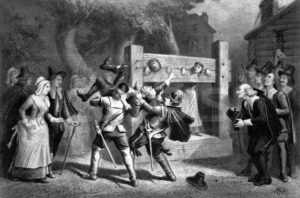
Posted in Uncategorized | 2 Comments

Due Not

I watched her cross the street with a taupe colored leash entwined in her fingers. Her belly protruding out in front of her as she swayed across the blacktop. She glanced in my direction and smiled a soft little acknowledgement of my presence. Her cheeks were plump and glistening in the sun beams of the late afternoon. The breeze lifted her long scarlet skirt into the air like the kite of a dragon on a summer day. She strolled along the grasses edge while the dog, an incredibly prestigious white poodle, lifted his leg and baptised a fire hydrant with his urine.

As I sat in the crisp white adirondack chair off the path, I thought about what it would truly be like to become a mother. What it’s like to feel the pain of childbirth, yet create a whole new life. Or even watching them grow, observing the ways in which the apple didn’t fall far from the tree, or the opposite, maybe the apple grew legs and ran as far as it could from the tree.

She hobbled slightly farther down the path tugging at the poodle who wouldn’t listen, evident exhaustion. I wondered whether she had picked a name yet, was it a family name or one she just felt right about. She spoke sternly to the poodle who had just left a beautiful steaming pile of feces in the middle of the path. She bent, trash bag in hand, and scraped what she could off of the warm tar. I wanted to offer my help but there wasn’t time to. She’d bagged it and moved on, just like I’d pictured her handling the world’s worst diaper changes in the upcoming months. She was the epitome of motherhood, a warm sunset glow in her cheeks. I stood from my observatory and walked in her direction. The heart’s curiosity often overpowers the mind’s awareness.

“Hello, I was just admiring your lovely dog and wanted to ask if I could pet him.”

“Of course! He’s very friendly, but full of himself so watch out for a rogue tongue to the face.”

He was an obedient dog, and the second I stroked his fuzzy ears he sat submissively and looked up at me. I wondered when he would have a brother or a sister to look at with those eyes, so in depth and endearing.

“If you don’t mind me asking, when are you due?” I politely inquired.

The eternity long silence that followed flipped my stomach inside out.

“Well, no actually,” she remarked in a tone very much unlike the woman I thought she was would have, “I’m not pregnant, just fat.”

Yes, I died a little that day.

Posted in Uncategorized | 3 Comments

Morality

Communities strive for acceptance and always aim for utopia, but what would happen if we were to reach utopia? There would be no room for improvement in a utopia, and how could a community thrive without always learning from mistakes? Communities aim for utopia based upon the purpose that utopia doesn’t exist. Having the goal of becoming a perfect community is something great to aim for because although it will never happen, there will always be room to learn and improve. In the novel The Scarlet Letter by Nathaniel Hawthorne and the play The Crucible written by Arthur Miller, the Puritan towns of Salem and Boston in the early 1600s are nowhere near perfect communities. There is a major issue of morality in the towns and a question is addressed as to whether modern society has become more or less moral since the Puritan times of the 1600s. Society today has offered more acceptance and tolerance as there is always an aim to become more moral, because of a modern shift into society with a cultural change, and because of the insecurity of power during the Puritan times. 
A major shift in morality from the Puritan times of the 1600s and today is that nowadays there is more leeway and more of a chance to redeem yourself in society rather than in the 1600s. Hester Prynne was seen strictly as a sinner in The Scarlet Letter. The narrator through the novel describes Hester as a prisoner: “Measured by the prisoner’s experience, however, it might reckoned a journey of some length; for, haughty as her demeanor was, she perchance underwent an agony from every footstep of those that thronged to see her, as if her heart had been flung in the street for them all to spurn and trample upon” (Hawthorne 78). Hester is referred to as ‘the prisoner’ which is completely dehumanizing and shows that she is not accepted in her community. The entire town sees her as a sinner and they are incapable of finding acceptance and forgiving Hester Prynne. This is a prime example of how the lack of acceptance in the 1600s could prove that society is more moral today because of there being more acceptance and forgiveness.
Society today has developed to become more accepting and forgiving unlike the Puritan times. In Corey Brettschneider’s magazine article “Why do Prisoners Deserve the Right to Vote” published by PoliticoMagazine, Brettschneider outlines that prisoners still should be seen as humane and citizens while obtaining their rights: “If prisoners remain citizens and retain their civic status throughout their sentences, then it follows that prisoners should enjoy the most basic of their civil rights, the right to cast a ballot. Disenfranchising them creates a class of people still subject to the laws of the United States (they were, after all, punished under that law) but without a voice in the way they’re governed—not unlike taxation without representation”. The prisoners are treated completely different than someone who has sinned during the 1600s. For most of the crimes that the criminals committed they would be stripped of their rights and put to death during the Puritan times, but society has developed to recognize that prisoners are human and still should deserve their rights. This goes to show why society today has become more moral but only based on the purpose of acceptance and forgiveness.
During the Puritan times there was a major lack of security within the communities. Throughout The Crucible, a major theme of insecurity is revisited because of the incredibly foolish and false claims of witchcraft. John Proctor seems as if he is the only sane man in as insecure town when he states,
“PROCTOR: I am only wondering how I may prove what she told me, Elizabeth. If the girl’s a saint now, I think it is not easy to prove she’s fraud, and the town gone so silly. She told it to me in a room alone—I have no proof for it. ELIZABETH: You were alone with her? PROCTOR, stubbornly: For a moment alone, aye. ELIZABETH: Why, then, it is not as you told me. PROCTOR, his anger rising: For a moment, I say. The others come in soon after. ELIZABETH, quietly—she has suddenly lost all faith in him: Do as you wish, then. (She starts to turn.) PROCTOR: Woman. (She turns to him.) I’ll not have your suspicion any more. ELIZABETH, a little loftily: I have no— PROCTOR: I’ll not have it! ELIZABETH: Then let you not earn it.” (Miller, Act II 74)
In Proctor’s words the town has gone ‘silly’ which is very accurate. Now, society is much more secure, and it is clear that today nobody would be tried and put to death for witchcraft which is exactly what happened during the insecure times of the 1600s. It is easy to point fingers when there is a lack of security which Hester Prynne also shows.
Hester is seen as a sinner and only a sinner in her town, so people are able to assign her with any blame. The entire community finds her disgusting and sees her as disgrace: “Thus the young and pure would be taught to look at her, with the scarlet letter flaming on her breast,—at her, the child of honorable parents,—at her, the mother of a babe, that would hereafter be a woman, —at her, who had once been innocent, —as the figure, the body, the reality of sin” (Hawthorne 55). Hawthorne mentions how society has been taught to ridicule Hester based on the A that she wears on her chest. Although the A means Able to some, to most it means Adultery, and the Puritan community has nothing but remorse for Hester because of it.
In a modernized cultural shift, there have been many ways that society has become more and less moral. One incredible instance of becoming moal within a modern culture was the acceptance of gay marriage in the United States. In the New York Times newspaper article Supreme Court Ruling Makes Same-Sex Marriage a Right Nationwide written by Adam Liptak, Liptak interviews a Supreme Court Justice to address the great decision: “No longer may this liberty be denied,” Justice Anthony M. Kennedy wrote for the majority in the historic decision. “No union is more profound than marriage, for it embodies the highest ideals of love, fidelity, devotion, sacrifice and family. In forming a marital union, two people become something greater than once they were.” Although there is still ongoing issues with equality and gay rights, this was a huge step forward to becoming more moral as a society.
It is challenging to compare morality from today’s society to a society over 400 years ago. Many question arise like “Would the Puritans react and behave the same way as society does today if they were brought up around the same culture and technology?”. It is clear that there are out outlying issues as to why society in the 1600s was more moral than today, but there are also ways in which society today is more moral. Overall, society today has taken bigger steps towards morality by establishing greater acceptance and leeway as well as being in a more secure position rather than the Puritan times.

Posted in Uncategorized | 2 Comments

      Borrowed Haven

                                 In a world where many people wake up every morning to chase after their dreams, it is inevitable for one to encounter fierce competition with other people in reaching a particular goal. Sometimes they achieve them, but many other times these dreams and aspirations remain mere thoughts as they never see the light of day. As a matter of fact, many people think the cemetery is the wealthiest place on earth since most of the people buried had bright dreams and wonderful ideas that were never fulfilled. They tend to send those mega ideas which might have the ability to change the entire world in their graves. Critical analysis of two of the most popular books in American culture all have characters who in one way or the other never achieved what they really wanted. In The Sun Also Rises and The Great Gatsby we see brave personalities who achieved a lot in life and were able to conquer some of the most difficult challenges in life but could not surmount a rather simple one.  Jake, Cohn and Romero were all typical examples of people who wished for one thing but had something else. Also, Gatsby in The Great Gatsby is another whom besides all the wealth he had acquired still wished for something superior which was never fulfilled.

                           Bret in The Sun Also Rises was the dream of Jake, Cohn and Romero. As much as their souls yearned to be with her, it was never fulfilled. It remains clear that Jake was genuinely in love with Bret but he never got a permanent hold of her. Sometimes Jake had hope he might be with Bret but those moments never lasted. Anytime Bret fell in trouble, Jake was the rock she relied on for comfort, but it always didn’t take long for it to fade away. In Cohn’s case, one can argue that he had no genuine love for Bret and was just lusting after her. Whatever lens one uses in viewing Cohn’s desire for Bret, the fact that he did not achieve his goal of having Bret cannot be denied. He spent so much time and resources in this endeavor but in the end it was fruitless. Cohn was so determined to have Bret that he followed her to San Sebastian in Spain not to talk about the numerous times he showed up uninvited at bars or parties. Jake and Cohn were not alone in the league of unfulfilled dreams.

                     On the other hand, Romero was a young man who was also highly impressed by Bret’s beauty and sought to be with her. Bret seemed to be all he wanted in a woman but never materialized. Even though  Jake and Cohn had successfully fulfilled their dream of fighting in the war besides the fun times they shared in Paris, Bret seemed to be the one thing that stood in their path to full happiness. Romero as successful as he was in bullfighting couldnt conquer Bret to put the icing on the cake for his young career. Besides  Jake, Cohn and Romero, Gatsby in The Great Gatsby was also guilty of not fulfilling his dreams to the fullest.

                     In The Great Gatsby, Jay Gatz upon the unwillingness of his soul to find consolation in living in poverty rose to contend his destiny and came out victorious. His goal of living the plush life similar to that of his former master came to reality and he began to live his dream. He materialised the desire undergo metamorphosis from poor Jay Gatz to rich Gatsby. One would say Gatsby was largely successful in his ventures as he had so much to share. This was evident in the big parties he threw on the weekends. In Spite of all the wealth, the one person Gatsby cherished more than his acquisitions was Daisy. She was his dream and he could do anything to have her.  Gatsby was so drunk in this ambition that he even offered to take the blame for the murder of Myrtle Wilson. Such was the depth of his love for Daisy. Gatsby tried as much as he could to get a hold of his dream in reality but all attempts proved futile.

                      In The Sun Also Rises and The Great Gatsby, we see clear examples of people who wished for something they never had. Their ambitions drove them on and on but the drive was never enough to accomplish that desire. Bret was the dream of Jake, Cohn and Romero while Daisy was Gatsby’s. Bret and Daisy were the dream that was never realized by those who desired to have them. Jake, Cohn , Romero and Gatsby were all individuals who had experienced success in one area or the other but their inability to provide their souls with whom it demanded to be with meant they couldnt always get what they wanted.


Posted in Uncategorized | 2 Comments

Black Pearl, White Milk

His curious Great White slate-blue pupils blinked back at me as I stood there with the tomato in my palms. His mother yapped away with her sister on the phone while he bounced at a constant in the sea blue rocker. My mom had trusted that I could run the beautifully plump heirloom tomato over to their house, as a little treat for the new baby coming home. I didn’t run there, moreover; I skipped there with a gleaming twinkle of pride behind my eleven year old smirk. I felt intimidated by him blinking at me, like I was a fish at the aquarium, constantly swimming in circles, back and forth, trying to locate the unfamiliar. He was unfamiliar because he was newborn life, and I felt honored to be in his presence. I had delivered the tomato, and she had thanked me with a proud motherly smile. I could make it back home safely now, and I declared it a mission accomplished.
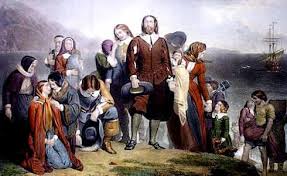


At nine years old, I had traveled to and from Italy on a cruise all throughout the Amalfi coast, flown alone on a plane, once back in the US, and been the younger sister who learned everything too early. My sister had to experience it all first and I got to watch. I was a professional at watching. Those slate-eyes taught me that, sit back, stay quiet, listen to your soul. At fifteen years old, I had a best friend who I considered my sidekick for life, you know, as we all do freshman year of high school. Her dad was the sweetest little business man, straight out of Boston Massachusetts, who would always forget that I was equivalent to a child in their house of true teenagers. One night we had all taken our seats for a take-out family dinner, when he leaned to the side and said to me,”you know Ave, you’re quite the old soul”. In that moment I did what I knew how to do best and listened. I watched and learned quietly, and because of it I am proud to declare myself just that: an old soul.

As we read about in the book The Things They Carried, by Tim O’Brien, in ‘Nam, the soldiers carry their individual necessities as well as intangible weights in the war. When I reflect on my life so far, and the intangible things I carry, I can filter through all of my ideas except for my responsibility to maintain my old soul. In the previous year, my lacrosse coach, and an honest dear friend, informed me that she sometimes had trouble reminding herself that my true sophomore self was in fact not a senior player on her team. She had always had in her mind that I could be better and perform at a higher level because she saw that quality in me. I wanted to be something more than what I was, for the people around me and to grow as a strong independent individual. However, that responsibility is not in fact weightless. It’s heavy on my shoulders, and my back aches at night. When I can’t sleep, I think of all the places I’ve been, those who I have met and who have taught me in both negative and positive ways. I think about my family and how there is simply nothing stronger than the bond we share. I think about my sister, and how she taught me to be one step bigger, one leap farther, one lunge deeper, one thrust higher than I already am because I am capable; because I have a world of people who will pick me up when I don’t quite reach the next rung. I lay awake because I cannot calm the voices, they are already one step ahead, gears engaged, cranking, planning to be one step just a little too early. I don’t know how to escape it, the feeling of being one moment too early and a second too late all at once. Born in the wrong time, a black pearl tossed into white waters. Thick like milk it weighs down on my soul. My old soul, tender to the touch, but pristine and stirring within. 

Posted in Uncategorized | 2 Comments

Puritan Based Society in 2016

In today’s society we are often faced with situations that challenge the morals we claim to live by. In both The Scarlet Letter and The Crucible, all of the characters are faced with these challenges. Some are a matter of life and death and others are less extreme. The important quality that both stories share is the point at which morality is questioned. In The Scarlet Letter, the protagonist Hester Prynne, commits a sin of adultery conceiving a child with a man other than her husband. She is forced, as punishment, to bear the letter “A” in gold and scarlet thread on her chest. This punishment stands alongside the persistent reminder of her wrongdoing; her daughter Pearl. Hawthorne describes Pearl as “the living embodiment of sin”, and it is that which eats at Hester’s freedom every day (Hawthorne 53). Similarly in The Crucible, John Proctor is faced with the challenge of dying an honest man or living a sinner. He was accused of witchcraft during the Puritan time period in Salem, Massachusetts, and is forced to either lie and confess to taking part in it, or be executed for doing otherwise.

It is scenarios like these that we look back on and weigh the differences of society then in comparison to our society today. When reflecting on specific incidences from these texts, and comparing them to modern day society, it is alarming to discover that they are very similar. During the Puritan time period, where both of these stories take place, there are issues of race, gender inequality, discrimination towards the less fortunate, unjust treatment of innocent people, and sin. One would think that over 200 years later, we might have figured some things out. The sad truth however, is that we haven’t. Society may have altered in regards to the way situations are handled, but when it comes to the morality of the people, our society remains the same.

The Scarlet Letter, a novel written by Nathaniel Hawthorne, takes place in a Puritan town in Salem Massachusetts. The Puritan belief system is described by Hawthorne as “a people among whom religion and law were almost identical” (Hawthorne 30). What that really meant was that the Puritans considered the mildest and the most severe crimes equal. Therefore, the punishment for either wrongdoing was the same, and in that time period, was most likely execution (Mills 2007). Hawthorne’s example of this in The Scarlet Letter is brought about in the way he portrays his characters. In that time period, men were still held at a higher rank than women were, and the superiority that both Roger Chillingworth and Arthur Dimmesdale possess over Hester is consistent throughout the story. At the sight of Dimmesdale and Chillingworth together, “her whole soul was moved in shuddering terror” (Hawthorne 89). Not only does it not change in the novel, that mindset is sadly still prevalent in many male minds today. For example, our President Donald Trump, was recently exposed to having said in a video recording that because of his stardom he has the right to grope women’s private areas without permission (Taub 2016). In the same article another women reveals that she was sexually assaulted by a male colleague at just 18 years old. It is situations like these that make us wonder whether or not the male superiority standard has evolved. Hillary Clinton would have been the first female president of the United States, however to many Americans the thought of a woman running the country was enough to sway their vote. That in itself is proof enough that society today has not grown much beyond the way it was in the Puritan time period.

In the poem by Maya Angelou titled Phenomenal Woman, there is an essence of change in the morality of a woman comparing herself to a man. There is pride in her prose, when she states, “I walk into a room, just as cool as you please, and to a man, the fellows stand or fall down on their knees” (Angelou 1995). This is evidence that the era of male superiority is decreasing in today’s society. However that conclusion is sadly a false hope. A recent article focused on a photograph captured by a bystander of a woman being arrested for wearing too little clothing in public. The police officers face is what is most alarming as he smirked with pride, scoffing at the woman in her bikini while he arrested her. During that time period in Italy the bikini was looked down upon for woman to wear in public as it was too “immodest”. However nearly a month later, in France, woman were being punished for wearing too much in public in burkinis (Rubin 2016). There is something about women’s attire and the way men see it fit, that for decades now, has caused society to regulate the choices of women (Rubin 2016). This mentality was a major part of the precedence that made of the Puritan society.

In The Crucible, a play that also takes place in the Puritan age in Salem Massachusetts, Arthur Miller focuses on themes of lies, sin, betrayal, choice, and equal punishment for all. When witchcraft was rumored to be present in the town, because of the Puritan belief system, both guilty deserving, and innocent people were convicted and in most cases executed. Because his wife is under questioning for having been a part of the witch trials, John Proctor is condemned and forced to confess to spare her life. However, in the final scene of the play, Proctor is forced to choose between living a liar for confessing to something he did not take part in, or dying a good man. It is in this scene where his famous quote is declared out of love and integrity to both himself and his wife, “Because it is my name! Because I cannot have another in my life! Because I lie and sign myself to lies! Because I am not worth the dust on the feet of them that hang! How may I live without my name? I have given you my soul; leave me my name!” (Miller 133).

Today a situation similar to the witch trials would be far more investigated and there would be a greater demand for sufficient evidence to support the accusations and convictions made. However, there are many immoral aspects of this play that still remain in our society today. For example, when Tituba, a black slave from Barbados who works for the Parris’s, is questioned for her participation in the voodoo in the forest, she is beaten and whipped until she confesses. The other girls involved however, all of white skin origin, are never physically harmed in the slightest. That belief, or “rule” we seem to get in our heads, that people of a darker skin tone are of less importance and are meant to be looked down upon, is a major issue of our society today. Back then it was a matter of labor, and the unjust treatment of a white man’s black workers. Today however, we claim to be an all equal people, yet black men and women are being killed by white police officers on a daily basis. The “black lives matter” act is not one that has just surfaced within the past couple of years, it is an issue of morality in our society that has fluctuated over time but never completely ceased to exist (Foust 2013).

Today’s society is very heavily based off of the morals that were passed on through generations. It is scary to think that in many negative ways our society has not become a place of equal being for all. In the words of Simone de Beauvoir, a famous social theorist of the nineteenth century, “our freedom carries with it the responsibility of morality and our errors are often actions of the immoral and/or demoralising kind” (Foust 2013). In other words, our freedom among society is not simply given. The morality of our society has attempted to change alongside the rapidly changing environment we live in, and although the way situations are handled has been altered in some ways, our morals do not seem to have further developed.  The human condition, or morality of the people, is far too ambiguous and it is up to us, the people as a whole, to make a change.

Posted in Uncategorized | 2 Comments

Gatsby: The Only Honorable Character

The Great Gatsby, a novel by F. Scott Fitzgerald, has been praised as one of the most remarkable work of American literature. In the book, Nick – the narrator – tells readers a sad love story between Gatsby and his cousin, Daisy. However, he tells us more than that. He gives us an insight of how corrupt the upper class and the American Dream have turned out to be and the secrets lie underneath them. Even though Gatsby carries all the characters Nick abhors, he still gains his faith and respect in the end. It can’t be denied that among all the careless people in Fitzgerald’s novela, Gatsby deserves to be praised and honored.

First of all, aside from Gatsby, all the characters in the book are all very corrupt and ignorant. Tom Buchanan, Daisy’s husband, is a racist and violent man. He doesn’t hide his affair outsidt of his house. Tom even breaks Myrtle’s nose when he’s too drunk. Throughout the novel, whenever Tom appears, he always has a great deal of scandals surrounding him. On the other hand, Daisy – the dream that Gatsby strives for, is corrupt in her own way. She creates her issue between Tom and Gatsby with even realizing what she has been doing. When Daisy finally comes back to her sense, the damage has been made, it is too late now. To make the matter worse, she hits Myrtle and runs away without ever admitting her faults. Jordan Baker cheats during her game and never pays attention while driving. Even Nick, the narrator, knows about Tom and Daisy’s affairs, knows the truth about the car crash but never raises his voice. In some aspect, Nick could have changed Gatsby’s death had he said the truth, but he did not.

Nevertheless, Gatsby is also corrupt on some levels. He takes Daisy when he promises her a life full of lies. He could have pushed Daisy to the poor and dark ages. After that, he is involved in the shady illegal alcohol. Gatsby is “a gangster, ruthless, amoral, willing to do whatever it takes to succeed” (Foster 145). He tries to create the luxurious and wealthy image of himself, but fails to recognize the details of it. He wears a pink suit; he doesn’t understand the insincerity when Tom’s friends invite him for dinner. Gatsby doesn’t even read his books; the library is created just for the imitation of it. Most importantly, he doesn’t know that all the party he creates is seen as too flashy in the eye of the upper class.

Still, Gatsby is different from all other characters because he is not careless. When a girl ruins her dress in his party, he sends her a new one. Gatsby doesn’t drink; he isn’t involved in all the fun of his own party. When Daisy hits Myrtle, he is not affaid to take the responsibility. In addition, Gatsby is even willing to look at her window for the whole night, making sure that Daisy would not be beaten by Tom. That’s what should be praised about Gatsby among all the characters in the novel.

In conclusion Gatsby is a respectable and honored man in this book. What makes him stand out among other characters, even though he has some negative sides himself, is that he is not careless. His goodness outshines all his bad side, and that’s why readers and Nick are more attached to him in this novela.

Posted in Uncategorized | 2 Comments

Tougher Than Iron

I’m not a very emotional person. It’s not that I don’t ever feel sad or happy or angry, I just tend not to show my emotions. I’m not proud of this, but this is how I always have been. My grandfather and great grandfather always taught me that whenever I feel sad I should stay strong because chances are others will need me when they are sad too. My great grandfather and grandfather are two people that I have a tremendous amount of respect and love for. Both of them have always been there to teach me how to do the things I love the most like hunting, fishing, camping, and most importantly football. They’re both full of stories and are men that you could hold a conversation with for hours on end. It is hard for me to put into words how much I love them, but I could go on forever and ever about them. It wasn’t until just about a month ago when both of these men changed my life forever.
My great grandfather, or GG as I know him, was having a rough couple of months as soon as my football season ended in November. He was diagnosed with dementia in late October and really struggled through the weeks to come. He would forget things easily, lose track of time, have severe mood swings, and even feel lost in his own home. He wasn’t himself a lot of the time, and this really bothered me and all of his loved ones. As a few months began to pass and January came along, we knew that GG really wasn’t doing well. GG was eighty-six at the time and physically was in better shape than most forty year olds are. He was a very active man and still loved to hike, kayak, snowshoe, and cross country ski, but he couldn’t do all of these things in theses past months because he was mentally lacking. Dementia was really getting to him and there was nothing that anybody could do about it.
January 31, was on a Tuesday and it was the last day of the month. I received a text from my Dad before lunch time at school saying that I needed to come home now because he had something to tell me. Something wasn’t right. Chills instantly crept from the back of my eyes down to my toes. I zoned out in the middle of class as all of the noises and voices around me vanished and I stared blankly at my phone screen and desk. Without saying a word I picked up my things and left class. The five mile drive home from school was an eternity. I had no clue what to think as I pulled in my driveway and walked up to my front porch. I walked through the door as my dad was sitting down and resting his face on both of his hands in tears. My jaw dropped as my dad quietly said, “Quinn… GG isn’t doing all that great. I need to know if you want to go see him because we don’t know if he’ll make it through the night. He doesn’t really want to see anyone right now but if you want to we can”. The toughest thing that I have ever had to do up to that point in my life was say no to him, which I did. There are a few reason why I said this, but I feel no regret for it because I know that this is what GG would’ve wanted me to do. My first reason was the my last memory of GG was just eleven days ago on my birthday when I got to see and spend time with him. He was so happy to see me and he seemed to be his normal self during the time that we spent together, and of that was something I could remember him by, then I would be totally happy with that. My second reason was that my sister was in Biddeford at college and there was no way she would be able to drive all the way to his house to see him. So, I decided to drive up and see her so she didn’t have to be alone at this time.
My sister and I met at a pizza place at the old port for dinner at 8:00 that night. We received a call from my mom at 8:22. She told us that GG had passed away just a few minutes ago right after he laid down for bed and fell asleep. I told my sister the news and I distinctly remember her resting her head on my shoulder and crying quietly for a while. I don’t remember much after that moment except for being very sad and knowing that I only needed to focus on being there for my sister as I forgot about almost everything else going on.
The next morning we drove up to my grandfather’s house which was only a half mile up the road from GG’s. I walked through the door and saw my grandmother and grandfather. I immediately began to cry and so did my grandfather as he walked forward to hug me. I have never seen him cry in my entire life and my grandmother even later told me that she hadn’t seen him cry for years until he saw me walk through that door. This is something that I will never forget for the rest of my life. My family from all over the state and even those that I haven’t seen for years from New Jersey came up to their house that night. We all sat around the table and dining room that night and talked for hours and hours on end. We all caught up for a short while and began telling stories and reminiscing about funny and pleasant memories of GG. As we all talked and listened to each other’s stories we laughed and cried but mostly laughed. One of the things that we talked about the most was GG’s massive collection of antique irons that he had been collecting for almost half of his life. We laughed at the fact that he had shelves and shelves filled with old irons but he would be able to tell you a five minute story about every single one of his irons that he owns. Seeing my family that I haven’t seen for years and seeing the family that I frequently see all together at one moment was something that everybody took comfort in. It was beautiful. We all spent the rest of week and weekend together which was very emotional but yet nostalgic at the same time. It was one of the best weekends of my life despite the unfortunate passing of my great grandfather.
While I reflected on GG’s passing on that weekend with my family, a pleasant memory kept revisiting my head. It was on my birthday when I last saw him. I read him a story I wrote about him called Elderberry Wine that I had won a writing contest with that he loved. I asked him one question while we were having lunch and having a great time together. I said, “GG? Do you know that have dementia?” He responded by saying, “Wait… Who are you?”. I was concerned but he immediately started laughing and said, “Of course I do Quinn… but that doesn’t change who I am whatsoever. I’m still GG and I will forever be your GG”. In the song by The Rolling Stones, “You Can’t Always Get What You Want” the general tone of the song starts in a generally mournful way but begins to turn around. The song picks up and a peaceful and joyful change transforms the song. GG’s passing was very sad and I would give anything just to see him one more time and I really do want to see him again, but I wouldn’t trade that weekend with my family and my memories of GG for the world. One of the biggest things that I took out of that weekend was that I don’t have to suppress my emotions and act tough like I normally do. I can express myself whenever I feel like I need to and that is something truly warming that I will never give up. “If you try sometimes, you just might find, you get what you need”.

Posted in Uncategorized | 4 Comments

Everyone is Guilty of Corruption

                     The pursuit of dreams and happiness has left many disregarding their traditions and societal norms which guides their conscience. Many people are not able to stand the pleasures of the world even if it’s beyond their reach. It seems as though evolution has ripped man off his moral capabilities and many morally debased. In THE GREAT GATSBY, the theme of corruption is seen in many areas. The creation of sudden wealth by Gatsby, the adulterous act between Tom Buchanan and Myrtle, Gatsby’s assassination by Wilson and Tom and Daisy’s escape are all forms of corruption revealed in human life.

                           To start with, little did people who attended Gatsby’s numerous parties know how he made his money. The source of his wealth remained anonymous to all. Jay Gatz after seeing to the modification of his real name, indulged in bootlegging to create the vast wealth he displayed. Either way, both Gatsby and the people who attended his parties are all guilty of in different times since they didn’t  really mind where the money came from other than the ecstasy they drew from the friday nights. One is guilty of financial corruption and the other for moral debasement.

                           It wasn’t only Gatsby who was guilty of corruption but also Tom and Myrtle’s adulterous affair can be labelled as an instance moral corruption. Tom was married to Daisy but sought fulfillment outside the confines of his marriage. This instance of moral corruption is also seen in Gatsby’s pursuit of his version of the American dream. As he lusted after Daisy, he knew very well she was married but was urged on by emotional greed. That act of covetousness by Gatsby was a clear indication of how morally corrupt he was. Gatsby didn’t care about whom he hurts in the process, the only thing that mattered was hitting his target.

                           It is almost impossible to talk about corruption and leave out Tom and Daisy’s ruthless behavior. The thought of Daisy as Myrtle’s killer remains unarguable no matter how much effort Gatsby commit in trying to carry her cross. Tom and Daisy’s departure with the intention of exposing Gatsby as the killer reveals they had no iota of morality in them. The plan worked perfectly for them as Gatsby paid the price.
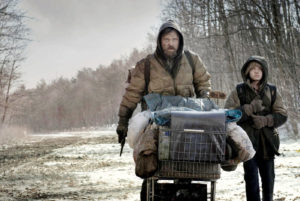
                           It is quite understandable to say that anyone who hasn’t lost a loved one doesn’t actually know the emotional difficulties it comes along with. That being said, a society built on the idea of an eye for an eye will run out of inhabitants in no time. Gatsby’s murder by Wilson is an example of the corruption that lives throughout the book. Even if Gatsby was the killer, it wasnt right for Wilson to kill him in cold blood. It caps the argument of immorality throughout the book.

                          No one person can be blamed for the corruption that existed at the time. Gatsby, those who showed up at his parties, Myrtle, Tom and Daisy Buchannan, and Wilson are all guilty of corruption one way or the other. Corruption in THE GREAT GATSBY is a gigantic web where all of it’s characters were connected one way or the other. It is not surprising Nick said “ They’re a rotten crowd’ I shouted across the lawn. “ You’re worth the whole damn bunch put together.’”(Fitzgerald 154). Corruption made them rot and its smell was all over the city.

Posted in Uncategorized | 29 Comments

The Maturity Of The Boy Through Time

The Road, a novel by Cormac McCarthy, is about a father and his son trying to survive in a post-apocalyptic world. The father tries to every way to keep his son safe and protect his sanity. Nonetheless, after seeing the terrible truth because of their trials on the road looking for food, the boy starts to lose his innocence.

First of all, the boy realizes what the cannibals do to their slaves. After running from the house where naked human beings are being kept like livestocks, he casually acknowledges what the “bad guys” are doing by asking his father: “They are going to kill those people, aren’t they? / Yes. / … / They are going to eat them, aren’t they? / Yes” (McCarthy 127). However, he also matures by making his dad promise that they will never “eat anybody”: “No matter what./ No. No matter what” (McCarthy 128). The boy’s realization signifies why they are different from other refugees on the road: they keep their moral even though they are desperate.

On the other hand, the boy’s loss of innocence also leads him to be more afraid whenever they reach a new destination. When the father is about to break the bunker, the boy cries and begs him not to go, which makes his father “very much fear[s] that something [is] gone that could not be put right again” (McCarthy 136). Though the boy appears to be less brave, he does it out of concern for his father. The boy cries because he loves his father and doesn’t want him to be harmed and that’s what important.

To conclude, the boy loses his innocence but he realizes his morality to be the most essential and grows more conscious of their situation, thus growing more love for his father.

Posted in Uncategorized | 2 Comments