
There are endless ways to write an essay. From crafting a detailed outline, or beginning with a rough draft, or maybe even taking the essay bit by bit, we have typically been taught to write essays in a certain way. During my time at Hebron Academy I have grown as a writer and learned that the only “right way” to write an essay is to just be sure you hand it in on the due date. The biggest and most important piece to writing an essay is to be certain that you are in the right mindset before you begin to write.
Jack Morton and I believe that if you want to be a successful writer you have to be sure that you are in the proper mindset before you write. This means that you have to take as much time as you find necessary to prepare yourself for the essay process. Some people refer to this as “procrastinating”, but the ignorance of those fools and their remarks can be excused most of the time. What many people fail to understand is that it is very challenging to craft a genius essay if you haven’t thought about the topic enough. Whether this means you don’t begin your essay until the day before it’s due, or my favorite, the period before it’s due, you should always strive to mentally prepare yourself if you would like to become a successful writers like Jack and I. The wise people who undergo this process are typically referred to as Preppers.
A genius use of this preparation can be seen in AP United States History. APUSH is a Preppers dream class. Seven essays are typically due at the end of each term for that class, and as long as you turn in the essays before grades close they will not be marked as late. My favorite form of mental preparation for that class is what I refer to as the “Stress Free Prep”. This form of preparation entails not working on any essays for the entire term until the night before they are due. This means that you are able to catch up on plenty of sleep during the entire term and do not have to deal with the stress of handing in seven papers until the very last day. As long as you are capable of pulling an all nighter, I have found that it is easiest to write all seven papers under the influence of caffeine.
Being a Prepper is wonderful. Some of the best Preppers in Hebron history will be remembered for a long time while the elite few entail Jack Morton, Biao Yang, Tristen Chan, Mr. Fidler, and myself. Call it what you will, but I have truly found that mentally preparing myself for as long as possible has allowed me to live a stress free lifestyle.
The Keys To Crafting a Succesful Essay
Red Head Rivalry
My mom was an incredible athlete throughout her entire life. She seemed to accel in every sport that she played. She was a state champion in field hockey, scored one thousand points in basketball in her four years in high school and still holds the school record to this day, and even played in the NCAA national championship game for division three softball while being named most valuable player for three years in a row at Saint Joseph’s College. She also coached AAU softball for seven years and lead her team three New England Titles. My mother is someone that I aim to one day be as well decorated in sports as she is. The way that she takes pride in the way that I play sports makes me feel proud of myself coming from such an accomplished person that she is. She loves bragging about how her “little boy” is captain of the football team and she loves to embarrass me by shouting “Go Boo Bear!” at all of my games. She knows everything there is to know about sports and even knows about the malicious rivalry between myself and the infamous “Ginger Twins” of Old Orchard Beach.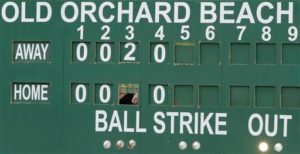
The Ginger Twins are two identical twins and are inseparable from each other. Their clean cut, buzzed, military style, bright red hair is always the first thing that is noticed about them. Their faded and pale white skin resembles that of the color of cold chapped lips. Their noses, sharp like a shark’s, are surrounded by a faint blanket of freckles that hug their cheeks from eye to eye. We have an extensive history of technical fouls against one another and intentionally hitting each other in baseball. The start of this rivalry was a moment that my own mother took shame in because of the bad reputation that I had suddenly given myself in the town of Old Orchard.
I had made varsity baseball my freshman year where I played third base and was a relief pitcher. My team and I were playing at an amazing baseball stadium in Old Orchard. It was priorly home to a minor league baseball team, and we all felt like kings once we stepped foot on the finely cut diamond. The game seemed to fly by because of how much fun we were having up until around the fifth inning. One of the two twins was on the mound while I was hitting up at the plate. A fastball flew right behind my back for the first pitch. Intentionally throwing behind someone’s back is a huge no-no to baseball players, worse than intentionally hitting them. Throwing behind someone’s back is like throwing the first grenade in a battle. You took the first punch, but now you have an entire team angry soldiers that are waiting to attack the other side.
I was hoping that the pitch was unintentional and I was just assuming that this kid was god awful at baseball. I stepped in the box for another pitch. The twin on the mound was a serpent. His smirk told his entire story. He wasn’t bad at pitching, it was intentional. I knew what was about to come next. As he began his wind up, time began to drag. From my cleats to my batting helmet, my muscles became tense with heat from the ensuing anger that was about to overtake me in about two seconds. The pitch came straight for my rib cage and I didn’t move an inch. I stood there and only stared at his dark eyes as the pitch came in and struck me. The twin started to sarcastically smile at me as he was being yelled at by his coach and receiving a warning from the umpire for doing this.
I was pissed.
My ears began to ring as all of the noises surrounding me were fading away. My head cleared of all thoughts except for retaliation. I needed payback. His smirking brother with the razor sharp nose was standing next to second base and enticing me to steal. So I did. I stole second. I took off and was focused on his shins and only his shins. I slid into second base while my cleats were aimed directly towards the second twins’ legs. His smirk vanished while he fell over me while cursing. I dusted myself off, stood up, and blew a kiss to the pitching twin while the other one was lying on the ground in pain. I was too cocky. I was immediately taken out of the game by my furious coach while my mother hid her face behind her hands from the
bleachers. I looked towards my mom while she stared back at me with an empty look in her eye. I have never seen that look before and I knew that I was about to be in some serious trouble.
The hardest part about that day was the ride home with my mom. She stayed silent throughout the drive toward Minot, but the silence rang so loud that it hurt my ears. She had always taken pride in my actions on the field, but now I knew she was hurt more than my ribcage hurt from the pitch or the bloody and bruised shin from one of the twins. My actions were indirectly the cause of her pain, and that hurt me as well.
Non-Linear
Every step killed me. I dragged myself across the field as I attempted to cover up what everybody could see. Taunting thoughts rushed through my head. What would happen if I wasn’t hurt? Have I let everyone down? Everyone asked me if was alright when I would answer with a short “I’m fine”. A lie. Everything was going wrong. It was my first game of the season and I knew I could play better, but this is the impression I’m leaving to all of my teammates and coaches around me. I never thought that a knee injury could affect me this poorly. 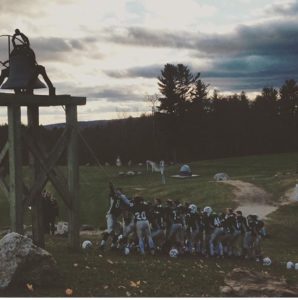
I was thrilled. Everything was going great. I couldn’t be more happy to do the thing I love at a school I knew I was going to fall in love with. Being accepted into Hebron Academy was by far one of my most proud moments of my life, and now I got to play football with a new head coach that I knew was going to make me a better person and player. I had never been excited for school and now I could hardly wait for my first day. During the first three days of practice I could already feel a special bond with the team and coaches take place.
I immediately fell to the ground and winced in pain when I heard the pop. I looked down at my left leg and could only think the worse because my knee cap should have never been where it was. It was only the fourth day of practice at a new school and I knew this was bad. I had always cruised through athletics without a major injury throughout my life but now I had to face a new challenge. In Mr. Vining’s office he determined that it was just a dislocated kneecap and I should be back to play in two weeks, but never did I think that nearly every single practice and game that my knee cap would dislocate again and again and again. I limped and dragged myself through each game with the help of Jose Carlos and Connor Butler by my side every play, and I knew that I was pushing myself too much. I didn’t want to believe that there was something else wrong with my knee although it was inevitable that something else seriously was.
The fifth week of the season was easily the greatest week of the season. The football team had practiced with so much intensity from Monday to Friday with only one thing on our minds, beat Dexter. Everybody on the team wanted this win more than anything because this was Coach Harrison’s old team and we could all tell that he wanted it too. For that reason, Coach Harrison had lit the fuse that inspired us to come together and play in a way that I have never seen before. As the Saturday afternoon game started in Boston, until the seconds ticked off in the fourth quarter, we were a well oiled machine. We fought our way to a 36-6 victory and we all played for Coach Harrison. He grabbed the respect of our entire thirty four man roster because he cared so much for each and everyone of us. We celebrated our win in the locker room but we all knew that the win tasted so much better for Coach Harrison than it did to his own players. He was so proud of us and we were all happy for him.
I didn’t know what to think. I didn’t know what emotions I was feeling. I didn’t know if I was mad, didn’t know if I was sad, didn’t know if I should be happy for him. I didn’t know. I held back tears as Dylan and I met privately with Coach Harrison when he gave us the news that he wouldn’t be coming back next year. A pit in my chest formed as my heart sunk like a falling anvil. I bit my lip and clenched my fists just to hold back whatever emotion I was feeling and to prevent the tears from falling. The news hit me like a screeching freight train. I never could have expected that Coach Harrison would be leaving. Dylan and I simultaneously looked at each other and I could tell he felt the same way I was. Never had I ever cared so much about one of my coaches. Coach Harrison has shaped and played a huge role on who I am today. I’ve never had more respect for a coach before in my life, but now I’ll have to face my senior year of football and school without him. I went home after school and wanted to be angry but I couldn’t be. How could I be mad at the man who has paved the path for me to be where I am today and has set me up to succeed in school and in football in the future?
Looking back on my first two years at Hebron Academy I have realized that I have so much to be thankful for. I have had to face a lot of things that have made me stronger and have met people who have made the most amazing impacts on my life. Coach Harrison has been there for me through thick and thin and there is no way that I can thank him enough for what he has done for me. From playing through an injured sophomore season to playing the best I have ever played in my junior year, Coach Harrison has lead me to the realization that I can improve in anything that I do as long as I work harder than I did the day before. As an advisor, teacher, coach, and person, Coach Harrison has taught me so much and done more than anyone has for me in the short time of two years. We consider the football team to be a family, and it is going to be incredibly hard to say goodbye to Coach Harrison at the end of the school year, but I know that he is and always will be proud of me.
Manipulative Charmers
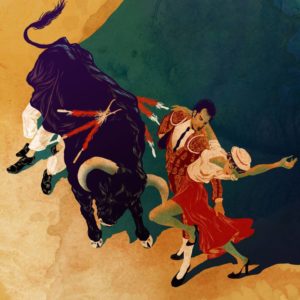 Beauty can make men do wonderful and terrible things. Throughout literature readers have seen many women persuade men with their beautiful looks and charming personalities. In the novels The Sun Also Rises by Ernest Hemingway and The Great Gatsby by F.Scott Fitzgerald Lady Brett Ashley and Daisy Buchanan are two beautiful women who play incredibly influential roles in two very different novels. Brett and Daisy shape the two novels by ways in which conflict revolves around their charm and they are able to manipulate men through the desire that they have for the them. It is clear that conflicts of both novels revolve around Daisy’s and Brett’s charm, and readers are shown this in the earliest parts of the novels.
As soon as Lady Brett Ashley and Daisy are introduced readers are able to pick up on their beauty. In The Great Gatsby Fitzgerald shows us this by stating, “But there was in excitement in her voice that men who cared for her found difficult to forget: a singing compulsion, a whispered “Listen,” a promise that she had done gay, exciting things just a while since that there were gay, exciting things hovering in the next hour” (Fitzgerald 9). Fitzgerald uses compelling language to portray Daisy’s beauty and charm that she has on ‘the men who cared for her’. Fitzgerald uses personification to show how Daisy’s soothing voice can be compared to that of a singer while at the same time her voice is as delicate as a whisper. This description of Daisy is given only a few moments after readers are introduced to her which Fitzgerald geniusly placed to show how substantial Daisy’s charm is. Similar to Fitzgerald, Hemingway shows Brett’s charm shortly after she is introduced as well: “She stood holding the glass and I saw Robert Cohn looking at her. He looked a great deal as his compatriot would when he saw the promise land… Brett was damned good-looking… She was built with the curves like the hull of a racing yacht, and you missed none of it with that wool jersey” (Hemingway 30). Although Hemingway is much more literal with his details of Brett, he still leaves an impression to the readers of how stunning Brett is. Hemingway uses a simile to show that Cohn is so drawn into Brett’s beauty that he stares at her is if a compatriot were staring at the promise land. Hemingway uses another simile to show Brett’s physical beauty by comparing her figure to the finely shaped hull of a racing yacht, and the narrator Jake even reiterates this by saying that the wool jersey that she is wearing allows shows off her curves even more. It is clear that Brett and Daisy are two stunningly visual characters, but their personalities differ from the beauty of their looks.
Daisy and Brett both shape the novels that they are in by playing a manipulative role that causes other characters to go to extreme lengths to keep a relationship together. Hemingway shows us this when Bill explains what Cohn has done to Romero and says, “It seems the bullfighter chap was sitting on the floor. He was waiting to get strength enough to stand up and hit Cohn again. Brett wasn’t having any shaking hands, and Cohn was crying and telling her how much he loved her, and she was telling him not to be a ruddy ass” (Fitzgerald 206). Cohn made a huge mistake by beating the hell out of Romero because he was so obsessed with Brett and he couldn’t have her. Instead of being honest with Cohn and telling him how she doesn’t feel the same about him as he does to her, Brett manipulates Cohn because she mostly enjoys the attention that not only Cohn but many other men give her. There is another instance where Brett has betrayed her fiancé, Mike, where he has been drinking to celebrate the entire Spain trip, but his drinking has now become unpleasant because he has to deal with the stress of Brett being with Romero instead of him. Brett recognizes the things that men do for love for her but she fails to do the right thing every time. Similar to Brett, Daisy Buchanan reacts the same way that Brett would in a situation where she can take advantage of the man who loves her. In The Great Gatsby Daisy has left such an effect on Jay Gatsby that he would even take the blame for a murder that he didn’t commit: “‘Was Daisy driving?’ ‘Yes’ he said after a moment, ‘but of course I’ll say I was.’” (Fitzgerald 143). Gatsby feels so strongly about Daisy that he would rather face the consequences of having killed somebody rather than see Daisy face that punishment. Where Daisy has manipulated Gatsby and taken advantage of him is the way in which she doesn’t thank or hardly even recognize that Gatsby has taking the fault for something that could put her in prison for the rest of her life.
Men throughout literature have always fallen for the beautiful girl. While women like Daisy and Brett may be charming and pretty, they should not be considered beautiful because their ugly personalities completely contradict their looks. Daisy Buchanan and Lady Brett Ashley shape the novels that are in because of how the men drool over their charm and because the two girls are manipulative and take advantage of the love that other men have for them.
Pearl’s Negatives Outweighs Her Positives in Hester’s Life
What effect does a child have on her mother? Or more specifically, what about when the child was conceived accidentally and born without a father? In The Scarlet Letter, by Nathaniel Hawthorne, this is the exact circumstances that Pearl is born. She is a fatherless child and has a mother who has been banished by society. More importantly Pearl is the direct result of one of the most horrible sins according to Puritan faith. That said, to suggest that Pearl is the living embodiment of sin, a devil, or detrimental to Hester is up to interpretation because Pearl could also be the source of joy and happiness as well as the will to live for Hester.
In The Scarlet Letter, by Nathaniel Hawthorne, Pearl has some positive influences on Hester’s life. In chapter 6, Hester tells us that “she named the infant ‘Pearl,’ as being of great price – purchased with all she had – her mother’s only treasure” (Hawthorne 80). The phrase ‘as being of great price’ refers to a Bible verse that discusses how the Kingdom of Heaven is like a great pearl, and how a merchant spent all that he had for it. This infers that Pearl really is Hester’s ‘only treasure’, but still does not necessarily bring joy to her life. Another example of Pearl’s joy and redemptive role in Hester’s life occurs in chapter 9. After Hester wins custody of Pearl at Governor Bellingham’s house, she encounters Mistress Hibbins, the Governor’s sister. Hibbins is eventually executed as a witch years later. She invites Hester to come into the woods and sign the Black Man’s (Satan’s) book. In which Hester replies that she must go home and take care of Pearl, but if Bellingham had taken away Pearl than Hester would have “gone with thee”, Hibbins, “into the forest, and signed my name in the Black Man’s book too, and that with mine own blood” (Hawthorne 105). Without Pearl, Hester literally would have signed her name in the devil’s book ‘with mine own blood’, which basically means certain death for her if her child was taken away. By pulling Hester away from death, Pearl plays the redemption role in her life by pulling her away from sin. Pearl also displays a supportive role for Hester in chapter 7. When walking to the Governor’s house, Hester and Pearl run into a group of kids, who insult them and throw mud at them. Pearl responds by “Frowning, stamping her foot… made a rush at the knot of enemies, and put them all to flight… She resembled…” [a] “half-fledged angel of Judgement – whose mission it was to punish the sins of the rising generation” (Hawthorne 92). The key phrase is when Pearl is compared to an “angel” with a mission to “punish the sins of the rising generation”. Some could say that another mission of Pearl’s was to redeem Hester. Either way Pearl responds well to the children and is not afraid of standing up for her mother.
In The Scarlet Letter, Pearl also plays the role of being a fiendish punishment and a destructive force in Hester’s life. In chapter 6, when describing how Hester felt with Pearl, Hawthorne says that “Hester had never felt a moment’s safety; not a moment’s calm enjoyment with her” (Hawthorne 87). That does not seem like Pearl is playing the joyful role in Hester’s life; in fact, Pearl plays the destructive force in Hester’s life by taking away her ‘safety’ and ‘calm enjoyment’. Later, on the same page, Hawthorne again tells how Hester is haunted by Pearl, the fiendish punishment for Hester’s sin. The paragraph goes on to say that while Hester is gazing into Pearl’s eyes, she is convinced that she sees a devilish spirit the lurking within. The evil spirit, smiling with malice, mocked her. Hawthorne later says that “many a times afterwards had Hester been tortured, though less vividly, by the same illusion” (Hawthorne 87). Hester is ‘tortured’ by this image; therefore, it is safe to assume that Pearl is not bringing much happiness to Hester. For “many a times afterward” when Hester looks into Pearl’s eyes or maybe even thinks about them she is tortured by the illusion of this evil spirit. This is another example of how Pearl plays a negative role in Hester’s life. Similarly, Pearl is also seen as a destructive force in Hester’s life in chapter 8. At the Governor’s house Hester is trying to win custody over Pearl and Mr. Wilson asks the child the simple question of “who made thee?” In which Pearl replies, well knowing exactly who made her, “that she had not been made at all, but had been plucked by her mother off the bush of wild roses, that grew by the prison door” (Hawthorne 100). This is possibly the worst time for Pearl to say this, and it nearly destroys Hester. The question was supposed to test Pearl on how much she had been taught about Christianity. Hester had taught about their faith well and it is acknowledged that Pearl would have done well in the New England Primer and the Westminster Catechism, which were tests on a child’s knowledge. Yet, Pearl has to say this and make her mother look like she has been teaching her some devilish worship. This greatly exemplifies how Pearl is a destructive force in Hester’s life.
To wrap it up, Pearl’s negative effects in Hester’s life far outweigh the positive effects. In her positive impacts, Pearl is a great treasure to Hester. She essentially is the only thing standing in between Hester and the Black Man’s book and stands up for her mother. The negative role however that Pearl plays outweighs the positives because Pearl threatens Hester’s safety and calm enjoyment. She tortures Hester with the evil possession of her eyes, and purposely works against her mother to make it look like Hester is unfit to be her mother.

Societal Comparisons from Modern Day to Puritan Times
The first colonists of America came over to escape religious persecution and had the ability to practice their religious freedoms. Puritans were a group of extremely religious followers of the bible. Their society reflected the bible in their best interpretation, which is often viewed as too harsh. However, religion does serve a purpose. Nearly all laws are based off of the ten commandments, such as, thou shalt not kill, and thou shalt not steal. Other commandments may not be a law, but, it does stand as a moral standard for individuals, at least for now. In The Scarlet Letter, by Nathaniel Hawthorne and The Crucible, by Arthur Miller, the two authors are critical and contemptuous of the Puritan society and their perhaps overbearing morals; however, is there proof that modern society is any more moral? Morality has descended from the Puritan times to modern day society due to the increasing omission of faith in law and culture.
Morality has shown a plummet since the 17th century Puritans due to the evermore increasing omission of faith in culture. In The Crucible, a reverend tells a man, after he had forgotten one out of ten commandments, that “Theology, sir, is a fortress; no crack in a fortress may be accounted small” (Miller 67). This is a tremendous analogy. Comparing the study of the bible to a ‘fortress’ and then saying that a ‘crack’ is not too small to bring it down is brilliant. Like it or not, the reverend makes an accurate statement. If you forget one commandment, and think it is no big deal, then it becomes easier and easier for you to forget the next one and the next. Take for example a workout routine, there are a set amount of exercises that you must do. Now, say that you forget or are just too lazy to do a certain exercise one day, but, you think nothing of it. The next day it becomes just a little bit easier to forget another one or to not do it. The reverend points out that in order for a continuous success in morality, one must continuously strive for no ‘small cracks’. In comparison to the latter argument, modern society has strayed away from faith and created small cracks to the fortress. A news article in the Washington Times observed that while introducing Hillary Clinton, the 2016 Democratic Nominee, Susan Shin Angulo, a member of the Camden County Board of Freeholders, said “Only Hillary can bring us together as one nation, un- — indivisible, with liberty and justice for all” (Richardson, 2016). Now, take into consideration the audience this woman is addressing. They are going to be democratic, because of the special speaker, and we know that democrats are generally less religious than republicans. Beside the matter, it does not matter the political party, but rather the speaker was trying to appeal to the audience by omitting the words “under God” in the Pledge of Allegiance. This is a crack in the fortress. This omission of faith from everyday activities is dangerous to our morality because it threatens to begin the complete omission of God from all things. Now, just because someone no longer believes in God does not mean that automatically makes them immoral. They are still capable, but they lack a code of law that everyone else follows. Therefore, there is an increasing immorality in culture from the puritans to modern society.
Morality has increasingly fallen from Puritan to modern society because of the omission of faith in laws. In The Scarlet Letter, a random woman says this about Hester when she figures out her punishment, “This woman has brought shame upon us all, and ought to die” (Hawthorne 46). The Puritans believed that because of the seventh commandment, which stated that you shall not commit adultery, there ought to be a punishment for it. The puritans interpretation for punishment was death or the culprit wear an “A” on their chest for the rest of their life. Hawthorne seems to be hinting how preposterous it is for a woman to be punished by execution for adultery; however, do not immediately believe that because Puritans believed in execution they were immoral. Compared to modern society it at least provides a punishment. Granted, death is a far too hefty punishment, but having no punishment is far worse. In a report by Candis McLean, he states, “people are more exposed to licentious behaviour,” and “they become more accepting of it. Increased acceptance of affairs leads to an increased willingness to participate in an affair” (McLean, 2000). McLean understands that because the increasing omission of faith, people are exposed to more and more ‘licentious behavior’. Which then prompts people to commit adultery themselves because it is being accepted; however, that does not mean that it is being embraced. In 16 states adultery is illegal. The punishment ranges from ten dollars in Maryland to 3,000 and up to a year in jail in Minnesota (Oehler 2015). This shows that some states are continuing to follow religious moral codes, but, that still leaves out 34 other states, who deem it acceptable by law to commit adultery. If the law says the latter, then what do the citizens think? It becomes easier and easier for a less moral society. However, even the states that make it illegal are under fire. Global trends have shown that “Adultery bans are a fading but a persistent global phenomenon” (Delman, 2015). Do not be surprised that the remaining states will repeal their bans in the coming years, because the people believe that adultery should be dealt without the law. However, the opposite effect could happen, such as a lessening of immorality because the law does not enforce it.
Morality has decreased since the puritan era to modern society due to the omission of faith in laws and culture. In The Crucible, a reverend talks about how the study of God is a fortress and politicians start to omit words referring to religion to appeal to the population. This will and is leading to an increase of immorality. The same can be said for the omission of faith in law. Adultery was heavily punished by the puritans and in modern society states have laws banning adultery; however, global trends have also lead to repeals of the laws and therefore an increasing of immorality again.

The Sun Also Trusts
No matter what, it is a never ending cycle. This cycle can take however long it needs, but, whether big or small, it always has an end and a beginning. In The Sun Also Rises, Hemingway uses Jake Barnes and company to show themes of betrayal and trust throughout the novel. The Sun Also Rises explores the theme of trust far more than betrayal. In the novel the theme of trust is far more complicated and drawn out compared to the quick acts of betrayal. This long drawn out theme is what drives the book forward and makes The Sun Also Rises great.
In the novel, Montoya, Jake’s aficionado friend, puts his trust into Jake but no longer trusts him after Jake’s betrayal. When Jake, and his friends, are dining with Romero, he notes the way Montoya reacts to the current situation. “He started to smile at me, then he saw Pedro Romero with a big glass of cognac in his hand, sitting between me and a woman with bare shoulders, at a table full of drinks. He did not even nod” (Hemingway 180). In order for one to understand the latter, one must fully understand the context prior. Montoya and Jake are occasional friends, the type of friends that see each other every once in awhile and talk about something they have in common and that is it. However, recently, Montoya confronts Jake about whether to forward a message to Romero about going to dine with the American Ambassador. Jake says to not forward the message, which only corroborates what Montoya had been thinking as well. Montoya, and it appears Jake at that moment as well, believes that the American culture will ruin the pure spaniard bullfighter. Nevertheless, Montoya had gone to Jake not only because he is an American, but also due to the fact that Montoya trusts Jake’s decision making. It seems that Montoya himself could have made the decision, but, he trusts Jake has the better judgement. So, when Montoya catches Jake being a complete hypocrite, he is insulted and betrayed. He ‘did not even nod’, which goes against the repetitive trademark of Montoya’s. Some people will then say to look at how Montoya reacts to Jake throughout the rest of the novel, which is rather poor. Yes, you could say that Montoya was betrayed and that is why he is not talking to Jake anymore, but really it is about the trust that is no longer there. The betrayal is a one and done, but trust and lack of is always present before and after. Yet, this theme of trust being a driving factor in the novel is not a one time event.
We also see Mike put his trust into Brett and then lose it. After Brett runs off with Romero, Mike says in his drunken state, “I’m rather drunk… I think I’ll stay rather drunk. This is all awfully amusing, but it’s not too pleasant. It’s not too pleasant for me” (Hemingway 207). Mike mentions many times before of his acknowledgement that Brett will have an occasional fling here and there. He knows about Cohn and Brett; however, the only reason that Mike does not lose trust in Brett is because he knows, or thinks, that she still loves him. Brett constantly talks of how she hates Cohn, and Mike just ignores their brief affair. In his mind, her affair does not really matter if she still loves him, and that is why he trusts her. However, once Brett gets with Romero and it is apparent that she does not love Mike, he implodes. Without the love that Brett seems to give him he no longer trusts her. That is why he states that it is ‘not too pleasant’ and would ‘stay rather drunk’. With his drunkenness he can not face reality. The reality that Brett really does not love him and that he can no longer trust her. Once again we see that trust drives the novel farther than a single act of betrayal can, and Brett did this not only to one man, but to several.
One of those several was the narrator, Jake. Jake constantly trusts that Brett will always come back to him when something goes wrong. After her fling with Romero, Jake gets a telegram from Brett asking him to come and get her. In response, Jake sends a telegraph with haste and says to himself, “that seemed to handle it. That was it. Send a girl off with one man. Introduce her to another to go off with him. Now go and bring her back. And sign the wire with love. That was it all right” (Hemingway 243). The latter is far more direct than the other quotes and accomplishes a great deal. Despite personally handing Brett off to other men, he trusts that she will come back to him. He signs the telegraph with ‘love’ to convince Brett to trust that he is not angry, even though it is quite clear that he is by the descriptive paragraph following the quote depicting many landscapes as dreary. Off course he is angry and betrayed, but it is the trust that fuels this relationship. For if it were just betrayal, than why would she keep coming back to him and vice versa.
To cut things short, Trust was the driving force in The Sun Also Rises, due to its ability to keep relationships going as well as end them. Montoya trusts Jake in his decision skills compared to his own and he is then betrayed and loses his trust for Jake. Mike trusts that even though Brett will be with other men, she still loves him, which he later finds out is not true and stays drunk to keep the illusion that everything is alright. Jake knows that Brett will always trust him and sends her off with men knowing that she will eventually come back to him. All of these examples are processes that are driven by trust and makes the novel extraordinary.

The Tragic Heroism of A Girl of the Streets
Many famed classics have been built around the literary element of a tragic hero. Characters such as Oedipus Rex and Hamlet have risen to the top of their aspirations only to fall back to the depths of death due to their own faulty characteristics or the intervention of someone else. In Maggie: A Girl of the Streets, by Stephen Crane, one of the main characters falls into this misfortuned category. Maggie is a tragic hero because she is depicted as innocent in the beginning of the book; however, Pete, who represents all things bad in the book, takes her in and introduces her to the cheap and crummy life of his. Eventually the awful environment that Maggie is in turns her into a prostitute, until her dark death.
Maggie starts out as a naive and innocent girl in the beginning of the book. In fact the first sentence of the fifth chapter states “The Girl, Maggie, blossomed in a mud puddle” and then shortly after, Crane says that “none of the dirt of Rum Alley seemed to be in her veins” (Crane 23). Crane brilliantly depicts the environment that Maggie is growing up in as ‘a mud puddle’ and by saying that Maggie ‘blossomed’ in the puddle goes to show how special and unique it was for a girl to grow up and have good qualities that ‘none of the dirt’ of her environment could get into. The latter shows why Maggie was innocent and even on the climb to the top; however, all good things have a turning point.
Pete primarily serves as a antagonist throughout the book, especially towards Maggie by creating and putting ideas of how life is into her mind. After first recognizing her only by her hot body, he brings her to clubs, of which Maggie has utterly no experience with, as well as men. She “perceived that Pete brought forth all his elegance and all his knowledge of high-class customs for her benefit” (Crane 32), and of course because Maggie is innocent and naive, she doesn’t even know what high-class customs are. Before Pete had said “say, what dah hell? Bring deh lady a big glass!” (Crane 32), which in the vast majority of opinions would not appear elegant or high-class at all. However, we can not truly blame Pete for his lack of knowing the propers at that time period, but we can make a strong argument of his choosing to bring Maggie to basically a strip club. We get a glimpse of what type of environment that Maggie is in with a fantastic description by her.
“The usual smoke cloud was present, but so dense that heads and arms seemed entangled in it. The rumble of conversation was replaced by a roar. Plenteous oaths heaved through the air. The room rang with the shrill voices of women bubbling o’er with drink-laughter. The chief element in the music of the orchestra was speed. The musicians played in intent fury. A woman was singing and smiling upon the stage, but no one took notice of her. The rate at which the piano, cornet and violins were going, seemed to impart wildness to the half-drunken crowd. Beer glasses were emptied at a gulp and conversation became a rapid chatter. The smoke eddied and swirled like a shadowy river hurrying toward some unseen fall” (Crane 64).
The ‘smoke cloud’, the ‘roar’ of conversation, the ‘fury’ of the music and its effect on the ‘half-drunken’ crowd, and the smoke rushing like a ‘shadowy river hurrying toward some unseen fall’ all contribute to an overarching ridiculousness of madness. It goes without a doubt that anyone placed in this club would turn into a some sort of fiend within a few days. So it is no wonder why Pete was the reason for the beginning of the fall of Maggie.
Crane makes it clear at the end of the book that Maggie was a tragic hero by turning her into a prostitute. Crane depicts Maggie’s downfall by describing “A girl of the painted cohorts of the city went along the street. She threw changing glaces at men who passed her, giving smiling invitations to men…” (Crane 78). The level of respect that Crane creates through this quote and the rest of the chapter is extraordinary. He makes sure not to mention her name at all, and refers to her as ‘a girl of the painted cohorts’, meaning a prostitute. By not saying her name, Crane is implying that she has become something completely different than what Maggie was. Maggie’s downfall is sealed at the end of the chapter with her death, where she vanishes into the depths of dark river, far from any nightlife.
Maggie’s life as a tragic hero is epitomized by her innocence early in the book, and then the cruel downfall through Pete, and ultimately her dark and lonely prostitution and death. Maggie ‘blossomed in a mud puddle’ and it seemed that she would make it out of her horrid childhood. Yet, by meeting Pete, his first impressions made a lasting impact on her, and she took a turn for the worse. Her eventual prostitution and death symbolizes the effect that Pete and the club had made on her.
Remember
I remember that day very clearly. The sun was beating down on us as if we were the anvil and the sun the hammer. Relentlessly conforming us into what was desired. What was expected. It was only a matter of time before a naive blacksmith outstretched a skinny and soft arm to grab a hold of the hot metal without the chance of letting it cool down. Then the subsequent backlash of the metal, that was doomed to happen, and the jump and fright, eventual pain, of the blacksmith. Joey had given him a beating that was rather undeserved. I believe, to this day, that we both knew that. Yet, at the same time, who could blame us? Nothing to do all day besides for the monotonous bending and picking of cotton. Harley was innocent, merely just in the wrong place at the wrong time. The way the sun hits off of the field and the long distance from the farmhouse only made things easier for us. To try to escape the sun, as well as our exhaustion, we bedded down like fawns. Like fawns we were hard to see, and Harley came up over that ridge quickly. He was running for no good reason and stepped on Joey. At the time we had just begun to start into the bottle of whiskey and Harley, being the prized and loyal son of our employer, took things very seriously. Before we knew it he was cussing us out here and there, telling us to get moving or he will do more than just tell his father. Suddenly, I became aware of a heinous glare setting into Joey’s eyes. His eyes, glazed over, and yet were extremely focused at the same time. They seemed to account for everything; Harley’s clothes, shape, muscularity, twitches, the unsurprising cleanliness of his nails. That glare seemed to trigger some memory that, even though there, evaded me like little bird. Chirping, tweeting, egging me on. I did try to catch it, but it was to no avail. Besides, at the moment there were far more interesting developments occurring at the time to worry about remembering. Joey had taken a few more steps forward and now seemed to take a more aggressive stance. Tension brewed in the air, a soft gust of wind pressured my face. The kind of breeze that only foresees a dark storm approaching. Despite actually happening at a quick pace, I still replay this event in a slower motion. Joey lunged forward and caught Harley with an explosive jab to the throat. Joey, being very well built, took Harley down with ease. Harley lay there grasping at his throat, writhing about. His face turned purple. We both watched until Harley passed out.
Then Joey asked me. “Are you okay?”
Those words, like steel sparks hit over a small pile of flint, ignited a wave of memories. I do not know why those memories had not come to me before, perhaps it was the heat of the sun. I remembered the words that Joey had asked just moments before, but instead the roles were reversed. I was the one asking that deeply caring question. It was when we were both much younger and were friends with Harley as well. Before, we were too small to be doing the work of young men in the fields. So we worked around the barnyard carrying out simple and easy chores. Harley would come out and play with us when we were done and we’d have a grand old time. One day, out in the barnyard, Harley began teasing Joey. Calling him names, making fun of his goofy hair, pointing at his ripped clothes and filthy nails. Eventually Joey pushed Harley into the horse barn. Horses are not usually dangerous, but when spooked and with something behind them, things can get hairy very quickly. Long story short, Harley was kicked by a horse and went running and screaming into the farmhouse. Mr. Youngsen came storming out of the house and grabbed Joey by the hair. Dragging him over to a post, where he then took hold of rope and tied him there. A whip was presented and Joey received the meanest whipping I have ever seen. After it was over, Joey stood there hugging and crying on the post. We must’ve been there for hours before Mr. Youngsen permitted me to release Joey. He fell to the ground like a sack of potatoes and I carried, or more like dragged him, into the barn. His eyes were glazed over, nothing left in them.
Forty years later I still remember that day when we killed Harley Youngsen. I say ‘we’ because I allowed it to happen. I should have remembered what had happened in the past between the two of them. Harley’s trachea had been fractured and the bone had punctured an artery in his neck. He choked on his own blood. Remembering the past is essential to progressing forward. I could have stopped this all from happening if I remembered; however, that is the past now, and you can not change it, but you can prevent similar things from happening.

Silence
Tick….Tock….Tick….Tock….Tick….Tock. Decisions. Decisions. You have to make a decision but you’re not quite certain exactly what to do. You eventually decide to just play it safe. Nothing different. Same old you. There are numerous intangible things that someone carries throughout their life. These burdens, although some may not be, influence how your life is shaped. Personally, silence has been the thing I have carried throughout my life and it has impacted my life in ways that are for the better and worse.
Silence can drive some crazy; however, for me it provides an enhanced ability to observe. Throughout my elementary and middle school years I moved between numerous schools. I began kindergarten enrolled in Crescent Park Elementary. After one year, my parents made the executive decision to send me to Boxbury Elementary in Oxford. Then after a troubling experience, I was homeschooled for around two years. Homeschooling was a great experience, even though it did put a lot of stress on my Mother; however, I learned much more than I would have if I had gone to Crescent Park. Unfortunately, my parents decided once again to send me to Crescent Park for my fourth and fifth grade years. Then after growing accustomed with the students in Bethel, I switched schools for my sixth grade year. That year I went to the Hebron Academy Middle School, but it was short lived. Due to a number of reasons I switched schools yet again. For seventh and eighth grade I went to the Telstar Middle School. Overall, I switched schools six times within a period of eight years. I have always been incredibly quiet since I was young, but swapping schools and friends every year or so made it extremely difficult to be as socially active as other students. With that being said, I still had friends. I was not a loner, or an outcast. Sports helped me a lot with that; however, I was still not especially outspoken. As a result, at lunch or in the classroom I would sit there and enjoy my silence. Often times in the dining hall at Hebron today I will sit at the end of a table at the far side of the dining hall and just watch and listen like a high-flying bird. Looking at people’s habits, things said at other tables. Every single detail. I would note how people interacted with each other, trying to understand what type of relationship they held at that moment. Often I will not say a single word at a table.
This is not a lesson of how silence can affect you negatively. Sure, I wasn’t conversing with others at the rate that some do; however, in the classroom it proves to be extremely helpful at times. Numerous occasions have arose when a teacher has been trying to teach and someone else was talking over them. I can see the stare that the teacher begins to develop. That stare, almost sympathetic, mostly annoyed. The waiting. I do not say anything, I just wait for the student to eventually realize their inconsideration, or be strictly told off by the teacher. Silence has made me far more observant and considerate than most.
Tick….Tock….Tick….Tock…. Silence. Similarly to a soldier waiting and listening for things, taking note, I wait and listen. Taking note of interactions. Silence is the thing I carry, and others should as well. Silence is a virtue.