
Cons of AI

By Charlotte Sveinsson ’29
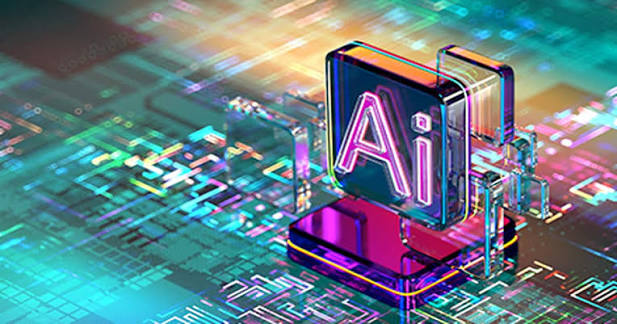
Roughly 5,000,000 gallons of water per day, 365 days a year, adds up to 202,000,000,000 gallons of water a year in order to cool AI data centers. “Data centers for AI are not the same as they used to be; now they are enormous facilities that are going 24/7, and they often use energy equal to that of a whole city.”(McGrath). The risks of AI are endless, whether it be extreme water waste, getting your job stolen, people getting much easier access to creating weapons of mass destruction, or deepfakes being created and spread across the internet, and the list goes on. There is already a 12% chance that AI will enable weapons, cyberattacks, or other mass-harm capabilities in the next 5 years, which could potentially have extremely devastating consequences on humanity and all living things. This is happening because of the race to be the most advanced country, primarily between America and China. Both countries are trying to rapidly create and apply new AI systems to maximize their economic and technological advantages, which leads to their AI systems becoming more and more prone to error. 

A very common fear amongst people is that of not being able to get a job because of AI. “It is estimated that by 2030 92,000,000 jobs will be displaced globally by AI”(Wong). This shows how AI can affect people directly, as it might for other people who have irreplaceable jobs such as a registered nurse, plumber, electrician, and physical therapist, which all require the manual labor and intelligence of a real human being. We need money to survive, and without jobs, we will not be able to get the money we need to buy food, water, a house, and many other necessities. “Only when the last tree has been cut down, the last fish been caught, and the last stream poisoned, will we realize we cannot eat money.”(The Lorax, 1972). We can not live without the world we have built, but the world can very easily live without us.
Why AI Is OK

By Addy Madsen ’29

Artificial intelligence is something humans can’t fully understand or agree on. AI can be a tool that we can use in everyday life, but that’s not the kind of artificial intelligence I want to talk about. I want to talk about the kind that goes beyond the day-to-day basis; I want to talk about the type that can change the world for the better. 

10 million people die each year from cancer. 10 million. Cancer has, in some way, affected you or the ones you love. Mankind still does not have a secure cure for it. However, doctors and medical researchers are using artificial intelligence to help end cancer. One article I read talked about how, “All of these computer algorithms use data such as investigations performed, scans conducted, patients’ medical histories, and other information to forecast or diagnose a cancerous condition.” (Press). What could take humans months to years to find out, AI finds in seconds. Not only is AI finding patterns through the data, but it is also offering economic stability and job opportunities. 

There has been a lot of fear that “AI is replacing jobs.” But in fact, it’s finding new ones. Farrel remarked that AI is bringing in 17.1 trillion dollars in the next 5 years. This is not because it’s taking jobs; it’s because it’s opening up new job opportunities in many different fields. In an article about AI affecting the workforce, “AI is expected to create 20-50 million new jobs globally by 2030. These new jobs will be in a range of industries, including healthcare, manufacturing, and finance”. (Farrel). This shows that AI is positively affecting us with new job opportunities and economic stability. 

One major downside of AI is its effects on the environment; in fact, it impacts climate change. Climate change has been something we humans have started to care more about in the past decade. With the rise of artificial intelligence, people are noticing what is happening to climate change due to AI. However, many researchers and scientists are trying to mitigate its effects, and machine learning (the bedrock of AI) can do just that. AI could be the solution to global warming; in fact, “An AI system could, for example, play a role in developing and making the most of new green and renewable energy systems, or finding ways to minimize carbon emissions to improve decision-making processes for governments across the globe.” (Press). This suggests that artificial intelligence can have its downsides, but it can find innovative ways to redirect its effects and make it into something that reverses climate change. 

In conclusion, Artificial intelligence is still something that mankind grapples with functionally and socially. While there are some downsides, ultimately, AI will innovate the world as we know it for the better. When AI is used as a proper tool, we can solve economic problems, climate change, and medical difficulties that we as humans struggle collectively to solve.

The Use of ChatGPT in High School

By Sage Joyce ’29

Imagine having a homework question at 10 p.m. and not knowing who to ask. For many high school students, ChatGPT has become an easy way to get help or understand a question. Whether students are struggling with an essay, trying to understand math, or just looking for ideas, ChatGPT can give them answers in seconds. But while it can be useful, it also comes with some problems.

One major benefit of ChatGPT is that it can make schoolwork easier to understand. If a student doesn’t understand something their teacher explained in class, they can ask ChatGPT to explain it differently. It can also help students brainstorm ideas, organize their thoughts, or find mistakes in their writing. Instead of giving up when an assignment gets difficult, students have another resource they can use.

However, ChatGPT can also become a problem when students depend on it too much. Some students might use it to write an entire essay or finish an assignment without actually learning anything or doing the work. This can make school easier in the moment, but it can hurt students in the long run. If students always let AI think for them, they may have a harder time developing their own writing, problem-solving, and critical-thinking skills. Students using ChatGPT to cheat has been a very common issue throughout high school these days. 

Another issue is that ChatGPT is not always correct. It can give information that sounds convincing but is actually wrong. Because of this, students should not automatically trust everything it says. They should check important information and use reliable sources, especially for research assignments. There have been many instances where students use ChatGPT to cheat on tests and end up failing anyway. 

Overall, ChatGPT can be a helpful tool for high school students if it is used responsibly. It should be used more like a tutor or study partner than a shortcut. AI is probably going to be a bigger part of education in the future, so learning how to use it correctly is just as important as learning the subjects themselves.

Gossip Girl 2.0

Juliet Son’ 28

In Gossip Girl, Blair Waldorf says, fashion is “the most powerful art there is. It’s movement, design, and architecture all in one. It shows the world who we are and who we’d like to be.” Fashion defines who you want to be and how you want to be perceived by people. In 2026, the flow and trend of fashion changed rapidly with the development of social media, allowing people to share and connect.

As the 2016 era is going viral, messy, splendid, and the use of anything that goes with bold is becoming a part of the new 2026 trend. Oversized and big-framed sunglasses such as Chloè’s square frame sunglasses and Gucci’s special fit square sunglasses, big, long, and multiple-layered jewelry, and bold colors – hot pink, sky blue, and green – clothes especially tracksuits from IAMGIA and Juicy Couture are examples of this trend. Regarding the ‘messy’ trend, wearing silky slip dresses with long and very sparkly accessories, skinny scarves, splendid purses, and bold makeup, which is called lingerie fashion, is also a part of the trend. Women’s Fall/Winter 2026 Runway Show from ‘7 for all mankind’ showed this trend amazingly, evoking early 2000s nostalgia.

One trend that blew up the millennial generation has come back in 2026, which is military-style jackets. Military-style jackets are often referred to as Napoleon jackets, a military coat style worn by Napoleon during the early 1800s. Its genderless style and traits make people more fascinated and want to wear it. Double-breasted, high collar, and gold buttons are conspicuous. People often match denim, skinny jeans, and sunglasses with it to add more chic and classy vibes. Cropped style, long style, and fur style, so many types of Napoleon jackets are coming out, and lots of brands are recreating it with their own styles. Alexander McQueen’s S/S 2026, Balmain F/W 2025, Ann Demeulemeester’s S/S 2026, and Dior S/S 2025 are examples.

The footwear trend highlights the balance between comfort and style. Slim sneakers are leading this trend with a wide range of styles within low profile, flat or minimal sole, lightweight, and simple design. This trend significantly emphasizes the change in footwear characteristics because it shifts from big, bulky designs to cleaner, refined, and understated designs. Also, slim sneakers give off quiet luxury and are stylish, but not flashy, which shows that the minimalism trend is back. Moreover, Sneakerina shoes are the evolution of this trend combining ballet flats and 1970s sport shoes to evoke a more classy and elegant style. Speedcat ballet venus from Puma, Tokyo MJ from Adidas, and LV Sneakerina from Louis Vuitton show several different styles within Sneakerina styles.