The composition of our life can not be without our friends, because friends can be our laughter-making machine, our cardiotonic, our emotional trash bin, or our mischelf-maker. Friends are amusing, supportive, although they are sometimes also disruptive and annoying; however, these together paint and depict our colorful life scrolls.
Turning off the screaming Pikachu Alarm, I woke up normally at 6:45, another normal school day. After brushing my teeth and finishing my breakfast, roasted toast and porridge, I pushed the bicycle out of my house. The wheels quickly began to rotate on the trail, accelerating; the music gradually began to revolve in my mind, lingering; the wind suddenly began to inflate in my shirt, blowing. Everything was relaxing, but I did feel a little strange because the ride was too relaxing.
At the stop sign of the cross road to the school, I met my classmate, Yi. Riding on our bicycles, we nodded to each other. However, the dramatic smile on his cunning face surprised me, I asked:
“What’s wrong?”
“Don’t you feel too relieved today?”
“Excuse me?” I was so confused; sometimes it’s really hard to understand his intentions because he always made jokes and japes.
Suddenly his laughter blasted. Under my baffled stares, he ceased laughing being. He then grabbed stomach and gasped the words, “Why doesn’t a student have his school backpack on his way to the school.” Yi then continued his endless laughing.
I immediately tapped my back, there was nothing there. I felt so embarrassed, turning around my bike, I began to ride home as fast as I could. As I was riding against the tide, I saw a lot of familiar faces, my schoolmates, my classmates, and my friends. It was pretty obvious but strange when you were against the flow; therefore, many of them asked me about what happened along the way home, and I answered quickly. Although it has been such a long time, I still remember that my best friend comforted me: “Don’t rush, just ride safely. You got time, it is ok.” All these brief reminders really warmed my heart. Finally, I reached the school on time, with my backpack on, which had been laying on the shoe shelf.
My story had already circulated around the classroom, I never thought that I would be under the spotlight because of not bringing my backpack to the school. However, after the first class, my friends all gathered around me; although they did taunt me about forgetting my backpack, which I admit is really ridiculous, they give me any suggestions about how to overcome this. The suggestions were really silly when reminding myself of them; for example, call me before I go to school to assure I have my bag; change my alarm name to: “Take your school backpack” and so on, but I did feel the sympathies and concerns from all my friends.
I can’t imagine my life without my friends. They can provide me with laughter and embarrassment; they help me, they support me; meanwhile, they taunt me and make fun of me. However, most importantly, friends are always there for me, they can color my life scrolls; they can fill my life blanks; they can make me feel alive.
As the sunset afterglow shone on our class photo, we have finished the last exam in my middle school career, which was also the last day of our school. The whole forty three of us sitting in the classroom were picking up the last piece of our memories while the head teacher, unlike her normal pace, slowly stepped into the classroom. At that moment, we could hear not only her sluggish steps but also our heartbeats.
“After getting along with each other for three years, you guys finally finished your little task in middle school,” after a short break, she continued: “all of a sudden, all of you have grown from little saplings to giant trees. Three years of hard working, now it is the time to shake off the stress. Go for the celebration.”
Under her benign and proud gaze, everyone threw all of their fulfilled quiz sheets, tests and notebooks out the window. Boys and girls shouted with excitement while the wind carried the sheets away and the fatigue and pressure finally released by discarding the sheets. She stared at this scene with tears, without being noticed, she wiped off the tears reluctantly. Gradually, the wild atmosphere came back to peace then silence, and students all returned to their seats, waiting for the head teacher’s further speeches.
Pretending to be serious, she looked around and continued her talk: “There is one last lesson I think I can teach all of you. There will always be fruits if you irrigate the seeds. Even if it is a Cactus, living in the harshest environment, it will have the most beautiful moment in its life, for example, bursting into the bloom or bearing delicious fruits. Now, class is over, pack and leave. Your parents must be really anxious now.” She walked away even more slowly than before. Right, she was aged three more years while we grew up three years older. After returning to her office, like being shackled in a chair, she watched the her class fading into the dusk. The trash bin standed beside her and devoured tissues one after another, until it’s almost fulfilled.
As the teens walked out of the campus gate, hugging and saying goodbye to teachers, I turned off the last bulb in the classroom, the lasting rotating ceiling fan and the computer. Locking the door and giving the key back to the headmaster, my job as audio-visual organizer, managing and controlling the electricity in the classroom, came to a satisfactory conclusion. It was almost dusk, the last sun rays were diminishing; the picture hanging on the board, with our class, became blurry. Recollecting my past middle school life, I walked out. Saying goodbye to teachers, I saw my parents. Hugging my parents, I glanced back at our classroom. The picture became completely dark and finally invisible.
And that is the last glance of my middle school life. At that time, we were all excited since the class was over and we would have a summer vacation. However, when I reminded myself of my last day of middle recently, I have a totally different understanding of her last lesson: as long as you dedicate yourself to your passion, you will gain the substantial fruit from your endeavor.
Good morning, I’m Alice or Dang Minh Hanh. I’m from Vietnam and I love love love books. I can read for days, my favorite genres of books are historical fiction and memoirs. For as long as I could remember, writing is my only expression of feelings, hence the use of “hence” there that I wouldn’t have used if I don’t write much.
I have very passionate feelings towards human rights causes or controversial issues like sexism, racism, or prejudiced against any type of identity. This is why I enjoy writing papers that improves my ability to argue effectively. Hope you enjoy reading them as much as I write them.
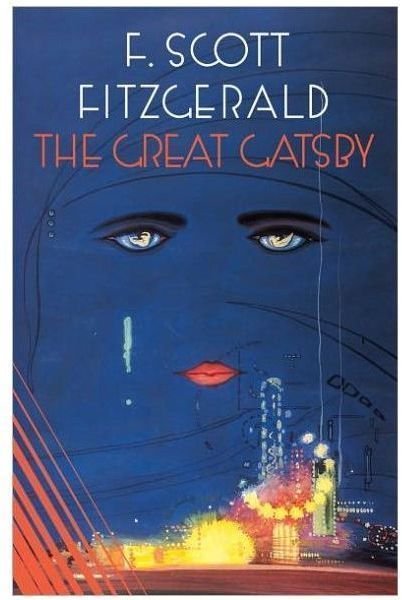
The American Dream is something that most people spend their whole lives pursuing. It is an ideal that is forced into the brains of small children by society beginning when they are just learning to talk. It is not necessarily a bad thing, and it varies from person to person; some wanting fame, fortune, and a mansion, some wanting to start a family and live life peacefully and quietly until their death. Though like said before, each person’s dream differs from another, and the uniqueness of dreams shown in the novel is when there is a white chauffeur for a African American family, or other parts when Nick and Gatsby are driving across the bridge. Many other scenes serve as a peek inside the American dream, including when Nick thought, “‘Anything can happen now that we’ve slid over this bridge,’ I thought; ‘anything at all….’ Even Gatsby could happen, without any particular wonder” (Fitzgerald 69). Anything could happen is the basic principle of freedom for a future that America was founded upon. Throughout the novel The Great Gatsby by F. Scott Fitzgerald, Jay Gatsby and many of his friends serve as the vessels in which the reader can see different aspects of the American Dream. The line “There are only the pursued, the pursuing, the busy, and the tired” (79) points out these different perspectives of the American Dream. Each character represents these perspectives where Gatsby is the pursuing, Daisy is the pursued, the busy is Nick, and Jordan Baker and Tom Buchanan are the tired. These characters all represent some aspect of the American Dream in different ways.
Gatsby represented the pursuit of the American Dream in his quests for wealth and Daisy. When Nick was describing how Gatsby acted, he said “Gatsby believed in the green light, the orgastic future that year by year recedes before us. It eluded us then, but that’s no matter—tomorrow we will run faster, stretch out our arms farther…. And one fine morning——” (180). In this case the green light represents Gatsby’s version of his American Dream. Throughout the whole novel, this green light is constantly what he was trying to pursue, which led to the pursuit of Daisy because she was a part of his dream. Gatsby constantly wanted Daisy and would have done anything to get her which is shown when “He looked around him wildly, as if the past were lurking here in the shadow of his house, just out of reach of his hand. ‘I’m going to fix everything just the way it was before,’ he said, nodding determinedly. ‘[Daisy’ll] see’” (110). He is willing to do anything and everything to achieve his hopes and dreams, which is a similar aspect to others going through their process to complete the American Dream. Usually though when there is pursuit, there is also the pursued.
Daisy represented the pursed or the main goal of Gatsby’s American Dream throughout the novel. When Jordan was speaking to Nick she said “‘I think he half expected her to wander into one of his parties, some night’…. ‘but she never did. Then he began asking people casually if they knew her,’… ‘It was that night he sent for me at his dance, and you should have heard the elaborate way he worked up to it. Of course, I immediately suggested a luncheon in New York—and I thought he’d go mad’” (79). Gatsby was finding connections and ways to get to Daisy, akin to how one would try everything and anything to gain their goal. He is the exact definition of pursuit in his relentless and tireless search for her. Daisy is this ideal for him, and he is in constant pursuit of her, making her a pursued person or object in this situation. Gatsby, like many others, devoted all his time and energy into this ideological perfect life for himself. He formed Daisy more into in object, and she lost all humanity she had. To him the alluringness of Daisy was not the way she acted, but in fact “that many men had already loved Daisy” (148). It “increased her value in his eyes” (148). She was nothing but a object, shown with the word ‘value’. It shows that Gatsby’s goals were a somewhat materialistic type, and that life was to him just one giant game. He is the vessel in that the American Dream can also corrupt and dehumanize people is shown.
Nick represented the busy, and always working hard aspect of the American Dream. During the explanation of the back story of Nick Carraway, it was said that “Instead of being the warm center of the world the middle-west now seemed like the ragged edge of the universe—so I decided to go east and learn the bond business” (3). Throughout the novel the reader could see that Nick led a more modest and honest lifestyle. He was working hard to get the money he earned, and did not resort back to family money to support him in his pursuits for his dreams. This is exactly how it is in the pursuit of the American Dream, where one has to work hard to get what they want, and even harder to get more than what they want, and Nick, being different from everyone in East and West Egg represents that part of the idea of the American Dream. Every dream comes to an end at some point, it is only just a dream, and life moves along with or without it.
Tom Buchanan and Jordan Baker represented the tired and worn out aspects of the American Dream after it had been achieved. When Nick was travelling to the city with Tom there was a brief moment where “[there was] a halt there of at least a minute and it was because of this that I first met Tom Buchanan’s mistress” (24). Tom cheated on his wife quite frequently throughout the course of the novel. This showed the reader that eventually, after dreams had been achieved, and life started to slow down, people will naturally become bored and start to cheat (literally and figuratively) their ways through the rest of their lives, and develop a careless attitude. Jordan serves as an example of this as well when Nick said “She wasn’t able to endure being at a disadvantage” (58). Also it was revealed to the reader later in the text that Jordan cheated often during her various golf matches. She did not care whether or not she got caught, much like how celebrities today often times are caught doing illegal acts or cheating on their spouses. Carelessness was also symbolized by her driving skills when she said “‘They’ll keep out of my way,’ she [Jordan] insisted. ‘It takes two to make an accident.’ ‘Suppose you met somebody just as careless as yourself.’ ‘I hope I never will,’ she answered” (58). She has the riches and everything that is acquired after the American Dream was achieved, and now she does not have anything she was actively pursuing, and it is over, and they lose their carefulness that drove them in their pursuit for a better life.
The American Dream was shown many different ways throughout the course of the novel, and it was shown more through the line “There are only the pursued, the pursuing, the busy, and the tired” (Fitzgerald 79) with different characters representing different parts of the line. Daisy represented the ‘pursued’ because of Gatsby’s efforts to win her heart. Gatsby represented the ‘pursuing’ with his constant efforts to gain wealth and Daisy’s affection. Nick represented the ‘busy’ in his hard work and not resorting back to family money. Jordan Baker and Tom Buchanan both represented the ‘tired’ in their careless and cheating ways shown throughout the novel. Even though one can see each character and their connection to the quote, there is one small word within it that makes a large difference; only. Not too long after the phrase was beating through Nick’s head, he starts to live in the moment. He pulls Jordan in and kisses her, and absorbs the moment he is in. He forgets about the drama with Daisy and Gatsby, and begins a carpe diem moment. Through his actions and in the phrase above, Nick is telling the reader to be present in the moment. Put aside the American Dream, or any dream that is, and live life as though anything in the world is possible, and the world might end tomorrow. So, like Nick, ‘carpe diem quam minimum credula postero’, or ‘seize the day, put very little trust in tomorrow’.
“It wasn’t a war story. It was a love story” (O’Brien 81). Tim O’Brien writes stories about his experience in the war in his novel, The Things They Carried. This is a collection of his experiences based on his emotions and situations. The depiction of dead bodies and horrifying conditions they were living in creates the image of war but Tim O’Brien makes a point to say that this novel is not about war but instead about love, human interaction, and the relationships between the characters in his stories. It truly is a love story, they daydream about their girlfriends back home, they love their families, they love living, and they love their enemies, but most of all they love each other.
In the first chapter of the novel Tim describes what the men carried physically and emotionally; a common item in their rucksacks was an item from a girl back home. Jimmy Cross carried an image of a girl he liked, but he also carried the memory of her in his mind all the time, he was constantly thinking about her and daydreaming about the next time, if ever, he would see her again. Dobbins was another man in the group, he wore his ex girlfriend’s pantyhose around his neck for good luck. Despite the men not having actual girlfriends waiting for them when and if they returned, they used women in their lives to find hope in the war and as a way to escape in their thought. Their rucksacks were already heavy but they made room for these little signs of love. Jimmy Cross received a small pebble from the girl he liked in a letter, “It was a simple pebble, an ounce at most. Smooth to the touch, it was a milky white color with flecks of orange and violet, oval-shaped, like a miniature egg” (O’Brien 7). He examined this pebble in detail and used it to remind him of the love he had for this girl and his home.
Before Tim left for the war he was young and had no intention of fighting, he did not believe in the war. Despite that, when he was drafted he was afraid to standing up for his beliefs by escaping to Canada. O’Brien quotes, “I was afraid of walking away from my own life, my friends and my family, my whole history, everything that mattered to me. I feared losing the respect of my parents” (O’Brien 42). He loved his family, his friend, and his life. He loved it so much he was not willing to give it all up to escape the draft. This is clearly a war story showing the process of getting into the war but also highlights the love in Tim’s life, what he was not willing to give up to escape. at war home was an escape, they carried pieces of their ‘girlfriends’ to remind them of happiness back home. In the Alpha Company Kiowa was a happy man who was always laughing and kept the men going, Tim added this detail about their experience in his story “…Kiowa had just laughed it off and said they should concentrate on better things. And so for a long while they’d talked about their families and hometowns” (O’Brien 163). Kiowa knew how to change the subject and remind the men of the love in their lives. Home was a big subject for this feeling, despite being at war, the thoughts of their families, friends, and homes demonstrated their love.
O’Brien claims his story is about love but he includes the death of a man he thinks he killed and the details of that body. Death may be the opposite of love, or maybe it is hate, but either way, this Vietnamese man that was killed is not hated by O’Brien. Maybe he should be because he is the enemy, whom the men are fighting, but really this dead man is just another human. O’Brien writes about him as if the death is on his hands, he creates a story for the man, a family, a life, a future, and a personality. These made up details create story truth that demonstrated O’Brien feelings. He does not hate the man, he did not want him to die. In reality he could not even look at the body because of his necessary emotionless and inhuman phase he had in order to remain sane. O’Brien’s description of the body create a human connection, it demonstrates the relationship between two people that are living though the same situation but are meant to be enemies.
The situation these men are living through has a binding part of it, it created bonds between the men because of the unique experience that only they will ever understand. They are the only ones who will ever know what the other went through. This bond created love between the men in the Alpha Company. As much as they were just soldiers sent to war from different backgrounds, with different beliefs and different opinions they were as close as anyone could possibly be. The most significant love in this story is the love between these men. When one is killed they are all hurt, when one is missing they all suffer the conditions to find the body. These men relied on each other through an experience few people on earth will fully understand. Kiowa was one of the most friendly men in O’Briens stories, he was loved, and the laughter he brought was extremely important. O’Brien shows the truth of the men, his exposes Curt Lemon, admitting he was not that great while he was alive, yet everyone was still sad when he was killed, but Kiowa is the only one who was remembered with such fondness. O’Brien says, “Kiowa had been a splendid human being, the very best, intelligent and gentle and quiet spoken. Very brave, too. And decent” (O’Brien 157). With few words and incomplete sentences O’Brien tries to summarize Kiowa’s significance to the group. Instead of telling a story about Kiowa’s death, O’Brien wants this to be a story of the love the men had for him. At the end of the novel O’Brien brings us back to his childhood. He uses his imagination to bring him back to the ice he skated on as a child with the girl he loved before she died. Then as he dreamed he said, “I can see Kiowa, too, and Ted Lavender and Curt Lemon, and sometimes I can even see Timmy skating with Linda under the yellow floodlights” (O’Brien 232). Timmy and Linda were in love, this story ends with them on skates going in circles and with clear images of all his friends who died at war.
This story tells the events of Tim O’Brien’s experience before, during, and after the Vietnam War, but says it is not a war story. Tim O’Brien went to war despite his beliefs, he created a life for the Vietnamese man that was killed to make him more human, he waded through sewage to find his friends body, and he created bonds with the Alpha Company to the extent that he was sad when he was no longer at war. O’Brien is right, this is not a war story, it is about the relationships between humans and the love they had for each other.
Everyone has a goal in life. Everyone has a dream, a plan for how they want the future to be turn out to be. We do everything we can think of to make this dream future a reality. In The Great Gatsby by Scott Fitzgerald, the narrator Nick Carraway observes Gatsby while living next door. He learns the truth about his past and gets to know the real Gatsby. Gatsby has a facade that he puts on for many people around him. Rumors fly around about his past and he gains mysterious reputations. The more Nick hears the more skeptical he is of the rumors. As he followed Gatsby around and became a pawn in one of Gatsby’s plans to reunite with his long lost love, he learns a lot about him. By the end of the novel Nick comes to a conclusion, “Gatsby believed in the green light, the orgastic future that year by year recedes before us. It eluded us then, but that’s no matter– tomorrow we will run faster, stretch out our arms farther…and one fine morning––”(Fitzgerald 189). Nick’s final iconic observation is significant because it points out that mankind lives for the journey; we are always trying to reach a goal in the future to make our lives about, but really our lives are about the journey and experiences that take place before we get there.
A theme that is carried out throughout the novel is that life is a journey and about chasing a dream. At the beginning to the story Gatsby has a goal and those around him in the society have goals too. They want money, fancy parties, status in society, they want love, happiness, and friends. From the beginning when Nick met Gatsby, Gatsby was already trying to set him up with a new job in the city. Nick was never the person to fall into the social ranking of society. He walked into every situation with wide eyes and made many observations. Gatsby threw large parties that were for high class people and it was a privilege to be able to go, but he had his own goals. Many people attended his extravagant parties, but never the one girl he always hoped would show up. Despite the hardships each of the characters faced and the struggles they endured in the strict and highly classified society, Nick says, “so we beat on, boats against the current borne back ceaselessly into our past” (189). This observation highlights the struggles each character goes through as they try to reach their dreams. Gatsby puts everything into his idea of the perfect life; he wants Daisy so badly he ignores everyone around him. He works so hard for her, but in reality he ends up dying without her. Nick points out that our focus should be on the life we are living. Everyone spends the majority of their life with a goal and once we reach it we have another goal, we are always improving and wanting life to be better, easier, more perfect. We remember a moment of a memory and imagine that as the rest of our life.
Gatsby remembers when he first met Daisy a year ago, he has an image in his mind of the perfect life with her. The more he pushes for her the more Nick warns him. In a conversation between the two of them, they say, “‘I wouldn’t ask for to much of her?’ [Nick] ventured. ‘you can’t repeat the past.’ ‘Can’t repeat the past?’ [Gatsby] cried incredulously. ‘Why of course you can!’” (Fitzgerald 116). Nick knows that this idea Gatsby has is a dream and can never be anything more. Gatsby is convinced it will become his reality, it has to, it is the one way he sees happiness for himself. He spends all his energy trying to impress Daisy. Gatsby asks Nick to invite them both over at the same time so he can see her again; Gatsby later asks Daisy to admit that she never loved Tom, the man that she was currently with, and only ever loved him. This idea of the perfect life is set on a pedestal and is the reason everyone is living. They all have a future goal, a ideal life that they work for, Gatsby does everything in his power to repeat that moment in his past when he was truly happy and in love.
To reach this moment again requires hope, determination, resilience, effort and perseverance. Gatsby spent years waiting for Daisy, she never came, but he never gave up. After the accident when Daisy was inside with Tom, Gatsby sat waiting for her even though it was clear she was in no danger and never leaving Tom again. Nick, our narrator, observes Gatsby, “He put his hands in his coat pockets and turned back eagerly to his scrutiny of the house, as though my presence marred the sacredness of the vigil. So I walked away and left him standing there in the moonlight–watching over nothing.” (Fitzgerald 153). Despite the reality Gatsby continues to watch over and wait for Daisy. A short time later Gatsby dies, he never accomplished his dream, he worked so hard his entire life to find that happiness, but failed. “Daisy hadn’t sent a message or even a flower” (Fitzgerald 183). Daisy and Tom are gone, they moved on forgetting Gatsby completely. Nick points out that despite the outcome, Gatsby’s life was not a waste, it is truly about the experiences he went through during his life. “Gatsby believed in the green light, the orgastic future that year by year recedes before us. It eluded us then, but that’s no matter–” (Fitzgerald 189). He had hope and determination, he tried so hard to get Daisy, and even when it was clear that she was gone Gatsby continued to wait for her.
Gatsby and his friends spent the whole novel trying to belong, trying to be special, be better than everyone else, and reach this ideal life fastest, but no one ever actually belonged. This was a story of the differences between the East and the West. As much as they all wanted to be a part the East Nick says, “I see now that this has been a story of the West, after all– Tom and Gatsby, Daisy and Jordan and I, were all westerners, and perhaps we possessed some deficiency in common which made us subtly unadaptable to Eastern life.” (Fitzgerald 184). No one ever belonged and was never going to. They all had to leave at some point but that doesn’t make the time they were here a waste. They all learned from it and the skills that were required showed the true side of each character in this story. Gatsby kept coming back to a green light, by the end, that green light can represent anything, but most importantly it represents the hope and determination of Gatsby. Without a journey there would be no story.
Nick Carraway can see that, he says “…tomorrow we will run faster, stretch out our arms farther and one fine morning––”(Fitzgerald 189). Everyday we reach to be better, we want to get closer to the end. Even today, we go to school, so we can go to college, so we can get a job, so we can make money, have a happy family and live our dream lives. We are continuously trying to reach a goal and catch our dreams, but really we are just living life.
Maggie’s father is dead, her baby brother is dead, her mother is always drunk, and Jimmie is never home. Maggie grows up alone in her run down tenement house. She is forced to make a life for herself. Nellie is “cut from the same cloth,” yet she makes herself a life. She is very independent and does not rely on anyone. In the novel, Maggie: A Girl of the Streets written by Stephen Crane, Nellie serves as a literary foil for Maggie. Maggie wants so much for someone to rely on. She want so much for Pete to like her, but she is blinded by his major flaws. Pete gives Maggie the attention she wants and then she can not live without him. In comparison, Nellie moves on so fast, she never stays with anyone for long. She lives on her own, taking money anywhere she can find it. They are both living the lives of Irish immigrants looking for a new world, with little in their lives, trying to find the American dream, Nellie and Maggie turn to prostitution for money. Despite being from the same background, Maggie and Nellie are very different. Nellie is self sufficient and independent, while Maggie needs a human connection and someone to lean on. One of them survives, the other one dies. Crane uses their characters to criticize society.
After the death of her father, Maggie realizes she needs a job. She begins to work at a factory sewing collars and cuffs. Still oblivious to the world around her, she sees an opportunity to have a connection with someone, someone to guide her, someone to look at her, and listen to her. Maggie soon begins spending her factory money to impress a boy. In the novel the narrator quotes, “She spent some of her week’s pay in the purchase of flowered cretonne for a lambrequin,” (Crane 28). Maggie is spending her hard earned money, she needs to live on, to get a man’s attention. Instead of saving it, she uses it to get Pete’s attention. Maggie is so innocent that when Pete finally does give her attention, she soaks it in and admires everything that Pete does regardless of the actions. When they go out at night Pete is rude to the waiters, he says, “Ah, git off deh eart’,” (Crane 32) but Maggie is so oblivious that she thinks it is part of his elegance. Maggie has been closed off to life, she learns so much from her experiences with Pete. He takes away her innocence and she grows up in the time she spends with him. Maggie is lost without him. Before Pete she had no one to lean on and now she can’t survive without him.
Unlike Maggie, Nellie survives on her own. She makes her money as a prostitute and leaves when she is no longer making money. She appears to have money compared to Maggie and Maggie notices that. “She perceived that her black dress fitted her to perfection. Her linen collar and cuffs were spotless. Tan gloves were stretched over her well-shaped hands. A hat of a prevailing fashion perched jauntily upon her dark hair. She wore no jewelry and was painted with no apparent pain. She looked clear-eyed through the stares of the men” (Crane 65). Maggie is envious of Nellie’s appearance and the way Pete looks at her. Nellie looks the way Maggie wants to look and she gets Pete’s attention the way Maggie wants to. Nellie moved to Buffalo following a man for his money and came back because she wanted more. She is a strong and independent women that makes a life from what she can get. She switches from man to man depending on the hour. Next to Maggie, she highlights the differences between them, she has a way of surviving, Maggie does not.
Crane created both of these characters to describe the life of immigrants coming the the new world in hopes of being successful and finding jobs. The story is told in favor of Maggie, but through Maggie, Crane criticizes the way she spends her life trying to fix herself and relying on those around her. Maggie is in a situation where she has no one to rely on so she must learn to rely on herself. Unfortunately for her, she does not do that and ends up finding herself in deeper and darker places than ever before until she is so empty and sick she has nothing left to live for. On her last night as a prostitute, Maggie finds her way down a gloomy ally with a strange man. They make their way in the darkness, “At their feet the river appeared a deathly black hue,” (Crane 82). Maggie has reached the end, she did not find a way to be independent, but she also never knew how to be. Her dependence on those around her leads her to the end of her life. Maggie’s ending may be very sad and dark, but Nellie’s is very different.
Crane added Nellie into the story as a devil like character to take Pete away from Maggie. At first, readers are meant to dislike her, but as the story goes on, Nellie’s life style seems to be favored. The last time she is mentioned in the story is when, “The women of brilliance and audacity stayed behind taking up the bills and stuffing them into a deep, irregularly-shaped pocket” (Crane 86). Crane gives her the name of “brilliance and audacity,” it is as if he is applauding her for doing what she must do to survive. Despite being a prostitute she holds on to her identity the best she can when everyone else is emptied and hollowed out. Nellie survives, while Maggie dies.
Maggie lived in an old tenement house with her drunk mother and the occasional visits of her brother. She had no one throughout her childhood and grew up sheltered and innocent from the outside world. When she fell in love with Pete, he exposed her to the world around her. In this world, she needed someone to depend on. As she lost herself to others, she slowly crawled her way towards death. Crane uses her life as a demonstration of what you will become living your life relying strictly on others. Nellie is introduced as a literary foil to show that in a messed up world it is important to be independent and self reliant.
From the minute readers today open the novels The Scarlet Letter or The Crucible, and read about the Puritans, negative thoughts come to mind. We immediately judge them. We call them strict and mean. We criticize their society, the way they act and we agree with the negative ways they are described. Think ahead a few hundred years. When people read books about us now, what is our description going to sound like? Are we going to be described as rude, or strict, maybe mean, racist, or biased about all kinds of things? Are we any better than the Puritans? In comparing the Puritans and society today, it is important to consider whether anything really has changed. If we have become more moral have we also become more nice? The novels, The Scarlet Letterby Nathaniel Hawthorneand The Crucibleby Arthur Miller, take place in Puritan times. In both of these stories, the Puritans are described in a unfavorable way. When reading about them, we appear to believe we are better than they were. To justify the positive opinions we have of ourselves we look for acts of kindness or love that signify our improved morality. With these examples we can compare today’s society to that of the Puritans and tell if we truly are more moral. We must acknowledge that many minorities in our society are still treated unfairly and we have an unacceptable amount of gun violence, both of these are a few of the many reasons we could be deemed the same or less moral. In The American civil war didn’t end…, written by Rebecca Solnit this point is made, but the opposite message is portrayed in another article titled Jewish Nurse treated shooter – News & Views, written for Sudbury News. Both of these articles help us to understand our society today and where we have come. Today as a whole society we are more moral; we recognize what is wrong and we are actively trying to make improvements, generally we live by kinder morals than the Puritans did.
From the beginning of The Scarlet Letter we could see the attitude the narrator had about the Puritans, and as readers we tend to agree with the narrator. The Puritans were constantly judged and at one point described as having a “coarser fibre,” the quote reads: “Morally, as well as materially, there was a coarser fibre in those wives and maidens of Old english birth….” (Hawthorne 48) Courser fibre is rough, harder, skratchy and definitely not as comfortable as a smooth fabric. This comparison implies that the Puritan women are rough and strict. Similar descriptions continue throughout the novel and the perspective is mirrored in The Crucible.
With the same attitude, but a different story line, in The Crucible the judgment around the Puritans is the same, they are less moral than our society today. The Puritans believed in witches and the devil so deeply they hanged people out of fear. As more and more people were tried as witches, the question of if witches really exist began to come up. Even when a consideration is made that maybe all of this is nonsense, Danforth, the main judge, refuses to stop hanging the victims. He attempts to justify this decision by saying, “You misunderstand, sir; I cannot pardon these when twelve have already hanged for the same crime. It is not just” (Miller 119). The Puritans may have realized that their actions were inhumane and unfair, but they didn’t stop. The victims who knew the nonsense wasn’t true died for the pride they had or for refusing to confess to the absurd accusation. If we refused to change the ways we think of issues because of all the injustice that has happened in the past, then we would never improve our morals and fix problems in society. This quote is equivalent to saying that we can’t get rid of slaves because it is unfair to all the people who have spent their whole lives and died as property of a white man. When we recognize a problem, we have to fight to stop it. Our views change over time, and over time, our morals have become better. The witch trials came to an end, we got rid or slavery, and many movements took place and are still taking place today to improve our society, such as the Women’s Rights movement and the fight for equality for the LGBTQ commumity. Our beliefs as a society are shifting and becoming more moral over time.
We may have come a long way since Puritan times, but it is unquestionable that our society still has many problems and many people in our society have a ways to go in becoming more moral. In Rebecca Solnit’s article she argues, “In the 158th year of the American Civil War, also known as 2018, the Confederacy continues its recent resurgence. Its victims include black people, of course, but also immigrants, Jews, Muslims, Latinos, trans people, gay people and women who want to exercise jurisdiction over their bodies”(Solnit). According to her article nothing has changed over the last 158 years. We have just acquired more or different problems in our society. It is easy to argue because of this our morality is the same or less than the Puritans, but we must consider that many people in society know that victimizing these groups is wrong and there are many movements started by very moral people to end “the confederacy”. No society is ever going to be perfect; the Puritans certainly were not and we are still not today. But today we have to look at how far we have come. The fact that those who identify as transgender or gay are being considered and acknowledged in our community is enough to know that we are going in the right direction. Our morality is changing and slowly becoming better.
Despite the terrible events that happen, we have many very moral people in our society. It would not be true to say that every person in our society is more moral than the Puritans were. There are still many mad people in the world, but a lot of people in our society are moral, and we can not judge the society on the mad acts of a select number of people that happen to get more media attention, but one act of kindness also doesn’t make our society more moral. We can list the acts of terrorism and injustice in our society. But what is harder to list is all the acts of kindness that often go unnoticed. One act of love that is speaks for the many kind people in our society was reported in Sudbury news. The article was about a Jewish nurse who was just treating one of his patients. The first line of the article is a quote from the nurse, Ari Mahler, “I treated [the] mass shooting suspect out of love” (Jewish Nurse treated shooter – News & Views). It is important to know that this article was written after the recent shooting in the synagogue in Pittsburg. Ari Mahler is an example is an exceptionally moral person in our society, who choose to deal with the suspected mass shooter who walked into his office with love. Our society is full of brave people who stand up for what is right and choose to fight back with love like Ari Mahler did. We have rallies and movements all the time. A number of terrible things happen in today’s society, but the number of people who stand up to support after these events and fight for change is much higher. We have come a long way since the Puritans, and still have a long way to go.
In The Scarlet Letterand The Crucible, the Puritans are described in a negative tone. As readers we agree with these descriptions and judge the Puritans. After reading Rebecca Solnit’s article and the story of the Jewish nurse, and considering whether we are any better today than the Puritans were, it is clear we have many problems in our society; however, we also have many moral people who recognize our problems and work hard to fix them individually and on a larger level as a whole society. With more morality, kindness comes, too. The Puritans were mean to Hester in The Scarlet Letter. They made fun of her, bullied her, whispered about her, and stared at her. In comparison, Ari Mahler is a very kind person because of his morals. In the future we might be looked back on as less moral people because of the media attention given to the individuals who are angry, uneducated, or mad. This is what is being recorded most often, but if you look for it, you can find stories like the story of the Jewish nurse, or articles about the massive women’s marches that have taken place or many of the other movements. Each of these events displays the morals of those involved. The change in behavior from the Puritan time to now is positive. Under the media and behind all the terrible news stories, lots of people in our society are very moral. Since the 1600s a lot has changed and our society has in fact become more moral.
Citations:
Hawthorne, Nathaniel. The Scarlet Letter. New American Library, New York N.Y. 2009
Miller, Arthur. The Crucible, Penguin Books, New York, N.Y. 2003.
Solnit Rebecca. “The American civil war didn’t end. And Trump is a Confederate President – His supporters hark back to an 1860s fantasy of white male dominance. But Confederacy won’t win in the long run.” Guardian, The Web Edition Articules (London, England), US ed., sec. Opinion, 4 Nov. 2018, NewsBank,
“Jewish Nurse treated shooter – News & Views.” Sunbury News.The (OH), Final ed., sec. news, 5 Nov. 2018. NewsBank,
What makes you feel alive? Hebron Writing Contest essay
High above the trees is a bright blue sky extending far into the universe. The air is warm and fresh, in every direction is an upward slope covered in thick forests. This body of water is what appears to be the only clearing in this vast woods. Each wave rolls across the surface with white bubbles dancing on top. The leaves whirl vigorously clinging to the tree branches. The rigging rattles as it clangs against the mast and colorful boats rock back and forth, yanking on their moorings. In my life jacket that used to be neon yellow, but is now so faded it is almost white, with my dark curls blowing, and my bare feet, I am sitting on the edge of Geronimo adjusting the sails to harness the wind; in one hand is the tiller and in the other is the main sheet. Sitting beside me is Kate, in her, still neon, yellow life jacket, Ray-Ban sunglasses she stole from the lost and found, and her straight blond hair flying free, because her lucky hair tie sank. The water is splashing up and cooling the sun-cooked fiberglass that is burning our butts. The sun is baking our already pink faces. We arch our backs backwards so that we can dunk our heads into the cool water, but the forward movement floods water up our noses and into our ears; nevertheless, our mops of hair are now dripping cool water down our backs and faces. Comfortable and ready we trim in the sheets and point down wind just enough to pick up speed.
My hands are red and blistered from the lines I’m gripping. “Let it out just a little,” I tell Kate. As she eases the jib sheet, our sails transform into wings and we take off with power. The water starts splashing up, each wave seems to crash right into the boat as we plow through it, Geronimo is slowly becoming a shallow tub. The tiller begins to resist more and more. Suddenly our bow becomes a knife and starts slicing through the waves.
We emerge flying, skimming the surface of the water with more speed than you can imagine, water spraying up from both sides of the boat. I feel out of control. Trailing us is a wake you’d think would come from a ninety horsepower engine. Together, Kate and I laugh from pure joy until our bellies hurt. In the distance a loon laughs at us and then dives under quickly to avoid the missile, that is us, coming at it. “Hold on!” I yell, as Kate loses her balance because she was holding the jib sheets with her toes; an obviously pour choice. My arm instinctively flies out to catch her. Laughing, song lyrics from Hannah Montana start flowing out. Then the song switches to “How far I’ll go” from Moana, and then to the chorus of “West Virginia”. Soaking wet, with my curls dancing in all directions and her golden mane still flying in the wind, thirsty and sun baked, we sail as the wind relentlessly blows.
Every part of my body from the inside out is happy. All I hear is the whistling wind and the laughter. The water sparkles as if it were covered in tiny gems. The sky is so bright it hurts my eyes to look, and my skin is warm, absorbing as much of the moment as it can hold. Nothing else matters, the only things on my mind are the sun, wind and water.
Under the vast blue sky, encircled by the forests and mountains of Maine, on a small lake, in this sailboat, I feel like a tiny spec in this huge world surrounding me. But, on this sailboat, beside Kate, under the warm sun and bright sky, soaring over the lake through a tunnel of mist, without an ounce of stress or worry, full to the brim with happiness, and feeling love, I feel alive!
From the minute she was born, Pearl had a role in her mother’s life. She was the embodiment of her mother’s sin, but she also made life worth living for her mother. In the novel, The Scarlet Letter by Nathaniel Hawthorne, Hester, Pearl’s mother is punished for adultery and lives a guilty and tortured life. Hester’s life may have been miserable and her scarlet letter stabbed her throughout it all, but Pearl was there to keep Hester moving forward. Pearl was a strange child, and she could have easily been sent from the devil like many Puritans thought. Pearl was naughty; she threw rocks at other children, she made fun of people, she screamed at anyone staring, she was rude to Dimmesdale, her father, and she often made fun the scarlet letter that her mother shamefully wore. Despite all this, Pearl was a source of joy for Hester. Pearl kept her mother company; she was often mischievous, but eventually this behavior led to redemption for Hester and Dimmesdale.
In Hester’s sad and lonely life, Pearl brings happiness and something for which Hester to live. Giving birth to Pearl made Hester an outcast in society, but that does not mean she loves Pearl any less. Hester chose her baby’s name carefully, as she is the embodiment of her sin. The narrator describes, “But she named the infant “Pearl,” as being of great price–purchased with all she had–her mother’s only treasure!” (Hawthorne 84). Hester compares her child to a valued stone with a expensive cost. She may live a sad and depressing life, but Pearl is her ‘treasure’, her possession she takes pride in, and the object to which she devotes her life. Hester believes this piece of happiness is from God. She cries, “God gave me the child!…She is my happiness!–she is my torture, none the less! Pearl keeps me here in life!” (Hawthorne 106). Hester literally cries out that without Pearl she will die. Pearl is the rope that holds Hester to life. She is far from the perfect child, she makes fun of Hester and is often naughty, but as Hester says, she is her punishment for her sin. Pearl is a little girl born of a sin, but she is still Hester’s little girl. Although Hester loves Pearl, the rest of the town is very unsure.
The people of the town think Pearl is sent from the devil. Of course they have reason to believe this, but Hester continues to look at Pearl as a blessing. Despite Hester’s belief, the townspeople have a valid point. Pearl makes fun of the scarlet letter and never passes up an opportunity to rub it in. Since she was born, Pearl has always been aware of her mother’s scarlet letter. This is clearly stated in the story, “…that first object of which Pearl seemed to become aware was—shall we say it?—the scarlet letter on Hester’s bosom!” (Hawthorne 91). This awareness Pearl has gives her the power to do a lot of her devilish behavior. She continuously shames her mother for the letter, but when her mother takes off the letter, she insists that she put it back on. Hester finally talks with Dimmesdale and they make a plan to start a new life, to move past their sin, but Pearl does not let that happen. When Hester asks Pearl to cross the river and join her and Dimmesdale, “Pearl pointed with her forefinger; and a frown gathered on her brow, the more impressive from the childish, the almost baby like aspect of the features that conveyed it,” (Hawthorne 200). Pearl was pointing at the blank space where there was no letter. She has only known her mother with the letter, she refuses to except her without it, but she is well aware of the shame her mother carries with it. This action is making fun of Hester, Pearl insists that her mother continue to bear this sin. This behavior is selfish and cruel, all the more reason to support the Puritan’s point. When Pearl does this she is right. Instead of naughty and mean she is actually very intelligent. Hester can not just throw away her letter, she needs to stay true to her sin. The letter A is part of who Hester is and without it she would have a completely different identity. Hester soon realizes that Pearl is right, she puts her letter back on, and Pearl crosses the river to join her mother.
Pearl’s job through the story seems to be to bring Hester and Dimmesdale out from behind the shadow of their sin. This explains why Pearl would not let Hester forget her sin and move on. This also explains why Pearl would not except Dimmsdale into her life until he publicly accepts her. On Election Day after Dimmesdale makes his speech and admits to being her father, “Pearl kisses his lips. The spell was broken,” (Hawthorne 242). Soon after this Dimmesdale died, but by then Pearl had completed her job; she redeemed her mother and Dimmesdale was exposed. He publicly confessed and was no longer holding anything on his chest. Hester was also able to move on. The town eventually looked up to her, and they even started coming to her for advice: “Hester comforted and counselled them, as best she could, (Hawthorne 249). Hester went from being the outcast in the town to the mentor for many others. If not for Pearl, Hester may have rotted in her own guilt.
Pearl is Hester’s treasure, Pearl is what Hester lived for through all the years she was ashamed and living in guilt. But, Pearl is not the perfect child. She did many things that reasonably made the townspeople think she was sent from the devil to punish Hester for her sin. As the story goes on and Hester thinks she can move past her sin, Pearl does not let her. Instead Pearl urges Dimmesdale to publicly admit to being her father. When Pearl came of age to move on to her own life, she leaves Hester as a mentor to the town. Pearl brings her mother joy in the darkest times of her life. She really was sent from God to Hester as a gift. She brought Dimmesdale publicly into their family and redeemed her mother.