
Acclaimed graphic novel writer Neil Gaimen once said “It may help to understand human affairs to be clear that most of the great triumphs and tragedies of history are caused, not by people being fundamentally good or fundamentally bad, but by people being fundamentally people.” Many look for the pure and the evil in literature, cinema, theater, music, and life. However, what Gaimen is suggesting is that people are too complex to be confined to good or evil. He states that good and bad things being done do not necessarily show the good and evil of the individuals , but the complete ambiguity of human nature, as good people do bad things and vice versa. Real life examples, as well as texts like The Road, a novel showing a post apocalyptic version of America show us that humans are not so basic. Life is not as simple as humans being egoistic or altruistic. Instead, the good and evil, selfish and selfless things we do in each of our lives make each of us an individual, unique, human being.
There are many examples of people who are both egotistical and altruistic in life. For example, take Martin Luther King Jr. This man’s name is so well known, associated with the ideals of freedom, equality, and inclusion. It is undeniable that he is one of the most influential people in American history. His contributions towards the civil rights movement formed America into the country we live in today. If the characteristics of humanity are truly those of simply egotistical vs. altruistic, anybody would tell you that this man, who put his life on the line to stand up for what’s right, is purely altruistic, completely selfless. But it’s also true that MLK Jr. cheated on his wife, Coretta Scott King, an obscene amount. If humans were really defined by a single trait, then there’s no way a man with such an incredible reputation for good and caring would take a series of actions so selfish, harming his wife and likely his kids as well for his own pleasure. This is not to take away from MLK’s accomplishments, or to say that he somehow had less credibility because of these actions, but it is an important example of a “good” man doing bad things. This speaks to the fact that there is no one alignment or idea that defines an individual. Another good example lies in a story of an incredible activist named Jim Jones. Jim Jones spent most of his life as a pastor, and constantly used his platform to speak on social issues. The pastor spoke out against nuclear weapons, believing them to be a disgusting destructive force. He also fought for the end of racial segregation. These actions led to him becoming the director of the Human Rights Commision in Indianapolis. However, if you know the name Jim Jones, you probably did not think of his activism first. Jim Jones privately led the People’s Temple, an infamous cult. He was directly responsible for the mass suicide of nine hundred and nine people, as well as the murder of Leo Ryan, former congressman. This is an example of someone who is most known for a terrible, evil act, but who had a history of activism and kindness among his congregation. Of course, his actions are not excused by his history, but he was not pure evil as someone with an egoistic worldview would believe. History shows us that human beings are incredibly complex.
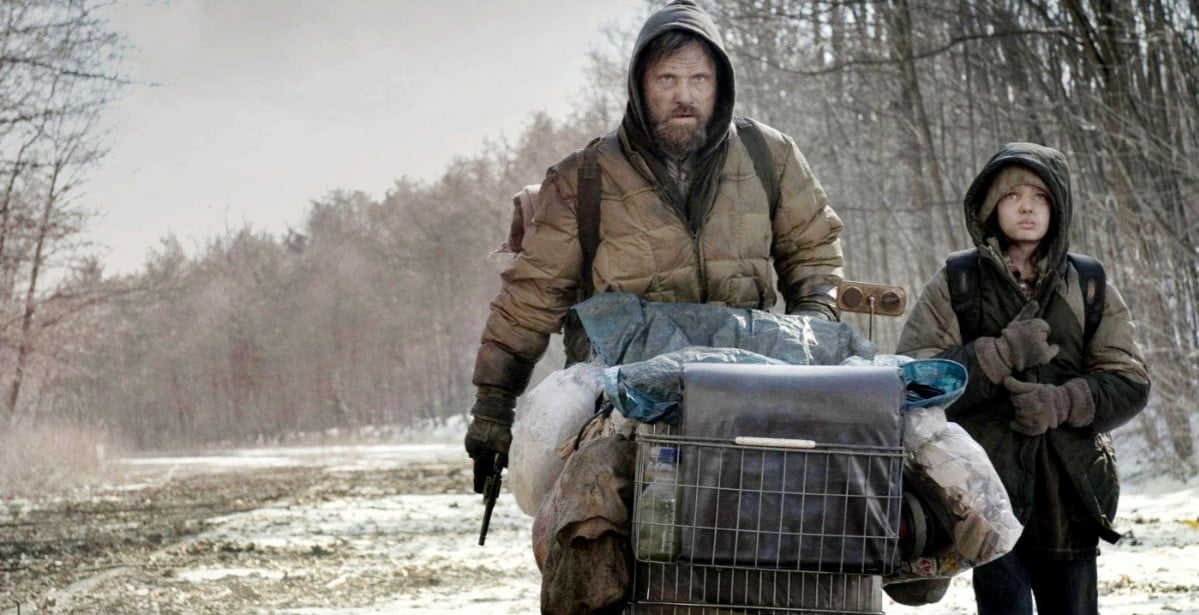
The Road by Cormac Mcarthy is a text that also shows the complicated decisions that humans sometimes make. In the post-apocalyptic landscape that the novel presents, the two main characters, the father and the son do some questionable things to survive. This does not make them unsympathetic, or inherently evil, but instead shows that sometimes people who are overall selfless or good can do things that others might perceive as evil. Take for example this instance in which the man takes a life: “You think I wont kill you but you’re wrong. But what I’d rather do is take you up this road a mile or so and then turn you loose. That’s all the head start we need. You wont find us. You wont even know which way we went. You know what I think? What do you think. I think you’re chickenshit. He let go of the belt and it fell in the roadway with the gear hanging from it. A canteen. An old canvas army pouch. A leather sheath for a knife. When he looked up the roadrat was holding the knife in his hand. He’d only taken two steps but he was almost between him and the child. What do you think you’re going to do with that? He didnt answer. He was a big man but he was very quick. He dove and grabbed the boy and rolled and came up holding him against his chest with the knife at his throat. The man had already dropped to the ground and he swung with him and leveled the pistol and fired from a two-handed position balanced on both knees at a distance of six feet.” (Mccarthy 66). This scene shows that the man is willing to do what he considers necessary to survive. In The Road, the man and the boy are some of the only “good guys”. If someone had an altruistic view of people, they might say that they cannot be considered the good guys because they kill. However, when compared to the other groups in the book, the “roadrats” and “blood cults”, who are only described as cannibals, murderers, and rapists, it’s clear the man and the boy are the closest to “good” that you can be on the road. Because the man makes hard decisions for the good of himself and his son, that does not make him pure evil. Instead this also shows an instance of someone who is otherwise relatively moral in comparison to others in his situation making a choice between doing something that would be perceived as wrong and living or dying so that this threat of a stranger may live. This is a decision even the best of us would likely make.
The Road doesn’t even look to comment on morality. The novel’s intent is much larger than “bad things happen in a bad world and people are bad”. Instead, Mccarthy looks to illustrate humanity persevering. He uses the man’s worldview to show that viewing humans as only having worth if they are moral and good is negative. Throughout the book, the man debates if living in a terrible world is even worth it. More than once, he references his plan to take his son with him if he ever dies. But in the end of the book, showing his death, he makes a very important final decision. “I want to be with you. You cant. Please. You cant. You have to carry the fire. I dont know how to. Yes you do. Is it real? The fire? Yes it is. Where is it? I dont know where it is. Yes you do. It’s inside you. It was always there. I can see it. Just take me with you. Please. I cant. Please, Papa. I cant. I cant hold my son dead in my arms. I thought I could but I cant. You said you wouldnt ever leave me. I know. I’m sorry. You have my whole heart. You always did. You’re the best guy. You always were. If I’m not here you can still talk to me. You can talk to me and I’ll talk to you. You’ll see. Will I hear you? Yes. You will. You have to make it like talk that you imagine. And you’ll hear me. You have to practice. Just dont give up. Okay? Okay. Okay.” (Mcarthy 278-279) The contrast between the man’s decision and his view throughout the book is important. The man decides to let his son live in an immoral world, because he decides his life is more important than the man’s past plan, which would have involved ending the boy’s life. Some with an egotistical view of the book may say that he makes this decision for himself, because of the line “I cant hold my son dead in my arms. I thought I could but I cant.” Though this may be partly true, the man also emphasizes that the boy must carry the fire, and never give up. This shows the man understands the importance of humanity carrying on. Instead of his past worldview, he believes that his son must survive above all else. This comments not on any concept of good vs. evil, but instead the simple idea that people have to carry on being human.
The Road doesn’t even look to comment on morality. The novel’s intent is much larger than “bad things happen in a bad world and people are bad”.
Robert Cotton Oakes Strong
Life tells us that people are complex beings, not good or evil. Texts like The Road show us that confining humans to moral norms instead of focusing on simply keeping us from losing the fire is harmful. Almost any event or person that could be considered a good example of people succumbing to either an inherently evil nature or inherently good nature certainly has layers that go beyond that basic view. Some still believe that humans are only either altruistic or egotistical. However, life is not as black and white as that. Instead every action we take in life makes each of us our own person.
I could have strengthened this with further real life examples. Also I think the MLK example is kind of weak and I hate people who point that out so I dunno why I kept it in.
Cotton, I agree with your observation about MLK; however, in the context of this essay, it’s particularly apt as you’re discussing morality. His choice to be unfaithful doesn’t negate the work he did for the Civil Rights Movement, but it does speak to a certain moral failing. I thought this was a thoughtful and sophisticated essay, Cotton, particularly the ending where you refocus the paper on preserving humanity rather than the more simplistic question of whether we’re egoistic or altruistic.