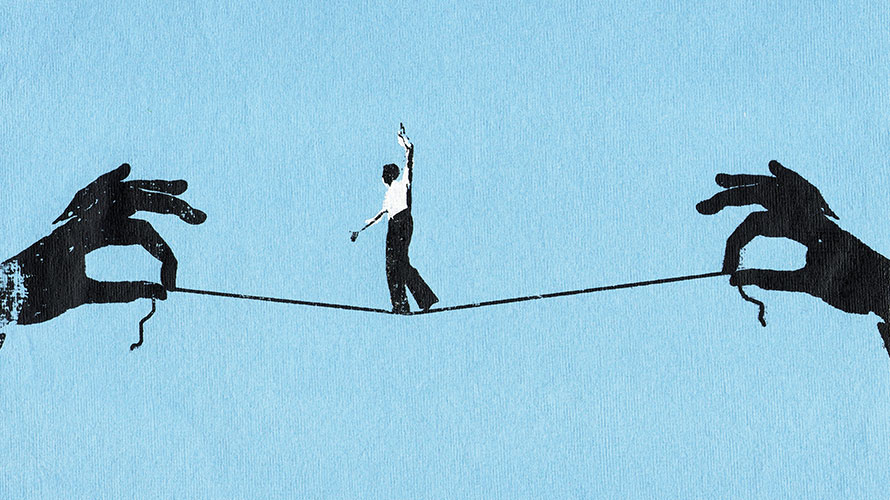
It was a beautiful summer day, and one that particularly stands out in the timeline of my entire life, though I have only lived a fraction of it(hopefully). School had gone out a couple weeks prior to the special day, and with the blink of an eye, my high school days in Canada hit an end as a new door opened and was ready to welcome me shortly. What started off as a rather stressful and last minute kind of day was the day prom would be held for the graduating class of 2021.
I went through the routine that had played out in my head several times before the big day; I took a shower, put on my suit, and wore a big smile as the excitement inside of me expressed itself on my visage. Every moment lined up perfectly and my every move seemed perfectly calculated as I effortlessly prepared myself for what could be one of the most memorable moments of my life. A rather long drive later, and I arrived at the beautiful scene where the event would take place. The beautiful and vibrant greens of the grass and trees contrasted perfectly with the somber blue of the water and the colorful blanket of flowers covering the ground. It was the perfect day for my final goodbye to the 5 years I had not appreciated enough, and I hoped would mark a new chapter in my life.
Though this was my last year of high school, it was also my first year at a brand new school. I had switched over with two of my best friends to ameliorate my chances of going to a prep school for hockey. Both friends had the same intentions as me and we persisted through all our struggles in order to realize our endeavours. Not only were they friends that stood up for me and brought my morale up at my lowest, but they were the brothers I’d created countless memories with every day in and out of school. The memories invaded my mind as time passed, and the minutes felt like seconds as the sun started setting.
Though we were definitely older, I knew that we’d never fundamentally changed deep down; our younger selves would always come out once in a while to poke fun at each other
Anthony Lombardo
Nonetheless, reminiscence couldn’t stop me from having an amazing night as even though it was the end of a huge part of my life, it was the start of an even larger one. A round of cocktails followed by some entrees were followed by a delightful dinner. A subtle sound of jazz played in the background as chatter and laughs filled the room. These moments made me realize how not much had changed between my friends and I as we still laughed at the same nonsense and picked at each other for every little mistake we made. This is an everlasting type of bond that I feel couldn’t be separated by much.
Later, we all danced together and every worry we currently had drifted away as the rhythm of the music filled the room and brought everyone together onto the dance floor. I felt as though I was the best dancer in the world as I tripped over my own feet and walked around clumsily. My friends were still by my side recreating similar movements but always there to poke at the little things such as my bad dancing. I now consider little nuisances such as these moments I look back on in happiness.
The school prom concluded as the music faded away however, my friends and I all went to an after prom party stretching this special night just a bit longer. As much as I wished this night could have lasted an eternity, I was ready to let go. Though this was the end of a day like every single day on this Earth, where the sun rises and sets as time counts down, this was the last page of a chapter that I never thought would end so quickly.
I said goodbye to my friends for the last time in a while as we’d be separated on our journeys for the following years. Even though I thought I’d be devastated, I wasn’t all that sad. Friendships like these don’t just simply fade away. A completely new and different start to what is essentially adulthood hit all of us so suddenly. Though we were definitely older, I knew that we’d never fundamentally changed deep down; our younger selves would always come out once in a while to poke fun at each other. The picture I chose represents our friendship and the moments I reminisce about though I know a special bond like ours could only grow stronger as time goes on. It is worth much more than a thousand words and could be interpreted millions of times for every memory that shaped us into the people we are today. What may seem as messing around and being mean to each other was in fact a substantial part of our lives that helped us open doors and grow together as friends.
Confucious, a Chinese philosopher, once said, “before you embark on a journey of revenge, dig two graves.” This quote directly refers to Chillingworth in the book The Scarlet Letter by Nathanial Hawthorne because he was setting out revenge on Dimmesdale for committing adultery with his wife, Hester Prynne and it consumed Chillingworth’s life and ultimately ruined it along with Dimmesdale. It also ruined Dimmesdale’s life because he was constantly reminded of it because of Chillingworth. Chillingworth went on to find out when he saw his scarlet letter on his chest by seeing it while Dimmesdale was sleeping on the couch. Chillingworth chose to torture Dimmsdale and Hester when he could of simply revealed he was her huband because it would be easier to find out who Hester’s parter was if his true identity was revealed, he wanted to make Dimmsdale as guilty as possible, and he does not want to encounter the disgraces of the husband of a faithless woman.
If Chillingwroth revealed he was Hester’s husband, it would have made his mission of revenge on finding out Hester’s partner. He lied about his identity from early on and according to the narrator, “… he chose instead to bury his old identity…” (Hawthorne 55). He says this very early in the story and he did it for a reason. He couldn’t forfeit his mission because it was way too important to him, since Hester was his “wife” but in reality, he really wasn’t. They made one other promise that they didn’t want to reveal each other’s identity early on in the book when she needed medical assistance while in her prison cell. Chillingwoth couldn;t have cared less about what was being done to Hester, but he only cared about finding out who her partner and father of Hester’s child was. All Chillingworth wanted was justice for himself, which only ended up doing more hurt to himself and other people like Hester and especially Dimmsdale. Justice implies, to some people, that they will do whatever it takes to get justice for either themselves or other people, just like Chillingworth did, but it was for himself. He completely ruined Dimmsdale, especially mentally.
Chillingworth made Dimmdale feel extremely guilty everyday and completely tore him apart mentaly and to some degree, physically. He was so sick and the townspeople thought he just going to die because of how he walked and carried himself as said by the narrator as, “While thus suffering under bodily disease, and gnawed and tortured by some black trouble of the soul, and given over to the machinations of his deadliest enemy, the Reverend Mr. Dimmesdale had achieved ”(Hawthorne 72). Dimmsdale obviously made himself feel like this, but Chillingworth gave him the constant reminder of the secret he was keeping. Chillingworth would just make it worse like when he would keep questioning what his deepest secret was and that if he told him, it would cure him. Dimmsdale never budged, but it made him feel that much more guilty about it to the point that it almost killed him. It didn’t almost kill Dimmesdale because it absolutely consumed Chillingworth’s life and became his obsession. Chillingworth’s obsession had to be kept a secret because he didn’t want anyone knowing his true identity as he was ashamed.
Chillingworth would have encountered many disgraces to being Hester Prynne’s husband as humiliation, no life, and constant recognition of it. Back then, the Puritans would give very bad punishments to sinners, like the humiliation and giving the scarlet letter to Hester. Most likely, as it is not directly said in the book, Chillingworth would have been ridiculed extremely inadequate for being married to a wife who cheated on him. Chillingworth didn’t want to deal with all the shame that came with it. He and Hester promised not to reveal his identity and that they were married because she was afraid he would harm her baby, which petrified her when she said, “ ‘I will keep thy secret as I have this,’ said Hester. ‘Swear it! Rejoined he. And now she took the oath ”(Hawthorne 49). She was already scared out of her mind about her public humiliation, and Chillingworth being there made it way worse for her. She fell out of love for him a long time ago and didn’t want anything to do with him anymore, but she had to promise out of fear. She thought of Chillingworth as evil and thought he would do anything to her to affect her, including hurting her baby. He also saved himself because no one could know that they were married because he was pretty selfish throughout the whole book.
Justice is defined as, according to Collins Dictionary as, “the fairness in the way that people are treated.” That is Chillingworth’s mission to get justice by finding out who Hester’s partner was. That is all he ever focused on in this book and it completely devoured his life. Certain actions can turn a person evil, especially when it comes to justice. Evil existed in Chillingworth as soon as found out about Hester’s sin. Chillingworth was so embarrassed of her sin, so obsessed with Dimmesdale, and embarrassed with himself by being Hester Prynne’s husband. Even though he was obsessed with what happened, you can’t blame him for wanting revenge, but revenge ruins the person you want revenge for and it also ruins you, as we saw in Chillingworth. When Dimmesdale confessed, then died, Chillingworth felt like he had no purpose and felt empty. When something is all you care about for seven years years and it goes away, you have nothing just like Chillingworth. Revenge is a two way street.
A picture that is worth one thousand words to me is the day we went to Camp Kieve at the beginning of September of this year, 2021. The day started off as a warm morning, blue sky, and a good breakfast. As soon as we got on the bus with the junior class, it was a long ride. It was about a two hour ride and it felt very long to get there. Me and Ryan Teehan were sitting together, and my legs were starting to feel cramped up from the long ride. When we got there, they separated every class which I wasn’t too happy about because a lot of my friends were in the senior class. So, we ended up splitting into groups and Ryan Teehan, Anthony Lonbardo, Spyro Hamzeh, and I ended up getting in the same group, which to me, I was very happy and excited about.
The first activity we did was canoeing, which none of us had experience with. We started by changing into our bathing suits and then putting life jackets on. We then picked out the canoe that we wanted and all four of us carried it to the water, which was pretty heavy. We then got the oars ready and started to go out on the lake. We weren’t supposed to, but we decided all together that we would go out to the far island, which was around a mile from the campsite, which we weren’t supposed to do. We started going out and it went pretty slow because none of us really knew how to paddle with the oars in sync. We started to pick up the pace on the canoe and were going pretty fast, considering the conditions.
The conditions were windy, especially as we got further out. When we got to the island, we realized there was a house and that we couldn’t go there. So instead, we saw another island we could go to which was about another mile and half away. We wanted to go on an adventure , which we knew we weren’t allowed to, but we realized we were already out pretty far and wanted to explore. When we got to the next island, we were absolutely gassed and out of breath. The current went against us the whole irde to that island and Ryan and I kept tipping the boat over as a joke and almost sank it in the middle of the lake.
When we got to the island, Ryan and I had actually sunk the boat and we had to drag it to the island and tip it back on top, which was very hard. One of the staff workers had gone out to search for us because we were so far away from the camp. The staff worker, Will, was a really cool dude. When we had finally started to get going after tipping the canoe back on top, we ended up sinking it again, which was solely due to Ryan and I. Syro and Anothony weren’t the happiest because it took around twenty five minutes to get all the water out the boat the first time. We ended up doing the same thing and got the canoe back into place. The staff worker Will had found it pretty comical and was laughing for a while. On our way back, we were doing well with paddling, which was unusual for us.
When we had gotten around halfway back to the camp, I was tipping the boat over as a joke and it ended up sinking, for the third time! We found it so funny at first, but we soon realized that it was a very far way back still and figured out we would have to drag the canoe back. I’m not going to lie, I did very little in efforts to drag the canoe back. After I stopped helping and went ahead and started swimming, Ryan did the same thing and we left Spyro and Anthony to do the towing. They weren’t very happy about it, but Ryan and I thought it was funny and to this day, we both don’t regret a thing. When we had finally got back, they had held back lunch for us, since we were out on that lake for two and half hours and the other staff workers were happy at all. They kept looking at us and whispering, giving us dirty looks. We found it funny and didn’t regret a thing we did that day. That was the first experience of Spyro and Anthony meeting Ryan and I, so I bet they had started to love us! We then went on to do a bunch of fun activities and grew closer as friends. I don’t regret a thing we did that day and I honestly don’t think Ryan, Spyro, Anthony, and I regret a single thing we did that day because we made so many amazing memories out of that day.
Martin Luther King Jr. once said, “The time is always right to do the right thing.” What he means by this is that no matter what situation or place in time one is in, there is always the opportunity to do the right thing, but is that always the smartest decision? In Arthur Dimmsdale’s case from the Scarlet Letter by Nathaniel Hawthorne, or in Mary Warren’s case from the Crucible by Arthur Miller, the right and just choice for their circumstances wasn’t the smartest one for their lives. According to the Merriam Webster Dictionary, the meaning of morality is, “beliefs about what is right behavior and what is wrong behavior.” Most people have the ability to know whether what they are doing is right or wrong and since the Puritan days, our ability to recognize what the right thing to do is, or our morality, has developed and become much superior. The world has become more moral since the 1600’s due to technology and education, learning from the mistakes we have made and the mistakes our ancestors made, more sense of law and morality; however, as a society, we still have more growing to do.
In the world now, everyone is entitled to an education, unlike back in the Puritan era. For the most part, men would get an education, not all women would. Black people or slaves would not get an education at all. In the present time, everyone, at least in the United States of America, has access to an education because of the freedom we have today. Back in Puritan times in the 1600s, if one recieved an education, it was mainly about religion. Now the world is way more focused on academic learning, not extremely one sided like when Judge Danfourth said, “ that a person is either with this court or he must be counted against it, there is no road in between”(Miller 94). What he means by this is that when judge Danforth thought John Proctor was going against the court by not saying anyone’s name which would be accusing them of witchcraft to clear his name. Danforth just wanted more names to add on the list and thought that if John didn’t say the names, he was against the court which was how they would think. Back in the Puritan times, one was either with them or against them and even if they were in the wrong, they were always in the right. Even if it was morally wrong on what they were doing, everyone just went along with it because of fear of them. They wanted to live so it’s either you choose to live on a lie, or die for the truth. Present time, everyone can live the way they want to live. In the USA, people can be what they want to be, and can choose what they want to live by. By no way is our society perfect, but the people are way smarter thanks to education and also technology plays a big role also. Anyone, at any time, can look anything up on the internet to learn or do research or to see what other people are doing in other countries. Although a lot of people use technology for bad, a lot of it is also used for good and other people feed off that good and have the chance to become more moral than they were before. What is done also through education and technology is looking into the past and present and learning and remembering the mistakes that were made by humans.
Another reason that the present time people are more moral than the Puritans is that we have the ability to learn from the mistakes of the Puritans in the New World, and for the most part, we have definelity learned from them. In the present day, we don’t hold unfair trials and say one can get out of trouble if you give the court more names to accuse. The Puritans were ruthless in that way and if you didn’t listen and follow them, you would either be looked down upon, or essentially killed. The Puritans thought that everything they did was for God and that he accepted everything they did, even killing people. The Puritans were extremely narrow minded and their government was intolerant and according to “Peace, Love, and Puritanism,” “Puritans were self righteous and authoritarian, bent on making everyone conform to a rigid set of rules and ostracizing everyone who disagreed with them”(Hall). That is absolutely right and is another example of how immorale the Puritans were. We have learned from our mistakes, especially the ones made by the Puritans, some may argue that he didn’t learn it too quickly because of all the genocides that happned recently, the Holocaust, and murderers. But after the Holocaust, the amount of evilness slowed down trememdously as most things that the Puritans did does not happen anymore like killing innocent people, unjust court trials, or what they did to Hester Prynn which was publicly shaming her for commiting adultery, which was extremely personal. Unlike now, the Puritans were blind to human life and only thought of what they thought was right. Our present day people are a lot more developed morally, educationally, and technologically. If we didn’t have the Puritans, our world would be very different and we wouldn’t have the free world we have now without them because if they didn;t make the mistakes they made, we wouldn’t have the opportunity to learn from them and see what didn’t work. If we didn’t learn from their mistakes in government and law, we would still be the way they were, which was very corrupt and narrow-minded.
Nowadays, the world has way more sense of law and morality thanks to the mistakes of the Puritans. The Puritans law system was extremely unjust and unfair as we saw in the Scarlet Letter with Hester as she was tormented, harassed, and humiliated for seven years for adultery. In this day and age, most people, but definitely not everyone, know the basics of what is right and wrong. Most people know killing is very wrong which is something the Puritans did not know at all. They were extremely ruthless, especially when it came to sinners, or what they thought were sinners. People accused in court, even if they were innocent, were forced to say they were guilty in the court system with the Puritans. There were many scenes of this happening in the Scarlet Letter like, “The scene was not without a mixture of awe, such as must always invest in the spectacle of guilt and shame in fellow creatures, before society shall have grown corrupt enough to smile, instead of shuddering at it”(Hawthorne 42). The Puritans saw good in shaming people and saw nothing wrong with it, like with Hester Prynne. They all listened to what the church said for everything like laws, punishments, and new laws. The society in the Puritan times was extremely religious, even in the laws. If someone had gone against one of the Commandments, they would either be killed or humiliated like Hester Prynne. If the Puritans never existed, we would never have had the law system we have now. We still use what they had, but we have kept building upon it for the last century and have made it much more fair, right, and just. Living in America now is ten times better now because of democracy, freedom, and safety. People living in the Puritan times were always scared that something would happen to them, even if they were innocent. Thanks to the law system now, most people don’t have to worry about that now because it is much safer and more moral and fair-minded to live in than back then, but it can still be much better. Obviously our generation is so far from perfect, we keep on improving as we move on.
Although we are more moral than the Puritans, we still have way more building to do. Like the past, we just keep on building upon morality as time evolves. The world keeps on getting smarter and more moral. We live in a more peaceful world, but we still have growing to do. Everyday, people get judged all the time, but nowadays, most of the time, people keep it inside their heads and don’t say it because it would be extremely rude to say it. As The Conversation says, “As cultures evolve and societies develop, people’s ways of thinking about good and evil also transform. The nature of that transformation is a matter of speculation”(Haslam). Our society has developed an enormous amount since the time of the Puritans. According to this article, the way we think of good and evil has changed and that’s totally right. The Puritans did some atrocious things like killing and hurting. Most people now would look at the Puritans and say that they are evil, but back in the Puritan times, killing, hurting, and punishing was just a normal day in society which is just crazy to think about. Although we have developed so much since the Puritans, we still do have a little bit of Puritanism in the way we think, like judging other people, saying things that hurt other people, and making other people look bad to make yourself look better. It is not even close to as bad as the Puritans because our society has worked to just erase their way of thinking which is definitely for the best.
The world would be very different without the Puritans because the people now learned a lot from them. Some good stuff, more bad things. They lacked morality, which in today’s age, is way better. They killed innocent people based on suspicions or accusations. In today’s day and age, people in the United States of America are way more moral than the Puritans in the way they live, speak, and act. If the Puritans never existed, our society would have never been this developed because the Puritans were the exact example of making mistakes. Luckily, we have learned and will keep on developing as the years go on.
Miller, Author. The Crucible: A play in Four Acts. Penguin Books, New York, New York 2016. Hawthorne, Nathaniel. The Scarlet Letter. Signet Classics, St. PAul, Minnesota. 2009
“Society is a joint-stock company in which the members agree for the better securing of his bread to each share-holder, to surrender the liberty and culture of the eater” (Emerson).Throughout evolution, humans have proved that society’s abusive and biased influence can destroy one’s sense of individuality and thus lead to a society reflecting only the ideas of the most powerful. However, morals in America today are far closer to equity and righteousness compared to a Puritan point of view. These new standards create a world where people live by their own ideas and create a sense of belonging as everyone contributes in their own way. This same evolution from our original roots(the Puritans) and the building upon the foundation for society they instaurated is what allows humans to strive and consider the world a genuinely fair place today(for the most part). Both Natahniel Hawthorne’s The Scarlet Letter and Arthur Miller’s play, The Crucible, manifest that morality in America has definitely ameliorated since Puritan times, as proved by an equitable justice system compared to theocracy, legitimate and agreed-upon laws, in addition to a prevalent sense of trust and loyalty.
To begin, the justice system has indubitably been strengthened compared to Puritan times as today, accessible and agreed upon laws reinforce the very morals that create structure and order in society. An article published in The New York Times by David D. Hall explains, “In 1648, Massachusetts became the first place in the Anglo-American world to publish a code of laws-and make it accessible to everyone. Believing that the rule of law protected against arbitrary or unjust authority, the civil courts practiced speedy justice, empowered local juries and encouraged reconciliation and restitution(Hall). Effective word choice such as ‘speedy justice’ and ‘reconciliation’ and ‘restitution’ emphasizes the very ideal our society lives by to maintain order. Without the previously mentioned values, the judicial system would fall to crumbles and criminals would never come out of their dark holes. Obviously, a code of laws that is accessible to everyone would erase any previous confusion and definitely prevent ‘arbitrary or unjust authority’, right? Actually, righteous morals such as justice, forgiveness, and most importantly, fairness, were not seamlessly developed with a simple rule set. Despite these rules, corruption was still prevalent due to the delusion and conceit of the Puritan time period. Conformism was basically taking the easy way out as “the witch-finder is ever vigilant, and who would not rather direct his attention to others than stand, in the what of the day, and challenge his authority?”(Bigsby 25). Conformity to the higher-ups essentially stabbed many in the back during the Salem witch trials. Civilization basically agreed to accept corruption for the price of giving away their individuality and witnessing the fall of close ones as a reward. How could someone even perceive this as rational? This event occurred in 1692(Bigsby 7) meaning that laws did not prevent abuse of power and condescendance. Therefore, accessible laws were in fact the basis to growth as societies but it was the question of authority and knowledge gained from tragic events(such as the Salem witch trials) that helped mold new standards that would lead to less corrupted authority and genuine ‘speedy justice’- which are the foundation to a legitimate and fair world.
“Society is a joint-stock company in which the members agree for the better securing of his bread to each share-holder, to surrender the liberty and culture of the eater”
Ralph Waldo Emerson
Moreover, Miller’s The Crucible and its interpretation of the Salem witch trials effectively demonstrates the immorality in giving accusers an excessive amount of power and its negative effect on society as a whole. In an attempt to save his wife from the duplicitous children, a desperate John Proctor exclaims, “Is the accuser always holy now? Were they born this morning as clean as God’s fingers? I’ll tell you what’s walking Salem—vengeance is walking Salem. We are what we always were in Salem, but now the little crazy children are jangling the keys of the kingdom, and common vengeance writes the law!”(Miller 73). A simile comparing the accusers to God’s fingers advances the idea that these people are in fact not innocent and should not have the power to change the course of people’s lives such as God has. In addition, personification is employed as vengeance does not literally walk, in fact, the accusers seeking vengeance and power are disregarded though they are the true sinners. Evidently, the accusers have tremendous power and are essentially seen as ‘clean as God’s fingers’ though they seek evil. This proves to be a problem in a society where one is not innocent until proven guilty but, one false accusation away from death. This day and age, ‘vengeance does not walk the street’ as loop holes such as the power accusers had simply do not exist anymore. In brief, society has advanced and proved to be a lot more fair and moral in the sense that it is a lot more difficult to abuse the justice system.
Next, ‘Vengeance walking the street’ during the Puritan era reminds us of the very morals that maintain the foundation of our societies and how the absence of trust and loyalty led to the fall of the Puritans. The Introduction to Miller’s The Crucible reminds us:“Beyond the question of witchcraft lies the more fundamental question of human nature, for which betrayal seems an ever-present possibility. The Crucible reminds us how fragile is our grasp on those shared values that are the foundation of any society(Bigsby 16). The personification used to illustrate how our grasp on fundamental values is ‘fragile’ amplifies the importance of being true to one another and even more importantly, to ourselves. This fragile ‘grasp’ is what maintains the structure in society and what prevents chaos and anarchy from ensuing. Strong relationships and loyalty to others are what contribute to forming a group and creating opportunities for the whole. Such relationships weren’t possible during the Puritan era as one may find themselves second guessing what everyone else’s true intentions are as betrayal was often the price to pay for power. Today, this is not the case and disasters such as the witch trials remind us just how important it is to hold our hands together and create a society founded based on trust. Essentially, the play reminds us of how easy it is for the world to fall apart and to keep hold of the progress we’ve made in keeping fundamental morals such as the importance of trust and loyalty that have proved to be crucial parts of flourishing societies.
To end, a further consideration of Puritan morals can be found in Hawthorne’s The Scarlet Letter, which also confronts the justice system and proves that theocracy essentially promotes guilt and hypocrisy. A penance embracing Dimmesdale’s loving and positive spirit was shunned by the guilt associated with his sin: “His intellectual gifts, his moral perceptions, his power of experiencing and communicating emotion, were kept in a state of preternatural activity by the prick and anguish of his daily life”(Hawthorne 75,76). Arthur Dimmesdale is proved to be very caring and proficient in the art of healing others. However, his intellect as well as positive emotions were all neglected and replaced by guilt when he committed adultery. This sin not only live a life full of torture, but quite literally killed him. This reality is extremely unfortunate as theocracy evidently separated him from his true love and took away his precious gift; the right to live freely. Would this have occurred in a more forgiving and moral society such as the one in which we are fortunate enough to exist? Dimmesdale would live as an innocent and free man who could use his expertise to make the world a better place. Thus, a society where theocracy is not so imposed definitely allows humans to live to their fullest potential and grants a perfect balance between forgiveness and justice.
In conclusion, morality in America has undoubtedly improved since Puritan times as individualism allowed for evolution and the refinement of societal structure and past experiences have allowed us to develop morals such as trust and loyalty in addition to creating a fair justice system where abuse of power is near impossible. Evolution has improved the world as it is today and almost guarantees that countless ordeals lived in the past do not occur today. However, would it be possible to experience some regression in society where the world in 300 years is far worse than today?
Hall, David “Peace, Love and Puritanism.” The New York Times, The New York Times, 24 Nov. 2010, https://www.nytimes.com/2010/11/24/opinion/24hall.html.
Hawthorne, Nathaniel. The Scarlet Letter Access Editions, St. Paul, Minnesota, 1998.
Hutson, Matthew. “Still Puritan After All These Years.” The New York Times, The New York Times, August 4, 2012
Miller, Arthur. The Crucible. Penguin Books, New York, New York, 2003.
Nathaniel Hawthorne’s “The Scarlet Letter” is set in the 1600s, and most of the characters are Puritans. The main character is named Hester Prynne, a caring mother, and a sinner. Chapter one opens with her being on the scaffold, being accounted for her sin: adultery, basically sex before marriage. On the scaffold, she is holding her biggest treasure: Pearl, her daughter. might be Hester’s biggest treasure, but is she golden? Her intentions might be good but her actions are different.
First of all, Hester’s thoughts about her daughter give one of the reasons why Pearl isn’t truly an angel, but a result of something that shouldn’t have happened: ”Her only real comfort was when the child lay in the placidity of sleep. Then she was sure of her, and tasted hours of quiet, sad, delicious happiness; until — perhaps with that perverse expression glimmering from beneath her opening lids — little Pearl awake.” & “From that epoch, except when the child was asleep, Hester had never felt a moment’s safety: not a moment’s calm enjoyment of her” (Hawthorne 64 & 66). By these words, we can tell Hester loves her daughter but hates her behavior. Not only that but finding peace when other people are sleeping is having a moment without them. Hester can’t stand her own daughter when she is awake, which suggests that Pearl is an impish, loud child. Furthermore, Hester calls her an imp: “Pearl was a born outcast of the infantile world … An imp of evil, emblem, and product of sin, she had no right among christened infants” (Hawthorne 64). Pearl, a curious child, also annoys her mother by pointing out her sin.
Pearl, ever since she has been little, never knew the full explanation behind the letter on her mother’s chest. Though amazed by the skill, she kept putting it out on the table: “One day, as her mother stooped over the cradle, the infant’s eyes had been caught by the glimmering of the gold embroidery about the letter; and putting up her little hand she grasped at it, smiling, not doubtfully, but with a decided gleam, that gave her face the look of a much older child” (Hawthorne 66). Each time that happened, Hester never told the full story, but she only got embarrassed and tried to avoid the topic. It’s understandable, imagine a three-year-old daughter of her own, who keeps on asking about the sin, in which she was made. It would not be a pleasant conversation, but also if Pearl knew the real truth behind her existence, she would be a good child because of what her mother went through.
Out of all the bad things she had done, the worst was throwing rocks at little kids playing “Witchcraft”. Instead of joining them to have fun like all the kids in the world should have, she was watching and hurting them: “Pearl saw, and gazed intently, but never sought to make acquaintance. (…) If the children gathered about her, as they sometimes did, Pearl would grow positively terrible in her puny wrath, snatching up some stones to fling at them, with shrill, incoherent exclamations, that made her mother tremble…” (Hawthorne 65). Pearl, as a little kid, should have had all the fun and many friends, but due to her mother’s position, it is not easy. Both of them are outcasts in their town after all. Throwing rocks at any people whether they are the most hated or brutal in the world is the first step to becoming worse. It may start with small things which will later become bigger and bigger. Who knows, maybe Pearl will follow Hester’s sin or go beyond that.
Although Pearl isn’t the best child, readers find her funny and even recognize her good intentions. She just doesn’t know the right approach; the one she is choosing isn’t good. The moment that Pearl heard the Puritan kids need to throw mud at her and Hester, she quickly intervened. Making angry gestures and chasing them made all the children scared: “‘Come, therefore, and let us fling mud at them!’ But Pearl, who was a dauntless child, after frowning, stamping her foot, and shaking her little hand with a variety of threatening gestures, suddenly made a rush at the knot of her enemies and put them all to fight. (…) She screamed and shouted, too, with a terrific volume of sound, which, doubtless, caused the hearts of the fugitives to quake within them.”(Hawthorne 70). This moment is inspiring because when seeing her mother in trouble she stepped up and was willing to defend her. The ending of this scene is quite hilarious: “The victory accomplished, Pearl returns quietly to her mother, and looked up, smiling, into her face.” (Hawthorne 70) Smiling as a way of expressing “no problem” makes readers laugh. Not only that Hester was okay with it, but she also didn’t yell at or ground Pearl.
“Pearl, her daughter. might be Hester’s biggest treasure, but is she golden?”
Even though she has good intentions, isn’t a good child. She embarrasses her mother, throws stones at playing kids, and the fact that Hester finds peace only when she is sleeping is sad. However, their love is mutual and defending her from the Puritan kids proves both good intentions and love for Hester. The treasure is shiny but won’t make anybody rich.
Many of the ideas contemporary Americans use now, come either from Puritans or are new from people, but morality has been in discussion for millennia and changed multiple times. Are people nowadays more moral than the Puritans in the 1600s? Well, the question is hard and difficult to judge, because morality has not only changed the meaning but adapted new ideas to it, such as microaggressions. Not only that, but we also evolved from Puritanism. Also, Americans nowadays have Puritan thoughts. Both Nathaniel Hawthorne and Arthur Miller describe Puritan ways negatively in their texts, yet today we are no better. In fact, justice has not evolved since day one it was introduced in America by the Puritans.
When it comes to thinking about what morality actually is, people think ‘oh it is what is good and what is bad,’ and they aren’t wrong, but they are also not fully correct: “It’s what societies determine to be ‘right’ and ‘acceptable’.” (Morin) Nowadays we define morality as what is acceptable and what is not; there is no in-between. As a broad concept, morality is what is good and bad, but different cultures define it differently. Nowadays it’s different: ”Morality isn’t fixed. What’s considered acceptable in your culture might not be acceptable in another culture. Geographical regions, religion, family, and life experiences all influence morals” (Morin). The cultures around the world are different, so what might be right in one part of the US might be going to be wrong in another. It divides into two sections, legal and social. Legal is what the constitution says and the government demands, whereas social is based on people’s opinions. Today, society must contend with the new, twenty-first century, ideas such as microaggressions.
“It’s like judging a peanut butter and jelly sandwich with a jelly and peanut butter sandwich.”
Microaggressions are definitely not moral because people judge other people based on religion, the color of skin, and sexuality: ”These conversations are essential to affect change, but they’re hard and uncomfortable, and you’re bound to run into what’s known as ‘microaggressions.’ These are the thinly veiled, everyday instances of racism, homophobia, sexism (and more) that you see in the world.” (Limborg). In Puritan times having conversations or ideas about the microaggressions: racism, sexism, was there but compared to America for the last two years it wasn’t as common. Conversations in the world today are hard because there are many factors that might affect the opinion of one side of a conversation. Many people may have been raised and taught differently or born with a different tradition. With that, social morality has increased with what is acceptable and what is not. The fight against microaggressions has been going on for a long time but the repair started two years ago with George Floyd’s death, which initiated BLM, or equality movements toward LGBTQ+ people. In terms of the range of words that come with morality, the world now has more of them. Today, we can’t mention morality without talking about social opinion. Knowing people in the 1600s and 2000s, we really see how those two eras differ so there is no actual judgment of who is more moral. Contemporary Americans also left some of Puritanistic mistakes a function of a government.
Today’s American ideas are made from the basics of Puritanism. Whatever have Puritans thought of, we have modified it or left it as it was. ”Yet he [Alexis De Tocqueville] did credit them [Puritans] for the political system he admired in 19th-century America.” (Hall). The judicial system of the US looks very similar to how the Puritan system was. Since the Puritans arrived in America, they created their own government system where churches were at the top. Their court was like a modern court with a judge and lawyers, but with more reverends; however, if people are defending the victim or culprit then they are against the court, which can lead them to punishments. Lawyers now can defend them without any punishment. This is a result of people learning from their mistakes, suggesting that morality improved in some aspects but in some it didn’t. Punishments Puritans gave out were usually death penalties or the victims of the court had to wear a scarlet letter like Hester Prynne in Hawthorne’s work, or even brutality such as whipping. Three centuries have passed and in a multitude of states in the US, a death penalty still exists, therefore the world hasn’t changed we are the sa. Comparing Puritanism and the world now is hard if both sides are similar.
Americans in the twenty-first century have many qualities of the old Puritans. Even though that America might have been influenced by other factors, one thing is certain Puritan ideas are still in people’s minds and the way we operate things such as justice or churches is the same as we did three hundred years ago, which means America has not changed since the 17th century. : “Do present-day Americans still exhibit, in their attitudes and behavior, traces of those austere English Protestants who started arriving in the country in the early 17th century? It seems we do…” (Hutson). Hutson has found a researched experiment that proved how many Americans, with being in contact before the experiment with words like heaven or redeem, had Puritanism thoughts and answers to the experiments. There are many factors that could have influenced that thinking; “(…) ‘industrialization and imigration’ and other factors that have led to immense social change” (Hutson). Judgment of a place that has not changed in over three centuries is impossible. It’s like comparing a pencil to another pencil. It might vary in outside structure but inside is still the same.
Morality hasn’t changed it just has shifted it deeper categories throughout three centuries. Puritans believed in theocracy and Americans are democratic, but living in a way designed by the Bible can be confusing. The Crucible by Arthur Miller shows it: “You are pulling Heaven down and raising up a whore! I denounce these proceedings, I quit this court!” (Miller 120). This situation illustrates how the show of witchcraft done by Abigail and her ‘friends’, makes everyone crazy, which leads to a slaughterhouse. Proctor is calling Abigail a whore because he knows that it’s all fake; not only he but also reverend Hale realizes he has been living a lie and tries to stop the insanity. After the court does not listen to him, he decides to quit the court. This leads to a point where a more “popular” side is winning and the losing side can do nothing about it, but only quit. Nowadays we can see it with the social morality of people. If a famous star acknowledges and shares something not ridiculous and a fan rejects that something, it starts a whole battle in which there is an obvious winner from the moment it started, the star. If there is a rejection of a famous person’s idea, it isn’t going to go far. Arthur Miller spoke of Puritans negatively but in this case, he is also speaking about nowadays Americans. Legal morality shifted into social morality in just three hundred years and we can’t forget that people value opinions more than what the government says now.
Throughout literature Miller is not the only example that proves this point, moreover Hawthorne in The Scarlet Letter has used another view on opinionated judgment for the people; “The unhappy culprit sustained herself as best a woman might, under the heavy weight of a thousand unrelenting eyes, all fastened upon her, and concentrated at her bosom.” (Hawthorne 42). Hester is being shamed for her scarlet letter ‘A’, which stands for adultery, with comments from the audience. The ‘heavy weight of a thousand unrelenting eyes’ judging upon Hester for her actions, can be clearly compared to the same situations happening on the internet. People are dumb, they can post a lot of statements that will unconsciously offend them, and also there is the fact of views. Nowadays, everything will be done for them. With these posts being put on the internet, a huge audience is attracted and laughs at them. At this point, the poster realizes he also has embarrassed himself and wants to put down the video. Posting things on the internet is the same as Hester Prynne being on the scaffold, so the same has happened as in Miller; legal morality has shifted into social.
Throughout three centuries there have been too many changes for us to judge who is more or less moral. Not only that, but based on events that happen in this world, the morality of a Puritan society is the same as the American morality nowadays. Legal Puritan morality shifted into social American morality. Many actions that happened in the 1600s found a way to live and survive for three centuries. Other are new ideas that can’t be compared to an old-world such as New England. It’s like judging a peanut butter and jelly sandwich with a jelly and peanut butter sandwich.
“If it was up to me, I would want to live that moment over and over again”
Chapter I: Adventure time starts.
Masuria is something special for a Polish sailor. Many lakes in the area, connected to each other or with the help of a water sluice. Unfortunately, money is a need for hygiene and docking a boat in a port, but my friends and I found a way to avoid that.
Small waves made by sailing and motorboats, were hitting our broadside, causing tiny banks to our yacht. It was calming. My whole crew. made up of my long-time friends and a cox, whose name was Ania, was sleeping except for my friend, Simon and I. We were getting ready for a morning three-km run. At 6:50 both of us came through a companionway to the cockpit to exit the boat to land. Wearing sport sneakers, shorts, and a T-shirt, we left the boat and started heading towards the gate, where the trail was starting. During our walk, many yachts were docked and tied with a Cleat Hitch to the cleat on the quay. All the boats looked the same; they had a sixteen-meter tall mast and were thirty feet long, only the model was unlike. “Do you want music?” I asked. Simon nodded his head and said “Yes”. We turned on the speaker and ran through the trail, which was in the village we were at.
Once we came back, we smelled really bad. Looking at each other we decided; a shower is essential. There was one fault in our thought; both of us forgot to bring coins of five Zlotys. There we were, standing in front of the yacht trying to solve our problem, when our friend Franek was awake and figured out our problem “I can borrow you money if you want, I have a lot of these coins. But next time we are in town exchange your bills.” Relieved and happy, we quickly grabbed our towels and went to the shower. Meanwhile, on the boat people started waking up and getting ready. Living on a yacht isn’t easy. Each member has chores that aren’t optional. We divided into three groups; one that does kitchen work, one that cleans, and another which washes the dishes, and those groups changed daily. Simon, Victor, and I were in one group and had to complete them or the rest of the crew is going to be mad at us. That day it was our turn to cook. Unfortunately, in the bathroom, there was only one working shower. A day earlier, my friends and I were messing with each other; we were putting shampoo on each other’s hair through the wide hole in the top of the shower, screaming and playing music. Now I’m pretty sure the owners closed the other ones due to that. Luckily I was before Simon because he took a long while. Being in a hot, small room with no benches is painful, and although it was five minutes I could feel the inside of me boiling.
When we finished, we rushed to the caboose (kitchen on a yacht). Before we reached it we saw everyone outside in the cockpit sitting and waiting. One moment since we went inside, Me, Simon, and Victor took out the ingredients from a small locker. We started making french toast. Once again three people inside with a pan on a gas burner in ninety-degree weather is not a good combination. All three of us were boiling inside it was almost like the heat was eating all of us from the inside. At 8:00 we were supposed to leave, unfortunately, our squad was never punctual. At that time, everybody around was shouting ”Prepare for mooring! Slack away the stern line! Let go the stern line!” I felt like we were at a military base.
Chapter II: Calm sea
Finished and almost ready to swim away we had one more task to do, well not us but a group in our crew. The girls’ named Maria and Malina (Raspberry, yes that’s a name) had to wash the dishes. The boys and I were preparing all the lines for us to take off and were waiting for the girls. After a while, Franek shouted “Girls are here!”, suddenly everyone came outside after a long time and we sailed away.
The feeling I get when I’m on the water is unspeakable, hard to describe. Having a light breeze on my face, small banks tilting the yacht right and left, and music… Ohhhh… the music gives total relaxation. Our team was coordinated, fun, and everything positive and joyful. Basically most of the time we were joking around but when it comes to having responsibilities we are dependable. Sitting on the head of the boat, girls looked like Top-models. Their hair was waving towards the steering wheel, with bright faces expressing calmness and relaxation. “Prepare to set the jib/main” Ania shouted. Immediately all the distractions became invisible and the girls came back to the back of the ship. All of us had one aim: get ready for the sails to go up. Simon and Jacob (other Jacob) got their gloves, or they actually shared one pair, because Jacob took one, so they took one each. And waited for the command from the cox. “Set the jib on the right side.” Simon quickly pulled the line until he couldn’t anymore; immediately one sail was ready. “Set the main!” Jacob did the same thing; We are swimming with the sails.
A couple of hours later, it got even warmer. The boys took off their shirts and jumped in the water with a circular-shaped object connected with two knots to the main boat.
Chapter III: Hotel
A couple of hours later we reached our destination. A big quay appeared in front of us. One second we were waiting for the girls, another we almost docked, as if we teleported. An empty port, easy to find a place except our place was among the rest of the group, my crew was swimming with. “Over here” a cox of another crew shouted. At once, with the sails down, Ania turned the engine to the right. After a while of shouting, we docked, had dinner, and talked. Three of us, out of eight, again Simon, Victor, and I wanted to shower and use the bathroom, but in this quay, it was really expensive, compared to all the others we have been at. One thing came to our attention. The biggest hotel in Poland, Hotel Gołębiewski. My group became curious about it and we started wondering if we could go in, and so we did. Right after the quay, there was a park, which was connecting to the entrance of the hotel. It was full of life, the tall trees, birds chirping, and squirrels running around. After walking through a happy park, we entered the hotel, and right as we entered we saw a bar, an entrance to the aquapark, and reception. Although at first for a walk, we then became tourists, walking around the red carpet in each hallway, which had a thousand doors. It was easy to get lost but luckily for us, we didn’t. “Why don’t we go to the roof?” Simon asked. Victor and I said “why not?” and went to a cube elevator that was supposed to go to the roof, but we were disappointed. The sixth, the final floor wasn’t going to the roof but after we exited the elevator there were stairs headed even more up. One moment after trying to go up, a security guard bothered us and asked us whether we were guests or not. ”umm… We are waiting for our parents to check-in, and we decided to go check out the hotel” This was an obvious lie but we hoped he believed it. Him trying to be nice said, “Go down if you aren’t guests here.” And so we did. But when exiting the hotel we noticed bathrooms and decided to go in there. Without actually trying to do anything, we just had a need. The moment we came into a mirror-wall room with a ceramic floor, we were stunned by the elegance and cleanness. In the bathroom, we saw showers and given our position and free showers we already knew what to do. “Quickly go back to the boat get our towels and come back, don’t tell anyone,” I said to Simon.
After he came back, we did our routines for free and did not say anything to anyone but each other. Even though what we did was sneaky and greedy, I think it was a fun experience. And we kept our secret until the end of the camp where together with other crew full of girls sat and flexed about it then. If it was up to me, I would want to live that moment over and over again.
Everyone’s moment when they transitioned to adulthood is different, like not believing in Santa Claus or sitting in the front seat. The moment that truly transitioned my perspective from childhood to adulthood is getting my first car. That truly changed my life because I am slowly not needing my mom and dad’s help. Obviously, I go to a boarding school, so you would think that I would put that, but I wouldn’t because I still relied on them for more commodities, like driving me around at home. I really figured out how much independence I have when I got my first car, in late June. I got a 2003 Lincoln Navigator, which is a tan color, has shining leather seats, the smell of the new car scent, and an old stereo system. Throughout the year, I still relied on my parents for a ride because I would have to drive their cars, so they would have to be home. If they weren’t home, that meant I couldn’t do anything, and to me, it felt like I was dependant on them and they still had more control over me.
The day I got my car was June 24, 2021 and it was a beautiful day with blue sky, slight breeze, and a hot temperature. I got the car from a family friend whose wife used to use it in the early two thousands and they kept it for all these years, just sitting immobile in the driveway. I was bursting with excitement when my mom, dad, and I went to get the car from him. All I could think about was how much freedom I would have and how I could do whatever I wanted, whenever I wanted to. The first time I had ever driven alone in my car, I started to realize that I was slowly starting to need my parents less. I had always thought of getting my first car as very exciting and how I would never be at home and always be out. In my first car ride, it wasn’t as I expected it to be. I expected to have all my windows down, blasting music and singing, driving to wherever I please, and feeling like I was on top of the world, but in reality I didn’t. All I thought about and realized was that I didn’t really rely on my parents for much.
They had always given me rides, gave me money and all that, but I never went to them for anything anymore. Obviously I would talk to them all the time, but I never really needed their help with anything. Before I got my own car, I had never realized how much I relied on them for things, but now, it was like I was starting to become an adult, and not a child anymore. Obviously I am so happy and grateful for my car and wouldn’t want anything else, but at the same time, I had realized that I’m finally growing up and I have to rely on myself for the things I want, not my parents. My first car ride was going to hockey around thirty minutes away, so that’s a lot of thinking for one sitting. I remember driving through my town, then merging on the highway, but after that, I didn’t remember a thing until I got to hockey. I was so deep in my thoughts, I didn’t remember a\ single moment of the drive. I didn’t know how I had even focused on driving because it felt like I wasn’t even paying attention to the road, but just buried in my thoughts.
“I had never forgotten that car ride because it was probably one of my most important conversations, but with myself.”
I had never forgotten that car ride because it was probably one of my most important conversations, but with myself. To this day, I still don’t know how I am able to drive because I was deep down in my thoughts, which scares me, but also interests me. I do know that I’m not a grown adult yet, but I am pretty close to it, and much closer to adulthood than childhood. That does scare me because I have to do things all by myself, but it also excites me because I get to do things my way, and that’s the way I want to go with life as I enter adulthood. Without getting my first car, I don’t think I would have ever realized how close I am to entering adulthood.
It was the end of the school year. The air was filled with the joy of what was to come but also nervousness about the upcoming transition into middle school. We had just been let out by bittersweet teachers and were having a chance to say farewell and exchange contacts. It was time to play outside. It was time to say goodbye to some and hello to others. It was time to be a child goofing off in summer. That’s when it happened. I felt a sharp pain in my stomach as if someone had punched me but their fist gouged through my skin. It was enough to curl me forward as if I were on the verge of throwing up. This is my joyous end to fifth grade?
A day passed, I thought it was just an occasional stomach bug. Then it got worse. I couldn’t stand up straight when I walked. I felt like an old man with a cane. The only position that brought me some comfort was on my left side in bed.
I came to the realization that nothing I ate in the past two days had come out. My mother suggested that I eat some figs, so I did. It just led to a feeling of pressure in my abdomen. I heard a grumble from my stomach, except I had been eating normally. My parents brought me to the local health center. The doctor there was not sure what had occurred. I had two uncommonly matched main symptoms. I was instructed to go to the nearby hospital in Norway, Maine. The doctor there didn’t know why I was constipated; however, they had a theory on my stomach pain. I needed surgery. I had never had surgery before, I was nervous but the pain distracted me.
I don’t remember most of the ambulance ride. I only remember the hazy city lights as it pulled into Maine Medical Center. When I awoke I was in a bright room on a stretcher, my surgeon noticed and introduced himself. The hospital felt too bright. I was squinting looking up at him. He explained to me and my parents that he thinks my appendix had ruptured or as I like to say now, it exploded. I spoke to my parents softly for a minute and then it was time to go under. A teddy bear appeared by my side as it went black. I felt like a computer rebooting.
I woke up in a room with my dad by my side. I couldn’t move but the pressure was gone. It was explained to me that my appendix had ruptured with enough force to wrap around my intestine like a boa constricting its prey. I was lucky to have my dad staying by my side, I couldn’t get up on my own for the next two days.
The smell of the room took my interest. It smelt sterile yet I could faintly tell that it had gone through a range of smells many times. After the smell lost my interest I began to start reading and walking with my dad. It felt as though I was intellectually growing while physically becoming younger, slowly losing the feeling of being eighty over the next few weeks. I thought summers were meant to be a fun time. The start of my summer wasn’t particularly fun.