Values over Beliefs?

“The superior man understands what is right; the inferior man understands what will sell.” (Confucius). Will this mean the same thing for every person to walk the Earth? Or will it have various different meanings to interpret? One thing that should draw every human being’s attention is the main idea of morality. What is morality, honestly it depends on who is asked because answers will vary by each person.  By definition, morality is “the set of standards that enable people to live cooperatively in groups” (“What Is Morality”). Morality almost sounds like another version of empathy; they both work hand in hand and share somewhat of the same main idea. Empathy is when one senses another person’s emotion as their own. Since society has developed more as a whole towards inclusiveness, the real question is: Are we more moral than we were in the 17th century or does society as a whole just believe that we are? While we are more sensitive today as an inclusive society, we still are not fundamentally prepared to discuss how problems from the 17th century have not been fully resolved. As evidenced by the American Literature we have produced as a reflection of society, our criminal justice system, specifically the death penalty, and finally the innate human quality of passing judgement reveal our nasty true colors, and the stagnancy of our morality. 

Further points that we are still not as moral as we should be are expressed in The Crucible. The Crucible by Arthur Miller is a play that was produced in the 1950’s. The scenes in the story are focused on the time period around the 17th century. The Crucible is an inside point of view from the people that lived in the 17th century throughout the numerous trials and accusations. The story shows the peculiar ways people acted out of fear instead of looking at the true evidence and facts they had which points directly to McCarthyism. McCarthyism started with Senator Joseph McCarthy in the 1950’s, he produced numerous accusations and investigations about multiple government departments and continuously questioned many suspected witnesses about connections with communists. Even though he never had found anyone guilty, he still persisted and continued to make accusations; just being accused of associating with the communists was enough for multiple people to lose their jobs and houses. This idea of McCarthyism was well demonstrated throughout the story in many direct and indirect ways. When all of the suspects on trial for witchcraft start accusing multiple other people of associating with the Devil, it reflects and circles around the idea of McCarthyism. Even though the girls from the Crucible know they are lying, they proceed to accuse people to stay in power and at the center of everyone’s attention.
“ Giles: He’ll lay in jail if I give his name!
Hawthorne: This is contempt of the court, Mr. Danforth!
Danforth, to avoid that: You will surely tell us the name.
Giles: I will not give you no name. I mentioned my wife’s name once and I’ll burn in hell long enough for that. I stand mute.” (Miller 97). Danforth and Hawthorne are two authority figures we see throughout the trials and imprisonments of all of these innocent people. They often used their power to try and make other people in the village accuse multiple others. For example, they would threaten Giles when he wouldn’t tell them who it was who told him about Putnam’s plans to accuse people of witchcraft just to inherit their land by force. The Salem witch trials was a horrific event that happened in history. Thankfully nothing relating to that would ever repeat itself… right? Well wrong, once again the human race hasn’t learned from their mistakes. Although we haven’t had a repeat of multiple people being hanged, we have had another horrific tragedy; instead of being hanged for a false accusation, people were being extinguished by the thousands because of their religion. Extinguished; not just killed. They were treated so inhumanly that they were killed the same way roaches were by an exterminator. The Crucible was written almost ten years after WWII, which means anyone reading it should have been able to draw a direct line from the 17th century to the 1940’s and be able to find similar moral injustices, this is not what we want. This suggests how far we still need to progress as a society. A holocaust survivor and author, Elie Wiesel, was chosen to place a wreath at the memorial of the Salem witches; this has a big significance, there is a connection between these two points of history; it is a very important step that leaders, governments, and people should head in the direction of.

Capital punishment seems like a step backwards, does it not? As a more inclusive and understanding society that we stand by today should we even have the death penalty? Who gives anyone the right to take away a person’s right to live? If we just end up killing a person for a crime they committed, are we really fixing the problem? Or are we just covering up a problem we think is too challenging? The purpose of a prison is rehabilitation, meaning the system should be trying to help the individual and get them ready to go back into the real world, without repeating a crime or progressing in a negative way. Society likes to think that we are more moral than we were in Puritan times because, but in reality how moral is capital punishment? No matter the kind of capital punishment it is a horrendous way to die. To die by lethal injection has often been considered “painless and quick” but this however is not the case. After doing a repeat of studies, autopsies from lethal injection inmates reveal that their lungs were twice the amount of weight of a normal human. The autopsy reports started to find a substance called pulmonary edema in the airways of the inmates, which means they were still alive and trying to breathe while slowly suffocating to death by the fluid filling in their lungs. There are three sets of drugs given during lethal injection, the first one is anesthesia, the second one paralyzes them, and the third one stops the heart. “All medical witnesses to describe pulmonary edema agreed it was painful, both physically and emotionally, inducing a sense of drowning and the attendant panic and terror, much as would occur with the torture tactic known as waterboarding,” Magistrate Judge Michael Merz says. (“Gasping For Air: Autopsies Reveal Troubling Effects Of Lethal Injection”). Torture tactic… should we as American’s in the twenty first century be allowing capital punishment if it’s described like a tactic for torture? Is that morally correct or does it start to bring us back to our Puritanic roots. The Puritans often tortured people and called it a “punishment for their crimes” by doing things such as stoning people and pressing them; much like like capital punishment. In just twenty years the statistics of the death penalty have changed dramatically. In 2000 there were about 220 deaths by capital punishment but in 2020 there were about 20, (“Death Penalty Information Center 2020 Year End Report”). This still has room for dramatic improvement. Twenty- seven out of fifty states allow the execution of inmates if found guilty and placed on death row. That is over half of the country. Capital punishment also varies on the judge and jury in the court that day. Race and ethnicity plays a big role in biased: “While white victims account for approximately one-half of all murder victims, 80% of all Capital cases involve white victims. Furthermore, as of October 2002, 12 people have been executed where the defendant was white and the murder victim black, compared with 178 black defendants executed for murders with white victims,” (“Race and the Death Penalty”). Drastically more people of color were condemned to the death penalty for the same crime as white people were. Just by that statement, it reveals how skin color still, just like in the 17th century, matters even when we think we are acting in a just way. Our government is still racially corrupt even when trying to be fair. “The report shows that the federal death penalty, like its application in the states, is used disproportionately against people of color. Of the 18 prisoners currently on federal death row, 16 are either African-American, Hispanic or Asian. From 1995-2000, 80% of all the federal capital cases recommended by U.S. Attorneys to the Attorney General seeking the death penalty involved people of color. Even after review by the Attorney General, 72% of the cases approved for death penalty prosecution involved minority defendants.” (“Race and the Death Penalty”). This proves the states during a condemning of the death penalty is unjust and biased to a fuller extent towards people of color, demonstrating the ways humans judge and prosecute people without a good reason. We see the same integrated attitudes in the Crucible quote related to Tituba.

The superior man understands what is right; the inferior man understands what will sell.” (Confucius).

Judgement. Why do we fear it? Why do we personally judge if we know how it feels to be judged? Why does it come so naturally if we know it is wrong. You can thank the Puritans for that one. In the 17th century, Puritans believed they had very deep connections with God and morals.  Puritans often frowned upon socializing during your work because they believed that it would keep you from doing what God wanted them to do. This tendency and behavior, unfortunately, was passed down to Americans. Which is proved in multiple studies, one being by the psychologist Jeffrey Sanchez-Burks who “has found that Protestants — but not Catholics — become less sensitive to others’ emotions when reminded of work,” which could be a way of “possibly indicating a tendency to judge fraternizing as unproductive and unprofessional,” (“Still Puritan After All These Years”). Meaning even though society has tried to change themselves for the better, our roots still reside in us and continuously influence our lives. As a society, we love to say that in the 21st century, we are way more moral than in the 17th century just because society is more lenient and inclusive, but is this actually true? Are we more accepting because we are more moral or are we more accepting because it would be frowned upon to not accept and include someone? The fear of judgement is what changes many people’s emotions; if you don’t agree with the crowd you are more likely to stand out rather than fitting in. “People go to self-defeating lengths to elude the possibility of being negatively judged by others.” (Weber). As a society, we succumb to the majority rules state of mind. Therefore if you do not agree with someone but everyone else does, most people are unwilling to share their opinion. The same goes with judgement: if someone is being judged because they have a different style, no one steps in with a different opinion, showing how we are not as moral as we like to believe.

So are we actually as moral as we think? No! Have we made some improvements over the decades… yes. But that doesn’t mean we can stop our advancements; social changes can take years, decades, and even centuries to make an impact on people around the world. We may be a more inclusive society, but we still are still as judgemental as we have always been. Human nature always will override the worldly society. 

Posted in Uncategorized | 2 Comments

Corruption From Within

“It is the public scandal that offends; to sin in secret is no sin at all.” – Author: Moliere. How would you analyze this statement? Would you view it as necessarily being true? In the novel, the Scarlet Letter, by Nathaniel Hawthorne, Reverend Authur Dimesdale is supposed to be a figure of holiness and withholding a highly honored position. His character, throughout the novel in its entirety, is faced with many challenges and chances of redemption. Many readers of the Scarlet Letter are often faced with the question of whether Reverend Authur Dimmesdale is a good man or a figure of corruption. Hawthorne often demonstrates the idea of Dimmesdale being the representation of sacred people being engulfed in sin, although they are often held to a higher religious expectation. The real question is: Is Reverend Dimmesdale a good man or a figure of corruption and evil in this novel? Dimmesdale is often seen throughout the novel being corrupted by Chillingworth, withholding his secret for his own benefit, and overall letting his guilt get the best of him.

Chillingworth is also a character readers of the Scarlet Letter watch develop through the novel; he is arguably one of the most devious and corrupt characters in the novel. Chillingworth isn’t just a corrupt character, he is sly and secretive. Just like the serpent that represented the Devil in the Bible, Chillingworth has the same attributes and character traits. The most dangerous attribute about Chillingworth is that he pretends to befriend and be Dimmesdale’s doctor. With doing this he was able to slowly contaminate Dimmesdale’s soul. Hawthorne quickly shows similar characterization between Chillingworth and Dimmesdale towards the middle of the novel making Chillingworth’s character almost a dissolving factor of Dimmesdale’s morals. The evil in Dimmesdale’s soul is way more prominent than good is as the book evolves the plot and storyline. Hawthorne indirectly describes Chillingworth as a leech in his chapter title, representing that Chillingworth is draining the life out of his patient, Dimmesdale, and acting like he was helping. “’I found them growing on a grave, which bore no tombstone, no other memorial of the dead man, save these ugly weeds, that have taken upon themselves to keep him in remembrance. They grew out of his heart, and typify, it may be, some hideous secret that was buried with him, and which he had done better to confess during his lifetime.” (Hawthorne 88). Dimmesdale’s biggest enemy expressed throughout the novel, although Chillingworth was a key factor in it, was his own guilt engulfing him from the inside out. “The heart, making itself guilty of such secrets, must perforce hold them, until the day when all hidden things shall be revealed.” (Hawthorne 88). Dimmesdale was often seen trying to almost justify his actions but at the same time he was seen being flooded with guilt that he withheld only for the benefit of himself.

Dimmesdale was looked upon by everyone in the village as an honorable and holy man, at times it seemed as though he could do no wrong; this might have been the problem that attributed to his guilt to a higher degree. He didn’t want to reveal his greatest secret because he had seen how unforgiving the townspeople were to Hester and his child. Dimmesdale was too selfish to endure the punishment he earned in repercussion of his sin. “Be not silent from any mistaken pity and tenderness for him; for, believe me, Hester, though he were to step down from a high place, and stand there beside thee, on thy pedestal of shame, yet better were it so, than to hide a guilty heart through life. What can thy silence do for him, except it tempt him–yea, compel him, as it were–to add hypocrisy to sin?” (Hawthorne 48). Dimmesdale, instead of standing with Hester on the scaffold at the beginning of the book, chooses to make an announcement directed to the child’s “father”. In his announcement he also makes condescending remarks towards Hester’s feelings for him calling her love for him mistaken pity and tenderness. Dimmesdale’s selfishness robs him of his holiness and health, robs Pearl of a father, and robs Hester of a companion. Dimmesdale was never thinking about anyone but his own reputation. “ “But, not to suggest more obvious reasons, it may be that they are kept silent by the very constitution of their nature. Or,—can we not suppose it?—guilty as they may be, retaining, nevertheless, a zeal for God’s glory and man’s welfare, they shrink from displaying themselves black and filthy in the view of men; because, thenceforward, no good can be achieved by them; no evil of the past be redeemed by better service.” (Hawthorne 89). Dimmesdale’s guilt was a very prominent problem he succumbed to by letting others’ opinions of him control his mind.

Dimmesdale was too selfish to endure the punishment he earned in repercussion of his sin.

Dimmesdale’s biggest enemy was himself, and I will stand by that statement. He was the main source of all of his problems. If he would have originally admitted to his sin like a big boy, he would not have gone through all the self guilt and punishment he endured at the hand of himself. He let himself get corrupted by lies and torment, okay maybe he didn’t formally invite evil into his life, but by denying his sin and still acting as a holy clergyman he creates another sin for himself. As the storyline progresses, his sin and guilt grows and he starts to come up with ways to give self punishment.  “In Dimmesdale’s secret closet, under lock and key, there was a bloody scourge…. It was his custom, too, as it has been that of many other pious Puritans, to fast… until his knees trembled beneath him… He kept vigils, likewise, night after night…” (Hawthorne 97). Dimmesdale tried to find other ways of punishment around repentance to try and make himself feel better and free from his sin, but this only caused more problems.

Dimmesdale’s problems were brought upon him by himself mainly and with the help of Chillingworth. He often let others’ opinion of himself get in the way of his morals which continuously brought corruption into his life. Although Chillingworth was constantly trying to fill Dimmesdale’s soul with evilness, Dimmesdale was the main factor of this evil. So, what does Hawthorne want you to think? Does he want Dimmesdale to be a symbolism of corruption throughout clergy members that are easily influenced by others opinions, or does Hawthorne just want us to feel badly for him?

Posted in Uncategorized | 1 Comment

Children, Blessings Right?

Lily L. Beauchesne
Mrs. Waterman
(H) American Literature
27 September 2021

Children, Blessings Right?

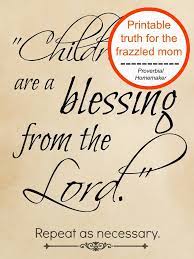
Children are blessings… right?

Children are blessings… right? Isn’t that what is always said to expecting or young mothers? Are children truly blessings or are they the Devil in disguise? In the Scarlet Letter, by Nathaniel Hawthorne an ongoing question throughout the novel is presented :Is Pearl a Devil’s spawn or is she a gift sent from God? At times even Hester questions if the child she birthed is an imp of evil. In fact, throughout this story, Pearl has shown multiple times that she was put on Earth by God, to protect her mother. She is very protective of her mother, she is presented discreetly as a gift from God, and Pearl saves her mother more than once from the Devil in disguise. Some might say that Pearl is trying to cause trouble between Dimmesdale and the townspeople by subtly revealing him as her father, but it is clear she doesn’t like to see him suffering with the guilt that has been suffocating him.  
Pearl has a very strong willed personality; she can be quite a devious troublemaker but it is going too far to claim that she is a Devil’s spawn. Pearl has shown many times that she deeply cares for her mother. At times she acts more as a motherly figure towards Hester than Hester acts towards her. Hester doesn’t like to stand up for herself because she feels like her mistreatment is part of her punishment from God. In a way, when Pearl stands up for her mother it is God trying to tell Hester he forgives her for her sin and doesn’t want her to suffer. Many of Pearl’s encounters with the Puritan children were not pleasant ones. They often started the altercation by insulting or tormenting Hester either with nasty comments or flinging things at them: “Pearl would grow positively terrible in her puny wrath, snatching up stones to fling at them, with shrill, incoherent exclamations, that made her mother tremble, because they had so much the sound of a witch’s anathemas in some unknown tongue.” (Hawthorne 65). Throughout the chapters, the narrator unfolded how Pearl’s personality developed. While reading the narrator is describing how her actions get her in trouble sometimes along with her devilish behavior towards the Puritan children. The narrator describes how, “But Pearl, who is a dauntless child, after frowning, stamping her foot, and shaking her little hand with a variety of threatening gestures, suddenly made a rush at the knot of her enemies, and put them all to flight.” (Hawthorne 70). After doing this, she turns and smiles back to her mother, presenting how she thought her actions towards the children were good. 
Pearl is often shown as a symbol of God’s love as a gift to Hester. Hawthorne decides to let Pearl’s meaning in the book be a mystery to his audience. Subtly, Pearl is presented as a devilish child with sweet intentions. Since so many townspeople thought that Pearl was a Devil’s spawn, they wanted to remove her from her mother’s care. They thought that if Pearl was affiliated with the Devil, Hester’s soul would be in danger unless Pearl was removed from her care. On the other hand, if Pearl was capable of moral and religious growth, the townspeople wanted to transfer her to better guardianship than what Hester was capable of. They believed that since Hester had committed a sin, she wasn’t the right leadership role for her child. Pearl, not knowing what was at stake, decided to come up with a creative remark when she is asked who made her. This makes it easier for Hester to be proved unworthy of raising a child in the Christian faith. As the Governor argues to take Pearl away from her mother, Hester begs him to let her prove that she is worthy of keeping her child. Hester herself argues “ God gave me the child! He gave her in requital of all things else which ye had taken from me. She is my happiness!-- she is my torture, none the less! Pearl keeps me here in life! Pearl punishes me, too! See ye not, she is the scarlet letter, only capable of being loved, and so endowed with a millionfold the power of retribution for my sin? Ye shall not take her! I will die first!” (Hawthorne 77). This shows the governor how letting Pearl stay with her mother is also part of her redemption.  Even with her pleas, Hester couldn’t convince the Governor or the townspeople that she had the ability to teach Pearl about the Christian faith. Without question, Hester turned to the well trusted and respected Mr. Dimmesdale. Hester asked Mr. Dimmesdale, to speak on her behalf; she knew that he was one of the most respected and powerful men in the town and could change many people’s minds. Dimmesdale declares “ God gave her the child, and gave her, too, an instinctive knowledge of its nature and requirements-- both seemingly so peculiar-- which no other mortal being can possess. And, moreover, is there not a quality of awful sacredness in the relation between this mother and this child?” (Hawthorne 77-78). With that statement, the Governor reluctantly allowed Hester to keep her child; he trusted Dimmesdale whole heartedly and listened to his pastor’s statement.  
Lastly, Pearl is constantly the cause of keeping Hester safe from the Devil in disguise. The story has many hidden spiritual meanings, Hawthorne often hides the Devil in plain sight in the book. He often implies Chillingworth as the Black Man in many ways; Pearl often being the character to point it out. Pearl calls, “Come away, mother! Come away or the yonder black man will catch you! He hath got hold of the minister already. Come away, mother, or he will catch you! But he cannot catch little Pearl!” (Hawthorne 90). Pearl could see through Chillingworth. She didn’t refer to his deformity; she as a child could see his intentions before any of the adults could understand his evil spirit. Pearl also keeps Hester out of trouble indirectly. When Hester was invited to go into the woods with the Black Man, she told the Governor’s sister how much she would willingly participate but couldn’t because she had a child at home. This saved Hester from most likely getting killed at a witch trial, in which she would have gladly participated in if it hadn't been for Pearl.  The narrator presents her attitude towards the Black Man by showing how willingly she would sign his book, “ I must tarry at home, and keep watch over my little Pearl. Had they taken her from me, I would willingly have gone with thee into the forest, and signed my name in the Black Man’s book too, and that with mine own blood!” (Hawthorne 79). It shows how Hester was almost excited to give her life to the Black Man. 
These are some of the many reasons why Pearl is a blessing in disguise to her mother instead of a devilish imp. She is very protective over Hester, she is a gift from God, and she saves her mother from the Devil in disguise. After reading this, what do you think? Is Pearl a Devil child like some of the Puritan’s think? Or is she a blessing in disguise to her mother? Are children really blessings in disguise?
Posted in Uncategorized | 1 Comment

Pearl’s Great Gift

In the Scarlet Letter by Nathaniel Hawthorne, there is a baby named Pearl so complex that she is recognized by some as a beacon of change for the better in Hester’s life, and by some as a tampering force for Satan. Ultimately, though, her ability to do good for her mother outweighs the devilish ways that most toddlers possess. Pearl is an angel, as she fights both the literal and figurative devils in her mother, Hester’s, life.

In one instance within the book, Pearl saves her mother from the wrong path, leading her towards the godly way in the townspeople’s eyes. She does this in the most direct and literal way possible. Hester is approached by the “ill-omened” Mistress Hibbons, who makes Hester this offer: “Wilst thou go with us to-night? There will be a merry company in the forest; and I wellnigh promised the Black Man that comely Hester Prynne should make one” (Hawthorne 105) There are several indications of mal-intent in this proposition. First, it is made clear in a previous passage that Mistress Hibbons was later executed for witchcraft. This means that an invitation from her is inherently frowned upon by Puritan society, so if Hester was to accept this invitation it would be a sign of her heading down the wrong path. Second, in the invitation, Hibbons references “The Black Man.” The Black Man in this context is an alias for Satan, meaning that this definitely is an invitation for Hester to practice some kind of Devil worship or witchcraft. Hester responds to this by saying: “I must tarry at home, and keep watch over my little Pearl. Had they taken her from me, I would willingly have gone with thee into the forest, and signed my name in the Black Man’s book too, and that with my own blood!” (Hawthorne 105) This is quite literally Hester stating that if she had lost Pearl, she would have gone towards the most extreme path of evil. Without her daughter, Hester would have accepted  Hibbon’s invitation, and she would have even used her ‘own blood’ to sign herself over to Satan.

Pearl not only draws Hester away from the wrong path, she is also the direct cause of Hester making steps in the right direction. This is shown in the first given description of Pearl: “But she named the infant “Pearl” as being of great price,-purchased with all she had-her mother’s only treasure! How strange, indeed!” (Hawthorne 81) This is the first step towards redemption, showing Hester’s sacrifices for Pearl. Pearl is a form of rebirth for Hester, for she has lost everything because of this child and the events leading up to its birth; thus, Pearl leads to a sort of fresh start for Hester. While this may not exactly be a large step directly towards the right direction, there would be no way for Hester to redeem herself from her sin if she could not start anew. The second showcase of Pearl leading Hester towards redemption is when Dimmesdale makes this point directly: “She recognizes, believe me, the solemn miracle which God hath wrought, in the existence of this child. And she may feel, too,- what, methinks, is the very truth,- that this boon was meant, above all things else to keep the mother’s soul alive, and to preserve her from blacker depths of sin into which Satan might else have sought to plunge her!” (Hawthorne, 103)  Dimmesdale, a minister and therefore a perceived authority on the word of God, argued that God gave Hester the child so that Hester’s soul could focus on Pearl, a force for good, instead of moving more towards Satan. He thinks that if Hester is able to properly teach Pearl the ways of God, even if Hester is sinful, the amount of good she does for Pearl will ultimately redeem her. Therefore, Pearl leads to redemption from Hester’s sin.

Finally, Pearl is profound for her age, recognizing people’s intentions, biases, and having an overall solid sense of good and evil. The first example of this is when Pearl defends herself and Hester from the town’s children, after they verbally harass both Hester and Pearl: “ ‘Behold, verily, there is the woman of the scarlet letter, and of a truth, moreover, there is the likeness of the scarlet letter along by her side! Come, therefore, and let us fling mud at them!’ But Pearl, who was a dauntless child, after frowning, stamping her foot, and shaking her hand with a variety of threatening gestures, suddenly made a rush the knot of her enemies, and put them all to flight” (Hawthorne 92) The children in this excerpt are a representation of the townspeople’s biases as a whole. They are choosing to antagonize Hester and Pearl because they know the scarlet letter is a mark of sin. This is how the town acts towards sinners, except the kids add in some projectile mud. Pearl understands this and preemptively strikes back against the kids, protecting herself and her mother. The children are described as “sombre little urchins” (Hawthorne 92) and play beloved childhood games like “scourging Quakers, or taking scalpa in sham fights with Indians” (Hawthorne 84). These kids are brutal by nature, and Pearl getting at them first shows that not only does she understand their biases, she understands the way they “play”, and attacks them directly before they have a chance to do anything. This is a level of worldly understanding that is incredible for someone her age. This is shown again when she recognizes Chillingworth’s evil before even Dimmesdale does, and speaks out about it: “Come away, mother! Come away, or yonder old Black Man will catch you! He hath got hold of the minister already. Come away, mother, or he will catch you! But he cannot catch little Pearl!” (Hawthorne 121) This shows Pearl directly recognizing that Chillingworth is a force for evil, and that he is onto Dimmesdale already, by comparing Chillingworth to the Black Man as soon as she sees him. She also states that she knows that the forces of evil, or the Black Man, are after Hester, and also Pearl herself. 

To summarize, Pearl helps her mother by saving her from the wrong path, helping her forge a path of redemption, and using her profound sense of other’s behavior to recognize the forces of evil. Pearl is definitely an angel, as she fights the figurative forces of evil by acting as her mother’s rebirth, and the literal forces of evil in the forms of the children and Chillingworth.

Posted in Uncategorized | 1 Comment

Pure Evil

Morality is infamously hard to define. It’s a word that has many different meanings to many different people. But there are things about the world at any period of time that would be considered immoral by everyone. Racism, sexism, any form of oppression, unnecessary death, or selfish actions made by those in power are all things any sensible person would consider objectively immoral. Modern American society has all of these problems and more, but we are much closer to healing them than the people that planted our Puritan roots, making us more and more moral as we grow further and further away from them.

There are many similarities between contemporary American society and our Puritan ancestors. For example, under stress or societal pressure, us and our Puritan ancestors will make similar leaps in logic or ignore what we know is right, causing us to make unforgivable mistakes. The Crucible, a play by Arthur Miller, touches on this issue through comparing the Salem Witch Trials and Mccarthyism. This issue is best exemplified through this quote in the text where the main character, John Proctor lashes out at those condemning him as he is taken away: “A fire, a fire is burning! I heat the boot of Lucifer, I see his filthy face! And it is my face, and yours, Danforth! For them that quail to bring men out of ignorance, as I have quailed, and as you quail now when you know in all your black hearts that this be fraud- god damns our kind especially and we will burn, we will burn together!” (Miller 120) While this may seem like the ramblings of a fearful person before being jailed and put to death, this is part of Miller’s allegory comparing the witch trials and Mccarthyism, and is also relevant today. Miller’s point in this quote is that in the case of a public craze like the witch trials and Mccarthyism, when people know they are wrong but harm others for the sake of self preservation, in the long run it is not the accused but the accusers who will suffer, for they are knowingly betraying their morals, like all those who falsely called their enemies communists but were looked down upon once the public got smart. That’s not the only thing the witch trials can be compared to through this allegory. Today, there are many instances of people lying for their own gain on all sides of any issue. The most prominent example of this is widespread political information being used by openly public figures, most notably the allegations of election fraud from both sides of the aisle in the two most recent elections. After the 2016 election, eleven democratic representatives levied eleven separate objections against the election results. These objections were shut down by then Senate President Joe Biden, either for not being based in fact or for being incorrectly certified (not signed by a senator). These objections had zero chance of having any effect on an election outcome, and were performative in nature. The only thing the representatives accomplished through these actions was boosting their public standing and spreading a bit of disinformation. On the other side, an issue that doesn’t really have to be explained to anyone who has access to the internet or a television, in the 2020 election, former President Trump, his cabinet, almost every republican in the senate and congress, and every right wing media pundit alleged massive voter fraud through the means of mail-in ballots and illicit poll watching practices. This was simply not true, and yet somehow a large group of people got together in the American capitol to riot, causing the death of five people. No one would disagree that all of these things are immoral. There is not much difference between us and our Puritan ancestors in this instance; we both allowed lies to lead to chaos and death. But that’s not where the comparison stops.

There is no end to the hate our Puritan ancestors possessed, and we still retain some of it. It is understood that Puritans were infinitely oppressive in their treatment of women. It was a societal requirement that women were married, or they were shunned. It was out of the question that any woman do anything to prevent or avoid pregnancy. They could not possess property or conduct any form of business. The husband owned all property after marriage, including any children. Women were expected to dress very strictly and modestly, in public and in their own home. Let’s compare this to today. Though many may look down on unmarried women, there are very few instances where those women should expect to be forced out of society as a result of her marital status. While many states fight abortion and find it reprehensable, many states make it possible for a woman to make that decision herself. Birth control has also advanced so far, and the general public is not against its usage. Women can also own their own property and conduct their own business. As for the dress code, what people wear is entirely up to them, though a lot of people will still judge. A study made in 2012 found that “American students judged promiscuous women more harshly than British students did” (Hutson). But still, nothing compares to the complete apathy and hatred for women that Puritans possessed, shown in this quote from The Scarlet Letter. “This woman has brought shame upon us all, and ought to die. Is there not law for it? Truly there is, both in the Scripture and the statute-book. Then let the magistrates, who have made it of no effect, thank themselves if their own wives and daughters go astray!’“ (Hawthorne 46).  While people may utter something so hate filled in the safety of their homes nowadays, one must  understand the further context. This is a regular person, surrounded by a group of regular people, essentially saying  that a woman deserves to die for the crime of adultery. Today, while cheating is considered a truly bad thing to do, no one would dare walk into a crowded group of people and openly state that a woman deserves to die for it. This also ties into another modern issue- the death penalty. Today, there are many debates surrounding the morality of that issue. People being very openly and unjustly put to death, the occasional failure in a lethal injection, adding a lot of pain to a supposedly quick death, and the general idea that death is bad are all very valid points against the death penalty. But today, the only way you can be put to death is if you are convicted of murder(s), or you do something worse no one really wants to discuss. This is nothing compared to our Puritan ancestors, who would put people to death for adultery or alleged magic powers. 

Finally, it is generally considered a fact that society today is formed in part by a lot of systemic racism. But it’s also considered a fact that this is because of the reason non white people were first brought to the colonies- slavery. And you’ll never guess who was an active component and supporter of the Atlantic slave trade- the Puritans of the New England colonies. Marginalized people today are still suffering from these transgressions, but we’ve come a long way from deeming an entire group of people property based on how they look. Speaking of slavery, we do still in large part have a system similar to that in our prison system. It is truly unjust that people are forced to work often some of the most labor intensive jobs in the world for years on end, no matter their crime, and then wonder why they haven’t magically been rehabilitated. But as dark and evil as this may be, creating unpaid manual labor as a punishment for a crime is still infinitely better than marking someone for this position in society from their birth. However, this is still not the worst offence of our Puritan ancestors. 

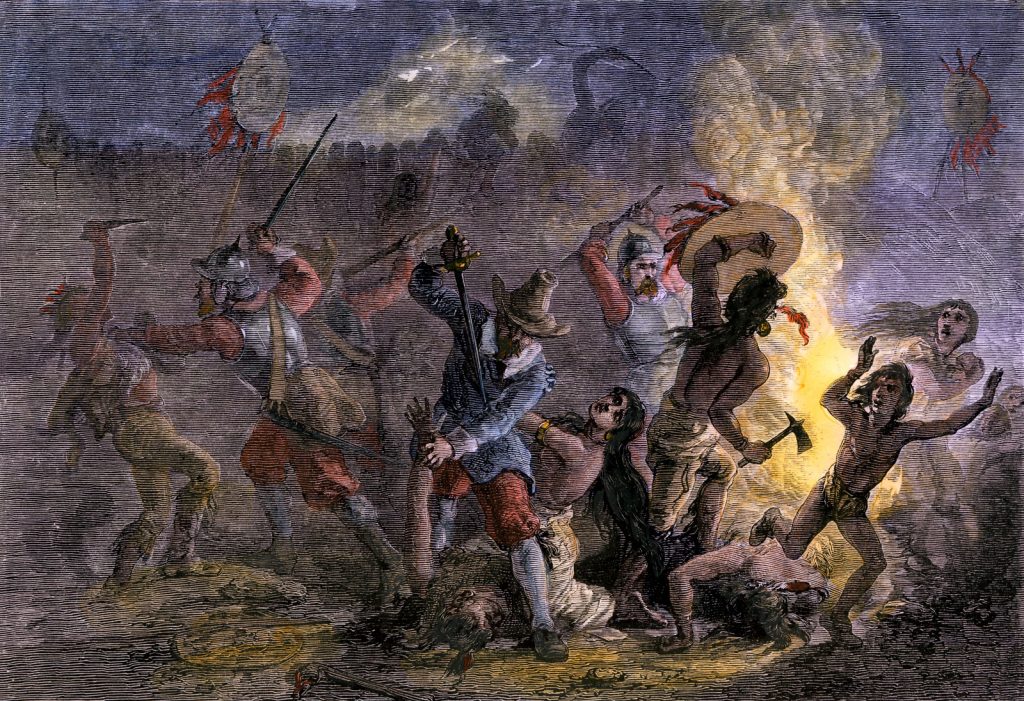
There is nothing more foolish than the idea that Puritans were positive in their impact on America during their time. Even by the low standards, the Puritans were brutal in their actions towards the land that wasn’t even theirs. Some people, like this New York Times writer, would assert that “The colonists hungered to recreate the ethics of love and mutual obligation spelled out in the New Testament”  (Hall).  If this is true, they had a weird way of going about spreading love. The Puritans played a large part in the Pequot and King Phillips war. This resulted in an estimated minimum of 7,000 deaths. But there are excuses you could make for all of these events, saying that they were protecting their land or were coerced into war by the larger British forces. But there is an event that is completely inexcusable: The Mystic Massacre. This was an attack on the Pequot people by Captain John Marshal of the Connecticut militia. The militia set fire to a Pequot village, and patrolled the exits, killing anyone who escaped, including women and children. This event had a death toll of up to 700 people. There is no world in which these actions could be described as an attempt to create “ethics of love”. That is an objectively hate filled and unnecessary attack against a defenseless people.

The points expressed in this paper are not only opinions, they are facts. The Puritans massacred people with far less reason than us and were infinitely more racist and sexist then us to the point that they created all the norms and biases we still  have today. While these may sound like small differences, it is the fact that our society has been able to and continues to move away from our Puritan ancestors that makes us more moral than them. That is why we are more moral.

Posted in Uncategorized | 2 Comments

I see

Didn’t mean to keep this up

Posted in Uncategorized | 2 Comments

Love

“Love yet commits another sin in The Crucible”

Hester from the Scarlet Letter waits years for the sake of love and John Proctor from The Crucible goes wild in an attempt to protect his wife. As often shown in various stories love is insanely powerful in how it can influence people. However, in the aforementioned texts love is the catalyst for the downfall of both Hester Prynne and John Proctor. It tempts them into actions that later ruin them. It keeps Hester sane in the long years with just Pearl and drives Proctor to insanity when he can do nothing to protect his wife. Love also redeems both of these characters showing the good in them and the passion they have for their partners.

Hester who comes to be alone in Puritan New England after believing her husband died is soothed by Dimmesdale. The great thing that is love leads them to commit adultery in a world where it is punished harshly. A pregnancy, which in different circumstances could be considered a blessing occurs and rats them out to the village. Upon hearing of her sin most of the people of the town say horrid things about her. Why would something so great rat her out?

Love yet commits another sin in The Crucible making Proctor practically go insane, threatening to gouge out someone’s organs and stuff them down their throat. This is all part of John trying to protect his wife from the vengeance of his once mistress Abigail. Love drives people to do crazy things, sometimes rightly so, just look at the literal war caused over it. In this case, however, it is the start of the end for Proctor. 

Love in these books also has a redeeming quality. John Proctor admits his own sin to the world in an attempt to help his wife. It proves how much Proctor really cares to give up himself in the attempt.

Love may be the catalyst of both Hester’s and John’s downfall, tempting them to sin, leading them to insanity and drastic action, but it redeems both of them, and really what is life without love?

Posted in Uncategorized | 1 Comment

Tradition

“The wind whistled by our ears as we gently conversed.”

Ring, ring, it was time to wake up. The sun had risen and it was time to set up. It was time for the traditional hike with my dad. We loaded our water and lunch into the truck and set off. The frothy fog from the river valley lifted away and dissipated into the sky. I stared out the window at a herd of deer silently munching away at a morning meal. The sun shined bright in our eyes as we arrived at our stop and glanced at our looming enemy to conquer.

It was dewy in the shadow of the trees. It was time to meander over roots and rocks. The wind whistled by our ears as we gently conversed. The trail began to steepen and our steps began to quicken. We found logs toppled from previous storms. The trees began to change, the soil got rockier and filled with needles. We passed a waterfall with cool, clear water. Then we saw the first blueberry bush.

We came out into the open. The ground was covered with granite, blueberry bushes, and red pine. Leftover water from yesterday’s storm dripped down the slope. We were almost at the peak! We started to pick some of the blueberries. They came in all varieties. There were puckery ones with purple leaves, sweet ones with green leaves, and large but relatively bland ones. We reached the peak and felt the strong breeze on our faces. The whole community lied down below around us, we were at the top of the land!

Posted in Uncategorized | 3 Comments

Child of the Devil?

“Pearl is a force of good, gifted from god to help Hester redeem herself”

Some may say Pearl is the child of the Devil, who came to ruin Hester’s life; however, it is quite the opposite. In Nathanial Hawthorne’s book, The Scarlet Letter Pearl is a force of good, a gift from God here to help Hester redeem herself and find a new joy in her forever changed life. Pearl is a child born from Hester’s adultery. As a result of this and other strange occurrences, she is thought to be a demon child, even by her own mother at times. In fact, Pearl, the gift from God, protects Hester from a much worse fate several times in the opening of the story.

Some may argue Pearl is a demon child because of her harsh interactions with children, however, she was just defending her mom: “But Pearl, who was a dauntless child, after frowning, stamping her foot, and shaking her little hand with a variety of threatening gestures, suddenly made a rush at the knot of her enemies, and put them all to flight. She resembled, in her fierce pursuit of them, an infant pestilence, -the scarlet fever, or some such half-fledged angel of judgment, -whose mission was to punish the sins of the rising generation. She screamed and shouted, too, with a terrific volume of sound, which doubtless caused the hearts of the fugitives to quake within them. The victory accomplished, Pearl returned quietly to her mother, and looked up smiling into her face.” (Hawthorne 92). This shows that Pearl is an erratic child; however, she uses this inconsistent energy to scare away local children who berated Hester. She acts strangely on other occasions such as when she threw rocks at Puritan children. However, she acts out in a way others’ morals do not allow them to in order to protect her mother and her honor. She may act strangely and occasionally upset Hester, but she has also become Hester’s reason to live.

Hester lost a lot after her sin was revealed to the whole town, including the connection between her and those she cares about. Pearl comes as a gift from God to Hester, bringing a new joy to her life “‘God gave me the child!’ cried she. ‘He gave her, in requital of all things else, which ye had taken from me. She is my happiness! She is my torture, none the less! Pearl keeps me here in life! Pearl punishes me too!’” (Hawthorne 101). Pearl has become what Hester lives for, keeping her from giving up her life because of her shame. It is stated that Pearl is from God which can be interpreted as Dimmesdale, as a gift for abandoning her at the discovery of their crime. God is often shown as a kind and forgiving figure that will punish humans when it is deemed necessary. Pearl’s actions, such as pointing out Hester’s “A” and just existing, have acted as a reminder to Hester about her sin. This can lead you to believe that Pearl was sent to Hester from God as both an act of kindness and further punishment. This constant reminder will help Hester make it through her punishment and redeem herself as time goes on. Since Pearl is considered a gift from God, it could also be thought that she is here to help Hester combat the devil.

Occasionally Pearl acts as a protector of Hester, not from little children but from the devil who is embodied by Chillingworth in this case “He hath got hold of the minister already” (Hawthorne 121). In this instance, Pearl acts as a warning to Hester that Chillingworth has taken control of Dimmesdale’s life. Chillingworth has become the embodiment of evil in his hatred for the crime. In his rage, he has begun poisoning Dimmesdale. As she is cast out, Hester is unaware of this, but Pearl has managed to discern this in order to warn Hester of Chillingworth’s evil. Since Pearl is a young child, she needs to be cared for a lot as a result she has kept Hester busy “‘Make my excuse to him, so please you!’ answered Hester with a triumphant smile. ‘I must tarry at home, and keep watch over my little Pearl. Had they taken her from, I would willingly have gone with thee into the forest, and signed my name in the Black Man’s book too, and that with my own blood’” (Hawthorne, 105). In this instance, Pearl saves Hester from the biblical Devil. Hester, knowing she needs to go home to tend to Pearl, ignores the mistress’s request. Hester states that if she did not have Pearl in her life she would have given up and willingly made a deal with the Devil. In this case, Pearl has saved Hester from further sin. 

In Nathanial Hawthorne’s novel, The Scarlet Letter Pearl is a force of good, gifted from God to help Hester redeem herself and find a new joy in her forever changed life. She saves Pearl from the embodiment of evil as well as the Devil himself. Not only this, she saves Hester from the shame of local children on multiple occasions. Instead of making Hester ignore her sin, Pearl draws attention to Hester’s “A” allowing Hester to privately amass her opinions of her sin.

Posted in Uncategorized | 3 Comments

Pearl Essay

A Different Type of Redemption

For many, a higher power exists and represents a force that forgives and aids those who may struggle through life’s many plights. The setting for the novel involves Puritan theocracy where religion plays a very impactful role in the lives of society.  In Hawthorne’s, The Scarlet Letter, Hester suffers the penance of her sin throughout her life; however, God mitigates some of this pain by bestowing her a daughter. Pearl is Hester’s source of joy and chance at redemption as she saves her from the devil, defends her on numerous occasions, and represents her journey towards innocence. 

To start off, Hawthorne’s narrator proves Pearl’s aid to  Hester with the use of symbolism when she prevents her mother from being taken away by the devil. Sinful Hester Prynne is invited to join the devil at a party in the forest but is saved as she must return home to her daughter. The narrator observes, “But here—if we suppose this interview betwixt Mistress Hibbins and Hester Prynne to be authentic, and not a parable—was already an illustration of the young minister’s argument against sundering the relation of a fallen mother to the offspring of her frailty. Even thus early had the child saved her from Satan’s snare” (Hawthorne 108). The party mentioned by Mistress Hibbons and the meeting with the devil symbolizes Hester’s temptation for the devil and her descent towards hell as she can’t escape this “snare” and embodies the sin by wearing the Scarlet Letter. Evidently, this is not the outcome as Pearl needs to be cared for back home and Hester therefore has an excuse not to sign her name in blood for the devil. Though not intentional, Pearl saves her mother from a horrible future and definitely puts her back on her path towards redemption of her innocence even. This could be considered as a feat considering Pearl was raised in isolation by her mother.

But here—if we suppose this interview betwixt Mistress Hibbins and Hester Prynne to be authentic, and not a parable—was already an illustration of the young minister’s argument against sundering the relation of a fallen mother to the offspring of her frailty. Even thus early had the child saved her from Satan’s snare

Nathaniel Hawthorne

Furthermore, the theme of nature versus nurture is very present as Pearl must be raised by Hester in confinement, and if she proves her teachings could lead to virtue and righteousness in a girl created from sin, both Pearl and Hester could ascend to heaven. Pearl is Hester’s hope and joy and she is the student Hester must teach in order to prove her worthiness of innocence and be forgiven after all. Dimmesdale recognizes this, pointing out, “Therefore it is good for this poor, sinful woman, that she hath an infant immortality, a being capable of eternal joy or sorrow, confided to her care—to be trained up by her to righteousness— to remind her, at every moment, of her fall—but yet to teach her, as it were by the Creator’s sacred pledge, that, if she bring the child to heaven, the child also will bring its parents thither!”(Hawthorne 106). It is apparent that Pearl will grow to be an exact image of how she is brought up by her mother as she is nurtured by her and doesn’t interact with anyone else, emphasizing that society can’t help her if she’s with Hester. This is important as Hester could prove to everyone that she has fundamental values and virtue that could be passed down to her daughter by respecting this “sacred pledge”. If Pearl goes to heaven, meaning that she has been brought up well by Hester, her once sinful mother would have proved herself worthy of also ascending and forgiven by God and the community.

Ultimately, Hawthorne manifests that Pearl is there to protect Hester from the outside world and everyone against her through foreboding. A dark figure named Roger Chillingworth who happened to once be Hester’s husband seeks revenge and becomes a dangerous figure that spreads his demons through his changing personality. Pearl declares,“Come away, mother! Come away, or yonder old Black Man will catch you! He hath got hold of the minister already. Come away, mother or he will catch you! But he cannot catch little Pearl!”(Hawthorne 124). Pearl warns her mother about the black man(Roger Chillingworth) who has already started catching his first victim(Dimmesdale), which could forebode his demise. Pearl recognizes this as she is very keen for her age and warns her mom of the dangers of this man, ultimately saving her from his demons and helping her stay aware of the situation. Pearl is quite obviously Hester’s way out of satan’s “snare”.

In essence, Pearl is a source of joy and redemption sent form the Heavenly Father as she saves Pearl from the devil, protects her from dangerous characters, and represents redemption as Pearl is her student who must succeed for Hester to obtain forgiveness. Though Pearl could represent all these great things for Hester, could she herself be happy and live a normal life even if her lone presence is the result of a sin?

Posted in Uncategorized | 2 Comments