The Gray Area

Acclaimed graphic novel writer Neil Gaimen once said “It may help to understand human affairs to be clear that most of the great triumphs and tragedies of history are caused, not by people being fundamentally good or fundamentally bad, but by people being fundamentally people.” Many look for the pure and the evil in literature, cinema, theater, music, and life. However, what Gaimen is suggesting is that people are too complex to be confined to good or evil. He states that good and bad things being done do not necessarily show the good and evil of the individuals , but the complete ambiguity of human nature, as good people do bad things and vice versa. Real life examples, as well as texts like The Road, a novel showing a post apocalyptic version of America show us that humans are not so basic. Life is not as simple as humans being egoistic or altruistic. Instead, the good and evil, selfish and selfless things we do in each of our lives make each of us an individual, unique, human being.

There are many examples of people who are both egotistical and altruistic in life. For example, take Martin Luther King Jr. This man’s name is so well known, associated with the ideals of freedom, equality, and inclusion. It is undeniable that he is one of the most influential people in American history. His contributions towards the civil rights movement formed America into the country we live in today. If the characteristics of humanity are truly those of simply egotistical vs. altruistic, anybody would tell you that this man, who put his life on the line to stand up for what’s right, is purely altruistic, completely selfless. But it’s also true that MLK Jr. cheated on his wife, Coretta Scott King, an obscene amount. If humans were really defined by a single trait, then there’s no way a man with such an incredible reputation for good and caring would take a series of actions so selfish, harming his wife and likely his kids as well for his own pleasure. This is not to take away from MLK’s accomplishments, or to say that he somehow had less credibility because of these actions, but it is an important example of a “good” man doing bad things. This speaks to the fact that there is no one alignment or idea that defines an individual. Another good example lies in a story of an incredible activist named Jim Jones. Jim Jones spent most of his life as a pastor, and constantly used his platform to speak on social issues.  The pastor spoke out against nuclear weapons, believing them to be a disgusting destructive force. He also fought for the end of racial segregation. These actions led to him becoming the director of the Human Rights Commision in Indianapolis. However, if you know the name Jim Jones, you probably did not think of his activism first. Jim Jones privately led the People’s Temple, an infamous cult. He was directly responsible for the mass suicide of nine hundred and nine people, as well as the murder of Leo Ryan, former congressman. This is an example of someone who is most known for a terrible, evil act, but who had a history of activism and kindness among his congregation. Of course, his actions are not excused by his history, but he was not pure evil as someone with an egoistic worldview would believe. History shows us that human beings are incredibly complex.

The Road by Cormac Mcarthy is a text that also shows the complicated decisions that humans sometimes make. In the post-apocalyptic landscape that the novel presents, the two main characters, the father and the son do some questionable things to survive. This does not make them unsympathetic, or inherently evil, but instead shows that sometimes people who are overall selfless or good can do things that others might perceive as evil. Take for example this instance in which the man takes a life: “You think I wont kill you but you’re wrong. But what I’d rather do is take you up this road a mile or so and then turn you loose. That’s all the head start we need. You wont find us. You wont even know which way we went. You know what I think? What do you think. I think you’re chickenshit. He let go of the belt and it fell in the roadway with the gear hanging from it. A canteen. An old canvas army pouch. A leather sheath for a knife. When he looked up the roadrat was holding the knife in his hand. He’d only taken two steps but he was almost between him and the child. What do you think you’re going to do with that? He didnt answer. He was a big man but he was very quick. He dove and grabbed the boy and rolled and came up holding him against his chest with the knife at his throat. The man had already dropped to the ground and he swung with him and leveled the pistol and fired from a two-handed position balanced on both knees at a distance of six feet.” (Mccarthy 66). This scene shows that the man is willing to do what he considers necessary to survive. In The Road, the man and the boy are some of the only “good guys”. If someone had an altruistic view of people, they might say that they cannot be considered the good guys because they kill. However, when compared to the other groups in the book, the “roadrats” and “blood cults”, who are only described as cannibals, murderers, and rapists, it’s clear the man and the boy are the closest to “good” that you can be on the road. Because the man makes hard decisions for the good of himself and his son, that does not make him pure evil. Instead this also shows an instance of someone who is otherwise relatively moral in comparison to others in his situation making a choice between doing something that would be perceived as wrong and living or dying so that this threat of a stranger may live. This is a decision even the best of us would likely make.

The Road doesn’t even look to comment on morality. The novel’s intent is much larger than “bad things happen in a bad world and people are bad”. Instead, Mccarthy looks to illustrate humanity persevering. He uses the man’s worldview to show that viewing humans as only having worth if they are moral and good is negative. Throughout the book, the man debates if living in a terrible world is even worth it. More than once, he references his plan to take his son with him if he ever  dies. But in the end of the book, showing his death, he makes a very important final decision. “I want to be with you. You cant. Please. You cant. You have to carry the fire. I dont know how to. Yes you do. Is it real? The fire? Yes it is. Where is it? I dont know where it is. Yes you do. It’s inside you. It was always there. I can see it. Just take me with you. Please. I cant. Please, Papa. I cant. I cant hold my son dead in my arms. I thought I could but I cant. You said you wouldnt ever leave me. I know. I’m sorry. You have my whole heart. You always did. You’re the best guy. You always were. If I’m not here you can still talk to me. You can talk to me and I’ll talk to you. You’ll see. Will I hear you? Yes. You will. You have to make it like talk that you imagine. And you’ll hear me. You have to practice. Just dont give up. Okay? Okay. Okay.” (Mcarthy 278-279) The contrast between the man’s decision and his view throughout the book is important. The man decides to let his son live in an immoral world, because he decides his life is more important than the man’s past plan, which would have involved ending the boy’s life. Some with an egotistical view of the book may say that he makes this decision for himself, because of the line “I cant hold my son dead in my arms. I thought I could but I cant.” Though this may be partly true, the man also emphasizes that the boy must carry the fire, and never give up. This shows the man understands the importance of humanity carrying on. Instead of his past worldview, he believes that his son must survive above all else. This comments not on any concept of good vs. evil, but instead the simple idea that people have to carry on being human.

 The Road doesn’t even look to comment on morality. The novel’s intent is much larger than “bad things happen in a bad world and people are bad”.

Robert Cotton Oakes Strong

Life tells us that people are complex beings, not good or evil. Texts like The Road show us that confining humans to moral norms instead of focusing on simply keeping us from losing the fire is harmful. Almost any event or person that could be considered a good example of people succumbing to either an inherently evil nature or inherently good nature certainly has layers that go beyond that basic view. Some still believe that humans are only either altruistic or egotistical. However, life is not as black and white as that. Instead every action we take in life makes each of us our own person. 
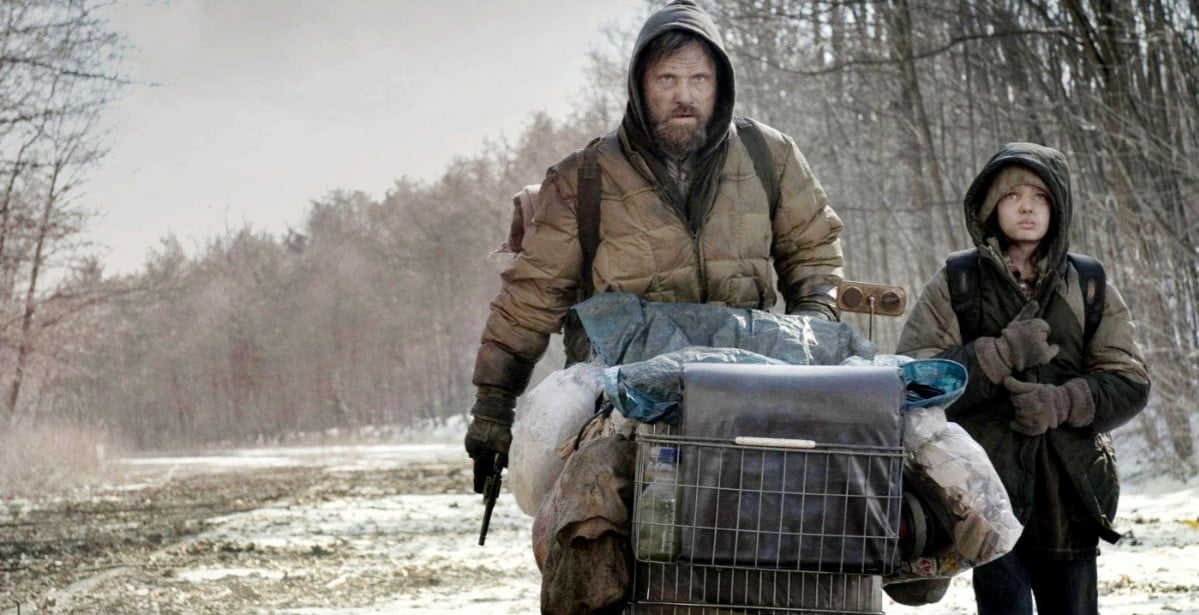
The Road (2009) | Bomb Report

Posted in Uncategorized | 2 Comments

I have a dream too

Two hundred and 45 years ago, a great American founded this country. For all white people in what was now America, this was a great step. The oppressive British boot had been lifted from their necks.

Over two hundred years later, the average American still feels trapped. Not by the chains of another empire, or the violence of another person. But they feel trapped by the apathy of their own rulers. And so it is important that I write this to illustrate such a hopeless struggle.

The founders of our country have many times had their intention to work in the interest of every American questioned. They claim to believe that “all men are created equal” and that everyone has a right to “life, liberty, and the pursuit of happiness”, and yet did not follow through on these promises for anyone but white men. But there is another privilege all these founders had. They were almost all rich, and mostly rich off the backs of slave labor. Even those who were not rich, like Adams and Hamilton, were soon invited into the highest echelons of society once they became high ranking government officials.

The working people of America have suffered greatly from their founders leaning towards the more privileged people in this country.  Low wages, insufficient labor regulations, and not enough policy supporting unions, the working class’s only defense. No matter how many people cry out, no matter how many protests, no matter how many strikes, the workers still struggle in this great, powerful, and wealthy country.

We cannot allow the ruling class to place it’s all too familiar boot on our necks.

Me

But we cannot give up. We cannot allow the ruling class to place it’s all too familiar boot on our necks. And so even as we will all have to fight through the same problems for many years to come, we should still have a dream. It is a dream deeply rooted in the American dream.

I have a dream that one day this nation will rise up and live out the true meaning of its creed: “We hold these truths to be self-evident, that all men are created equal” 

I have a dream that one day every worker in the nation will be able to come home and say that they feel like they were given what they deserved.

I have a dream that every man, woman and child will not have to break themselves just to survive, but that their livelihood will be provided to the richest nation in the world, which can give so much more to its people.

I have a dream that every future generation will be born into a nation with no racial, sexual, gender based, or class based divide.

I have a dream that one day, the ultra-rich, holding more wealth then their hundred of millions of workers combined, will be forced to surrender their unspendable riches to the people who have built them up so high.

This is our hope, and the faith I will go into the future with.

Democratic Socialists of America - Wikipedia


Posted in Uncategorized | 3 Comments

I Have a Dream, Too

There are 331,449,281 people in America as of January 19, 2022. In a country so vast, yet so exclusive, the question arises. How are we all doing? Collectively, we are unsure. Because the United States of America is unimaginably large, yet so sparsely populated, to answer this question you are gauging the conditions of people so separated that they are as similar as a bird is to a fish. However, despite immediate conclusions, these people can still be understood by looking at general trends. Over the past almost three years, we have seen a gripping trend among our small population. People, although seemingly being born in the wealthiest nation, are being held from larger potential. Many live their lives, paying debts to those who it will not affect, or rather don’t know the impact. Student loans causing people to work endlessly to pay it off, housing on the rise, salaries barely moving with inflation, are all things that are bleeding our country. Yet the bleeding continues.

To grow up to work in a tedious, ever-expanding, infuriating job, where you are paid an intolerable wage, is to grow up in America.

To grow up to work in a tedious, ever-expanding, infuriating job, where you are paid an intolerable wage, is to grow up in America. To grow up on a four-year promise, to lead into four years of expectation, is to grow up in America. To grow up watching a nation flounder on the floor, while trying to hold composure, is to grow up in America. While understanding the ability that it has to change. To create a new, break down the status quo, and change the modern day is normal for us. To speak wonders towards the advancement of civilization is the foundation of our everyday life. But we, the country, keep bleeding.

The undeniable truth that all men are created equal is held by every single one of us that lives prudently. However, one can believe that they live above the equal bar set for all mankind. In response to their conviction, one must conclude on gatekeeping others from the standard of living they preserve for themselves. To live lavishly above the spectator masses is to be a gatekeeper. However, these parasites among us see this as a reasonable goal. Once the parasite has continued to develop, it will slowly grow. The parasites grow so large they take up all space and will do nothing but take from pockets of the American people.

To be born to bleed is what it means to be born in America. To bleed your brain, heart, organs, and the bone marrow that houses the essence of your life is to be born in America. I have a dream, too. I have a dream that one day, we can patch our wounds, inhibit our parasites, and restore our condition. We have proven that dreams become reality, therefore, I have a dream, too.

Posted in Uncategorized | 2 Comments

Vietnam’s Biceps

The Vietnam war was full of horrific experiences for everyone involved, and Tim O’Brien’s novel The Things They Carried details the effects of these experiences from his perspective as a veteran. While Tim writes mostly fiction in this novel, he uses this storytelling to reflect his thoughts on the war, and highlights many negatives in the culture surrounding the war, before, during and after the fighting. Among these negatives is a problem that has always existed and continues to exist in society: toxic and hyper masculinity. The definition of toxic masculinity is a set of attitudes and ways of behaving stereotypically associated with or expected of men, regarded as having a negative impact on men and on society as a whole. These attitudes are usually associated with demeaning or discriminating against women, men with perceived feminine traits, and bottling up one’s emotions as not to show “weakness”. The men in this novel enforce these hyper masculine values by refusing to show their feelings naturally, saying ridiculous or horrible things to portray themselves as tough, and refusing to see women as equals. 

One common effect of a hyper masculine environment is that the men in the environment avoid showing their feelings or keep their emotions inside of them. However, men still obviously have emotions and so keeping their emotions from showing can lead to outbursts or irregular behavior in order to cope with avoiding expressing normal human emotions like sadness. For example, a medic in Tim’s unit, Rat Kiley, loses his good friend Curt Lemon. Instead of going through a normal process of grieving, speaking to his other friends, or expressing himself in any way. He decides to take his anger out on a baby water buffalo:

  “Curt Lemon was dead. Rat Kiley had lost his best friend in the world. Later in the week he would write a long personal letter to the guy’s sister, who would not write back, but for now it was a question of pain. He shot off the tail. He shot away chunks of meat below the ribs. All around us there was the smell of smoke and filth and deep greenery, and the evening was humid and very hot. Rat went to automatic. He shot randomly, almost casually, quick little spurts in the belly and butt. Then he reloaded, squatted down, and shot it in the left front knee. Again the animal fell hard and tried to get up, but this time it couldn’t quite make it. It wobbled and went down sideways. Rat shot it in the nose. He bent forward and whispered something, as if talking to a pet, then he shot it in the throat. All the while the baby buffalo was silent, or almost silent, just a light bubbling sound where the nose had been. It lay very still. Nothing moved except the eyes, which were enormous, the pupils shiny black and dumb. Rat Kiley was crying. He tried to say something, but then cradled his rifle and went off by himself”. (O’Brian 75)

 This scene embodies the idea of hyper masculinity perfectly. Rat is not described as grieving in any other way prior to this, and suddenly has a violent outburst directed towards an innocent creature. Then, at the end of the scene he is in tears, finally letting everything out. However, he tries to speak but stops himself, and walks away. All together, this is a scene of a man letting all his bottled up emotions out, directing all his feelings towards an innocent creature, but in the end he still cannot actually bring himself to say his feelings out loud. However, that passage also tells us that he whispered something to the buffalo. While we don’t know exactly what he may have said, he may have apologized before doing what he was about to do, or even expressed his remorse at his friend’s passing to the water buffalo. He may have briefly made the water buffalo the sole witness to his emotions. Then, he shoots it directly in the throat, silencing it forever. His ability to have an outburst to this level also speaks to the culture of the war. While obviously men get violent very often in domestic settings, you rarely hear about a man torturing a baby animal to death in America. Rat could only do this because he is in a warzone, where he has likely killed people and destroyed homes. The horrible freedom the war offers gives men with bottled up emotions a terrifying outlet for their rage. 

Another way that toxic masculinity is demonstrated is through the men’s attempts to minimize horrible things through acting like they are not affected when clearly they are through using apathetic or callous language.

A prime example of this is Azar. Azar does several horrible things throughout the novel, most notably being that he blows up a puppy.

Cotton Strong

A prime example of this is Azar. Azar does several horrible things throughout the novel, most notably being that he blows up a puppy. Throughout the book, he makes constant tasteless jokes about dead people or victims of the war. For example, he calls the man Tim kills “Shredded fuckin wheat”. This may make Azar seem completely emotionless; however, this is actually another method of hiding one’s emotions. Azar attempts to turn everything into a joke to avoid actually processing the real and serious things happening all around him. This is shown when one of his friends, Kiowa, dies and leaves Azar speechless for the first time: “Norman Bowker found Kiowa. He was under two feet of water. Nothing showed except the heel of a boot. ‘That’s him?’ Azar said. ‘Who else?’ ‘I don’t know.’ Azar shook his head. ‘I don’t know.’ Norman Bowker touched the boot, covered his eyes for a moment, then stood up and looked at Azar. ‘So where’s the joke?’ he said. ‘No joke’ ‘Eating shit. Let’s hear that one.’ ‘Forget it’” (O’Brian 166). When Azar finally has to think about one of his close friend’s deaths, while he can’t bring himself to express outright grief, he finally decides to show respect. This is significant because we finally get to see Azar care about something and process an event in a serious manner, showing that he is not a psychopath, he is simply somebody who has learned it’s easier not to deal with something terrible head on. This contributes to the culture of toxic masculinity because Azar would rather bottle up with his jokes than seek help or support from those around him. While Azar does show respect in this scene, the fact that such a basic step like not telling a joke upon seeing your deceased friend is surprising to Norman and the reader should be a sign that men bottling up their emotions has become a staple of society, and is amplified in a wartime environment. 

Another component of toxic masculinity is sexist language and attitudes. One of the most prominent examples lies in the story of Mary Anne’s transformation from a woman living a life of peace to a deadly green beret who ends up becoming essentially a horror story when she disappears into the land. In this story, Mary Anne finds a form of belonging in the war, so much so that she goes on to join the green berets in their ambushes. When she comes back, Mark Fossie is enraged that she went out without talking to him. They have a conversation that is not shown in the text, and then Mary Anne restricts herself back into traditional values:

 “Mary Anne’s hair was freshly shampooed. She wore a white blouse, a navy blue skirt, a pair of plain black flats. Over dinner she kept her eyes down, poking at her food, subdued to the point of silence. Eddie Diamond and some of the others tried to nudge her into talking about the ambush—What was the feeling out there? What exactly did she see and hear?—but the questions seemed to give her trouble. Nervously, she’d look across the table at Fossie. She’d wait a moment, as if to receive some sort of clearance, then she’d bow her head and mumble out a vague word or two. There were no real answers.”  (O’Brien 98)

Why does Mark Fossie try to restrict Mary Anne from doing something that all the men around her are doing constantly? Obviously, he did not bring her into the war expecting her to enjoy the darker parts; however, he’s also the one who dragged her into the war. The fact that he attempts to reel her back in from doing something that people all around her are doing demonstrates that he sees Mary Anne as unfit to do the things men do in war. Because of the end of the story, we know that she is totally capable of doing these things, as she not only goes out on more ambushes, but she becomes a sort of legend who scares even the green berets when they go out. The fact that Mark Fossie tries to pull her away from her potential can only be attributed to the fact that Mary Anne is a woman. The violence demonstrated by the green berets is extreme. Their ability to lie in wait for hours, days, to kill enemy combatants is daunting. However, because they are men in war, and are exhibiting resilience and apathy, they are seen as normal. This is a prime example of hyper masculinity at work. Traits like these exhibited to an unnatural extent in men are normalized. However, when a woman like Mary Anne also exhibits these traits, it is unacceptable to the men around her, showing how sexist war culture is.

Who Was Involved in the Vietnam War? - HISTORY

In The Things They Carried, a lot of commentary is made on a lot of horrible things in the Vietnam war. One of these things is toxic masculinity. O’Brian demonstrates this in many different ways, by showing the horrors of the war from the perspective of the men in it. Hyper masculinity plays a large role in this book, and it’s enforced among the men  by refusing to show their feelings naturally, saying ridiculous or horrible things to portray themselves as tough, and refusing to see women as equals. 

Posted in Uncategorized | 2 Comments

Puritans: The Lowest Point of Morality

Entitled separationists with little patience for anything outside of Christianity or their community norms is the perfect way to describe Puritans in the 1700s. This sentiment is shared by both Nathaniel Hawthorn in the novel The Scarlet Letter and Arthur Miller in The Crucible. In their writings, both of their depictions of Puritans held crude values which are expected of their time. All Christians trust in the court, no exceptions. Those who have different skin, hair, or eyes were not seen as Christian or human, as they were. Puritans had no empathy, understanding, or tolerance for anyone who did not abide by their strict code of law. This lack of understanding meant that the Puritan society was very crude, and less moral than ours today. Even if we are built from the puritan society that is synonymous with these terrible morals, our modern society has evolved and learned from our past mistakes. 

Being birthed into a society with Puritan roots, we Americans frequently have to look back and understand what we have done in the past to not repeat it.

Being birthed into a society with Puritan roots, we Americans frequently have to look back and understand what we have done in the past to not repeat it. In the play, The Crucible by Arthur Miller, we read about a story depicting the Salem witch trials. During one of these trials, a man by the name of John Proctor tries to make a defense for himself, but in the process is cut off by a man claiming Proctor is attacking the Court. A reverend, Hale,  tries to seek the truth by asking, “Is every defense an attack upon the court? Can no one–?” (Miller 87). In this quote, Hale is cut off, which only served as a reminder to the reader that he has no voice in court. This is morally incorrect because a court hearing is much more than an argument. A court hearing decides the fate of someone’s future, a future with possible financial repercussions, jail time, and in the case of the Salem witch trials, death. In today’s world, we have the morality to understand that hearing people out, and understanding their words plays an important role in deciding their position in a legal disagreement. In our modern society, we have learned from these experiences. Never again will someone not be allowed to convey their argument, as it is immoral to condemn someone without hearing their retort. This type of predetermined outlook on someone’s character does not stop at puritans of the past and has been an observed action passed through puritan beliefs.

Protestants are people who live by the same set of codes and rules set by Puritans. Looking towards them to understand the Puritans who landed in America helps us understand the type of morality the Puritans had. Bias was evident in the Puritan court. In the essay “Still Puritan After All These Years” by Matthew Hutson, we learn that it didn’t end there. Hutson states “Studies since the ‘70s have also found that Americans who score high on a protestant Ethic Scale (emphasizing self-reliance and self-discipline) or similar metric show marked prejudice against racial minorities and the poor; hostility toward social welfare efforts; and. Among obese women, self-denigration.” (Hutson). The statement ‘hostility towards social welfare efforts’ shows the protestant community, and by extension, the Puritans did not care for those who needed assistance. The concept of helping thy neighbor, an idea that is typically valued by those of Christian faith, was not completely brought into fruition when it came to those of lesser status. This proves to be less moral outlook on others because protestants fail to recognize another person as human and deserving of life as a protestant identifying individual. Another key concept stated in the passage is that scoring higher also meant higher marked racial prejudice. Higher marked racial prejudice is important because historically, Puritans loved excluding people who didn’t fit their mold. Although many Americans love crediting themselves for currently having a morally just democracy, the American democracy when it was created by the Puritans, had many issues.

The American government we know today is vastly different from the one that Puritans created. Although we have similarities in documents, those encompassed by those documents, and more importantly who isn’t, is important. In “Peace, Love and Purism” by David D Hall, we learn “In 1648, Massachusetts became the first place in the Anglo-American world to Publish a code of laws – and make it accessible to everyone.” (Hall). The idea of a code of laws’ being ‘accessible to everyone may sound very inclusive at first, but with deeper inspection, it is clear that this ‘everyone’ David D Hall references may not be everyone you think. Historically, white land-owning men were the only ones who were encompassed by these laws. In the article, “Puritan Laws and Character” by Henry William Elson, we learn about how those not encompassed by the laws were treated. He states, “All colonies had negro slaves” all of whom certainly did not participate in the law-abiding society depicted previously. Even if one was fortunate enough in the Colonies to be encompassed by the Puritan laws, one was still bound by many irrational and immoral laws that restrict individual freedoms.

In New England being lucky to be a white, land-owning man meant they were blessed by Puritan laws that were restrictive and lacking in freedom. Puritan laws were based on religion and faith more than they were modeled for freedom and personal independence. Many laws restricted people’s ability to express their sense of self through clothing, physical appearance, or by showing affection to a  partner. To impose restrictions upon individual freedoms, Puritans declared “The length and width of a lady’s sleeve was solemnly decided by law” (Elson). Puritans used the power of law to control and hinder individual choice; however, as we aged as a country and a society we understood these to be immoral. To decide what another person wears by the code of law is completely ridiculous to current Americans because we have developed and learned what is necessary to keep society safe. In today’s world, even students can appear at school dressed in pajamas, and express affection to their significant other. However in Puritan society “A man was not permitted to kiss his wife in public” (Elson). Because of laws like this, we as an American society have learned to regulate things that affect others’ way of life. Simply, the length of a woman’s sleeve, or a man kissing his wife, do not harm anyone. Another example to call to mind is Hester Prynne in The Scarlet letter being forced to wear the letter A on her chest as prosecution for adultery. It was not enough to the puritans to have her publicly condemned in court, but they also had to make a permanent wardrobe change with the soul cause to shame her. To limit  simple freedoms like one choosing what to wear is immoral to the people it affects, and we as a society have moved on to larger issues. However, this want for control and regulation stems from the fact that Puritans were inherently intolerant people.

Puritans in The Scarlet Letter were depicted as judgmental people. They constantly butted into the life of Hester Prynne even after she was banished from society. In the novel, Hawthorn tried to take every chance he had to describe just how little he valued the Puritans. It was evident that although Hawthorne was writing from a place of hate towards the Puritans, they always glared back with a similar sense of distance for modernity. “All were characterized by the sternness and severity which old portraits so invariably put on; as if they were ghosts rather than pictures, of departed worthies, and were gazing with harsh and intolerant criticism at the pursuits and enjoyments of living men” (Hawthorne 67). Nothing aggravated Puritans more than knowing others are living a life of happiness that they couldn’t. Bound by unfair laws, and overly religious neighbors, Puritans critique people of the future for not living by their outdated and frankly incorrect moral standards. Puritans being described as ‘ghosts rather than pictures’ highlights their poignant hatred towards their lifestyle, only to force them to haunt others to ensure they don’t lead better lives. After death, the puritans still refused to let go of their intolerant morals so much that their hatred and fussy attitude can still be observed through historical record.

Puritans, although laying the groundwork for modern Americans, never truly understood morality. They constantly silenced others to diminish their voices and message, used laws to then restrict personal freedom, and looked down on those whose future was not yet written. Meanwhile, they created a false democracy where they gave the illusion of equality and passed it down to future generations only to reflect their sense of bigotry and intolerance. Although they are praised for their faith, Puritans truly lacked morality and empathy when it came to anyone who wasn’t a white-blooded land-owning Christian.

Posted in Uncategorized | 1 Comment

I SEE

The image above may seem simple, but in my mind there is nothing more complex. This picture embodies everything about the best and worst months of my life, the months that make up this past summer. In the foreground, you can see rocks, a fireplace, rocks and a chair. I see my moments of peace, with the fire crackling, sparks flying from the unpredictability of the flame in the barely standing brick structure. I see my dog, his favorite spot is just out of frame, a grassy area where he stood preparing to protect us from his most violent enemy: the squirrels.  I see my family, gathering near the pit near the end of the day, after we spent the prior hours going to our separate places at our separate times. Beyond this place, you see a boat, you see the name- James Ann- and the boy on the boat. What you cannot see is that boy, me, struggling with the limited space. Jumping around buckets and crates is a process that I now do so efficiently that I now think of myself as the sole American Ninja Warrior.

You definitely cannot even begin to imagine the sting on your nose, as you take in the smell of hundreds of dead fish.

Cotton Strong

You can look at pictures online, but there is no way to appropriately describe pushing through the seemingly endless pile of yellowed herring that have aged so badly they melt like pudding in your hands. Even now, I can feel my exhaustion, paired with the seasickness that is inevitable for even the most experienced fishers. This twisted feeling in my stomach, my chest, my head was a daily routine for so long that even thinking of it gives my body the illusion that I somehow feel it, no matter where I am, or how long it’s been since I have felt any actual fatigue. Past my own little bubble of struggle and fish, I can see my captain, grinning as he guns the boat he has named after his two kids, who he is no doubt thinking of as he ignores his constant pain. Beyond our struggles, you see an island, the oceans, the horizon, the sky, and you know of the world beyond. I see the 20-odd traps, each island in the distance, which are hidden from your eyes. I know that behind every island there is a harbor, which will be my point of escape, months after this picture was taken. I know that out in the blue desert, there are hundreds of lobsters already ensnared in yellow cages made just for them, waiting for us, waiting for me. I know that each lobster will feel like a victory in my mind but a step towards defeat for my body. I know that every one of those steps will make the image of completion more and more clear in my mind, an image that I know so well. So I see my moments of peace, until I finally reach them, when I see the fire crackling, sparks flying up from the flame so predictably unpredictable.

Posted in Uncategorized | 1 Comment

Gatsby’s Green Light

The Great Gatsby is commonly regarded as one of, if not the best, work by F. Scott Fitzgerald. In the novel, F. Scott Fitzgerald delivers the compelling story of Jay Gatz, otherwise known as Mr. Gatsby. Mr. Gatsby is a rich American living in West Egg; a flashy, status-driven, new money community whose residents love to flaunt their wealth. In West Egg, appearances are everything, and Gatsby has just that. No one knows where he came from, how he got his wealth, or even who he is, but the rumors of him grow to become their persona. Inklings of murder, drug rings, and other highly illegal activities float through the crowd of parties like cigarette smoke, even within the walls of Gatsby’s home. Through these rumors, Gatsby emerges, and while it’s unclear just how legitimate his earnings and lifestyle are, it is clear that he is special. It’s clear that Gatsby is special because he is an avid believer in the ‘green light’ as stated in the novel. From this, the question arises; what is the green light? The green light can be characterized as one’s majestic hope for the future, despite the constant reminder of the reality that looms behind. However, before reality came to view, Gatsby believed.

Gatsby, with all of the money, notoriety, and luxury that he had, still longed for something that he once held in the past.

Gatsby, with all of the money, notoriety, and luxury that he had, still longed for something that he once held in the past. His previous relationship with Daisy, was brief and exciting as the two explored each other with an undertone of scandal between them. This relationship with Daisy that Gatsby thought to be so true, ended one-sidedly, as Daisy left Gatsby for her now-husband, Tom. This tragic breakup only fueled Gatsby, however, and made him have unrealistic expectations for what Daisy should be for him. Daisy recognized this and was quick to understand the flaws that lay beneath the surface. She calls out Gatsby claiming, “Oh, you want too much!” she cried to Gatsby. “I love you now — isn’t that enough? I can’t help what’s past.’”. (Fitzgerald 102). Daisy’s blatant disregard for Gatsby’s feelings, as she lashes out against him verbally, shows that Gatsby has pushed her too far, even without laying a finger on her. Rather, he does this with every action that he makes, by trying to encapsulate Daisy’s complexities as a human into the perfect image that he holds of her past self. As Daisy cries out, ‘I can’t help what’s past.’ She expresses that her past self is incomparable to her now, and what’s done is done, and the impossibility of resurrecting their past relationship. This dilemma does not phase Gatsby, as his beliefs are not as grounded in reality as Daisy’s, but rather is fantasy.

The ‘green light’, is mentioned rarely throughout the novel, used so sparingly that it escapes the minds of many. Nevertheless, its infrequent use highlights the importance of the green light and the view that Gatsby has upon it. In reality, the green light was a simple green burning lantern that sat on the dock of Daisy’s home across the bay. However due to the mist that clouds the bay, Daisy’s home is blocked from view. Still, the green light shines bright, and it becomes the only way Gatsby can find refuge, recognizing that Daisy remains close to him, even through the distance. The issue only arises for Gatsby, the moment he looks out at the light, with Daisy’s arms familiarly. To Gatsby, “His count of enchanted objects had diminished by one,” when the light was finally extinguished (Fitzgerald 72). The use of the word ‘enchanted’ suggests that Gatsby had in his mind, an image of a woman even more majestic than his most desired lover. So now that he has the lover in his arms, exactly as he envisioned, the magic is missing, as it was never there in the first place. Gatsby had built the memory of Daisy with skewed ideals and expectations, and so what he had built in his imagination contained unrealistic elements. These elements that are the foundation of Gatsby’s future expectation of Daisy, crumbled when met with the hard truth of reality.

The reality of the relationship between Gatsby and Daisy has always been apparent. Daisy, although semi-reluctantly, moved on from Gatsby and went on to marry Tom Buchanan, and although things weren’t the best between Tom and Daisy, she still managed to tough it out, and even have a child together. Through this, Gatsby believes that he is still the only one Daisy ever loved. Gatsby holds this to be so true, that he even begins to coerce Daisy into admitting this, by saying ‘You never loved him.’ in front of her husband. But the harsh, cold, and unforgiving reality is far different from his fantasy. She valiantly proclaims, “‘Even alone I can’t say I never loved Tom,” she admitted in a pitiful voice. ‘It wouldn’t be true.’” (Fitzgerald 101). Daisy’s inability to admit her apathy towards Tom is proof that it has been her reality during all of her recent interactions with Gatsby, as not only was she able to say it in this instance, but also before Gatsby had arrived. Through the weakness of her ‘pitiful voice’, in a room where she felt powerless sitting next to an abuser and a homewrecker, she still slaps Gatsby with the truth that was always glaring at him. Gatsby was too ignorant to see this as fact, and while in disbelief, could only mutter back ‘You don’t understand,’, because no one could understand the dissensions of a broken man encapsulated in his twisted imagination.

Through its mysterious meanings, the green light felt as if it would provide insight into the scrupulous life of many characters in the book. Believed to be the meaning behind many life questions, and existence, but ultimately being a decrepit brain taking Gatsby hostage, and inserting false expectations where a wishful memory once lived. The green light, disappointing as it may be, is a lantern. Yet it remains to teach one thing, somebody desperate can turn simple objects into majestic hope, even when reality threatens to blind them.

Posted in Uncategorized | 1 Comment

Maggie’s Meaningless Effort

Maggie Johnson is an Irish American girl who was dealt an impossibly difficult hand. Despite this, she constantly tried her best no matter her situation to improve her living conditions against all odds. Maggie is a selfless protagonist to the core, but still suffers a harsh fate regardless of her efforts. At the beginning of the book, Maggie is a gleaming light of hope for her family, nevertheless, she devolves into a tragic hero who still tries to do what’s best. In Maggie: A Girl of the Streets, Stephen Crane develops a fictional character who portrays the masses who have little to no control over their lives. Through Crane’s language, it is understood that Maggie had no impact on her downfall, and was born to become ‘The girl’ who she ends the story as.

Maggie’s home, Rum Alley, is not one to be proud of. Rum Alley is filled with violence, poverty, and hatred.

Maggie’s home, Rum Alley, is not one to be proud of. Rum Alley is filled with violence, poverty, and hatred. This ‘dark region’ is home to adult devils who dump their “loads of babies to the streets and the gutter.” (Crane 8). Simply having parents at home, no matter what their status or decency is a rarity to those born in this decrepit town. Because of her surroundings, Maggie begins her life with a chip on her shoulder. Her brother constantly fighting rival towns, and her mother boiling red whilst belligerently drunk, brings attention to the urgency in her home life. However, in comparison to the infants fighting with each other on the streets, she is a cut above the rest. Although she may appear fortunate, it is evident by the way Crane names her brother ‘Jimmie’, and her mother ‘Mary’, but refers to Maggie as “The little girl” (Crane 9) that she has yet to be significant. Her lack of importance in contradiction to her actions creates a character that one can stand behind. For instance, even after her brother beats her, she still asks, “‘Will I wash deh blood?’” (Crane 13). Her selflessness cements her role as a protagonist. By trying to aid her brother who previously smacks her, she earns the sympathy of the reader. Despite this, it is vital that Maggie’s big-heartedness cannot be mistaken for perfection as she later falters.

While it is true Maggie is more altruistic than any anyone else in the book, she remains flawed. Maggie’s overwhelming flaw is that she relentlessly seeks a way to whisk herself from her current state of reality. She acts this out by trying to engage in love with a man who she describes as ‘ideal’ after first sight. Maggie overlooks this fatal error in judgment because “Under the trees of her dream-gardens there had always walked a lover.” (Crane 34). This lover, although unexplored, is taken at face value. Maggie finds no reason to explore Pete any deeper simply because he holds exactly what she had been looking for, status. Maggie’s unkempt desire for status makes her unaware of Pete’s intentions. She fails to recognize when she is only admired for her body rather than her behavior. This tunnel vision she holds for Pete indicates her imperfection, giving her the true mark of a tragic hero. Although one would feel inclined to blame this imperfection for Maggie’s downfall, it is clear that her downfall was marked from the beginning of the story.

By the end of the story, Maggie is simply, ‘the girl’. She has lost all sense of individuality and character that she possessed prior to her descent. However, it has been evident since the beginning that her downfall was outlined in her introduction. As depicted, “The girl walked out of the realm of restaurants and saloons.”(Crane 108). This depiction may seem contradictory to what we had thought Maggie’s future would become. Upon close inspection, Stephen Crane always made it apparent that Maggie was always ‘the girl’. Drawing attention back to the beginning of the book, Maggie was always nameless. Unidentifiable through any means of individuality, she crawled her way through a sludge of hateful and abusive relationships. Born into a family who beat her when she offered aid, Maggie was led down a path that led to a dead end. As Maggie “went into the blackness of the final block.” (Crane 112) it is important that we remember the description of her home, Rum Alley.  Described as a “dark region” (Crane 8), it is clear that Maggie ended exactly where she began. As she dies without meaning, one must ask if she was born to die in Rum Alley. Her fate outlined since the beginning makes it clear that she is irresponsible for her own death, and had no impact on her situation.

At no point throughout the book did Maggie have an option over the agency of her own life. Her romance with Pete, struggle for wealth, and frustrating death, are all consequences of her birthplace. No one in her family tried as hard as Maggie to escape Rum Alley. Maggie was unique in her charitable behavior that caused her to run in circles in her search for a better life. Even after all these factors, she lived an unimportant life that resulted in a meaningless death. These events, although evident from the beginning, were masked by hope shared by the reader and Maggie. Because of these factors, we can conclude that Maggie was born to become ‘the girl’ and had no impact on her journey as a tragic hero.

Posted in Uncategorized | 1 Comment

Innocent Little Pearl

It may seem that Pearl is a disastrous form of torture sent by the Devil to torment Hester Prynne in the novel The Scarlet Letter by Nathaniel Hawthorne. However, with closer examination it is easy to see just how angelic Pearl is to her dear mother in her times of need, redeeming Hester of her sins. Although Hester Prynne may never be able to change what she did in her past she can alter her future in the form of her sweet daughter Pearl. Pearl will be the self-defining symbol of innocence that Hester Prynne has lost. Pearl will alter the fate of her mother’s life by keeping Hester away from the devil, associating her with heaven, and balancing her mother’s sin. 

Pearl is the only thing keeping Hester Prynne bound to God despite Hester Prynne once being a beacon to society of perfection.

Pearl is the only thing keeping Hester Prynne bound to God despite Hester Prynne once being a beacon to society of perfection. In England, she was an admirable source of beauty, character, and faithfulness to the church. However, once she was alone from moving into the Colonies, she changed. She took steps closer towards the devil, in the form of committing adultery. After being condemned and branded with a letter A on her chest, the only thing that kept her will to live was her sweet Pear signifying her only treasure. When invited by a witch to meet with the “black man”, a figure who we understand to symbolize the devil, Hester declines. Hester states, “I must tarry home, and keep watch over my little Pearl. Had they taken her from me, I would willingly have gone with thee into the forest, and signed my name in the Black Man’s book too, and that with mine own blood.” (Hawthorne 75). If not for Pearl, Hester would have decided to dive further into the darkness of sin; Willingly giving herself into temptation by the devil. In this scene, Pearl proves to be a factor in diverting her mother away from the grasp of the Devil. Pearl here proves herself to save her mother away from the devil, something that only certain characters in the book pick up on.

It is clear from the point of view of Reverend Dimmesdale, that with his vast knowledge of The Bible, Pearl is a significant piece in Hester Prynne’s redemption. While Hester has acted in a manner that cannot be forgiven, she can be redeemed by raising a force of good for the world. While trying to assign Pearl to a new mother, Dimmsdale retorts, “Therefore it is good for this poor, sinful woman, confined to her care-to be trained up by her to righteousness, to remind her, at every moment, of her fall, but yet to teach her as if it were by the Creator’s sacred pledge, that if she brings a child to heaven, the child will also bring its parents thither!” (73). Reverend Dimmesdale states to the audience and readers, that although Hester Prynne may never be able to reach heaven herself, she may raise a child who will bring her in by association. Pearl with all of her overwhelming divine relation may overshadow Hester’s most grave sin. Without a doubt, Dimmesdale foresees Pearl as a future resident of Heaven, despite her conflicts with Puritan children.

A common thought is that Pearl’s actions towards the townsfolk children represent Pearl’s demonic affinity. Her actions against the children at times can be ferocious due to the constant fighting. When Pearl is interacting with the other children it can often end in the swift precise use of force that may paint her negatively. However, a closer examination of the fighting contrasts how we initially see her battles. During a confrontation between Pearl and the children, they decide to play a game where they fling mud at Hester Prynne and Pearl. As stated by the narrator, “She resembled in her fierce pursuit of them, an infant pestilence-the scarlet fever, or some such half-fledged angle of judgment-whose mission was to punish the sins of the rising generation.” (65). Although Pearl does fight back courageously, it is always in defense. Pearl does not create the conflict but rather rises to defend her mother from these child attackers. Pearl being depicted as an angelic figure by the narrator conveys her true purpose to her mother. As Pearl fights for the redemption of her mother, it only further highlights just opposite Pearl is to her mother’s sin.

Hester Prynne has sinned in a way that will grant her to receive no human sympathy. She is completely at fault for her position and will never be able to directly cause herself to be on the side of God. Therefore, to balance the sinful life of Hester Prynne, she has been given a daughter so pure and holy. Pearl is a gift from above, that will forever signify her mother’s disgrace by simply holding a child so lovely by her sin-bearing self. The narrator roars, “God, as a direct consequence of the sin which has thus punished, had given her a lovely child, whose place was on that same dishonored bosom, to connect her parent for ever with the race and descent of mortals, and to finally a blessed soul into heaven!” (57). Pearl’s soul has been blessed only to oppose her mother. God has given Hester Prynne Pearl not to show her how deserving she is of a child but to simply balance each other. Adultery will never be removed from her skin, as Pearl will never be removed from her side. Both are examples of the extremes which they represent. An aging mother who is defined by her sin only to be contrasted with a young angelic Pearl gifted from God.    Pearl is no demonic figure cast down on Hester to torment her for the rest of her life. Rather she is an angelic figure, a balance to Hester’s life of sin that desperately needs salvation. Pearl is a goddess amongst devils, a child so pure that among all of the demonic presence of the Puritans, she is often mistaken for a devil. Only further proving her fight for redemption as she is symbolized as an angelic creature fighting against impish Puritan children. She is a force of good if only alive to ensure the balance between her mother’s sin and redemption. Even reminding reverend Dimmesdale of an example of the Creator’s pledge. However, more importantly, Pearl is her mother’s anchor to life, serving as the final influence Hester may have as she moves closer to judgment day. Pearl is the only force for good that Hester Prynne will ever have in The Scarlet Letter.

Posted in Uncategorized | 2 Comments

Scarlet Letter Imitation

It may seem unimaginable the way people fracture other’s trust and go behind the backs of those around them – deliberately striking them in the behind with a cold dull blade that slides effortlessly to their core, removing all lingering sense of hope and feeling for the person that they once previously held. But it is in human nature to both build relationships, and destroy those around them who once held them dear just to ensure that they can be the ones to triumph against their peers. People such as these are common, and forcefully edge their way to the top of social circles around them simply to repeat the cycle of reconstruction and destruction. It is as if these people are succubae feeding off the clinical act of clenching onto those they know only to claw them to the bottom with previously tormented individuals. All other methods of self-betterment and acceptance can be tossed away in favor of such tyrannical actions, to impose a self-centered view of superiority. An action so pulverizing like a mountain crumbling from its place amongst the sky down to the sea, where nothing may rise to such an unseen height for all eternity.

It might be, too, a basic factor of humanity to dissociate from terror drawn out from daily horrors of life – cast down by those equally unfamiliar with cascading disaster and grim loss of souls like dominoes nudged by an unsuspecting shoulder, falling in unison.

It might be, too, a basic factor of humanity to dissociate from terror drawn out from daily horrors of life – cast down by those equally unfamiliar with cascading disaster and grim loss of souls like dominoes nudged by an unsuspecting shoulder, falling in unison. To simply turn the other cheek when watching another man stripped of all consciousness forever lost on earth, without a blinking eye moving on to the next chapter of being. The tempter of souls directing a real-time chessboard planning out steps, forcefully deciding the fate of those who can’t decide for themselves, lost in a sea of foreign enticement, capturing the minds of the many who have unwillingly lost a home to turn to. An army of zombies mindlessly marching towards an end with no resolution for either party. Those who collectively misguide others are further enforced by those who are misguided, only to further dilute the subject of wishful thinking of those with a purpose to lead. With a cycle bound only to repeat unless one were to come by, perchance with a passion to give help to those in need of; care, guidance, purpose, and love.

Posted in Uncategorized | 1 Comment