
Goodbye Babies

They sat lined up against the dark blue wall while the summer breeze made the curtains dance into the room. As I pulled out the whiteboard and every color marker imaginable, I lectured at them with pride and sincerity. Today I was teaching them their times tables. Chou-chou raised her hand to answer a problem, and as I called on her, I heard a familiar snicker to my right. Joseph had earned himself a two minute time-out in the naughty chair while the class applauded Chou-chou on her impeccable work. Joseph was always a trouble-maker, and I always found myself dedicating valuable class time to his behavioral issues. This was my responsibility, and boy did I believe it.
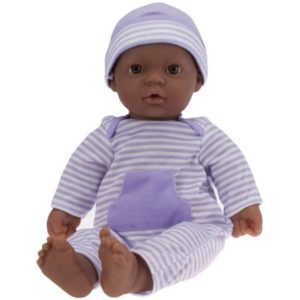
The following day was a family day. I packed up my six children, Charlie, Micheal, Oliver, Chou-chou, Wilbur, and Sammy in the baby jogger and we headed out for a picnic. Holding the two youngest in my arms, I kept an eye out for the others playing in the soft, emerald grass. The world whirred around us, yet the blur of passing cars did not phase me. The eldest played on the swingset as I fed the littles their bottles. I poured my heart and soul into the care I put out for my children. Before bed that night, I sang them all the sweet songs my parents sang to me. I tucked them in and planted a gentle kiss on every little forehead, plush, plastic, and pale fabric. That night however something was different. The following day I would start school as a fifth grader at Hebron Station, my last year before finally making it to Hebron Academy. My dream was coming true, but it felt more like my worst nightmare. I felt empty in the space below my ribs. A small ache that I could bear but one that wouldn’t go away. I challenged myself to focus on the following day, new friends and a new teacher, my last first day of true adolescence, but the ache remained. Growing more and more frustrated at this uneasy feeling I began to grow very sleepy until the next thing I saw was the soft light of morning.

“BUS!” shouted Rachel, as the ugly egg-yolk screeched around the corner into sight. Nervously smiling at bus driver Stacy as I passed by, I finally took my seat at the back of the bus. I was a cool kid now, yet I felt bothered by something that I still could not decipher. I went about my day at school pushing and prodding that feeling of uncertainty to the back of my mind. Finally the bell rang and I could go home to my kids. I sat next to my best friend Sam on the bus, but we weren’t having our usual pointless and hilarious conversation. Today we sat quietly in each other’s presence, he with a straight forward gaze and I focused out the window on the passing shambled houses. That was the bus ride that lasted a whole lifetime. Looking back, that was the busride I will never forget.

I walked in the door of our house and gave a quick “hi” to my mom on the way by; I scampered up the stairs to my room. However as I went to turn the doorknob of my creaky wooden door, I paused and my hand fell back down to my side. I turned around and walked slowly back down the stairs. I grabbed the clear plastic bags from underneath the sink, formerly familiar to me only for the recycling, and climbed the long staircase back to my room. This time, as I reached for the doorknob something inside me broke in half. It was time and I had decided. So I pushed on.  

Thud..thud..thud…the bag slowly dropped to each step behind me. It was no longer just a bag for throwing away, but an encasement of what I’d always known to be the truest love. Every last one of them, placed carefully into what felt like a never ending pit of destruction to my happiness. That night as I fell asleep, a deep sadness grew from the pit of my stomach. Today that feeling crept up to the surface as it always will upon remembering that day. It’s as easy as counting to three.

For this is the day I said goodbye to my babies.

Posted in Uncategorized | 2 Comments

A Berry Big Problem

“Hey Ben,” Walter called out from the house, “remember to chuck the soggy and moldy berries into the bucket to be thrown in the woods!” “Don’t worry, I know,” I said nonchalantly as I strolled to the freezer room. ‘Aaahhh I can’t wait. After this I can go home. Plus, I get the day off tomorrow!’ I thought to myself. It was my second year at the farm so I knew the drill. When I arrived, the stage was set. The trays were stacked high to the ceiling, the wax paper was ready to be rolled out, and the berries were in the fridge. My phone got plugged into the speaker and the music started. I rolled up my t-shirt sleeves to make it a tank top and got to work. I turned into a conveyer belt moving to the beat of the sounds. Berries went from container, to a fresh sheet of wax paper on a tray, to the rack in the freezer.

My mind became lost in the music, and I began to sing as I dumped whole cartons of berries and spread them around on the wax paper. “Biggie Biggie Biggie can’t you see, sometimes your words just hypnotize me, and I just love your flashy ways, guess that’s why they broke, and you’re so paid.” “Cold like Minnesota, it get cold like Minnesota need to stay up out them streets if you can’t take the heat.” “It’s the remix to ignition, hot and fresh out the kitchen, mama rollin’ that body, got every man in here wishin.’”
Minute by minute the stack of trays started to shrink like a snowman melting in the spring sunshine. The crates that were once full of berries now laid in a pile, empty, waiting to be filled with tomorrow’s crop. As the roll of wax paper became thinner, so did my patience. I started working faster and thinking more about the food that I would devour for dinner when I finally arrived home. The time finally came. The last carton. I watched the berries hit the wax paper, spread them out, and slid the last tray into place in the freezer. A deep sigh followed as I was finally done working for the day. I cleaned up my mess, and walked out of the freezer room. One thing that I did not notice was the empty bucket sitting right next to the table that was meant for the moldy and soggy berries.
The next morning I was eating breakfast and watching SportsCenter when I heard a buzzing coming from my phone that was in the kitchen. Too lazy to get up, I waited until a commercial break to go see who it was. As the FanDuel commercial started, I hauled myself off the couch to go find my phone. I opened my it to find a voicemail from Sam, a friend of mine who I work with. “Yo Ben, do you know who was in the freezers last? Most of the trays are soggy and sticky from moldy berries. They’re all sticking together. I am going to try to fix it, but if I don’t I’ll have to tell Walter. You know he won’t be happy if this much has to go to waste. Lemme know if you know anything about it.”
My heart felt like it got shot with a rifle. A hot sensation spread from my toes to my fingertips. ‘It was MY fault that my Sam has to deal with it,’ I thought in a panic. Now what am I supposed to do? Pacing around the house, I finally made up my mind. ‘I’m going to tell Sam it was me, and then talk to Walter about it tomorrow when I get to work. Yeah, that sounds good.’ I picked up my phone to break the news to Sam. My hand trembled and my palms sweat as I would dread the moment he picked up the phone. I dodged a bullet because it went to voicemail.
“Hey man, uh, just letting you know that it was me who did the, uh, freezing. It, it was just a long day and m-my mind wandered. It was an honest mistake. I’m sorry you have to deal with it. I’ll make it up to you. How about I buy the slushes for next lunch? We can figure something out. Anyways, I’ll tell Walter it was me tomorrow morning. Catch you tomorrow.” My heart had a revival. I fessed up to what I had done and did what was right.
This feeling did not last long because the thought of having to tell Walter it was my fault that those berries went to waste filled my mind. I had a hard time sleeping. Tossing, turning, and thinking about what I should say. I finally fell asleep. In what seemed like only a few minutes later, my alarm chimed and it was time for me to get ready for work. I practiced my speech in the car ride on the way there. ‘I am so sorry.’ ‘I promise it won’t happen again.’ I can pick what I messed up without pay if you want’ The time to shine came. I pulled into the parking lot and hopped out of the car. I was greeted by Walter’s naturally stern face. I was not sure whether it was an illusion or not be he seemed extra angry that morning. I was nervous about how this was going to end. ‘Could I get fired?’ I thought to myself, ‘Mom and dad would kill me if I do. Nervous and scared, I cleared my throat and prepared myself. I stared into his stern cold face and began, “Walter, I am so sorry I can explain…”

Posted in Uncategorized | 2 Comments

Blood That Cuts

“We spoke with the officer and confirmed the incident..” by that point I was back to staring at the sterile white of the wall in front of me. I don’t know if I’m blinking; I don’t know if I’m even breathing. Mom keeps glancing at me with a concerned expression as the doctor drones on about any past injuries. My eyes slide to the poster above the trash can, the little girl smiles at me with a condescending air as I hear the wail of an ambulance echo distantly in the back of my head. Mom’s looking at me again, her eyes calculating whether I’m in pain or not. I cradle my arm closer and return to the wall. The world outside is just an insistent whirring, like a mosquito that I can’t locate. It’s like I have cotton balls filling me, clogging my ears and stuffing my throat, my senses are gone and I’m stuck inside myself. The only clear sound is the screaming inside, why is it inside? What did I do to get punished like this? Cold hands are moving and prodding at me again, assessing the damage. But they’ll never find the pain will they? They’ll never make it go away, because they can’t. They can’t…

***

Don’t say anything, just keep your mouth shut and he might go away.

The handle to the dresser is stabbing into my rib cage and my palm is bleeding. My fist unclenches as I stuff my hands into my hoodie. Why am I here? Nothing good will come of this, it never does.. His beady, cold eyes bore into me, emotionless. I grind my teeth as the words assault me, one after the other. Filled with hatred and disgust, they envelope me and swirl behind my eyes, imprinting on the lids, always there to remind me. His eyes, the eyes of the devil, narrow as his lips curl into a sneer. He looks malicious and terrifying. “You’re a waste of life, can’t you see? You are nothing and everybody around you knows it.”

Don’t. Talk. He likes it when you talk, don’t give him that.

“No one cares about you, you’re a worthless piece of trash, just like your mother.” My lip stings and I realize I’ve bitten into it. “What, you don’t feel like talking? I thought you wanted to be treated like an adult. This little silent act of yours isn’t very mature.” The anger in his voice fills the small room but no sound escapes me, not even a breath. I barely flinch as he shoots up and slams his fist against the wall, the sound reverberating up my spin and curling around my stomach, tightening. As he stalks out the door my gasping breaths finally fill the empty room. My chest is both heaving and crushing into itself, making the air stick in my throat, burning me from the inside. His words are swirling around my head, latching onto my insecurities.

He’s wrong. You know he is. People love you, mom loves you.

I try to calm myself; I try to breath, but my body starts to go numb and my head feels light.

What if he’s not? Everyone who claims to love you has left, they all left you, they all ignored you. Only your mom stayed, you have one person that truly loves you. What’s wrong with you?

I rub the heels of my hands against my eyes, squeezing them tight until all I see is black. My body is shaking as I feel the water soak my face.

He’s wrong..right?

***

The stares are worse than we originally predicted. My classmates stop mentioning it once they see the hesitation in my eyes, the old ladies at the cafe give me pitying glances and pats on the hand. They all watch me intently, eyes focused on the suffocating entrapment along my arm. They all ask the same questions:“What happened? Are you okay?” How am I supposed to answer that? No one wants to hear the truth, they don’t care to hear the pain I experienced or the always present procession of words in my head. All they want is the satisfaction of having asked. The truth? He ruined me. My constant doubts and self hatred, my inability to love who I am or notice my worth, let alone believe I’m able to be loved, that I deserve it. The trust issues that cause my nerves to jump when someone gets too close, and the steel formed around my heart, preventing further pain. He damaged me, damaged me beyond my bones. He undid everything I ever learned and believed about loving myself. Because of him, my eyes flitter and scan a room, unable to maintain a constant point; because of him, I burrow into myself, hoping to go unnoticed, but praying to be seen. He hurt me, so much more than the world sees. And what’s sad? It’s not hard. Convincing them all that I’m okay is as easy as breathing. All I have to do is quirk my lips, widen my eyes, and paint on a happy expression when confronted and they can can feel better about themselves.
It’s just so easy isn’t it?

***

I don’t know weather to freeze or to fight back. My body is rigid, yet so easily movable. I feel like a rag doll getting thrown across a room, the world around me spinning. I know it seems worse than it is. I’m probably just overreacting, huh? But I guess that’s just what the mind does, it intensifies the most terrifying moments of your life, it makes your heart pound against your chest and your breath shallow. The corner of the dresser is digging into my back, the sharp wood cutting into my spine. One arm feels like it’s getting crushed, while the other uselessly tries to fight back pushing harder and harder against his chest. But he’s unmovable, a solid wall against me. All my weight is pushing into him as my mind tells me to keep trying, to not let him hurt me again. His hand tightens around my wrist and my vision sparks, pain shooting through the bone. With silent tears I glance up into his face.

Oh God.

His eyes have no soul, they’re devoid of life, like a killer’s. Terror fills me, seeping into my body, covering it like a blanket. Everything in me is screaming for help, for him to stop. The only tangible thought Ican form is that this man is capable of killing.

And oh God, oh God. Why is nobody coming in here? Why do they let him do this? They’re supposed to be my family…

The tears gush out, hot and thick, as a pained whimper escapes my lips. He smirks down at me, squeezes tighter, then lets go. “Maybe next time you’ll speak when I say so.” His voice scrapes along my ears like ice, then he’s gone. My body can’t take anymore and I collapse onto the floor, cradling my hurt arm. The sobs have stopped, the tears continuing their path down my cheeks. My eyes trace the crack along the ceiling, trailing along the webbing, branching off.

One night, then I’m home.

Posted in Uncategorized | 1 Comment

Angel or Demon

Imagine cheating on your significant other, having a child from that affair, and then proceeding to raise the child alone all while being shunned from the town and its people as a sinner. In the novel The Scarlet Letter, the protagonist, Hester Prynne, gives birth to a child as a result of her sin, adultery, and is faced with exactly this. Pearl, her daughter, is a very powerful presence in Hester’s life because she has the ability to control Hester’s emotions in both a positive and negative light. The narrator of this story portrays Pearl’s character in two very contradictory ways: one as the living embodiment of sin and a punishment for Hester’s wrong doings, and the other the opposite, a will to live sent from the Heavenly Father to bring joy and light into her future. Nathaniel Hawthorne purposefully introduces both sides of Pearl in different circumstances throughout the book, but he emphasizes her dark qualities more frequently. Because Pearl’s sinister and wild qualities are so prevalent in most of the scenes in this book, she is a living embodiment of sin and “demon child” in Hester’s life.
From the very beginning of her existence, Pearl is portrayed in a negative manner. Pearl is the result of her mother’s tragic mistake, sleeping with a man who was not her husband. Although Pearl is innocent and has done no wrong herself, her physical existence, as the daughter of sinner Hester Prynne, has planted a permanent label on her very being. Pearl experiences treatment from the townspeople as though she has been “branded” with a scarlet letter of her own.

In contrast to this, Pearl has also been the very reason that Hester does not “be a merry company in the forest to the Black Man” (Hawthorne 66). Hester clearly states “had they taken her from me, I would willingly have gone with thee into the forest, and signed my name in the Black Man’s book too”, that if she did not have Pearl at home to care for, she would have joined Satan in the forest. Because “the Black Man” in this quote is referring to the Devil, Hester states that Pearl is the only thing standing between her and the dark side. This quote in particular demonstrates that Hester, at this point in time, sees Pearl as the one thing keeping her from the Satan.

Despite the evidence that supports the idea of Pearl being a savior for her mother, the majority of the language that Hawthorne uses to portray Pearl’s strange self suggests she is, in fact, more a sinner herself than she is a savior. In the chapter in which Pearl is introduced at length, the narrator describes Hester’s worry for the child: “she knew that her deed had been evil; she could have no faith, therefore that its results would be good” (Hawthorne 51). Hester fears that due to the severity of her sin, her child might just be God’s punishment for her. Later in the chapter Hester reveals that when she “passionately cries”, Pearl just scowls, shakes her fists at her and laughs as though she has no awareness or sympathy for another person’s pain and suffering. This stands out as a devilish quality in Pearl, and the idea of a mother being afraid of and mocked by her own child supports that. Hester expresses that her only real comfort is when her child “lay in the placidity of sleep”, showing the uncertainty Hester faces in regards to Pearl (Hawthorne 51).

Pearl, among other negative qualities, is a born outcast to the Puritan society. The narrator even uses the term “an imp of evil”, and “an emblem and product of sin” to show the broken connection between Pearl and the world into which she is born. As much as we may sympathize for Pearl’s inability to control her mother’s past, the child she becomes is an alarming one on many accounts. Pearl has a strange fascination with her mother’s scarlet letter and is often described playing and tormenting her mother with it. It is as though in these scenes a devil’s descendent has emerged from the “black mirror” in Pearl’s eyes, becoming her, and proceeding to haunt her mother’s current life. As the story progresses there are more and more significant instances where Pearl portrays this demonic character. In the scene where Chillingworth and Dimmesdale spot the women out the window, Pearl sees Chillingworth looking down at her and points and laughs as though she has this afore knowledge of his evil qualities and is praising them. In later chapters, in the scene where Dimmesdale, Hester, and Pearl create the “electric chain”, Pearl yanks her hand away from Dimmesdale’s grasp in a way that feels defiant to both her mother and Dimmesdale’s love for her. Pearl is basically killing him in her actions in this scene because her touch is what gives Dimmesdale life.

Throughout the story thus far, Hester has struggled with the imbalanced qualities in which Pearl possesses. Pearl drives the knife ever so deeply into Hester’s heart over and over again, but pulls back just enough that her true identity is not revealed. Pearl’s wild behavior suggests that of both an angel and the devil  compiled into one, which gives Hester all the more reason to be constantly on edge. Pearl creates an unnerving atmosphere in most settings she appears in throughout this story. As she transforms from “angel baby” to “demon child” readers are exposed to the content of her wild character and the past that provides an explanation for it. As she grows and becomes more aware of the world around her, Hester only becomes more fearful of the person Pearl truly is, therefore causing readers to wonder who she will become.

Posted in Uncategorized | 1 Comment

It’s So Real!

To many people, Stephen Crane is considered the father of American realism. American realism is a form of art, music and literature which depicts the daily lives of ordinary people. This claim reigns true in the novella Maggie: Girl of the Streets. Crane’s use of creativity and word choice shows that this is a fictional book, but in the details the reader will notice major themes, places, and feelings that were very potent back in the slums of New York City in the early 1900’s. Stephen Crane’s use of realism in the story directly correlates with the history of that time period, especially Maggie Johnson working in a factory, the poverty that she experiences, and the social issues that exist in her community.
One use of realism in the novella is Crane having Maggie work in a factory. The narrator says that Maggie,
“Got a position in an establishment where they made collars and cuffs, She received a stool and a machine in a room where sat twenty girls of various shades of yellow discontent. She perched on the stool and treadled at her machine all day, turning out collars, the name of whose brand could be noted for its irrelevancy to anything in connection with collars. At night she returned home to her mother” (Crane 23).
While Maggie was reflecting on her time at the factory, she realized that it was “a dreary place of endless grinding” (Crane 28). The long work day was a dangerous grind for all who worked in factories and mills in that time. Many people lost fingers and other limbs because of accidents in the workplace. These people, Maggie included, worked long, grueling days and made very little money. Many Irish and Canadian immigrants worked at Bates Mills in Lewiston, Maine during the late 1800’s. With their work days ranging from twelve to fourteen hours, they still made less than eight dollars per week; furthermore, these long days and low paying jobs led to poverty and poor living conditions in the family lives of these people (Brochu).
The poverty that Maggie and her family experience directly correlates to the poverty that many Irish immigrants had to live in during the early 20th century. While Maggie is looking around her small living area, “The broken furniture, grimy walls, and general disorder and dirt of her home of a sudden appeared before her” (Crane 26). This shows that the Johnson family has no money left over to buy new furniture or to clean the ’grimy walls, and general disorder and dirt’ that was all throughout the house. Another instance where Maggie notices how disgusting her home is is after she meets Pete. The narrator says, “Maggie contemplated the dark, dust stained walls, and the scant and crude furniture of her home. A clock, in a splintered and bettered oblong box or varnished wood, she suddenly regarded as an abomination” (Crane 28). Crane’s use of vivid adjectives allows the reader really see and experience how horrific her home is. An example of this comes when he describes the furniture as ‘scant and crude.’ Like Maggie and the rest of the Johnson family, Irish immigrants lived in similar situations. They lived in places with multiple families that were meant for only one. Some people even lived in cellars and attics. The lack of sewage and running water also made adequate sanitation almost impossible. These poor living conditions in turn led to diseases such as cholera, and tuberculosis, and typhus (Adaptation and Assimilation). In the novella, Maggie’s brother Tommie dies at a young age. The narrator says, “The babe, Tommie, died. He went away in a white, insignificant coffin, his small waxen hand clutching a flower that the girl, Maggie, had stolen from an Italian” (Crane 18). The tone and language suggests that a short life expectancy was not out of the ordinary. The ‘insignificant coffin’ shows that it was a normal thing for an infant to die. Tommie might have caught one of the many diseases or could have just passed away from malnutrition. These poor living situations also led to a poor social environment for the people as well.

The lives of the people in Maggie: Girl of the Streets and the lives of real Irish immigrants were filled with violence and alcohol. The first scene of the story is a fight. This immediately sets the tone and gives the reader a sense of the environment right from the start of the book. The narrator describes the fight as, “Howls of renewed wrath went up from Devil’s Row throats. Tattered gamins on the right made a furious assault on the gravel heap. On their small, convulsed faces there shone the grins of true assassins. As they charged, they threw stones and cursed” (Crane 4). Crane used the words ‘true assassins’ to show that these kids fight very often. These types of scuffles were common in the streets. Jimmie gets in many fights and must be separated from them by the adults of Devil’s Row. Another problem in society was the drinking. One prime example of an alcoholic is Maggie’s mother Mary. Throughout the novella she is constantly drunk, even when Pete comes over to pick Maggie up for the first time. The narrator said, “Maggie’s red mother, stretched on the floor, blasphemed and gave her daughter a bad name” (Crane 30). Mary is ‘red’ and ‘stretched on the floor’ because she is so drunk she is almost at the point of passing out. She mumbles some bad things about Maggie, but it was just her drunkenness taking over. These problems that occurred in the story also happened in cities crowded with immigrants in the early 1900’s. The large, overpopulated cities were filled with violence, drinking and crime. At times some families who were native to a city moved out when they heard that more immigrants were coming in. The families did not want to deal with all of the issues they brought to society (Adaptation and Assimilation).
In summary, Stephen Crane uses American realism to give the reader a taste of what life was like for a family of Irish immigrants in the early 20th century. There are specific examples in the job that Maggie has, the poverty that her family and the rest of the community experiences, and also the social problems in society at the time. There was a lot of crime, violence and drinking going on. Through the graphic details the reader can really feel like they are living in New York City around the year 1900.

Works Cited
“Adaptation and Assimilation.” Immigration… Irish. Library of Congress, n.d. Web. 23 Jan.
2017.
Brochu, Robin. “Bates Mill Complex.” Walk Through History. N.p., 15 Dec. 2013. Web. 23 Jan.
2017.
Crane, Stephen. Maggie: A Girl of the Streets. Stilwell, KS: Digireads.com, 2000. Print.

Posted in Uncategorized | 2 Comments

Unanswered Questions

It irritates me so much when I cannot answer a question.
I recall when I was a seventh grader and we were given a quiz about Geometry. I solved all the questions except the last one, and I stayed at the seat thinking how to solve it until lunch. I carried the problem with me when I fell asleep later that day and woke up with the answer. I screamed to my friend who was sleeping next to me. My whole class laughed at me, no one thought about it anymore but I could not be happier. It felt like a burden was released.
Then there was this time when I was filling out the application form to be an intern in a summer camp. There was a question: “What can we do to improve our organization?” I stopped and thought for a while. I thought for few days until the deadline had passed. I ended up not submitting my materials anymore. Then one day when I couldn’t sleep and my mind wandered to this question, something suddenly came up and I jumped out of my bed, wrote down everything and was so satisfied I couldn’t wait to fill the form again. It was six months after the deadline.
It is the most fulfilling feeling when I can find the solution to what I have sought for. Talking and discussing with other people to gain more knowledge about the problem is even more satisfying. Classrooms are definitely perfect to explore more about topics that I am interested in. However, I can just sit down and listen to my friends explain everything, from why Americans mostly prefer turkey to seafood to where idols get their customs for performance or why American presidents are all religious. Every time I learn something new, the world seems even bigger than it has been and I am one in thousands, millions grains of sand. Answers can come to you at anytime that you never expect them to, and I am always up for them.
Nevertheless, not all questions have answers. I have always wondered about different things around me like, “Are we the only one in the universe? What makes us human?” or questions about my life as, “What is my future? What am I going to do after college? Where am I going for college?” New questions can pop up in my head anytime and I can’t find any perfect solution for all of them. Sometimes these questions come back to me and I spend hours trying to find the answers for all of them. Still, nothing comes to me no matter how much I think about them. It’s amazing how our technology has improved so much yet we cannot find the answer to everything.
On the other hand, isn’t everyone looking for the answers to those questions as same as I am?
I remember a quote from the book I read recently: “…Imagining the future can be kind of nostalgia.” Yes! One year ago, who could imagine I would be here right now, in Hebron, Maine, next to my roommate who is already asleep, writing these lines? When my parents gave birth to me, have they ever imagined this ‘future’? When humans were just cavemen and all they cared for was to have sufficient food to survive; did anyone think of the society that we are having today? Maybe it will be in ten-years time when I have already finished my college and have a settled-down life. Maybe when people discover another planet with life, figure out why we became humans as we are today and the solutions to all the questions possible. Will I be happy that all the questions I have ever asked are all answered? Or would I dig myself to find even more complicated questions? In the end, all I can do is to wait and see the results myself.
So I continue walking on my path, carrying all kinds of questions with me.

Posted in Uncategorized | 14 Comments

Maggie Vs Pearl (Structure of the Environment)

Throughout the course of a novel, the structure of the environment plays a role in the development of key characters. In both Maggie: A Girl of the Streets, by Stephen Crane, and Hawthorne’s The Scarlet Letter, the development of the key characters is situated around a specific spot within the setting of the novel. In The Scarlet Letter, the scaffolding serves at the spot where the truths of Pearl’s birth unravel between different characters. In Maggie: A Girl of the Streets, the dance hall serves as the place where Maggie, the main character, loses her innocence and gains a clear understanding of her surrounding environment. In comparison, both the structure of the scaffolding in The Scarlet Letter and the dance hall in Maggie: A Girl of the Streets function as the spot where the major developments on the main characters occur.

In both novels, Pearls and Maggie’s first encounter with the structure of their environment highlights their innocence of the world around them. It also introduces the reader to the secondary characters with respect to their relationship with the protagonist while in the public of their community. Pearl’s first encounter with the scaffolding brings in the personalities of Hester, Dimmesdale, and Chillingworth while in public among the community. Although Pearl is young, there’s still some innocence suggested with the way she acts when hearing the voice of Dimmesdale. Unlike Pearl, Maggie is a little older in the sense that she self conscient but still young enough to be innocent or hidden from the truth. Maggie’s first encounter with the dance hall introduces us to Pete personality while in public along with Maggie’s obliviousness to the community surrounding her:

“Maggie perceived that Pete brought forth all his elegance and all his knowledge of high class costume for her benefit… The orchestra of yellow silk women and bald-headed men gave vent to a few bars of anticipatory music and a girl, in a pink dress with short skirt, galloped upon the stage. She smiled upon the throng as if in acknowledgment of a warm welcome, and  began to walk to and fro, making profuse gesticulations and singing” (Crane 13).

Crane depicts Pete as a gentleman of class and wealth in the eyes of Maggie by describing his “elegance and all his knowledge of high class.” Maggie, coming from an unprivileged background, is flabbergasted by Pete’s wealth and the way he treats her. Crane describes a woman in a “pink dress” dancing to music on the stage. By using the words “galloped,” and “profuse gesticulations” to describe her movements, the reader can see the dramatic irony and infer that the woman on stage is a stripper. Crain use of language to show the setting of the dance hall through Maggies point of view highlights her innocence of the community around her. In correlation, both Pearl and Maggie are portrayed to be unaware of their ambience with respect to their background, and are introduced to secondary characters within the community.

Pearl and Maggie’s second encounter with the true structure of their environment helps them become aware of the community around them. Pearl’s second encounter with the scaffolding confirms that she knows of the secrets behind her birth and understands the societal consequences of her mother’s actions; therefore, she has gained an awareness of the true environment around her. In Maggie’s second encounter with the dance hall, Crane reveals Pete’s true character, and a somewhat continuity of Maggie’s innocence by showing how she has become aware of her environment, but still is blind to of how her relationship with pete is consuming the little independence she has. As Maggie and Pete were leaving the dance hall, the narrator says, “Maggie perceived two women seated at the table with some men. They were painted and their checks had lost their roundness. As she passed them the girl, with a shrinking movement, drew back her skirts ” (Crane 24). Earlier in the novel Crane used the word ‘painted’ to refer to prostitutes, and with this in mind, we are able to presume that Maggie is aware of the profession of the ‘painted women’ she walks by. Maggie notices how their ‘checks had lost their roundness,’ indicating that the women have lost their innocence, independence, and sense of self. The narrator is able to highlight Maggie’s continuity of innocence; although she is in the dance hall, by referring to her as a ‘girl’ as opposed to a ‘woman.’ Crane shows Maggie’s understanding of the truth behind the environment around her by her actions towards the ‘painted women.’ By using language such as ‘shrinking’ to describe Maggie’s gestures towards the women at the table, Crane is able to, not only show Maggie’s disgust towards these women and their profession, but to also show Maggie’s awareness of the environment of the dance hall. While sitting down in the bar with Pete, “She was timid, as if fearing his anger or displeasure. She seemed to beseech him” (Crane 23). Although Maggie has become mindful of the true purpose of the dance hall, she is still oblivious to how she is becoming dependant of Pete. Crane explains how Maggie’s ‘fear’ of disappointing Pete is what drives her dependence on him. By using language such as ‘beseech,’ Crane emphasizes how Maggie seeks Pete’s approval by imploring his attention. Within this scene we recognize a sense of dramatic irony within Maggie’s relationship where we as readers understand how the relationship is bad for Maggie, while she is unknowing of the truth behind Pete’s intentions. In Maggie’s second encounter with the dance hall, Crane is able to reveal her understanding of the purpose of the dance hall to highlight her loss of independence within her relationship with Pete. In comparison, both Maggie and Pearl have gained acknowledgment in the truth behind the structure of their environment, while Maggie continues to be oblivious to how her relationship with Pete is taking her independence away.  

Pearl and Maggie’s last encounter with the structure of their environment reveals the truth behind all characters, and fosters a grand change among both protagonists. Pearls last encounter with the scaffolding is in the end of the novel, where all truth is revealed to the community about the secrets behind Pearl’s birth. The final moment of truth on the scaffolding leads Pearl to completely change from being an innocent girl under the guidance of her mother, to completely isolating herself from her by moving away from home. Maggie’s last encounter with the dance hall reveals Pete’s true character towards women, and stimulates a change within Maggie’s character among the environment. As Nellie and Pete are conversing in the dance hall, they both disregard Maggie and ignore her although she is sitting next to them. The narrator says, “As Maggie was silent, he paid no attention to her. He made a great show of lavishing wealth upon the women of brilliance and audacity” (Crane 26). Maggie, who has become completely dependent on Pete, felt dismal and left out after Nellie walked in and stole Pete’s attention. Maggie’s ‘silence’ indicates jealousy and disappointment from the way Pete treats her while he is around Nellie. Crane is able to disclose Pete’s true identity with the presence of Nellie. Pete changes from focusing his attention on Maggie to the ‘women of brilliance and audacity.’ Crane is able to show a drastic change in Pete’s character while around Nellie by using language like ‘lavishing,’ that highlights his extreme shift in attention from Maggie to Nellie.  

After Pete had left Maggie, she had been rejected from her household, and had been wondering the streets, she undergoes a drastic change in character. The Narrator says, “A girl of the painted cohorts of the city went along the street. She threw changing glances at men who passed her, giving smiling invitations to men of rural or unthought pattern and usually seeming sedately unconscious of the men with a metropolitan seal upon their faces” (Crane 32). Maggie, having been forgotten by Pete, was left on the streets alone. By using the language ‘A girl of painted cohort,’ Crane emphasizes Maggie’s change from being pure and innocent, to becoming part of the nasty environment around her. The Narrator describes Maggie to be ‘painted,’ as are the prostitutes she encounters, as well as referring to her a ‘girl’ indicating that she has become ‘painted’ at such a young age. Crane is able to show a change in Maggie’s personality throughout her actions towards strangers on the streets. By describing Magies ‘glances’ to be ‘inviting’ towards the men she pases, it can be inferred that she has changed from being scared of strange men on the streets, to seeking attention from anyone possible. Maggie’s last encounter with the dane hall exposed Pete’s true personality, and with this truth, Maggie lost all independence and became part of the nasty community surrounding her. After Pearl and Maggie become aware of the truth behind the other characters in their community, they are both affected by the conditions of their environment and change their personality towards other characters on the story. In comparison, the truth of the environment around them, shapes them to be who they are at the end of the story.

In both the novels, when the truth that lies behind the structure of the environment is discovered, both the protagonist undergo a change that defines who they are at the end of the novel. While Pearl is born into hatred and lies established by Hester and her relationship with the community, by discovering the secrets of her birth she is able to move on past her mother’s bad reputation and change her life. On the other hand, Maggie is affected the opposite way by her environment compared to Pearl. At the beginning of the story, Maggie is seen to be pure and innocent indicating she has not been touched by the vile community around her. Once Maggie learns the truth behind her community and the people who live in it, she is consumed by her need for attention and soon becomes part of the nasty environment around her. As a result, the structure of the environment in both stories plays a significant role in the development of the protagonist throughout out the story. 

Image result for dirty back alley in the 1800's

Maggie Critical Essay (Student choice, dance hall, Pete’s Character, etc.)

Posted in Uncategorized | 2 Comments

Midnight Thoughts, Sweet Dreams

Like the trickle of the brook along the serene and silky stones, the skies tears kerplunked in the puddles around me. I wore my favorite tights, sheer with polka dots, and my paisley purple puddle boots. The world around me, the world outside my circle of knowledge and naivety, would disappear when I danced in the rain. I imagined a whole other world evolving inside my own, my imaginary people, invented support systems, and creative play. My world was filled with those I could inspire, teach, love and care for, and depend on. Skipping splashes, the plop of the pebbles, and laughing in the rain, were only fragments of that summer. The summer of 2004. My mama, papa, sissy, and me in our apartment in Atwood Dorm. Together we listened, the chirp of the crickets on Wally’s Pond, and their silence in the rain. Goodnight.

He wouldn’t stop telling me to stop yelling at him. Stop. Stop, Stop. Ironic I thought to myself, we were at the crosswalk at the stoplight. I wanted to punch him smack in the nose. You see, he had this imagination, sometimes like a billionaire on Wall Street, and other times like the dork on the shows we watch: Family Guy, That 70’s Show, Superbad, Blades of Glory, etc. Those I loved, those were the ones I could handle. Then all of a sudden like the switch to a cold winter in Alaska, one hundred and eighty degrees the weather vane’s gold point turns, East to West, light’s out. He’s come up with the worst scenario. It’s very typical for him to think that way of me, I love him to death I do, but he works so hard to never believe me. He believes in me but he doesn’t believe me. You have to understand the difference between the two. You have to. Bipolar disorder. I only yell when I can’t take the stress of my emotions anymore. He’s never understood that I guess. Maybe he never will, I don’t know really, I wish someone would tell me. Stop yelling, he kept hissing. Night.

Neutral colors surround me while the wind picks up the loose-hair crown that rims my face. It’s a typical spring in Maine. Hebron, Maine especially. Everything blurs together when I come out here. The gray of my sneakers flashing rhythmically beneath me reminds me that I am capable of a level head, focused play, and the responsibility it is to lead. I have this season to show what I am capable of. I am a female athlete here and I choose to represent that to the best of my doing. There are people I don’t want to let down. They don’t know that though. I don’t know why, when I write, I tell the reader about the things that I cannot say out loud. It’s like an escape from silence to write down what one cannot say in the soundwaves we produce with our vocal chords. Of course I explained it like that. I love the science in this world, yet I am caught up in writing it down. Neutral colors surround me while I lay in my cool bed sheets. I inhale a steady, yet tired breath, then let it seep into the atmosphere that surrounds us. In this moment, it’s just me and Moyale, the one best friend who loves like no other yet can’t live forever. Its that screwed up system in this world. Life and death. Midnight thoughts, sweet dreams.

Jamie Roach, the hockey guy, jello cake with fishies, crying in my car seat in the back of his truck, second dad, “manny”, friend. The good old days. I remember that day we picked my sister up from school as a surprise and brought her home for the afternoon of searching through a jello cake for the suspended fishies together. Jamie would do that sometimes, it was just the way he was, he aimed to be trusted, thoughtful and fun, and to love us as if we were his own. Those were the happy days. I was a sweet little bossy baby, and when that guy came everyday and freed me from daycare, I was on top of the world. Something about the pine smell in the back of his big silver truck, and how he always double-checked my car seat, because, well just in case. I would get lost in the rhythm of the trees passing by, and we would listen to the Curious George, Jack Johnson album all the way back to campus. Suddenly the trees passing grew dark around the edges, I could feel my eyelids getting heavier and thinner. New car scent, pine, Curious George, the rhythm in the trees passing by. We pulled up the hill, climbing towards campus. I knew exactly how the car felt under my little bum cheeks and toes when we came up over that hill, it was routine, it was comfort. I couldn’t hold on any longer, and I closed my eyes. Goodnight Jamie, all the love in my little heart, Avery.
It’s raining this week and the mood all around me feels dull and overstretched. We call them “choose your own adventure” practices. Today I chose to run campus loops. I usually run with my friend since birth, but she couldn’t be at school today. The earth has run out of capacity to hold the water that the atmosphere deems necessary, and the soil has overflowed onto the pavement surrounding me. I am breathing hard, heavy and fast. It is rhythmic yes but the tempo feel’s off. A twinge in my left hip, the strain in my calf, my planting foot, idiot, I thought. As I round the corner by sturtevant dorm I recall the times that I have traveled there and then gone away again in various directions. I have created a life for myself here, and my family believed I could. I kept running and my heart beat faster, sweat beads began to crawl down my forehead, and I coughed. Allergy season, the worst for me. The hot steam in the shower clears my nose and throat, the soap bubbles slide down my skin toward my toes, and I am clean again. Washed clear of the sands of mud season, mint-hinted breath, and a dream waiting patiently. Midnight thoughts, sweet dreams for our future.

Goodnight, Stearns.

Posted in Uncategorized | 2 Comments

Passion

          I love to feel my heartbeat. I’ve noticed that in certain times when I am doing something that I love and things that I am passionate about, my heart pounds slow and steady, pushing harder and harder against my chest each time. Something that I have carried throughout my entire life is an iron passion for the things that make me me. When students at Hebron Academy got to know me, they most likely thought, “Why the hell does this kid go to a preppy boarding school in New England? He’s a hick.” I think it’s absolutely hilarious when people like Bill Wang and Marcus Mcbean jokingly call me a hick because they obviously haven’t met the rest of my family as Ben English knows. A lot of people see me that way because I always have had an incredible passion for things like NASCAR, ice fishing, and hunting, and many see those things as boring. Why would I want to watch forty cars drive in a circle for up to 500 miles? Why would I want to stand outside on a frozen lake in freezing cold snowstorms? Why would I want to hike for miles so that I can sit in a tree stand for hours on end? Why, because there is nothing more thrilling to me than those “boring” things. I have always had a passion for those things and that passion will forever be by my side.

I have grown up watching NASCAR my entire life. I went to my first race in Loudon, New Hampshire when I was five months and twenty-five days old, and I haven’t missed a Loudon race ever since. There is an incredible nostalgic feeling that takes over all of my emotions whenever I get close to the track. Sitting high up on the sun scorched, metal stadium bleachers with a bird’s eye view over the entire track is serene yet thrilling to me. There is something about sharing a common passion with thousands of other fans at the race that is too challenging to put into words. Standing for the national anthem at the race and seeing three jets soar overhead as everyone hoots and hollers patriotic screams is amazing. There is nothing like the atmosphere of a NASCAR race. Hearing the sweetly ear piercing roars of every car engine starting up makes my heart pound again. I’m always on the edge of my seat nervously hoping that my favorite driver pulls through in the final ten laps. I carry this passion around wherever I go and love having conversations about NASCAR with the only other person in school that I know somewhat enjoys the motorsport, Ross Leblond.
My other two passions are ice fishing and hunting. I have always been told that you need to have an acquired taste for these two things, so I guess I’m starving. I barely even notice the cold or the wind when I am out on the lake ice fishing. I’m sure many people experience the same thing when they do things that they love too. It is easy to enjoy yourself out on the ice because a few of my favorite things come together. I get to spend time with family and friends who share this passion of nature, fishing, and enjoying each other’s company. Everything going on around you seems to be irrelevant when you purely enjoy yourself, and I can even relate that to hunting as well.
I have never been bored when I hunt which even my grandfather think is odd and he has been hunting for his entire life. I am able to sit in a tree stand from 5:30 in the morning to 4:00 in the afternoon and not get bored. I get to take in all of the nature around me and there is nothing more relaxing and peaceful than that. When you’re out in the woods you can visit the same exact spot thousands of times, yet it will always be different. Some people hunt and get bored because they are only in pursue of the animal. That upsets me because I think it shows a lack of respect to the animal and it’s home, the woods. Hunting season occurs in the most beautiful time of the year, fall, which makes it easier for me to take in nature’s beauty. I get to walk around mountain tops and towering hills that allow me to see blankets of red, orange and yellows that coat the trees for miles and miles. The serenity of being alone and hearing only the sound of the wind and your own breath is a feeling that only few people get to experience. Even if I don’t see a deer or turkey for weeks, it is all worth it in the end. Once you spot the deer, adrenaline takes over and my pounding heart beat returns once again. All sounds drain out as you focus on the animal and the rest of you takes over. My great grandfather always told me that I have to enjoy the beauty of the hunt, and if you end up getting a deer it’s only a bonus to the gift of the woods. My great grandfather and grandfather helped me acquire this passion for hunting that I will always carry as well, but it is much more of a passion for the beauty of hunting.
I love things that some people despise. People call my passions boring, but they might not take the time to appreciate those things like I do. I will forever carry a passion for those things with me.

Posted in Uncategorized | 4 Comments

The Line Between Good and Evil

“But the line dividing good and evil cuts through the heart of every human being. And who is willing to destroy a piece of his own heart?” – Aleksandr Solzhenitsyn. In the novel The Scarlet Letter by Nathaniel Hawthorne, Pearl, Hester Prynne’s daughter, is said to be the embodiment of sin, being the living result of her adultery. She is believed to be a witch or the devil because of her fierce actions. While she does have the evil in her heart which she cannot be rid of, Pearl is not only a destructive force in Hester’s life; she protects Hester and gives her a reason to live even though it is with the weight of her sin.

Since Pearl is a bastard child born in a town of Puritans, both she and her mother are ridiculed. When Hester has to go to the governor’s house to fight for custody of Pearl, he asks the child where she came from as a test. Despite her mother telling her repeatedly that she came from God, “at the most inopportune moment, [her caprice] took thorough possession of her, and closed her lips, or impelled her to speak words amiss. . . the child finally announced that she had not been made at all, but had been plucked by her mother off the bush of wild roses that grew by the prison door” (Hawthorne 63). This deliberate neglect that ‘took thorough possession of her’ is ruining her chance of staying with her mother. This hurts Hester since Pearl is the only light left in her life, and if she is taken away, Hester has nothing left to live for. Even so, Pearl causes Hester a considerable amount of pain, especially when it is related to her letter. While the mother and daughter were sitting in a field, Pearl continuously threw flowers at her mother’s letter as a game, “But whether from pride or resignation, or a feeling that her penance might best be wrought out by this unutterable pain, she resisted the impulse [to cover her letter], and sat erect, pale as death, looking sadly into little Pearl’s wild eyes” (Hawthorne 55). Pearl either never noticed the pain that she caused her mother or completely ignored it; either one provokes a clear agony for Hester. The way that Pearl treats her only brings Hester pain and suffering, which, coming from her own daughter, is distressing.

While Pearl is a detriment to her mother, she also saves Hester both from herself and protects her from others. When Hester is at the Governor’s house to fight for the custody of Pearl, Mistress Hibbins invites her to a ‘merry company in the forest’ to see the ‘Black Man’. She declines saying, “with a triumphant smile. ‘I must tarry at home, and keep watch over my little Pearl. Had they taken her from me, I would willingly have gone with thee into the forest, and signed my name in the Black Man’s book too, and that with mine own blood’” (Hawthorne 66). If Hester had not been able to keep Pearl, she would have gone with Mistress Hibbins to the forest, she would have signed her name in the ‘Black Man’s book’, which is joining Satan. Because of Pearl, Hester has something to live for, and she doesn’t lose herself to the Devil. She ‘triumphantly smiles’ displaying how she won: keeping Pearl and in turn that saving her from the Devil. Also while they were at the Governor’s house, the Governor asks Hester what she can do for Pearl to support her, and while she is fighting for custody of Pearl she says:

She is my happiness!- she is my torture, nonetheless! Pearl keeps me here in life! Pearl punishes me too! See ye not, she is the scarlet letter, only capable of being loved, and so endowed with a millionfold the power of retribution for my sin? Ye shall not take her! I will die first! (Hawthorne 64)

The love that Hester has for Pearl is evident in this scene. She even states that will die before she has Pearl taken away from her, and that Pearl is the reason that she is still alive. Even though she does bring pain and torture, Pearl is also the most positive thing in Hester’s life being judged for her sin.

One person can never be all good or all evil, and Pearl is a perfect example. She does hurt her mother at times, whether it is related to her letter or putting her custody at risk. The boundary between good and evil is almost lost on her, but in the end, she helps Hester become a better person. Hester starts to help the community more and becomes on the most influential people in the town. No one can be solely good or bad, but Pearl protects her mother and becomes a better scarlet letter than the letter itself, while giving Hester joy that the letter never could.

Posted in Uncategorized | 1 Comment