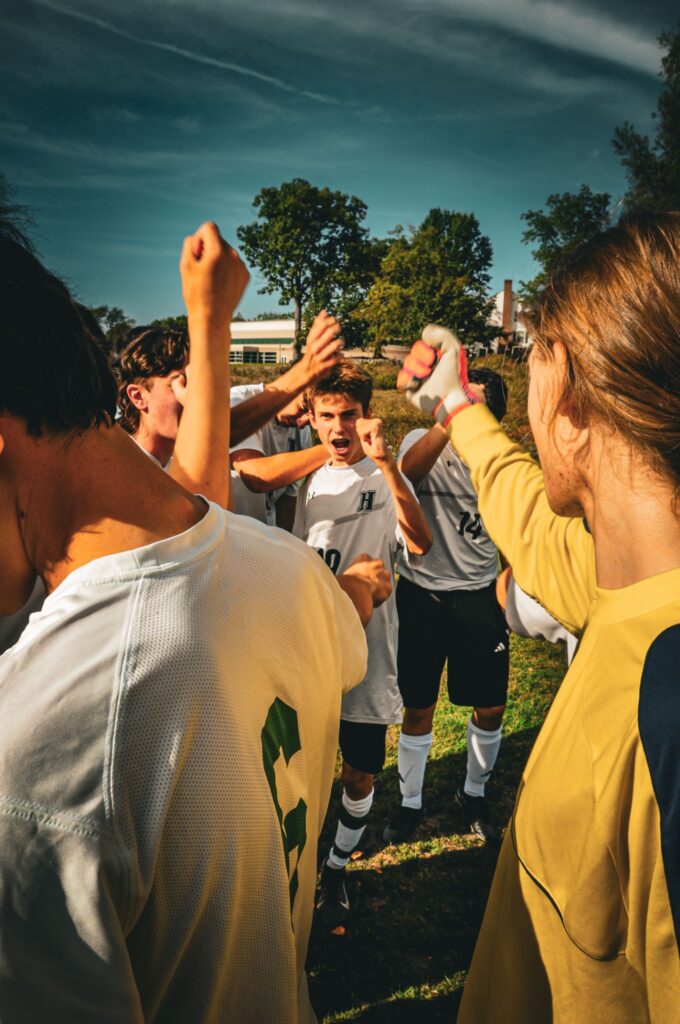
Now that the fall sports season is more than halfway through, it’s safe to say that Boys JV Soccer has had a magnificent run this year.
Through a combination of teamwork, determination, and hard work, our team has continued to make an impact on our conference. Through competing with tough opponents and working to create opportunities both offensively and defensively, our players have truly demonstrated what it means to play for something bigger than themselves. Beyond just our results, this season has been an opportunity for players to develop their skills, build chemistry, and grow as a team.
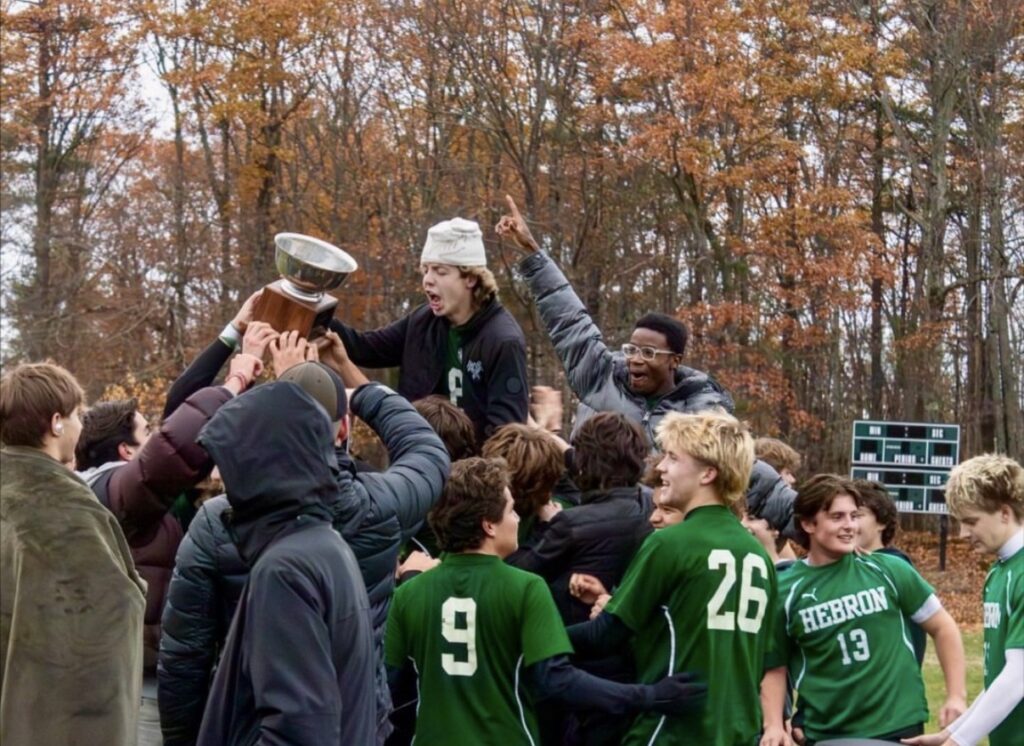
As this season progresses, Boys JV Soccer looks to maintain our momentum forward, following the glory of last year’s championship win, with the goal of winning another. After a heartbreaking one-goal loss to Proctor Academy, our team has set its sights on building upon its strong 5–2 record and continuing to improve throughout the season. Despite this minor setback, our performance so far has put us in a strong position, hopefully heading into the MAISAD finals.
With the championship in reach, Boys JV Soccer is determined to finish the season strong, build on our success, and bring home another MAISAD title, following in the footsteps of our 2025 season.
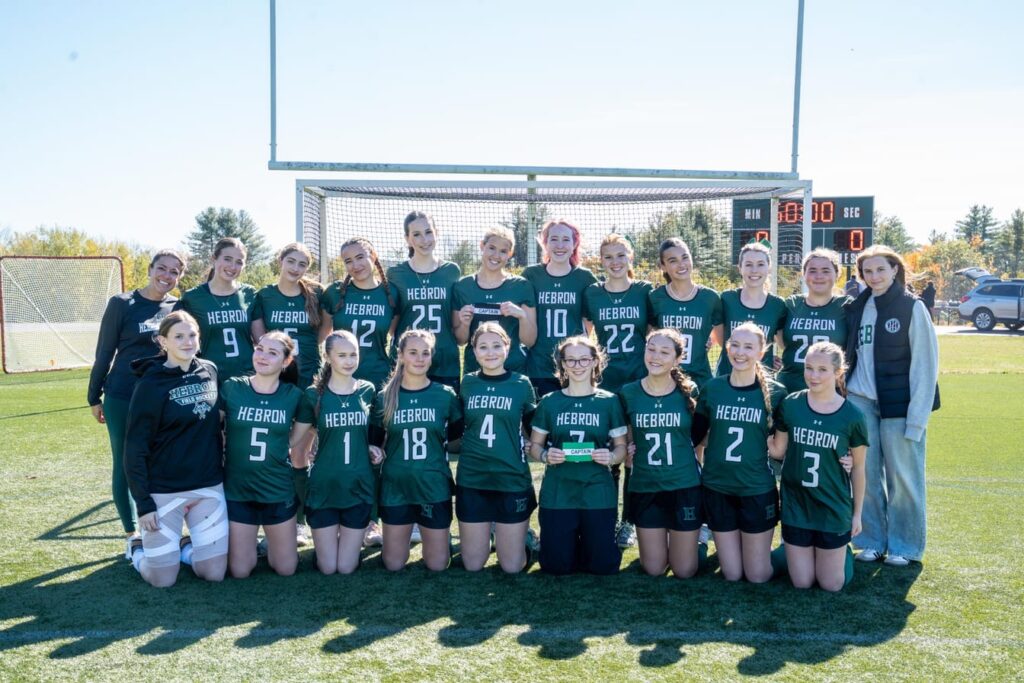
Success is not measured by wins or losses; it is measured by communication, defense, forwards, teamwork, and the overall effort that drives the team toward the next best thing. In this case, for the Hebron Varsity Field Hockey team, that meant scoring our first goal in the last few years. This was a dream come true by Addy Madson 29’ along with the entire time scoring in the last corner.
The game, which took place on October 10, 2026, was one to remember. This weekend was Homecoming weekend, when alumni and family members gathered to celebrate the investiture of Miss Craig in recognition of her wonderful accomplishments and outstanding achievements throughout her time around the world and, especially, at Hebron Academy.
Scoring was about so much more than a goal. It was a reminder of how far we have come, how much we believe in one another, and how exciting the future of our team will be. With a positive mindset, an incredible new coach, supportive captains, and an amazing, diverse team, we are moving in the right direction, and this is only the beginning. Seeing the ball hit the back of the net during the final corner of the third quarter was like winning the lottery. This goal demonstrated not only the determination that comes from practicing corners and other plays during practice, but also the countless hours spent working outside of practice.
Behind every save, block, drive, or backhand chip lies the true meaning of the game: field hockey is supposed to be fun. Field hockey showcases the beautiful brilliance both on and off the turf that our student-athletes will carry with them for the rest of their athletic careers and, more importantly, throughout their lives.
Great coaching is about more than just training, conditioning, and playing games. It is also about building confidence, trying new things that players may not have tried before, strengthening relationships, and working together as a team. That’s what the Hebron Varsity Field Hockey brings to the Hebron Community. While we still have a lot to work on as a team, the players who have contributed to and participated in this year’s field hockey season have made it a memorable experience and brought fresh energy to campus.
On the turf, every pass or shot is made with integrity and confidence, and every sprint is made with full effort. Through every skill they develop, our girls create opportunities and make more plays for the team. Regardless of the skill level at which our girls started the 2026 season, they are demonstrating how just one month of maintaining a positive mindset and embracing a shared vision of success can truly shape a team into a family that supports and encourages everyone.
by Andreas Sawoniak ’27, Finn Miller ’28, Paula Martin Vicente ’29, Trinity Nardelli ’28, and Chase Longsworth ’28
My dad wanted to recreate the moments he had with his dad during the 2006 World Cup in Germany, so we travelled across 5 states and 2 provinces and watched a total of 8 World Cup matches. I also travelled solo to Italy for 10 days and visited 5 new cities that felt like a whole new world. This summer felt like a dream. – Andreas Sawoniak ‘27
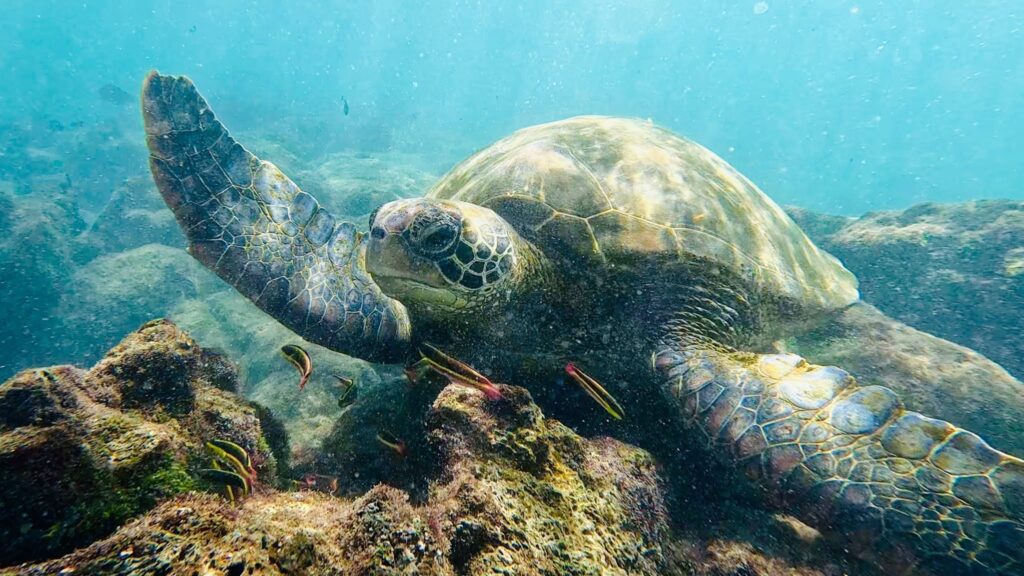
It was a warm day, but the Pacific Ocean breeze felt cool and comfortable. My family was staying in the Galapagos for a week, and I couldn’t imagine a better place to be. As I walked the dirt road down the main street of the island, I saw iguanas hiding in and among rocks and even a couple attempting to cross the road. This untouched piece of Island paradise had never felt the full impact of humanity, and life thrived everywhere. I walked through the gate of my family’s hostel and grabbed one of the boogie boards resting against the wall. My brother, who was reading in the shade of a palm tree, asked to come with me to the beach, and we walked across the road and up the sandy embankment. We ran into the surf and paddled out to the huge waves crashing out on the sandbar. The ocean was perfect for body surfing, but a boogie board took it to the next level. As a wave towered over my head, I threw the board out in front of me and surfed the wave all the way to the shore. I looked back out to the ocean, and as the barrel of a wave lifted up, it became a pane of glass. My brother had started paddling away from the wave, and as soon as it crashed over his head, I saw a huge shark swimming right in the wave! Luckily, every shark we had seen had been super harmless, but this one was so close I instantly got worried. My brother finally popped up from the choppy water, completely unaware of any danger, and I ran over to him. I told him we needed to get out of the water as soon as possible, and we ran all the way back to the road. Narrowly escaping with our lives, I realized that we were no longer in an area where humans controlled the environment. Here, wildlife roams free and untamed. – Finn Miller ‘28
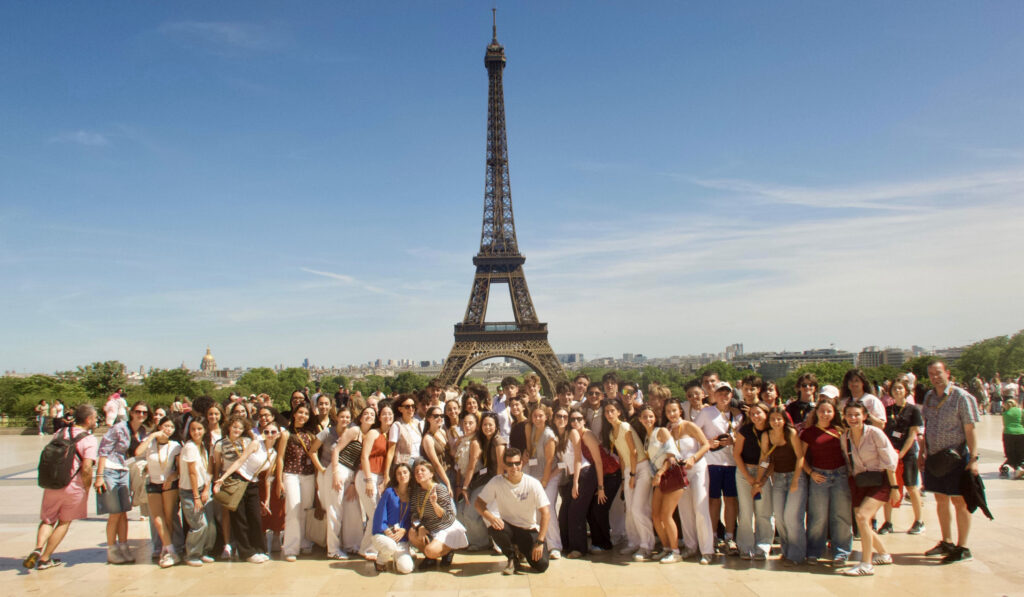
We wait all year for summer, and when it actually arrives, we sit around with our phones. This summer I decided I was not going to waste even a second of it- and it was the best summer ever. Even though every week was amazing, the first one was unbeatable. On the 13th of June, my friends and I took off towards Paris, not knowing it would be one of the best trips of our lives. We stayed for 5 days, 2 of them at Disneyland. What made our time in Paris so special wasn’t the activities, the food, or Paris itself; it was the people and the teachers. Teachers made it special without intending it, because all they did was tell us off and yell at us. We spent the whole trip with bullseyes on our backs, but it was funny to see how intense things got. Every day we had one big event that made the organiser, Mr. Papp, explode. It was his first time planning and leading a school trip, which was not a great idea on the school’s part. He took us to a hotel, barely a hotel, that was meant for partying, drinking and staying only for one night- which led to many problems. You can imagine the state of the rooms- they were horrible. Despite being constantly threatened with going back home, we had an incredible time. I love it when not everyone goes on the school trips, because everyone gets closer so quickly, and it’s also with the people you least expect. Paris will forever be a fond memory for me. – Paula Martin ‘29
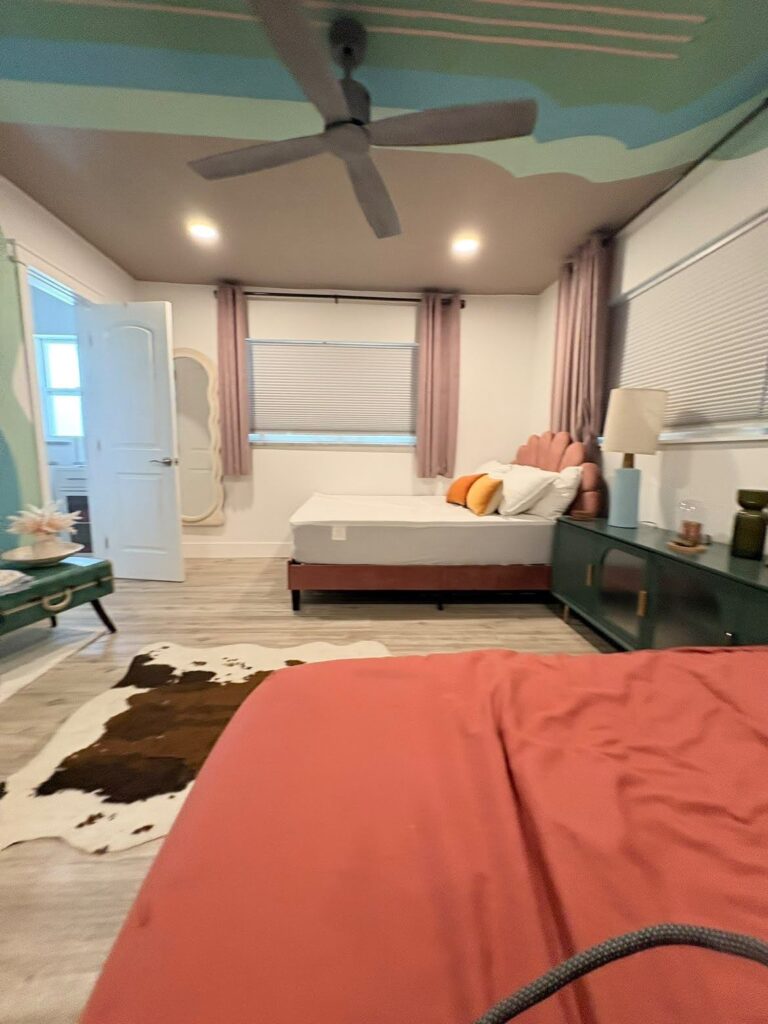
I went to Orlando, Florida, this summer with my entire family. I went with my two brothers, my mom, and my dad. One of my brothers is Nathan, and he is 20; my other brother is Aidan, and he is 22. We were in Florida for a couple of days and already did three Universal Parks and Disney; now we were headed to the more beachy part of Florida. As we left our first resort, I made my dad stop at 7Brew because I don’t have one of those in my area, and I’ve always wanted to try it. I had to order for Nathan too because he was too scared, but nonetheless, 7Brew was very good. After a couple of hours of driving, we got to our Airbnb that our parents surprised us with. It was a cute house that was on the ocean, and it had a small pool and a hot tub in the back. I realized, though, that I needed the perfect room and I wanted to choose first. So, I dropped my bags at the front door and ran up the stairs. I started checking the rooms; the first two I looked inside were kind of boring. The next one I saw was painted all black, and it had two beds, L.E.D. lights, a TV, red accents, posters, and a guitar. It was a really cool room, and I was almost certain I wanted that one, but just in case, I looked at the room to the left of it. It was a basic room with pink bedding, a vanity, and good window light. I did like this room a lot, but then my brother, Nathan, came running up the stairs and was saying how he wanted the dark room, so of course I needed to make sure I got it so he couldn’t. We started arguing about it and going back and forth, but eventually I said I picked it first, so I got the dark room, and he got the room with the vanity. But a few minutes later, I decided I liked his room better, and I tried to reason with him to get it. I was saying how I’d give him 30 bucks (I wasn’t actually going to), but he kept saying no because he liked the mattress. I eventually decided I didn’t even want the dark room because it was too depressing, so I went downstairs to see if there was a room down there. There was. I walked into the room, and it had two beds and a cow-pattern rug. I walked in a little further, and it had its own bathroom. That was the deal breaker for me; automatically, I needed that room just because of the bathroom. I ended up being very content with my decision even after the rollercoaster of fun arguments that came with it. – Trinity Nardelli ‘28
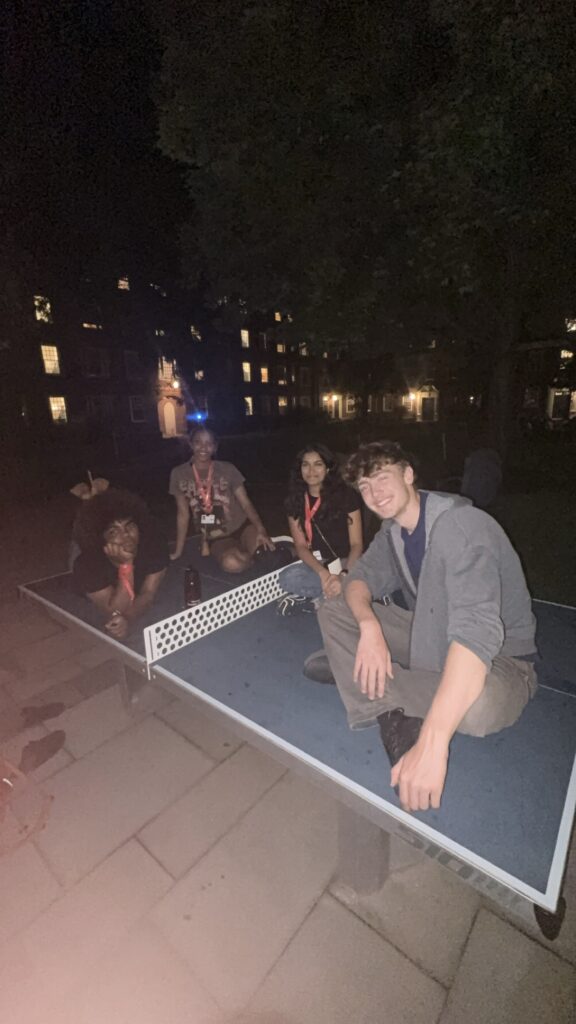
My time at Harvard consisted of waking up, walking about 15 minutes to Annenberg hall, doing homework for four hours, and then heading to class in the afternoon. This life may seem quite cliche or dry of color however, the experience to attend Harvard and take a course there was one of my most cherished moments in life. To tell you the truth, I woke up early most days to meet my friends at the gym or to walk to the cafe to try a “limited edition” matcha (it was alright). We ate at annenberg because we like that dining hall more than the one by Lowell House (the name of this dining hall slips my mind). Its Harry-potter type of vibe left me stunned in complete awe as I took in my surroundings; It almost felt like that moment could last forever. Sure I went to class at 3 P.M., (I hate waking up early) waited to do my homework the next day at 12 and spent the rest of my nights out and about the town with my friends. Was this the smartest choice? Probably not, as I would willingly torture myself when I would be subject to grinding out 3 essays 2 hours before class. The grind? Nonstop. The experience? Unforgettable. I know this sounds crazy to admit but I was super late to check in one night (check in is 11:30.) because I snuck out to a street party crowded with thousands of people. It was my first time attending a party like this without my family and to be honest: I felt rebellious (you’re supposed to laugh). Safe to say that night did not end well as my proctor would call me and ask where I was (he sounded really upset, I almost felt a little bad). The worst part of this experience was saying goodbye as I would leave behind a group of friends that I would never forget. Although the possibility of attending Harvard is possible, the opportunity to meet the people I did will never come again (it’s like a “right place, right time” kind of vibe). What I leave you readers as a parting message is: the location may be prestigious, but the bonds you make are legendary and last forever. – Chase Longsworth ’28
The twenty eighth of April the hour came that I delivered my last word.
Not to retread the address’s territory, but it was indeed, as I said, a long time coming, and an event I oft thought upon in the years leading up.
In the original designs I had planned a more expansive and perhaps boresome oration, to be spoken for the better part of half an hour. I knew this would lose me some goodwill with the audience, not to mention their fleeting attention, but counted on classtime missed because of my lengthiness to buy it back. When they caught wind of the machination my parents were not as thrilled with the idea and, covetous of their contribution to my college tuition, was quick to heed their opinion on the matter.
Perhaps it was for the best, afterall. Even with thirty minutes I believe it would have been rather jarring and disjointing (also, probably, ineffective) to incorporate more detailed instructions summarized by the surviving content as well as completely cut cassandric forewarnings of the ecologic disaster that awaits in the nearer future. The only remnants of these tangents lie in my abundant apocrypha and the outroduction song that was unfortunately muffled by the set volume on the speakers and the (much appreciated) ovation from the crowd.
And, oh boy, was their ovation. By my own reckoning I predicted some extra uproar from the more boisterous male sections of the crowd with whom I’d ingratiated myself, and Dr. Oakes had warned me beforehand of the Waterman waterworks. The actual reception was beyond what I had imagined because I could not have realized how deeply I seem to have touched the hearts and minds of those around me.
I told you all “I love you”. Contrary to what has been suggested by some, it was quite easy. Because it is the truth.
The slow shift in the concavity of my facial features, the voltaic wiping away of imaginary tears, and the trained tremble in my voice were all ruses. I am not an expressive person by nature, but if others require dramatism to believe then so be it. I don’t see thespianism as disingenuous, but rather an interpretive process translating my monotone with which I am content into a more relatable and relayable experience. I hope noone minds. Because for all my acting I spoke no lies.
For me it’s always easy to speak the truth, but I find people have difficulty distinguishing it, even among their very own thoughts. To give an example, all the mainstream religions persisting in the modern day claim to represent unconditional love and mercy, and all their holy books have passages to support this. In my travels I’ve come upon many a man who claims devotion to the teachings of Sid, Josh, Moe, and co. (Siddartha Gautama Buddha, Jesus Christ, and the prophet Muhammad). However, for all their belief in what they speak they cannot bring themselves to admit love freely and widely as I do.
I hope that instead of reading the prior sentence in an accusative tone, that hypothetical offended religionists see some reason to look in the mirror and work to better implement these particular tenets as guiding principles rather than just ponderable scripture.
As is typical of people well immersed in the science fiction fandom as I am, much of the comic and profound phrases I use originate from cult classic media. If you want to truly know how many references lie within my Last Word, I ran it through a chatbot and it detected only half of them. I leave those curious among you to find them all. Ramblings aside, the reason I draw attention to this facet of my life is the comfort I find in Ridley Scott’s Blade Runner(1982).
I won’t spoil the movie but I ask those who are inspired to view it to pay special attention to resolution and “Tears in Rain”. You’ll know it when you see it.
In brief, it is a film about a group of rebellious bioengineered slaves who are hunted by a human detective. The creatures, called replicants, are designed with a four year lifespan and are granted false memories to help them perform their duties. As a side effect they have underdeveloped emotional intelligence and are rooted out from regular people by the unusual responses they give to emotionally provocative questions.
Despite the writer’s and director’s intentions that it be about people with stunted empathy, their behaviors are so like mine that I am forced to interpret them as having equal empathy that is conveyed via different channels than facial expression and socially cued gasps. “More human than human” is the motto of the corporation in the movie that manufactures the replicants and I am tempted to embrace this label, but fear it too would confuse my purposes as narcissistic, grandiose or else pretentious.
Seldom do I extoll upon personal experiences. This is not out of innate aversion to the idea, but because it paints a picture quite exotic to others. Most question the credibility of my stories, not because they doubt my memory, but because my own actions implicate a perspective that is utterly alien in ontology, in the way I systematize and organize my perception of reality.
When I was but a wee laddy the word that best described as, uh, precocious. When other children were occupied with games conventionally appropriate for their age, I found myself lost in textbooks of history and science. Since these former days I have had a strong sense of curiosity that I cannot shake.
This distanced me from my peers, who were far more oriented on age-appropriate matters like soccer and exploring the laughably primitive mechanics of elementary school relationships. While they traded rumors over who fancied whom and argued with life-or-death seriousness over playground games, I was preoccupied with that which could not be cleanly folded into recess conversation. I wanted to know why empires rose and fell, how computer screens lit up in such complex configurations, what made my hand move at my will, and whether morality was something discovered or merely inherited. Such fixations made me incompatible.
There were some children I spent much time with, who would invite me to birthdays and play with me in the schoolyard every now and then. I find it likely that some could place my name in their memories, but none, I think, ever truly understood me, nor I them. We could exchange gestures of kindness and coexist amicably, but there remained an invisible partition between us that neither side quite knew where it ceased. Even in moments of inclusion I felt an observer, as though I stood half a pace outside of the world where everyone else was native.
I recall in first grade there was one child though, with a linguistic and intellectual disability, who saw me as his best companion. I remember how bad I would feel that others ignored his attempts at amiability and gestures of his intent to play with them. In his company I sensed a sincerity absent from many others; his attempts at kindness were awkward but entirely genuine. Where his isolation was visible and readily mocked, mine was subtle enough to pass unnoticed except by those who looked carefully. He was nothing like me but I warmed most to him because he was lonely like me.
I get along equally well with most groups here, as I adapt my behaviors to meet popular demand. I don’t call it dishonesty because none of these personas feel more natural to slip into than others. My defense against jocular types has always been reliant on the knowledge that raw confidence fights better than any intelligent quips or feats of physical strength. My way of interacting with more sensitive souls has been to remain as inoffensive as possible, and my occasional bouts of stammered “Sorry”’s are a byproduct. I am the shape of water.
Anybody who has shared a class with me knows as much as I have revealed to anybody else at this school. People are familiar with my eccentric turns of phrase and my reputation as a mnemonist, yet few can name any of my beliefs aside from the gross simplifications I utilize in jest. I strive to be everybody’s friend and evidently I’ve made many folks feel welcome but the exchange is not mutually balanced. Every hearth is my home but no hall is my own.
Don’t any of you feel shame or think this is a (justified or unjustified) call for pity. On the basis of our individual relationships I am content; the struggle lies with the fact that I cannot find a single outlet for my frustrations or aspirations. Too much background reading is required before I can relay the depths of my despair to allow any casual entrance to their dissection. All I have is the catharsis I find in the angry-sad music I listen to, and the dystopic literature and films whose messages came early and yet still too late.
There came a day when I was three years old that I came to a shocking realization. For those few first anna of life I had eaten meat as a staple, and it eventually was revealed by my parents that the source of these foodstuffs lies in animal flesh. I loved animals, not the least because of the dogs and goldfish at my own home as well as the agricultural environment where I grew up, but others in similar conditions I find rarely share the deep attachment and egalitarian sentiment I possess. I decided at this early age that I could not bear the thought of consuming lives I valued as much as human ones.
Of course this came as a shock to my parents, who saw it as a swiftly correctable comportment of toddlerhood. They allowed me a pass for the day but the following morning served me a breakfast solely consisting of bacon. Despite my pleas they continued to grow angrier and angrier with my noncompliance until eventually the pressure of disappointing them broke me. I ate one piece, each bite accompanied by a distinct cry and a smaller portion than the last. I took one nibble at a second slice before I decided “No”. No, I would not. There was much more yelling and after this I cannot recall the punishment I received as it must not have been notable to stay with me these fifteen years later. As a young child to defy thy parents is to spit in the face of God. But I did so, because I thought it more important that I stand for the lives and welfare of those who could not fend for themselves than to heed the dogma of figures whose authority is derived from sources that refuse reason and dare not to be explained.
Everything I do I do out of love. I don’t care what’s in your skin, what’s in your pants, or what’s in your wallet. I will do anything and everything that is necessary that is within my power. I don’t give for the sake of giving, I weigh my own worth equally to everyone else’s, there’s just a lot more of everyone else and I find that I am less sensitive to pettier affairs like placement in a line. I give all that I can without damaging my sanity. All of morality is mathematics to me; damage control. The misfortune is that I am really bad at mental math.
I think it faded into my interstitial words when I first said it so I repeat it now.
I don’t know half of you half as well as I should like, and I like half of you half as well as you deserve. I know there isn’t much left before graduation do us part, but if anyone should need a leaning shoulder, I am here. I am all too familiar with the feeling of being alone in a crowded room. To carry thoughts with that others could not understand or chose to understand. So if you like, pitch me an email or just walk up to me if you see me around.
In my quest for truth I have abandoned every conscious irrationality I find myself able to and there is still much to be done. But try as I might I cannot lose the sinking feeling that is aroused in me by exposure to the idea of death in myself and others. The annihilation of consciousness horrifies me because of the sheer tragedy that a thinking, feeling being may simply cease to exist. Every personality is an unrepeatable configuration of memories, perceptions, and affections. To lose even one… I shudder and bawl. To lose one human every second, thousands of intelligent mammals, avians, etc… in the same interval. Numbers lose their meaning in my limited brainspace.
For all my criticisms I may preach about tyrannical and bullying individuals and their rituals I cannot bring myself to hate them. Hatred requires a confidence in moral separation that I do not possess. Even the cruel and ignorant are, in the end, frightened creatures improvising meaning within a universe that offers none freely. I fear not man but when man is not. I can withstand hostility, ridicule, even suffering of myself and even billions, but absence is another matter entirely.
There was once a heretical Orthodox priest named Nikolai Fyodorov, who believed that we could never be happy unless everyone we know is alive with us. He saw the goal of civilization and technology to be the end of death, and eventually its reversal. I think he was onto something with that.
“Pressure is a privilege” (Virgil Van Dijk). Student athletes are often expected to be strong, both physically and mentally. While time management, working well under pressure, and teamwork are all great qualities student-athletes build over time, what is not talked about is the overwhelming struggle to balance their school, sports, and home life. The stigma surrounding mental health in athletes is caused by the idea that all athletes have this type of “mental toughness”, where they are “weak” and “powerless” if they seek help for their problems. While this is not true at all, people still perceive that this is the case when it comes to mental health surrounding your sport. The unique challenges that athletes face can lead to poor mental health when not taken care of right away, whether it’s burnout, injuries, or needing to be the best, every game and every practice.
Injuries can have a major impact on an athlete not only physically, but also mentally. Many athletes define themselves through their sports, so getting that taken away from you can lead to feeling frustration, anxiety, and eventually lead to depression. Depending on the injury, the recovery process can be uncertain and take a very long time, leading athletes to have to quit the thing that has brought them the most joy since they were kids. Without support, injuries can make athletes feel isolated and disconnected from the world around them, and in Morgan Rodgers case, it can lead to death by suicide.
Morgan played lacrosse at Duke University. During her freshman year, she suffered a knee injury that required surgery and a long recovery. While she worked to return to her sport, she began dealing with intense emotional struggles, including feeling of being isolated from her team and losing part of her identity as an athlete. Even though she appeared strong on the outside, Morgan was battling internally. In 2019, she died by suicide, which deeply impacted her family, teammates, and the lacrosse community.
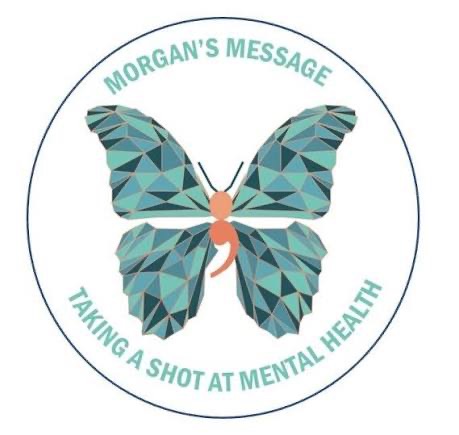
After her death, her family started Morgan’s Message to raise awareness about mental health in student athletes and to break the stigma that prevents many from asking for help. Morgan’s Message is a charitable organization that strives to eliminate the stigma surrounding mental health within the student-athlete community and equalize the treatment of physical and mental health in athletics. In the Morgan’s Message community, we aim to expand the dialogue on mental health by normalizing conversations, empowering those who suffer in silence, and supporting those who feel alone.
Going into the 2025/2026 school year, I was dedicated to bringing Morgan’s Message to the Hebron Academy campus. I had been in Morgan’s Message clubs in my previous schools, and, since our school is made up of student athletes, I thought it would be a great opportunity. In Morgan’s Message, we learn how to recognize signs of mental health struggles in ourselves and others, and how to respond in a supportive, respectful way. It also focuses a lot on open conversation, so club members can gain confidence in talking about topics that people usually avoid. This helps show the importance of support systems and how teammates, friends, and coaches can make a big difference on one’s mental health. Lastly, we develop leadership and advocacy skills by organizing events (hopefully dedication games to come!), spreading awareness, and creating a more positive Lumberjack culture. Overall, it teaches athletes that they are more than just athletes.
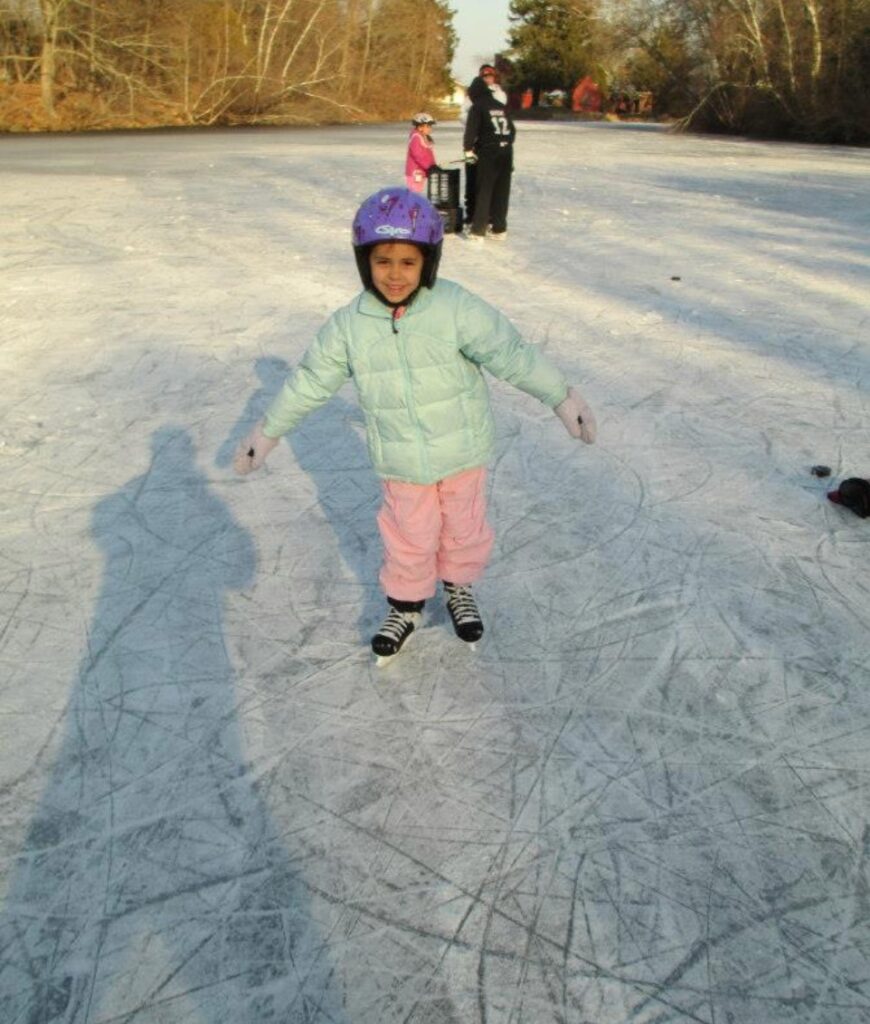
For years, I outgrew pair after pair of skates. Their leather became thin and broken-in, and the laces embedded into the boots. They were never new or shiny, but each pair was mine and had been through a lot with me.
I didn’t just learn to skate in them; I was raised in them. My schedule, my friendships, even my family dynamic revolved around hockey. Weeknights were for practice. Weekends were for games. Holidays were for traveling. Our car always smelled faintly of damp gear, and our family arguments often started or ended in a rink parking lot. It was a rhythm I knew by heart.
And then it ended.
Abruptly, I woke up with my coach over me. “Addie, are you okay?”
I didn’t know what was going on, but I did know those lights were giving me a headache. As I got off the ice, the athletic trainer looked at me with disappointment. I knew this was my last time on the ice. I knew I was about to go into weeks of dizziness, nausea, and an aversion to light. What I also knew was that this was going to be my fourth and final concussion.
I had to untie those laces and rip off the skates as quickly as they went on. I would never wear those skates—or any skates—again. I would never feel the crease under my blades, never shuffle or t-push across the ice.
Without my skates on, I couldn’t help but feel like I was wearing my shoes untied. No direction. No identity. Just… lost.
And that loss didn’t stay on the ice. It followed me everywhere. The routine that had once structured my life was gone, and without it, everything felt unsteady. I struggled to find motivation, to feel like myself, to understand who I was without the one thing that had always defined me. What I had lost wasn’t just a sport, it was my outlet, my stability, and a huge part of my identity.
There were moments when it felt like I was stuck there, in that in-between, no longer the person I had been, but not yet someone new.
I hit a low point. I kept trying to fill the space hockey had left by overloading my schedule, hoping staying busy would make things feel normal again. But instead, I would burn out, lose motivation, and feel even more stuck. I didn’t fully understand what I was feeling or how to handle it. It wasn’t until I went home to recover from the concussion and had a real, honest conversation with my dad that I realized I wasn’t “ok” and something needed to change. That moment made it clear that I couldn’t keep going the way I had been, not just for myself, but for the people who cared about me: my parents, my siblings, Mrs Nadeau and everyone that was silently supporting me.
So slowly, things began to shift.
I began to realize that those worn-out skates didn’t define me, and neither did the sport. I started helping the school’s social media. Designing posts, telling stories, and finding ways to make people feel connected gave me the same kind of spark hockey once had. I found new laces. I realized I wasn’t losing a team, I was just becoming part of a different one. I joined a club, Girl Up, that I now lead. I found my love for leading in my community as being elected Vice President. I had never seen myself becoming involved in leadership roles, but now they are my passion. I learned to retie those laces.
I also began noticing relationships I had once overlooked. My advisor became more than just someone who asked me how my day was; she became a mentor I went to about everything in my life. She helped me through the moments when things still felt heavy, when I wasn’t sure I was fully okay yet. She helped me tighten my new laces. My boss, who held me accountable but also reminded me to enjoy the workspace, showed me that leadership doesn’t always mean being the loudest voice, but often the most dependable one. She helped me start to loop those laces. Those relationships helped me realize I wasn’t as alone as I thought—I just had to look up from the ice to see them.
And while hockey wasn’t a part of my daily routine anymore, the lessons it taught me stayed. The dedication I brought to every practice carried over into new passions, and the teamwork I learned helped me support people in new ways. I made my first knot in those laces.
There was so much more to my life—things I had been missing—because I was hyperfocused on lacing up those skates. I finally was able to tie the new laces I had found.
Letting go of hockey wasn’t easy. It was messy, and at times, it felt like I was losing more than I could handle. But in doing so, I made space for something even more important: growth. I didn’t lose myself; I fought to find myself again. I uncovered parts of me that had been waiting all along.
There are some moments in life that don’t feel real until you’re already in them, the kind of moments where you look around at your friends and think, I’m going to remember this forever. What makes our Florida trip even crazier is that it all started as a joke. One random night in November, during study hall, someone said, “What if we actually went to Florida?” We all laughed because it sounded impossible. There was no way our parents would say yes. But somehow, one by one, every single parent did. That wild idea turned into plane tickets, packed bags, and one of the most unforgettable trips of my life.
It all became real the moment Charley, Ryleigh, and I stepped onto the plane. We were filled with excitement, barely able to sit still as we flew down to meet Jess and Sylvie. When we finally landed and dropped our bags, the very first thing we did was jump on the golf cart. The warm air hit us, the music was blasting, and we were flying down the road with no real destination. That was the moment we all knew, this trip was going to be something special. It didn’t matter what we did. It mattered that we were doing it together.
We had two days to soak in the Florida sun before the night we’d been counting down to for months. Zach Bryan’s 2026 tour was coming to Tampa, and somehow, we were going to be front row. Even saying it out loud didn’t feel real. Before the concert, we spent our days by the pool, letting the warm air sink into our skin and laughing about everything and nothing. That’s the thing about Hebron. It doesn’t just give you classmates, it gives you people who make even a simple pool day feel like the start of summer. Hebron builds friendships that don’t end when the school day does. They follow you across states, into new experiences, and into moments that shape who you are.
Our favorite part of the trip, besides the concert, was definitely the golf cart rides. The freedom of being able to take it anywhere felt like a preview of summer, hands in the air, hair everywhere, music loud, and no responsibilities. It was simple, but it was perfect.
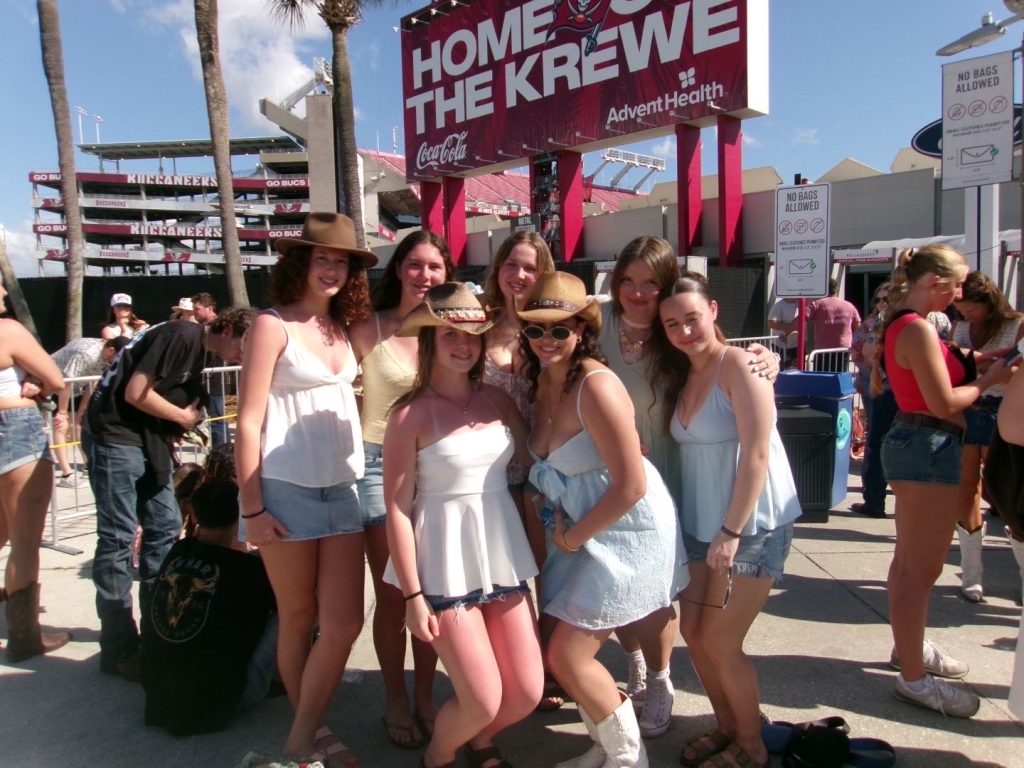
Then the day finally came. Concert day. For most of us, it was our first concert ever, and Zach Bryan was the perfect person to experience that with. We were anxious, excited, and honestly still in disbelief. We didn’t care that we had to wait in line for seven hours. Time flew because we were together. Getting ready was one of my favorite parts with the music blasting, the energy building, and the realization that in just a few hours, we’d be singing those same songs live.
When we left the house, we were practically vibrating with excitement. The sun was brutal, and we were sweating before we even got inside, but none of it mattered. As soon as the gates opened, we sprinted through the pit and somehow, miraculously got front row spots. We were over the moon. Every minute of waiting, every sunburn and sun poisoning was worth it.
Then it happened. Zach Bryan walked out, and the stadium exploded. Hearing “Overtime” live from the front row didn’t feel real. By the time he closed with “Revival,” not a single person in the entire stadium, all 65,000+ of them, was sitting down. Everyone was screaming, singing, jumping, and living in the moment. It was electric. It was unforgettable.
After the concert, we definitely had concert depression. Our feet were killing us, some of us were sunburnt or even sun‑poisoned, and the traffic was awful. Even then, it was 3 a.m. McDonald’s run made everything feel perfect again. Every second, good or bad, was worth it. Not just because of the concert, but because I got to experience it with my best friends.
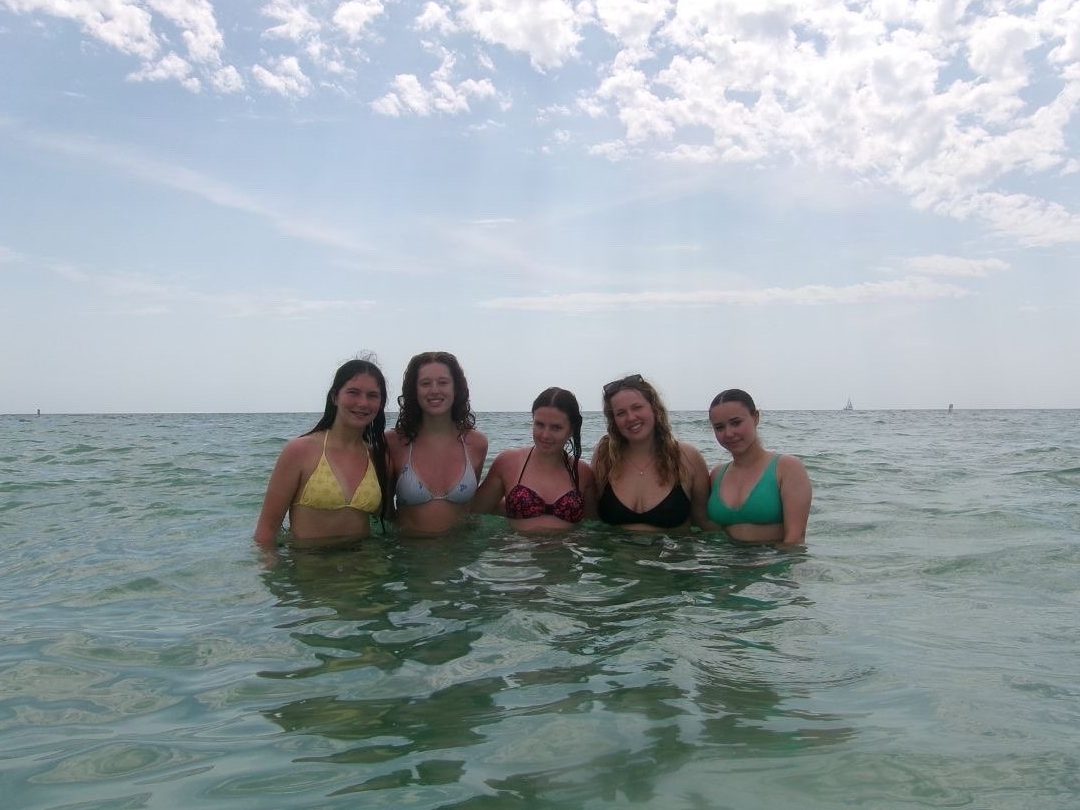
Even after the concert, the trip kept going. Our beach day was the perfect ending, even when Jess and Charley kept pranking me in the ocean. I didn’t care. I wouldn’t trade a single moment of that trip for anything. It was the trip of a lifetime, one I’ll never take for granted.
Florida wasn’t just a vacation. It was a reminder of how lucky I am to have the friends I do, friends I met at Hebron, friends who make every experience bigger, brighter, and better. It was unforgettable not because of where we were, but because of who I was with.